Article: # Israel kills prominent Al Jazeera journalist and four colleagues in targeted Gaza attack: full analysis and implications
The August 10, 2025 Israeli airstrike that killed Al Jazeera correspondent Anas al-Sharif and four colleagues near Al-Shifa Hospital underscores the acute danger facing media workers in Gaza. This article examines the incident’s chronology, legal protections for journalists, casualty trends in the Israel–Gaza conflict, operational challenges for Palestinian reporters, global reactions demanding accountability, the regional press‐freedom landscape, and actionable steps to safeguard journalism in conflict zones. Through entity‐rich analysis and authoritative statistics, we illuminate how targeting press personnel violates international humanitarian law and amplifies the urgent need for stronger protective measures.
What happened in the August 10, 2025, Al Jazeera journalist attack in Gaza?
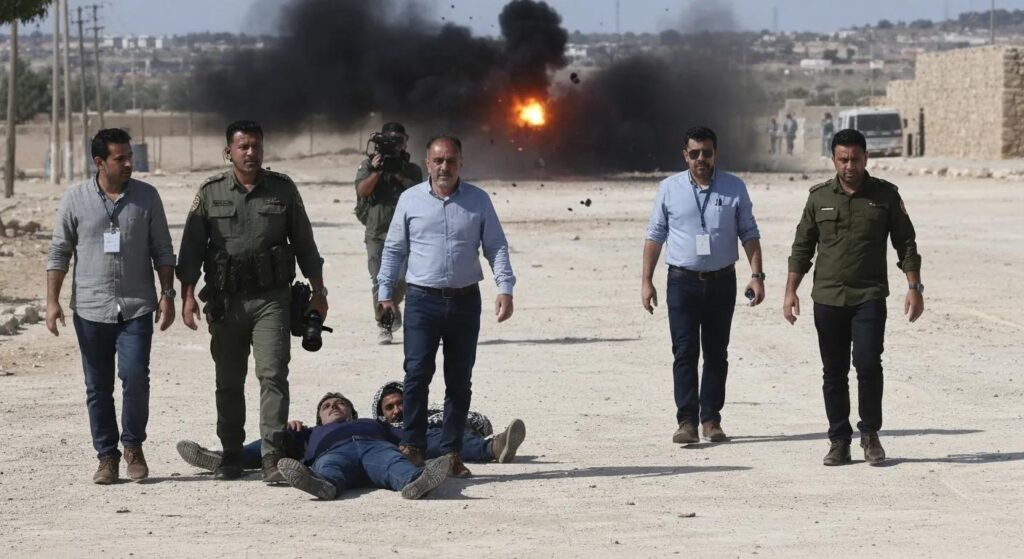
An Israeli airstrike struck a makeshift media tent outside Al-Shifa Hospital in Gaza City on August 10, 2025, instantly killing five Al Jazeera staff and one freelance journalist. Witnesses report that the white-marked tent bore visible “Press” insignia, yet footage shows multiple precision munitions impacting the structure. Medical teams retrieved bodies amid collapsing debris, and local ambulances were delayed by secondary strikes. This targeted strike raises critical questions about adherence to the laws of armed conflict and sets the stage for examining both immediate responses and longer‐term ramifications for press freedom.
Who were the Al Jazeera journalists killed in the Gaza strike?
- Anas al-Sharif, a veteran correspondent renowned for frontline reporting on civilian casualties.
- Mohammed Qreiqeh, a field correspondent embedded with medical units.
- Ibrahim Zaher, camera operator specializing in live broadcasts.
- Mohammed Noufal, camera operator documenting humanitarian aid convoys.
- Moamen Aliwa, camera operator focusing on displacement narratives.
A sixth journalist, Mohammad al-Khaldi, freelanced for multiple outlets. Each person’s identifiable press vest and Al Jazeera credentials marked them clearly as civilians, illustrating the human cost of disrupting independent documentation.
Where did the Israeli airstrike occur and what was the immediate aftermath?
The attack struck a media tent pitched on hospital grounds at Al-Shifa Hospital’s northern perimeter. Local health authorities report that within minutes of the first strike, secondary munitions targeted rescue attempts. Survivors described chaotic scenes of wounded civilians and journalists alike, with drones surveilling the site before and after the strike. The destruction of this civilian‐serving facility intensified displacement pressures and suspended critical medical services in Gaza’s largest hospital. Debris clogged entrances, forcing evacuations and further straining an already overburdened health system.
How did Al Jazeera and Israel respond to the attack?
Al Jazeera immediately condemned the strike as a “targeted assassination,” demanding a transparent investigation and reparation for the families. In a press release, the network highlighted video evidence showing clearly marked press identifiers. The Israel Defense Forces issued a statement asserting that the facility was allegedly used by hostile elements and that the strike complied with the principle of distinction. Conflicting narratives deepened mistrust, as international organizations called for independent fact-finding to reconcile these accounts.
How does international humanitarian law protect journalists in conflict zones?
International humanitarian law (IHL) treats journalists as civilians when they are not engaging in hostile acts, thereby granting them protection from direct attack. IHL’s civilian-protection regime ensures press personnel can document armed conflict without undue risk, reinforcing accountability mechanisms for violations.
International Humanitarian Law and Journalists
International humanitarian law (IHL) provides specific protections for journalists, treating them as civilians and prohibiting direct attacks against them. These protections are outlined in the Geneva Conventions and their Additional Protocols.
This citation supports the article’s discussion of the legal protections afforded to journalists under international law.
What are the key provisions of the Geneva Conventions regarding journalists?
The Fourth Geneva Convention and its Additional Protocol I explicitly recognize journalists as civilian “protected persons.” They must not be targeted and should be granted safe passage to report on humanitarian conditions. Protocol I Article 79 mandates that parties to a conflict respect and protect journalists carrying out their duties.
Why is targeting journalists considered a war crime under international law?
Deliberately attacking civilians or civilian objects constitutes a grave breach of the Geneva Conventions and a war crime under the Rome Statute of the International Criminal Court. When press personnel are intentionally struck, the act meets the threshold of “wilful killing” or “intentionally directing attacks against a civilian population,” warranting individual criminal responsibility.
How does the principle of distinction and proportionality apply to media personnel?
The principle of distinction requires combatants to differentiate between military objectives and civilian entities. Under proportionality, any incidental civilian harm must not be excessive compared to the anticipated military advantage. Media tents clearly marked “Press” should be presumed civilian objects, and strikes causing disproportionate journalist casualties violate these core tenets.
What is the scale and impact of journalist deaths in the Israel-Gaza conflict?
The Israel–Gaza war represents the deadliest conflict for journalists in the 21st century, with casualty figures surpassing those of other modern war zones. Tracking by multiple organizations highlights an unprecedented toll on press freedom and independent reporting.
Journalist Deaths in Conflict Zones
The Committee to Protect Journalists (CPJ) has documented a significant increase in journalist fatalities in conflict zones, particularly in the Israel-Gaza conflict. These statistics highlight the dangers faced by media workers and the need for greater protections.
This citation supports the article’s claims about the high number of journalist deaths in the Israel-Gaza conflict.
How many journalists have been killed since October 7, 2023, in Gaza and surrounding areas?
Various sources report over 180 fatalities among journalists and media workers. The Committee to Protect Journalists confirmed 186 deaths, while the UN Human Rights Office verified 227 Palestinian journalists killed. Local authorities cite up to 237 casualties, reflecting discrepancies rooted in access restrictions and reporting methodologies.
Why is Gaza considered the deadliest place for journalists in the 21st century?
Gaza’s compact urban environment, extensive use of precision strikes, and the systematic denial of safe corridors for media personnel make it uniquely perilous. The lack of effective safeguards and the frequent targeting of civilian structures amplify risks, positioning Gaza above other conflict zones in combined fatality metrics.
What role do organizations like CPJ and RSF play in tracking journalist casualties?
Entities such as the Committee to Protect Journalists and Reporters Without Borders collect data, verify incidents through multiple sources, and publish regular updates on press‐freedom violations. Their monitoring efforts inform international advocacy, guide legal actions, and provide authoritative statistics that shape policy debates on journalist protection.
What challenges do Palestinian journalists face reporting from Gaza?

Local journalists contend with restricted international access, limited protective equipment, frequent internet and electricity outages, and the constant threat of arrest or detention. Operating amid bombardment, they risk not only direct attack but also punitive measures by various armed actors.
How does restricted international media access affect Palestinian journalists?
When foreign correspondents are barred from Gaza, local journalists shoulder the entire burden of documenting humanitarian crises and alleged violations. This lack of international presence magnifies risks for Palestinian reporters, as they receive less global visibility and fewer protective diplomatic channels.
What personal risks and sacrifices do journalists like Anas al-Sharif endure?
Journalists endure physical dangers—shelling, sniper fire, drone strikes—and psychological trauma from witnessing civilian suffering. Many work without adequate protective gear, improvising body armor, and continue reporting despite bereavement when colleagues are killed, demonstrating unwavering commitment to truth–telling.
How do journalists document events amid ongoing conflict and censorship?
Reporters leverage digital tools—smartphone video, encrypted messaging apps, and social-media platforms—to transmit real-time evidence. Citizen journalists and human rights groups assist in geolocating incidents, verifying open-source imagery, and preserving digital forensics that form the basis for post-conflict accountability.
How has the international community reacted to the killing of Al Jazeera journalists?
Global institutions, press‐freedom advocates, and foreign governments issued unanimous condemnations, calling for independent probes and accountability for those responsible. Several UN bodies, human rights NGOs, and diplomatic missions urged Israel to allow unhindered media access and to respect IHL guarantees.
What statements and actions have the UN, CPJ, RSF, and Amnesty International taken?
- The UN Human Rights Office demanded immediate access to investigate and verify facts.
- CPJ called for criminal investigations against Israeli commanders suspected of ordering the strike.
- RSF condemned the pattern of journalist killings, urging Israel to cease deliberate targeting.
- Amnesty International labeled the strike a potential war crime and called for urgent accountability.
These organizations are coordinating to submit expert statements to international legal forums, reinforcing calls for transparent investigations.
What calls exist for independent investigations and ending impunity?
A coalition of over 50 state delegations requested a UN-mandated inquiry, while six press unions petitioned the International Criminal Court to open proceedings. Universal calls emphasize that impunity perpetuates cycles of violence and undermines the global rule of law.
How have governments and foreign press associations responded to the attack?
Several European parliaments issued resolutions condemning the killings, and foreign press associations demanded protective protocols for journalists embedded in conflict zones. Some governments threatened to withhold military assistance pending IHL compliance reviews, signaling potential diplomatic leverage.
What is the broader context of press freedom in the Israel-Palestine conflict?
Press freedom in the region has been deteriorating for decades, with censorship, protest bans, and disinformation campaigns shaping narratives on both sides. Rankings by RSF and Freedom House place Israel and the Occupied Palestinian Territories in low tiers for press freedom, reflecting legislative restrictions and safety hazards.
Press Freedom in the Israel-Palestine Conflict
Reporters Without Borders (RSF) has documented a decline in press freedom in the Israel-Palestine conflict, citing restrictions, censorship, and safety hazards. The RSF’s World Press Freedom Index reflects the challenges faced by journalists in the region.
This citation supports the article’s claims about the deteriorating press freedom landscape in the Israel-Palestine conflict.
How has Israel’s press freedom ranking changed amid the conflict?
According to RSF’s World Press Freedom Index, Israel fell from “Problematic” to “Difficult” status, highlighting growing legal and operational constraints on reporters, including gag orders, revocation of press credentials, and alleged bans on critical coverage.
What censorship and disinformation challenges affect media coverage in Gaza and the West Bank?
Authorities on both sides restrict internet access, block social platforms, and propagate rival narratives. State‐sponsored disinformation campaigns and cyberattacks target independent outlets, undermining verification efforts and fueling mistrust among international audiences.
How does the conflict impact the safety and freedom of journalists across the Middle East?
Regional press freedom indices show that spillover tensions have led to arrests of journalists in neighbouring countries, with security laws invoked to suppress coverage of the Gaza war. These restrictions limit cross‐border reporting and weaken collective scrutiny of human rights abuses.
What actionable steps can support press freedom and journalist protection in Gaza?
Advocacy, digital tool deployment, and partnerships with international NGOs can strengthen safety protocols and amplify calls for legal safeguards. Robust support networks and technological solutions empower local reporters and pressure conflict parties to uphold IHL.
How can readers and organizations advocate for journalist safety and legal protections?
- Lobby elected representatives to condition military aid on IHL compliance.
- Support campaigns by CPJ, RSF, and Amnesty International demanding accountability.
- Sign petitions urging UN bodies to authorize robust fact‐finding missions.
Mobilizing public opinion creates political incentives for change and signals solidarity with endangered media workers.
What role do digital tools and social media play in raising awareness?
Encrypted platforms enable secure transmission of eyewitness accounts, while data-visualization apps map attack sites in real time. Social‐media hashtags and livestreams draw international attention, driving rapid advocacy responses and documenting violations for legal evidence.
Which human rights organizations are leading efforts to protect journalists?
Key groups include the Committee to Protect Journalists, Reporters Without Borders, Amnesty International, Human Rights Watch, and the UN Human Rights Office. These entities publish safety guides, provide emergency grants, and train local correspondents in digital security and first-aid protocols.
Gaza’s crisis in press freedom demands immediate, coordinated action. Upholding the protection of journalists under international law not only preserves the flow of impartial information but also underpins accountability for violations. Strengthening legal frameworks, supporting frontline media workers, and amplifying advocacy campaigns are essential steps to ensure that the world remains informed—and that the architects of violence against the press face justice.