Are Smart Rings the Next Big Thing in Wearable Wellness Tech?
Smart rings are transforming personal health by delivering continuous biometric insights from the finger with unparalleled discretion and comfort. Facing challenges with bulky wrist-worn fitness trackers and incomplete wellness data, many users now seek a seamless solution that captures sleep patterns, heart rate variability, temperature shifts, and activity metrics in one elegant gadget. This article maps the core innovations and benefits of finger-worn wearables, explores the key health metrics they track, compares them with smartwatches, highlights leading brands and market trajectories, and previews how AI and medical integrations will drive the next wave of wellness technology.
What Are Smart Rings and Why Are They Revolutionizing Wearable Wellness?
Smart rings combine miniaturized sensors and wireless connectivity to monitor vital signs 24/7, offering a low-profile alternative to traditional fitness trackers. By embedding PPG, temperature, and motion sensors into durable metals, these finger-worn devices improve data accuracy through proximity to arteries and reduce motion artifacts that can affect wrist devices. For example, a user wearing a smart ring can receive real-time readiness scores and sleep analysis without bulky displays or daily charging routines—an innovation that aligns with modern lifestyle demands.
What Is a Smart Ring and How Does It Work?
A smart ring is a compact, finger-worn device that houses optical and thermal sensors to measure physiological signals. It uses photoplethysmography (PPG) to detect blood volume changes, thermistors for skin temperature, and accelerometers for movement detection. These measurements are processed by on-board microprocessors and transmitted via Bluetooth to mobile apps, allowing immediate interpretation of sleep stages, heart rate variability, and recovery status.
Why Choose Finger-Worn Wearables Over Other Devices?
Finger-worn wearables excel in discretion, comfort, and measurement precision compared to wrist gadgets.
- They sit closer to peripheral arteries for more reliable heart rate and HRV readings.
- Their slender profile minimizes interference with daily tasks or workouts.
- Absence of bulky screens enables longer battery life and continuous tracking.
This combination of accuracy and unobtrusiveness makes smart rings a natural fit for users seeking holistic personal health insights without compromising style or functionality.
How Do Smart Rings Integrate with Broader Wellness Ecosystems?
Smart rings connect seamlessly with health platforms and fitness apps to centralize wellness data. Most models sync with iOS and Android dashboards, exporting sleep scores, activity logs, and readiness metrics to established services like Apple Health, Google Fit, and custom vendor portals. This interoperability creates a unified data repository, empowering users and healthcare providers to track trends, refine lifestyle choices, and anticipate concerns before they escalate.
Which Key Health Metrics Do Smart Rings Track for Wellness?
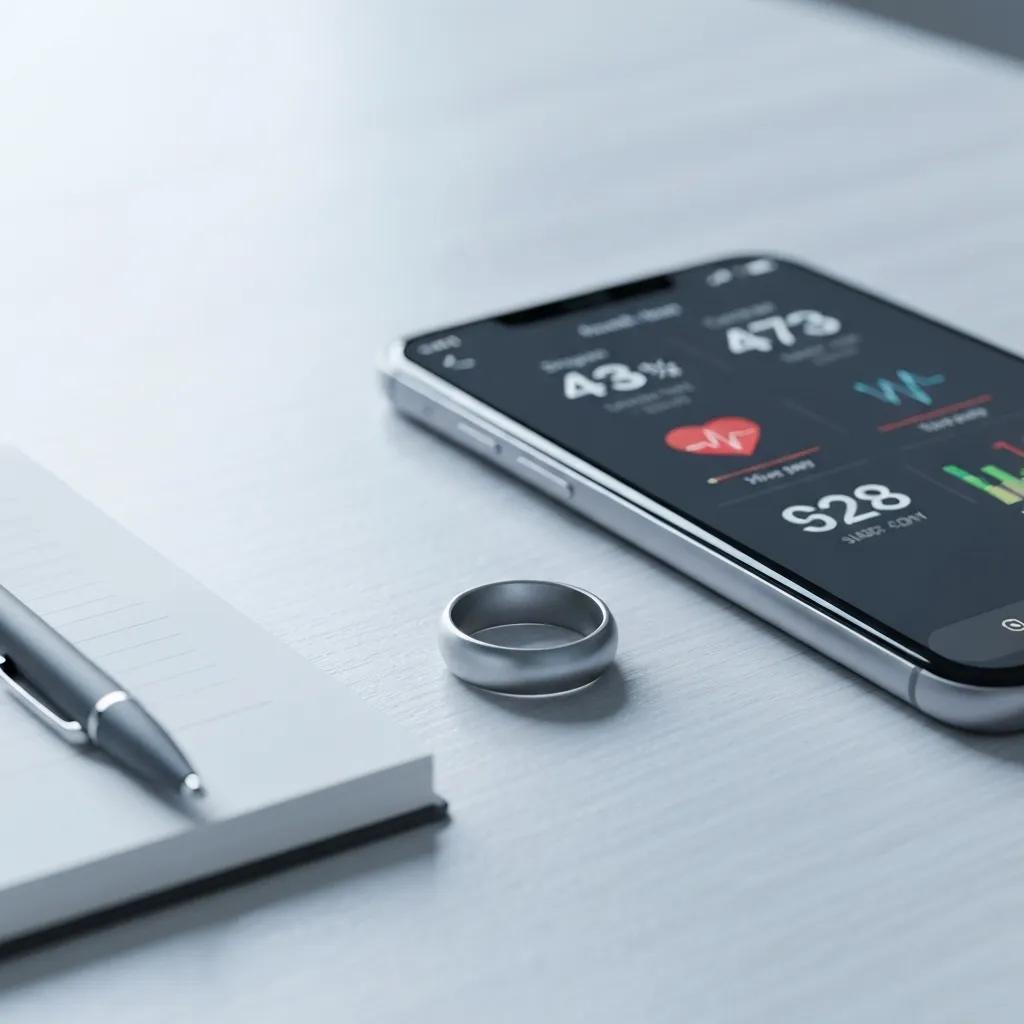
Smart rings capture a spectrum of biometric indicators that span restorative sleep, cardiovascular health, thermal regulation, and daily activity, enabling data-driven lifestyle decisions.
How Do Smart Rings Monitor Sleep Quality and Stages?
Smart rings distinguish between light, deep, and REM sleep by analyzing motion patterns and pulse amplitude.
They track:
- Sleep latency and duration
- Percentage of time in each sleep stage
- Restorative quality via heart rate variability during rest
These data empower users to identify disruptive patterns and adopt interventions—such as sleep hygiene improvements or stress-management routines—that enhance overall wellness.
What Is Heart Rate Variability (HRV) and Why Is It Important?
Heart rate variability measures the millisecond variations between successive heartbeats, reflecting autonomic nervous system balance. A high HRV indicates strong resilience to stress and efficient recovery, while a low HRV can signal fatigue or early illness. By continuously monitoring HRV, smart rings provide actionable recovery scores and stress-management insights that guide training intensity, rest days, and lifestyle adjustments.
How Do Smart Rings Track Body Temperature and Detect Illness?
Built-in thermistors record basal body temperature fluctuations, serving as an early warning system for infection or hormonal shifts. Nightly temperature baselines establish personal norms; deviations of 0.3–0.5 °C trigger alerts for potential illness or menstrual cycle tracking. This early detection mechanism supports proactive health care and timely medical consultations.
What Activity, Stress, and Recovery Insights Do Smart Rings Provide?
Beyond sleep and temperature, smart rings quantify daily movement, calories burned, and stress through integrated accelerometers and PPG data. They calculate step count, active calories, and stress scores derived from HRV dips under load. Users receive a consolidated readiness metric that balances activity strain and recovery, promoting optimal workout scheduling and lifestyle balance.
Which Emerging Biometrics Are Included in Smart Rings?
Next-generation rings expand capabilities to include oxygen saturation (SpO₂), respiratory rate, and menstrual cycle tracking:
- SpO₂ monitoring for detecting breathing irregularities
- Respiratory rate trends linked to overall fitness and stress
- Cycle phase predictions for personalized women’s health insights
How Do Smart Rings Compare to Smartwatches in Wellness Tracking?
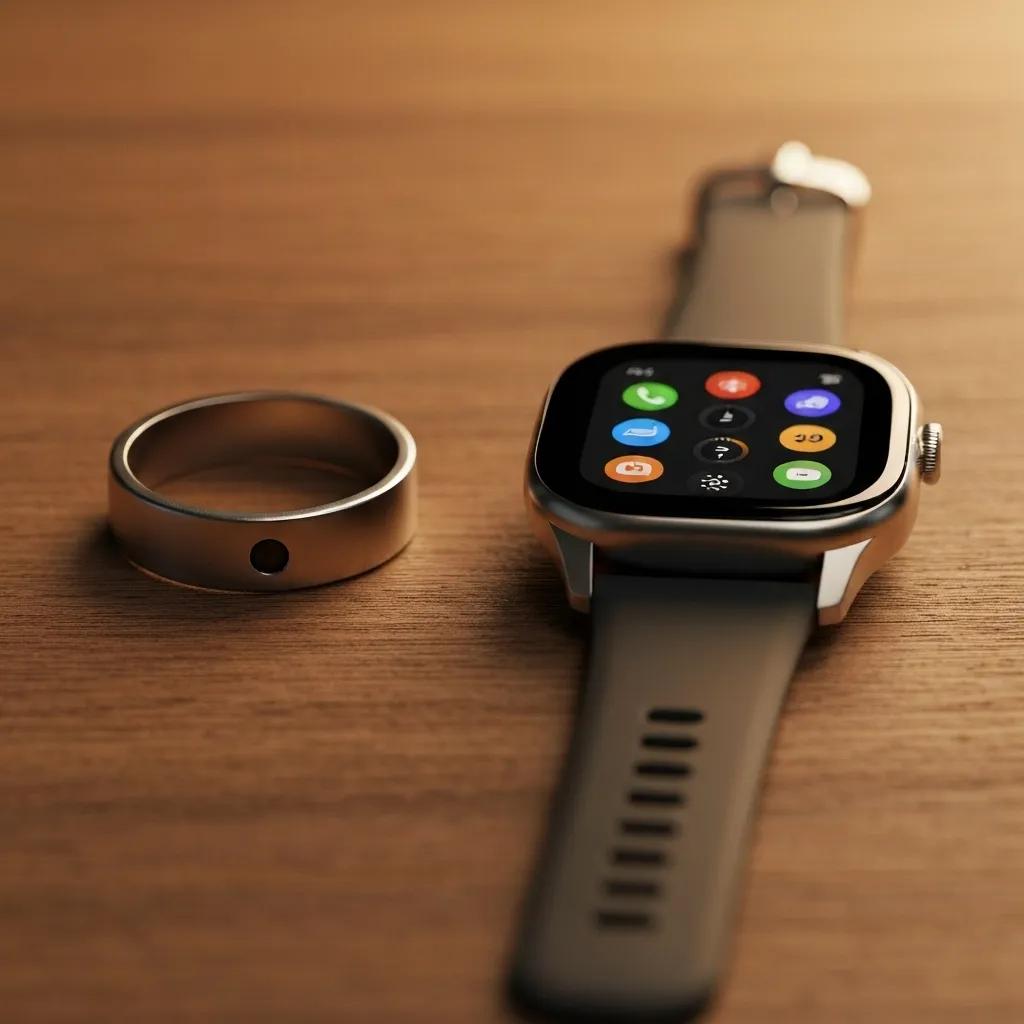
Smart rings and smartwatches both monitor health, but each offers distinct advantages in design, wearability, and feature set. A direct comparison highlights where finger-worn devices excel and where full-featured wrist gadgets maintain superiority.
What Are the Pros and Cons of Smart Rings vs. Smartwatches?
How Do Activity and Health Tracking Differ Between Devices?
Smart rings focus on passive monitoring—sleep, HRV, and temperature—whereas smartwatches emphasize active tracking such as GPS runs, guided workouts, and real-time coaching. Rings excel in capturing overnight recovery metrics with minimal user intervention, and watches excel in interactive fitness experiences, display-driven metrics, and app ecosystems.
Can Smart Rings Replace Smartwatches for Notifications and Payments?
Yes, many smart rings now support contactless payments and basic notification handling through NFC integration and haptic alerts. Users can authorize payments or receive call and message prompts without pulling out a phone, though detailed message content and app-level interactions still require a companion mobile interface or smartwatch display.
What Are the Leading Smart Ring Brands and Their Unique Innovations?
The smart ring market hosts a competitive landscape of innovators, each pushing biometric and connectivity frontiers to enhance wellness tech.
What Makes the Oura Ring a Pioneer in Sleep and Readiness Tracking?
Oura Ring established itself with an intuitive readiness score that merges sleep data, HRV, and body temperature into a single daily metric. Its subscription model unlocks advanced trend analysis, personalized guidance, and multiple sleep-stage breakdowns, setting a high bar for holistic wellness insights.
How Does the Ultrahuman Ring Air Offer Subscription-Free Wellness?
Ultrahuman Ring Air delivers comprehensive sleep, recovery, and activity tracking without recurring fees. Its recovery-focused design emphasizes battery longevity and streamlined data visualization, empowering lifestyle optimization through an accessible app interface.
What AI-Powered Features Does the Samsung Galaxy Ring Provide?
Samsung Galaxy Ring integrates deep AI algorithms within Samsung Health to forecast energy trends, recommend workout intensity, and predict sleep disturbances. Its seamless tie-in with Samsung’s ecosystem and AI-driven insights elevates personalized coaching and long-term health forecasting.
Which Other Smart Rings Are Gaining Popularity?
- RingConn Gen 2 for extended battery life and customizable insights
- Amazfit Helio Ring for lightweight design and affordability
- Circular for modular sensors and modular accessory compatibility
What Are the Current Market Trends and Growth Projections for Smart Rings?
The smart ring segment is experiencing exponential expansion driven by consumer health focus, miniaturization, and AI integration.
How Is the Smart Ring Market Growing Globally?
Global smart ring revenue is forecast to rise from USD 2.67 billion in 2023 to USD 4.46 billion in 2024, reaching USD 34.87 billion by 2032 with a CAGR near 29 percent. Shipments are expected to triple by 2028, while average selling prices decline to about USD 270 as competition intensifies.
What Are the Key Drivers Behind Smart Ring Adoption?
- Rising demand for preventive health monitoring
- Advances in sensor miniaturization and power efficiency
- AI-powered personalization of wellness recommendations
How Are Bluetooth and NFC Technologies Shaping Smart Ring Use?
Bluetooth connectivity enables continuous data uploads for fitness tracking and live coaching, accounting for up to 68 percent market share in health applications. NFC integration, representing 53 percent of smart ring use cases, powers contactless payments and secure authentication, merging financial and health functions in one wearable device.
How Will AI and Medical Integration Shape the Future of Smart Rings?
The convergence of artificial intelligence and medical-grade monitoring will transform smart rings from lifestyle accessories into clinical tools for remote care and chronic disease management.
How Does AI Enable Personalized Health Coaching in Smart Rings?
AI algorithms analyze longitudinal biometric datasets—sleep cycles, HRV trends, and temperature shifts—to generate tailored coaching prompts, predictive alerts, and adaptive goal-setting. This predictive analytics approach offers actionable guidance, such as recommending rest days before performance dips or hydration tips ahead of temperature anomalies.
What Role Will Smart Rings Play in Preventative and Chronic Care?
Smart rings will serve as continuous remote monitoring devices for conditions like diabetes, hypertension, and sleep apnea. By integrating with medical platforms and biosensors—such as the recent Oura-Dexcom glucose collaboration—these devices support early intervention, telehealth consultations, and data-driven treatment adjustments.
How Are Data Security and Privacy Addressed in Smart Ring Technology?
Manufacturers implement end-to-end encryption, anonymized data storage, and user-controlled sharing permissions to safeguard sensitive health information. Regular firmware updates, secure pairing protocols, and compliance with healthcare standards ensure that biometric data remains private and protected.
What Are Common Questions About Smart Rings and Their Wellness Benefits?
Smart rings raise key considerations around tracked metrics, accuracy, battery life, and preventative health potential that guide informed purchasing decisions.
What Health Metrics Can Smart Rings Track?
Smart rings gather multiple metrics including sleep stages, resting heart rate, heart rate variability, skin temperature, SpO₂ levels, respiratory rate, step count, and caloric expenditure. These layered data streams form a nuanced picture of daily wellness, recovery, and readiness.
How Accurate Are Smart Rings Compared to Other Wearables?
Accuracy studies show finger-worn PPG sensors reduce motion artifacts and deliver heart rate and HRV readings within 1–3 percent of clinical devices.
While smartwatches may incorporate ECG and GPS for activity validation, rings excel in overnight and resting-state measurements.
How Long Does the Battery Last on a Smart Ring?
Typical smart rings provide 5–7 days of battery life per charge depending on feature usage. Extended modes that disable haptic alerts or infrequent data sampling can push endurance beyond 10 days, minimizing charging interruptions.
Can Smart Rings Help with Preventative Health Care?
By detecting subtle deviations in temperature or HRV and flagging stress-related patterns, smart rings enable users to adopt timely interventions—such as adjusting sleep hygiene or seeking medical advice—thereby reducing the risk of illness escalation and promoting proactive health management.
Smart rings have matured into a distinct category of wearable tech, blending fashion-forward design with robust biometric tracking. Their unobtrusive form factor and advanced sensor suites address core fitness tracker limitations while delivering comprehensive wellness insights. As leading brands continue to innovate and AI-driven personalization deepens, smart rings are poised to redefine lifestyle-based health monitoring and preventative care in the years ahead.