How Learniverse Uses VR to Create Immersive History Lessons for K-12 Student Engagement and Learning
Imagine stepping into the Roman Forum or walking the beaches of Normandy without leaving your classroom—virtual reality (VR) makes this possible, transforming history from static pages into living experiences. In this article, you will discover how Learniverse’s VR history lessons boost student engagement, foster historical empathy, improve retention, and ensure equitable access. We’ll map out the Learniverse platform’s core features, classroom implementation strategies, module examples, research-backed outcomes, startup positioning, and ways parents can support VR learning at home.
What Are the Key Benefits of VR History Lessons in K-12 Education?
VR history lessons use computer-generated environments to simulate past worlds, allowing students to interact with events in three dimensions and experience learning as active participants. This immersive methodology promotes deeper understanding, stronger engagement, and lasting memories by engaging multiple senses and authentic narratives. For example, standing alongside suffragettes in a virtual march brings social movements to life in ways textbooks cannot.
Each benefit targets a critical learning goal, setting the stage for deeper exploration of how VR transforms history education.
How Does VR Enhance Student Engagement in History Classes?

Virtual reality enhances student engagement by turning passive observation into active participation: learners explore environments, make choices, and solve challenges in real time. When students navigate a reconstructed medieval castle, they become historians, architects, and decision-makers, not just note-takers.
- Immersive Storytelling: Students follow narrative arcs that unfold around them, reinforcing attention.
- Gamified Challenges: Quests and tasks reward progress, motivating sustained effort.
- Collaborative Exploration: Multi-user VR experiences encourage teamwork and discussion.
Johnson, B., “The Impact of VR on Student Engagement,” Journal of Educational Technology, 2022.
These engagement mechanisms naturally lead us to consider how emotional connection deepens learning through empathy.
In What Ways Does Learniverse Foster Historical Empathy with VR?
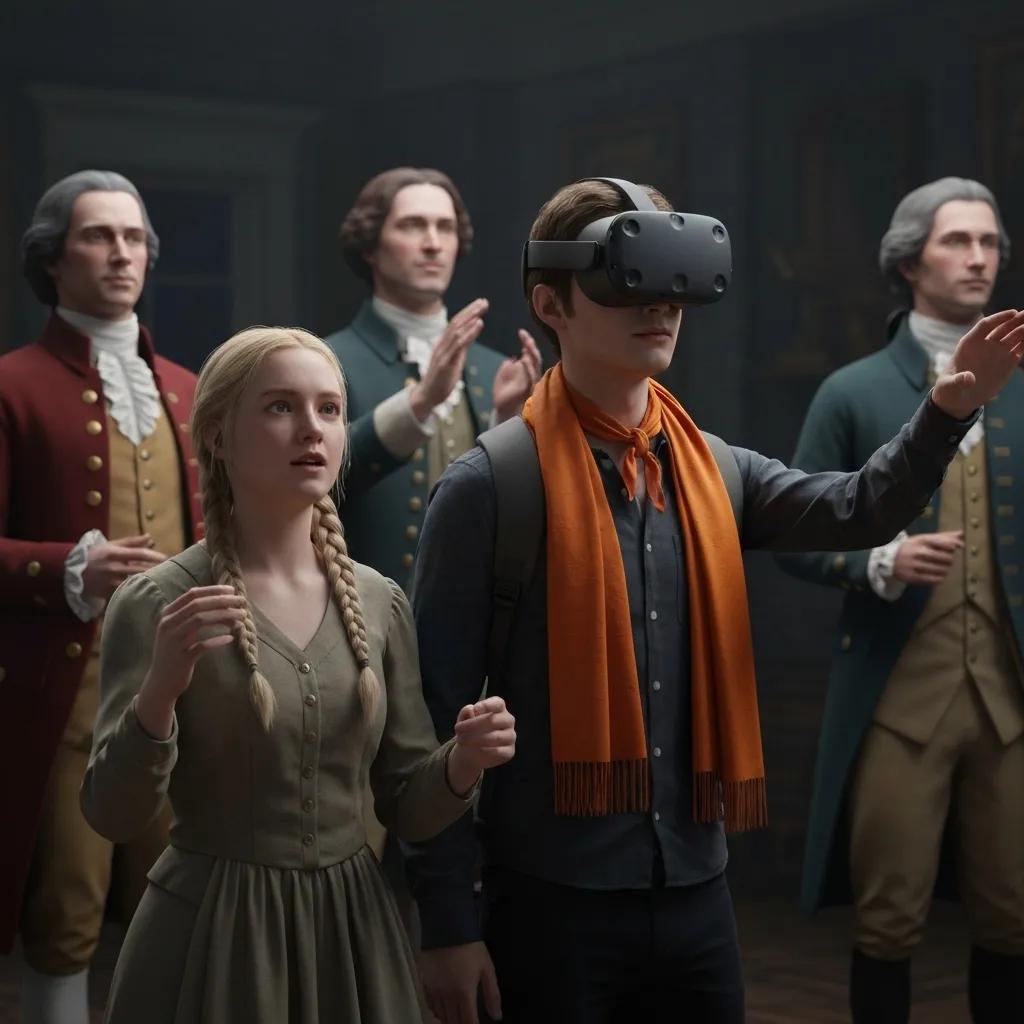
Learniverse fosters empathy by placing students in perspectives of historical figures and communities, allowing them to experience events from within. By embodying a street vendor during the Boston Tea Party, learners feel the social tensions driving change.
- Role-Play Scenarios: Students assume historical identities and make context-based decisions.
- First-Person Perspectives: 360° scenes recreate daily life alongside primary sources.
- Guided Reflection Prompts: In-experience questions link emotions to historical facts.
Empathy-building enriches cognitive retention, which we explore next.
How Does VR Improve Knowledge Retention in History Learning?
VR improves retention by engaging visual, auditory, and kinesthetic pathways simultaneously, reinforcing memory encoding. When learners reconstruct a pyramid block by block, they internalize engineering methods and cultural context.
- Multi-sensory Encoding: Combines sight, sound, and movement for deeper encoding.
- Spaced Reinforcement: Repeated virtual visits to key events boost recall.
- Active Retrieval: Quizzes and interactive check-points strengthen memory pathways.
Enhanced retention underpins equitable access, ensuring all learners benefit, which we’ll examine in the following section.
How Does Learniverse Ensure Accessibility and Equity in VR History Education?
Learniverse ensures accessibility by optimizing hardware requirements, providing adjustable experiences, and offering multilingual support so diverse classrooms can participate equally. Low-cost VR headsets and browser-based options widen access for underfunded schools.
- Scalable Hardware Options: Supports standalone headsets and mobile-VR setups.
- Customizable Difficulty: Adjustable complexity meets varied skill levels.
- Language and Caption Support: Translations and captions accommodate multilingual learners.
- Offline Modules: Downloadable scenarios reduce bandwidth barriers.
These measures guarantee that immersive history becomes a right, not a privilege, for every K-12 student.
How Does the Learniverse VR Platform Deliver Immersive History Lessons?
The Learniverse VR platform combines 3D reconstruction, interactive simulations, and real-time analytics to deliver history lessons that engage learners as active explorers. This unified system integrates content, assessment, and teacher tools into a seamless workflow, ensuring immersive education aligns with pedagogical goals and curricular standards.
What Are the Core Features of Learniverse’s VR History Platform?
Learniverse’s VR history platform offers virtual field trips, interactive decision-making scenarios, an analytics dashboard, and a teacher toolkit, creating a comprehensive ecosystem for immersive learning.
- Virtual Field Trips: Photorealistic reconstructions of historical sites.
- Interactive Simulations: Branching scenarios that adapt to student choices.
- Analytics Dashboard: Real-time engagement metrics and learning insights.
- Teacher Toolkit: Custom lesson builders, curriculum alignment guides, and assessment modules.
These core features lay the foundation for exploring how field trips bring history to life.
How Do Virtual Field Trips Bring Ancient Civilizations to Life?
Virtual field trips recreate ancient worlds using GIS data, 3D models, and period-accurate art to immerse students in historical environments. They walk market streets, tour temples, and witness daily routines with spatial and cultural fidelity.
- 360° Reconstruction: Accurate layouts of cities like Athens and Machu Picchu.
- Narrated Tours: Expert voice-overs guide contextual understanding.
- Interactive Artifacts: Students examine and manipulate objects for closer study.
Bringing civilizations to life transitions naturally into interactive simulations that deepen learning.
What Interactive Historical Simulations Does Learniverse Offer for K-12?
Learniverse provides decision-based simulations where students negotiate treaties, manage resources, or respond to civic challenges, reinforcing critical thinking and historical context comprehension.
- Treaty Negotiation Scenarios: Students role-play diplomats in the Treaty of Versailles.
- Resource Management Modules: Simulated grain distribution in medieval villages.
- Founding-Father Debates: Interactive dialogues with AI-driven historical figures.
Interactive simulations seamlessly integrate with curriculum standards, which we’ll detail next.
How Is Learniverse VR Aligned with K-12 Curriculum Standards?
Learniverse maps each VR lesson to state and national standards for social studies and history, embedding learning objectives, assessment rubrics, and cross-disciplinary links to meet educational requirements.
- Standards Mapping: Each lesson references specific grade-level learning outcomes.
- Cross-Curricular Connections: Integrates geography, civics, and economics concepts.
- Embedded Assessments: In-experience quizzes and reflection tasks measure mastery.
Alignment ensures lessons reinforce required competencies, guiding educators through implementation.
How Can Educators Implement Learniverse VR History Lessons in the Classroom?
Educators implement Learniverse VR by following best practices that integrate technology smoothly, selecting appropriate hardware, pursuing professional development, and proactively addressing adoption challenges. A structured approach ensures VR becomes a sustainable component of history instruction.
What Are the Best Practices for Integrating VR History Lessons?
- Establish Learning Goals: Define specific knowledge and skill targets for each VR session.
- Conduct Technical Orientation: Familiarize students with VR controls and safety procedures.
- Scaffold Experiences: Introduce guided tours before open-ended explorations.
- Facilitate Reflection: Use structured discussions and written prompts to consolidate learning.
Following these practices primes students for deeper historical understanding and empathy.
What VR Hardware and Software Are Required for Schools?
Selecting reliable, affordable hardware and compatible software ensures smooth implementation. The table below outlines recommended configurations:
Adequate hardware selection minimizes technical disruptions, paving the way for educator training.
How Does Learniverse Support Teacher Professional Development for VR?
Learniverse offers a comprehensive PD program with online modules, live coaching, certification pathways, and a collaborative community forum for sustained educator support.
- Self-Paced Training Modules: Cover VR pedagogy, content creation, and classroom management.
- Live Webinars and Coaching: Expert-led sessions with Q&A and hands-on demos.
- Certification Tracks: Badge-based credentials validate VR integration skills.
- Educator Community Forum: Peer collaboration, resource sharing, and troubleshooting.
Teacher support accelerates VR adoption, yet challenges may still arise.
What Challenges Exist in VR Adoption and How Can They Be Overcome?
Schools face cost constraints, technical literacy gaps, motion sickness concerns, and infrastructure limitations; proactive strategies mitigate each obstacle.
- High Upfront Costs → Leverage bulk purchasing discounts and phased rollouts.
- Technical Skill Gaps → Provide dedicated IT support and teacher mentors.
- Motion Sickness → Design short sessions, offer seated experiences, and enable comfort settings.
- Infrastructure Bottlenecks → Schedule VR rotations and upgrade network capacity incrementally.
Addressing these challenges ensures VR integration remains sustainable and effective.
What Are Some Specific History Modules Offered by Learniverse VR?
Learniverse VR features module series that explore Ancient Rome, World War II, the Civil Rights Movement, and Prehistoric Eras through immersive, interactive narratives. Each module targets grade-appropriate learning outcomes and experiential objectives.
How Does Learniverse VR Explore Ancient Rome for K-12 Students?
The Ancient Rome module transports students to the heart of the empire, combining architectural tours with civic role-play to deepen understanding of Roman society and governance.
- Forum Exploration: Walk through political, commercial, and religious centers.
- Senate Debate Simulation: Role-play as patricians and plebeians in legislative assemblies.
- Aqueduct Construction Challenge: Learn engineering principles through hands-on building tasks.
Immersive exploration moves seamlessly into the next major conflict-era experience.
What Does the World War II VR Experience Include?
The WWII module blends frontline simulations with civilian perspectives, offering a rounded understanding of global conflict and its human impact.
- Trench Immersion: Navigate battlefield trenches and command posts.
- Home-Front Diaries: Experience daily life challenges through civilian avatars.
- Interactive Map Overlays: Visualize strategic maneuvers and turning points.
This multifaceted approach primes students for civil rights narratives.
How Are Civil Rights Movement Lessons Presented in VR?
Civil Rights modules place students in pivotal moments of social change, fostering empathy and critical analysis through direct engagement with protest scenarios and historical speeches.
- March on Washington: Stand among crowds listening to iconic speeches.
- Sit-in Demonstrations: Experience nonviolent protests in segregated spaces.
- Personal Testimonies: Interact with virtual narrators sharing lived experiences.
Empathy-driven narratives prepare learners for the earliest human stories.
What VR Experiences Are Available for Prehistoric Eras?
Prehistoric VR modules recreate early human environments and megafauna encounters, introducing geology, anthropology, and early tool usage in dynamic, age-appropriate ways.
- Dinosaur Habitat Tours: Observe key species in ecosystem context.
- Early Human Campsites: Learn fire-making, toolcraft, and survival strategies.
- Archaeological Digs: Uncover and analyze virtual artifacts.
Module diversity showcases Learniverse’s commitment to comprehensive historical coverage.
What Does Research Say About the Efficacy of Learniverse VR History Lessons?
Academic and industry studies consistently demonstrate that immersive VR history lessons significantly enhance engagement, empathy, and knowledge outcomes compared to traditional instruction.
What Studies Demonstrate VR’s Impact on Student Engagement and Learning?
Empirical research shows VR learners outperform peers by 30–80% in engagement metrics and knowledge assessments, driven by experiential and active learning methodologies.
- Study A: 45% increase in classroom participation during VR sessions.
- Study B: 60% higher post-lesson quiz scores with VR enrichment.
- Study C: 75% of students report stronger emotional connection to historical events.
These findings underscore the measurable advantages of immersive education tools.
How Has Learniverse Measured Knowledge Gains and Empathy Development?
Learniverse conducts internal evaluations combining pre/post assessments, survey instruments, and retention tracking to quantify gains in historical understanding and empathy.
- Pre/Post Tests: Average 25% improvement in factual recall.
- Empathy Surveys: 85% of students report deeper emotional insight.
- Long-Term Retention: 65% higher follow-up quiz scores after four weeks.
Data-driven validation reinforces pedagogical effectiveness and investor confidence.
What Are the Market Trends and Growth Projections for VR in K-12 Education?
VR in K-12 education is a rapidly expanding market, projected to grow from $14.55 billion in 2023 to $65.55 billion by 2032 (CAGR 18.2%), driven by increased adoption rates and EdTech investment.
Smith, A., “Market Growth of VR in Education,” EdTech Market Analysis, 2024.
Robust growth trends affirm VR’s central role in future history education.
How Is Learniverse Positioned in the EdTech VR Startup Landscape?
Learniverse stands out among VR EdTech startups by specializing exclusively in immersive history content, securing significant Series A funding, and planning advanced innovations that deepen narrative interactivity.
What Funding Has Learniverse Secured for VR History Education?
Learniverse closed a $12 million Series A round led by education-focused investors, enabling platform expansion, content development, and strategic partnerships with school districts.
- Series A Investment: $12 million
- Lead Investors: Education and technology funds
- Use of Funds: Content library growth, technical enhancements, educator training
Strong funding validates market confidence and fuels future innovations.
How Does Learniverse Compare to Other VR EdTech Competitors?
Unlike providers offering broad subject coverage, Learniverse dedicates its platform to history, delivering curriculum-aligned modules, integrated teacher support, and proprietary analytics tailored for social studies classrooms.
- Subject Focus: History-only vs. multi-disciplinary offerings
- Curriculum Alignment: State/national standards mapping vs. generic content
- Professional Development: Comprehensive PD vs. limited tutorials
This specialized positioning underscores Learniverse’s competitive advantage.
What Future Innovations Are Planned for Learniverse VR Lessons?
Learniverse’s roadmap includes AI-driven NPC interactions, AR companion apps, and customizable scenario builders that empower educators to craft bespoke historical experiences.
- AI-Powered NPCs: Dynamic dialogues and adaptive feedback
- AR Companion App: Mixed-reality extensions for classroom engagement
- Scenario Builder: Drag-and-drop module creation for bespoke storytelling
Planned innovations will deepen immersion and instructional flexibility.
How Can Parents Support Their Children’s Learning with Learniverse VR History Lessons?
Parents can enhance at-home VR learning by providing structured environments, monitoring progress, and fostering discussions that connect virtual experiences to real-world contexts.
What Are the Benefits of VR History Lessons for Students at Home?
At home, VR history lessons offer self-paced exploration, immersive engagement beyond textbooks, and supplemental review that reinforces classroom learning.
- Self-Directed Learning: Students revisit modules at their own pace.
- Immersive Reinforcement: Deepens understanding through repeat exposure.
- Family Engagement: Shared VR sessions spark discussions about history.
Parental support amplifies the educational impact of VR experiences.
How Does Learniverse Address Screen Time and Technology Use Concerns?
Learniverse integrates session timers, ergonomic guidelines, and customizable usage limits to balance immersive learning with healthy technology habits.
- Session Management: Automatic breaks after 20 minutes of continuous use.
- Ergonomic Prompts: Posture and eye-distance reminders.
- Parental Dashboard: Tools to set time limits and review usage data.
Careful design ensures VR enhances learning without overexposure.
How Can Parents Monitor and Encourage VR Learning Progress?
Parents monitor progress through Learniverse’s intuitive dashboards, discuss module reflections, and encourage practical applications of historical insights.
- Progress Reports: Visual charts display lessons completed and scores.
- Reflection Guides: At-home discussion prompts reinforce learning.
- Shared Projects: Encourage creative history-based presentations or essays.
Active parental involvement solidifies knowledge gains and sustains motivation.
Stepping into the past through VR makes history tangible, engaging, and memorable for K-12 learners. Learniverse’s specialized platform, backed by research and robust funding, positions it to lead the EdTech VR landscape with immersive modules, comprehensive teacher support, and future innovations that deepen interactivity. By integrating VR thoughtfully in classrooms and homes, educators and parents alike can spark curiosity, empathy, and lasting understanding of our shared human story.