Serve Robotics Dallas Expansion: How Autonomous Delivery Robots Revolutionize Last-Mile Food Delivery in Dallas-Fort Worth
What if meals in Dallas-Fort Worth could arrive at your door via AI-driven sidewalk robots, cutting costs and carbon emissions while creating local jobs? This article reveals how Serve Robotics—an autonomous delivery startup spun off from Uber—is deploying Gen3 robots powered by NVIDIA Jetson Orin to serve Uptown neighborhoods, partner with Uber Eats and merchants, boost the economy, reduce emissions, and shape the future of last-mile logistics. We will cover:
- Serve Robotics’ identity, core technologies, and local scale
- The Level 4 autonomy platform and safety systems
- Strategic partnerships with Uber Eats, Wing and neighborhood merchants
- Economic and environmental benefits in DFW
- Future deployment targets and regulatory outlook
- Common questions about the Dallas rollout
- How you can order or partner for autonomous delivery
This roadmap ensures you understand every facet of autonomous food delivery in Dallas-Fort Worth.
What Is Serve Robotics and Why Is Its Dallas-Fort Worth Expansion Important?
Serve Robotics is a leading autonomous sidewalk delivery company that deploys AI-powered, zero-emission Gen3 robots for last-mile food and parcel distribution, and its entry into Dallas-Fort Worth unlocks efficient, sustainable deliveries for over 22,000 households.
Serve Robotics Launches in Dallas-Fort Worth
Expansion into the fourth-largest U.S. metro area leverages well-maintained sidewalks and innovation-ready communities to drive scale and environmental impact.
Who Is Serve Robotics and What Are Its Core Technologies?
Serve Robotics, founded by Dr. Ali Kashani, builds and operates delivery robots that leverage Level 4 autonomy, advanced sensors, and NVIDIA Jetson Orin AI to navigate urban sidewalks without human intervention. The company’s Gen3 platform integrates 360° LiDAR, stereo cameras, ultrasonic sensors, and custom AI models for obstacle detection, path planning, and secure contactless handoff.
Why Is Dallas-Fort Worth a Strategic Market for Serve Robotics?
Dallas-Fort Worth’s extensive sidewalk network, high population growth, and appetite for technology make it an ideal testbed for autonomous delivery. The region’s favorable climate supports year-round operations, while local government initiatives to modernize urban logistics align with Serve Robotics’ smart-city vision, accelerating both adoption and regulatory cooperation.
Which Dallas Neighborhoods Are Served by Serve Robotics?
Serve Robotics’ robots currently operate in Uptown areas including:
- Pearl District
- State Thomas
- West Village
- South Routh
These neighborhoods blend dense residential clusters with popular restaurants, creating optimal corridors for reliable, on-demand deliveries. The phased rollout now sets the stage for broader coverage across DFW.
How Many Households and Merchants Does Serve Robotics Reach in Dallas?
Serve Robotics connects more than 22,000 households to partner merchants and platforms. Operational partnerships include national chains and local favorites, with real-time order volumes exceeding hundreds of deliveries daily. This scale demonstrates the company’s ability to handle peak demand while maintaining a 99.8% completion rate.
How Does Serve Robotics’ Autonomous Delivery Technology Work?

Serve Robotics’ autonomous delivery technology combines Level 4 autonomy, multi-sensor fusion, and edge AI to perform safe, contactless last-mile food distribution on sidewalks, eliminating the need for human drivers and reducing delivery times.
What Does Level 4 Autonomy Mean for Sidewalk Delivery Robots?
Level 4 autonomy indicates that robots can operate without human oversight within specific geographic zones and conditions. Serve Robotics’ Gen3 units self-navigate sidewalks, detect dynamic obstacles, and replan routes in real time, ensuring consistent performance even in crowded pedestrian areas.
Levels of Autonomy in Self-Driving Cars
How Does NVIDIA Jetson Orin Power Serve Robotics’ AI?
NVIDIA Jetson Orin Nano Super Developer Kit
What Safety Features Ensure Secure Robot Operations in Dallas?
Serve Robotics employs multiple redundant safety systems:
- Dual LiDAR arrays and stereoscopic cameras for 360° obstacle detection
- Ultrasonic sensors for close-range hazard clearance
- Emergency stop mechanisms triggered by anomalous readings
- Real-time remote monitoring by trained operators
These layers work in concert to prevent collisions and maintain pedestrian safety.
How Do Serve Robotics Robots Navigate Urban Sidewalks Efficiently?
Robots use SLAM (Simultaneous Localization and Mapping) to build and update sidewalk maps, then apply AI-driven path‐planning algorithms to maintain smooth, predictable motion. Dynamic obstacle avoidance reroutes around construction, street vendors, and crowds without human intervention, ensuring timely contactless delivery.
How Does Serve Robotics Partner with Uber Eats and Local Merchants in Dallas?
Serve Robotics partners with Uber Eats to integrate autonomous robots into the food-delivery app’s workflow and collaborates with merchants to expand on-demand reach, creating a robust local ecosystem for last-mile logistics.
What Is the Role of Uber Eats in Serve Robotics’ Dallas Expansion?
Uber Eats acts as the ordering and payment platform, dispatching robot deliveries seamlessly to customers. The integration allows diners to select robot delivery as a fulfillment option, while Uber’s routing engine synchronizes pickup and drop-off schedules without app fragmentation.
Uber Eats Introduces Delivery Robots
Which Local Merchants Collaborate with Serve Robotics?
Serve Robotics works with both national and neighborhood brands to fill the last-mile gap:
How Does the Wing Partnership Enable Robot-to-Drone Multimodal Delivery?
Collaboration with Wing introduces seamless handoffs between Serve robots and delivery drones. Robots transport packages to predefined drone launch points, where Wing’s drones complete the aerial leg, extending reach to suburban zones beyond sidewalk networks.
What Benefits Do Merchants and Customers Gain from These Partnerships?
Customers and merchants experience:
- Reduced delivery fees and wait times
- Extended service hours without extra labor costs
- Zero-emission fulfillment driving positive brand sentiment
- Data insights on order patterns from integrated AI analytics
This synergy builds efficiency and delight across the delivery value chain.
What Are the Economic and Environmental Impacts of Serve Robotics in Dallas-Fort Worth?
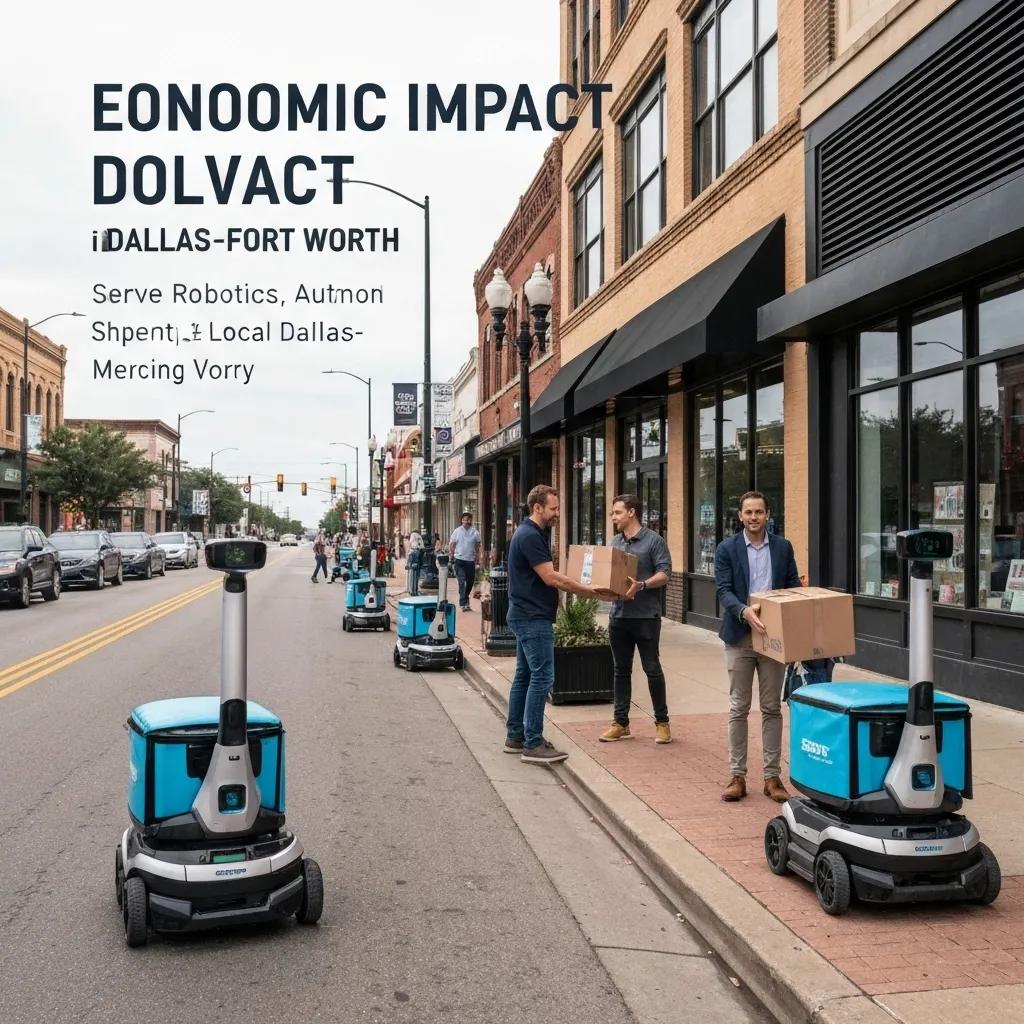
Serve Robotics delivers measurable economic growth and sustainability gains by creating new local roles and substituting carbon-intensive vehicle trips with electric robots.
How Does Serve Robotics Create Jobs and Boost the DFW Economy?
The company hires local operations staff for robot maintenance, monitoring, and customer support. Technicians, fleet managers, and remote operators form a service network, generating skilled-trade positions that strengthen Dallas-Fort Worth’s robotics employment ecosystem.
How Does Autonomous Delivery Reduce Carbon Emissions in Dallas?
Robots run on battery power with zero tailpipe emissions, replacing gas-powered cars and scooters for short-range deliveries. Annual emission reductions per robot average the equivalent of removing dozens of gas vehicles from urban roads.
What Efficiency Gains Does Serve Robotics Bring to Last-Mile Delivery?
Electric robots achieve lower per-delivery costs through automation, reducing labor and fuel expenses. Predictive routing and continuous operation cycles increase delivery density, cutting average fulfillment times by up to 30% compared to traditional couriers.
What Industry Statistics Support the Growth of Delivery Robots in Dallas?
Key metrics underscore rising adoption:
- Autonomous delivery robots market projected to reach $2.8 billion by 2030
- Sidewalk robots held 58% share of last-mile automation in 2024
- Serve Robotics aims for 2,000 units nationwide by end of 2025
- Robots have completed tens of thousands of deliveries with 99.8% success
Autonomous Delivery Robots Market Analysis
What Is the Future Outlook for Serve Robotics and Autonomous Delivery in Dallas?
Serve Robotics plans nationwide scaling and deeper Dallas integration, while regulations and market trends shape a rapidly evolving last-mile robotics landscape.
How Many Robots Does Serve Robotics Plan to Deploy Nationwide by 2025?
The company targets deploying over 2,000 AI-driven delivery robots across major U.S. metros by the end of 2025, dramatically increasing coverage and operational learnings.
What Are Serve Robotics’ Long-Term Goals for Dallas-Fort Worth?
Long-term, Serve Robotics aims to expand service areas beyond Uptown, integrate with city mobility hubs, and support multi-modal delivery networks, positioning Dallas-Fort Worth as a model smart-city deployment.
How Will Regulatory Changes Affect Autonomous Delivery in Texas?
Evolving sidewalk robot regulations in Texas focus on speed limits, operational hours, and pedestrian right-of-way. Serve Robotics engages with local agencies to shape policies that ensure safety while enabling scalable robot fleets.
What Trends Are Shaping the Last-Mile Delivery Robotics Market?
Key trends include:
- Enhanced AI for dynamic obstacle prediction
- Integration of electric cargo bikes and drones
- Rising investment in contactless logistics startups
- Smart-city initiatives driving infrastructure upgrades
These patterns will determine the pace and scope of future autonomous deployments.
What Are Common Questions About Serve Robotics’ Dallas Expansion?
Serve Robotics’ Dallas roll-out generates curiosity around service areas, technology, partnerships, and future growth. Clear answers below demystify the offering.
What Is Serve Robotics and How Does It Operate in Dallas?
Serve Robotics is an autonomous delivery company operating Gen3 sidewalk robots in Dallas-Fort Worth. Robots collect orders from partner merchants via Uber Eats and navigate pedestrian paths to deliver food and parcels.
Where Exactly Do Serve Robotics Robots Deliver in Dallas-Fort Worth?
Robots currently serve Uptown neighborhoods including Pearl, State Thomas, West Village, and South Routh, covering thousands of densely populated residences and businesses.
How Do Serve Robotics’ Delivery Robots Work Safely on Sidewalks?
The fleet uses LiDAR, stereo vision, and ultrasonic sensors to detect obstacles and people, coupled with AI-driven path planning and emergency stop functions to maintain secure operations.
Who Are Serve Robotics’ Key Partners in Dallas?
Key partners include Uber Eats for order fulfillment, Wing for drone handoffs, and merchants like Ka Thai, Shake Shack, and 7-Eleven, forming a diverse ecosystem.
What Is the Future of Delivery Robots in Urban Markets Like Dallas?
Urban areas will see expanded sidewalk robot corridors, multimodal integrations with drones and bikes, and data-driven optimizations to improve speed, cost, and sustainability of last-mile logistics.
How Can You Experience Serve Robotics’ Autonomous Delivery in Dallas?
Engaging with Serve Robotics’ service is simple—whether you’re ordering a meal, observing a robot, or exploring partnership opportunities.
How to Order Food Delivered by Serve Robotics via Uber Eats?
- Open the Uber Eats app on your smartphone.
- Select a participating restaurant in Uptown Dallas.
- Choose “Robot Delivery” at checkout if available.
- Track your order as a robot travels to your door.
These steps ensure a seamless autonomous delivery experience.
Where Can You See Serve Robotics Robots Operating in Dallas?
Robots frequently travel along McKinney Avenue in Uptown, near West Village and Pearl District storefronts. You can observe them delivering lunches midday and evening.
How to Partner with Serve Robotics as a Local Merchant?
Contact Serve Robotics through the “Partner” section on their website to discuss integration requirements, order volumes, and local marketing support. Onboarding includes API integration and staff training.
How Does Serve Robotics Support Dallas’ Smart City Initiatives?
The company collaborates with city agencies to pilot sidewalk mapping projects, test curbside loading zones, and share anonymized route data that informs urban planning, fostering a smarter, more sustainable Dallas.
Serve Robotics’ expansion into Dallas-Fort Worth marks a transformative step for last-mile food delivery, blending advanced autonomy with hyperlocal partnerships. As the fleet grows and regulations evolve, residents and businesses will benefit from faster, greener deliveries and new economic opportunities. Experience the future of urban logistics today by ordering robot delivery or exploring merchant collaborations with Serve Robotics.