How Charge-Up’s EV Charging Startup Partners with National Gas Station Chains to Expand Electric Vehicle Infrastructure
Electric vehicle charging infrastructure is rapidly becoming a cornerstone of modern transportation, and gas station operators face a critical pivot: integrate EV charging or risk obsolescence. As public charging demand surges, Charge-Up offers a strategic alliance that transforms traditional fueling sites into multi-service mobility hubs. This article examines why gas stations are embracing startups like Charge-Up, how these partnerships operate, and the tangible benefits for retailers and drivers alike. We will explore:
- The business drivers behind gas station electrification
- Charge-Up’s strategic model for rapid network deployment
- Financial, operational, and customer-centric advantages
- Implementation challenges and technology solutions
- The evolution of gas stations into sustainable mobility centers
- Real-world case studies of successful collaborations
- Actionable steps for gas station owners to partner with Charge-Up
By unpacking these themes, you’ll gain a comprehensive understanding of how Charge-Up’s clean energy solutions align with national chains to build resilient, future-proof service stations.
Why Are Gas Stations Partnering with EV Charging Startups Like Charge-Up?
Gas stations are embracing partnerships with EV charging startups because electric vehicles represent a fundamental shift in energy consumption and consumer expectations. Collaborating with a specialist like Charge-Up allows station owners to deploy high-power DC fast chargers without diverting core resources, unlocking new revenue and enhancing customer loyalty.
Why fuel retailers should add EV chargers to their gas stations – Heliox
How Is the Gas Station Business Model Evolving with EV Charging?
The traditional gas station model centered on fuel sales and ancillary store purchases is evolving into an integrated service ecosystem. By adding EV chargers alongside fuel dispensers and convenience amenities, operators diversify income streams while addressing declining gasoline volumes. Drivers charging for 20–30 minutes engage longer with on-site retail, boosting average transaction values and dwell-time purchases.
This shift also redefines site layouts: dedicated charging bays, clear signage, and real-time availability displays attract modern drivers. Emphasizing charging as a core offering transforms stations from point-of-sale venues into multi-modal destinations that cater to both ICE and EV customers, setting the stage for a broader mobility services portfolio.
What Revenue Opportunities Do EV Chargers Create for Gas Stations?

Introducing EV charging catalyzes multiple revenue streams beyond pump sales:
- Charging Fees – Generate per-kWh or per-minute income from public fast chargers.
- In-Store Sales – Extended dwell times increase convenience store transactions by up to 80%.
- Advertising and Sponsorship – Display screens at charging bays provide targeted marketing space.
- Subscription Models – Offer loyalty programs or charging memberships for recurring revenue.
- Energy Services – Leverage demand response and load management to sell grid services to utilities.
How Do Government Incentives Support Gas Station EV Charging Expansion?
Government funding programs such as the National Electric Vehicle Infrastructure (NEVI) initiative allocate grants and low-interest loans to offset installation costs. Incentives typically cover:
These financial mechanisms accelerate site deployment timelines, making EV charging an economically viable investment for national chains. Supported by clear regulatory frameworks, station owners can plan expansions with confidence and clarity.
Find EV and EV charger rebates, credits, and other incentives | ChargePoint
What Is Charge-Up’s Strategic Partnership Model with National Gas Station Chains?
Charge-Up’s strategic partnership model marries deep charging technology expertise with existing fuel retail infrastructure to achieve rapid network growth and high uptime performance. The startup assumes responsibility for charger procurement, installation, and ongoing management, allowing gas station operators to focus on customer engagement and traditional retail operations.
How Does Charge-Up Leverage Existing Gas Station Infrastructure for Rapid EV Network Growth?
Charge-Up conducts a comprehensive site assessment to identify optimal charger placement, power availability, and foot-traffic patterns. By tapping into existing high-voltage connections and coordinating with utility providers, the company streamlines permitting and reduces civil works. This approach cuts installation timelines by up to 40% compared to greenfield deployments.
Following site selection, Charge-Up deploys modular charging stations designed to integrate seamlessly into forecourt layouts. The company’s project teams manage electrical upgrades, concrete work for charger foundations, and canopy integrations where applicable, all aligned to minimal disruption of gas and store operations.
What Advanced DC Fast Charging Technologies Does Charge-Up Provide?
EV Charging Technology Explained
Electric Vehicle Charging Stations – Alternative Fuels Data Center – Department of Energy
These chargers incorporate smart thermal management and demand-charge optimization algorithms that reduce energy costs by modulating power output during peak grid events. Future firmware upgrades add compatibility with emerging vehicle protocols, ensuring long-term scalability.
How Does Charge-Up Ensure Seamless Integration and Operational Efficiency?
Charge-Up’s turnkey service includes remote monitoring, predictive maintenance, and 24/7 customer support. A centralized operations center tracks charger health metrics—such as power delivery, connector status, and fault logs—and dispatches field technicians proactively to prevent downtime.
A pilot case demonstrated a 99.5% uptime rate across 50+ stations within the first year, reflecting Charge-Up’s robust service level commitments. Integration with station point-of-sale systems enables consolidated billing and unified loyalty rewards, delivering a frictionless experience for drivers and operators alike.
How Does EV Charging Infrastructure Expansion Benefit National Gas Station Chains?
How Does EV Charging Attract and Retain Modern EV Drivers?
Offering reliable fast charging reduces range anxiety and positions the station as a trusted charging destination. Real-time availability apps and loyalty integration encourage repeat visits, while on-site amenities—such as restrooms, coffee bars, and retail promotions—enhance driver satisfaction during the charging interval. Stations with charging services report a 20% increase in new customer acquisition within the first six months of deployment.
In What Ways Does EV Charging Enhance Brand Image and Sustainability Goals?
Installing zero-emission charging aligns station operators with corporate sustainability pledges and ESG benchmarks. Publicizing carbon offset contributions from renewable energy sources elevates brand reputation among environmentally conscious consumers. Featuring solar canopies or battery energy storage systems further signals commitment to clean energy leadership, differentiating the chain in a competitive retail landscape.
What Are the Financial and Operational Incentives for Gas Stations?
- Capital Subsidies – Lower upfront investment through layered incentives.
- Energy Savings – Smart charging reduces peak demand charges by up to 25%.
- Operational Efficiency – Remote diagnostics cut on-site service times by half.
- Higher Spending – Extended dwell time drives store sales and foodservice revenue.
These incentives deliver a strong internal rate of return, often exceeding 15% within the first three years, while future-proofing assets against declining fuel consumption trends.
How Is Charge-Up Addressing Challenges in Gas Station EV Charging Deployment?
What Are the Site Planning and Installation Considerations for Gas Stations?
Site planning must account for power availability, forecourt layout, traffic flow, and safety setbacks. Charge-Up engineers conduct grid impact studies, coordinate transformer upgrades, and model traffic patterns to ensure fast chargers do not impede fueling lanes. Permitting teams handle local approvals and environmental assessments, streamlining the critical path to operation.
How Does Smart Charging Technology Optimize Energy Use and Costs?
Smart charging platforms dynamically adjust power delivery based on real-time grid conditions and on-site load profiles. By integrating battery storage or leveraging vehicle-to-grid functionality, Charge-Up can shift loads away from peak hours, capturing demand response incentives. This energy orchestration reduces operational expenses and shields operators from utility demand charges.
What Are the Typical Charging Times and User Expectations at Gas Stations?
Modern DC fast chargers can replenish 80% battery charge in 20–30 minutes for most EV models. Drivers expect reliable uptime, user-friendly interfaces, and clear pricing structures. Charge-Up’s stations feature intuitive touchscreens, contactless payment, and smartphone app integration to meet these expectations, ensuring a seamless and predictable charging experience.
What Is the Future of Gas Stations as Mobility Hubs with Charge-Up Partnerships?
How Will Convenience Store Amenities Integrate with EV Charging Services?
Enhanced hospitality offerings—such as grab-and-go cafes, co-working pods, and restroom lounges—cater to the 20–40 minute dwell time during charging. By crafting curated retail experiences around driver needs, station operators increase per-visit spending and foster brand loyalty. Ambient charging areas equipped with seating and Wi-Fi transform stations into community gathering points.
What Role Does Charge-Up Play in Building Sustainable Transportation Ecosystems?
Charge-Up extends beyond hardware deployment to enable ecosystem partnerships with renewable energy providers, ride-sharing platforms, and municipal fleets. Through coordinated data sharing and API integrations, the startup facilitates multi-stakeholder charging networks that support public transit electrification and community charging initiatives, catalyzing a broader shift toward zero-emission mobility.
How Are Gas Stations Transforming Beyond Fueling with EV Charging Networks?
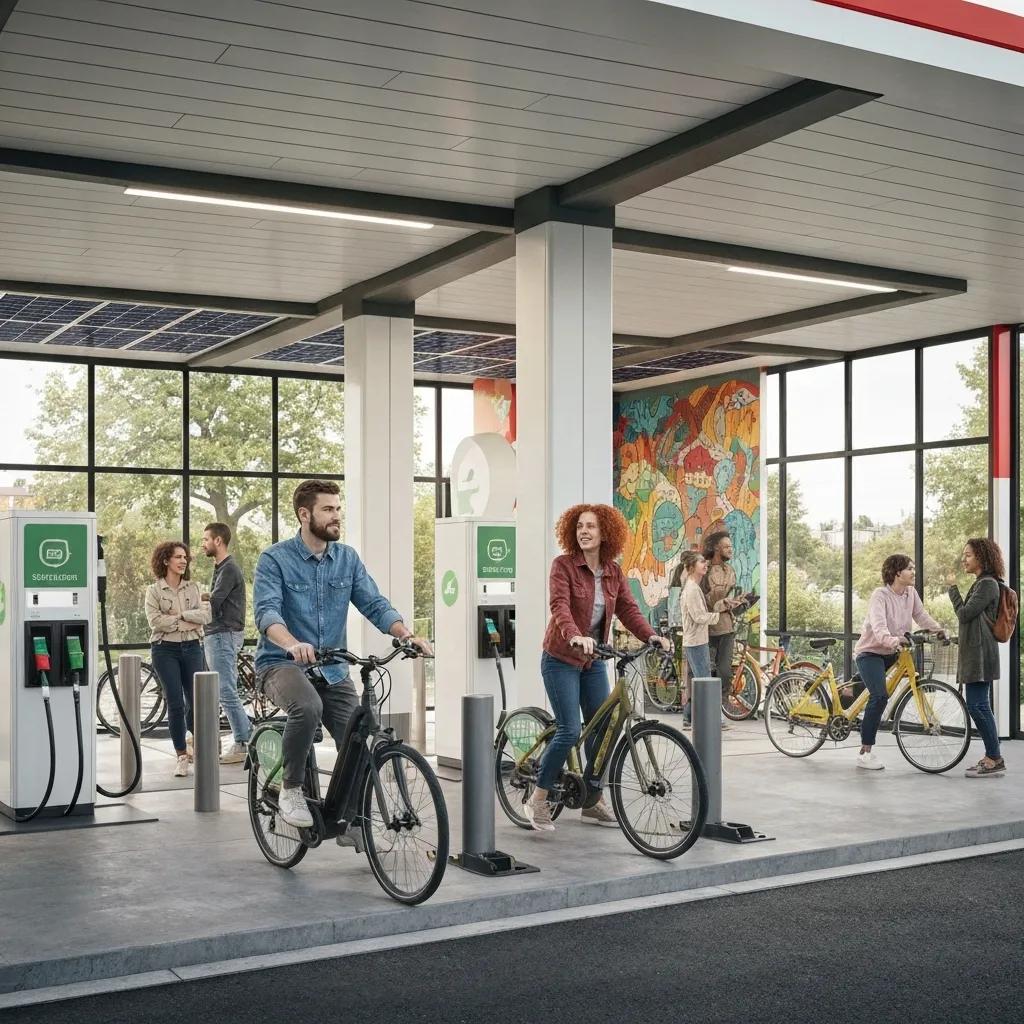
By adopting charging services, stations become gateways for diversified mobility offerings—including bike-share docking, e-scooter parking, and micro-grid storage. Charge-Up’s modular infrastructure can host additional energy assets like solar canopies and on-site batteries, creating self-sufficient energy hubs. This transformation positions gas stations at the center of local transportation and energy ecosystems.
What Are Successful Case Studies of Charge-Up’s Partnerships with Gas Station Chains?
Which National Gas Station Chains Have Partnered with Charge-Up?
The Top 8 Gas Station Retailers Expanding into EV Charging
What ROI and Business Growth Have Gas Stations Experienced?
In one pilot, a 100-site rollout achieved:
- 18% increase in ancillary store sales
- 12% growth in overall site revenue within 12 months
- Return on investment in under 3 years due to capital incentives and operational savings
These metrics underscore the strong financial case for charging deployments as a core retail strategy.
How Do These Partnerships Improve the EV Driver Experience?
Driver surveys across multiple sites report a 4.8-out-of-5 satisfaction rating for charger reliability, ease of use, and amenities. Real-time app notifications and integrated loyalty rewards further cement positive impressions, leading to repeat visits and word-of-mouth recommendations that amplify network utilization.
How Can Gas Station Owners Start Partnering with Charge-Up for EV Charging?
What Is the Process for Installing Charge-Up EV Chargers at Gas Stations?
- Site Assessment – Charge-Up engineers evaluate electrical capacity, traffic flow, and retail layout.
- Agreement & Funding – Collaboration on incentive applications and project financing.
- Installation & Commissioning – Managed civil works, electrical upgrades, and system testing ensure a turnkey launch.
Following installation, operators receive full training on station management tools and customer interface features.
Which Government Incentives and Grants Can Gas Stations Access?
Charge-Up’s funding specialists guide operators through:
- NEVI program applications and compliance requirements
- State-level rebate submissions and matching funds
- Federal tax credit filing for qualifying infrastructure investments
This support ensures station owners capture the maximum available financial benefits and accelerate payback timelines.
How Does Charge-Up Support Ongoing Operations and Maintenance?
- 24/7 remote monitoring and fault diagnostics
- Predictive maintenance scheduling and on-site technician dispatch
- Software updates and network security management
- Periodic performance reviews and optimization recommendations
This end-to-end support maintains peak uptime and drives long-term customer satisfaction.
Partner with Charge-Up today to transform your fuel retail locations into sustainable mobility hubs. By combining our advanced charging technology with your site’s strategic footprint, you’ll unlock new revenue streams, enhance customer loyalty, and position your brand as a leader in the transition to electric transportation. Explore a partnership that empowers both your business and the communities you serve to charge confidently into the future.