Nexus Worlds Play-to-Own Metaverse Platform: Discover True Digital Asset Ownership and Immersive Web3 Gaming
Imagine entering a virtual universe where every sword, parcel of land, and avatar accessory you earn or buy belongs to you forever, backed by blockchain verifiability. Nexus Worlds introduces a revolutionary play-to-own metaverse platform that empowers players with genuine digital ownership, immersive environments, and a thriving Web3 economy. In this guide, you will learn what play-to-own gaming is and how it differs from play-to-earn, explore the core features of Nexus Worlds’ virtual world, discover how NFTs secure assets, examine the player-driven economy and community governance, dive into the underlying Web3 infrastructure, and follow simple steps to join and invest in this next-generation gaming startup.
What Is Play-to-Own Gaming and How Does It Empower Players?
Play-to-own gaming is a model that empowers players by granting verifiable digital asset ownership through blockchain-based NFTs, ensuring in-game achievements and purchases yield lasting value and control. By shifting from license-based possession to true ownership, this concept transforms entertainment into an investment opportunity where every asset can be traded, rented, or leveraged across experiences. For example, when a player acquires a virtual sword in Nexus Worlds, its NFT remains in their wallet regardless of game updates or server changes, promoting long-term engagement and real-world liquidity. Understanding this ownership paradigm sets the stage for comparing play-to-own to play-to-earn mechanics.
How Does Play-to-Own Differ from Play-to-Earn Models?
Play-to-own differentiates itself from play-to-earn by prioritizing permanent asset control over ephemeral reward structures. In play-to-earn, players accumulate tokens or in-game currency through gameplay that can be cashed out, but ownership of digital items often remains with the platform. In contrast, play-to-own ensures that acquired items—land, skins, equipment—are minted as NFTs, giving players full disposal rights. This ownership model:
- Enhances player empowerment by removing centralized revocation of assets.
- Promotes sustained community growth as assets retain value beyond gameplay sessions.
- Encourages creativity since owned items can be modified, lent, or integrated into other interoperable environments.
By delivering asset sovereignty, play-to-own closes a gap in traditional play-to-earn approaches and lays the foundation for deeper virtual economies.
What Are the Benefits of True Digital Ownership in Nexus Worlds?

True digital ownership in Nexus Worlds boosts player agency, financial potential, and creativity by ensuring that every NFT asset can be managed independently of the game client. Ownership empowers players to:
- Monetize assets on secondary markets for real-world profit.
- Lease virtual land or equipment to other participants, generating passive income.
- Transfer NFTs across supported metaverses, unlocking cross-platform experiences.
This level of control enhances engagement, drives economic growth, and positions digital assets as genuine investments. Recognizing these benefits leads us to examine which types of assets players can own.
Which Types of Digital Assets Can Players Own in Nexus Worlds?
Nexus Worlds offers a diverse range of NFT assets that players can acquire, trade, and utilize. The table below outlines core asset categories and their utilities:
These asset types fuel a dynamic ecosystem where ownership drives value creation and social interaction, paving the way for the immersive build tools we’ll explore next.
How Does Nexus Worlds Create an Immersive Play-to-Own Metaverse Experience?
Nexus Worlds crafts an immersive metaverse by combining realistic physics, seamless social interaction, and true asset ownership through NFTs, resulting in a virtual universe where players shape and inhabit living worlds. Advanced rendering, spatial audio, and dynamic events bring environments to life, while blockchain underpins every transaction. This fusion of cutting-edge entertainment and decentralized technology ensures each session feels meaningful and rewarding. By understanding these core features, we can appreciate how the platform fosters creativity and monetization through user-generated content.
What Features Define the Nexus Worlds Virtual World and User Interaction?
Nexus Worlds’ virtual environment offers five defining features that elevate immersion and engagement:
- Persistent Physics – Real-time collision, gravity, and environmental effects enhance realism.
- Spatial Audio – Directional sound supports team strategies and social events.
- Dynamic Events – Live concerts, quest festivals, and NFT art launches keep the world evolving.
- Cross-Platform Access – Play on PC, VR headsets, or mobile without losing ownership data.
- Avatar Customization – Deep personalization with wearable NFTs and morphable character models.
These features converge to create an interactive universe where player choices shape every corner, leading to a thriving ecosystem of user-driven creativity.
How Does User-Generated Content Enhance Player Creativity and Monetization?
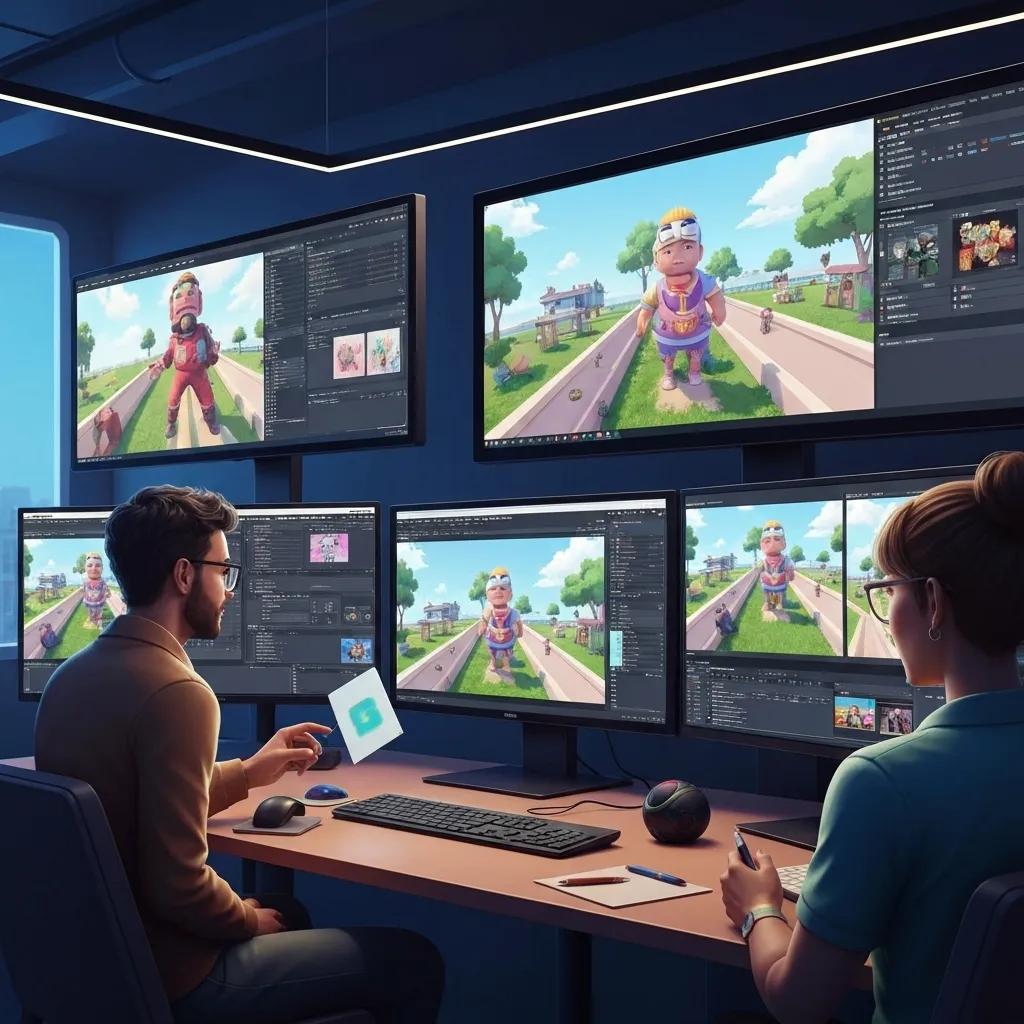
Enabling user-generated content (UGC) lets players become architects, artists, and entrepreneurs within Nexus Worlds. By providing intuitive creation tools, the platform encourages:
- Custom Quest Design – Users script scenarios that reward participants with unique NFTs.
- Virtual Architecture – Builders design and sell structures, landscapes, and interactive exhibits.
- Digital Merchandise – Artists mint wearable NFTs and digital art for marketplace sale.
These creative outlets unlock new revenue streams, foster community collaboration, and diversify the virtual economy. As creators explore the full potential of UGC, they rely on specialized toolkits to bring their visions to life.
What Tools Are Available for Building and Creating Within Nexus Worlds?
Players can leverage a suite of modular tools for content creation:
- Voxel Builder – Drag-and-drop environment editor for rapid prototyping.
- Script Studio – Visual scripting interface to define game mechanics and quests.
- NFT Minting Panel – One-click NFT generation with metadata customization.
- Marketplace Integrator – Built-in tools for listing, auctioning, and royalty management.
With these toolkits, new creators seamlessly produce, mint, and monetize assets, fueling the platform’s growth and innovation. The robust creation ecosystem naturally extends into secure NFT integration.
How Are NFTs Integrated to Secure Digital Asset Ownership in Nexus Worlds?
In Nexus Worlds, NFTs represent every unique digital item, land parcel, and wearable, providing cryptographic proof of ownership, provenance, and scarcity on the blockchain. By tokenizing assets, the platform guarantees that players hold indisputable rights, prevents unauthorized duplication, and enables transparent transfers. This NFT backbone fortifies digital property while unlocking peer-to-peer trading and interoperability. Exploring how NFTs represent assets reveals their central role in the metaverse economy.
What Role Do NFTs Play in Representing In-Game Items and Virtual Land?
NFTs in Nexus Worlds act as non-fungible certificates that record:
- Item Metadata – Attributes like rarity, level, and special effects.
- Ownership History – Immutable transaction records tracing each asset’s journey.
- Usage Rights – Permissions for modification, lending, or cross-platform deployment.
By encapsulating item properties on-chain, NFTs ensure that virtual land deeds, rare weapons, and avatar enhancements remain unique and verifiable. This trust layer underpins all economic activities and community interactions.
How Does the Nexus Worlds NFT Marketplace Facilitate Trading and Value Creation?
The integrated NFT marketplace in Nexus Worlds streamlines peer-to-peer trading with features designed for liquidity and fairness:
- Auction Mechanisms – English and Dutch auctions for dynamic price discovery.
- Royalty Settings – Creators earn a percentage of secondary sales automatically.
- Escrow Services – Smart contracts hold assets until payment is confirmed.
- Bulk Listings – Batch minting and sale interfaces for high-volume creators.
These mechanisms foster vibrant commerce, reward creativity, and reinforce asset value over time.
What Drives the Player-Driven Virtual Economy in Nexus Worlds?
The player-driven economy in Nexus Worlds thrives on decentralized ownership, transparent tokenomics, and community-led resource allocation, resulting in a sustainable marketplace where supply and demand are balanced by active participants. Blockchain-enabled tokens, NFT trading, and UGC monetization fuel continuous value creation, while governance structures safeguard economic health. Investigating the technological underpinnings reveals how sustainability is maintained.
How Does Blockchain Technology Support a Sustainable Virtual Economy?
Blockchain technology sustains the economy by providing:
- Immutable Ledgers – Transparent transaction history prevents fraud and inflation.
- Programmable Tokens – In-game currency and governance tokens with capped supply.
- Automated Audits – Smart contracts monitor token flows and flag anomalies.
This secure infrastructure reduces centralized risk, ensures predictable token issuance, and supports trust among participants. A stable foundation enables multiple earning and trading mechanisms.
What Are the Mechanisms for Earning, Trading, and Creating Value in Nexus Worlds?
Players engage in economic activities through three core mechanisms:
- Play-Based Rewards – Completing quests, tournaments, and events grants token and NFT rewards.
- Marketplace Transactions – Buying, selling, and leasing NFTs generates direct income.
- Content Creation Royalties – UGC creators earn royalties each time their assets change hands.
These parallel pathways encourage diverse participation and reward both gamers and creators, ensuring a resilient economic cycle. Balancing token supply and demand remains vital to prevent inflationary drift.
How Does Nexus Worlds Address Tokenomics and Inflation Concerns?
To maintain healthy token value, Nexus Worlds implements:
- Capped token issuance schedules tied to in-game milestones.
- Burn mechanisms that retire a portion of transaction fees.
- Staking incentives that lock tokens in governance pools.
- Dynamic fee adjustments based on network activity.
These measures stabilize token supply, reward long-term participation, and sustain purchasing power, leading naturally to how community governance steers future evolution.
How Does Community Governance Shape the Future of Nexus Worlds?
Community governance in Nexus Worlds shifts decision-making power from centralized operators to the players themselves, using decentralized autonomous organizations (DAOs) that propose, vote, and fund platform enhancements. By aligning incentives and enabling stakeholder participation, this governance model ensures that the metaverse evolves according to collective vision and real-time feedback. Understanding DAO mechanics clarifies how players influence development.
What Is the Role of DAOs in Player Decision-Making and Platform Evolution?
DAOs in Nexus Worlds function as on-chain councils where governance token holders can:
- Submit proposals for new features, events, or economic adjustments.
- Vote on roadmap priorities using weighted voting rights.
- Allocate community treasury funds to development, marketing, or partnerships.
This transparent framework empowers participants to co-create the metaverse roadmap, increasing engagement and trust in the platform’s direction. As governance evolves, individual player voices gain tangible impact.
How Are Players Empowered to Influence Nexus Worlds Development?
Players influence the platform through:
- Proposal Creation Tools – Intuitive interfaces for drafting and sharing improvement ideas.
- Voting Rewards – Earn governance tokens by participating in decision cycles.
- Feedback Channels – Community forums, surveys, and live discussion events.
These empowerment pathways ensure that Nexus Worlds adapts to user needs and industry trends, setting the stage for the advanced Web3 technologies that power security and interoperability.
What Web3 and Blockchain Technologies Power Nexus Worlds’ Play-to-Own Platform?
Nexus Worlds leverages a multi-layered Web3 stack—including scalable Layer-2 solutions, cross-chain bridges, and decentralized storage—to deliver security, transparency, and seamless interoperability. By integrating zero-knowledge proofs, sidechains, and token standards, the platform ensures that every transaction is efficient, auditable, and portable across virtual environments. Evaluating these innovations highlights the competitive edge of the Nexus Worlds infrastructure.
How Does Web3 Integration Ensure Security, Transparency, and Interoperability?
Web3 integration in Nexus Worlds employs:
- Layer-2 Scaling – Off-chain processing reduces gas fees and latency.
- Cross-Chain Bridges – Enables asset transfers between Ethereum, Polygon, and other networks.
- Decentralized Storage – IPFS and Arweave host NFT metadata and game assets immutably.
- Smart Contract Audits – Third-party reviews guarantee contract integrity.
This technological combination secures player assets, provides clear audit trails, and allows NFTs to migrate across metaverses, reinforcing the play-to-own vision.
What Blockchain Innovations Differentiate Nexus Worlds from Competitors?
Nexus Worlds stands apart by introducing:
- Interoperable Asset Standard – A universal token protocol for cross-platform functionality.
- Dynamic NFT Upgrades – Smart NFTs that evolve attributes based on usage or achievements.
- Composable Royalty Framework – Configurable royalty splits for collaborative creations.
These breakthroughs empower players and creators with flexible ownership models that extend beyond conventional virtual worlds, naturally inviting new participants and investors to get involved.
How Can New Players and Investors Get Started with Nexus Worlds?
Joining Nexus Worlds is straightforward: create an account, set up a Web3 wallet, acquire initial tokens, and explore the metaverse. Investors can evaluate tokenomics, asset value trends, and governance proposals to make informed decisions about long-term participation. This accessible onboarding process ensures that both gamers and backers can seamlessly integrate into the ecosystem.
What Are the Steps to Join and Participate in the Nexus Worlds Metaverse?
To begin your Nexus Worlds journey:
- Register an Account – Sign up with email and verify identity.
- Connect a Wallet – Link MetaMask or WalletConnect for NFT custody.
- Acquire Genesis Tokens – Purchase platform tokens via supported exchanges.
- Enter the World – Download the client, claim a starter parcel, and start exploring.
- Engage and Earn – Complete quests, trade NFTs, and join community events.
These steps streamline entry for new players and encourage immediate engagement, leading to investment opportunities.
How Can Investors Benefit from Nexus Worlds’ Play-to-Own Model?
Investors gain multiple advantages from the play-to-own framework:
- Appreciating Asset Values – Rarity-driven NFTs often increase in demand.
- Secondary Market Liquidity – Active trading provides exit options.
- Governance Participation – Early backers influence platform direction and unlock rewards.
- Staking Incentives – Lock tokens to earn additional returns and governance privileges.
By aligning player interests with investor outcomes, Nexus Worlds creates a sustainable ecosystem where both communities thrive.
Nexus Worlds’ play-to-own metaverse platform redefines digital entertainment by fusing immersive gameplay, blockchain security, and genuine asset ownership. Through NFT integration, a robust virtual economy, community-driven governance, and advanced Web3 infrastructure, the platform empowers players and investors alike. Whether you’re a creator minting your first digital asset or a backer seeking emerging opportunities, Nexus Worlds offers a transformative environment where virtual achievements translate into real-world value. Step into the future of gaming and claim your stake in this new era of Web3 entertainment.