Secret Service Counterfeit Investigations: How Large-Scale Counterfeit Currency Operations Are Detected and Disrupted
Every year, millions of counterfeit U.S. dollars enter circulation, threatening economic stability and public trust in the nation’s currency. The United States Secret Service investigates and suppresses these large-scale operations by combining intelligence gathering, undercover operations, and forensic analysis to protect the integrity of the U.S. dollar. In this article, you will learn about the Secret Service’s historical mandate and current financial crime missions, the anatomy of organized counterfeit rings, practical detection methods and public awareness strategies, the economic fallout from fake bills, inter-agency and international cooperation, cutting-edge technologies in crime prevention, and the legal consequences facing counterfeiters.
What Is the Role of the United States Secret Service in Combating Counterfeit Currency?
The United States Secret Service is a federal law enforcement agency founded in 1865 to investigate counterfeiting, safeguard the nation’s financial system, and protect national leaders. Through specialized financial crime units, undercover operations, and collaboration with printing authorities, the Secret Service dismantles complex networks producing forged currency. This mission preserves economic security and public confidence.
How Was the Secret Service Founded to Fight Counterfeiting?
The Secret Service was established under the Department of the Treasury in 1865 after an estimated one-third of all U.S. currency in circulation was counterfeit. Agents were empowered to track printing presses and arrest operators, establishing a national presence that laid the groundwork for modern financial crime investigations and economic protection.
Secret Service’s Role in Counterfeit Investigations
What Are the Secret Service’s Current Missions in Financial Crime Prevention?
Today, the Secret Service’s financial crime division investigates counterfeiting alongside cyber-enabled fraud, identity theft, and money laundering. Agents employ digital forensics, financial intelligence, and global liaison officers to identify criminal hierarchies and suppress illicit printing facilities, improving the resilience of the U.S. currency design.
Which Federal Agencies Collaborate with the Secret Service on Counterfeit Investigations?
The Secret Service partners with the Federal Bureau of Investigation, U.S. Customs and Border Protection, the Department of the Treasury’s Bureau of Engraving and Printing, and the Financial Crimes Enforcement Network. This inter-agency cooperation enhances information sharing, provides rapid currency authentication, and strengthens joint task forces, ensuring swift raids on counterfeit labs.
How Do Large-Scale Counterfeit Currency Operations Function?
Large-scale counterfeit currency operations produce high-quality fake bills by exploiting advanced printing technologies, reputable materials, and organized distribution networks. Criminal enterprises coordinate specialized roles—from master printers to money mules—to circulate bogus notes domestically and abroad, challenging law enforcement’s ability to intercept fraudulent currency at every stage.
Who Are the Key Players in Organized Counterfeit Crime Networks?
- Master Printer – Oversees plate creation and intaglio processes.
- Financier – Funds equipment purchases and raw materials.
- Distributor – Moves large currency shipments via concealment or ports.
- Passers – Introduce small batches of counterfeit bills into commerce.
- Money Mules – Launder proceeds through shell accounts or cash exchanges.
What Printing Techniques and Materials Are Used in High-Quality Fake Money?
Counterfeiters leverage sophisticated printing processes and near-authentic materials to mimic genuine banknotes. Below is a comparison of legitimate vs. illicit methods:
How Do Distribution Networks Spread Counterfeit Currency Domestically and Internationally?
Counterfeit rings exploit multiple distribution channels to introduce fake bills:
- Dark web marketplaces facilitate bulk sales and cross-border payments.
- Illicit freight shipments conceal currency in legitimate cargo.
- Street-level passers exchange small batches in local commerce.
- Shell companies launder proceeds through financial institutions.
What Are Notable Case Studies of Major Counterfeit Currency Busts?
High-profile investigations highlight successful enforcement strategies:
- Operation Royal Accent (2002–2005): Secret Service and Europol halted a superdollar ring valued at $4.5 million.
- CBP Philadelphia Seizure (May 2023): Officers intercepted $15 million in counterfeit U.S. bills en route from overseas.
- Federal Task Force Raid (November 2024): Joint FBI–Secret Service action dismantled a printing lab producing fake $100 notes with intaglio presses.
How Can You Detect Counterfeit Currency? Security Features and Public Awareness
Detecting fake bills relies on understanding official security features, employing simple tools, and reporting suspicious notes. Public awareness campaigns and business screening protocols support frontline prevention and deter circulation of counterfeit money.
What Are the Key Security Features of U.S. Currency to Identify Fake Bills?
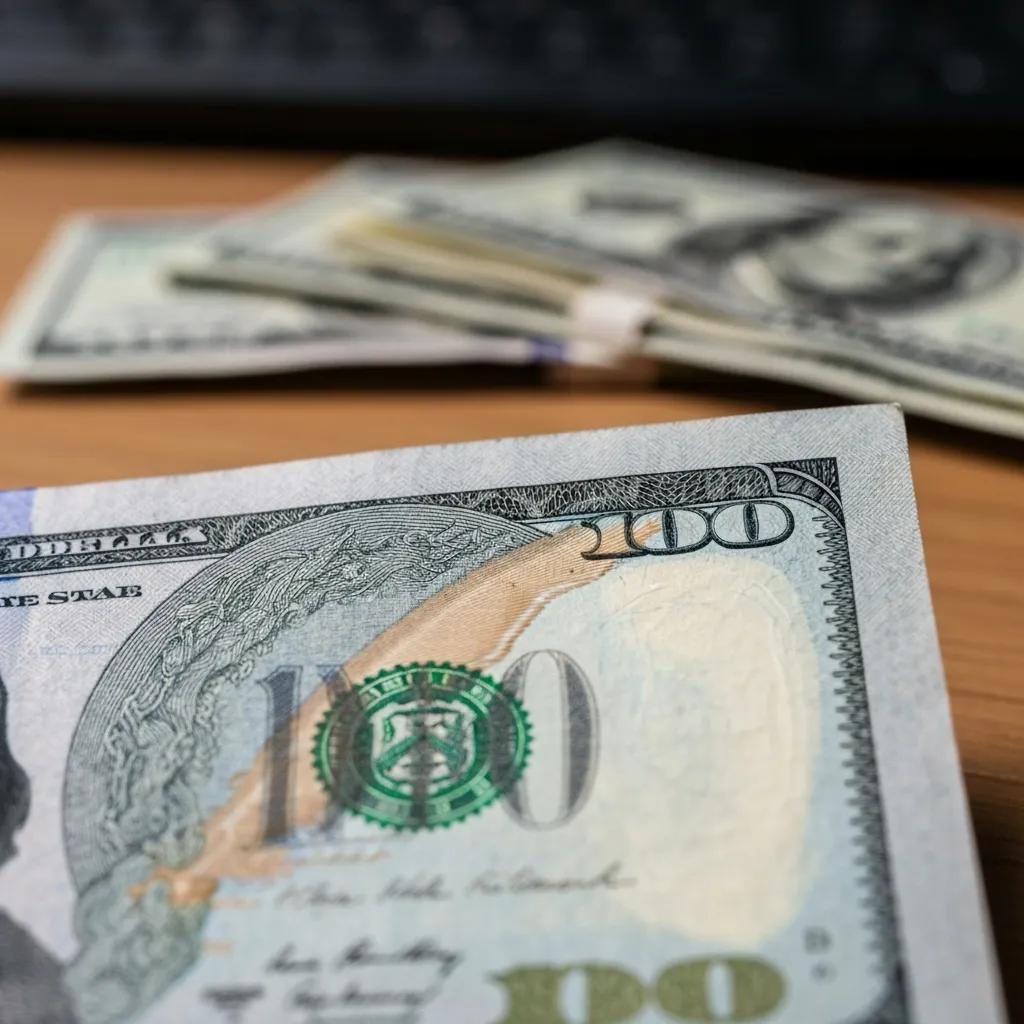
- Watermarks showing portrait-matching images when held to light.
- Security threads that fluoresce under ultraviolet light.
- Color-shifting ink on denomination numerals visible at varying angles.
- Microprinting along borders and in portrait frames.
- Raised printing that produces fine textures detectable by touch.
Which Tools and Techniques Help the Public and Businesses Spot Counterfeit Money?
- UV Light Scanners: Reveal embedded threads and fibers.
- Magnetic Ink Detectors: Identify authentication ink formulations.
- Counterfeit Detection Pens: React chemically to currency paper blend.
- Automated Bill Counters: Flag inconsistent thickness or size.
Counterfeit Detection Techniques
Using multiple detection layers improves accuracy and reduces reliance on any single method, strengthening routine currency screening.
What Should You Do If You Suspect You Have Received Counterfeit Currency?
- Handle the note minimally to preserve forensic evidence.
- Compare it with a known genuine bill for discrepancies.
- Report to your local Secret Service field office or law enforcement agency.
- Provide transaction details, merchant information, and any witness accounts.
Prompt reporting ensures rapid investigation and prevents further circulation of fraudulent currency, reinforcing financial system integrity.
What Is the Economic Impact of Counterfeit Currency on the U.S. Financial System?
Counterfeit currency undermines monetary stability, reduces consumer confidence, and can finance other illicit enterprises. By distorting currency supply, fake bills introduce inflationary pressures and erode the effectiveness of monetary policy.
The Impact of Counterfeit Money on the Economy
How Does Counterfeiting Affect Inflation and Currency Value?
- Push up consumer prices by diluting genuine currency.
- Hamper Federal Reserve efforts to regulate money supply.
- Force businesses to absorb losses or raise prices, compounding inflation.
In What Ways Does Fake Money Undermine Public Trust and Financial Stability?
- Erodes trust in cash transactions and financial institutions.
- Raises transaction costs as businesses invest in screening systems.
- Discourages cross-border trade due to currency authenticity concerns.
How Does Counterfeit Currency Fund Other Illicit Activities Like Drug Trafficking and Terrorism?
- Finance narcotics distribution networks.
- Support money laundering operations that conceal illicit funds.
- Underwrite extremist or terrorist activities seeking untraceable funding.
How Do Law Enforcement Agencies Collaborate to Combat Counterfeit Currency Operations?

Joint operations and intelligence sharing among federal and international partners enhance enforcement efficiency, enabling real-time tracking, rapid raids, and coordinated prosecutions against counterfeit rings.
What Roles Do the FBI, CBP, and Treasury Department Play Alongside the Secret Service?
- Secret Service: Leads financial crime investigations and undercover operations.
- FBI: Provides counter-terrorism support and forensic profiling of criminal networks.
- CBP: Intercepts counterfeit shipments at ports of entry and assesses border threats.
- Treasury Department: Oversees currency design and works with the Bureau of Engraving and Printing on advanced security features.
How Do Joint Task Forces and Intelligence Sharing Enhance Counterfeit Investigations?
Joint task forces bring together specialized agents from multiple agencies to:
- Pool financial intelligence and criminal databases.
- Synchronize undercover and surveillance operations.
- Share forensic laboratories and technical experts.
What Is the Role of International Partners Like Europol and Interpol in Fighting Counterfeiting?
Europol and Interpol facilitate cross-border cooperation by:
- Issuing global alerts on emerging counterfeit trends.
- Coordinating multinational sting operations and currency interceptions.
- Providing shared databases of known counterfeit specimens for rapid authentication.
What Advanced Technologies Are Used in Counterfeit Detection and Financial Crime Prevention?
Emerging technologies—artificial intelligence, forensic analysis tools, and big data analytics—are revolutionizing the speed and accuracy of counterfeit currency detection and the disruption of financial crime networks.
How Is Artificial Intelligence and Machine Learning Applied to Detect Fake Currency?
AI models analyze high-resolution bill images to detect microvariations in ink distribution, paper texture, and print patterns. Machine learning algorithms continuously improve by learning from confirmed counterfeit samples, enabling quicker screening and predictive risk scoring for suspicious transactions.
What Forensic Analysis Techniques Are Employed to Examine Counterfeit Notes?
Forensic laboratories use a series of scientific tests to verify authenticity:
- Spectroscopic Imaging: Examines ink composition and trace elements.
- Microscopic Fiber Analysis: Identifies unique paper fiber profiles.
- Chemical Reagents: Reveal counterfeit ink formulas under controlled reactions.
How Do Data Analytics and Cybercrime Investigations Support Counterfeit Operations Disruption?
Big data platforms aggregate financial transaction records, border seizure logs, and dark-web communications to map criminal networks. By correlating disparate data points, analysts uncover hidden money flows and anticipate ring movements, enabling targeted enforcement that disrupts counterfeit supply chains.
What Are the Legal Penalties and Federal Enforcement Actions Against Counterfeiters?
Counterfeiting U.S. currency is a federal offense carrying severe punishments enforced under Title 18 of the U.S. Code, including imprisonment and substantial fines intended to deter economic crimes.
What Federal Laws Govern Counterfeiting and Financial Crime?
Key statutes include:
- 18 U.S.C. § 471: Prohibits the creation, distribution, or possession of counterfeit currency.
- 18 U.S.C. § 472: Addresses the making of U.S. obligations and securities without authority.
- 18 U.S.C. § 493: Imposes penalties for possessing or uttering counterfeit obligations.
Federal Laws on Counterfeiting
How Are Arrests and Raids Conducted in Large-Scale Counterfeit Operations?
Federal agents plan multi-agency raids by gathering intelligence on production sites, securing search warrants, and coordinating simultaneous entries to prevent evidence destruction. Arrest teams often deploy tactical units alongside financial investigators to seize printing presses, raw materials, and digital records in a single operation.
What Are Typical Sentences and Fines for Convicted Counterfeiters?
Sentencing reflects the scale of the operation and monetary loss:
Counterfeit currency poses a persistent threat to the U.S. financial system, but through specialized Secret Service investigations, inter-agency cooperation, advanced detection tools, and rigorous prosecution, large-scale operations are steadily diminished. Continuous innovation in security features and forensic technology, combined with public vigilance, remains essential to preserving the integrity of the U.S. dollar and safeguarding economic stability.