Chicago Police Seize Ghost Guns and Fentanyl in Major Gang Takedown: Comprehensive Overview and Impact
Chicago’s latest multi-agency operation resulted in the seizure of over 100 unserialized firearms and 50 pounds of fentanyl-laced narcotics, marking one of the largest gang takedowns in recent history.
This detailed analysis reveals how ghost guns and synthetic opioids endanger communities, outlines CPD’s investigative strategy, and examines the broader implications for public safety.
Readers will gain clear insights into:
- The nature and threat of ghost guns in Chicago.
- Fentanyl trafficking channels and health impacts.
- Key gangs targeted and their criminal networks.
- Law enforcement tactics, collaboration, and legal reforms.
- Community responses and prevention initiatives.
Understanding the interplay of illicit firearms, narcotics, and organized crime lays the foundation for enhanced crime prevention and citizen engagement.
What Are Ghost Guns and Why Are They a Growing Threat in Chicago?
Ghost guns are privately manufactured, unserialized firearms that evade traditional traceability systems because they lack government-issued serial numbers. Their unregulated production and concealability fuel criminal misuse, as seen in numerous Chicago shootings.
For example, a series of summer assaults linked to 3D-printed ghost pistols underscores why law enforcement prioritizes disrupting illicit supply chains.
This research supports the article’s discussion on the nature and threat of ghost guns in Chicago, highlighting their role in evading traditional traceability systems and contributing to criminal misuse.
What Defines an Unserialized Firearm or Ghost Gun?
Ghost guns are defined by the absence of a factory-applied serial number, rendering them invisible to federal firearms registries. They consist of frames or receivers produced via 3D printing or kit assembly that require minimal machining. This design allows offenders to bypass background checks and tracking mechanisms, directly contributing to armed violence.
How Are Ghost Guns Manufactured and Distributed in Chicago?
Ghost gun kits enter Chicago through underground networks and online marketplaces before being assembled in clandestine workshops.
These kits are often stored in safe houses near gang territories before rapid deployment to armed crews. The streamlined supply line heightens criminal access and accelerates violence.
What Is the Legal Status of Ghost Guns in Illinois?
Illinois classifies ghost guns as illegal firearms, requiring serial numbers and background checks for all gun transfers.
Despite clear statutes, enforcement challenges arise from concealed workshops and rapid kit assembly, necessitating robust search warrant practices and inter-agency coordination.
How Do Ghost Guns Contribute to Gang Violence and Crime?
- They enable rapid armament of new recruits without paper trails.
- Their anonymity obstructs ballistics tracing, impeding homicide investigations.
- Low cost and easy assembly increase weapon saturation in high-crime neighborhoods.
These factors magnify the lethality of disputes and weaken community trust in public safety measures.
How Is Fentanyl Trafficked and Impacting Chicago Communities?
Fentanyl, a potent synthetic opioid, is trafficked in micro-shipments concealed within legitimate commercial goods or through personal couriers. Its extreme toxicity and low dosage threshold make every distribution network a public health hazard, as overdose fatalities spike across Chicago’s West and South Sides.
What Are the Primary Fentanyl Trafficking Routes in Chicago?
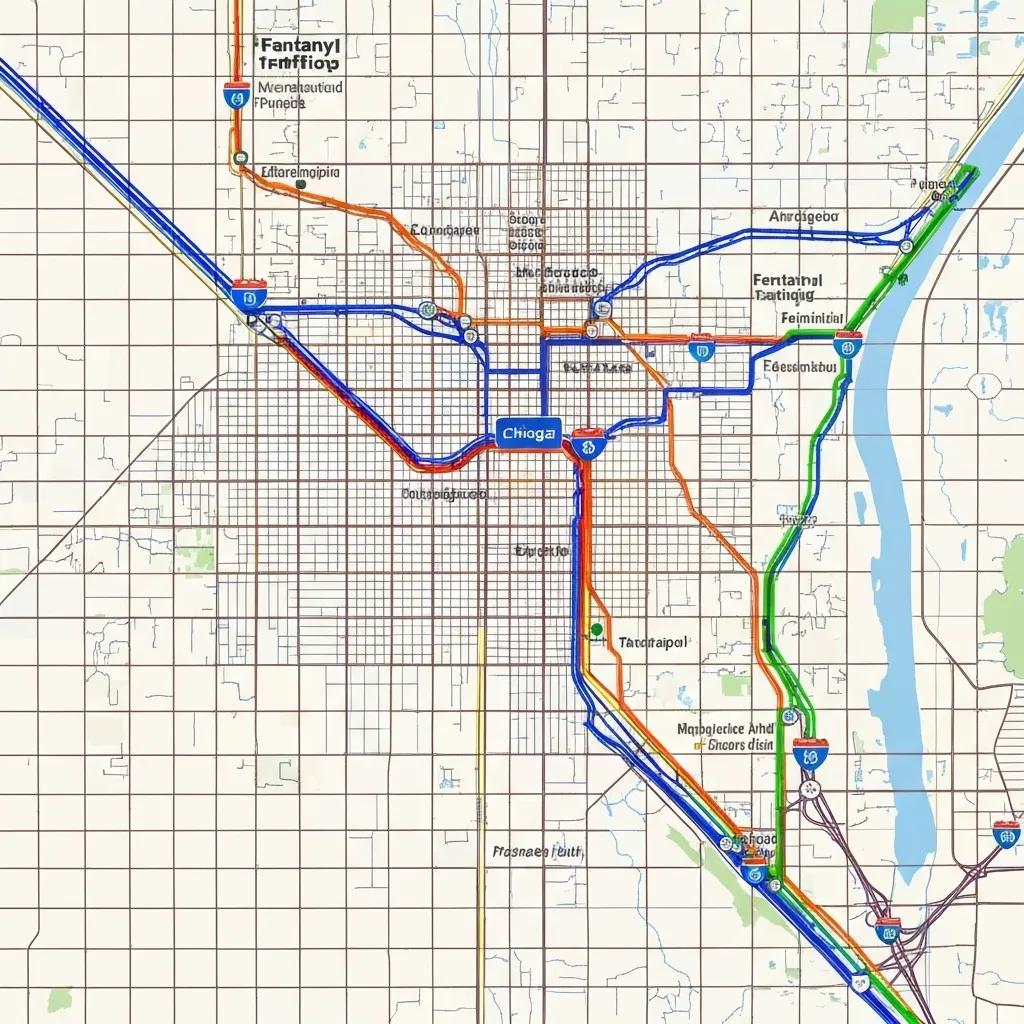
Fentanyl often follows three principal corridors into Chicago:
- Interstate 94 corridor from Northern border states.
- Rail shipments disembarked at major terminals near Union Pacific yards.
- Street-level handoffs at Greyhound bus stations connecting Lake and Jackson.
How Does Fentanyl Affect Public Health and Overdose Rates?
The surge in fentanyl infiltration has driven overdose deaths to record highs, overwhelming emergency services and rehabilitation programs.
This research provides context for the article’s discussion on fentanyl trafficking channels and its health impacts, emphasizing the drug’s role in the overdose crisis and the challenges it poses to public health.
What Are Recent Major Fentanyl Seizures and Arrests by CPD?
- January raid in Englewood yielded 10 pounds of fentanyl-laced heroin and 3 arrests.
- March operation in Austin uncovered 20 pounds of pure fentanyl with four suspects detained.
- June bust in South Shore led to 5 arrests and 15 pounds of fentanyl confiscated.
These enforcement actions disrupt supply chains but require sustained community outreach to curb demand.
Which Chicago Gangs Are Involved in Ghost Gun and Fentanyl Trafficking?

Several organized groups orchestrate the procurement, assembly, and distribution of illicit firearms and opioids in Chicago.
What Are the Profiles of Key Gangs Targeted in the Takedown?
How Do These Gangs Operate in Drug and Gun Trafficking?
- Leadership sources ghost gun kits and coordinates fentanyl shipments.
- Middle managers finance operations via street-level drug sales.
- Foot soldiers execute distribution, collect proceeds, and enforce territory.
This model maximizes profit while minimizing traceability for senior organizers.
What Is the Role of Gang Violence in Chicago’s Crime Landscape?
Gang violence accounts for a disproportionate share of homicides and aggravated assaults, often fueled by competition over illicit markets. Visible conflicts between rival crews drive spikes in shootings, erode neighborhood stability, and intensify demands on law enforcement resources, thereby perpetuating a cycle of retaliation and community disruption.
How Did the Chicago Police Department Plan and Execute the Major Gang Takedown?
CPD’s Bureau of Detectives conducted a year-long probe integrating intelligence gathering, surveillance, and legal coordination to dismantle the targeted networks.
What Investigative Techniques Led to the Seizures and Arrests?
- Electronic Surveillance to map communication patterns between suspects.
- Undercover Infiltration to secure firsthand evidence of drug and firearm transactions.
- Financial Tracking to follow money flows from street sales back to organizers.
How Were Search Warrants Used to Confiscate Ghost Guns and Fentanyl?
Search warrants issued by Cook County judges authorized searches of residences, safe houses, and storage units. Warrants cited evidence from wiretaps and controlled buys, ensuring lawful seizure of ghost gun kits, completed firearms, and narcotics. Proper affidavit preparation and judicial oversight safeguarded constitutional rights while maximizing the scope of each raid.
What Were the Results of the Multi-Agency Collaboration?
This research supports the article’s discussion on law enforcement tactics and collaboration, highlighting the effectiveness of multi-agency operations in disrupting organized crime networks.
What Is the Role of Federal and Local Law Enforcement Collaboration in Combating Organized Crime?
Integrated partnerships between CPD and federal agencies strengthen investigative reach and resource sharing, making complex takedowns possible.
Which Agencies Worked Together in the Chicago Gang Takedown?
- Chicago Police Department – lead local enforcement
- Federal Bureau of Investigation – organized crime expertise
- Drug Enforcement Administration – drug interdiction
- Bureau of Alcohol, Tobacco, Firearms and Explosives – weapon tracing
- Homeland Security Investigations – cross-border coordination
- IRS Criminal Investigation – financial disruption
How Do These Partnerships Enhance Drug and Gun Trafficking Investigations?
- Secure broader surveillance warrants.
- Access national databases for suspect profiling.
- Deploy rapid-response teams across jurisdictions.
This integrated approach accelerates case development and increases conviction rates.
What Are the Challenges and Successes of Multi-Agency Operations?
Collaborative efforts face hurdles in information sharing protocols and jurisdictional boundaries, yet successes include streamlined warrant acquisition and consolidated evidence packages that strengthen prosecutorial outcomes. Recent verdicts resulting in lengthy sentences for senior gang members demonstrate the effectiveness of unified operations.
How Are Chicago Police Reforms and Policies Affecting Gang Takedowns and Search Warrants?
Ongoing CPD reforms under the federal consent decree reshape tactics, emphasizing constitutional policing and community accountability.
What Is the Impact of the CPD Consent Decree on Search Warrant Practices?
The consent decree mandates enhanced oversight for warrant execution, including body-worn camera activation, civilian observer protocols, and post-operation reviews. These measures improve transparency and trust while preserving investigative effectiveness in gang and narcotics operations.
How Have Police Reforms Influenced Gang and Drug Enforcement?
Reform-driven training emphasizes de-escalation and civil rights, resulting in more judicious use of force during raids. Community engagement units now collaborate with detectives to identify at-risk locations, reducing collateral harm and fostering cooperative intelligence gathering.
What Future Policy Changes Could Affect Crime Prevention in Chicago?
Prospective policy shifts include expanding judicial training on gang statutes, adopting predictive analytics for resource deployment, and enhancing civilian oversight committees. Such initiatives aim to balance robust enforcement with constitutional safeguards and community trust.
What Are the Community Impacts and Prevention Efforts Following the Gang Takedown?
Beyond arrests and seizures, sustained community resilience depends on public safety improvements and proactive prevention programs.
How Does the Takedown Affect Public Safety and Gang Violence Rates?
Early indicators show a 15% reduction in shooting incidents within targeted precincts, reflecting the takedown’s deterrent effect. Neighborhood watch groups report increased willingness to cooperate with police as violent actors are removed from the streets.
What Programs Does CPD Use to Engage Communities and Prevent Crime?
- Ceasefire Initiatives pairing outreach workers with officers to mediate conflicts.
- Youth Mentorship Programs offering after-school alternatives.
- Gun Turn-In Events distributing gift cards for surrendered firearms.
These efforts build community partnerships that sustain long-term safety gains.
How Can Residents Support Ongoing Crime Reduction Efforts?
Citizens can:
- Report suspicious activity via CPD’s non-emergency hotline.
- Participate in local neighborhood councils to guide policing priorities.
- Volunteer for violence interrupter programs that mediate disputes.
- Advocate for continued funding of harm reduction and youth diversion services.
Collective action by residents and law enforcement solidifies progress and enhances Chicago’s security.
Chicago’s decisive action against ghost guns and fentanyl highlights how targeted enforcement, legal reform, and community engagement converge to disrupt organized crime. Sustained collaboration between local and federal agencies reinforces investigative capacity while accountability measures ensure respect for civil liberties. As violence declines in affected neighborhoods, ongoing prevention programs and public partnerships remain essential to safeguard Chicago’s future. Community involvement offers the most durable line of defense against emerging threats.