Kansas City Police Department Federal Civil Rights Investigation: Outcome, Allegations, and Reform Efforts
When the Department of Justice closed its civil rights investigation into the Kansas City Police Department in January 2025 with no findings, it marked a turning point in federal oversight and local accountability. This article delivers a comprehensive analysis of the DOJ probe’s origins, the final determination, KCPD’s reform agenda, broader legal and societal impacts, future recommendations, data-driven insights on racial disparities, and the investigation’s influence on community trust. By tracing the genesis of allegations, unpacking procedural mechanisms, comparing national precedents, and highlighting proactive measures, readers gain a full-spectrum view of how federal civil rights enforcement intersects with policing culture and reform.
What triggered the Department of Justice’s federal civil rights investigation into KCPD?
The DOJ launched its “pattern or practice” inquiry in September 2022 after receiving credible reports that KCPD systematically engaged in racial discrimination against Black officers and applicants, undermining equal employment opportunities under Title VII of the Civil Rights Act.
Title VII of the Civil Rights Act of 1964: Equal Employment Opportunity
This formal civil rights probe aimed to evaluate whether hiring, promotions, discipline and workplace culture violated constitutional and statutory protections for federal employees.
What were the racial discrimination allegations against KCPD employment practices?
Allegations centered on Title VII violations in multiple personnel processes that disadvantaged Black officers and candidates. Specific claims included:
- Unequal hiring standards that delayed or blocked recruitment of Black applicants
- Disparate promotion rates, with qualified Black sergeants bypassed for advancement
- Retaliatory discipline disproportionately targeting Black officers for minor infractions
- Hostile work environment complaints citing racial slurs and exclusionary team assignments
These account of employment bias established the factual foundation for a systemic inquiry into KCPD’s internal personnel policies and culture.
How does the DOJ’s Civil Rights Division conduct “pattern or practice” investigations?
The Civil Rights Division defines a “pattern or practice” investigation as a systematic review of persistent policies or actions that substantially harm protected groups. Key procedural steps include:
- Issuing a notice letter to the agency under Title VII
- Collecting employment data, internal memos, discipline records
- Conducting interviews and depositions of officers and supervisors
- Analyzing statistical disparities across hiring, promotions, and discipline
FAQ about Pattern or Practice Investigations
What timeline outlines the key events of the KCPD federal investigation?
Below is a summary of critical milestones in the DOJ’s KCPD probe:
What was the outcome of the DOJ investigation into the Kansas City Police Department?
The U.S. Department of Justice concluded its civil rights investigation into KCPD in January 2025, determining that available evidence did not establish a pattern or practice of intentional racial discrimination. Consequently, the probe was closed with no official findings or enforcement actions.
Why did the DOJ close the investigation with no findings?
Investigators concluded that statistical disparities and individual complaints did not meet the high legal threshold required to prove intentional discrimination, particularly after the DOJ’s recent policy shift away from the “disparate impact” theory. The decision reflected both evidentiary standards under Title VII and evolving Justice Department guidelines on civil rights enforcement.
How does this outcome compare to other federal police investigations nationally?
The result diverges from more interventionist outcomes in several comparable inquiries:
How has the Kansas City Police Department responded with reforms and accountability measures?
KCPD has proactively announced policy updates, enhanced transparency mechanisms, and expanded community partnerships aimed at strengthening accountability and reducing potential bias. These measures reflect a commitment to rebuild trust and support equitable law enforcement practices.
What police reform initiatives has KCPD implemented to address discrimination and misconduct?

Following the investigation, KCPD introduced several reforms:
- Mandatory Body Cameras on all patrol officers to document interactions
- Duty to Intervene Policy requiring officers to halt or report misconduct by colleagues
- Independent Shooting Review by outside auditors for officer-involved uses of force
- Revised Promotion Framework incorporating transparent criteria and external oversight
- Implicit Bias Training integrated into annual certification and leadership development
How does KCPD’s Community Engagement Division foster trust with Kansas City residents?
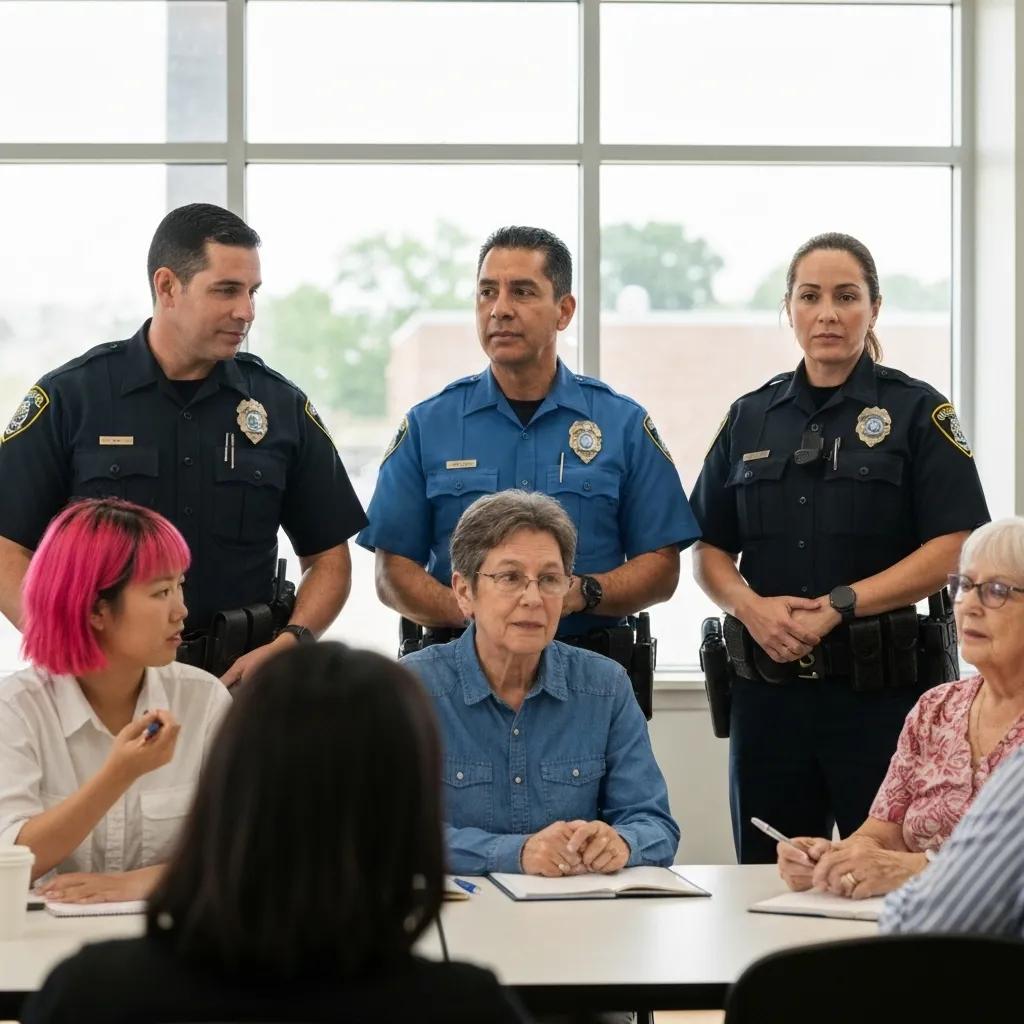
The Community Engagement Division leads structured outreach programs designed to strengthen civilian–police relationships. Key efforts include:
- Neighborhood Town Halls that facilitate open dialogue between officers and residents
- Youth Mentorship Clinics partnering with local schools to build positive role models
- Civilian Ride-Along Days allowing community members firsthand insight into patrol operations
KCPD Creates New Community Engagement Division
What policies has KCPD adopted to improve use of force transparency and reduce racial disparities?
KCPD revised its Response to Resistance Policy to emphasize de-escalation and data reporting:
What are the broader legal and societal implications of the KCPD federal civil rights investigation?
The KCPD probe illustrates shifting federal oversight priorities and triggers important discussions about civil rights enforcement, local governance, and the future of policing accountability across the nation.
How is federal oversight of police departments evolving under the DOJ’s current approach?
Recent DOJ leadership has tightened standards for proving unconstitutional practices, notably moving away from disparate impact claims and emphasizing intentional discrimination. This evolution:
- Raises the bar for civil rights litigation against law enforcement
- Encourages agencies to seek voluntary agreements rather than consent decrees
- Signals a recalibration of federal–local partnerships in policing reform
What ongoing civil rights lawsuits involve the Kansas City Police Department?
Several active legal cases parallel the DOJ probe:
- A class–action lawsuit alleging racial bias in KCPD promotions
- Federal litigation by former officers claiming retaliation after whistleblowing
- Civil suits over discriminatory traffic stops and searches in majority–Black neighborhoods
Why is state versus local control a significant issue for KCPD governance?
Kansas City policing operates under a unique state–controlled Board of Police Commissioners rather than a municipal police department. This governance structure:
- Limits direct accountability to city elected officials
- Centralizes disciplinary and budgetary authority at the state level
- Fuels debates over local input in policy decisions
The tension between state oversight and community representation shapes the policy landscape for lasting reforms.
How can Kansas City sustain police reform and ensure ongoing accountability?
Long–term success depends on institutionalizing best practices, fostering collaborative oversight, and embedding continuous improvement across KCPD operations.
What recommendations support continuous improvement in KCPD policing practices?
- Establish a permanent “Policy Review Council” with civilian and expert members
- Integrate real–time data analytics to flag and address emerging bias patterns
- Expand de–escalation and cultural competency training for all ranks
- Conduct annual third–party audits of disciplinary and promotion processes
- Secure dedicated funding for community–led public safety initiatives
What role do community and civilian oversight play in maintaining police accountability?
Civic participation serves as a powerful corrective mechanism. Effective oversight includes:
- Civilian Review Boards with authority to recommend discipline
- Public Advisory Panels that vet policy proposals before adoption
- Crowdsourced Incident Reporting tools enabling residents to submit concerns
- Regular Performance Forums where KCPD publishes metrics and welcomes feedback
Engaging the public in governance fosters transparency, builds trust, and anchors reform efforts in shared community values.
What are the key facts and statistics about racial disparities and use of force in KCPD policing?
Data analysis reveals persistent disparities in how KCPD applies force across demographic groups, underscoring the need for targeted interventions.
How do racial disparities manifest in KCPD’s use of force incidents?
Black residents represent 28 percent of Kansas City’s population yet account for 57 percent of reported force encounters—a stark imbalance that signals underlying systemic bias.
Kansas City police use force against Black people more often. Their own data shows it
Contributing factors include:
- Higher deployment in majority–Black neighborhoods
- Discretionary decision–making in traffic and pedestrian stops
- Limited de–escalation training uptake during critical incidents
These patterns highlight priority areas for policy recalibration and officer support.
What transparency measures exist for public access to KCPD misconduct and use of force records?
KCPD offers multiple data portals and reporting tools to enhance public oversight:
- An online Use–of–Force Dashboard with incident details by date and location
- Quarterly Bias Audit Reports published on the department website
- Annual Civil Rights Compliance Summaries shared in City Council meetings
How does the Kansas City Police Department’s federal investigation affect community trust and policing culture?
The DOJ’s inquiry and KCPD’s response shape public perceptions of fairness, legitimacy, and the potential for meaningful reform in urban policing.
What has been the community response to the DOJ investigation and KCPD reforms?
Resident advocacy groups and civil rights organizations have generally welcomed policy changes while urging deeper structural reforms. Public forums have yielded:
- Calls for greater representation of Black officers in leadership roles
- Demands for transparent promotion processes and active civilian oversight
- Support for restorative justice programs in schools and neighborhoods
Community feedback reinforces the importance of inclusive dialogue in driving lasting improvements.
How are Black officers and applicants affected by the investigation and subsequent reforms?
Many current and prospective Black officers report cautious optimism as revised hiring and promotion frameworks increase procedural equity. Early indicators include:
- A modest rise in Black applicant interview invitations
- More transparent performance evaluations tied to standardized criteria
- Expanded mentorship opportunities through the Community Engagement Division
These developments suggest that targeted reforms can strengthen diversity, morale, and retention among underrepresented officers, setting the stage for a more inclusive departmental culture.