Apex Lands $200M in Unicorn Round to Scale Satellite Bus Production and Lead Space Tech Investment
Securing $200 million in a Series D unicorn round has empowered Apex to ramp up its hardware manufacturing of configurable satellite bus platforms, positioning the company at the forefront of space tech investment and production scale. This milestone addresses the industry’s urgent need for repeatable satellite hardware, promises rapid delivery of mission-ready spacecraft, and cements Apex’s role in enabling next-generation LEO constellations. In this article, we explore:
- The strategic significance and investor lineup behind Apex’s unicorn status
- Apex’s productized satellite bus platforms and their manufacturing innovations
- Market drivers fueling demand for standardized spacecraft buses
- Apex’s positioning among space tech unicorns and competitors
- Core technological breakthroughs in propulsion, power and modular design
- Future investment trends and how Apex’s expanded capacity will shape the global space economy
What Is the Significance of Apex’s $200M Series D Unicorn Funding Round?
Apex’s $200 million Series D unicorn round represents both validation of its rapid, standardized satellite bus manufacturing and a catalyst for scaling production capacity to meet surging LEO constellation demand. By achieving a valuation above $1 billion, the company underscores the strategic importance of off-the-shelf spacecraft hardware in accelerating mission timelines and reducing development risk.
Who Led Apex’s $200M Series D Funding Round and Which Investors Participated?
Apex’s latest funding round was led by Interlagos Capital, joined by leading space-focused venture capital firms and institutional backers. The investor lineup includes:
- Interlagos Capital: Lead investor with deep expertise in aerospace growth capital
- Andreessen Horowitz: Strategic support in scaling space hardware startups
- Point72 Ventures: Emphasis on high-growth technology investments
- 8VC: Known for backing breakthrough ventures in engineering and hardware
This consortium combines sector knowledge with growth-stage capital, reinforcing Apex’s manufacturing roadmap and supporting global market expansion.
How Does Apex’s Unicorn Status Impact the Space Tech Industry?
Achieving unicorn status elevates Apex’s visibility and credibility, signaling that productized satellite bus platforms are critical enablers for both commercial and government missions. This milestone:
- Attracts additional institutional investment into standardized spacecraft hardware
- Validates the shift from bespoke satellite builds to modular, off-the-shelf platforms
- Encourages ecosystem partners to integrate Apex buses into their mission roadmaps
By leading this trend, Apex accelerates hardware commoditization, reducing barriers for new entrants and driving down unit costs across the industry.
What Are the Key Milestones in Apex’s Funding Journey?
Apex’s funding trajectory reflects steady progression from seed to unicorn:
This progression highlights Apex’s systematic capital deployment—first to validate product-market fit, then to build high-throughput manufacturing, and finally to achieve large-scale production.
How Does Apex Revolutionize Satellite Bus Production with Its Productized Platforms?
Apex accelerates satellite manufacturing by offering configurable, standardized bus platforms that integrate core subsystems—propulsion, power, structure and avionics—into modular building blocks, enabling customers to focus on payload innovation rather than custom spacecraft development.
What Are Satellite Bus Platforms and Why Are They Critical for Space Missions?
Satellite bus platforms constitute the structural backbone and essential subsystems that support payload operations in orbit. They deliver:
- Structural support for payload and thermal control
- Power generation and distribution via solar arrays and batteries
- Propulsion and attitude control for orbit insertion and station‐keeping
- Command, data handling and communication through onboard avionics
By standardizing these components, satellite bus platforms reduce design complexity, enhance reliability and shorten lead times for complex missions.
What Makes Apex’s Aries, Nova, and Comet Satellite Bus Models Unique?
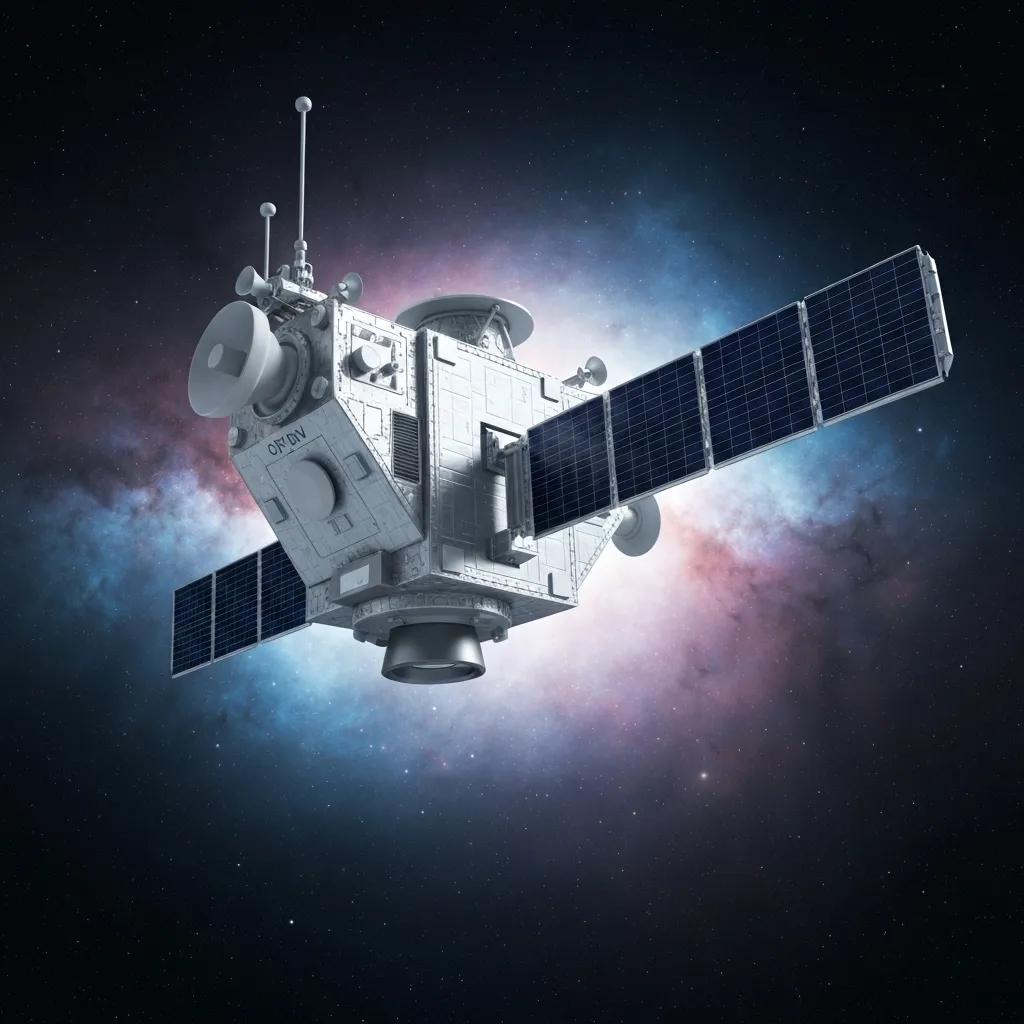
Below is a comparison of Apex’s three core bus families, each optimized for specific mission classes:
Each bus model follows an EAV logic—streamlined manufacturing (Entity) → configurable subsystems (Attribute) → reduced integration risk (Value)—to deliver mission-ready spacecraft.
How Does Apex Achieve Rapid Production and Scalability in Satellite Manufacturing?
Apex’s Factory One facility integrates automated assembly lines, standardized test benches, and digital twin simulations to compress the production cycle:
- Automated fabrication of structural panels and harnesses
- Parallel subsystem integration using configurable jigs
- Continuous hardware-in-the-loop testing for power and propulsion subsystems
- Digital twin validation enabling rapid iteration and quality control
This end-to-end approach cuts typical custom satellite build times from 24 months to under 12 months, driving cost efficiency and predictable delivery.
How Does Modular Design Enhance Apex’s Satellite Bus Efficiency?
Modularity underpins Apex’s efficiency by allowing interchangeable subsystems and shared production tooling. Key benefits include:
- Reduced inventory complexity through standardized parts
- Simplified qualification via common test procedures
- Faster reconfiguration for customer-specific payload interfaces
- Economies of scale from batch production of shared modules
This modular architecture ensures every new mission benefits from continuous design refinements and reduces time-to-orbit.
Why Is There Growing Demand for Satellite Buses in the New Space Economy?
The proliferation of LEO constellations, Earth-observation networks and communication platforms has created an unprecedented requirement for reliable, scalable satellite bus hardware that can be deployed rapidly and at lower cost.
How Are LEO Satellite Constellations Driving Satellite Bus Production?
Low Earth orbit constellation providers demand hundreds to thousands of satellites with consistent performance and rapid turnaround. This trend:
- Scales bus volume exponentially to meet connectivity targets
- Prioritizes standardized platforms to minimize engineering variation
- Leverages mass production models akin to high-volume manufacturing
Apex’s productized approach directly addresses this scale requirement, enabling constellation operators to place orders in batch sizes rather than unique custom builds.
What Commercial and Government Applications Rely on Apex’s Satellite Buses?
Apex’s platforms serve a spectrum of missions:
- Defense and missile early-warning requiring secure, rapid-deployment spacecraft
- Earth-observation analytics for agriculture, climate monitoring and disaster response
- Global broadband and IoT connectivity via mesh‐networked LEO constellations
These use cases illustrate how standardized bus hardware can underpin diverse mission objectives with proven reliability.
What Are the Current and Projected Market Trends for Satellite Bus Manufacturing?
Market analysts project robust growth in satellite bus production:
Satellite Bus Market Analysis
How Is Apex Positioned Among Leading Space Tech Unicorn Startups and Competitors?
Apex’s unicorn status and productized manufacturing approach set it apart in a competitive field of emerging space tech startups and traditional satellite integrators.
Which Companies Are Apex’s Main Competitors in Satellite Bus Production?
Some providers maintain custom or semi-standardized bus lines, but none combine end-to-end productization, rapid throughput and proven in-orbit heritage at scale. Apex’s approach surpasses conventional manufacturers that rely on bespoke integration models and extended lead times.
What Differentiates Apex’s Productized Approach from Traditional Satellite Manufacturers?
Unlike conventional satellite builders that design each spacecraft from scratch, Apex offers:
- Off-the-shelf modular buses that reduce engineering variation
- Batch production processes enabling volume discounts and consistent quality
- Digital twin platforms that streamline integration and test validation
This productized methodology delivers both time and cost savings unmatched by legacy custom-build paradigms.
How Does Apex’s Funding Compare to Other Aerospace Venture Capital Investments?
Apex’s $200 million Series D round ranks among the largest hardware-focused funding events in 2025, reflecting investor confidence in mass-manufacturable space hardware. By comparison, other notable unicorns in launch or space infrastructure secured rounds ranging from $100 million to $250 million, underscoring Apex’s competitive capital position.
What Are the Technological Innovations Behind Apex’s Satellite Bus Platforms?
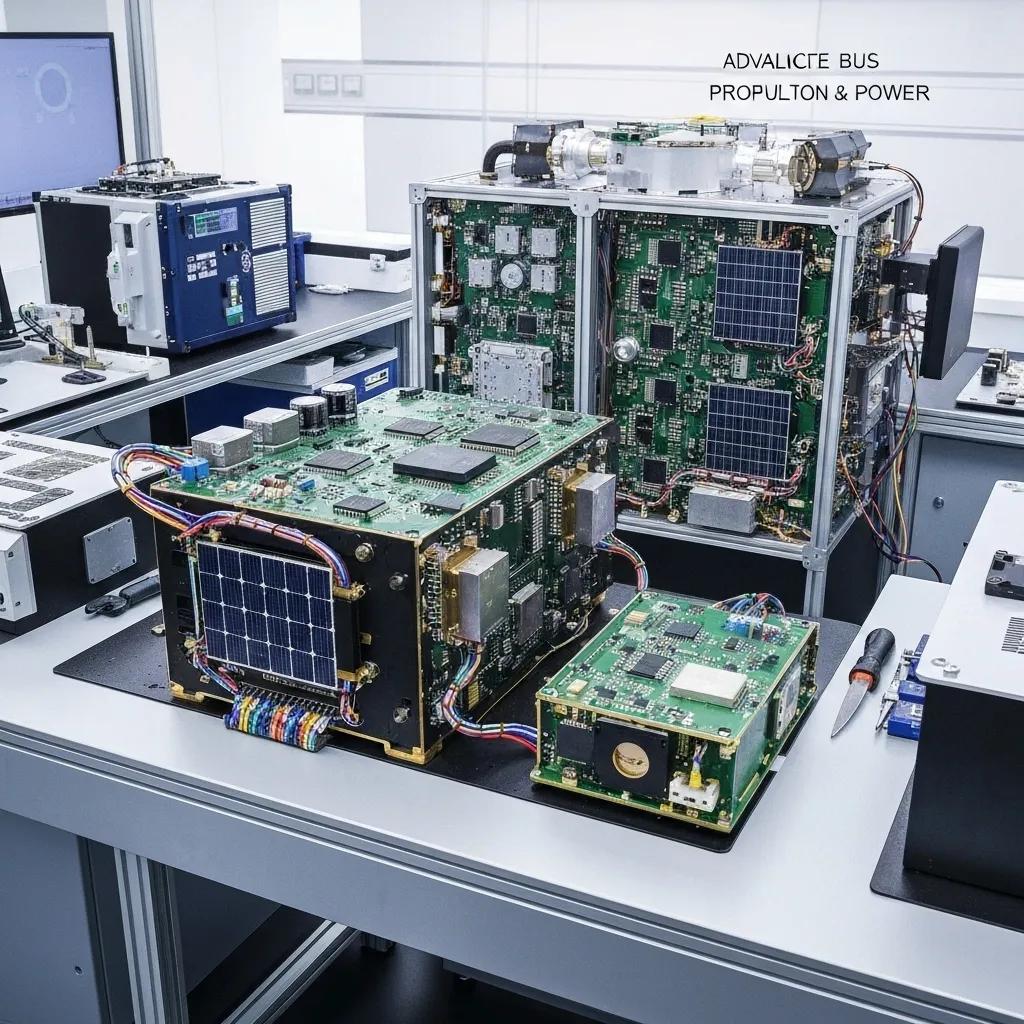
Apex’s engineering teams drive innovation across propulsion, power and structural design, ensuring each bus platform delivers high performance and reliability.
How Do Advanced Propulsion and Power Systems Enhance Apex’s Satellite Buses?
Apex integrates next-generation electric propulsion thrusters and high-efficiency power electronics to:
- Extend mission lifetimes through low-thrust, high-specific-impulse maneuvering
- Optimize power budgets using adaptive MPPT (Maximum Power Point Tracking) controllers
- Reduce mass by consolidating subsystem functions into integrated power-propulsion units
These subsystems support precise orbit insertion and station-keeping, enhancing mission flexibility.
What Role Does Engineering Excellence Play in Apex’s Rapid Development Cycle?
Apex’s cross-disciplinary engineering teams employ concurrent design practices, digital twin simulations and automated test harnesses to:
- Validate subsystem interactions virtually before hardware fabrication
- Identify and rectify integration issues early through co-simulation
- Iterate design improvements in parallel across mechanical, electrical and software domains
This integrated workflow accelerates development while maintaining rigorous quality standards.
How Does Apex Ensure Reliability and Proven Hardware Performance in Orbit?
Apex’s buses undergo extensive environmental testing—vibration, thermal vacuum and radiation screening—mirroring orbital conditions. Demonstrated in-orbit success of the Aries platform for over one year validates both reliability and the underlying qualification processes, instilling confidence for mission planners.
What Is the Future Outlook for Space Tech Investment and Apex’s Role in It?
The aerospace venture capital landscape is evolving toward funding hardware platforms that can scale globally, and Apex is poised to lead this transformation.
What Are the Emerging Trends in Aerospace Venture Capital Funding?
Current investment patterns reveal:
- Growing allocation to hardware-as-a-service models, where platform providers lease bus capabilities
- Increased funding for modular manufacturing technologies such as additive fabrication
- Rising interest in integrated mission services combining buses with ground networks and analytics
These trends align with Apex’s strategy of offering standardized buses paired with engineering support.
How Will Apex’s Expanded Production Capacity Support Future Space Missions?
With Factory One expansion and a tripling of assembly lines, Apex will achieve:
- Monthly throughput of 20–30 buses across Aries, Nova and Comet families
- On-demand delivery capabilities for rapid mission turnarounds
- Flexible production slots to accommodate evolving constellation schedules
This capacity surge directly responds to forecasted demand from commercial broadband, remote sensing and defense clients.
How Does Apex Contribute to the Growth of the Global Space Economy?
By lowering barriers to entry for satellite deployment, Apex accelerates the proliferation of space-based services, spurring innovation in industries from agriculture to telecommunications. Its scalable hardware model fosters new business applications—satellite-enabled IoT, real-time Earth analytics and resilient communications—that collectively expand the global space economy and democratize access to orbit.
SpaceX and the New Space Economy
Apex’s proven approach to satellite bus production not only transforms manufacturing efficiency but also expands the possibilities for what space missions can achieve next.