Pakistani Startup Signer Wins AI Accessibility Competition with Real-Time ASL Video Translation
Imagine a world where every video is understood by everyone—regardless of hearing ability. Signer, a Pakistani startup headquartered between Islamabad and Lahore, achieved this vision by winning the League of Launchers competition for its AI-powered app that converts spoken content into American Sign Language (ASL) via lifelike 2D avatars.
In this article, you’ll discover how Signer’s technology works, why its culturally accurate translation matters, the impact on education and government communications, the startup’s journey to victory, and ways you can access and support this breakthrough in digital inclusion.
What Is the Signer App and How Does It Enhance Deaf Community Accessibility?
Signer is an AI-driven video accessibility application that translates live or recorded audio into real-time ASL using animated avatars. By combining computer vision, natural language processing, and machine learning, Signer delivers seamless sign language interpretation directly within multimedia content. This mechanism empowers deaf and hard-of-hearing users to access lectures, news broadcasts, webinars, and entertainment without relying on separate interpreters or subtitles, thereby boosting independence and comprehension.
Deaf Pakistani engineer develops sign language app to bridge the hearing gap
This source highlights the communication barriers faced by the deaf community in Pakistan and the efforts to address them, which is relevant to the article’s discussion of Signer’s mission.
How Does Signer Use AI for Real-Time American Sign Language Translation?
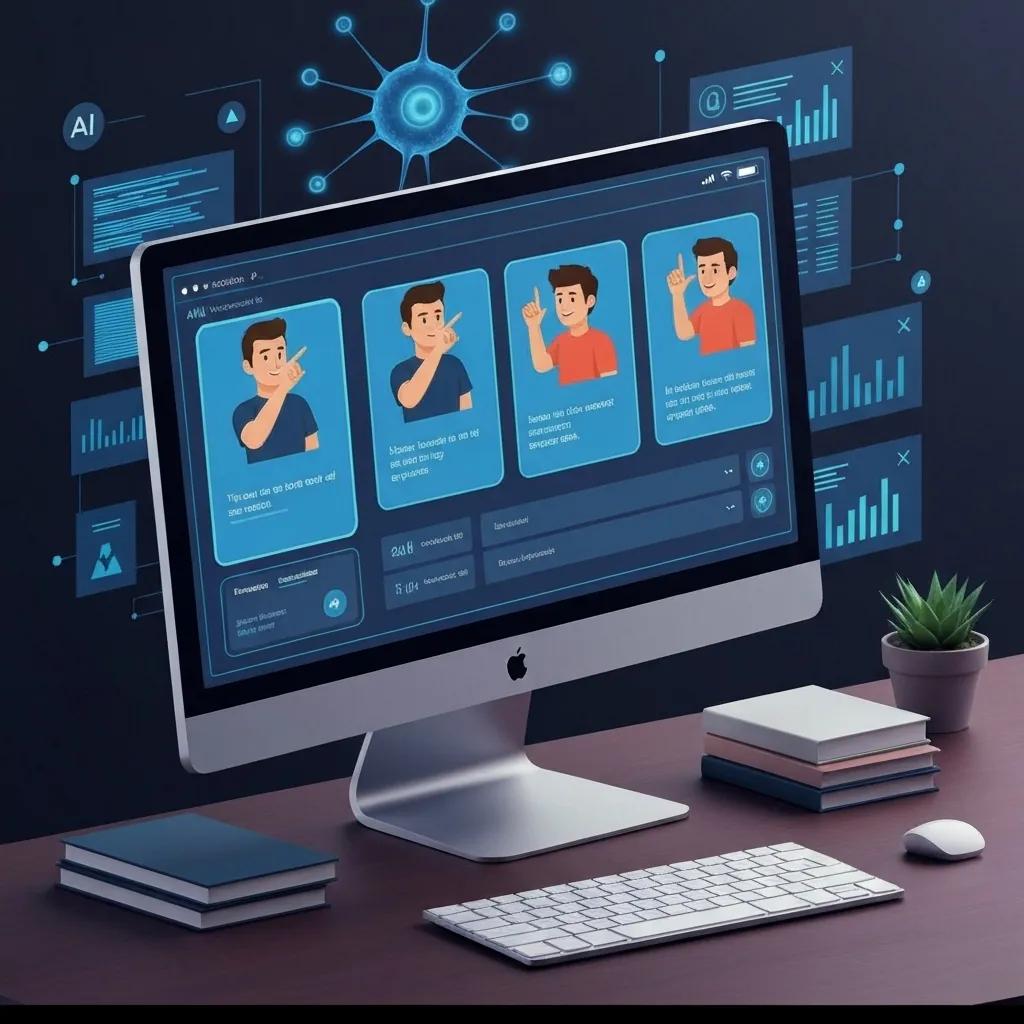
Signer’s AI pipeline begins with automatic speech recognition that transcribes spoken words instantly. A natural language understanding module then maps English syntax to ASL grammar, while a trained 2D avatar performs culturally accurate signs. The result is immediate visual translation embedded directly into videos, eliminating delays and enhancing viewer engagement through synchronized avatar gestures.
AI-Powered Sign Language Translation System: A Deep Learning Approach to Enhancing Inclusive Communication and Accessibility in Low-Resource Contexts
This research provides insight into the technical aspects of AI-powered sign language translation, which is relevant to understanding how Signer’s technology works.
What Makes Signer’s ASL Translation Culturally Accurate and Scalable?
Signer’s platform integrates a curated ASL corpus developed in collaboration with deaf community experts, ensuring idiomatic expressions and regional variations are preserved. A scalable cloud architecture allows new sign lexicons to be added without retraining the entire system, supporting expansion into diverse dialects and specialized vocabularies. This approach maintains translation fidelity as usage grows.
Which Digital Content Types Does Signer Make Accessible?
Below is a list of key content categories that Signer transforms into ASL-accessible formats:
- Online lectures and e-learning modules with dynamic avatar overlay.
- Government briefings and public service announcements to foster civic inclusion.
- Corporate webinars and investor presentations for workforce engagement.
- Social media videos and news reports to broaden media reach.
Signer’s versatility across these formats underscores its mission to make every video universal.
How Did Signer Win the League of Launchers Competition?
Winning the League of Launchers competition validated Signer’s innovation by showcasing its practical impact and technical excellence. The event spotlighted startups developing transformative AI solutions for global challenges, and Signer’s real-time ASL translation impressed judges with its human-centered design, robust performance, and social significance.
Signer Wins League of Launchers Competition with AI-Powered Accessibility Innovation
What Is the League of Launchers Competition and Its Significance?
League of Launchers is an annual global startup challenge that identifies and funds early-stage ventures leveraging cutting-edge technology for social good. Recognized for rigorous evaluation by industry experts, this competition accelerates promising solutions through mentorship, seed funding, and strategic partnerships, underscoring the credibility of its winners.
League of Launchers: Pakistan’s Premier AI Startup Competition
This source provides context on the League of Launchers competition, which is relevant to understanding the significance of Signer’s win.
What Was Signer’s Journey and Innovation That Led to Victory?
Signer’s founders combined personal experiences within Pakistan’s deaf community with advanced AI research conducted at local universities in Karachi and Lahore. Early prototypes focused on avatar realism and sign accuracy, evolving into a cloud-native platform capable of handling simultaneous video streams. Iterative user testing with deaf participants refined handshape precision and facial expression rendering, culminating in a polished demo that secured top accolades at the finals.
How Does This Win Validate Signer’s AI Accessibility Solution?
Securing first place in a competitive field confirms Signer’s technical robustness, user-driven development process, and market readiness. Recognition by industry leaders and investors underscores trust in Signer’s capacity to scale, while the associated mentorship network fast-tracks partnerships with educational institutions and government agencies.
Why Is AI-Powered Sign Language Translation Critical for the Deaf Community?
AI-powered sign language translation removes communication barriers by converting spoken language into a visual form that aligns with ASL’s unique grammar and cultural context. This process fosters equitable access to information, participation in online learning, and engagement with digital media, supporting social inclusion and lifelong opportunities.
How Does AI Improve Communication for Deaf and Hard-of-Hearing Individuals?
- Automatic Speech Recognition converts audio streams into text transcripts in milliseconds.
- Natural Language Understanding maps transcribed text to ASL constructs, preserving meaning.
- Avatar Animation visually renders signs with accurate handshapes and facial cues.
Together, these components enable fluid interactions without human interpreters, expanding autonomy and immediacy.
What Are the Challenges in Translating Spoken Language to ASL?
Translating English to ASL involves overcoming syntactic differences, regional sign dialects, and non-manual signals like facial expressions. Technical hurdles include lip-reading accuracy, gesture timing alignment, and rendering avatars at sufficient frame rates. Ensuring cultural relevance requires continual input from native ASL users.
AI vs. Human Interpreters: Can Technology Replace ASL Interpreters?
This source highlights the ongoing development of AI in ASL translation and the challenges it faces, which is relevant to the article’s discussion of Signer’s AI-powered solution.
How Does Signer Address These Challenges Uniquely?
Signer’s solution leverages a feedback loop with deaf community advisors who annotate nuanced expressions and validate avatar motions. A modular AI architecture isolates dialect updates, while GPU-accelerated rendering maintains smooth frame rates. By integrating real-world user data, Signer achieves both linguistic fidelity and high-performance translation.
What Impact Does Signer Have on Inclusive Online Education and Government Accessibility?
Signer transforms learning environments and civic communications by embedding sign language interpretation directly into video content. This inclusivity reshapes how deaf students engage with curricula and how governments disseminate critical information, driving societal awareness and policy compliance.
How Does Signer Empower Inclusive Learning for Deaf Students?
Signer’s integration with e-learning platforms delivers synchronized ASL overlays for lectures, enabling deaf students to follow complex subjects in real time. Educators can upload course videos and instantly receive a version accessible to learners with hearing impairments, fostering deeper comprehension and academic success.
How Does Signer Facilitate Accessible Government Announcements?
Public sector bodies leverage Signer to broadcast health advisories, emergency alerts, and legislative updates with embedded sign language interpretation. This practice ensures that crucial information reaches every citizen, reducing misinformation and enhancing civic participation among deaf communities.
What Benefits Does Signer Bring to Corporate Webinars and Digital Content?
In corporate contexts, Signer enhances internal and external communications by making presentations, training sessions, and marketing videos accessible. This inclusive approach improves employee engagement, broadens customer reach, and demonstrates corporate social responsibility.
How Is Signer Shaping the Future of AI Accessibility in Pakistan and Beyond?
Signer’s success sets a precedent for technology-driven inclusion in Pakistan’s growing startup ecosystem and signals a global shift toward automated sign language services. By combining regional expertise with international standards, Signer is charting a scalable model for digital equity.
What Role Does Signer Play in Pakistan’s Digital Inclusion for the Deaf Community?
Signer collaborates with local NGOs and educational institutions in Karachi and Islamabad to pilot free-access tiers for schools serving deaf students. This partnership model integrates Signer into national digital inclusion initiatives, contributing to Pakistan’s Access to Media (Deaf) Persons Act 2022 objectives.
Jazz Collaborates with DeafTawk to Launch Deaf-Inclusive Communication Solutions
This source highlights the efforts to promote digital inclusion for the deaf community in Pakistan, which is relevant to the article’s discussion of Signer’s mission.
How Is AI Accessibility Evolving Globally and What Is Signer’s Vision?
Worldwide, AI accessibility is moving toward hyper-realistic avatars and cross-lingual sign translation. Signer’s roadmap includes expanding to British Sign Language (BSL) and other international sign systems, aiming to create a unified platform that supports global deaf communities.
Pakistan Set to Approve Groundbreaking AI Policy: A Digital Leap Forward
This source provides context on the growing AI landscape in Pakistan, which is relevant to the article’s discussion of Signer’s future.
What Partnerships and Innovations Are Driving Signer’s Growth?
Strategic alliances with cloud providers, telecom operators, and university labs fuel Signer’s technical enhancements. Joint research projects focus on gesture prediction algorithms and low-bandwidth avatar streaming, ensuring consistent performance across devices and regions.
What Are the Key Features and Technology Behind Signer’s AI Solution?
Signer’s architecture melds robust AI modules, intuitive design, and scalable infrastructure to deliver seamless ASL translation. Its core features include real-time processing, cultural adaptation layers, and cross-platform compatibility, enabling universal video access.
How Do 2D Avatars Enable Real-Time ASL Translation?
Signer’s 2D avatars render handshapes and facial expressions using vector graphics optimized for minimal latency. This approach balances computational efficiency with visual clarity, allowing avatars to animate at 60 frames per second even on mobile devices.
What AI Components Power Signer’s Accessibility App?
Below is an overview of Signer’s primary AI modules and their benefits:
These integrated components define Signer’s performance and reliability.
How Does Signer Ensure User-Friendly Experience Across Platforms?
Signer provides native apps for Android and iOS, plus a web SDK that embeds into existing video players. An intuitive interface lets users toggle ASL overlays and adjust avatar size without disrupting playback. Offline caching and adaptive bitrate streaming maintain accessibility even on limited connections.
How Can Users and Organizations Access and Support Signer’s Mission?
Signer offers multiple pathways for individuals, schools, and governments to adopt and promote digital accessibility. By downloading the app, integrating APIs, or contributing to advocacy efforts, stakeholders can accelerate inclusion for deaf communities worldwide.
Where Can You Download the Signer App and What Are Its Requirements?
The Signer app is available on Android (9.0+) and iOS (13+) via official app stores. A minimum 3 Mbps internet connection is recommended for HD avatar rendering, while offline mode supports cached translation for up to 30 minutes of video playback.
How Can Educational and Government Institutions Integrate Signer?
Institutions can embed Signer’s web SDK into learning management systems or government portals by completing a quick API integration. Custom onboarding sessions and technical support ensure smooth deployment, enabling instant ASL translation for up to 1,000 hours of video per month under enterprise plans.
How Can Supporters Help Advance Digital Accessibility for the Deaf Community?
Individuals and organizations can advocate by sharing Signer-powered content, sponsoring free-license programs for underserved regions, or contributing to open-source ASL corpora. These efforts amplify Signer’s reach and reinforce the principle that every video should be truly universal.
Signer’s ascent from a local startup to a globally recognized AI accessibility leader illustrates the transformative power of technology when guided by human-centered design. By fostering collaboration, cultural accuracy, and technical excellence, Signer is not only bridging communication gaps but also inspiring a future where inclusive digital experiences are the norm. For those eager to explore further or support deaf inclusion, now is the moment to embrace this pioneering solution.