A History of Music: Exploring Musical Periods, Genres, Instruments, and Influential Composers
Music history traces the development of human sound-making from prehistoric rituals to global digital ecosystems, showing how melody, rhythm, harmony, instrumentation, and notation evolved across cultures and centuries. This article, prepared as a journalistic overview by ARY News — an Information Hub committed to timely, accurate cultural coverage — explains major musical periods, genre evolution, key instruments, influential composers, notation advances, South Asian and Pakistani traditions, and contemporary innovations shaping the field. Readers will learn how archaeological finds inform our earliest knowledge, how stylistic and technical revolutions restructured Western and global practices, and how modern technologies and AI are creating new musical lineages. The piece maps periods, provides quick-reference tables for composers and instruments, and highlights regional significance for South Asia, offering both a chronological framework and targeted insights for further exploration. We begin by outlining the major musical periods that structure most historical narratives and then follow with genres, instruments, composers, notation, regional history, and future trends.
What Are the Major Musical Periods in History?
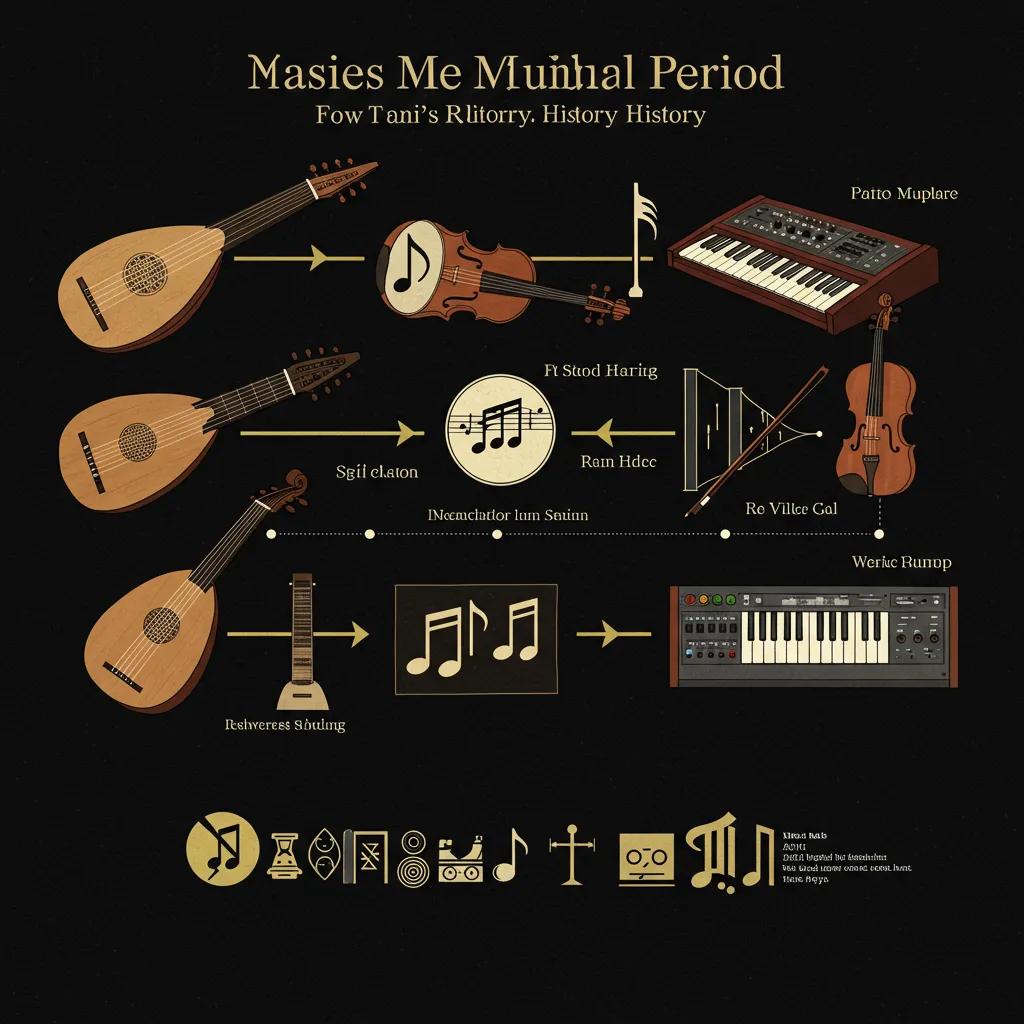
Major musical periods provide a chronological scaffold that links stylistic features, technologies, and cultural functions across time, allowing listeners and scholars to compare texture, form, and instrumentation. These periods mark shifts in notation, patronage, ensemble size, and expressive goals, producing representative works and composers that define each era. Understanding the periods helps explain why instruments, genres, and theoretical systems emerged the way they did and sets the stage for how later innovations built on earlier practices. The following list summarizes commonly recognized Western and global periods with concise definitions and dates.
Different musical periods can be compared for quick reference:
This table highlights the continuity from ritual and oral practices to formalized notation and eventually to recorded and networked music, which will be unpacked in later sections.
What Defines the Prehistoric and Ancient Music Eras?
Prehistoric and ancient music eras are defined by archaeological evidence—such as bone flutes, stringed instrument fragments, and early inscriptions—that reveal rudimentary melodic systems and percussive practices used in ritual, social, and court contexts. These sonic practices relied on oral transmission and functional roles: signaling, ritual accompaniment, and communal entertainment, rather than formalized theory. The Hurrian Hymn fragments, one of the earliest notated melodic examples, suggest that complex musical ideas already existed in the ancient Near East, bridging artifact study and interpretive performance. Examining these origins clarifies how later notation and instrument design evolved from practical, social needs into specialized craft and artistry.
How Did Medieval and Renaissance Music Shape Early Western Traditions?
Medieval and Renaissance music shaped Western traditions by transitioning from monophonic liturgical chant to increasingly sophisticated polyphony supported by early notation systems, which enabled preservation and dissemination. Gregorian chant functioned as liturgical backbone, while developments in notation—initially neumes and later staff notation—allowed composers to coordinate multi-voice textures and innovate counterpoint. The Renaissance expanded secular genres and humanist influences, producing madrigals and elaborated vocal polyphony that directly informed Baroque forms and the later rise of instrumental music. These changes establish a lineage from communal religious performance to composed, reproducible art music.
What Are the Key Characteristics of Baroque Music?
Baroque music is characterized by dramatic contrast, ornamentation, basso continuo foundations, and emerging genres such as opera, concerto, and sonata, all of which reflect new expressive and formal priorities. Composers used figured bass to support harmonic thinking while virtuosity and sectional contrast enhanced theatricality and rhetorical expression. Instrumental technology—improved string making and keyboard action—expanded dynamic and timbral possibilities, enabling large-scale orchestral works and solo virtuoso repertoire. Understanding Baroque conventions reveals how later composers codified form and set technical expectations that survive in classical performance practice.
Who Were the Prominent Composers of the Classical and Romantic Eras?
Classical and Romantic eras feature composers who refined form and then expanded emotive expression, shaping symphony, sonata, and opera as central genres in Western art music. The Classical era emphasized formal clarity, balanced phrases, and structural innovation exemplified by Haydn and Mozart, while Beethoven bridged Classical architecture and Romantic expressivity. The Romantic period intensified chromatic harmony, orchestral color, and programmatic intent through composers like Chopin, Schubert, Liszt, and Wagner, who foregrounded personal expression and nationalistic elements in music. These stylistic shifts illustrate how form and affect co-evolved to produce the core repertory of concert music.
How Did 20th and 21st Century Music Evolve with New Genres and Technologies?
The 20th and 21st centuries saw rapid diversification as recording technology, radio, and later digital distribution enabled new genres—jazz, blues, rock, electronic, hip hop—and global diffusion of styles across continents. Technological drivers like the phonograph, multitrack recording, synthesis, and digital audio workstations changed production, democratized access, and created new aesthetic possibilities, while social movements and migration patterns fueled genre evolution. The century’s pluralism fused classical modernism with popular innovations, producing hybrid forms and continuous reinvention that extend into AI-assisted creation and networked collaborations. These technological and cultural forces set the context for genre evolution discussed next.
How Did Music Genres Evolve Over Time?
Genres evolve through cultural contact, technological innovation, and social conditions that reshape musical building blocks—melody, harmony, rhythm, instrumentation—and repurpose them for new audiences and contexts. Lineages show how earlier forms provide source material: for example, blues and ragtime influenced jazz, which in turn fed into rock and later popular styles. Mechanisms of diffusion include migration, media spread, and commercial infrastructures like record labels and streaming platforms that accelerate adoption and mutation. Tracing genre evolution clarifies the relationships between local practices and global trends.
The following list captures the major genre evolution pathways in brief form.
- Blues to Jazz to Rock: Blues structures and expressive microtonality shaped early jazz improvisation and later rock’s harmonic vocabulary.
- Ragtime to Early Popular Forms: Ragtime’s syncopation influenced both jazz and early American popular song.
- Folk and World Traditions to Global Pop: Local melodic modes and rhythms entered mainstream pop through cultural exchange and recording.
These pathways indicate how distinct elements recombine over time to create new genres, leading to the specific case studies below.
What Are the Origins and Development of Jazz, Blues, and Rock?
Jazz, blues, and rock trace roots to African American musical traditions, with blues offering structural templates (call-and-response, twelve-bar forms) and jazz introducing improvisation, complex harmony, and syncopation. Early blues codified personal expression and social commentary, which jazz electrified with collective improvisation and varied subgenres such as Dixieland, bebop, and cool jazz. Rock developed by fusing blues, country, and R&B into amplified, rhythm-driven forms that emphasized youth culture and commercial media, producing pioneers who translated heritage into global pop idioms. Studying these origins reveals the social and technological conditions that enabled genre mainstreaming.
How Did Electronic and Hip-Hop Music Transform Contemporary Sounds?
Electronic and hip-hop music transformed sound production through new tools and cultural practices: synthesizers, samplers, drum machines, and DAWs enabled sonic design beyond acoustic constraints, while DJ culture and MCing redefined authorship and performance. Hip-hop’s sampling techniques repurposed recorded fragments into novel compositions, raising artistic and legal questions while creating dense, referential sound worlds. Electronic music’s subgenres—house, techno, ambient—relied on club contexts and production techniques to generate new rhythmic logics. These transformations democratized production, foregrounded producer-as-artist, and catalyzed global scenes that continue to innovate.
What Role Did Regional and Cultural Influences Play in Genre Evolution?
Regional and cultural influences shape genre identity by contributing specific scales, rhythms, instrumentation, and performance practices that get adapted or hybridized during cross-cultural exchange. Case studies—such as Afro-Cuban rhythms enriching jazz, or South Asian melodic modes appearing in Western pop—demonstrate how diaspora networks and media enabled musical borrowing and fusion. Cultural institutions, migration, and trade routes historically transmitted musical elements, while modern internet platforms accelerate hybridization, creating genres with multilingual and multi-instrumental palettes. Recognizing regional inputs clarifies why global music remains both local and transnational.
What Are the Oldest and Most Influential Ancient Musical Instruments?
Ancient instruments—flutes, lyres, drums—offer tangible evidence for early music-making and reveal material choices, acoustics, and cultural roles that persisted across civilizations and informed later orchestral design. Studying surviving artifacts clarifies construction materials, tuning practices, and social contexts, showing continuity from carved bone flutes to stringed lyres and percussive ensembles. These instruments illustrate how technological constraints shaped melodic ranges and rhythmic possibilities, and how certain timbres acquired ritual or symbolic meanings. The table below compares a set of early instruments and key artifacts.
Introductory note: the table compares origin, materials, and notable surviving examples for three influential ancient instruments.
This comparison highlights continuity in materials (bone, wood, hide) and how basic acoustic principles underpinned later, more complex instruments.
Which Instruments Were Used in Prehistoric and Ancient Civilizations?
Prehistoric and ancient civilizations used simple wind and percussion instruments—bone flutes, whistles, and drums—for ritual, signaling, and entertainment, while early stringed forms such as lyres appeared in the Near East and Egypt. Material scarcity and available craft technologies dictated the instrument designs, producing timbral ranges suited to communal performance and vocal accompaniment. Archaeological contexts show that these instruments often held symbolic or ceremonial status, indicating music’s integrated role in social and religious life. Tracing these uses helps explain why certain instrument families endured and evolved into classical ensembles.
How Did Instrument Design and Use Change Through Musical Periods?
Instrument design evolved through material innovations, mechanical refinements, and standardization driven by ensemble practices, transforming simple idiophones and aerophones into complex keyed, fretted, and valved instruments. Developments such as improved string metals, refined bowing techniques, and expanded keyboard actions allowed greater dynamic control and pitch range, facilitating larger ensembles and finer expressive nuance. The process involved both incremental craft improvements and leaps linked to industrial production, which together shaped the standardized orchestral sections we recognize today. These design changes created new repertoire demands and performer specializations.
What Are the Key Instruments in Classical and Romantic Music?
Classical and Romantic music centered on orchestral strings, winds, brass, and percussion, with the piano emerging as a dominant solo and chamber instrument due to expanded range and dynamic control. Composers exploited orchestral color through expanded wind sections and richer brass timbres while Romantic composers enlarged orchestras for dramatic expressivity and novel sonorities. The piano’s evolution from clavichord and harpsichord enabled virtuosic solo literature and reshaped salon and concert culture, leading to composer-performers who pushed technical boundaries. Instrument roles became codified in repertoire and performance traditions that persist into modern orchestral practice.
Who Were the Most Influential Composers in Music History?
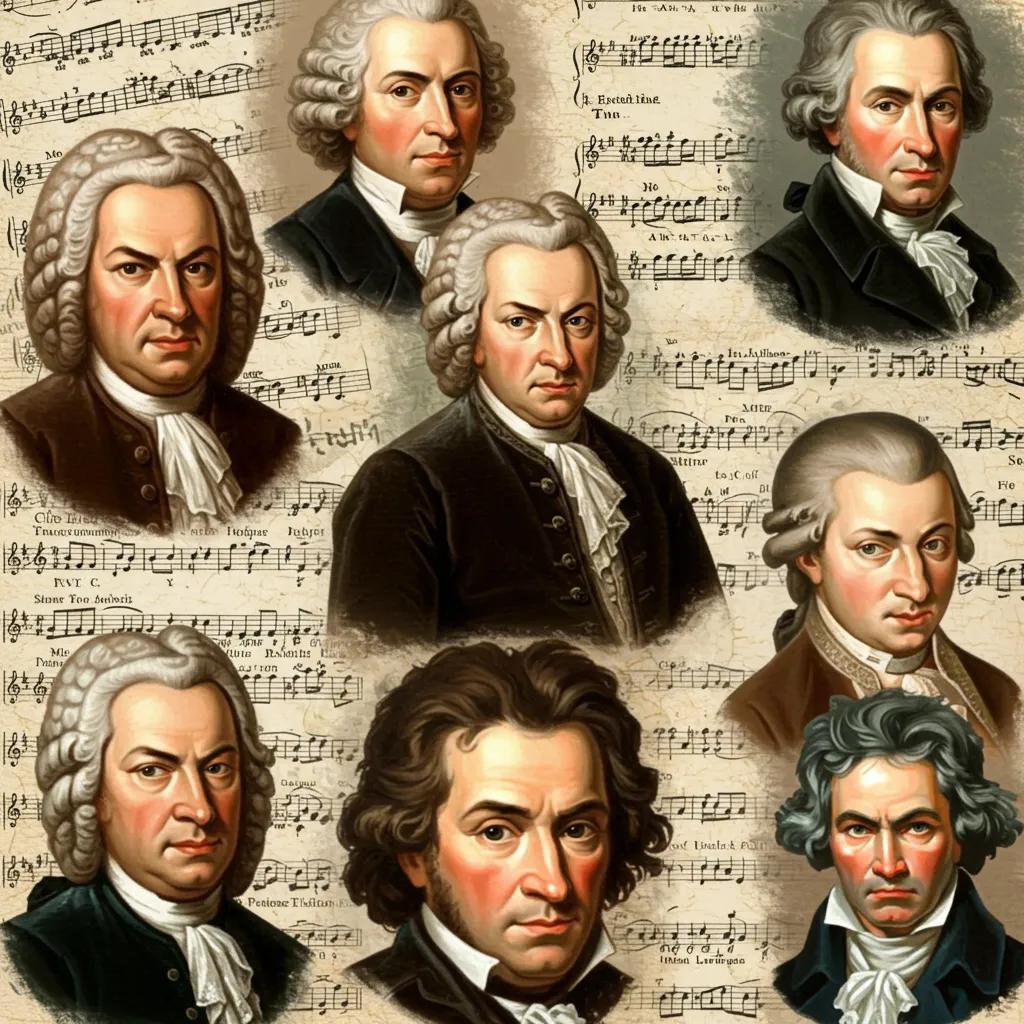
Influential composers shaped musical language through structural innovations, technical mastery, and aesthetic visions that influenced generations of practitioners and listeners, forming networks of influence that can be traced across periods. Profiling key composers clarifies their contributions to form, harmony, genre creation, and performance practice, and helps map lineage chains—who influenced whom and how stylistic elements migrated. The table below provides a concise comparison of several pivotal composers, their lifespans, and signature works that exemplify their impact.
This comparison shows diverse modes of influence—from contrapuntal technique to modal improvisation—that shaped both concert and popular music histories.
What Contributions Did Baroque Composers Like Bach and Handel Make?
Baroque composers such as Bach and Handel formalized contrapuntal technique, developed large-scale vocal and instrumental genres, and codified compositional procedures that became pedagogical cornerstones. Bach’s fugues and cantatas exemplify systematic voice-leading and harmonic architecture, while Handel’s operas and oratorios demonstrated dramatic narrative in large ensembles and public concert contexts. Their works provided models for harmonic thinking and genre conventions that informed later pedagogy and performance practice. Appreciating these contributions clarifies modern tonal conventions and compositional training.
How Did Classical Composers Such as Mozart and Haydn Shape Music?
Mozart and Haydn refined musical forms—symphony, string quartet, sonata—and advanced expressive clarity through balanced structures and motivic development, setting standards for formal coherence and classical aesthetics. Haydn’s structural experiments and Mozart’s melodic immediacy together standardized genre templates and ensemble practices used throughout the Western canon. Their emphasis on formal proportion, tonal architecture, and textural transparency influenced compositional pedagogy and created repertoires that remain central to concert life. These refinements enabled later composers to expand emotional scope within established forms.
What Defines Romantic Era Composers and Their Emotional Expression?
Romantic composers prioritized heightened emotional expression, chromatic harmony, and programmatic narratives, often expanding orchestration and virtuosity to convey personal or nationalistic themes. Composers such as Chopin and Liszt elevated the piano’s expressive range, while Wagner reimagined opera through leitmotif and orchestral density. Romanticism’s emphasis on individual feeling and extended harmonic vocabulary pushed tonal boundaries and inspired new approaches to form and orchestral color. These developments underpinned the century’s dramatic repertory and its ongoing influence on tonal language.
Which Modern Composers and Artists Influenced 20th and 21st Century Music?
Modern influence spans classical modernists and popular innovators who reshaped rhythm, harmony, and production—figures like Stravinsky and Schoenberg in classical modernism, and Miles Davis and The Beatles in popular music, each introducing radical methods of organization and timbral experimentation. Stravinsky’s rhythmic invention, Schoenberg’s serialism, and Miles Davis’s modal explorations redefined compositional practice, while popular artists used recording and studio techniques to alter song form and sonic palette. These innovators fostered cross-pollination across genres and set aesthetic parameters that contemporary artists continue to reinterpret.
How Did Music Notation and Theory Develop Through History?
Music notation and theory developed as practical solutions for preserving, teaching, and transmitting musical ideas, evolving from mnemonic neumes to precise staff notation and theoretical systems capable of describing harmony, form, and rhythm. Each advance—neumes, staff lines, mensural notation, figured bass, and modern staff—enabled greater complexity in polyphony and ensemble coordination, while theoretical writings codified rules for counterpoint, harmony, and form. The interplay between notation and theory shaped what composers could conceive and performers could realize, making notation a central actor in music’s historical development.
What Was the Role of Gregorian Chant and Early Notation Systems?
Gregorian chant and early notation systems functioned primarily to preserve liturgical melodies and support communal worship, using neumes to indicate melodic contour and relative pitch without exact rhythm. These neumatic notations provided anchors for transmission where oral memory alone risked drift, and they laid the groundwork for staff innovation that later allowed exact pitch representation. The liturgical context drove the need for preservation, making chant a textual and musical repository that influenced subsequent melodic and modal practices. Understanding these origins informs how notation later accommodated increasingly complex polyphony.
How Did Polyphony and Harmony Evolve in Renaissance and Baroque Music?
Polyphony and harmony evolved from modal counterpoint focused on independent melodic lines to tonal harmony emphasizing chordal progression and functional relationships, with the Baroque introducing figured bass as a practical shorthand for harmonic realization. Renaissance counterpoint trained composers in species techniques and voice-leading rules, while Baroque practices shifted toward vertical thinking and harmonic progression, enabling large-scale tonal forms. This evolution reflects a semantic shift in compositional priorities—from equal-voiced interweaving to hierarchical harmonic structures that support dramatic form and tonal direction.
What Are the Key Advances in Music Theory During the Classical and Romantic Periods?
Classical and Romantic periods advanced theory through formal analysis (sonata-allegro structures), expanded harmonic vocabulary (chromaticism), and orchestration treatises that systematized instrumental color and balance. Sonata form provided a blueprint for thematic development and tonal organization, while Romantic chromaticism stretched tonal boundaries and inspired new analytical tools. Orchestration manuals codified section roles and timbral combinations, enabling composers to exploit expanded orchestral forces for narrative and dramatic effect. These theoretical advances continue to guide analysis and composition pedagogy.
What Is the Historical Significance of Music in Pakistan and South Asia?
Music in Pakistan and South Asia represents a deep, continuous tradition anchored in raga and tala systems, folk idioms, devotional Sufi practices, and a rich film music industry, all of which intersect with social, religious, and political histories. These traditions contributed distinct melodic, rhythmic, and modal frameworks that influenced global music through diaspora and cultural exchange, while local media—radio, film, and television—shaped modern popular tastes. As a regional Information Hub, ARY News examines these continuities and contemporary developments to inform Pakistani and South Asian audiences about musical heritage and its ongoing influence.
The next sections examine classical South Asian development, Pakistani music history, and Islamic cultural influences that shaped regional musical trajectories.
How Did Classical South Asian Music Develop and Influence Global Traditions?
Classical South Asian music developed through codified raga (melodic frameworks) and tala (rhythmic cycles), transmitted via guru-shishya lineages and institutional gharanas that emphasized improvisation within formal constraints. Masters such as vocalists and instrumentalists carried these systems into cross-cultural collaborations during the 20th century, influencing Western composers and popular musicians attracted to modal improvisation and microtonal ornamentation. The pedagogical and improvisatory focus created flexible frameworks adaptable to fusion projects, which in turn facilitated the global diffusion of South Asian modes and rhythmic sensibilities.
What Are the Historical Roots of Pakistani Music and Its Evolution?
Pakistani music draws on pre-Partition regional folk and classical practices, evolving through institutional mediums like radio and film to form a distinctive public culture that includes ghazal, qawwali, classical, and contemporary pop. Post-1947 media infrastructures—radio broadcasts and the film industry—helped consolidate national repertoires while musicians preserved gharana traditions and rural folk idioms. Notable artists and playback singers popularized styles that blended traditional modes with modern production, shaping public taste and creating a continuity between classical practice and popular consumption in Pakistan’s musical landscape.
How Has Islamic Culture Shaped Music History in the Region?
Islamic culture influenced regional music through devotional forms such as Sufi qawwali and naats, patronage patterns in courts and religious institutions, and intellectual debates about music’s role and permissibility that varied across time and locale. Sufi traditions emphasized ecstatic and devotional musical expression that became central to cultural life, while religious scholarship and varying attitudes toward musical performance created diverse local practices. The region’s musical syncretism demonstrates how religious and cultural interactions produced unique musical expressions that both preserved heritage and adapted to changing social contexts.
What Are the Future Trends and Innovations in Music History?
Future trends in music history hinge on AI-assisted composition, platform-driven discovery, hybrid genres, and the continuing democratization of production tools, all of which will shape which works get made, preserved, and canonized. Machine learning tools now assist composers with melodic and harmonic suggestions, raise authorship and attribution questions, and enable archival restoration and stylistic emulation that may alter historical narratives. Streaming platforms and algorithmic curation will influence taste formation and what becomes historically salient, while cross-cultural collaborations and emergent scenes expand the scope of musical innovation. ARY News will continue covering these developments in its entertainment and technology reporting to keep audiences apprised of ongoing changes.
Below is a brief list of the most consequential trends to monitor.
- AI and Machine Learning: Tools that assist composition and production, raising ethical and authorship debates.
- Platform Economics: Streaming and short-form platforms shaping discovery and revenue flows.
- Genre Hybridization: Blends of regional and electronic aesthetics creating new global sounds.
These trends indicate where scholars and listeners should focus attention as new historical layers accumulate.
How Is AI Changing Music Production and Historical Narratives?
AI is changing music production by offering composition assistance, automated mixing/mastering aids, and style transfer capabilities that can emulate historical artists or produce novel hybrid sounds; this accelerates creation but raises complex authorship and copyright questions. Ethically, AI-generated works challenge how history will credit creators and preserve authenticity, since machine emulation can blur lines between original composition and algorithmic replication. Researchers and journalists must monitor legal frameworks and archival standards to ensure that future music histories accurately document provenance and creative agency. The evolving role of AI will therefore be both technological and historiographical.
What Are the Emerging Genres and Global Influences in Contemporary Music?
Emerging genres reflect hybridization and regional scenes gaining global visibility—examples include South Asian-influenced electronic pop, Afro-diasporic bass hybrids, and internet-born microgenres that spread virally. Artists and producers increasingly mix instrumentation, modes, and production aesthetics across cultural lines, creating sounds that are simultaneously local and global. Platform-driven virality accelerates adoption, letting regional innovators influence mainstream trends quickly, which reshapes the pathways by which genres enter historical narratives. Tracking these emerging forms is essential for understanding how the next chapter of music history will be written.
How Does Digital Technology Continue to Shape Music’s Evolution?
Digital technology shapes distribution, production, and consumption: streaming algorithms determine discoverability, DAWs democratize studio-grade production, and social platforms create short-form contexts that reward immediacy and shareability over long-form listening. These shifts affect economics—playlist placement and viral metrics now influence career sustainability—and aesthetics, as shorter attention spans and algorithmic formats encourage succinct, hook-driven songwriting. For historians, digital footprints create new archival possibilities but also novel selection biases, requiring careful curation to ensure representative preservation of diverse musical voices.
- Production Democratization: Affordable software and home studios empower more creators.
- Algorithmic Curation: Playlists and recommendation systems influence what listeners encounter.
- Archival Impact: Streaming metadata and social records create new primary sources for future historians.
These dynamics show that technology not only enables new music but also shapes which works enter collective memory and historical accounts.
Conclusion
Understanding the rich tapestry of music history reveals the profound connections between cultural evolution, technological advancements, and artistic expression. By exploring major musical periods, influential composers, and the evolution of genres and instruments, readers gain valuable insights into how music shapes and reflects societal changes. Embrace this knowledge to deepen your appreciation of music’s role in our lives and consider exploring further resources to enhance your journey. Discover more about the fascinating world of music history and its ongoing impact today.