Unveiling Global Power Shifts: A Comprehensive Guide to Geopolitics and International Affairs
Geopolitics delves into how geography, economics, technology, and institutions intricately shape the distribution of power among states and across regions, revealing why these shifts are crucial for national security and our daily lives. This comprehensive guide illuminates the core drivers behind contemporary global power shifts, meticulously tracing how major rivalries—particularly the US-China competition—are reshaping global trade and technology. We also map the critical regional fault lines in South Asia and the Middle East. Readers will discover concise explanations of institutional limitations, the complex interplay of sanctions and supply chains, and the emerging trends—from climate change to cyber warfare and biotech—that profoundly influence policy choices. Our analysis further highlights practical implications for Pakistan and its neighboring states, demonstrating how governance, international law, and the Women, Peace and Security agenda impact conflict resolution. Each section provides focused evidence, insightful comparison tables, and actionable lists, empowering policymakers, students, and informed citizens to interpret rapidly evolving international developments.
Unpacking the Core Drivers of Global Power Shifts in Geopolitics
Global power shifts are fundamentally propelled by a confluence of factors: economic rebalancing, intense technological competition, evolving military postures and alliance dynamics, significant institutional changes, and environmental stressors that transform resources into strategic leverage. A nation’s economic strength dictates its access to vital markets and capital, while mastery over key technologies redefines comparative advantage and coercive capabilities. Military might and strategic alliances profoundly influence deterrence and regional stability, while climate-related resource pressures escalate security risks, impacting migration patterns and state resilience. Grasping these pivotal drivers is essential to understanding why states strategically invest in supply-chain control, global standards-setting, and institutional influence.
To fully grasp these intricate dynamics, we’ll break down these drivers into actionable categories, revealing their underlying mechanisms and immediate global impacts.
This section provides a concise overview of five principal drivers, introducing targeted examples that will be explored in detail within the following subsections.
- **Core Economic Rebalancing:** How trade, investment, and sanctions fundamentally reshape relative national capacity.
- **Technology and Standards Competition:** The race in semiconductors, AI, and telecommunication networks that will define future industrial leadership.
- **Military Posture and Alliance Flux:** How deterrence, forward presence, and strategic partnerships are altering regional equilibria.
- **Environmental and Resource Stressors:** The profound impact of climate shocks driving migration and intensifying competition for vital resources.
- **Institutional Change and Normative Contestation:** The ongoing struggle over international rules and norms that influences global legitimacy and cooperation.
These drivers are deeply interconnected; for instance, technological control significantly magnifies economic pressure, while climate shocks often create new avenues for geopolitical rivalry and exacerbate humanitarian strain.
Exploring How the US-China Rivalry Reshapes Global Power Dynamics
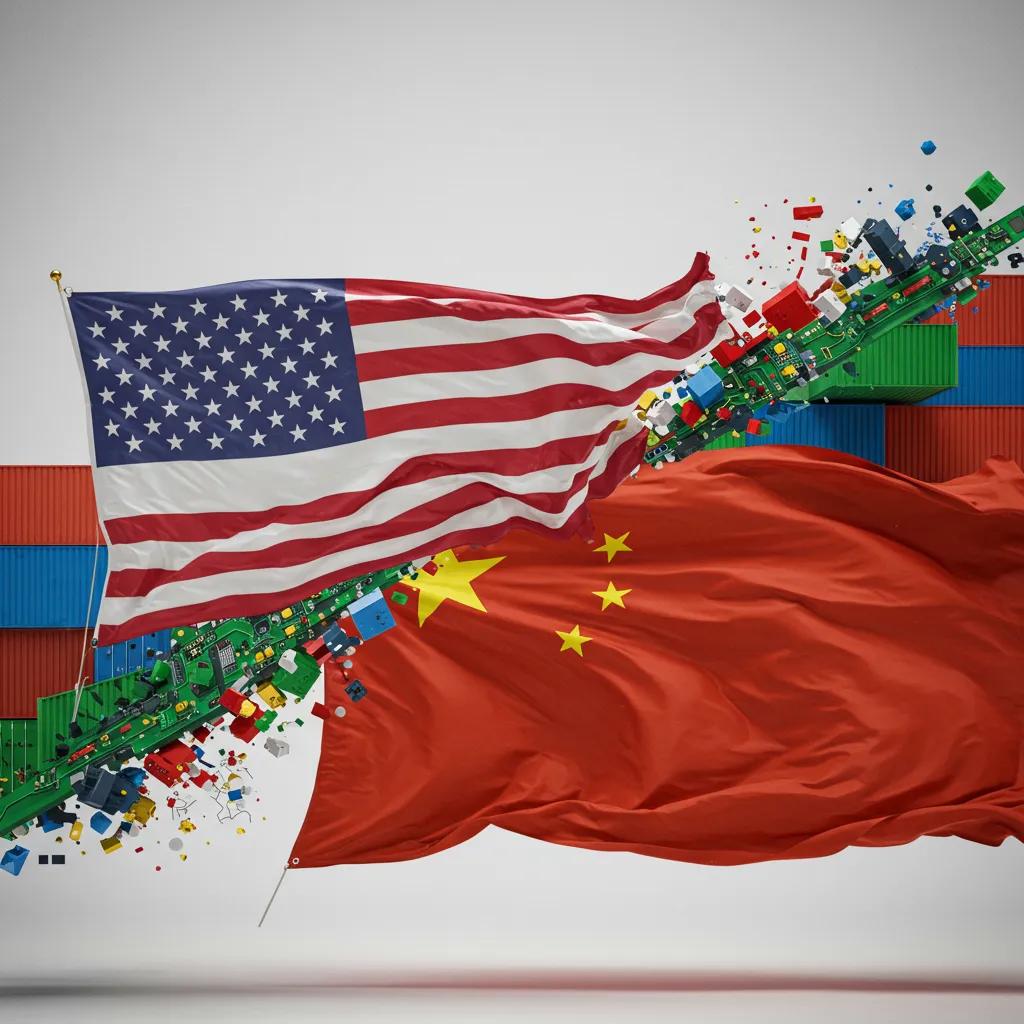
The intense US-China rivalry sharpens competition across critical domains: trade, advanced technology, diplomatic influence, and institutional access. Both nations employ sophisticated tools, including tariffs, stringent export controls, and strategic investment screening, to secure decisive advantages. This dynamic operates through both deterrence and attraction: the United States strategically leverages its robust military alliances and extensive market access, while China deploys economic statecraft and infrastructure diplomacy to forge new partnerships. Third-party states find themselves navigating significant spillovers, from supply-chain fragmentation and investment reallocation to mounting pressure to align with one side’s standards. The overarching consequence is heightened policy uncertainty for nations reliant on both global powers.
A concise timeline of recent measures—including tariffs, export controls, and intensified investment scrutiny—vividly illustrates how these policy shifts cascade into corporate strategy and reshape regional diplomacy, naturally leading us to the next section on evolving world orders.
Understanding the Role of Emerging Multipolar and Bipolar World Orders
Multipolarity, characterized by power dispersed among several influential states and blocs, offers mid-sized nations greater flexibility for hedging and balancing their interests. In contrast, bipolarity concentrates choices between two major poles, intensifying pressures for binary alignment. Within a multipolar system, strategic coalition-building and non-aligned approaches can foster greater autonomy; however, in a bipolar landscape, the imperative to choose sides escalates transactional leverage and heightens the risk of proxy competition. For nations like Pakistan, these fundamental structural options directly translate into distinct diplomatic costs, unique trade opportunities, and varied security partnerships.
Grasping the practical distinctions between these world orders is crucial for understanding why some states strategically prefer diversified international ties, while others opt for deeper, more committed alignments with a primary partner.
Exploring the Influence of Economic Sanctions and Trade Wars on International Relations
Economic sanctions and trade wars serve as potent instruments of coercion and signaling, fundamentally reshaping financial flows, access to critical inputs, and political costs for targeted states. However, these measures invariably generate significant secondary effects, including widespread supply-chain disruption and humanitarian strain. While policymakers deploy sanctions to elevate the costs of hostile behaviors, their overuse can inadvertently incentivize the development of alternative payment systems and strategic diversification, ultimately eroding long-term leverage. In response, businesses often adapt by relocating production, actively seeking “friend-shoring” partners, or investing heavily in redundancy to mitigate risks.
These intricate dynamics create a powerful feedback loop: sanctions often trigger fragmentation that further politicizes trade and technology governance, a critical aspect we will explore in detail through a focused case study on US-China trade tools.
The Profound Impact of the US-China Rivalry on Global Trade and Technology
The escalating competition over trade policy and advanced technology is actively fragmenting global supply chains and profoundly shaping the standards for critical inputs, while ambitious strategic infrastructure initiatives are fundamentally altering investment landscapes worldwide. This intense rivalry manifests through a range of powerful tools: tariffs, stringent export controls, investment restrictions, and competing visions for infrastructure finance. Each of these levers significantly alters market incentives and dictates the geographical location of strategic industries. The following subsections will meticulously compare these policy levers, analyze their economic impacts, and examine the strategic role of transformative infrastructures like China’s Belt and Road Initiative.
Below, we present a concise table offering a direct comparison of key US and China policy levers and their immediate economic and technological impacts.
This insightful comparison clearly demonstrates how these complementary policy tools collectively construct a complex strategic mosaic that third countries must skillfully navigate to preserve both market access and national autonomy. The following subsections will meticulously unpack the intricacies of economic tariffs, the profound implications of technological decoupling, and the dynamic interplay of BRI/CPEC initiatives.
Exploring the Economic Implications of US Tariffs on China
US tariffs imposed on Chinese goods act as a significant price shock, fundamentally altering global trade flows, shifting production locations, and impacting consumer costs. This often compels businesses to adopt nearshoring or robust supplier diversification strategies. Sectoral effects are particularly concentrated in electronics, machinery, and intermediate goods, where tariffs elevate production costs and incentivize firms to relocate assembly operations or seek alternative inputs. For smaller economies, these shifts can both reshape export demand, creating opportunities in specialized supplier niches, and simultaneously drive up import prices, contributing to inflationary pressures. Consequently, policymakers must carefully balance the desire for short-term protection against the imperative of long-term competitiveness and supply chain resilience.
These tariff-driven shifts are directly linked to critical decisions regarding export controls and technological bifurcation, dynamics that significantly amplify the next topic: the profound supply-chain effects of decoupling.
The Far-Reaching Impact of Technological Decoupling on Global Supply Chains
Technological decoupling—driven by stringent export controls, investment restrictions, and the exclusion from key standards—is actively fragmenting global innovation ecosystems and compelling critical nodes to fundamentally reconfigure, particularly in vital sectors such as semiconductors, rare-earth processing, and telecommunications. In response, firms are adopting robust diversification strategies, including “friend-shoring,” dual-sourcing, and reshoring for sensitive components, while governments are strategically investing in domestic capacity for paramount national security reasons. The immediate consequence is elevated costs and a slower diffusion of new technologies, but the longer-term outcome could be the emergence of distinct innovation blocs, each possessing redundant capabilities.
A thorough understanding of these intricate mechanisms is vital for governments to craft effective mitigation policies that judiciously retain openness where feasible, while rigorously safeguarding critical national capacities.
Unveiling the Geopolitical Significance of China’s Belt and Road Initiative
China’s ambitious Belt and Road Initiative (BRI), with the China-Pakistan Economic Corridor (CPEC) serving as a high-profile regional example, strategically combines massive infrastructure investment, comprehensive financing, and extensive diplomatic outreach to deepen economic ties and expand strategic influence across vast regions. While BRI projects undeniably create vital market access and enhanced connectivity, potentially boosting growth in partner states, they also raise critical questions regarding debt sustainability, procurement transparency, and strategic access. For host countries, the benefits include transformative transport corridors and essential energy projects; however, the risks encompass significant contingent liabilities and potential political dependence. Therefore, a thorough assessment of these projects necessitates carefully weighing tangible economic returns against crucial strategic trade-offs.
This critical assessment naturally leads us to region-specific comparisons within South Asia, where the dynamics of CPEC are particularly salient and impactful.
Navigating the Current Geopolitical Challenges in South Asia

South Asia is currently navigating a complex confluence of intersecting security, political, and economic pressures. These include the persistently tense Pakistan–India relations, significant cross-border spillovers emanating from Afghanistan, the profound strategic influence of CPEC, and an ever-shifting web of regional alliances. Border incidents and intense competition for influence directly impact vital trade corridors and investor confidence, while Afghanistan’s inherent instability shapes regional security calculations and drives substantial refugee flows. Economic corridors such as CPEC promise enhanced connectivity and crucial investment, yet they also amplify strategic entanglements. The following comparative table distills the key attributes and challenges across Pakistan, India, and Afghanistan.
This insightful comparison vividly highlights the divergent yet deeply interconnected vulnerabilities and opportunities that fundamentally shape regional stability and critical policy choices across South Asia.
For our Pakistani audience, these regional dynamics hold direct and profound significance. ARY News, as a dedicated information hub, is committed to contextualizing these pivotal shifts with timely, locally relevant reporting. By meticulously translating complex strategic trends into clear, Pakistan-first implications, our comprehensive coverage empowers citizens and policymakers alike to fully understand the critical trade-offs and available options.
The Profound Impact of Pakistan-India Relations on Regional Security
Pakistan–India relations continue to represent the central bilateral fault line in South Asia, a region where border disputes, airspace incidents, and evolving naval postures can rapidly escalate from diplomatic standoffs into widespread instability. Military confrontations invariably disrupt vital trade and cooperation, harden domestic political stances, and significantly complicate third-party mediation efforts. While confidence-building measures—suchs as direct hotlines, observer mechanisms, and trade facilitation—are crucial for reducing the risk of miscalculation, sustained political will remains absolutely essential. This bilateral relationship thus functions as both a potent regional risk amplifier and a critical test case for robust crisis-management frameworks.
These intricate security dynamics are inextricably linked with crucial economic decisions, including efficient corridor management and broader regional trade integration initiatives.
Understanding Afghanistan’s Pivotal Role in South Asian Stability
Afghanistan’s inherent fragility generates significant cross-border security spillovers, substantial refugee movements, and the proliferation of transnational criminal networks, all of which profoundly impact the domestic stability of neighboring states. Non-state actors operating from unstable Afghan territory complicate vital counterterrorism efforts and diplomatic engagement, while escalating migration pressures severely strain social services across the region. Although regional cooperation mechanisms—if effectively applied—can coordinate crucial humanitarian aid, border management, and stabilization support, geopolitical rivalries frequently complicate unified responses. Consequently, Afghanistan remains a pivotal and complex variable in all South Asian security calculations.
Exploring How CPEC Influences Economic and Strategic Dynamics
The China-Pakistan Economic Corridor (CPEC) strategically bundles critical infrastructure, energy, and transport projects, designed to significantly enhance connectivity and industrial capacity within Pakistan while simultaneously deepening economic ties with external partners. This ambitious initiative necessitates crucial policy choices regarding financing terms, local content utilization, and strategic access, and it holds the potential to profoundly influence domestic politics through job creation and regional development. However, the ultimate sustainability and broad distribution of its gains hinge critically on transparency, adherence to robust environmental standards, and sound debt-management strategies. Therefore, balancing immediate growth imperatives against long-term national sovereignty and fiscal health is absolutely central to maximizing CPEC’s multifaceted benefits.
This inherent trade-off between immense opportunity and potential dependence mirrors similar strategic decisions observed across various regions, and it directly informs the complex alliance dynamics we will explore in the next subsection.
Unveiling the Key Regional Alliances Shaping South Asia
Regional alliances—encompassing both formal pacts and informal understandings—include crucial state-to-state partnerships, robust security agreements, and influential economic groupings that collectively shift the balance of influence and expand the strategic choices available to South Asian governments. India’s burgeoning partnerships with major democracies offer enhanced security cooperation and vital market access; similarly, Pakistan’s diverse alliances serve to broaden its strategic options and economic partnerships. Multilateral mechanisms and carefully calibrated selective alignment strategies empower states to effectively hedge against risks while simultaneously pursuing deeper economic integration. The practical outcome is a dynamic diplomatic marketplace where states meticulously calibrate their partnerships to preserve national autonomy and maximize strategic benefits.
These critical alliance choices, in turn, directly influence how states respond to overarching global drivers such as trade fragmentation and technological decoupling.
Exploring How the Middle East Geopolitical Landscape Influences Global Affairs
The Middle East wields an outsized influence on global affairs, primarily through its pivotal energy markets, persistent proxy conflicts, and geopolitically significant flashpoints like the Israeli-Palestinian dispute and Iran’s assertive regional posture. Energy security inextricably links regional stability to global price volatility and industrial planning worldwide, while protracted proxy warfare and external sponsorship prolong conflicts and severely complicate resolution efforts. Evolving regional alignments and normalization processes are fundamentally redrawing diplomatic maps and reshaping the strategic calculus of external powers. The following subsections will meticulously examine recent developments, Iran’s multifaceted influence, the critical dynamics of energy, and the intricate mechanics of proxy conflicts.
A profound understanding of Middle Eastern dynamics is absolutely crucial for navigating global markets, shaping effective security policy, and ensuring robust humanitarian planning.
Latest Developments in the Israeli-Palestinian Conflict: A Critical Overview
Recent escalations within the Israeli-Palestinian arena have tragically ignited severe humanitarian crises, spurred intense diplomatic mobilization, and generated far-reaching geopolitical ripple effects. These developments necessitate urgent multilateral responses and present exceptionally complex peacemaking challenges. While ceasefire diplomacy, the establishment of humanitarian corridors, and legal debates over conduct significantly shape international engagement, a truly durable resolution demands comprehensive political arrangements that address core grievances. The immediate international response frequently encompasses sanctions, substantial aid pledges, and concerted mediation efforts, all of which impact wider alliances and domestic politics throughout the region.
These critical developments also profoundly intersect with Women, Peace and Security (WPS) concerns, which we will discuss later, particularly regarding the imperative of civilian protection and ensuring unhindered humanitarian access.
Exploring How Iran’s Regional Influence Affects Power Balances
Iran strategically projects its influence through a network of state proxies, deep regional civic and political ties, and formidable strategic deterrence capabilities, all of which significantly impact Gulf security, Israel’s strategic calculations, and broader great-power engagement. Its extensive proxy networks offer asymmetric tools for influence, operating effectively below the threshold of direct confrontation, while ongoing nuclear diplomacy and stringent sanctions regimes continually shape Tehran’s strategic options. The cumulative result is a complex regional environment where states actively hedge, align, or counterbalance Iran’s influence through carefully constructed partnerships and robust defense postures.
These intricate dynamics are inextricably linked to the broader landscape of energy security and the pivotal role played by external powers within the region.
The Critical Role of Energy Security in Gulf Geopolitics
Energy exports and evolving transition strategies serve as the bedrock of Gulf states’ global clout and meticulous economic planning. Any shifts in global demand or supply risks immediately impact national revenues and international leverage. While strategic investments in diversification and renewable energy transitions are building long-term resilience, near-term dependence on hydrocarbon revenues profoundly shapes foreign policy and domestic stability. Consequently, global markets closely monitor Gulf energy policy for crucial signals regarding price volatility, investment flows, and overarching geopolitical stability.
The intricate interplay between energy policy and security precisely explains why proxy wars and intense external competition continue to endure in the region.
Exploring How Proxy Wars Shape Middle East Stability
Proxy wars strategically employ surrogate groups and local militias to project power indirectly, tragically resulting in protracted conflict, immense humanitarian suffering, and widespread regional spillovers that severely undermine governance and reconstruction efforts. While external sponsors gain strategic depth without the costs of overt occupation, prolonged proxy engagement invariably breeds destructive cycles of instability that critically hinder economic recovery and erode social cohesion.
Effectively addressing these complex proxy dynamics necessitates robust diplomatic channels that actively reduce incentives for external interference and simultaneously strengthen local governance capacities.
Unveiling the Role of Global Governance and International Law in Geopolitics
Global governance and international law establish crucial frameworks—encompassing rules, norms, and institutions—that possess the potential to mitigate conflict, effectively manage transnational challenges, and coordinate collective responses. However, they frequently confront significant enforcement limitations and pervasive politicization. Institutions such as the United Nations offer vital tools for peacekeeping, mediation, and sanctions, yet political constraints and the exercise of veto powers often restrict their decisive action. International law meticulously balances state sovereignty against the imperative of accountability for abuses, leading to complex and often contentious jurisdictional debates. The sections below will thoroughly examine the UN’s multifaceted role, the inherent legal challenges, the evolving landscape of climate diplomacy, and the profound effects of human rights on geopolitics.
A comprehensive exploration of these institutional strengths and weaknesses is essential for clarifying where targeted reforms or more robust diplomacy can effectively reduce global risks.
The United Nations’ Pivotal Contribution to Conflict Resolution
The United Nations offers indispensable mediation venues, critical peacekeeping operations, and vital sanctions frameworks, all designed to manage conflict escalation and provide neutral facilitation. However, its effectiveness often varies significantly with the clarity of its mandate and the unwavering support of member states. Successful UN missions typically combine strong political backing, robust rules of engagement, and coherent exit strategies; conversely, failures frequently arise from contested mandates and insufficient resources. Recent UN actions vividly illustrate both the immense potential for coordinated humanitarian access and the inherent limits imposed by the complexities of great-power politics.
These crucial operational insights naturally lead us to explore the ongoing debates surrounding legal frameworks and the concept of sovereignty in the following subsection.
Navigating the Complex Challenges of International Law and Sovereignty
International law consistently grapples with an inherent tension between respecting state sovereignty and rigorously enforcing norms for human rights and accountability. This often leads to complex jurisdictional disputes and accusations of selective application. Instruments such as international criminal tribunals confront formidable evidentiary, logistical, and political hurdles, while states frequently invoke sovereignty to staunchly resist external intervention. The cumulative effect is a highly contested terrain where legal norms advance slowly and unevenly, profoundly shaping diplomatic choices and domestic politics worldwide.
Effectively resolving these persistent tensions directly impacts the efficacy of climate diplomacy and the next critical policy domain we will examine.
Exploring How Climate Diplomacy Is Shaping Global Agreements
Climate diplomacy intricately integrates mitigation efforts, adaptation finance, and crucial loss-and-damage negotiations into complex interstate bargaining. This process profoundly intersects with global development priorities and pressing security concerns. Nations meticulously negotiate emissions pathways, innovative finance mechanisms, and technology transfer rules, while the escalating impacts of climate change drive significant migration and intensify resource competition, leading to profound geopolitical consequences. Truly effective diplomacy successfully links finance to resilience-building and offers viable transitional pathways that actively reduce security spillovers.
These evolving diplomatic mechanisms are increasingly intersecting with the human-rights frameworks that we will discuss next.
The Profound Impact of Human Rights on International Affairs
Human-rights narratives significantly influence diplomatic legitimacy, inform critical sanctions choices, and shape coalition-building efforts, often profoundly impacting public opinion and the policy agendas of liberal democracies. When egregious rights abuses occur, international actors may impose targeted sanctions, restrict trade, or support legal litigation. However, such actions can also provoke strong counter-reactions and severely complicate humanitarian access.
Striking the delicate balance between robust rights-based advocacy and pragmatic engagement remains a recurring and complex policy challenge for multilateral actors worldwide.
Exploring Emerging Trends Shaping the Future of Geopolitics
A powerful confluence of converging trends—including climate change, the rise of cybersecurity and digital sovereignty, advancements in biotechnology, and increasing trade fragmentation—is fundamentally reshaping global threat perceptions, economic planning, and governance choices. These trends carry profound, cross-cutting implications for security and migration. While each trend operates through distinct mechanisms, they collectively produce similar strategic effects: intensified state competition for critical inputs, mounting pressure on international institutions, and the emergence of entirely new domains of contestation. The comprehensive table below meticulously maps these trends to their underlying mechanisms and resulting geopolitical effects, aiming to clarify critical priorities for policymakers.
This comprehensive mapping clearly highlights critical areas where strategic investments in resilience, robust governance, and cooperative norms can effectively mitigate severe security consequences.
Exploring How Climate Change Affects Security and Migration
Climate change profoundly amplifies resource scarcity, inflicts extensive damage on critical infrastructure, and displaces vast populations, thereby intensifying competition and significantly elevating the risk of localized conflicts that frequently spill across borders. Extreme weather events trigger sudden, mass displacement and severely strain state response capacities, while gradual shifts in arable land and water availability drive longer-term migration patterns. These escalating pressures create both immense humanitarian challenges and complex strategic dilemmas concerning burden-sharing and adaptation finance.
Effectively addressing these multifaceted climate-security risks necessitates integrated and proactive planning across disaster management, migration policy, and diplomatic engagement.
The Geopolitical Implications of Cybersecurity and Digital Sovereignty
Digital sovereignty initiatives—encompassing data localization, national cloud policies, and the setting of proprietary standards—reflect states’ growing imperative to control information flows and rigorously protect critical infrastructure. However, these efforts also inadvertently fragment the global internet ecosystem. State-sponsored cyber operations introduce potent coercive instruments that operate below kinetic thresholds, significantly complicating deterrence and attribution. The cumulative result is a complex strategic environment where robust norms, enhanced resilience, and unwavering international cooperation on vulnerabilities are absolutely essential to mitigate escalation risks.
Effective policy responses must include the development of interoperable norms, robust incident-sharing mechanisms, and strategic investment in defensive cyber capacities.
Exploring How Biotechnology Is Becoming a New Geopolitical Frontier
Rapid advancements in biotechnology are generating new national-security sensitivities, particularly concerning research capacity, the intricate supply chains for biological inputs, and the capabilities for rapid medical response. Dual-use research, with its potential for both beneficial and harmful applications, raises critical questions regarding governance and export controls, while intense competition for top talent and advanced facilities drives significant strategic investments. States that cultivate robust oversight and foster transparent international collaboration can both fully benefit from groundbreaking innovation and effectively manage inherent biosecurity risks.
Enhanced international cooperation on research standards and the development of agile emergency response mechanisms are crucial for mitigating the most dangerous biosecurity spillovers.
The Economic Impact of Trade Fragmentation and Sanctions
Trade fragmentation significantly increases transaction costs, diminishes overall efficiency, and fundamentally reshapes global value chains, pushing them towards regionalization or “friend-shoring” models. This creates distinct winners and losers across various sectors and regions. While sanctions are designed to exert targeted pressure, they can also inadvertently spur the development of alternative financial architectures and new supply arrangements, potentially weakening long-term leverage. Economies heavily dependent on open trade face the prospect of slower growth and higher operational costs, necessitating adaptive industrial policies and strategic diversification to maintain competitiveness.
Policymakers, therefore, must implement targeted measures that effectively support firms through these transitions while judiciously preserving strategic openness where possible.
Integrating Women, Peace, and Security Issues into Geopolitical Analysis
The Women, Peace and Security (WPS) agenda meticulously integrates gendered analysis into every stage of conflict prevention, peace processes, and post-conflict reconstruction. It fundamentally recognizes that truly inclusive approaches consistently yield more durable outcomes and provide enhanced protection for civilians. UNSCR 1325 and its subsequent resolutions emphatically underscore women’s vital participation, protection, and rights as absolutely central to effective peacebuilding. Operationalizing WPS demands robust institutional commitments, dedicated resources, and keen attention to contextual constraints prevalent in active conflict zones. The following subsections will outline the profound significance of UNSCR 1325, explore how gender perspectives critically influence peace outcomes, and detail the persistent implementation challenges in global hotspots.
These crucial considerations effectively bridge normative frameworks and practical operational strategies, ultimately leading to more effective and equitable conflict responses.
The Enduring Significance of UNSCR 1325 in Global Peacebuilding
UNSCR 1325 stands as a landmark resolution that formally established the Women, Peace and Security (WPS) agenda. It unequivocally calls for women’s meaningful participation in all peace processes, robust protection from sexual and gender-based violence, and the systematic integration of gender perspectives into conflict resolution efforts. This pivotal resolution fundamentally reframed peacebuilding to recognize gender as an essential stability factor, actively encouraging the development of national action plans and comprehensive monitoring frameworks. While commendable progress has been achieved in many countries, significant implementation gaps regrettably persist, often due to limited funding and entrenched political obstacles.
A thorough assessment of UNSCR 1325’s impact is vital for prioritizing actionable reforms that will genuinely strengthen peace processes and foster greater inclusion.
Exploring How Gender Perspectives Influence Conflict Resolution
Integrating gender perspectives fundamentally alters priorities in negotiation and reconstruction efforts by spotlighting critical protection needs, fostering economic inclusion, and championing social cohesion initiatives that are indispensable for long-term reconciliation. Inclusive processes that genuinely incorporate women’s voices consistently tend to produce agreements with broader legitimacy and more effective implementation mechanisms. However, persistent barriers such as exclusionary political structures and pervasive security risks severely limit meaningful participation without dedicated targeted support and robust safeguards.
Therefore, strengthening meaningful participation unequivocally requires dedicated resources and comprehensive institutional reforms to effectively dismantle structural obstacles.
Challenges of Implementing WPS in Conflict Zones: A Case Study of Gaza
Implementing the Women, Peace and Security (WPS) agenda in active conflict zones confronts formidable operational constraints—including severe access restrictions, heightened security risks, and competing political claims—all of which critically hinder protection and participation efforts. Pervasive humanitarian access limitations and highly politicized environments make it exceptionally difficult to implement gender-sensitive programming or ensure women’s meaningful inclusion in crucial negotiations. Overcoming these profound challenges demands coordinated advocacy, flexible funding mechanisms, and robust protection guarantees that unequivocally prioritize civilian safety and inclusion.
- This comprehensive article meticulously covered the major drivers and critical regional case studies that are profoundly shaping contemporary geopolitics.
- Our in-depth analysis seamlessly integrated institutional, technological, and environmental lenses to vividly illustrate how global power shifts manifest across various domains.
- For our Pakistan-focused audiences, timely, locally relevant reporting and insightful analysis remain absolutely essential for navigating these complex dynamics.
These meticulously crafted lists and insightful tables collectively provide an invaluable operational map for readers seeking to deeply understand and effectively respond to the rapidly evolving landscape of geopolitical change.
Conclusion: Navigating the Evolving Geopolitical Landscape
This comprehensive analysis of global power shifts has illuminated the intricate interplay of economic, technological, and geopolitical factors that are fundamentally shaping contemporary international relations. By thoroughly understanding these dynamic forces, our readers are now better equipped to navigate the profound complexities of global affairs and grasp their far-reaching implications for regional stability, especially within South Asia. We strongly encourage you to explore our further resources and insights to remain consistently informed about these critical and ongoing developments. Stay engaged with ARY News content to continually deepen your understanding of the ever-evolving geopolitical landscape.