UN Peacekeeping Missions: Your Comprehensive Guide to Roles, Mandates, and Future Directions
UN peacekeeping missions stand as vital multilateral operations, meticulously crafted to stabilize conflict zones, safeguard civilians, and cultivate environments conducive to lasting political solutions through a strategic blend of military, police, and civilian endeavors. This essential guide delves into the intricate workings of UN peacekeeping, exploring the mandates that define their scope, the nations contributing personnel, the operational and political hurdles encountered, and how success is measured and adapted for emerging global threats. Readers will gain crystal-clear definitions, practical procedural insights, measurable indicators, and forward-looking analyses of technological advancements and cooperative trends shaping peacekeeping effectiveness. Many conflicts persist due to rapidly closing political windows and uneven operational capacities; robust peacekeeping efforts are crucial in bridging security gaps while empowering diplomatic processes. This piece meticulously outlines core objectives, contributor responsibilities, mandate formulation, field challenges, measurement frameworks, historical lessons, and future trajectories—including the pivotal roles of technology and international collaboration—to equip policy-aware readers and practitioners with an actionable understanding of peacekeeping operations and their inherent limitations.
Exploring UN Peacekeeping Operations and Their Core Objectives
UN peacekeeping operations represent authorized international security endeavors, deploying military contingents, police units, and civilian components to bolster conflict resolution and foster stability. These operations function by meticulously implementing mandates established by the Security Council and guided by the Secretary-General, effectively translating high-level political decisions into tangible, on-the-ground tasks designed to mitigate violence and protect civilian populations. Their distinct value lies in providing a neutral, multilateral presence capable of deterring escalation, facilitating humanitarian access, and actively supporting political processes. Below, we detail these core objectives and illustrate how integrated mission structures transform them into both routine and contingency activities.
UN operations distinguish themselves from peace enforcement or peacebuilding through their primary emphasis: peacekeeping typically necessitates host-state consent and centers on stabilization, whereas enforcement may employ more assertive coercive measures. Grasping these distinctions is key to understanding why mandates vary significantly and why mission composition is always meticulously tailored to specific contexts. The subsequent section illuminates how international peacekeeping forces operate when deployed to volatile environments.
How International Peacekeeping Forces Operate in Conflict Zones
International peacekeeping forces operate through a structured approach involving phased deployment, an integrated command framework, and close collaboration with host-state authorities and humanitarian partners. Initially, forces are deployed to secure critical areas, establishing regular patrol routines and checkpoints to deter violence. Command responsibilities are strategically divided between the Special Representative of the Secretary-General (SRSG) for political leadership and a dedicated Force Commander for military operations. Civilian components contribute vital expertise in political affairs, human rights, and rule of law, while police units concentrate on community policing and capacity-building, collectively forging a multi-layered strategy for stability. This comprehensive deployment and coordination model empowers missions to dynamically adjust tasks, from routine patrols to robust civilian protection, as conditions evolve, directly influencing the mandate components that define these crucial responsibilities.
Key Components of Peacekeeping Mission Mandates
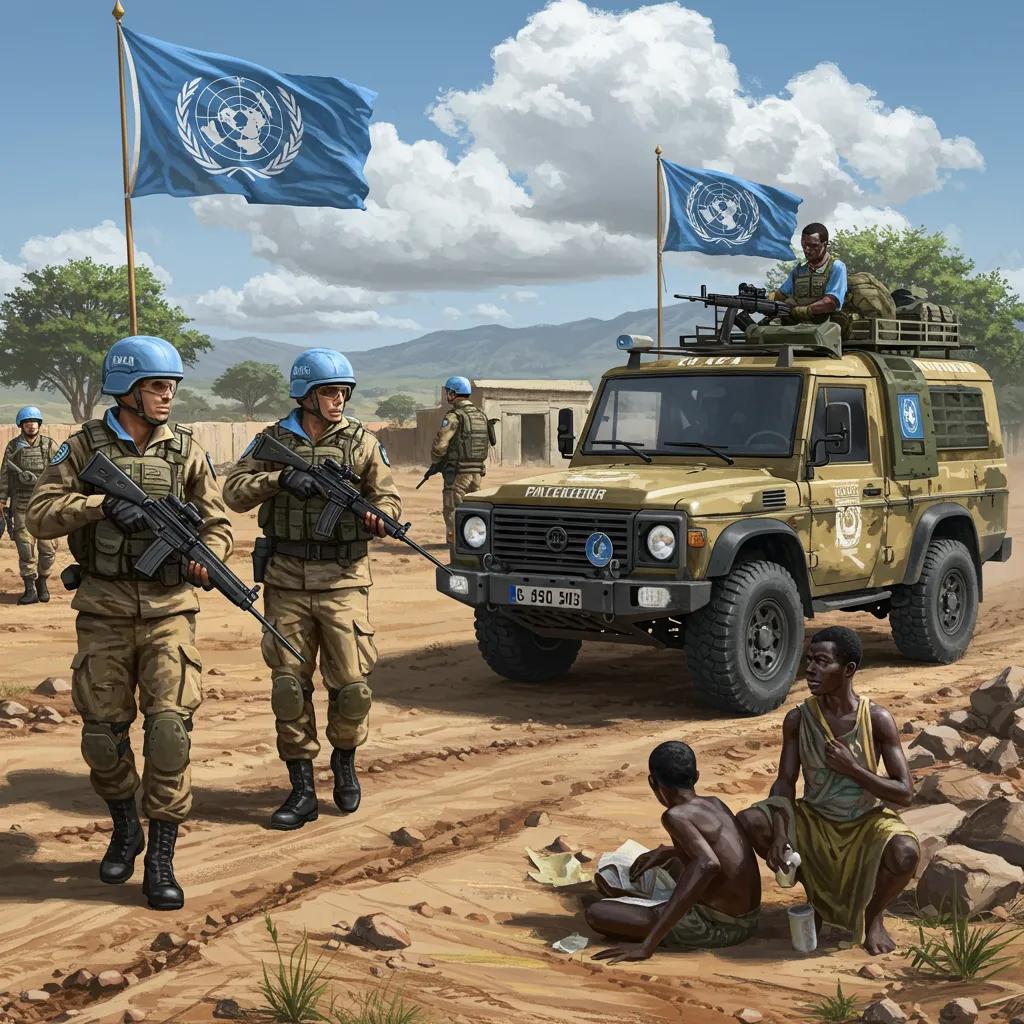
Mandates typically encompass the protection of civilians, monitoring and verification of ceasefires, support for political processes, disarmament, demobilization and reintegration (DDR) programs, and institution-building initiatives such as police reform and judicial assistance. Each component translates into specific operational tasks: protection mandates lead to patrols and area security, monitoring mandates involve reporting and incident verification, and capacity-building mandates result in training programs for local forces and judicial actors. These mandate elements are carefully selected to address the political and security drivers of violence and to establish conditions conducive to stable governance. A clear understanding of these components helps stakeholders grasp expected activities and how mission success can be measured in practical operational terms.
How UN Peacekeeping Missions Advance Global Conflict Resolution
UN peacekeeping actively advances conflict resolution by establishing secure environments for negotiations, providing impartial monitoring that fosters trust between parties, and enabling humanitarian access to stabilize affected populations. Peacekeepers play a crucial role in facilitating ceasefire implementation and verification, while also supporting political mediation efforts led by diplomatic actors, thereby forging a vital link between security and political processes. Civilian mission elements engage directly with local stakeholders and national institutions to bolster governance capacity, making negotiated settlements more resilient and enduring. These mechanisms clearly demonstrate how peacekeeping effectively complements diplomacy and aid, and our next section will explore which countries provide the essential personnel and resources that make these critical functions possible.
Nations Contributing to International Peacekeeping Forces
Contributions to peacekeeping efforts originate from Troop-Contributing Countries (TCCs), Police-Contributing Countries (PCCs), and member states that provide crucial logistics, medical units, engineering, and other essential support elements. These contributors volunteer personnel and capabilities, driven by a combination of diplomatic engagement, national security interests, valuable training opportunities, and a profound sense of international responsibility. The practical outcome is a multinational force characterized by diverse national equipment standards, languages, and doctrines, necessitating robust interoperability frameworks to ensure effective functioning. Below, we summarize the typical types of contributions and how they align with specific roles within missions.
Troop- and police-contributing nations frequently coordinate pre-deployment training and interoperability measures through established UN channels to harmonize operational expectations. Logistics and engineering support from contributors are vital for the mobility and sustainment of field units, while medical and aviation assets provide essential force protection and emergency response capabilities. Understanding these diverse contribution types clarifies why multinational cooperation, while a significant strength, also introduces layers of complexity for operations. The following table offers a quick reference, comparing contribution types with their example roles.
Diverse contributors provide troops, police, logistics, and specialist capabilities, collectively sustaining mission tasks.
This comparison vividly illustrates how varied contributions translate into complementary operational capabilities, enabling mandates to be successfully executed. Next, we will delve into the distinct roles of troops and police in greater detail.
Roles of Troop- and Police-Contributing Countries
Troops primarily focus on area security, deterrence, and rapid reaction to safeguard civilians and critical infrastructure, while police units emphasize law-and-order functions, the training of local police forces, and community-oriented policing. Military contingents conduct patrols, secure vital supply routes, and undertake force-protection missions that stabilize contested areas, thereby enabling civilian activities and humanitarian relief efforts. Police-contributing contingents engage in mentoring, advisory roles, and civilian protection through non-lethal crowd management and judicial liaison. Recognizing these complementary roles is essential for effective mission design and the strategic allocation of tasks across contributing countries.
Enhancing Peacekeeping Effectiveness Through Multinational Cooperation
Multinational cooperation significantly enhances legitimacy, facilitates burden-sharing, and provides access to a broader spectrum of capabilities. However, it also demands meticulous coordination to navigate interoperability challenges, command language differences, and divergent national caveats. Shared training standards, pre-deployment exercises, and UN-led doctrine harmonization are crucial in bridging capability gaps and fostering predictable operational behavior across diverse contingents. Political legitimacy is strengthened when missions include regional and geographically diverse contributors, which can ease host-state acceptance and facilitate broader diplomatic engagement. These intricate coordination mechanisms lay the groundwork for how mandates are developed and implemented, a topic we will explore next.
To support continuous tracking of contributions and mission developments, our platform—serving as a dedicated Information Hub—provides ongoing coverage and in-depth analysis. We are committed to delivering timely and comprehensive news and current affairs, ensuring our audience remains informed and engaged with a diverse range of content.
UN Peacekeeping Operations: Challenges, Effectiveness, and Reforms for Sustainable Peace
The UN attempts to achieve this mandate through different means including peacekeeping by deploying personnel and experts in conflict situations. The UN has adopted number of policies and mechanism to strengthen its peacekeeping operations. Although there are number of activities focusing on peacekeeping with notable successful operations, the UN still face issues and challenges which have been negatively influencing the efficiency, effectiveness and the success of its peacekeeping operations. This paper has attempted to examine the key activities of UN peacekeeping operations, their impact, and the major issues that negatively influence and challenge the peacekeeping operations. The study has found that the UN peacekeeping operations have worked effectively in managing conflict situations and establishing peace in many parts of the world. However, the shortcomings and issues particularly in terms of political, military and humanitarian aspects of the operations have negatively influenced the peacekeeping operations in achieving their targets successfully. The study urges the importance of policy and institutional reforms together with commitments of parties, institutions, and involving actors in order to strengthen peacekeeping operations and establish sustainable peace in many corners in the world.
The United Nations peacekeeping operations and challenges, A Sarjoon, 2019
Developing and Implementing Peacekeeping Mission Mandates
Mandates for UN peacekeeping missions serve as the legal and operational blueprints, meticulously defining objectives, tasks, and rules of engagement. Their development follows a precise sequence: initial proposal, Security Council decision, and subsequent Secretariat implementation guidance. The process commences with thorough political assessments and field reports, which inform the Secretary-General’s recommendations. This is followed by Security Council deliberation and the adoption of resolutions that formally authorize the mandate. Implementation then falls to the Department of Peace Operations and mission leadership, who translate the mandate into actionable operational plans, resource requests, and specific rules of engagement. This structured, stepwise process clarifies both the inherent legitimacy of mandates and the essential mechanisms for their adaptation as situations on the ground evolve.
Mandate components are operationalized through clearly defined responsibilities assigned to military, police, and civilian elements, supported by regular reporting and review cycles to ensure ongoing relevance. The dynamic interplay between legal authorization and field-level adaptation empowers missions to respond effectively to changing dynamics while maintaining accountability to the Security Council. The next section provides a concise overview of who determines mandates and the typical procedural steps involved.
The following table summarizes mandate components, responsible actors, and typical tasks, illustrating how mandates translate into tangible field outputs.
Mandate building blocks precisely map responsibilities to on-the-ground tasks and institutional actors.
This table clearly illustrates how mandate language transforms into concrete tasks executed by mission components. The subsequent subsection details who, in practice, decides these crucial mandates.
Who Determines Mandates for UN Peacekeeping Missions?
While the Security Council serves as the legal authorizer of peacekeeping mandates, their formulation is a collaborative effort involving the Secretary-General, the Department of Peace Operations, field leadership, and crucial input from member states and regional organizations. The Secretary-General compiles comprehensive field assessments and issues recommendations that inform Council deliberations, while DPO provides essential operational guidance on feasibility and resource requirements. Regional bodies and troop-contributing countries can significantly influence the shaping of mandates through diplomatic engagement and practical considerations, ensuring that political objectives align with available capacities. This multi-actor process meticulously balances political aspirations with operational realities, leading directly into an inventory of typical tasks mandated for missions.
Typical Tasks Included in Peacekeeping Mandates
Typical mandate tasks encompass the protection of civilians and humanitarian corridors, ceasefire monitoring, support for elections and political dialogue, Disarmament, Demobilization, and Reintegration (DDR) programs, and institution-building for police and judicial systems. Operationalizing these tasks involves meticulously allocating patrol schedules, establishing robust monitoring systems, training local officials, and coordinating humanitarian logistics with relevant agencies. Success in these tasks hinges on the clarity of mandate language, the adequacy of resources, and effective civil-military coordination to prevent operational gaps. A thorough understanding of these practical tasks is indispensable for accurately measuring mission impact and adapting mandates to evolving ground realities.
Adapting Mandates to Evolving Conflict Dynamics
Mandates adapt through systematic periodic reviews, comprehensive Secretary-General reporting, and Security Council amendments that directly respond to field assessments and political developments. Field leadership conducts regular reporting and contingency planning, which informs recommendations for mandate renewal or modification, while the political dynamics within the UNSC and member-state priorities can either accelerate or constrain these changes. Operational flexibility is achieved through updates to rules of engagement, adjustments to force posture, and the re-prioritization of civilian tasks to meet emerging needs on the ground. These crucial adaptation mechanisms then intersect with the myriad challenges peacekeeping missions must navigate in often hostile environments.
Challenges Faced by UN Peacekeeping Missions in Conflict Zones
UN peacekeeping operations routinely encounter security, political, logistical, and community-engagement challenges that can significantly diminish mission effectiveness if not proactively addressed. Security risks include asymmetric attacks and direct threats to personnel, while political constraints often involve ambiguous mandates, a lack of consensus among Council members, or insufficient cooperation from the host state. Logistical issues, such as transport bottlenecks, equipment maintenance, and supply-chain disruptions, can severely impede sustained operations. Failures in community engagement can erode legitimacy and reduce local cooperation, underscoring the necessity for missions to integrate comprehensive mitigation strategies across all these domains to maintain their vital impact.
Below is a concise overview of major challenge categories and their critical implications for mission outcomes.
Key challenge categories that consistently impact mission performance include security, political dynamics, logistics, and local engagement.
- Security Risks: Direct threats to peacekeepers and civilians severely limit operational reach and morale.
- Political Constraints: Ambiguous mandates or a divided Council can hinder decisive action.
- Logistical Gaps: Shortfalls in transport, maintenance, and supplies disrupt operational continuity.
- Community Engagement: A lack of local trust undermines vital information flow and mission legitimacy.
Effectively addressing these categories demands integrated approaches encompassing robust force protection, astute diplomacy, and seamless civil-military cooperation. The next subsection will explore force protection and risk management techniques in detail.
Managing Security Risks and Hostile Environments for Peacekeepers
Peacekeepers meticulously manage security risks through comprehensive force-protection measures, precisely tailored rules of engagement, advanced intelligence and situational awareness, and close coordination with host-state security forces and humanitarian actors. Tactical measures include establishing fortified bases, strategic patrol planning to minimize exposure, and maintaining rapid reaction reserves for emergent threats, while legal frameworks strictly define when and how force may be used to protect civilians. Information-sharing and liaison with humanitarian agencies are crucial for reducing unintended harm and bolstering civilian protection efforts. Effective risk management empowers missions to sustain their presence and opens vital avenues for political processes, which in turn highlights the consequences of political and logistical barriers, as discussed next.
Political and Logistical Barriers to Mission Success
Political barriers frequently include a lack of consensus among key Security Council members, resistance from the host state, and conflicting national caveats from contributing nations that can severely constrain operations. Logistical barriers often stem from funding shortfalls, limited strategic lift capabilities, and persistent difficulties in sustaining remote outposts with essential maintenance and supplies. These barriers directly translate into operational limitations, such as reduced patrol frequency, critical gaps in medical evacuation capabilities, and uneven coverage of vital areas. Addressing political constraints typically requires sustained diplomatic engagement, while resolving logistical issues demands predictable funding and enhanced strategic mobility, both of which are bolstered by local partnerships, as explored in the next subsection.
The Impact of Local Community Engagement on Peacekeeping Outcomes
Community engagement is paramount for building legitimacy, enhancing intelligence flows, and boosting protection effectiveness by meticulously aligning operations with local needs and cultural norms. Effective engagement strategies utilize dedicated community liaison officers, civil-military cooperation teams, and inclusive consultation processes to address grievances and mitigate local tensions. When communities perceive peacekeepers as impartial protectors and genuine partners in local reconstruction, cooperation significantly improves, enhancing patrol safety and the reporting of threats. Thus, strong local engagement acts as a powerful force multiplier, extending mission reach and making political solutions more attainable and sustainable.
Exploring the Future of UN Peacekeeping Missions

The future trajectory of UN peacekeeping will be profoundly shaped by evolving conflict dynamics, the broader adoption of cutting-edge technology such as drones and data analytics, and critical reforms in international cooperation and burden-sharing. Missions are increasingly likely to embrace more integrated, flexible mandates that prioritize the robust protection of civilians, rapid reaction capabilities, and a stronger linkage between political and operational tools. While technology promises to significantly enhance situational awareness and logistics, ethical and privacy considerations will be paramount in guiding deployment choices. Reforms in international cooperation—including standardized pre-deployment protocols, pooled funding mechanisms, and strengthened regional partnerships—are poised to bolster readiness and legitimacy. These converging trends signal a definitive shift towards missions that are more responsive, data-informed, and deeply integrated politically.
The ongoing adaptation of doctrine and capabilities to new conflict types is already driving extensive studies and pilot initiatives aimed at more closely integrating civilian, police, and military assets. There is a growing emphasis on developing rapid deployment forces, specialized protection units, and joint mission planning to effectively counter urban and non-state actor threats. These crucial doctrinal shifts underscore the transformative role technology can play in enhancing decision-making and ensuring safety, a topic the next subsection will explore in comprehensive detail.
Technological tools such as ISR (intelligence, surveillance, reconnaissance), advanced satellite imagery, and sophisticated data analytics are poised to dramatically expand situational awareness, improve early warning systems, and optimize logistics. These technologies provide clearer operational pictures, enable predictive analysis of threat patterns, and streamline supply chains through precise tracking and inventory systems. However, the use of surveillance technologies raises significant privacy and ethical considerations that missions must meticulously manage through transparent rules and robust oversight. Striking the right balance between the operational benefits of technology and essential legal and ethical safeguards will be a central challenge as peacekeeping operations continue to modernize.
- Enhanced ISR: Drones and advanced imagery significantly boost situational awareness for civilian protection.
- Data Analytics: Pattern analysis aids in predicting incidents and optimizing resource allocation.
- Logistics Tech: Tracking and maintenance platforms improve sustainment and operational readiness.
These technological trends underscore the critical need for international cooperation on standards and governance to ensure responsible implementation. The concluding paragraph of this section highlights how readers can stay informed through ongoing coverage and analysis on this rapidly evolving topic.
For continued reporting and in-depth analysis of how doctrine, technology, and cooperation are shaping the future of peacekeeping, our platform—a dedicated Information Hub—invites readers to follow our ongoing coverage. We are committed to providing timely and comprehensive news and current affairs, ensuring our audience remains informed and engaged with diverse content. This continuous coverage will meticulously track developments in capability, policy reform, and the ethical governance of emerging tools.
Evolving Peacekeeping Strategies for New Conflicts
Peacekeeping strategies are dynamically evolving towards more integrated, flexible mandates that empower missions to swiftly pivot between protection, monitoring, and political facilitation roles. The heightened emphasis on civilian protection has driven crucial doctrinal updates, prioritizing proactive deterrence, the deployment of rapid reaction units, and strengthened civil-military coordination. These strategic shifts are designed to effectively address the growing prevalence of urban conflict, the proliferation of fragmented armed groups, and complex hybrid threats that demand adaptive operational postures. Understanding these strategic transformations is essential for practitioners and observers alike to accurately evaluate mission design against contemporary security challenges.
The Future Role of Technology in Peacekeeping Operations
Technology will serve as a foundational pillar for advancements in situational awareness, force protection, and logistics, leveraging drones, satellite imagery, secure communications, and advanced data analytics to inform critical decision-making. These powerful tools can significantly reduce risks to personnel by providing persistent monitoring and enabling faster response times, while sophisticated logistics platforms will enhance efficiency in supply delivery and equipment maintenance. However, missions must meticulously navigate the legal, ethical, and privacy implications of persistent surveillance, ensuring that technologies complement, rather than replace, human judgment and vital community engagement. Careful governance will be the determining factor in how technology is responsibly integrated into future deployments.
Strengthening Future Peacekeeping Efforts Through International Cooperation
International cooperation can profoundly enhance peacekeeping through standardized pre-deployment protocols, pooled logistics and financing, joint training exercises, and stronger regional partnerships that deliver both political legitimacy and operational capacity. Shared training standards and interoperability protocols are crucial for reducing national caveats and enabling smoother coordination within multinational contingents. Pooled funding mechanisms and standby arrangements for rapid deployment can effectively overcome resource shortfalls and significantly improve strategic lift capabilities. These cooperative steps collectively boost mission readiness and political support, thereby enhancing the prospects for durable outcomes when meticulously linked to clear mandates and effective measurement frameworks.
Measuring Success and Impact in UN Peacekeeping Missions
Measuring peacekeeping success involves a crucial distinction between process indicators—such as patrol frequency, incident responses, or training sessions—and outcome indicators, which include reductions in violence, improved governance, and the sustainable return of displaced populations. Process metrics demonstrate the delivery of activities and compliance with mandates, while outcome metrics assess whether operations are genuinely contributing to longer-term stability and political progress. Measurement challenges are significant, encompassing data scarcity, complex attribution problems, and the inherent lag between interventions and socio-political outcomes. Clear indicator frameworks, combining both quantitative and qualitative measures, are vital for missions and stakeholders to effectively track progress and justify necessary adaptations.
The following table outlines common metrics, their definitions, and example measurement methods, clarifying how effectiveness is assessed in practice.
Metrics for assessing mission effectiveness encompass both operational outputs and crucial longer-term stability indicators.
This metrics table illustrates how combining multiple indicators provides a more comprehensive picture of impact, though attribution remains a complex challenge. The next subsection will discuss how these measurements connect to achieving long-term stability.
Metrics for Assessing Peacekeeping Effectiveness
Common metrics for assessing peacekeeping effectiveness include counts of security incidents and ceasefire violations, trends in civilian casualties and displacement, measures of humanitarian access, and governance indicators such as court functioning or police responsiveness. Data collection methods integrate patrol and incident reports, inputs from NGOs and UN agencies, satellite and remote sensing data, and comprehensive household or institutional surveys. While each metric has limitations—security incident counts may be underreported in inaccessible areas, and governance measures often lag—triangulating sources significantly increases confidence in assessments. Robust monitoring systems are essential for supporting adaptive management and providing crucial evidence for mandate reviews and resource allocation.
Peacekeeping Missions’ Contribution to Long-Term Stability
Peacekeeping missions contribute significantly to long-term stability by protecting populations to enable political dialogue, building essential capacity within security and justice institutions, and creating conditions conducive to economic recovery and reintegration programs. The typical pathway involves security stabilization, which then creates space for political processes, leading to institution-building and social reconciliation—all of which collectively reduce the drivers of conflict. Missions also actively support transition planning and handover strategies to local authorities, aiming to sustain gains long after withdrawal. While attribution is complex, well-sequenced security and capacity interventions substantially increase the probability of lasting peace when paired with political settlement and development assistance.
Notable UN Peacekeeping Missions Throughout History
Throughout history, notable peacekeeping missions have spanned a wide spectrum, from extensive, multidimensional operations to smaller observer tasks, with their diverse experiences profoundly shaping modern doctrine and operational practice. Some missions established critical precedents by implementing multidimensional mandates that integrated military protection, policing, humanitarian coordination, and political facilitation, while others starkly highlighted risks when mandates lacked clarity or sufficient resources. The invaluable lessons distilled from these varied experiences continuously inform current practice: clarity of purpose, adequate resourcing, strong local engagement, and measurable indicators are universally critical for success. The following subsections categorize these precedent-setting mission types and detail the crucial lessons they imparted for both doctrine and practical application.
Precedent-Setting Missions in International Peacekeeping
Precedent-setting missions encompass early observer operations that meticulously defined monitoring roles, complex multidimensional missions that seamlessly combined security and civilian tasks, and operations that emphasized robust civilian protection under Chapter VII authorizations. Each of these precedents significantly influenced mandate design, the integration of civilian components, and the acceptance of stronger protection postures where required. These categories vividly demonstrate how diverse operational models evolved in direct response to conflict complexity, informing the delicate balance between political objectives and operational feasibility. Recognizing these precedent types is crucial for practitioners designing mandates optimally suited to contemporary conflict dynamics.
Lessons Learned from Past Peacekeeping Operations
Past operations offer several enduring lessons: mandates must be realistic and precisely matched to available resources; clear rules of engagement and robust accountability mechanisms are absolutely essential; local engagement and legitimacy significantly enhance protection outcomes; and comprehensive measurement and learning systems are vital for adaptive management. Additional lessons underscore the critical importance of integrated planning across military, police, and civilian components, the urgent need for rapid deployment capabilities, and the immense value of technology and data for superior situational awareness. Embedding these lessons into doctrine, pre-deployment preparation, and mandate reviews dramatically increases the likelihood that future missions will achieve sustainable impact and contribute meaningfully to global conflict resolution.
Conclusion: The Enduring Impact of UN Peacekeeping
UN peacekeeping missions fulfill an indispensable role in stabilizing conflict zones, safeguarding civilians, and facilitating political solutions through a meticulously coordinated international effort. By thoroughly understanding the complexities of mandates, the diverse contributions, and the operational challenges involved, stakeholders can gain a deeper appreciation for the profound value these missions bring to promoting global peace and security. Engaging with our ongoing coverage and expert analysis can further deepen your insights into the evolving landscape of peacekeeping. Stay informed and explore our comprehensive resources to learn more about how you can contribute to these vital global efforts.