Tech Startups in Pakistan 2025: Trends, Ecosystem, and Venture Capital Insights
The Pakistani tech startup scene in 2025 is a rapidly maturing ecosystem where entrepreneurship, digital infrastructure upgrades, and expanding investor interest converge to create new opportunities and practical challenges. This article explains what defines the ecosystem today, the dominant trends shaping startup strategies, the role of venture capital, relevant government initiatives, profiles of notable startups, the principal challenges and opportunities, and plausible scenarios for the next five years. Readers will learn concrete definitions, mechanisms that drive growth, practical steps founders can take to attract funding, and where to focus product-market fit efforts across cities and sectors. The analysis draws on semantic clusters—funding and investment, technology trends, government policy, geographic hubs and startup case studies—to link high-level trends to actionable guidance. Each section provides short definitions, evidence-based reasons, examples, and tactical takeaways that founders, investors, and policy watchers can apply immediately.
What Defines the Pakistani Tech Startup Ecosystem in 2025?
The Pakistani startup ecosystem in 2025 is defined by a growing number of technology companies pursuing scalable digital solutions, increasing outward-facing IT exports, and an expanding freelance talent base that feeds product development and service delivery. Improved digital infrastructure and rising fintech adoption underpin new business models, while incubators and accelerators help convert ideas into investable ventures. This environment creates both concentrated hubs of activity and nascent regional nodes, and it makes sector specialization—like fintech and AI—more pronounced. Understanding these defining elements helps founders select markets, design go-to-market strategies, and prioritize talent and regulatory navigation.
Which cities are the main tech hubs in Pakistan?
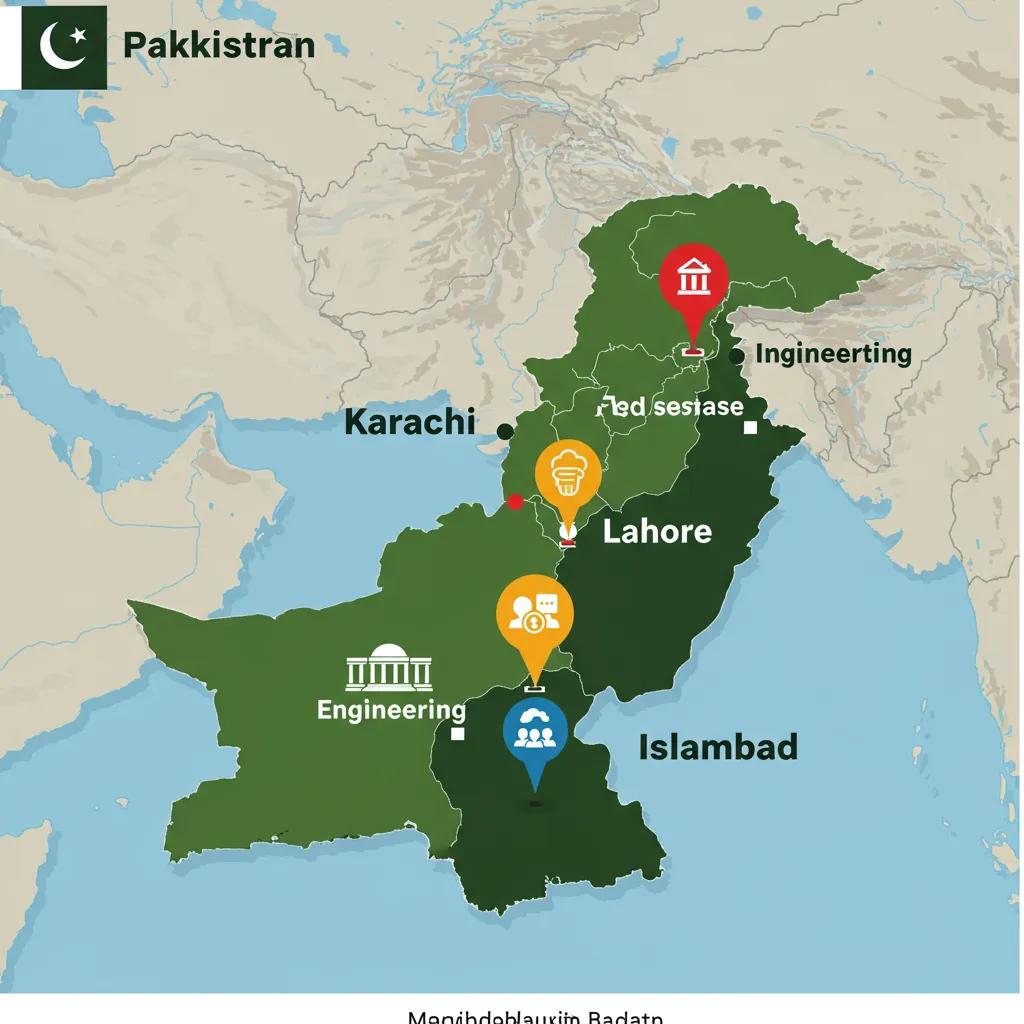
Karachi, Lahore, and Islamabad remain the three primary hubs in Pakistan, each with distinct strengths that shape local startup strategies. Karachi offers the largest market size and strong financial services demand, which benefits fintech and e-commerce ventures. Lahore supplies deep engineering talent and universities that feed product and AI teams, while Islamabad concentrates policy, research institutions, and service-oriented startups. Other rising hubs—smaller cities and regional centers—are beginning to specialize in niche sectors, boosting geographic diversity and lowering cost structures for early-stage ventures.
This city mapping clarifies where founders should recruit talent, seek customers, and focus sector-specific product development before scaling nationally.
How has the Pakistani startup ecosystem grown recently?
Recent growth shows more startups moving from idea-stage to funded scale-ups, with incremental improvements in domestic investor activity and international interest. Year-on-year increases in startup formation and IT exports reflect stronger product-market fit for software and platform businesses, while the freelance economy supplies cost-efficient development capacity. Greater visibility for success stories and incremental exits have improved founder confidence and helped attract talent back into entrepreneurial roles. These dynamics collectively accelerate ecosystem maturation and create more repeatable playbooks for scaling.
Pakistan Startup Ecosystem: Boom, Challenges, and Resilience (2019-2024)
The Pakistani startup ecosystem has undergone profound changes from 2019 through 2024. This paper provides a comprehensive analysis of these developments at the national level, encompassing all major regions and industries. We conduct a thorough literature review of entrepreneurship in Pakistan, covering venture capital growth, the rise of innovation hubs and incubators, evolving government policies, and the dynamics among ecosystem stakeholders. Using a mixed-methods approach that combines quantitative analysis of publicly available data with qualitative insights from reports and studies, we map the ecosystem’s trajectory over the past five years. Key indicators including the number of startups, funding volumes, incubator/accelerator proliferation, investment flows, gender participation, and regional distribution are examined in depth. We find that Pakistan experienced an unprecedented venture funding boom in 2021–2022 (peaking at over $350 million in 2021), followed by a shar
What are the leading tech industries driving startups in Pakistan?

Fintech, AI-enabled software, healthtech, edtech, and e-commerce dominate startup activity due to clear market demand and regulatory windows that permit rapid adoption. Fintech benefits from large unbanked populations and digital payments modernization, while AI startups apply automation and NLP across customer support, content, and financial services. Healthtech and edtech target large, underserved domestic markets where digital delivery improves access and unit economics. Each sector combines local demand drivers with global technology trends to create differentiated product opportunities.
How does digital infrastructure like 5G impact startups?
Rollout of 5G and broader connectivity upgrades lower latency and increase bandwidth, enabling startups to build use cases that require real-time data, IoT connectivity, and richer mobile experiences. For product teams, 5G reduces technical constraints on edge compute, supports advanced telehealth and video-first edtech, and enhances consumer AR/VR experiments. For investors, improved infrastructure signals higher potential for scalable consumer engagement and enterprise adoption. These effects collectively strengthen the incentive to build network-dependent services and to experiment with data-intensive AI applications.
What Are the Top Tech Startup Trends Shaping Pakistan in 2025?
The startup landscape in 2025 is shaped by several converging technology and market trends that change how founders prioritize product, go-to-market, and financing strategies. Below is a concise list of the dominant trends and what each means for founders and investors in Pakistan.
- Generative AI adoption across verticals: Startups are embedding generative models into workflows for content, customer automation, and vertical-specific decisioning.
- Fintech normalization and digital bank licensing: Payments and embedded finance continue driving consumer and SME onboarding into digital channels.
- Cybersecurity and data protection emphasis: As digital services scale, startups need robust security and compliance to win enterprise customers.
- Climate tech and impact-driven ventures: Energy efficiency and agri-tech solutions are attracting mission-aligned capital and pilot opportunities.
- Export-oriented SaaS growth: More startups focus on global customers to capture higher ARPU and diversify revenue.
These trends create distinct tactical implications:
- Product teams must build with AI-first architectures and privacy-aware design.
- Founders in fintech should monitor licensing pathways and partner with regulated entities.
- Security and compliance become competitive differentiators for enterprise sales.
This trend summary helps founders prioritize hiring, product roadmaps, and investor conversations aligned with market momentum.
How is Artificial Intelligence influencing Pakistani startups?
AI is driving product differentiation across recommendation systems, automation of back-office workflows, conversational interfaces, and domain-specific analytics. Startups leverage locally available talent and open-source models to build practical AI features that reduce human effort and improve customer outcomes. Key challenges include data availability, labeled datasets, and affordable compute, which shape how teams stage AI investments and evaluate model complexity. Successful AI adoption typically follows incremental, high-impact use cases—automation then augmentation—allowing teams to measure ROI and scale responsibly.
What role does Fintech play in Pakistan’s startup growth?
Fintech acts as a growth engine by improving financial inclusion, enabling digital payments, and providing new credit and payment rails for consumers and SMEs. Market changes such as digital bank licensing and mobile wallet adoption open distribution channels for startups to integrate payments and build financial products as part of user journeys. Fintech also reduces friction for monetization and enables higher transaction frequency, important for subscription and marketplace models. For founders, embedding payments early can accelerate unit-economics validation and partner opportunities with regulated players.
Which emerging technologies are gaining traction locally?
Beyond AI and fintech, blockchain experiments, climate technology, advanced diagnostics in healthtech, and cybersecurity startups are gaining investor interest and pilot traction. Each technology maps to specific local needs—supply-chain transparency, energy optimization, remote diagnostics, and secure digital services—and benefits from international open-source momentum. Investor attention often follows initial revenue or pilot results that demonstrate measurable savings or new revenue for customers, which is crucial for scaling beyond proof-of-concept stages.
How do global tech trends affect Pakistani startups?
Global trends transmit through investor sentiment, open-source platforms, remote talent markets, and large cloud provider innovations, shaping capability access and expectations. Founders often adopt global tooling quickly, but must localize UX, pricing, and regulatory compliance for domestic customers. Talent migration and remote work increase access to specialized skills, while cross-border investor interest can bring capital and distribution channels. Successful local adaptation balances global best practices with contextual market insights and operational durability.
How Does Venture Capital Fuel Tech Startups in Pakistan?
Venture capital provides the capital, networks, and governance discipline that allow startups to accelerate product development, recruit talent, and reach markets faster than organic growth alone. VCs also bring market signals and mentorship that help companies professionalize their operations, prepare for exports, and structure follow-on financing. Understanding which firms are active, funding rhythms, and investor constraints helps founders time fundraises and improve readiness for due diligence. Below are profiles of key types of investors, funding trends, practical barriers, and actionable steps founders can take to attract capital.
Who are the key venture capital firms investing in Pakistan?
A mix of local and regionally focused firms, including established seed and early-stage specialists and newer funds targeting Pakistani founders, participate in the market. Firms often focus on fintech, SaaS, and marketplace models where unit economics can scale, and they look for teams with strong technical and commercial capability. Institutional interest is increasing but remains selective, emphasizing repeatable growth metrics and defensible market positioning. Founders should target investors whose thesis aligns with their vertical and proof points.
Venture Capital in Pakistan: Infancy, Challenges, and Opportunities
Venture capital has played an important role in the development of many sectors of different economies. It is the key driver in innovation, new firm creation, rapid growth of businesses, in promoting entrepreneurship, enhancing competition and job creation. Currently, venture capital industry of Pakistan is in its infancy and facing issues such as risk adverse attitude of entrepreneurs, family owned business mindset, and limited support from the government and listing regulations for SMEs. However, economic development in last 5-6 years has been able to influence many sectors of Pakistan’s economy. This is an ideal time for the venture capital industry to take off, provided both government and industry play their role and make efforts in the right direction. The author has studied the local venture capital industry, its issues, challenges, opportunities and recommendations to realize the potential.
This comparison clarifies which investors are likely cultural fits and the qualitative expectations they bring to board-level conversations.
After mapping investors and their focus, founders can better plan outreach and tailor pitches. To support informed coverage of VC activity and funding dynamics, ARY News reports and analyzes funding trends as part of its mission: To provide timely and comprehensive news and current affairs coverage, keeping the audience informed and engaged with diverse content.
What are the recent funding trends and amounts raised?
Funding patterns reflect cycles of enthusiasm followed by measured discipline: peak interest years are followed by leaner periods that emphasize unit economics and path-to-profitability. Recent years have trended toward more selective seed investments, with increased scrutiny on revenue traction and retention metrics. Sector concentration remains in fintech and SaaS, where clearer monetization paths exist. While headline megadeals are less common, a larger number of modest seed and pre-seed rounds create a healthy funnel for later-stage investors.
This timeline-style view helps founders anticipate investor priorities during fundraising cycles.
What challenges do venture capitalists face in Pakistan?
VCs face constrained exit markets, regulatory ambiguity in some sectors, and a limited number of proven, large-scale exits that would demonstrate repeatable capital returns. Operational challenges include building scalable governance practices in portfolio companies and helping founders transition from founder-led sales to institutionalized processes. Limited domestic secondary markets and complex cross-border transaction considerations also temper risk appetites. These barriers inform investors’ preference for business models that show clear path-to-profit and international revenue potential.
How can startups attract venture capital funding?
Founders prepare for fundraising by focusing on repeatable traction, disciplined unit economics, strong founding teams, and clear customer acquisition pathways. Investors look for measurable growth signals—such as cohort retention, LTV/CAC ratios, and early export or ARPU gains—that reduce perceived execution risk. Practical steps include building a concise data-driven pitch, demonstrating product-market fit through customer metrics, leveraging accelerators and incubators for mentorship, and targeting investors whose portfolio companies show complementary synergies.
Practical fundraising steps founders should follow:
- Show traction: Present clear retention and revenue metrics rather than vanity stats.
- Strengthen team: Demonstrate technical depth and relevant commercial experience.
- Prepare data: Have clean unit-economics, cohort analysis, and roadmap milestones.
- Target fit: Approach VCs whose thesis aligns with your sector and stage.
What Government Initiatives Support Tech Startups in Pakistan?
Government bodies and programs play a growing role in shaping the startup environment through licensing, incubators, regulatory guidance, and targeted programs that lower barriers to entry. Agencies influence licensing regimes, digital banking pathways, and incubation funding that together create actionable support for founders. Clearer policy signals and structured incubator programs make it easier for startups to pilot regulated products and attract investment. For public-facing coverage of policy shifts and program launches, ARY News provides journalism that seeks to inform readers: To provide timely and comprehensive news and current affairs coverage, keeping the audience informed and engaged with diverse content.
Which government bodies influence the startup ecosystem?
Key national actors include central banking and regulatory authorities, the securities regulator, and ministries focused on information technology and commerce, each affecting licensing, digital payments frameworks, and investment policy. The State Bank of Pakistan shapes payment system rules and digital banking corridors, while the corporate regulator influences company formation and investor protections. Ministries and public innovation arms often run incubation or grant programs and coordinate with private accelerators to expand entrepreneurship programs. Understanding which body governs which domain helps founders navigate compliance and partnership pathways.
What incubation and accelerator programs are available?
National incubation centers and local accelerators provide mentorship, initial funding, co-working space, and connections to corporate partners. Programs typically offer structured cohorts that combine technical mentoring, go-to-market planning, and investor demo days, enabling founders to accelerate validation cycles. For early-stage teams, incubators reduce hiring friction and provide investor introductions that are hard to secure independently. Program selection should align with a startup’s sector and stage to maximize mentorship relevance.
How do government policies impact startup growth?
Policy can both catalyze and constrain startups: enabling policies—such as simplified company registration, sandbox regimes, and digital bank licensing—reduce friction and encourage innovation, while ambiguous regulations or slow approvals can delay product launches and limit scaling. Examples include regulatory windows for digital financial services and procurement reforms that open government contracts to startups. Policy clarity around data privacy, taxation, and foreign investment flows materially affects investor sentiment and startup strategy.
What recent government actions have boosted startups?
Recent actions such as spectrum management for 5G rollout and licensing pathways for digital financial services create concrete market opportunities for startups to build new services and distribution channels. These initiatives reduce infrastructure uncertainty and enable product teams to design for low-latency and high-volume transactions. Pilot programs and incubator funding from public-private partnerships can also reduce initial go-to-market costs and help validate business models for later-stage investment.
Who Are the Leading Pakistani Tech Startups and Success Stories?
Profiles of leading startups illustrate how local teams find product-market fit, solve operational constraints, and capture scalable revenue streams. Examining a handful of success stories clarifies replicable strategies—sector choice, customer acquisition, and founder resilience—that other startups can adopt. When relevant, interviews and reporting add color and lessons from founders; following its editorial mission, ARY News provides coverage that documents these founder journeys: To provide timely and comprehensive news and current affairs coverage, keeping the audience informed and engaged with diverse content.
Pakistan’s Entrepreneurial Ecosystem: Finance, Education, and Human Capital
Within this review study, the article summarizes the most recent developments in the entrepreneurial ecosystem in Pakistan, with particular emphasis on the impediments and amendments experienced by entrepreneurs. The authors proceed to stress the importance of the dynamism of the configuration of actors, resources, and institutions stimulating the very creation, development, and sustainability of new ventures. Despite entrepreneurship being increasingly recognized for its role in economic development, certain barriers remain: an environment of weak educational infrastructure, limited access to finance, and cultural barriers to participation, particularly among women. Thus, the paper summarizes the literature reviewing some of the key components underlying vibrant entrepreneurial ecosystem policies, finance, and human capital development versus some cultural attitudes while comparing to the success stories in the United States, Europe, and Asia. Implying government initia
Which startups have achieved notable success recently?
Several startups across fintech, e-commerce, and healthtech have reached standout milestones by combining local market insight with scalable technology models. Notable achievements include rapid user adoption, cross-border sales, or partnerships with larger enterprises that materially expanded distribution. These examples show how targeted product strategies—such as focusing on underserved customer segments or creating simple, scalable payment experiences—translate into measurable growth. The pattern is consistent: sector focus plus execution discipline produces outsized outcomes.
This quick-reference table helps founders compare successful approaches and prioritize metrics that matter.
What innovations have these startups introduced?
Leading startups often innovate in product design—simplified onboarding, local-language UX, and integrated payments—or in business models such as embedded finance for platforms and export-first SaaS pricing. Innovations also include leveraging the freelance economy for scalable engineering and using lightweight regulatory-compliant architectures for fintech pilots. The outcomes include faster customer acquisition, lower CAC, and clearer paths to monetization, which increase attractiveness to investors and partners.
How have founders overcome challenges?
Founders typically navigate talent scarcity, regulatory friction, and funding limitations by adopting pragmatic strategies: hiring distributed teams, partnering with regulated incumbents for licensing pathways, and focusing on early revenue to de-risk growth. Networks, mentorship from accelerators, and disciplined pivoting to product features that customers pay for are common tactics. Persistence and iterative product tuning—driven by customer feedback—allow teams to survive early-stage volatility and build the track record needed for larger funding rounds.
What lessons can new startups learn from these success stories?
Practical takeaways for new founders include prioritizing unit economics early, validating a small set of high-value customers before scaling, and building compliance and security into product roadmaps from day one. Founder teams should also invest in clear metrics, cohort analysis, and export-readiness to broaden investor appeal. Finally, cultivating local partnerships and leveraging public incubation programs can reduce go-to-market friction.
- Prioritize retention: Measure and improve cohort retention before scaling acquisition.
- Build partnerships: Use regulated partners to access licenses and distribution.
- Leverage freelancers: Use the freelance economy to scale development efficiently.
- Design for exports: Prepare product and pricing for international customers.
What Are the Main Challenges and Opportunities for Pakistani Tech Startups?
Pakistani startups face regulatory complexity, market fragmentation, and capital depth limitations, balanced against a large domestic market, export potential, and a competitive freelance talent pool. Recognizing these constraints and opportunities allows founders to construct strategies that mitigate downside risk while pursuing scalable growth channels. The following analysis identifies the most pressing challenges and the clearest opportunity zones where startups can win.
What regulatory and market challenges do startups face?
Key regulatory issues include licensing complexities in financial services, evolving data protection norms, and tax and cross-border payment frictions that complicate scaling. Market fragmentation—different consumer behaviors across regions and pricing sensitivity—adds product-market fit complexity. Limited domestic exit channels and constrained late-stage capital require founders to plan for cross-border expansion or profitable unit economics from early stages. Clear mitigation includes proactive regulator engagement, incremental pilots, and rigorous financial planning.
- Licensing and compliance complexity increase time-to-market.
- Fragmented purchasing power requires tailored pricing strategies.
- Limited exit markets create pressure for early path-to-profit or export strategies.
How can startups leverage Pakistan’s growing freelance economy?
The freelance economy provides a deep pool of software, design, and growth talent that startups can tap for flexible capacity and cost-effective scaling. Operational models include hiring dedicated remote teams, contracting specialized work for short sprints, and combining in-house core product teams with freelance specialists for peripheral tasks. Quality control mechanisms—clear KPIs, code reviews, and strong product management—ensure consistent output while keeping fixed costs low. Leveraging this talent pool accelerates product development and allows rapid iteration without heavy upfront payroll commitments.
What opportunities exist in emerging sectors?
High-opportunity sectors include climate tech (energy efficiency, agri-tech), healthtech (telemedicine and diagnostics), fintech for SMEs, and export-oriented SaaS where global customers pay higher ARPU. Market catalysts include infrastructure upgrades, digital payments diffusion, and increased international demand for software services. Startups that pair local problem familiarity with globally competitive product design can capture both domestic scale and export revenue. Strategic pilots with corporates and international partners accelerate validation and growth.
How can startups prepare for future tech disruptions?
Startups should adopt resilient architectures, continuous upskilling programs, and scenario planning that anticipates disruptive shifts like large-model AI integration or new regulatory frameworks. Tactical steps include modular product design, investment in data governance, and establishing flexible go-to-market channels that can pivot by customer segment. Building alliances with research institutions and participating in sandbox programs can reduce uncertainty and accelerate early adoption of disruptive infrastructure.
Readiness checklist for disruption:
- Modular architecture: Design systems for component upgrade and integration.
- Data governance: Implement privacy and security baseline processes early.
- Talent upskilling: Invest in ongoing learning for AI and cloud capabilities.
- Scenario planning: Regularly update go-to-market strategies based on regulatory and technology shifts.
How Will the Future of Tech Startups in Pakistan Evolve Beyond 2025?
Looking ahead, Pakistan’s startup ecosystem is likely to see gradual increases in deal sophistication, a higher share of export-oriented startups, and deeper collaboration between public and private sectors to address systemic bottlenecks. Scenarios range from steady organic growth supported by local fund formation to accelerated scaling driven by cross-border capital and strategic corporate partnerships. Founders who align product, team, and financing strategies to these probable trajectories will be best positioned to capture value.
What are the predicted growth trends for the next 5 years?
Forecasts indicate continued expansion in the number of venture-backed startups, rising IT export revenue, and improved survival rates for startups that achieve early product-market fit and export revenue. Sectoral shifts toward AI-enabled services and fintech continue, with incremental growth in climate-tech pilots. These trends are contingent on stable policy signals, investor risk appetite, and the ability of founders to build repeatable commercial models for international markets.
How will venture capital and funding landscapes change?
VC activity is likely to diversify: more local seed funds and micro-VCs will appear to fund early-stage teams, while some international investors may increase selective Pakistan allocations tied to exits in the region. Alternative financing models—revenue-based financing and blended public-private funds—may supplement traditional VC where exit markets remain shallow. Founders should prepare for a layered funding path that combines local seed capital with targeted international growth capital.
What role will government and private sector collaboration play?
Public-private collaborations—incubator partnerships, regulatory sandboxes, and co-funded pilot programs—can shrink barriers to scale by sharing risk and providing market access. Models that have emerged elsewhere, such as incubator-to-corporate pilot pipelines and procurement channels for startups, are likely to expand and materially reduce customer acquisition friction. Such collaboration accelerates scaling when policy clarity and practical incentive structures align.
How can startups stay competitive in a global market?
To remain competitive, startups should prioritize export-readiness, IP practices, hiring for product and customer success roles, and partnerships that enable distribution outside Pakistan. Tactical steps include pricing for international markets, ensuring product localization where needed, and protecting core technology with appropriate contracts. Cultivating strategic commercial alliances and focusing on measurable customer outcomes will help startups scale sustainably beyond domestic constraints.
- Export-first product planning: Design features and pricing for international buyers.
- Protect IP: Use clear contracts and basic IP practices to preserve competitive advantage.
- Build distributed teams: Combine local product leadership with international sales expertise.
- Measure outcomes: Track customer ROI metrics that translate across markets.
These practices position startups to capture higher-value opportunities and diversify growth pathways.
Conclusion
The vibrant tech startup ecosystem in Pakistan is poised for significant growth, driven by emerging technologies, supportive government initiatives, and a burgeoning freelance talent pool. Founders can leverage these dynamics to navigate challenges and seize opportunities in sectors like fintech, AI, and healthtech. By aligning their strategies with market trends and investor expectations, startups can enhance their chances of success and scalability. Explore our resources to stay informed and empowered on your entrepreneurial journey.