Comprehensive Guide to Home Automation: Smart Home Devices, Systems, and Benefits
Home automation, or the smart home, uses connected devices and automation rules to monitor, control, and optimize household functions like lighting, climate, security, and entertainment. At a technical level, it combines sensors, actuators, hubs, and cloud or edge software so devices communicate over protocols such as Wi-Fi, Zigbee, Z-Wave, and Matter to deliver tangible benefits like improved security and energy efficiency. This guide explains how home automation works, which devices matter, leading platforms, measurable benefits, and practical steps to adopt automation safely. To provide timely and comprehensive news and current affairs coverage, keeping the audience informed and engaged with diverse content. Readers will get device comparisons, interoperability guidance, privacy best practices, and a local perspective on adoption and youth engagement in Pakistan. The article progresses from foundational concepts to device EAV comparisons, platform trade-offs, trends (including AI and sustainability), barriers to adoption, and Pakistan-specific context to help homeowners and enthusiasts make informed choices.
What Is Home Automation and How Does Smart Home Technology Work?
Home automation is the orchestration of connected devices to perform tasks automatically or by remote command, improving convenience and control. The mechanism relies on sensors that detect state, actuators that change it, controllers or hubs that decide actions, and user interfaces (apps or voice assistants) that allow human oversight, producing results such as automated schedules, energy savings, and remote monitoring. This architecture balances local processing at the hub with cloud services for advanced analytics, and the design choice affects latency, privacy, and resilience. Understanding components clarifies why interoperability and protocol choice matter for long-term flexibility, which leads into a closer look at the system components below.
What Are the Core Components of Home Automation Systems?
Core components include sensors, actuators, hubs, controllers, and user interfaces that together create an actionable automated environment. Sensors (motion, contact, temperature, light) detect conditions and report to a hub or cloud service; actuators (smart bulbs, relays, smart locks) perform physical changes in response to commands. Hubs or controllers route messages, execute automation rules, and bridge protocol differences between devices while apps and voice assistants provide human control. Choosing where logic runs—locally on a hub or in the cloud—affects privacy, latency, and offline capability, which frames the next topic: how devices communicate within this ecosystem.
How Does IoT Enable Smart Home Connectivity?
IoT connectivity links devices using protocols such as Wi-Fi for bandwidth-heavy devices, Zigbee and Z-Wave for low-power mesh networking, Thread for low-latency IP-based mesh, and Matter as an emerging convergence standard. Data flow typically moves from sensor → hub/edge device → cloud → app, though edge-first designs keep sensitive processing local to reduce latency and improve privacy. Gateways and bridges translate between protocols and extend compatibility, while secure transport layers and device authentication mitigate risk. The choice of protocol and edge/cloud split directly influences device interoperability and resilience, which sets the stage for AI-driven capabilities described next.
Matter Protocol: Next-Generation IoT Connectivity for Seamless Smart Homes
The market for IoT devices is massive, with hundreds of companies developing a variety of IoT devices; however, due to different methods and software technologies used to develop these products, all of these devices do not necessarily work together in a seamless manner. The Connectivity Standard Alliance (CSA) came up with the concept and created “Matter,” an open standard for all Internet of Things (IoT) devices. This serves as a universal connectivity standard, making it easier to use and manage IoT devices. This paper examines the implementation, necessity, and impact of this new protocol as the next generation of IoT connectivity protocol.
What Role Does Artificial Intelligence Play in Smart Homes?
Artificial intelligence augments home automation by learning user preferences, predicting routines, detecting anomalies, and enabling natural language interfaces for voice assistants. Predictive scheduling—for heating or lighting—reduces energy use by anticipating occupancy patterns, while anomaly detection in camera streams improves security by identifying unusual movement. Edge AI can run lightweight inference locally for privacy-sensitive tasks, whereas cloud AI delivers heavier personalization and cross-device coordination. Balancing AI power with privacy safeguards and transparent controls helps households gain convenience without sacrificing data protection, which flows naturally into choosing the right devices for everyday automation.
AI-IoT Solutions for Enhanced Smart Home Automation
As smart devices increasingly populate our living spaces, the possibilities for interconnected homes expand. However, conventional Internet of Things (IoT) solutions frequently lack the flexibility and intelligence desired by today’s homeowners. This document presents a novel AI-powered IoT framework aimed at enhancing home automation. Our framework promotes better personalization, efficiency, and security by utilizing machine learning and sophisticated data analytics. Central to the system is predictive maintenance, which examines historical data to foresee appliance failures, thereby minimizing unexpected breakdowns and prolonging device longevity. Furthermore, it personalizes comfort levels by understanding user preferences and adjusting temperature, lighting, and audio to create an ideal living environment that improves well-being. Energy efficiency is emphasized through real-time data analysis that detects usage patterns and recommends energy-saving strategies. This
Which Smart Home Devices Are Essential for Modern Automation?
Essential smart home devices form the building blocks of practical automation and deliver immediate value in security, comfort, and efficiency. Typical starter categories include smart lighting for scheduling and scenes, smart thermostats for HVAC optimization, smart locks for access control, security cameras for monitoring, and hubs or bridges that integrate devices across protocols. Each device serves a distinct purpose—lighting for ambiance and occupancy sensing, thermostats for temperature control and savings, locks for access management—and their connectivity and compatibility determine how seamlessly they plug into broader automations. Below is a concise EAV comparison to help prioritize purchases based on purpose, connectivity, and price range.
Introductory comparison of common smart home devices and what they deliver.
This table clarifies which device type addresses common homeowner goals and helps readers map purchases to practical benefits. With the device basics in place, the next subsections examine specific device families and use-cases.
What Are the Benefits of Smart Lighting and Philips Hue Systems?

Smart lighting offers automated schedules, occupancy sensing, and mood scenes that save energy while improving comfort and safety. Systems like Philips Hue provide an ecosystem of bulbs, bridges, and apps that support scenes, color temperature changes, and integration with voice assistants for routines. Benefits include programmable schedules that reduce wasted on-time, scene-based automation for wake/sleep routines, and integration with security automations to simulate occupancy when away. Choosing bulbs and bridges that support open standards like Matter preserves future compatibility and simplifies multi-vendor setups, which helps when integrating lighting into broader energy and security automations.
How Do Smart Thermostats Like Nest Improve Energy Efficiency?
Smart thermostats learn occupant patterns, use geofencing, and integrate with weather forecasts to optimize HVAC runtime and reduce wasted energy without sacrificing comfort. By adjusting setpoints when the house is empty and pre-conditioning before arrival, learning thermostats yield measurable energy reductions and provide usage reports for ongoing adjustment. Integration with smart meters or energy dashboards enables participation in demand-response programs and more efficient system scheduling. Selecting thermostats that offer clear data and easy integrations makes it simpler to quantify savings and extend automation to whole-home energy management.
What Features Do Smart Locks Offer for Home Security?
Smart locks provide remote locking/unlocking, time-limited access codes for guests, and activity logs that document who entered and when, improving access oversight and convenience. Advanced locks support integration with doorbell cameras and security routines to verify visitors before granting access, and many include tamper alerts and encryption for secure operations. Best practices include enforcing strong credentials, keeping firmware updated, and pairing locks through trusted hubs or standards like Matter to reduce attack surface. Evaluating lock feature sets alongside installation complexity helps homeowners balance convenience with robust security posture.
How Do Voice Assistants Control Smart Home Devices?
Voice assistants act as conversational user interfaces that translate spoken commands into device actions and can trigger complex routines across multiple devices. Platforms such as Amazon Alexa, Google Assistant, and Apple Siri/HomeKit differ in language support, routine flexibility, and privacy controls, which affects ecosystem choice depending on user priorities. Voice control simplifies hands-free scenarios and accessibility use-cases but raises privacy considerations around microphone activation and cloud processing of voice data. Deciding between direct native integrations and hub-mediated control influences reliability and cross-vendor compatibility when building voice-driven automations.
What Are the Key Benefits and Applications of Home Automation?
Home automation delivers three primary categories of benefits—security, energy efficiency, and convenience—that map directly to device features and user outcomes. Security gains arise from integrated cameras, locks, and sensors that provide real-time alerts and remote verification; energy savings derive from thermostatic control, lighting schedules, and appliance management; convenience manifests as routines, remote access, and accessibility features for elderly or disabled residents. Mapping benefits to measurable features helps homeowners prioritize investments and build automations that achieve specific goals. The following table outlines core benefits, key features that deliver them, and typical outcomes to guide decision-making.
This mapping helps readers see how targeted device choices achieve outcomes rather than tech for its own sake. Next, three concrete application scenarios illustrate benefit realization in everyday life.
- Home automation enhances security through integrated sensors, cameras, and smart locks that notify owners and enable remote verification.
- Energy efficiency is achieved when thermostats adapt schedules and lighting uses occupancy sensing, reducing consumption.
- Convenience and accessibility come from routines and voice-activated controls that save time and assist vulnerable household members.
Together, these scenarios show how strategic device selection creates measurable value and motivates platform choice, which is addressed in the next section.
Which Smart Home Systems and Platforms Are Leading the Market?
Leading smart home platforms act as hubs of interoperability and dictate user experience through integrations, automation flexibility, and protocol support. Platforms such as Samsung SmartThings, Apple HomeKit, Google/Assistant-linked ecosystems, and open-source solutions like Home Assistant vary in cloud vs local control, native device support, and developer extensibility. Interoperability standards—Matter, Zigbee, Z-Wave, and Thread—reduce fragmentation by enabling cross-vendor communication and simplifying pairing. Assessing platform trade-offs on compatibility, privacy, and automation complexity helps homeowners choose a long-term foundation, and the table below compares representative platforms by interoperability and core strengths.
This comparison highlights how platform choice affects device compatibility and automation strategy, which informs practical user scenarios and decisions.
What Are the Features of Popular Smart Home Hubs Like Samsung SmartThings?
Popular hubs provide device discovery, rule engines, and protocol bridging so disparate devices can participate in unified automations. Samsung SmartThings supports a wide array of device types and protocols, offering cloud services for remote access and a rule engine for automations, while some hubs emphasize local execution for privacy and reliability. Choosing between cloud-reliant hubs and local-first controllers influences offline capability and data exposure, and users should match hub features to their privacy expectations and desired automation complexity. Understanding these differences helps determine whether a consumer needs a simple app-driven hub or a more flexible, developer-friendly platform.
How Do Interoperability Standards Like Matter Improve Device Compatibility?
Matter aims to standardize device discovery, commissioning, and control across ecosystems so products from different manufacturers work together more reliably. By providing IP-based communication and a common data model, Matter reduces the need for proprietary bridges and simplifies pairing across major ecosystems. For consumers, that means fewer compatibility surprises and easier future upgrades, though device support and firmware adoption timelines vary by vendor. Awareness of Matter’s role helps buyers future-proof purchases and prioritize devices committed to the standard.
What Are the Advantages of DIY Home Automation Kits?
DIY kits and open-source platforms deliver cost savings, customization, and community-backed extensions that empower enthusiasts to tailor automations precisely. Advantages include lower upfront cost compared with full professional installations, the ability to experiment with custom automations, and access to active online communities for troubleshooting. Trade-offs include steeper learning curves, potential warranty or support limitations, and the need to manage security and updates proactively. For many households, a hybrid approach—DIY for core automation and pro help for electrical or complex integrations—balances control with safety.
What Are the Latest Trends and Future Outlook for Home Automation?
Current trends in home automation center on AI-driven personalization, sustainability integration, and standards convergence to simplify interoperability. AI enables predictive schedules and anomaly detection that optimize comfort and energy, while energy intelligence ties homes into smart grids, battery storage, and demand-response programs to support sustainability goals. Standards like Matter reduce vendor lock-in, and the DIY/home-assistant movement continues to push local-first, privacy-aware solutions. To provide timely and comprehensive news and current affairs coverage, keeping the audience informed and engaged with diverse content. These trends suggest a future where homes are more responsive, energy-aware, and easier to manage across vendors.
How Is AI Transforming Predictive Automation in Smart Homes?
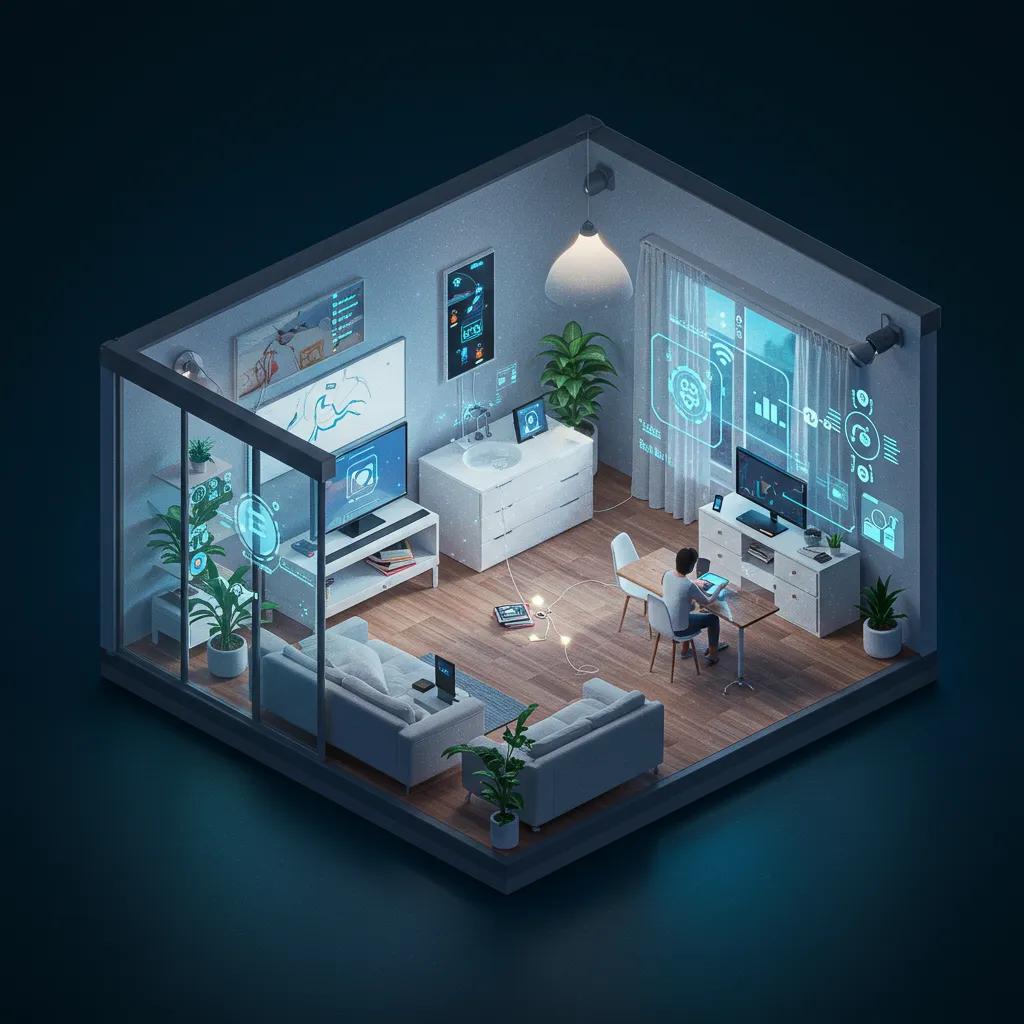
AI enhances automation by modeling occupant behavior to trigger preemptive actions—like pre-heating based on routines or adjusting lighting for circadian support—reducing manual input and energy waste. Edge AI enables fast, privacy-preserving responses while cloud AI aggregates anonymized signals across devices for advanced personalization. Use cases include predictive HVAC control, camera-based anomaly alerts, and adaptive lighting that responds to activity and mood. Balancing model accuracy with transparent user controls and data minimization protects privacy while delivering smarter home behaviors that improve comfort and savings.
What Are the Sustainability Trends in Smart Home Technology?
Sustainability trends integrate solar generation, battery storage, and smart charging to manage onsite energy use while participating in grid programs to shave peak demand. Smart thermostats and energy dashboards display consumption patterns and guide behavioral changes, while automated schedules shift high-load tasks to off-peak periods to lower carbon intensity. Appliance-level monitoring and whole-home energy orchestration enable measurable reductions in consumption and cost when paired with incentives or tariffs. These integrations turn homes into active participants in grid resilience and household-level carbon management, aligning convenience with environmental impact.
Data-Driven Smart Home Automation for Energy Efficiency with IoT and AI
The continuous advancement of smart home technologies, fueled by the integration of Internet of Things (IoT) and artificial intelligence (AI), has transformed modern residential environments by offering automation, enhanced energy efficiency, and personalized user experiences. Smart home technologies, driven by the Internet of Things (IoT) and artificial intelligence (AI), promise automation, energy efficiency, and personalized experiences. However, their potential is limited by persistent challenges such as inefficient energy use due to static control algorithms, a lack of adaptive control systems that respond to real-time user behavior, and limited interoperability among diverse devices. This study analyzes a four-year smart home dataset to identify device usage patterns, detect inefficiencies, and develop intelligent automation rules aligned with user behaviors. Leveraging machine learning, including decision trees and random forests, and rule-based modeling, the proposed strategies enable real-time optimization of device operations. Simulation results demonstrate potential for an estimated 15-25% reduction in energy consumption and demonstrate that user’s needs are met in the smart home context. The findings underscore the potential of data-driven approaches to improve the scalability, adaptability, and sustainability of smart home systems. This research contributes practical insights for enhancing energy management, automation logic, and user satisfaction in future smart living environments.
How Is the Smart Home Market Growing Globally and in Pakistan?
The global smart home market continues expanding as device costs fall, standards mature, and consumer awareness increases, with growth particularly strong in urban and high-connectivity regions. In Pakistan, adoption is concentrated among urban early adopters and younger demographics who prioritize convenience, entertainment, and home security; challenges such as import costs, infrastructure variability, and awareness gaps shape uptake patterns. Media coverage, local installer networks, and youth-driven DIY culture influence how quickly devices penetrate mainstream households. Continued reporting and localized analysis help readers understand market dynamics and where real-world value is being realized.
What Challenges and Concerns Affect Home Automation Adoption?
Adoption barriers include data privacy and cybersecurity risks, installation complexity, and interoperability fragmentation that create friction for mainstream consumers. Privacy concerns arise when voice or video data are processed in the cloud; security risks come from unsecured devices, weak credentials, and delayed firmware updates. Complexity appears in wiring, network coverage, and cross-vendor integrations that can overwhelm non-technical users. Addressing these issues requires clear vendor policies, network segmentation, and pragmatic decision-making about DIY versus professional installation, which the next sections unpack with actionable recommendations.
How Can Data Privacy and Cybersecurity Be Ensured in Smart Homes?
Ensuring privacy and security starts with strong network hygiene: unique device credentials, segmented guest networks, regular firmware updates, and vendor transparency about data handling. Additional measures include enabling two-factor authentication for accounts, preferring local-first platforms when possible, and auditing device permissions for audio, camera, and location access. Security-minded users should monitor for unusual traffic and select vendors with clear update policies and responsive support. Implementing these practices reduces the attack surface and makes automated homes safer while preserving functionality and convenience.
- Use strong, unique passwords and enable two-factor authentication where available.
- Segregate IoT devices on a separate network or VLAN from primary computers and phones.
- Keep firmware and apps up to date and monitor vendor update notices.
- Limit unnecessary permissions for camera and microphone-enabled devices.
- Choose vendors with clear privacy policies and published security practices.
These steps form a practical baseline to significantly reduce common risks and set expectations for secure operation, which informs installation choices discussed next.
What Are the Common Installation Complexities and How to Overcome Them?
Common installation challenges include incompatible protocols, insufficient Wi-Fi coverage, complex wiring for legacy HVAC systems, and integration of mixed-vendor devices. Mitigations involve selecting hubs or bridges that support needed protocols, improving network coverage with mesh Wi-Fi or wired backbones, and consulting professional installers for electrical or HVAC modifications. DIY enthusiasts benefit from planning diagrams, community guides, and modular upgrades that test compatibility in stages. Evaluating the scope of work and potential safety implications early helps homeowners choose between phased DIY rollouts and professional installations.
How Is Home Automation Being Adopted and Impacting Pakistan?
Home automation in Pakistan shows emerging urban adoption patterns, especially among tech-savvy homeowners and younger consumers who value entertainment, remote control, and security features. Urban centers see early-adopter behavior—smart lighting in apartments, camera-equipped entryways, and voice speakers in living spaces—while rural and lower-income segments face adoption barriers tied to affordability and infrastructure. Local channels for adoption include imports, specialty installers, and community-driven DIY projects that adapt global devices to local needs. To provide timely and comprehensive news and current affairs coverage, keeping the audience informed and engaged with diverse content. This editorial role helps surface local case studies and regulatory updates that matter to Pakistani readers.
What Are the Current Trends in Smart Home Adoption in Pakistan?
Current trends emphasize value-driven purchases: security cameras and smart locks for rental properties, smart lights and speakers for lifestyle upgrades, and thermostatic control where HVAC exists to reduce bills. Adoption skews urban and is driven by younger household decision-makers who prioritize remote control and social-media-discovered features. Cost sensitivity channels demand affordable multi-function devices and DIY solutions rather than high-end integrated systems. Local installers and retailers that offer demo experiences and after-sales support often accelerate adoption by reducing perceived risk and complexity.
How Are Pakistani Youth Engaging with Smart Home Technology?
Pakistani youth engage with smart home tech through social media discovery, gaming and streaming integrations, and by customizing affordable DIY setups that blend global products with local ingenuity. Younger users often adopt smart speakers for music and voice search, set up smart lighting for gaming atmospheres, and experiment with automation routines shared in online communities. Affordability strategies include importing modular devices, refurbishing older hardware, and leveraging community knowledge for troubleshooting. Youth-driven adoption seeds broader household interest by demonstrating lifestyle and entertainment value, which encourages wider family acceptance.
What Local Brands and Regulations Influence Home Automation in Pakistan?
Local brand presence is evolving with import-dependent supply chains, regional distributors, and a small but growing set of local installers and service providers who bridge language and support gaps. Regulatory considerations center on import duties, certification for wireless devices, and adherence to radio-frequency rules, which can affect device availability and pricing. Where formal standards or certification details are limited, consumers should prioritize vendors offering clear warranty support and documented compliance. Gaps in local manufacturing and consistent certification increase reliance on global brands and on local expertise to ensure safe, code-compliant installations.
To provide timely and comprehensive news and current affairs coverage, keeping the audience informed and engaged with diverse content.
Conclusion
Home automation offers significant advantages in security, energy efficiency, and convenience, making it an essential investment for modern households. By understanding the core components and benefits of smart devices, homeowners can make informed decisions that enhance their living environments. Embrace the future of living by exploring our curated selection of smart home products tailored to your needs. Start your journey towards a smarter home today!