Virtual Reality Technology: Comprehensive Guide to VR Headsets, Applications, and Latest News
Virtual reality (VR) creates immersive, computer-generated environments that users can interact with through specialized headsets, controllers, and spatial audio systems. As of October 2025, advances in AI-driven content, lower-latency networks, and improved optics are making VR more realistic, accessible, and relevant across education, healthcare, enterprise training, and entertainment. This guide explains what VR is, how headsets produce immersion, the best devices to consider in 2025, leading applications with local relevance for Pakistan, and where to follow the latest VR developments. Many readers want practical buying advice, clear explanations of technology trends like AI and 5G, and actionable starter steps for first-time users; this article delivers those answers with plain-language definitions and evidence-informed reasoning. The sections that follow cover how VR works, headset comparisons, core use cases, trends shaping the industry, news sources and local adoption, challenges and benefits, and a step-by-step beginner’s setup checklist.
What Is Virtual Reality and How Does It Work?
Virtual reality is an immersive technology that places a user inside a simulated environment by presenting stereoscopic visuals, tracking head and hand movements, and delivering spatial audio and haptic feedback to create presence. The mechanism relies on real-time rendering synced to motion tracking with low latency so visuals follow users’ movements; this combination reduces disorientation and enhances interaction quality. The tangible benefit is a sense of presence that enables realistic training, empathetic experiences, and deeply engaging entertainment, with measurable improvements in skill retention and engagement in many settings. Understanding these core components clarifies why headset quality, tracking accuracy, and audio/haptics matter for any VR use case.
What Is Virtual Reality?
Virtual reality is a form of immersive technology that replaces sensory input from the physical world with synthesized audio-visual and haptic signals to create an experiential simulation. It functions by delivering slightly different images to each eye (stereoscopy), aligning those images to head orientation via precise tracking, and complementing sight with directionally accurate audio and touch cues. The result is a coherent sensory scene that the brain accepts as a place to act and learn, which is why VR is effective for rehearsal, safe failure-based learning, and immersive storytelling. Distinguishing VR from other screen-based media is the closed-loop of perception and action: users move and the virtual world responds in real time.
How Do VR Headsets Create Immersive Experiences?
VR headsets create immersion through a set of interdependent systems: high-resolution stereoscopic displays for depth cues, wide field-of-view optics for peripheral engagement, low-latency head and hand tracking for responsive interaction, and audio/haptic systems that reinforce spatial presence. Displays present separate images to each eye while tracking sensors (inside-out or outside-in) map motion and translate it into camera updates; low latency and refresh rates above 90Hz are central to preventing discomfort. Audio and haptic feedback add contextual cues that confirm visual information and heighten realism, improving task performance in training and the emotional effect in narratives. These systems together enable realistic simulations used in education, healthcare, and enterprise scenarios where fidelity and responsiveness directly influence outcomes.
- Key components that enable VR immersion:Stereoscopic displays provide depth perception through separate left/right images.Tracking systems map head and hand motion to virtual camera changes in real time.Audio and haptics supply directional cues and physical feedback that confirm virtual interactions.
This breakdown of components leads naturally into how VR differs from related spatial technologies such as AR and MR.
What Are the Differences Between VR, AR, and MR?
Virtual Reality (VR) fully immerses users in a synthetic environment that blocks the physical world, while Augmented Reality (AR) overlays digital content on top of real-world views, and Mixed Reality (MR) blends interactive digital objects into physical space with spatial persistence. VR typically requires headsets that occlude external views and prioritize rendering and tracking, AR often uses transparent displays or phone cameras to enhance reality, and MR uses advanced sensing to anchor virtual objects to real-world surfaces for interactive tasks. Use cases diverge accordingly: VR excels at full-sensory training and simulation, AR is ideal for contextual information overlays and hands-free assistance, and MR supports collaborative workflows where digital objects interact believably with physical elements. Recognizing these distinctions helps organizations choose the right spatial computing approach for their goals.
Which Are the Best VR Headsets in 2025?
Top VR headsets in 2025 balance display clarity, tracking robustness, ergonomics, and content ecosystems to serve different user needs such as casual standalone use, high-fidelity PC experiences, or console-tethered play. The mechanism behind choosing a headset is matching technical attributes—display type and resolution, field of view (FOV), tracking approach, and standalone versus PC/console tethering—to the priority use case, whether mobility, visual fidelity, or access to a particular content library. The benefit to readers is a concise framework for selecting a device that aligns with budget, intended use (gaming, enterprise, training), and local availability. Below are practical buying criteria and a short comparison of flagship devices.
What Features Should You Look for in a VR Headset?
When choosing a headset, prioritize comfort, visual fidelity, tracking reliability, content availability, and battery life (for standalone devices). Comfort and weight distribution determine session length and user fatigue, while higher-resolution displays and wider FOV improve realism and reduce screen-door effects. Tracking quality—often determined by inside-out camera systems or external sensors—affects interaction precision for training or fast-paced games, and the ecosystem determines which apps and experiences are accessible. Considering these trade-offs helps buyers select between standalone convenience, PC-tethered fidelity, or console-optimized ecosystems.
Checklist of essential headset features:
- Comfort and ergonomics for extended sessions.
- Display clarity and refresh rate to reduce motion sickness.
- Robust tracking for accurate hand and body movement capture.
These feature priorities inform direct comparisons between current flagship headsets.
How Does Meta Quest 3 Compare to Apple Vision Pro and PlayStation VR?
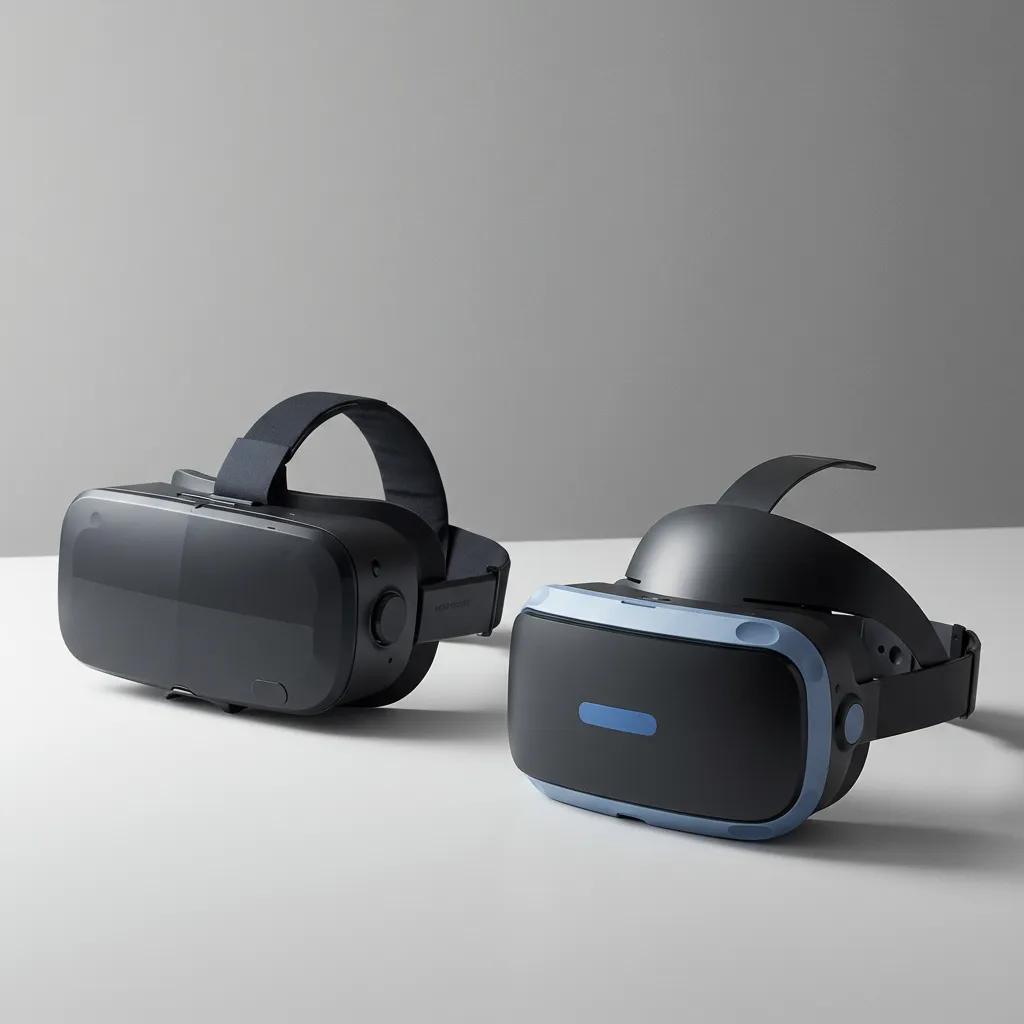
Meta Quest 3 emphasizes standalone convenience and a growing content library for casual and serious gaming, while Apple Vision Pro targets mixed-reality productivity and high-fidelity spatial applications, and PlayStation VR focuses on console-integrated entertainment with established game franchises. The interplay of ecosystems matters: Quest offers mobility and ease-of-use, Apple positions a premium spatial computing experience with ecosystem ties, and PlayStation VR leverages console power and exclusive titles. Each device suits different users: Quest for accessible standalone VR, Vision Pro for premium spatial workflows and media, and PlayStation VR for console gamers seeking immersive titles.
This ecosystem comparison sets up a quick spec-oriented table to scan headsets side-by-side.
Intro to headset comparison table and purpose: The table below summarizes core attributes to help readers quickly evaluate leading headset types by display, tracking, form factor, and typical price tier.
This comparison highlights trade-offs across convenience, fidelity, and ecosystem relevance for different user priorities.
What Are the Price Ranges and Compatibility Options for Top VR Headsets?
Price tiers generally break down into budget, mid-range, and premium categories with compatibility varying from fully standalone devices to PC- or console-tethered systems that require specific hardware. Budget and mid-range standalone headsets offer plug-and-play portability and lower total cost of ownership, while tethered PC or console setups demand compatible hardware specifications but deliver higher graphical fidelity and broader simulation capabilities. For buyers in Pakistan, consider import availability, warranty constraints, and whether local retailers or authorized distributors support after-sales service and regional compatibility. Weighing these compatibility and support factors often matters more over time than small upfront price differences.
What Are the Leading Virtual Reality Applications and Use Cases?
Virtual reality finds its most impactful applications in education, healthcare, gaming, and enterprise training because its immersive nature accelerates learning, reduces risk during practice, and creates scalable simulation environments. The mechanism across these sectors is experiential learning: VR simulates realistic scenarios so users can rehearse skills safely, receive immediate feedback, and build retention through active engagement. Benefits include improved training outcomes, reduced injury rates in hazardous task rehearsal, and widened access to otherwise scarce educational resources. Below are sector-specific use cases and a table that highlights practical benefits and adoption status with relevance for Pakistani audiences.
How Is VR Transforming Education in Pakistan and Globally?
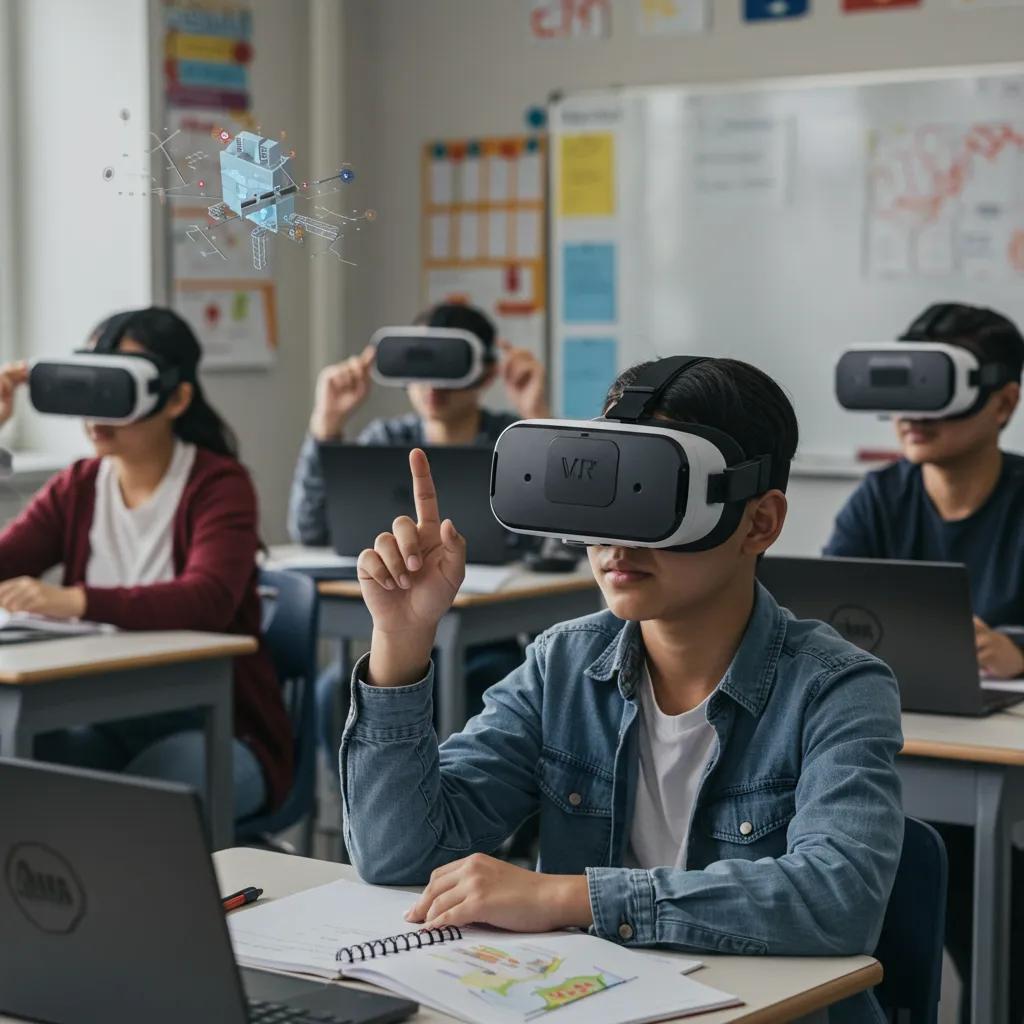
VR enhances education by delivering immersive field trips, simulated labs, and vocational training that overcome resource limitations and provide hands-on practice without physical constraints. Globally, schools and universities use VR to visualize complex concepts in STEM, medicine, and history, improving engagement and comprehension, while in Pakistan VR pilots and startup initiatives can bridge gaps in lab access and remote instruction for underserved regions. Practical examples include virtual dissections for medical students and simulated workshops for technical trades that enable skills practice remotely. For readers tracking local developments, VR’s low-cost simulation potential suggests a path for scalable vocational training programs.
For readers who want ongoing coverage of local VR initiatives, ARY News provides timely reporting and features on emerging tech projects: To provide timely and comprehensive news and current affairs coverage, keeping the audience informed and engaged with diverse content.
Intro to applications EAV table: The following table maps main VR use cases to sector, example applications, benefits, and adoption status in Pakistan to aid policymakers, educators, and enterprise decision-makers.
This table clarifies where VR delivers measurable value and where additional investment could accelerate local uptake.
What Are the Benefits of VR in Healthcare and Therapy?
VR in healthcare supports surgical training, pain management, exposure therapy for phobias and PTSD, and rehabilitation by enabling controlled, repeatable therapeutic environments. Mechanistically, VR allows practitioners to simulate procedures or create graded exposure scenarios that are otherwise difficult, costly, or unsafe to reproduce in real life, improving clinician preparedness and patient outcomes. Reported benefits include reduced training time for certain procedures and measurable improvements in patient engagement during rehabilitation exercises. As infrastructure and content localization improve, VR therapies have potential to expand accessibility for patients across Pakistan.
How Is VR Used in Gaming and Entertainment?
Gaming remains VR’s largest consumer-facing domain, with genres ranging from immersive first-person action to social VR spaces and narrative-driven experiences that exploit presence and body-based interaction. Developers craft games that leverage tracking fidelity and haptic feedback to provide compelling physical interactivity, while social platforms enable shared virtual events and creative expression. The content ecosystem—including cross-platform titles and exclusives—strongly influences platform choice, so players should match game availability to headset ecosystems. As hardware evolves, expect richer worlds and more cross-device social interoperability.
What Enterprise Solutions Use VR for Training and Simulation?
Enterprises deploy VR for safety training, technical skill rehearsal, customer-experience prototyping, and soft-skills simulations because VR enables realistic rehearsal without real-world risk or supply chain costs. Examples include emergency response drills, complex equipment maintenance simulations, and sales scenario role plays that improve performance metrics and reduce on-the-job errors. Organizations measure improvements via retention rates, error reductions, and faster onboarding times, with many reporting positive ROI when simulations replace high-risk live training. For Pakistani firms, VR offers a scalable route to upskill workers in manufacturing, utilities, and service sectors where practical practice is otherwise costly.
For ongoing local reporting on VR initiatives and enterprise pilots, ARY News provides timely reporting and features on emerging tech projects: To provide timely and comprehensive news and current affairs coverage, keeping the audience informed and engaged with diverse content.
What Are the Latest Trends and Future Developments in Virtual Reality Technology?
Current trends shaping VR include deep AI integration for dynamic content, 5G-enabled cloud streaming for untethered high-fidelity experiences, hardware miniaturization for comfort, and metaverse concepts that prioritize persistent social spaces. Each trend acts as a driver: AI automates asset generation and personalizes scenarios, 5G reduces end-to-end latency enabling streamed rendering, and hardware improvements lower friction for everyday use. The short-term impact is broader access and richer interactive content; long-term impact includes new economic models for persistent virtual goods and cross-platform interoperability. Evaluating these trends clarifies where investment and attention will matter most for 2025 and beyond.
How Is AI Enhancing Virtual Reality Experiences?
AI enhances VR by enabling procedural content generation, intelligent NPC behavior, personalized learning pathways, and real-time translation or voice synthesis that enrich interaction quality. Procedural generation reduces content creation costs by algorithmically producing environments, while behavior models make virtual characters adapt to user actions and learning needs. The practical benefit is scalable, adaptive simulations that improve training effectiveness and maintain user engagement over repeated sessions. As AI tools mature, expect more dynamic scenarios tailored to individual learners and workflows.
What Impact Will 5G Have on VR Streaming and Connectivity?
5G networks lower latency and increase bandwidth, enabling cloud-rendered VR experiences where heavy graphics are streamed to lightweight headsets, removing the need for powerful local hardware. This shift allows high-fidelity visuals and multiplayer synchronization at distance-sensitive thresholds, making complex simulations and shared spaces more practical in mobile contexts. For regions where 5G rollout expands, cloud VR can democratize access by reducing device cost while preserving quality through edge compute. The immediate effect is enabling tetherless experiences with near-console fidelity; the long-term effect is broadening VR adoption across mobile and distributed user bases.
Intro to trends EAV table: The table below breaks down major trends, their drivers, and short- and long-term impacts to help stakeholders prioritize investments.
This framing shows how technical drivers translate into practical outcomes for users and organizations.
How Will VR Hardware Evolve by 2025 and Beyond?
Hardware evolution emphasizes lighter optics, better energy efficiency, integrated eye and hand tracking, and improved battery and thermal management to support longer, more comfortable sessions. These changes reduce physical barriers to adoption—less weight and better balance means longer use with fewer breaks—and improve interaction fidelity through eye-tracking-driven foveated rendering that saves processing power. The net benefits are higher user acceptance, richer visual detail where it matters most, and expanded mobile scenarios. Manufacturers focusing on these areas will shape the next wave of mainstream VR devices.
What Is the Role of the Metaverse in Virtual Reality’s Future?
The metaverse concept ties persistent social spaces, interoperable assets, and platform economies to VR adoption by offering ongoing virtual venues for work, play, and commerce; its realization depends on standards and cross-platform cooperation. In practice, social VR environments demonstrate how shared presence can support collaboration and entertainment, but interoperability and governance remain open questions. For creators and businesses, the metaverse presents a new channel for immersive experiences and monetization, while for users it promises continuity across sessions and devices. Addressing interoperability and privacy will be central to realizing its potential.
Where Can You Find the Latest Virtual Reality News and Updates?
Staying current on VR requires a mix of specialist outlets, industry event coverage, and active monitoring of product launch cycles and developer ecosystems; this approach ensures both timely news and in-depth analysis. The mechanism is simple: combine daily news feeds from specialist and mainstream outlets with alerts for product announcements and conference keynotes, and follow developer platforms for technical trends. The benefit is balanced awareness of breaking product news plus deeper insights into technology, standards, and local adoption. Below are practical tips, a list of recommended monitoring tactics, and a brief local-adoption note.
How Is VR Technology Being Adopted in Pakistan?
Adoption in Pakistan is emerging through private-sector pilots, educational initiatives, and interest from healthcare and enterprise training providers, with barriers including device cost, content localization, and infrastructure variability. Enablers such as improving connectivity and growing startup activity can accelerate pilots in vocational training and remote medical education, while partnerships between educational institutions and technology hubs can seed scalable programs. Policymakers and institutions exploring VR should prioritize strong internet access, localized content development, and instructor training to realize expected benefits. For ongoing tracking of these developments, follow national tech coverage and innovation reporting that highlights local pilots and policy shifts.
What Are the Most Recent VR Product Launches and Industry Events?
Recent industry activity in 2025 continues to include flagship headset updates, developer-focused solutions, and major conferences where ecosystem roadmaps and standards are often announced; monitoring event timelines helps spot platform priorities and release windows. Major product launches tend to bundle hardware updates with new software platforms, while events such as global consumer electronics shows and developer conferences reveal roadmaps and partnerships. To digest these announcements efficiently, follow event recaps and technical deep-dives that explain implications for content creators and enterprise adopters. Keeping a calendar of major industry events enables timely planning for purchasing or pilot rollouts.
Practical ways to stay updated:
- Set search alerts for product names and “VR” plus local keywords to receive news updates.
- Follow specialist outlets and developer channels for hands-on reviews and technical insights.
- Monitor industry event schedules to anticipate product announcements and platform changes.
These monitoring tactics help readers maintain a steady information flow without information overload.
How Can You Stay Updated on VR Innovations and Market Growth?
Staying informed combines automated alerts, curated newsletters, developer community channels, and coverage from mainstream and specialist news organizations to provide both breadth and depth. Set up keyword alerts, subscribe to industry newsletters, and follow developer forums for early indicators of platform changes; combine this with regular reads from established outlets for validated reporting and analysis. For Pakistan-focused updates, prioritize local technology reporting that highlights regional pilots and policy developments, and track education and healthcare innovation coverage for applied case studies. These combined sources deliver a continuous view of technical improvements, market shifts, and real-world deployments.
For national and regional follow-ups on VR developments, ARY News offers consistent editorial focus and timely coverage: To provide timely and comprehensive news and current affairs coverage, keeping the audience informed and engaged with diverse content.
What Are the Common Challenges and Benefits of Virtual Reality Technology?
A balanced view of VR acknowledges barriers—cost, motion sickness, content availability, and infrastructure needs—alongside clear benefits like improved training retention, safer skill practice, and novel therapeutic tools. The mechanism of benefit is experiential rehearsal and presence, which increases memory encoding and procedural fluency; the mechanism of challenge often relates to hardware ergonomics, latency, and content relevance. Understanding both sides enables informed decisions about when VR is the right tool and how to mitigate downsides. Below are common challenges, evidence-based benefits, and mitigation strategies.
What Are the Main Challenges Facing VR Adoption?
Primary barriers include affordability of premium hardware, discomfort and motion sickness for some users, lack of localized content, and infrastructure limits such as inconsistent high-bandwidth networks. Mitigations include selecting comfortable hardware with suitable refresh rates, gradual exposure protocols for sensitive users, investing in localized content development, and leveraging cloud streaming where network conditions permit. Policy and business strategies—such as shared VR labs or public-private partnerships—can reduce upfront cost barriers and accelerate adoption in education and healthcare. Addressing these challenges increases the chance of successful, scalable deployments.
How Does VR Improve Training Outcomes and Reduce Workplace Injuries?
VR improves training outcomes by enabling repetitive, scenario-based practice with immediate feedback, which enhances retention and reduces on-the-job mistakes that cause injuries; many organizations measure significant improvements in procedural accuracy and reduced incident rates. The mechanism is active learning within safe simulated environments that mirror real-world complexity without real-world risk, allowing trainees to make and learn from mistakes. Enterprise KPIs often show shortened onboarding times and measurable decreases in error rates after VR training modules are introduced. For organizations evaluating ROI, tracking retention metrics and incident reduction offers clear evidence of VR’s value.
What Are the Health and Social Benefits of Using VR?
VR delivers therapeutic benefits—such as graded exposure therapy and pain distraction—while enabling social interaction for remote participants through shared virtual spaces, which can reduce isolation and support rehabilitation exercises. Mechanisms include controlled sensory environments for therapy and embodied social presence for remote collaboration, both of which have shown positive effects in clinical or pilot studies. Benefits must be balanced with safety guidelines to avoid overuse, and developers should design accessible interfaces to ensure inclusivity. When implemented thoughtfully, VR can expand access to specialized therapies and connect users across distances for shared learning and support.
How Can Beginners Get Started with Virtual Reality?
Beginners should focus on selecting the right entry-level hardware, preparing a safe play area, and choosing short, beginner-friendly experiences to build tolerance and confidence; this staged approach reduces discomfort and accelerates enjoyment and learning. The mechanism is incremental exposure—start with seated experiences and brief sessions—combined with simple setup practices to ensure safety and proper tracking. The payoff is a smooth introduction that reveals whether standalone convenience or tethered fidelity better matches the user’s needs. The subsections below list required equipment, setup safety steps, and recommended starter titles.
What Basic Equipment Do You Need to Experience VR?
Essentials include a compatible headset with controllers, a clear play area, and optional accessories like improved head straps, prescription lens inserts, or dedicated audio for comfort and clarity. For tethered setups, a compatible PC or console meeting recommended hardware specifications is necessary, while standalone headsets minimize extra hardware needs and simplify setup. Accessory choices affect comfort and hygiene, so lightweight straps and replaceable face pads improve long sessions and shared use. Choosing equipment based on intended use—games, training, or education—helps prioritize which accessories are worth investing in.
How Do You Set Up and Use a VR Headset Safely?
Safe setup begins with clearing a play area free of obstacles, marking boundaries with guardian systems, and keeping session lengths short with regular breaks to reduce motion sickness and eyestrain. Additional safety steps include ensuring adequate ventilation, cleaning shared surfaces between users, and following manufacturer guidance for strap adjustment and IPD settings to optimize comfort. For new users, start with seated or room-scale experiences that require minimal body movement and gradually extend duration as tolerance builds. These precautions create a safer, more comfortable first experience that encourages continued use.
Beginner session tips:
- Start with sessions of 10–15 minutes and increase gradually to build tolerance.
- Use seated experiences first to minimize disorientation for new users.
- Adjust headset fit and IPD to optimize comfort and visual clarity.
These practical steps help beginners establish safe habits and enjoy VR without unnecessary discomfort.
What Are the Best VR Games and Applications for New Users?
Beginner-friendly titles prioritize short sessions, intuitive interactions, and gradual motion to ease users into the medium while showcasing VR’s strengths such as presence and physical engagement. Look for puzzle-driven or narrative experiences that allow pausing, or curated demo collections that introduce mechanics in bite-sized chunks; social spaces and creative sandboxes also offer low-pressure ways to explore. Cross-platform apps that support both standalone and tethered headsets can be a good investment for flexibility. Starting with approachable apps helps new users build confidence and discover which genres they prefer.
For further coverage and follow-ups on VR product guides, local pilots, and practical how-tos, ARY News continues to report on relevant developments and innovations: To provide timely and comprehensive news and current affairs coverage, keeping the audience informed and engaged with diverse content.
Conclusion
Virtual reality technology offers transformative benefits across various sectors, enhancing learning, training, and entertainment through immersive experiences. By understanding the key components and applications of VR, users can make informed decisions about the best headsets and experiences to suit their needs. As the technology continues to evolve, staying updated on trends and developments will empower users to leverage VR effectively. Explore our resources to dive deeper into the world of virtual reality and discover the right solutions for you.