How Media Influences Politics and Elections: Strategies, Ethics, and Public Opinion
Media shapes political landscapes by selecting which issues receive attention, how they are framed, and when they are amplified, directly affecting voter priorities and electoral outcomes. This article explains mechanisms—agenda-setting, framing, priming, and mobilization—then maps how traditional and digital channels operate in Pakistan’s political ecosystem. Readers will learn which communication strategies influence decisions, how journalism ethics and fact-checking mitigate bias, the impact of digital campaigning on youth engagement, and the role of media literacy in reducing polarization. The guide also examines investigative reporting’s contribution to government accountability and forecasts near-term trends in AI, regulation, and public engagement. Throughout, we integrate practical tables, lists, and examples so practitioners, students, and engaged voters can apply these insights to decode political coverage and participate more effectively in democratic processes.
What Is the Role of Media in Shaping Political Behavior and Public Opinion?
The media sets public priorities by choosing which stories to highlight, explains the mechanisms behind how audiences interpret events, and produces tangible effects such as shifting policy salience and altering turnout. In Pakistan, television remains a high-reach agenda setter for older demographics while social platforms accelerate narrative circulation among younger voters. This section compares core channel attributes and explains how verification speed and framing shape political perceptions. Understanding these differences helps voters and practitioners evaluate where influence is concentrated and why certain narratives persist.
The table below compares main media channels by reach, typical audience, and influence mechanism.
This EAV-style comparison shows that television drives broad salience while social platforms enable rapid amplification and targeted persuasion, creating layered effects on public opinion.
How Does Media Affect Voter Decisions and Election Outcomes?
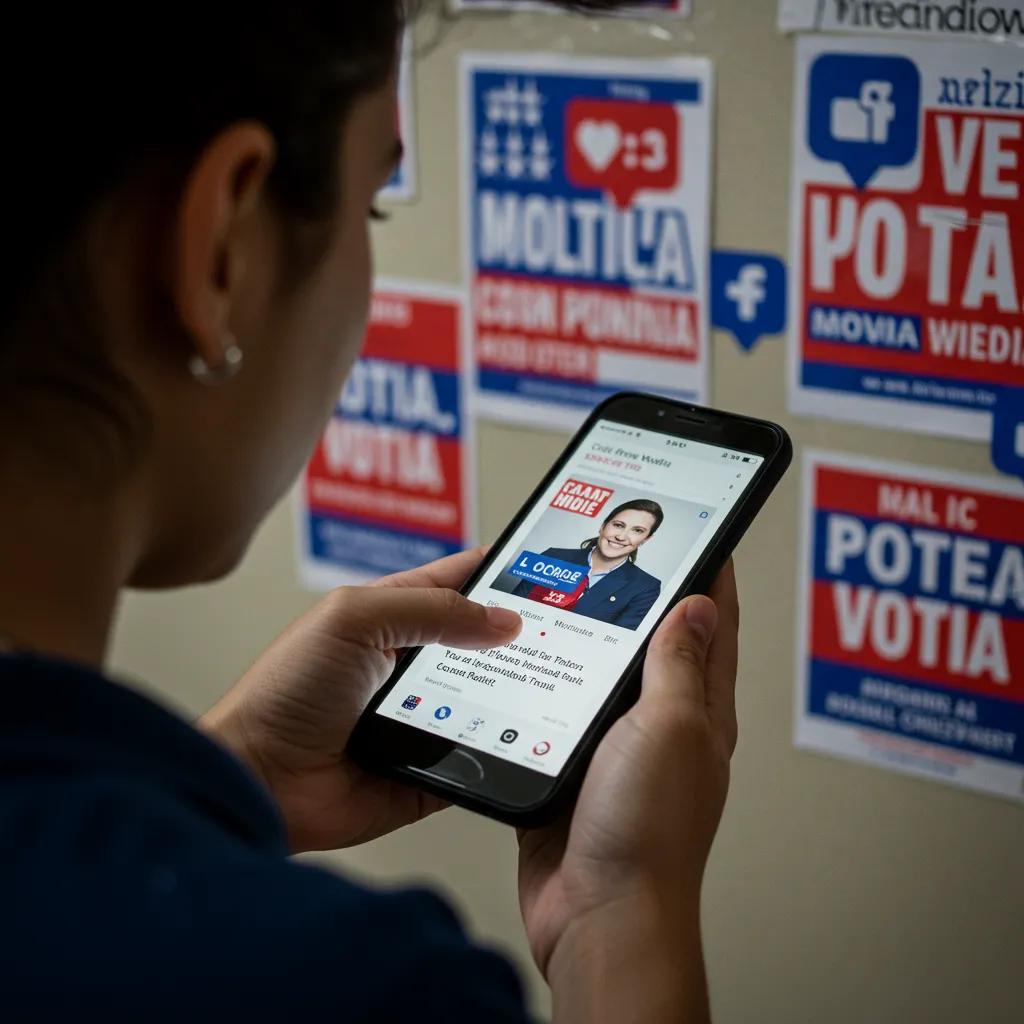
Media affects voter decisions by supplying information, framing candidate attributes, and mobilizing supporters through calls to action; these mechanisms translate into measurable shifts in turnout, candidate favorability, and issue salience. Empirical links come from case studies where concentrated coverage raised issue importance or exposed scandals that changed campaign momentum. For example, intense investigative reporting on governance issues can reduce incumbent support, while consistent positive framing can boost a challenger’s perceived competence. The combined effect of exposure, framing, and repeated messaging often determines which issues voters consider decisive at the ballot box.
These dynamics lead naturally to examining the specific channels that deliver political communication and their audience profiles.
Media’s Influence on Voter Behavior and Election Outcomes
This study delves into the intricate relationship between media coverage and voter behavior, shedding light on the profound influence that news outlets wield over election outcomes. Elections are the cornerstone of democracy, and understanding the role of media in shaping voter behavior is critical for transparent and informed electoral processes. This study sheds light on the complex dynamics between media, voters, and election outcomes, offering valuable insights for policymakers, media practitioners, and the general public. Four key research questions guided the study: the influence of news coverage on candidate perceptions, the varying impact of media platforms, the role of media bias in shaping trust, and the interaction of demographic factors with media consumption patterns. This research seeks to elucidate how media narratives, biases, and framing techniques can shape voters’ perceptions, attitudes, and ultimately, their choices at the ballot box using the quantit
What Are the Key Channels of Political Communication in Pakistan?
Political communication in Pakistan operates across television, radio, print, online news portals, and social platforms, each with distinct audiences and content styles that influence reach and credibility. Television talk shows and bulletins reach mass audiences and set daily agendas, while online news portals host rapid updates and long-form explainers. Radio retains utility in rural areas for outreach, and social platforms enable targeted mobilization and peer-to-peer persuasion among younger cohorts. Recognizing these channel roles helps campaigners and civic educators tailor messages to audience expectations and verification habits.
Knowing where citizens receive information highlights how social media changes campaign tactics in practice.
How Does Social Media Change Political Campaign Strategies?
Social media transforms campaigns by enabling micro-targeted ads, rapid narrative testing, influencer amplification, and real-time feedback loops that refine messaging and mobilization. Platforms allow parties and interest groups to segment audiences, run A/B tests on creative, and deploy short-form videos or memes that resonate with younger voters. However, speed creates ethical and regulatory risks: misinformation travels quickly and can harden polarizing frames before corrections appear. Campaigns therefore balance innovation with verification practices to maintain credibility and minimize backlash.
These platform effects feed into broader strategic choices media outlets use to frame political information.
For a concise view, here are three primary influence channels and examples of their effect:
- Agenda-setting: Highlighting an economic scandal raises public concern and forces policy response.
- Framing: Presenting a protest as a security threat versus civic expression changes public sympathy.
- Priming: Repeated coverage of corruption primes voters to evaluate incumbents on integrity.
These mechanisms explain why media choices matter for democratic outcomes and how audiences interpret political signals.
What Are Effective Political Communication Strategies Used by Media Outlets?
Effective outlets combine clear editorial standards, rigorous sourcing, and formats that facilitate verification while engaging audiences through debate and narrative structure. Strategies include balanced guest selection, transparent attribution, and structured fact-checking embedded in live formats. Talk shows, interviews, and investigative packages are tools for contextualizing events and pushing accountability, but they require editorial oversight to avoid sensationalism. Below we list concrete newsroom tactics that strengthen credibility and public trust.
Media outlets use several repeatable strategies to influence discourse and remain credible:
- Balanced sourcing and attribution: Cite named sources and provide documentation for factual claims.
- Contextual segmentation: Use explainers and backgrounders to situate breaking news within policy history.
- Transparent corrections: Publish clear corrections and link updates to original reports.
These editorial techniques reduce bias and set the stage for effective interviews and debates discussed next.
How Do News Channels and Political Talk Shows Influence Public Discourse?
News channels and talk shows shape discourse through host framing, guest selection, and conversational formats that magnify conflict or consensus; they turn policy questions into digestible narratives for large audiences. Hosts can prioritize certain frames—security, economy, or identity—thereby influencing which issues become politically salient. While talk shows can elevate underreported topics and pressure policymakers, they also risk creating echo chambers if guest diversity is limited. Balancing provocative content with expert analysis preserves engagement without sacrificing informational depth.
Understanding talk-show mechanics leads to considering how interviews and debates function as public vetting moments.
What Role Do Interviews and Debates Play in Political Messaging?
Interviews and debates are controlled environments where candidates present platforms, rebut attacks, and face immediate scrutiny; they concentrate voter attention and often produce defining soundbites that shape campaign narratives. Skilled moderation, on-air fact-checks, and follow-up analysis help audiences distinguish claims from evidence, improving accountability. Conversely, poorly managed formats can become spectacle rather than substantive evaluation, prompting viewers to focus on personality over policy. Effective design therefore prioritizes clear questions, time management, and verification aids.
These live formats increasingly incorporate AI tools to manage transcripts and verify claims in real time.
How Is AI Used to Enhance Political Reporting and Accuracy?
AI assists political reporting through rapid transcription, automated entity extraction, trend detection, and initial rumor flags, which speed verification while preserving reporter oversight. Automated tools can surface patterns across vast datasets—donations, social engagement, or legislative records—enabling deeper investigative threads faster than manual methods. However, ethical safeguards are essential: human editors must validate AI outputs, explainability should be maintained, and labeling of AI-assisted content is important to preserve trust. Integrating AI into workflows accelerates reporting but does not replace editorial judgment.
ARY News, branded as “ARY News – Ai Reporting Yard,” exemplifies newsroom positioning that emphasizes both speed and machine-assisted accuracy; its stated purpose is “To provide timely and comprehensive news and current affairs coverage, keeping the audience informed and engaged with diverse content.” (dailymotion.com)
How Does Journalism Ethics Impact Political Reporting and Media Bias?
Journalism ethics shape political reporting by establishing norms—accuracy, fairness, accountability—that counteract sources of bias and editorial pressure. Ethical frameworks guide sourcing practices, corrections policy, and conflict-of-interest disclosures, all of which reduce misinformation and strengthen public confidence. When newsrooms apply consistent ethical checks, they limit the impact of partisan frames and provide citizens with verifiable information for political decision-making. The table below compares common initiatives and their outcomes in combating misinformation.
Media Ethics and Shaping Public Perception: Agenda-Setting, Framing, and Bias
This paper explores the methods used by media outlets to manipulate public opinion, including agenda-setting, framing, and selective exposure of facts and how this can reinforce exi
What Are Common Challenges in Maintaining Objectivity in Political Journalism?
Maintaining objectivity faces pressures from ownership interests, advertiser influence, political access dynamics, and safety constraints that can skew coverage choices and sourcing. Reporters may face incentives to prioritize sensational content that drives ratings, while legal risks or threats can curtail investigative ambition. Mitigations include editorial firewalls, diverse sourcing policies, transparent corrections, and safety protocols for field reporters. These measures help preserve impartiality and enable journalists to report on power without undue restraint.
Addressing these challenges gives context to how fact-checking initiatives operate inside and outside newsrooms.
How Do Fact-Checking Initiatives Combat Misinformation in Politics?
Fact-checking initiatives follow a stepwise process: identify viral claims, trace origins, evaluate evidence, consult experts, and publish clear verdicts with sourcing; they often partner with platforms to increase reach. Examples include newsroom desks tagging live claims and independent organizations issuing verdicts that are then amplified through partnerships. Measuring impact uses metrics such as corrected impressions and downstream reduction in shares. Coordinated fact-checks can blunt the lifespan of false narratives and increase the cost of spreading misinformation.
These methods are complemented by ethical standards that guide everyday reporting practice in Pakistan.
What Ethical Standards Guide Political Journalists in Pakistan?
Political journalists in Pakistan are guided by principles of accuracy, fairness, verification, and accountability, drawing on both local norms and international codes adapted to the national context. Practical newsroom policies include multiple-source corroboration for contentious claims, clear labeling of opinion versus news, and transparent correction policies. Training programs and editorial oversight reinforce these standards, while legal and safety realities require careful risk assessment. Upholding these norms improves the information environment and supports democratic deliberation.
These ethics intersect with digital campaigning, which has remade how parties reach voters.
How Has Digital Media Transformed Political Campaigns and Voter Engagement?

Digital media has shifted campaigns from mass broadcasts to personalized, data-driven outreach, enabling targeted persuasion, micro-fundraising, and rapid narrative testing at lower marginal cost. Parties now use analytics to identify persuadable segments, deploy short videos and influencers to mobilize youth, and coordinate grassroots messaging through chat apps. These tools raise questions about transparency, finance reporting, and regulatory coverage. The table below compares common digital tools by function and campaign use.
What Is the Impact of Social Media Platforms on Political Mobilization?
Social platforms enable rapid mobilization through hashtags, viral videos, and influencer calls to action, producing fast spikes in participation and attention that can translate into protests, turnout, or fundraising surges. Platforms also accelerate narrative shifts, allowing competitors to respond quickly and adapt messaging. However, the same dynamics make misinformation spread faster and amplify fringe voices. Effective digital mobilization requires verification, clear calls to action, and ethical targeting to avoid polarizing or manipulative tactics.
How Do Political Parties Use Digital Tools for Campaign Finance and Outreach?
Parties utilize online donation platforms, micropayment systems, and targeted ads to raise funds and segment outreach, improving cost efficiency but also complicating transparency in reporting. Digital fundraising lowers barriers to entry for small donors and enables rapid response to events, yet weak disclosure rules can obscure funding sources. Campaigns pair fundraising with segmentation algorithms to tailor appeals by demographic and issue preference, increasing conversion while raising regulatory concerns about accountability and auditability.
How Are Young Voters Engaged Through Digital Media in Pakistan?
Young voters respond to short-form video, meme culture, influencers, and interactive formats that prioritize authenticity and relatability over polished messaging. Campaigns that use storytelling, participatory content, and platform-native creative see higher engagement among 16–32 year olds. Trust is built through transparency, consistent verification, and credible messengers, while missteps—manipulative targeting or opaque sponsorship—erode credibility. Designing youth-focused formats requires mixing entertainment with verifiable facts to sustain long-term engagement rather than momentary attention.
What Are the Effects of Media Coverage on Government Accountability and Political Transparency?
Sustained investigative reporting and watchdog coverage expose wrongdoing, prompt inquiries, and shape public demand for accountability, making media a central check on power. Clear, evidence-based reporting increases the probability of legal scrutiny, legislative reform, or administrative action, while routine coverage keeps issues within public memory. Media freedom enhances the media’s capacity to act as a watchdog, and restrictions reduce investigative depth. The following list shows mechanisms through which coverage translates into accountability.
Media contributes to accountability through three primary mechanisms:
- Investigation: Deep reporting uncovers evidence that triggers institutional responses.
- Sustained coverage: Repetition keeps issues on the public agenda until remedial action occurs.
- Public pressure: Informed public opinion compels officials to respond or face electoral costs.
These mechanisms illustrate why protecting editorial independence is essential for functional democracy.
How Does Investigative Reporting Influence Political Accountability?
Investigative reporting uses document analysis, source cultivation, and data forensics to produce evidence that can prompt official investigations, resignations, or policy reform. When investigators publish verifiable findings, institutions must respond or risk reputational damage, and subsequent legal or administrative action often follows. Protecting sources and ensuring rigorous chain-of-custody for documents are key safeguards. Effective investigations therefore combine methodological rigor with editorial courage to effect change.
Investigative outcomes underscore the relationship between press freedom and democratic health.
What Is the Relationship Between Media Freedom and Democratic Processes?
Press freedom correlates with stronger accountability, higher transparency, and more informed public debate, which together support healthier democratic institutions. Open media ecosystems enable scrutiny of officials and policy debates, while restricted environments reduce incentives for corrective action and increase corruption risk. Policies that protect journalistic independence and safety thus contribute directly to the integrity of electoral and governance processes. Strengthening legal safeguards for media is therefore part of bolstering democratic resilience.
How Do Media Reports Shape Public Perception of Political Leaders?
Media framing, repetition, and the prominence of certain narratives shape leader reputations and crisis responses; consistent negative framing lowers approval while balanced context can mitigate reputational damage. Corrections and fact-checks play important roles in reputational repair when erroneous claims circulate. Readers who evaluate sources and look for corroboration are less susceptible to manipulative frames. Encouraging critical consumption and visible editorial transparency helps audiences interpret leadership coverage accurately.
How Can Media Literacy Improve Public Understanding of Politics and Reduce Polarization?
Media literacy equips citizens with verification skills, source evaluation tools, and bias recognition techniques that reduce susceptibility to divisive content and improve civic discourse. Teaching practical skills—reverse image search, claim tracing, cross-checking sources—lowers the chance of sharing falsehoods and narrows echo-chamber effects. Media literacy initiatives also foster habits of deliberation, improving the quality of political debate and reducing reactive polarization over time. The list below summarizes core media literacy components.
Core components of effective media literacy programs include:
- Verification skills: Fact-checking tactics and digital search techniques.
- Source evaluation: Assessing credibility, motive, and provenance of claims.
- Bias recognition: Identifying framing and emotional appeals in content.
These competencies enable citizens to engage with politics more thoughtfully and resist manipulative messaging.
What Are Effective Media Literacy Initiatives in Pakistan?
Effective local initiatives combine school curricula, university partnerships, NGO workshops, and newsroom outreach to reach different age groups and civic actors. Programs that pair hands-on verification training with scenario-based exercises show higher retention, while social-first formats and short explainers reach youth more effectively. Collaborations between educational institutions and media organizations increase realism and provide practical verification examples. Measuring impact uses pre/post assessments of verification skills and reductions in sharing false content.
Scaling these approaches clarifies how media literacy reduces polarization in everyday interactions.
How Does Media Literacy Help Combat Political Polarization?
Media literacy reduces polarization by improving source discernment, encouraging cross-cutting exposure, and promoting norms of evidence-based discussion that weaken echo-chamber dynamics. When people apply verification checklists and seek multiple perspectives, they are less likely to accept extreme narratives uncritically. Practical advice—pause before sharing, verify with two credible sources, and check authoritativeness—lowers the spread of divisive misinformation. Long term, these habits promote deliberative norms that make political conflict more productive.
What Role Does ARY News Play in Promoting Media Literacy and Fact-Checking?
ARY News positions itself as an information hub that engages audiences across formats and emphasizes timely reporting and verification practices consistent with wider newsroom education efforts. The organization’s stated raw content intent is “To provide timely and comprehensive news and current affairs coverage, keeping the audience informed and engaged with diverse content.” (dailymotion.com) In practice, newsrooms that share explainers, fact-check segments, and youth-focused explainers contribute to public skills and reduce misinformation exposure. When outlets publish correction policies and partner with civic education projects, they help scale media literacy outcomes.
This factual depiction shows how newsroom practices can support civic learning without substituting for neutral educational programs.
What Are the Future Trends in Media and Politics: AI, Ethics, and Public Engagement?
Near-term trends include deeper AI integration into verification and personalization, increased demand for transparency and model auditability, and growth of youth-first content formats that shape political narratives. Regulators will face pressure to balance innovation with safeguards against manipulation, while newsrooms will need to invest in explainable AI tools and clear labeling to maintain trust. Practical recommendations include adopting AI-assisted verification pipelines, investing in local reporting capacity, and designing youth engagement formats that combine entertainment with verified information. The following projections offer concrete expectations for practitioners.
Key near-term projections:
- AI-assisted verification becomes standard: Faster claim triage and evidence aggregation.
- Demand for transparency grows: Auditable models and labeling of AI-augmented content.
- Youth formats dominate political engagement: Short-form video and interactive explainers lead discourse.
These projections highlight actionable steps for media, policymakers, and civic educators to prepare for evolving political information environments.
How Will AI Shape Political Journalism and News Reporting?
AI will streamline transcription, summarization, and entity extraction—speeding research and freeing reporters for analysis—while enabling automated trend detection across large datasets for investigative leads. Automated summarization can produce initial briefings that reporters refine, and entity extraction helps link people, organizations, and events for richer context. However, risks include deepfakes and automated opinion amplification, requiring watermarking, human oversight, and public disclosure of AI-assisted outputs. Responsible deployment emphasizes explainability and editorial control.
These considerations lead into the regulatory questions that will shape AI’s deployment.
What Are the Regulatory Challenges for AI in Political Media?
Regulatory challenges include defining disclosure standards for AI-assisted content, ensuring model auditability, protecting intellectual property in training data, and allocating platform responsibilities for political manipulation. Policymakers must balance innovation that improves verification with safeguards against automated amplification of falsehoods and targeted manipulation. Recommended best practices involve mandatory labeling of AI-generated content, retention of provenance logs for audits, and collaborative frameworks between platforms, newsrooms, and regulators to enforce transparency.
Addressing regulation prepares the media ecosystem to continue influencing campaigns and opinion effectively.
How Will Media Continue to Influence Political Campaigns and Public Opinion?
Media influence will evolve through format innovation (short video, interactive explainers), deeper personalization, and a renewed premium on local reporting to build trust. Outlets that combine rigorous verification with youth-oriented formats will shape next-cycle narratives, while investigative reporting will remain a cornerstone of accountability. For practitioners: prioritize transparent AI use, invest in local beats, and design engagement formats that foster deliberation rather than spectacle. These steps will keep media a constructive force in democratic life.
This completes a practical, entity-rich guide to how media interacts with politics and elections, offering tools and standards for practitioners, journalists, educators, and engaged citizens.
Conclusion
Understanding the intricate relationship between media and politics is essential for navigating today’s democratic landscape. By recognizing how various channels influence public opinion and voter behavior, individuals can engage more effectively in political discourse. We encourage you to explore further resources and tools that enhance your media literacy and critical thinking skills. Stay informed and empowered to make a difference in your community.