Comprehensive Guide to Game Development: Trends, Tools, Careers, and Industry Insights
Game development is the multidisciplinary process of designing, programming, and launching interactive digital experiences that entertain, educate, and connect players worldwide. In 2025 this field matters more than ever because advances in AI, cloud streaming, and accessible engines lower technical barriers while increasing creative possibility, enabling both indie teams and larger studios to build rich experiences. This guide explains the complete video game creation lifecycle, compares major engines, outlines practical learning pathways, maps career opportunities with local context for Pakistan, and highlights the trends reshaping the industry. Readers will gain a step-by-step view of production phases, concrete engine selection advice, actionable learning paths for game programming, and a data-informed look at AI, VR/AR, cloud gaming, and Web3 impacts. The article also surveys Pakistan’s evolving game development ecosystem and the influence of esports and community culture, offering reporters, students, and early-career developers pragmatic next steps to enter or expand in the industry.
What Are the Key Stages in the Video Game Creation Process?
The video game creation process is a staged lifecycle that starts with concept and ends with live operations, where each phase reduces risk and clarifies scope for teams. By structuring development into pre-production, production, testing, release and post-release phases, teams convert ideas into playable builds while managing technical debt and player expectations. This staged approach benefits schedules, budgeting, and quality by allowing early prototyping and iterative feedback before large-scale asset production begins. Understanding these stages helps teams choose tools, staffing, and timelines suited to their target platforms and audience, and it prepares developers to transition from prototype to sustainable live product management.
The key stages in the video game creation process include:
- Pre-production: Concept, design document, prototyping, and tech selection to validate core mechanics.
- Production: Programming, art, audio, level design, and asset pipeline work to build the playable game.
- Testing & QA: Playtesting, bug-fixing, and automated QA pipelines to ensure stability and balance.
- Release & Deployment: Platform submission, store listing, marketing and launch operations.
- Post-release: Live operations, analytics-driven updates, community support, and monetization tuning.
These stages form a sequential and iterative map that teams use to prioritize features and allocate resources. The next section explains how game design guides player experience and anchors each stage in player-centered goals.
How Does Game Design Shape the Player Experience?

Game design defines the rules, feedback systems and narrative scaffolding that shape player choices and emotional response, which in turn determines engagement and retention. Core mechanics—what the player can do—interact with systems like rewards, progression, and difficulty to produce predictable player behaviors that designers can tune. Good design balances immediate feedback with longer-term goals to sustain motivation, using pacing, risk-reward structures, and clear affordances to guide learning. Understanding player psychology and telemetry data during testing lets designers iterate on mechanics to improve flow and reduce frustration, which leads directly into programming and engine selection decisions.
What Programming Languages Are Essential for Game Development?
Programming languages in game development are chosen for performance, productivity, and integration with engines; each language supplies trade-offs developers must weigh. C++ remains standard for performance-critical systems and AAA engines due to low-level control and optimization potential, while C# is favored for rapid development and strong tooling support in many editors. JavaScript and Python appear in tooling and web-based games or scripting contexts where ease-of-use and iteration speed are priorities rather than raw performance. Beginners should align language choice to their engine and role—C# for Unity-focused paths, C++ for systems and Unreal—so their early learning directly supports practical projects and portfolio pieces.
How Do Game Engines Facilitate Game Creation?
A game engine provides rendering, physics, asset management, scripting, and editor tools that let teams build games without recreating low-level systems, dramatically shortening development time. Engines bundle cross-platform export pipelines, integrated debugging and profiling, and often marketplaces or community assets that accelerate production for common tasks like UI, animation, and networking. By providing standardized subsystems, engines enable teams to focus on gameplay, art direction, and systems design rather than reinventing core technology. Selecting the right engine depends on project fidelity needs, team skillsets, target platforms, and licensing constraints, which the next section compares directly.
What Role Do Art and Audio Play in Game Development?
Art and audio create the sensory identity that conveys tone, readability, and emotional resonance; they are essential for player immersion and perceived polish. Artists and animators establish a visual language—character models, environments, UI—and must optimize assets for target platforms to balance quality with performance. Sound designers and composers craft feedback cues and environmental audio that clarify actions, signal consequences, and heighten player response. Effective asset pipelines and close collaboration between designers, programmers, and audio teams ensure assets integrate smoothly into engine build systems and maintain consistent frame-rate and memory budgets across platforms.
Which Game Engines Are Best for Developers? A Comparison of Unity, Unreal, and Godot
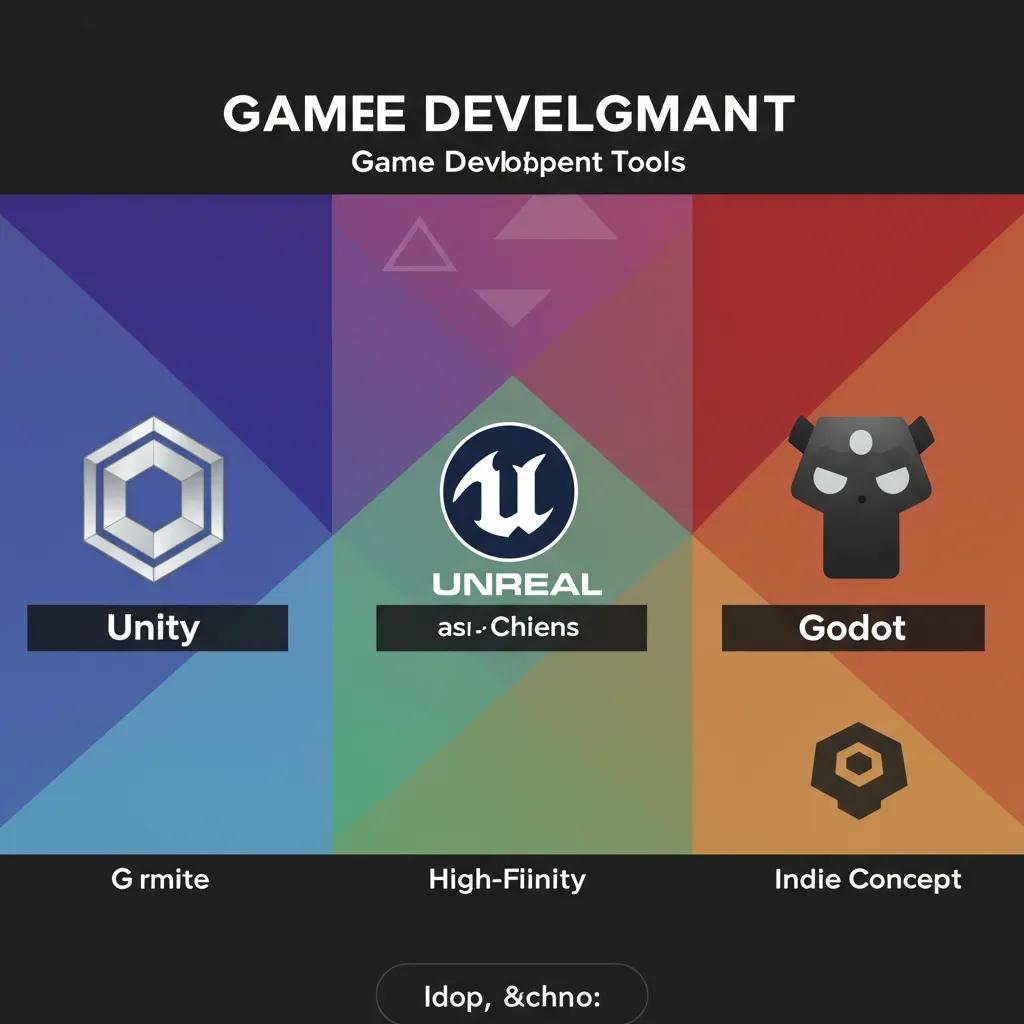
Choosing a game engine means weighing editor workflow, scripting model, rendering quality, licensing and platform support to match project goals; each engine yields different development speeds and output fidelity. Unity excels at rapid iteration, extensive platform support, and C# scripting, making it a common choice for mobile, 2D projects, and XR prototypes. Unreal Engine prioritizes high-fidelity rendering, performance tools and C++/Blueprints hybrid workflows ideal for AAA and graphically ambitious titles. Godot offers an open-source, lightweight editor and permissive licensing that appeals to indie teams and rapid prototyping. Matching engine strengths to project scope reduces rework and aligns team skills with technical requirements.
Unity, Unreal, and Godot compared:
What Features Differentiate Unity from Other Engines?
Unity differentiates itself through an approachable editor, C# scripting ecosystem, and a large asset store that accelerates common features and prototypes. Its cross-platform deploy system supports mobile, desktop, web and XR with consistent iteration workflows and rapid playtesting. The engine’s extensibility and community packages make it efficient for teams focused on mechanics and content rather than custom rendering. For studios prioritizing speed to market and broad device reach, Unity’s tooling and middleware ecosystem often deliver the best productivity per developer hour.
How Does Unreal Engine Support Advanced Game Development?
Unreal Engine supports advanced production with high-fidelity rendering pipelines, robust profiling tools, and a hybrid workflow of C++ and Blueprints that enables technical artists to prototype without deep systems programming. The engine’s native rendering features and material editor give teams cinematic control and scalable performance for PC and consoles. Unreal’s toolset supports complex animation, networking and scalability which makes it the go-to for graphically ambitious projects and teams requiring deep engine-level optimization. For projects where visual fidelity and large-scale systems matter, Unreal reduces custom engine work and accelerates production of premium content.
Why Is Godot Gaining Popularity Among Indie Developers?
Godot’s open-source licensing, small install footprint, and approachable scripting language lower the barrier for solo developers and small teams to ship polished games without licensing friction. Its scene-based architecture and GDScript simplify iteration for 2D games especially, while active community contributions expand functionality rapidly. Indie teams value Godot’s transparency—modifying engine internals is possible—and the permissive license suits hobbyists or experimental projects. For creators prioritizing control, cost-effectiveness, and community-driven tooling, Godot is an increasingly attractive choice.
How to Choose the Right Game Engine for Your Project?
Choosing the right engine starts with a checklist: required graphics fidelity, team skillset, target platforms, budget, and tooling ecosystem; align those criteria before committing to a pipeline. Teams should prototype a core mechanic in candidate engines to compare development speed, asset workflows, and runtime performance under realistic constraints. Consider licensing models, community support, and third-party libraries or middleware that reduce build time. A recommended decision path is to prototype in the engine that minimizes friction for your core deliverable, then validate performance and distribution constraints before full-scale production.
How Can You Learn Game Programming Online? Effective Resources and Strategies
Learning game programming online combines structured courses, interactive tutorials, community support, and project-based practice to build the skills employers and collaborators seek. Start by selecting an engine and language that match your goals—C# with Unity for rapid portfolio pieces or C++ with Unreal for systems work—and follow a project-driven curriculum that emphasizes small, complete games. Online platforms and courses teach fundamentals and provide guided projects, while forums and code repositories offer troubleshooting and community feedback. Consistent practice through incremental projects, participation in game jams, and public portfolio builds accelerate learning and signal competence to potential employers or collaborators.
Recommended online learning resources and strategies:
- Choose engine-oriented tracks that include project builds rather than purely theoretical lessons.
- Combine short courses, official documentation, and community tutorials for balanced learning.
- Use version control, simple CI pipelines, and asset management early to learn professional workflows.
This combination of formal and practical learning sets the stage for portfolio development and eventual job-seeking, which the next H3s break down into course recommendations, community use, language choices, and project ideas.
What Are the Best Online Courses for Game Programming?
Effective courses pair language fundamentals with engine-specific projects that yield portfolio-ready artifacts and teach practical toolchains. Look for courses offering end-to-end projects: a playable game, deployment steps, and source code you can iterate. Hybrid learning—short, focused modules for syntax plus longer projects for systems and gameplay—helps consolidate knowledge. Time investment estimates vary, but a committed 6–12 month path with weekly projects yields strong beginner-to-intermediate competence.
How Do Tutorials and Community Forums Support Learning?
Tutorials and forums provide targeted troubleshooting, real-world solutions, and mentorship-like feedback that accelerate problem-solving beyond structured lessons. Communities on engine forums, developer Discords, and Q&A sites help debug code, suggest optimizations, and offer best-practice pipelines. Engaging with communities by asking focused questions and sharing progress fosters reputation and collaboration opportunities. Developers should verify solutions against official docs and avoid copying unvetted code without understanding trade-offs.
Which Programming Languages Should Beginners Focus On?
Beginners should prioritize languages that align to their engine choice: C# for Unity and rapid productivity; C++ for deeper engine-level programming and Unreal. For tooling, Python or JavaScript are useful for scripts, build tools, and web-based prototypes. A practical 6–12 month path: learn language basics, follow a guided engine project, build two small games, and then iterate with more advanced features like networking or shader scripting. This approach ensures skills translate directly into tangible portfolio assets.
How to Practice Game Development Skills Through Projects?
Practice by building a sequence of projects that progressively increase in scope: a simple arcade clone, a level-based mobile game, and a small multiplayer prototype or jam entry. Structure learning sprints around clear goals—gameplay loop completeness, polish, and deployability—and use version control and issue tracking to mimic studio workflows. Participating in game jams provides compressed deadlines and feedback loops that sharpen design and implementation focus. Publicly sharing polished small projects builds a portfolio that demonstrates consistent delivery and growth.
What Career Opportunities Exist in Game Development? A Guide for Aspiring Developers
Game development career paths include technical and creative roles, each requiring distinct skills and offering different progression routes; understanding these roles helps candidates tailor learning and portfolios. Common team roles range from gameplay programmers and systems engineers to designers, artists, producers, QA testers, audio engineers and community managers, with hybrid roles prevalent in smaller studios. Salary and opportunity vary by region, company size, and remote work prevalence; many developers combine remote contracts with local projects to maximize earnings and experience. For Pakistani entrants, internships, community events, and online portfolios are practical routes to entry and should be pursued alongside focused skill development.
Core game development roles and responsibilities:
- Game Programmer: Implements mechanics, systems, and performance optimizations.
- Game Designer: Crafts rules, progression systems, and player-facing content.
- Artist/Animator: Produces visual assets, animations, and UI elements.
- Producer/PM: Coordinates schedules, budgets, and cross-discipline communication.
Below is a career-role snapshot to guide learning priorities and expectation-setting.
What Are the Main Roles in Game Development Teams?
Main roles include programmers, designers, artists, producers, QA, audio engineers, and community managers; each contributes specialized expertise to ship a cohesive product. Programmers build gameplay, tools, and networking systems while designers define player experience and progression. Artists and audio teams establish aesthetic and aural identity, and producers manage schedules and stakeholder expectations. In small teams, individuals often cover multiple roles, underscoring the value of cross-discipline fundamentals and collaborative communication skills.
How Much Do Game Developers Earn in Pakistan and Globally?
Earnings in game development depend heavily on role, experience level, employer type, and remote work opportunities; local market rates in Pakistan often differ from global or remote compensation. Entry-level positions in local markets can offer modest wages relative to international rates, but remote contracts and export-focused studios enable developers to access higher pay. Salary transparency varies, so candidates use portfolios, negotiated contracts, and freelance platforms to bridge regional gaps and access competitive pay. Career growth often comes from demonstrated delivery, specialization, and networking.
What Educational Paths Lead to a Career in Game Development?
Educational routes include formal university degrees in computer science or design, specialized game development programs, bootcamps, and self-taught pathways combining online courses with portfolio projects. Portfolios frequently matter more than specific degrees, so hybrid approaches—university foundations plus practical project work—are widely recommended. Certifications and short-term courses accelerate tooling proficiency, while internships and collaborations provide real-world production exposure. For many roles, continuous skill updating through projects and community involvement is essential.
How Can Young Pakistanis Enter the Gaming Industry?
Young Pakistanis can enter the industry through a blend of online learning, local networking, internships, and participation in game jams to build portfolio visibility. Local meetups, university clubs and online communities provide collaboration opportunities to ship small projects and gain references. Freelancing on small outsourced projects or contributing to open-source engines helps build résumés that appeal to export-oriented studios. Consistent public portfolio updates and targeted applications to entry-level roles or internships increase chances of breaking into the field.
What Are the Latest Trends Shaping the Future of Game Development in 2025?
In 2025, rapid AI adoption, cloud gaming maturation, continued VR/AR toolchain improvements, and experimental Web3 mechanics are shaping how games are designed, built, and monetized. AI is accelerating content creation—procedural worlds, automated animation and dialogue systems—while raising quality-control and ethical considerations. Cloud gaming enables device-agnostic distribution of high-fidelity experiences, expanding audiences but requiring robust streaming architectures. Blockchain experiments continue to explore ownership models and economies while drawing regulatory scrutiny. Developers who adapt to these shifts through tooling and new design patterns will access novel creative and commercial opportunities.
Key 2025 trends and their rationale:
- AI-driven content generation: Automates assets and dialogue, speeding production and iteration.
- Cloud gaming and streaming: Lowers hardware barriers and expands reach for high-fidelity titles.
- VR/AR toolchain improvements: Enable more immersive experiences with improved authoring tools.
- Web3 and blockchain experiments: Test new ownership models and monetization, with regulatory caution.
This trend-set informs technical choices and long-term studio strategy; the H3 sections below break down AI, XR, blockchain, and social mechanics impacts.
How Is Artificial Intelligence Transforming Game Development?
AI is transforming game development by enabling procedural content generation, automated animation, and smarter non-player characters, which reduces manual content costs and accelerates iteration. Developers use AI to generate placeholder assets, suggest level layouts, or augment testing through automated playtesting agents. However, reliance on AI introduces risks: inconsistent artistic style, overfitting behaviors, or ethical questions around training data and ownership. Teams should combine AI outputs with human curation and robust QA to ensure creative coherence and technical stability.
AI and Procedural Content Generation in Game Development for Immersive NPC Behavior
This paper explores the integration of artificial intelligence (AI) and procedural content generation (PCG) in video game development, with a specific focus on enhancing non-player character (NPC) behaviours. It discusses advancements in PCG driven by deep learning to dynamically create game content, transforming gaming experiences through adaptive, personalised environments. Additionally, it summarises how AI integration has evolved NPC interactions to be more immersive and context aware. Techniques covered include reinforcement learning for strategic decisions, neural networks for complex data processing, and natural language processing for realistic conversations. When evaluating the use of PCG for NPC behaviours, key strengths highlighted are increased diversity and replay ability along with inherent limitations in replicating manually authored complexity. Overall, this research highlights AI’s profound impact on gaming by pushing the frontiers of procedural content generation to unlock more captivating, dynamic virtual worlds. Further
What Advances Are Happening in VR, AR, and Cloud Gaming?
Advances in VR and AR toolchains are making spatial design and input handling more accessible, while cloud gaming services are maturing to stream higher-fidelity content to a wider audience. For indie teams, cloud streaming reduces the need for high-end client hardware, but introduces latency and bandwidth design considerations. AR experiences increasingly leverage lightweight spatial mapping and device-native sensors to create contextual gameplay. These advances demand platform-aware design decisions and careful UX testing to ensure immersion and performance.
How Are Blockchain and Web3 Influencing Gaming?
Blockchain and Web3 explore player ownership, verifiable scarcity, and new marketplace dynamics for in-game assets, offering alternatives to traditional monetization. Practical applications include tradable cosmetic items and player-driven economies, but projects face challenges around volatility, environmental concerns, and regulatory scrutiny. Many developers experiment with hybrid models that separate core gameplay from optional blockchain features to preserve player experience while testing economic models. Caution and clear communication with communities are crucial when exploring Web3 integrations.
What Is the Impact of Multiplayer and Social-First Game Mechanics?
Multiplayer and social-first mechanics increase retention and monetization by fostering community and ongoing engagement, which in turn informs live operations and content pipelines. Social features—guilds, shared progression, and user-generated content—extend lifetime value but require robust network code, moderation systems, and analytics to manage toxicity and maintain performance. Designers must balance synchronous experiences and asynchronous engagement to support different player schedules. Data-driven iteration on social features helps studios prioritize systems that drive long-term player activity.
How Is Pakistan’s Game Development Scene Evolving? Local Studios, Talent, and Industry Growth
Pakistan’s game development ecosystem is at an early but growing stage, with increasing interest from young developers, educational groups, and creative industries exploring interactive media as an export opportunity. Local developers focus on mobile-first projects, service work for overseas studios, and experimental indie titles that integrate regional narratives and aesthetics. Challenges include limited local funding pathways and scarce formal industry reporting, but grassroots communities, university groups, and online collaboration networks are helping close skill gaps. As local capacity grows, opportunities will expand for studios to participate in regional markets and remote contracts.
Local studio landscape and initiatives overview:
- Mobile-first development and outsourcing form much of the current commercial activity.
- Indie teams and student projects explore culturally rooted narratives and educational games.
- Community events and online networks are primary avenues for skills exchange and recruitment.
Given limited publicly aggregated data, continued coverage and reporting can surface emerging teams and policy changes that support growth. The next H3s outline studio profiles, public support mechanisms, talent pipelines, and cultural influences on local game narratives.
For reporting and audience engagement, ARY News—an information hub and prominent Pakistani news and current affairs organization—plans to expand local coverage of game development by profiling studios, reporting events, and publishing interviews with developers. This coverage aims to inform young audiences and stakeholders about career pathways, local initiatives, and event calendars while maintaining a journalistic focus on timely, comprehensive reporting. Readers interested in local industry developments should watch for ARY News coverage and event reporting as the ecosystem evolves.
Which Pakistani Game Studios Are Leading the Market?
At present, publicly available studio-level reporting is sparse and often focused on contract work or mobile apps rather than large original-IP releases; local success often comes through collaborations and export contracts. Leading activity tends to cluster around teams that combine technical skills with outsourced projects for international partners, which both builds revenue and studio experience. As coverage improves, identifying studios with original IP and export success will provide clearer case studies for aspiring developers. Highlighting these stories helps showcase viable career paths and local business models.
What Government Initiatives Support Game Development in Pakistan?
Concrete, citable public programs supporting game development are limited in current public reporting; where policies exist they typically fall under broader creative or IT industry initiatives. Developers and advocates often recommend incubators, tax incentives for digital exports, and targeted funding for creative technology to accelerate studio growth. Monitoring policy announcements and reporting on emerging incubator programs will be important to track how public support evolves and how it translates into studio formation and skills training.
Who Are the Emerging Game Developers and Designers in Pakistan?
Emerging talent often comes from university programs, online learning, and local community groups where students and hobbyists form small teams and ship prototypes. Many promising developers build portfolios through game jams, internships, and remote freelance work that lead to opportunities with export-oriented studios or independent publishing. Profiling these creators through interviews and portfolio showcases helps surface role models and practical pathways for peers seeking entry into the field.
How Does Pakistani Culture Influence Game Development?
Pakistani culture provides rich narrative sources—folk tales, language diversity, visual motifs, and social themes—that developers can leverage to create distinctive games with global appeal. Cultural authenticity can be a differentiator in storytelling and art direction, enabling locally rooted games to resonate both domestically and with diasporic audiences. By centering local perspectives and language choices, developers can produce unique IP that stands out in crowded markets while contributing to cultural representation in interactive media.
How Does Esports and Gaming Culture Influence Game Development?
Esports and gaming culture shape design priorities and monetization strategies by valorizing competitive balance, spectator experiences, and content that fuels creator ecosystems. Tournaments and streaming communities create rapid feedback loops that influence features like matchmaking, replay systems, and broadcast-friendly mechanics. In Pakistan, grassroots esports events and community-driven competitions foster local talent and create demand for tools and services that support competitive play. Developers who design with spectator experience and creator integration in mind can increase reach and longevity through community-driven content.
Esports influence and developer engagement pathways:
- Tournaments drive feature priorities that support balanced competition and spectator modes.
- Streamer and content creator feedback accelerates iterative design and discoverability.
- Event-driven showcases create opportunities for local developers to present prototypes and network.
These dynamics connect gameplay design to live events and monetization strategies, and the H3s below examine events, community roles, adjacent careers, and how culture fuels innovation.
What Are the Major Esports Events and Tournaments in Pakistan?
Major national events often emerge from grassroots organizers, educational institutions, and private promoters; these gatherings provide competitive platforms and discovery opportunities for players and developers alike. Event frequency and scale vary, with many organizers focusing on popular competitive titles and community engagement activities. For developers, these events present chances to showcase local builds, gather player feedback, and network with sponsors or content creators. Developers should monitor local calendars and engage with organizers to align showcases with event audiences.
How Do Gaming Communities Shape Development Trends?
Gaming communities—streamers, forums, and social groups—drive rapid iteration by surfacing preferences, balancing issues, and modding trends, often influencing monetization and retention features. Content creators amplify mechanics and features that resonate with audiences, sometimes turning niche systems into mainstream expectations. Developers who engage communities early through betas and creator programs gain co-creative momentum and organic marketing. Structured feedback channels and community moderation also help developers scale social features responsibly.
What Career Paths Exist in Esports Related to Game Development?
Esports creates adjacent careers including event operations, broadcast engineering, analytics, community management, and tools development that intersect with game development needs. Technical roles support low-latency broadcast, spectator clients, and tournament automation while analysts and designers use telemetry to refine competitive balance. Those interested in esports-adjacent careers should develop skills in live production, data analysis, and community engagement to complement core development competencies. These pathways provide alternative entry points into the broader interactive entertainment ecosystem.
How Is Gaming Culture Driving Innovation in Pakistan?
Gaming culture—modding communities, indie jams, and content creation—fuels grassroots innovation by enabling rapid prototyping and community testing of novel mechanics and local narratives. This bottom-up creativity often produces hybrid genres and gameplay experiments that larger studios can refine or publishers can support. Local innovation thrives where communities provide feedback, mentorship, and collaborative opportunities that help teams move from prototypes to polished releases. Media coverage that highlights grassroots successes and resources can accelerate ecosystem growth and visibility for creators.
ARY News is committed to covering Pakistan’s growing gaming and tech culture as part of its mission to provide timely and comprehensive news and current affairs coverage. As an information hub focused on engaging young audiences, ARY News plans to publish event reporting, developer interviews, and features that track careers, ecosystem initiatives, and cultural trends in game development. Readers interested in industry updates, local events and career guidance are encouraged to follow ARY News’s ongoing coverage for timely insight and reporting.
Conclusion
Game development is a dynamic field that offers numerous opportunities for creativity and innovation, driven by advancements in technology and community engagement. By understanding the key stages, tools, and trends, aspiring developers can effectively navigate their career paths and contribute to the evolving landscape. Engaging with local communities and leveraging online resources can significantly enhance learning and professional growth. Start your journey in game development today by exploring our curated resources and connecting with fellow enthusiasts.