Sustainable Economy in Pakistan: Benefits, Challenges, and Renewable Energy Solutions
Pakistan faces mounting economic and environmental pressures that make a sustainable economy an urgent priority. A sustainable economy balances economic growth with environmental protection and social equity, ensuring long-term prosperity while limiting ecological damage and climate risk. This article explains what a sustainable economy means for Pakistan, outlines measurable benefits such as GDP growth, job creation, and energy security, and maps practical renewable energy and circular-economy solutions. Readers will find policy- and project-level insights, data-driven comparisons of renewable targets, and actionable pathways for youth and local stakeholders to engage with the transition. The analysis draws on national targets, sector estimates, and recent reporting patterns, and it highlights how focused climate finance, green investments, and circular models can translate high-level goals into regional impact. Each section includes concise definitions, evidence-oriented lists, and tables to support policymaking, investment, and community action across Pakistan.
What is a Sustainable Economy and Why Does It Matter for Pakistan?
A sustainable economy is an economic system that meets present needs while safeguarding future capacity by integrating environmental limits, social inclusion, and resilient growth. The mechanism that makes this possible is the deliberate alignment of policy, investment, and technologies—such as renewable energy, circular materials management, and climate-resilient infrastructure—to reduce emissions, create jobs, and protect livelihoods. For Pakistan, the specific value is in lowering energy import costs, reducing climate-related losses, and opening new export and employment pathways. Framing sustainability as an economic strategy rather than just an environmental goal clarifies trade-offs and investment priorities for planners and businesses. Understanding this conceptual framing leads naturally to a breakdown of the precise definition and the three core pillars that underpin the approach.
How is a Sustainable Economy Defined?
A sustainable economy is defined by three interlocking characteristics: environmental limits, social equity, and economic viability. Environmentally, it prioritizes low-carbon, resource-efficient production that conserves natural capital and reduces emissions; socially, it emphasizes inclusive growth and equitable access to services and opportunities; economically, it focuses on long-term resilience, diversification, and productivity gains. Distinct but related concepts include the green economy—primarily focused on low-carbon investment and jobs—and the circular economy, which emphasizes reuse and waste reduction. These definitions matter because they determine policy instruments and metrics used to evaluate progress across Pakistan’s regions and sectors.
What are the Three Pillars of a Sustainable Economy?
The three pillars are environmental protection, social inclusion, and economic prosperity; each pillar requires concrete actions and measurable targets. Environmental protection in Pakistan involves expanding renewable energy like rooftop solar and onshore wind while protecting water resources and biodiversity. Social inclusion covers job creation, skills training, and equitable access to energy and services, especially for rural and youth populations. Economic prosperity means diversifying the economy, improving energy security to lower import bills, and building climate-resilient infrastructure that reduces economic shocks. Together these pillars create a cycle: cleaner energy lowers costs and emissions, which enables reinvestment into human capital and infrastructure.
How Does Sustainable Development Align with Pakistan’s Economic Goals?
Sustainable development aligns with Pakistan’s economic goals by improving productivity, reducing external vulnerability, and supporting export-led growth in green sectors. Investments in renewable energy and energy efficiency directly reduce fossil-fuel import dependence and stabilize the balance of payments while creating domestic manufacturing and installation jobs. Integrating Sustainable Development Goals (SDGs) with national planning helps target public spending toward infrastructure that yields multiple co-benefits—reduced flood risk, improved public health, and higher labor productivity. This alignment enables the country to attract climate finance and private green investment, which are crucial for scaling transition projects and meeting both development and resilience objectives.
What Are the Key Benefits of a Green Economy for Pakistan?
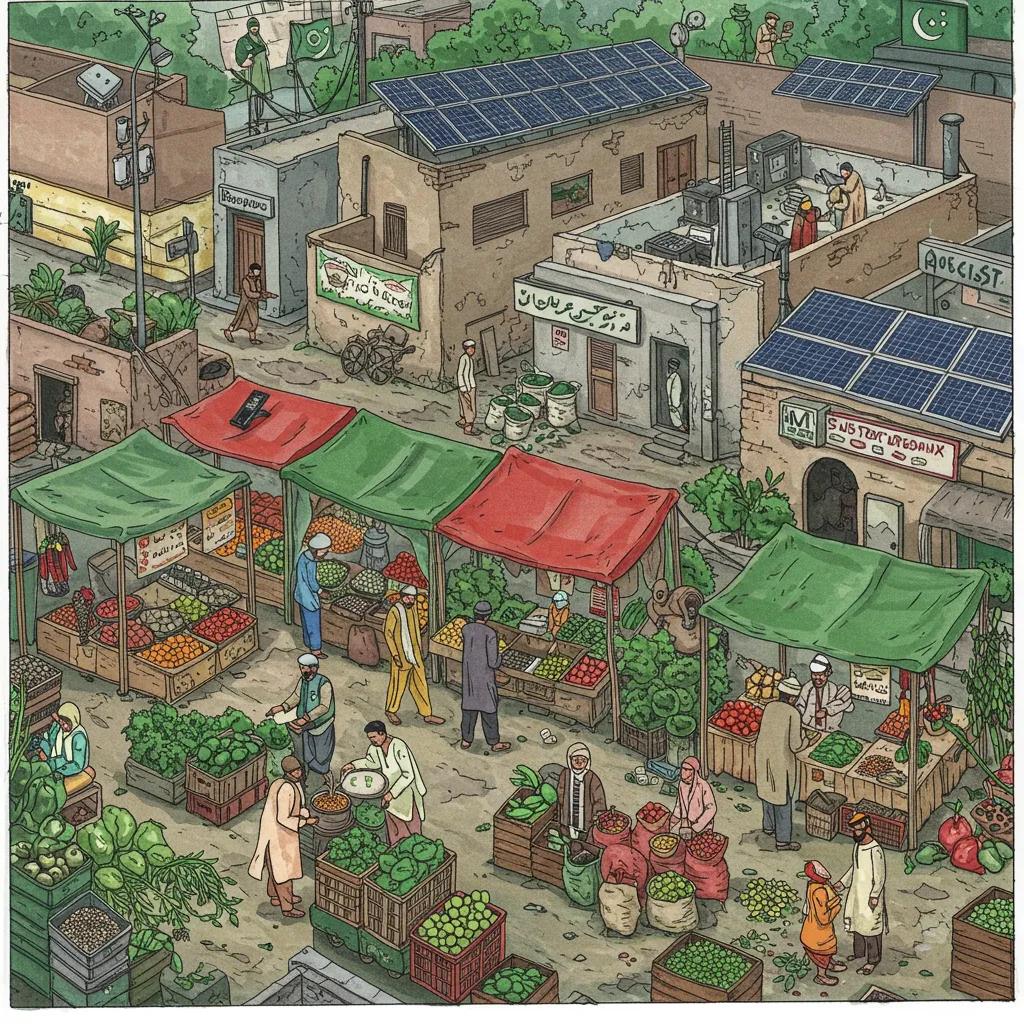
A green economy converts environmental stewardship into concrete economic outcomes by creating jobs, enhancing GDP resilience, and improving energy security. The mechanism is straightforward: shifting investment from imported fossil fuels to domestic renewables, sustainable agriculture, and circular industries retains more value locally, reduces imports, and lowers the economy’s exposure to volatile global commodity prices. Environmentally, the green economy reduces emissions and improves air and water quality, which has direct public health benefits and lowers health-related economic losses. Below is a compact, comparable view of green job types, estimated employment impact, and plausible GDP effects to guide policymakers and investors.
This table highlights that decentralized solar and circular-waste enterprises tend to create large numbers of local jobs, while utility-scale projects generate higher-skilled construction and O&M roles. Localizing value chains magnifies GDP impacts by keeping more of the investment in-country. The next section shows how these employment effects translate into broader economic and environmental advantages.
When reporting on these developments, ARY News serves as a timely information hub that tracks policy shifts, project milestones, and labor-market signals related to the green economy. Brief, factual coverage helps communities and job-seekers spot opportunities and holds stakeholders accountable as investments are deployed.
How Can a Green Economy Boost Pakistan’s GDP and Job Market?
A green economy boosts GDP by redirecting capital into domestic renewable energy, circular manufacturing, and climate-adaptive infrastructure that generate local value. Job creation spans installation technicians, plant operators, service providers, and green entrepreneurs, with many roles accessible through short vocational training and apprenticeships. Estimates indicate that decentralized solar, waste management, and small hydro can generate tens of thousands of local jobs, particularly in underemployed regions. Public-private partnerships and targeted skills programs accelerate hiring by matching supply of trained workers to emerging projects while improving long-term productivity.
What Environmental Advantages Does a Green Economy Offer?
Environmental advantages include reduced greenhouse gas emissions, better air and water quality, and strengthened ecosystem services that sustain agriculture and fisheries. These benefits lower public health expenditures, reduce productivity losses from pollution, and increase resilience to extreme weather events. By preserving natural capital, the green economy also supports livelihoods that depend on ecosystems, such as fisheries and tourism. Policy measures like emissions standards, conservation incentives, and ecosystem restoration link environmental outcomes directly to social and economic well-being.
How Does a Green Economy Enhance Energy Security in Pakistan?
A green economy enhances energy security by diversifying the energy mix through rooftop solar, utility-scale renewables, and distributed generation, thereby lowering fossil-fuel import dependence. Decentralized generation reduces stress on transmission networks, improves local supply reliability, and empowers communities to manage demand. Widespread adoption of rooftop solar and storage stabilizes prices and limits exposure to global fuel price shocks. Strengthening grid infrastructure and integrating energy storage systems are complementary steps that maximize reliability and efficiency across regions.
How is Renewable Energy Transforming Pakistan’s Economy?
Renewable energy transforms Pakistan’s economy by replacing fossil-fuel imports with domestically produced clean power, creating local manufacturing and service jobs, and lowering carbon intensity. The mechanism involves scaling rooftop solar, utility-scale solar farms, onshore wind farms, and small hydropower, alongside grid upgrades and storage. This shift reduces the country’s import bill and exposes new export and manufacturing niches while improving energy access in underserved regions. The following table summarizes technology targets and the trajectory needed to meet near-term and medium-term ambitions.
This snapshot shows rapid rooftop and utility solar growth as accessible levers, while wind and storage require coordinated grid planning and investment. Understanding these target ranges helps prioritize incentives, tariffs, and grid reinforcements.
ARY News documents project rollouts, policy announcements, and local adoption trends in real time, providing a practical line-of-sight for stakeholders tracking rooftop-solar growth, flagship projects, and regulatory changes that affect deployment.
What Are Pakistan’s Renewable Energy Targets for 2025 and 2030?
Pakistan’s renewable energy targets for 2025 and 2030 emphasize rapid expansion of variable renewable energy (VRE) and distributed generation to increase domestic capacity and reduce imports. Progress metrics include installed MW, share of renewables in the power mix, and rooftop adoption rates, with targets calibrated to national energy security and emissions goals. Meeting these timelines requires streamlined permitting, supportive tariffs, and financial de-risking instruments to attract private capital and expedite projects.
Achieving 100% Renewable Energy for Sustainable Climate Change in Pakistan
Towards achieving 100% renewable energy supply for sustainable climate change in Pakistan
How Are Solar Power Projects Driving Pakistan’s Energy Transition?
Solar power—both rooftop and utility-scale—drives the energy transition by offering rapid deployment, modular scalability, and falling costs. Rooftop solar empowers households, businesses, and institutions to reduce bills and improve resilience, while utility-scale projects deliver bulk generation at competitive prices. Policy enablers such as net-metering, tax exemptions, and streamlined approvals accelerate uptake, while local manufacturing and installation services create local economic value. Adoption barriers include financing access, grid integration, and consumer awareness, which targeted programs can address.
What Is the Potential and Impact of Wind and Hydropower in Pakistan?
Pakistan’s coastal belt and selected inland corridors offer significant onshore wind potential—estimates point toward very large theoretical capacity—which can complement solar generation with seasonal resource diversity. Small and medium hydropower projects provide dispatchable capacity and water-management co-benefits, though large hydro presents environmental and social trade-offs requiring careful planning. The combined potential of wind and hydropower supports system reliability, reduces curtailment of solar, and enhances long-term seasonal balancing. Integrating these resources requires careful assessment of environmental impacts and stakeholder engagement.
What Are the Current Major Renewable Energy Projects in Pakistan?
Major renewable projects include clusters of utility-scale solar and wind farms and numerous rooftop-solar rollouts across commercial and residential sectors. Key projects often combine private investment with public support and target grid-connection milestones that increase local generation capacity. Regional distribution concentrates projects in high-resource provinces and coastal areas for wind, while rooftop adoption spreads across urban centers where grid stress and retail tariffs make self-generation attractive. These projects collectively illustrate how investment and policy can scale capacity rapidly when regulatory and financial barriers are addressed.
How Are Circular Economy Models Supporting Sustainable Development in Pakistan?
Circular economy models reduce waste, recover value, and close material loops through reuse, remanufacturing, and waste-to-value initiatives, delivering both environmental and economic benefits. The mechanism relies on redesigning products and systems to minimize landfill, extending asset lifetimes, and developing markets for secondary materials. Municipalities and private actors can implement collection, sorting, and processing systems that feed recycling and composting value chains, creating jobs and reducing landfill-related pollution. Understanding these principles helps identify practical interventions that can be scaled across urban and industrial sectors.
What Are the Principles of a Circular Economy?
The circular economy rests on reduce, reuse, recycle, and design-for-recovery principles aimed at keeping materials in productive use longer. Reduce focuses on consuming fewer resources through efficiency and service models; reuse and repair extend product life; recycling and industrial symbiosis turn waste into feedstock; design-for-recovery ensures products are easier to disassemble and recycle. Examples in Pakistan include repurposing construction waste, extending electronic device lifespans, and promoting packaging alternatives. These principles create business opportunities while lowering environmental footprints.
How Is Waste Management Improving Through Circular Economy Practices?
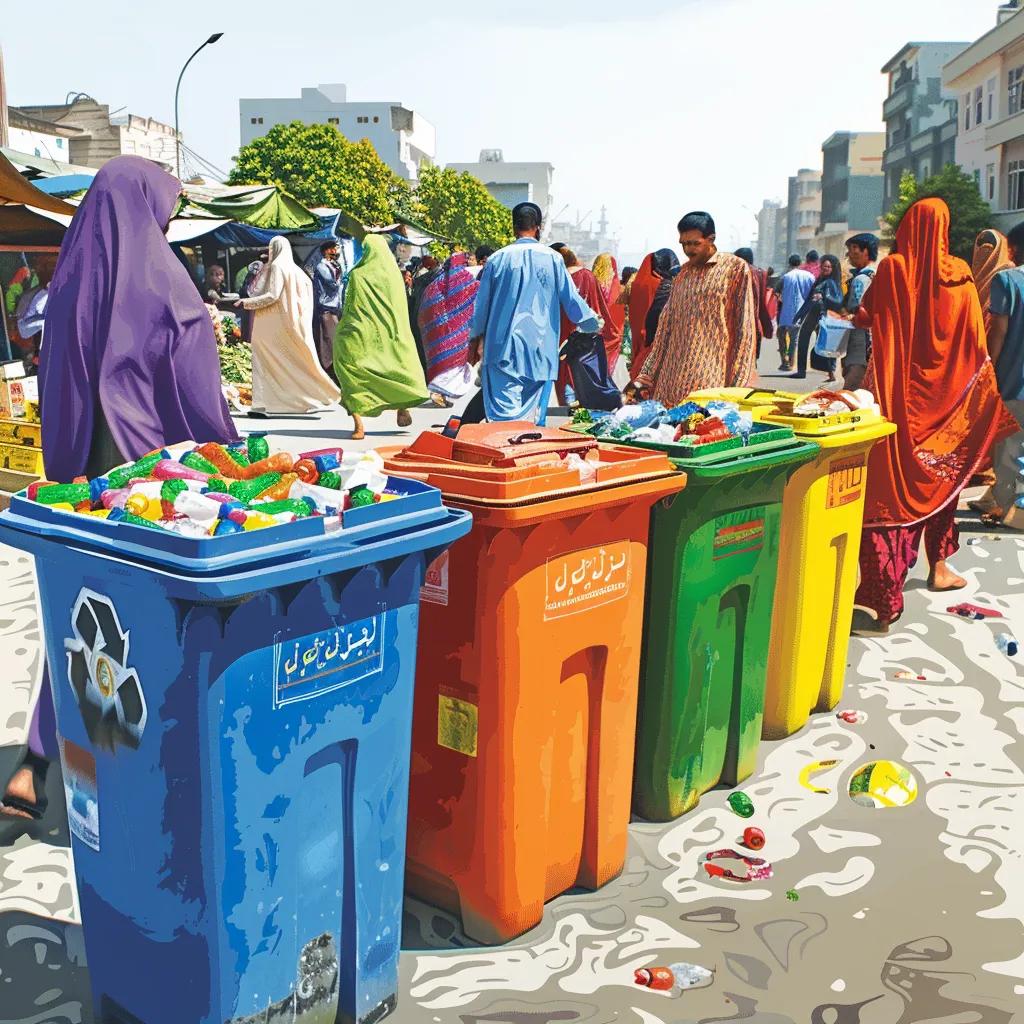
Waste management improvements include enhanced segregation at source, private-sector recycling enterprises, and pilot waste-to-energy plants that convert organic waste into energy or compost. Municipal reforms that combine collection improvements with formalized recycling markets increase recovery rates and reduce public health risks. Measurable outcomes include reduced landfill volumes, new micro-enterprises in recycling, and lower methane emissions from organic waste. Scaling these practices requires infrastructure investment, incentives for private operators, and public awareness campaigns to change consumption and disposal habits.
Waste-to-Energy Technologies for Circular Economy and Decarbonization in Pakistan
The main role of WTE technologies in the circular economy is the energy recovery from biomass and non-recyclable waste, and also it was presented as a viable alternative to the decarbonization of transport and energy sectors.
What Challenges Does Pakistan Face in Implementing Circular Economy Models?
Challenges include limited financing for waste-processing infrastructure, fragmented regulations, weak enforcement, and low public awareness about reuse and recycling benefits. Informal waste workers play a critical role but often lack protection and access to formal markets. Policy solutions include blended finance to mobilize private capital, regulations that mandate extended producer responsibility for packaging, and capacity-building programs for local governments and informal recyclers. Overcoming these barriers unlocks both environmental gains and new livelihood pathways that complement renewable-energy and green-investment strategies.
What Role Do Climate Finance and Green Investments Play in Pakistan’s Sustainable Economy?
Climate finance and green investments mobilize the capital needed to scale renewable energy, adaptation, and resilient infrastructure projects, which the private sector alone often cannot fully fund. The mechanism includes concessional loans, blended finance, green bonds, and carbon markets that lower investment risk and make projects bankable. Estimates suggest Pakistan could attract substantial green investment—on the order of tens of billions over coming decades—if policy frameworks, pipeline development, and investor safeguards are strengthened. The table below summarizes financing mechanisms, indicative investment size, and primary use cases to guide decision makers and funders.
This comparison indicates that blended finance and policy clarity are essential levers to unlock larger private investments in clean energy and resilience. Strengthening pipelines and regulatory certainty increases the chance that these financing pools mobilize expected funds.
How Much Green Investment Can Pakistan Attract in the Next Two Decades?
Estimates project Pakistan could attract $30–50 billion in green investments over two decades if enabling conditions—clear policy, bankable projects, and de-risking instruments—are in place. Priority sectors likely to attract capital include renewables, energy efficiency, water infrastructure, and climate-resilient agriculture. Attracting these flows requires streamlined permitting, transparent procurement, and targeted public support to reduce technology and market risk. Successful early projects create a track record that encourages follow-on private investment.
What Are the Opportunities in Pakistan’s Carbon Credit Market?
Pakistan’s carbon credit market offers opportunities to monetize emissions reductions from forestry, improved cookstoves, renewable projects, and methane avoidance in waste and agriculture. The potential annual revenue from carbon credits could reach hundreds of millions to over a billion dollars depending on market rules, pricing, and verification standards. Developing credible registries, MRV (measurement, reporting, and verification) systems, and community benefit-sharing mechanisms are prerequisites for realizing this potential. Carbon revenues can also finance local adaptation and conservation measures.
How Are Climate Finance Mechanisms Supporting National Adaptation Strategies?
Climate finance mechanisms support adaptation by funding projects that reduce vulnerability in water, agriculture, urban infrastructure, and disaster risk management. Multilateral funds and bilateral programs often prioritize community-level resilience, early-warning systems, and nature-based solutions. Effective use of adaptation finance requires clear project pipelines, strong monitoring frameworks, and integration with national development plans to ensure funds reach high-impact, scalable initiatives. Strengthening institutional capacity to manage funds and measure outcomes increases the value delivered by adaptation investments.
How Is Pakistan Addressing Climate Change Impact Through Policy and Innovation?
Pakistan addresses climate change through a mix of national policies, international commitments, and innovation programs focused on green infrastructure, adaptation, and urban resilience. Mechanisms include national contributions under international frameworks, sectoral policies for energy and water, and pilot innovations in urban planning and green buildings. These interventions aim to reduce economic losses from extreme weather, protect vulnerable populations, and enable sustainable urban growth. Examining vulnerabilities and policy tools clarifies where investment and regulation will produce the greatest resilience benefits.
What Are Pakistan’s Major Climate Vulnerabilities and Economic Losses?
Major vulnerabilities include floods, heatwaves, water scarcity, and glacial melt, each producing significant economic and social losses. Flooding damages infrastructure, agriculture, and housing, while heat extremes depress labor productivity and increase health burdens. Water scarcity threatens irrigation-based livelihoods and hydropower generation. Quantifying recent economic losses and mapping exposure helps prioritize adaptation spending in high-risk regions and sectors. Risk-informed planning reduces long-term recovery costs and supports sustainable economic outcomes.
What National Climate Policies and International Commitments Are in Place?
Pakistan has articulated mitigation and adaptation commitments through national climate strategies and its nationally determined contributions (NDCs), aligning with Sustainable Development Goals and international frameworks. Policy instruments include renewable energy targets, adaptation plans, and incentives for low-carbon technology adoption. Implementation challenges remain in scaling from plans to projects due to financing, governance, and data gaps. Strengthening monitoring, reporting, and cross-sector coordination improves policy effectiveness and investor confidence.
3H: How Are Green Infrastructure and Sustainable Urban Development Being Promoted?
Green infrastructure and sustainable urban development are promoted through pilot projects in resilient drainage, urban greening, and energy-efficient buildings that reduce flood risk and heat exposure. Financing models include municipal bonds, public-private partnerships, and targeted climate grants for urban upgrades. Promoting building codes, green procurement, and transport modal shifts supports lower emissions and healthier urban environments. These initiatives create replicable models for scaling urban resilience across Pakistan’s growing cities.
How Can Youth Engage with and Benefit from Pakistan’s Sustainable Economy?
Youth can engage with and benefit from the sustainable economy by pursuing green skills, entrepreneurship, community initiatives, and policy advocacy that align with emerging job markets. The mechanism is skills acquisition combined with platform-based engagement—training, internships, innovation hubs, and media that translate opportunity into employment and influence. Young people benefit by accessing technician roles in solar and wind installation, data analysis for energy systems, and entrepreneurship in circular services. Practical steps and resources help youth move from awareness to employment and civic action.
What Green Job Opportunities Are Emerging for Young Pakistanis?
Emerging green jobs include solar installers and electricians, wind-turbine technicians, waste-management operators, energy-efficiency auditors, and data analysts for grid optimization. Entry pathways often require vocational certificates, short technical courses, and on-the-job apprenticeships, while higher-skill roles need tertiary education in engineering or data science. Salary ranges vary by role and region, but many green jobs offer rapid absorption for trained technicians and entrepreneurial returns for service providers. Structured vocational programs accelerate the transition from training to paid work.
How Can Youth Participate in Sustainable Practices and Advocacy?
Youth can participate through community projects, advocacy campaigns, and social-media storytelling that raise awareness and mobilize local action. Practical steps include organizing local clean-up and recycling drives, participating in energy-efficiency audits for schools, and promoting rooftop-solar pilots for community centers. Digital advocacy—short explainers, campaign videos, and data visualizations—amplifies impact and attracts stakeholders. These activities build practical experience that complements formal training and prepares youth for green careers.
ARY News supports youth engagement by producing accessible explainers, short videos, and social content tailored to younger audiences, helping them understand job pathways and local project updates. These formats bridge the gap between technical policy discussions and practical next steps for young people seeking to enter green sectors.
What Educational Resources and Innovations Support Youth Involvement?
Educational resources include vocational bootcamps, online modules on renewable technologies, incubators for green startups, and seed funding competitions that help convert prototypes into viable ventures. Innovation hubs and maker spaces provide hands-on training in prototyping and small-scale manufacturing for circular-economy products. Public and private partnerships can expand scholarship and internship opportunities, linking educational pathways to employers in the renewable and circular sectors. Access to mentorship and networks accelerates entrepreneurship and career progression.
- Key Skills for Entry: Technical installation, basic electrical knowledge, and safety procedures.
- Advanced Pathways: Engineering, data analytics, and project management for system-level roles.
- Entrepreneurship: Business skills, access to microfinance, and market linkages for circular startups.
This article has laid out the conceptual framework, sector-specific pathways, and practical actions needed to develop a sustainable economy in Pakistan. By aligning policy, finance, innovation, and youth engagement, Pakistan can leverage renewable energy, circular models, and climate finance to create resilient growth that benefits people and the planet.
Conclusion
Embracing a sustainable economy in Pakistan offers significant benefits, including job creation, enhanced energy security, and improved public health through reduced emissions. This transition not only aligns with national economic goals but also empowers local communities to engage in green initiatives. By investing in renewable energy and circular economy practices, stakeholders can unlock new opportunities for growth and resilience. Discover how you can contribute to this vital movement and explore actionable resources today.