Comprehensive Headphone Reviews and Ratings for Best Wireless and Noise Cancelling Models in 2025
This article aims to be an authoritative, up-to-date resource for headphone reviews, comparisons, and purchasing guidance for 2025. Readers will find ranked recommendations for wireless and noise-cancelling headphones, clear explanations of key technologies like ANC and codecs, practical buying checklists, and Pakistan-specific availability guidance. The article compares flagship models side-by-side, highlights the best budget options, and covers emerging trends such as AI-personalized audio and USB-C connectivity. Expect concise verdicts, comparison tables, and actionable steps to troubleshoot or optimize your headphones for calls, travel, and daily listening.
What Are the Best Wireless Headphones of 2025?
Wireless headphones in 2025 prioritize a balance of sound quality, battery life, connectivity, and noise control to serve travel, commuting, gaming, and fitness use cases. These models use advanced Bluetooth versions and low-latency codecs to reduce sync issues while offering robust battery life for multi-day use. For many listeners, top wireless picks combine precise drivers with effective ANC and comfortable ear cushions to deliver long listening sessions without fatigue. Below are top wireless choices across categories, with one-line rationales and quick pros/cons to guide selection based on use case.
Which Over-Ear Wireless Headphones Offer Top Performance?
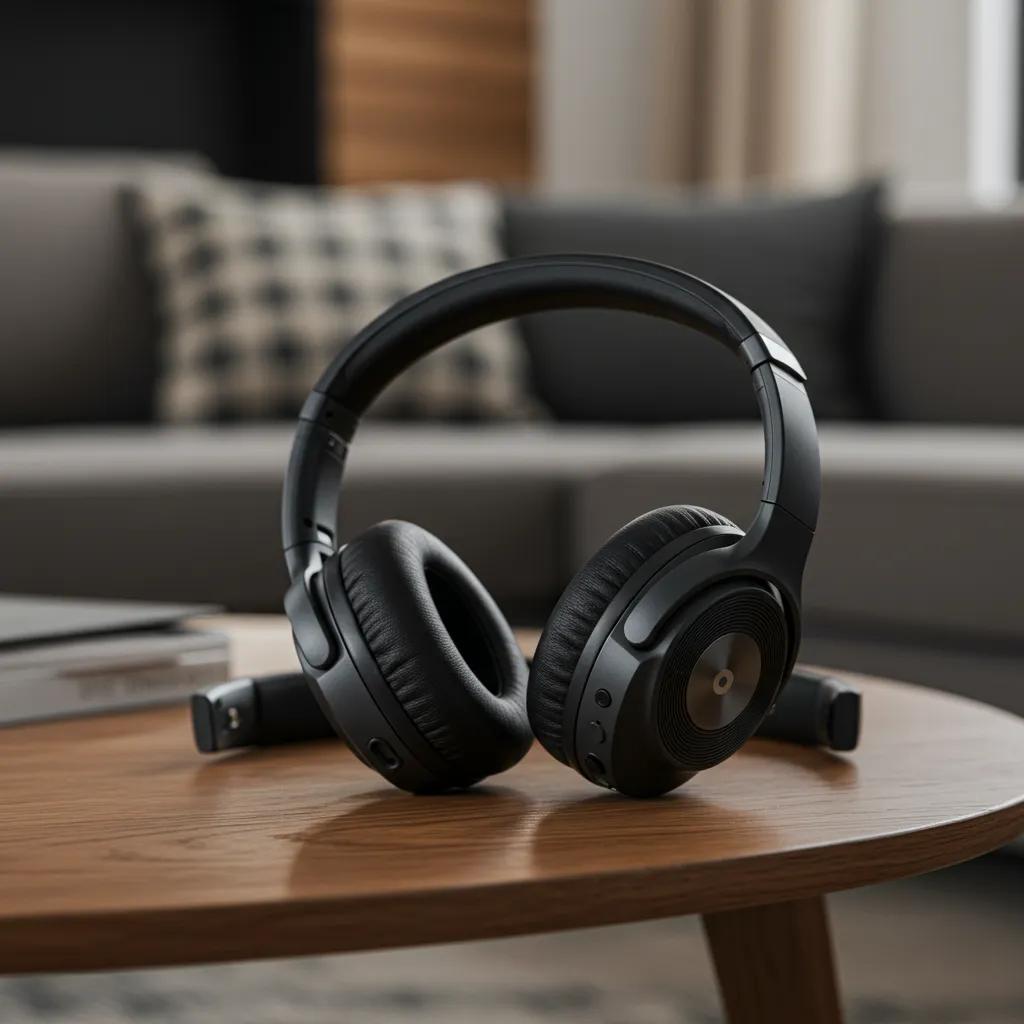
Over-ear wireless headphones designed for top performance pair large drivers and refined tuning with active noise cancellation to create immersive soundstage and quiet listening environments. These models typically emphasize driver size, frequency response balance, and ANC tuning, which affect perceived bass weight and treble clarity during complex tracks. Comfort features like plush ear cushions and lightweight headbands reduce pressure during long flights or studio sessions, while durable build materials extend product lifespan. Listeners seeking audio fidelity and travel-ready ANC should weigh sound signature preferences against battery life with ANC active.
What Are the Leading True Wireless Earbuds in 2025?
True wireless earbuds (TWS) in 2025 focus on compact driver performance, stable wireless codecs, and case-assisted battery extension to meet daily commute and workout needs. Leading TWS models support high-quality codecs and multipoint pairing for seamless switching between phone and laptop, and they provide IP ratings for sweat resistance during exercise. Charging case performance—both capacity and fast-charge speeds—impacts total usable hours and convenience for frequent users. For calls and commuting, earbuds with reliable beamforming microphones and solid passive isolation will outperform open-fit alternatives in noisy environments.
How Do Battery Life and Connectivity Impact Wireless Headphone Choice?
Battery life and connectivity directly affect how often users charge devices, how long uninterrupted listening lasts, and whether devices can pair to multiple sources simultaneously. Longer battery runtimes reduce charging frequency and improve portability for multi-leg travel, while fast-charge features can deliver hours of use from minutes of charging. Connectivity features like multipoint pairing and stable codec support (including low-latency options) determine call reliability and media sync, especially for hybrid work setups. When choosing, prioritize daily routines—commuters need long battery life, gamers need low-latency codecs, and multitaskers need multipoint functionality.
Which Brands Dominate the Wireless Headphone Market in 2025?
Market leaders in wireless headphones often specialize in specific strengths such as ANC refinement, app ecosystems for tuning, or codec leadership for high-resolution streaming and low latency. Some manufacturers emphasize ANC research and firmware-driven improvements, while others build comprehensive companion apps that enable personalized EQ and spatial audio. Brand ecosystems also matter for users who want seamless integration with phones and media services; robust software support extends product value through firmware updates and feature rollouts. Assess brand strengths by prioritizing the attributes most important to your use case—noise control, sound tuning, or app-driven personalization.
How Do Noise Cancelling Headphones Compare in 2025?
Active noise cancelling (ANC) systems reduce ambient sound by using microphones and signal processing to create anti-noise that cancels incoming noise, improving listening clarity and lowering required volume. ANC benefits travelers and open-office workers by attenuating low-frequency hums like aircraft engines or HVAC systems, while hybrid systems combine passive isolation from ear cushions with active processing for broader attenuation. The result is extended listening comfort and reduced hearing strain in noisy environments, though implementation affects battery life and potential tonal coloration. Below are comparisons of ANC approaches and trade-offs across headphone categories.
What Are the Best Active Noise Cancelling Over-Ear Headphones?
Top ANC over-ear models achieve high attenuation across a wide frequency range, maintain neutral tonal balance with ANC engaged, and provide multiple noise-cancelling modes for different environments. Effective ANC requires well-placed external and internal microphones, robust DSP algorithms, and careful tuning to avoid unnatural artifacts or excessive low-end boost. Comfort and long battery life with ANC active are essential for long-haul travel, and travel-oriented models often include airplane-mode optimizations and compact folding designs for packing. When choosing, prioritize measured ANC effectiveness, comfort, and firmware support that can refine ANC performance over time.
Which Noise Cancelling Earbuds Deliver Effective ANC?
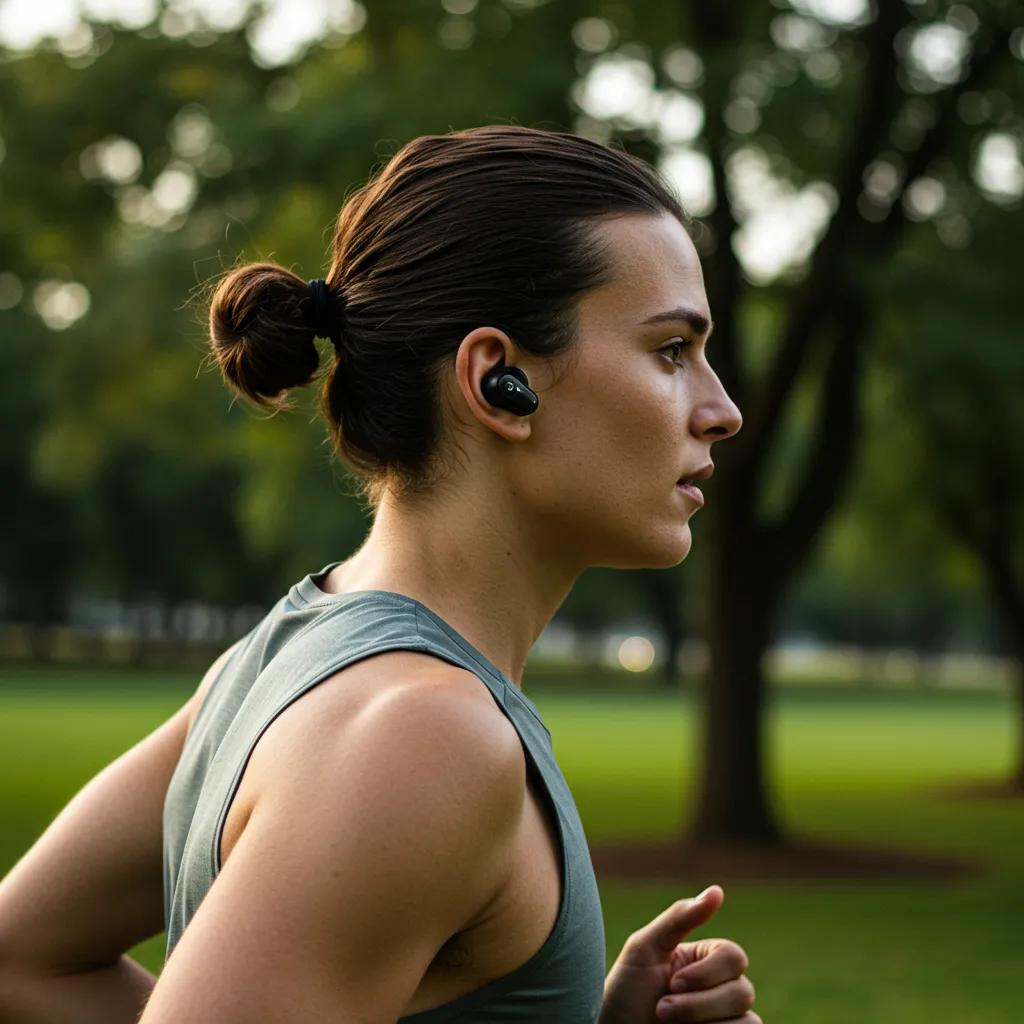
Noise cancelling earbuds rely on a tight ear seal plus onboard ANC processing to counter external noise; fit and tip selection are critical for achieving maximum attenuation. High-performing ANC earbuds combine strong passive isolation with adaptive ANC modes that tune processing intensity based on detected ambient noise, improving battery efficiency. Call quality in noisy settings also depends on microphone arrays and AI-driven noise suppression, which differ between models. For daily commuting and office use, pick earbuds that prioritize seal, ANC adaptivity, and reliable in-call voice pickup.
How Does ANC Technology Work and Why Is It Important?
ANC technology works by using microphones to sample external noise, then generating an inverse audio signal through digital signal processing to reduce perceived ambient sound at the ear. This active approach complements passive isolation from ear cushions or ear tips, and it is most effective on low-frequency, predictable noise like aircraft engines or train rumble. The benefits include lower listening volumes (reducing hearing fatigue), improved music detail in noisy settings, and clearer voice calls. Understanding ANC helps buyers decide between ANC levels, transparency modes, and whether firmware updates or app tuning can improve performance.
What Are the Pros and Cons of Noise Cancelling Headphones?
Noise cancelling headphones offer clear advantages such as reduced ambient distraction, improved listening clarity at lower volumes, and better focus in noisy settings, but they also include trade-offs related to battery consumption and potential sound signature changes. ANC processing consumes extra power which shortens runtime compared to passive-only models, and some implementations slightly alter tonal balance, particularly in the low end. Price is another consideration: advanced ANC systems typically appear in mid-to-high price tiers, though some budget models offer acceptable performance for casual use. For travelers and open-office workers, ANC is often worth the trade-offs; for audiophiles prioritizing absolute neutrality, passive or hybrid approaches may be preferable.
What Should You Know Before Buying Headphones?
Before buying, focus on sound signature, connectivity, comfort, battery life, and after-sales service to ensure the headphones match your daily needs and local support realities. Key audio metrics like frequency response and driver type help predict tonal balance while codec support influences streamed audio fidelity. Comfort and build quality determine long-term wearability, and local availability or warranty terms affect repairs and service. ARY News is primarily a news and current affairs platform focused on delivering timely and comprehensive news coverage to a Pakistani audience. This positioning allows objective, locally relevant guidance about where to buy, expected price ranges, and verification steps for warranty and service in Pakistan.
How to Choose Headphones Based on Sound Quality and Audio Features?
Choosing by sound quality starts with identifying preferred sound profile—whether you prefer bass-forward impact, neutral studio tuning, or a wide soundstage for orchestral material—and matching driver types and tuning to that preference. Codec support also matters: higher-bandwidth codecs preserve more detail over wireless links, improving clarity when streaming high-quality sources. Listening tests—trialing tracks you know well—are the best practical indicator of fit, and objective specs like impedance inform source matching when using wired modes or DACs. Prioritize features according to your use case: portable TWS for workouts, over-ear for travel and home listening, and wired options for critical listening.
What Are Key Headphone Features Explained Simply?
Key features include active noise cancellation (ANC), multipoint pairing, spatial audio, IP water/sweat resistance, and companion app EQ. ANC reduces ambient noise actively, multipoint allows connecting to two sources simultaneously, and spatial audio simulates immersive three-dimensional sound fields for movies and select music. IP ratings indicate how resistant a model is to sweat or light rain—vital for sports earbuds—while companion apps enable personalized EQ and ANC tuning. These features carry trade-offs: more features often mean higher power consumption or added weight, so choose features that align with everyday needs.
How Does Comfort and Build Quality Affect Headphone Use?
Comfort and build quality shape how consistently you will use headphones and how long they last under daily wear and travel conditions. Ergonomics—clamping force, earcup shape, weight, and headband padding—affect pressure points and heat build-up during extended sessions. Durable materials and replaceable ear cushions or parts extend serviceable life, and models designed for repairability reduce long-term cost-of-ownership. Checking for authorized service options and replacement parts availability locally is prudent before purchase, as it influences post-warranty repair options.
Where to Find the Best Deals and Local Availability in Pakistan?
For Pakistan-specific buying guidance, ARY News provides local context on authorized resellers, warranty verification steps, and seasonal pricing fluctuations to help readers make informed purchases. Look for authorized distributors and official resellers to ensure valid warranties and genuine products, and always verify serial numbers and warranty registration procedures before buying. Import channels can offer lower prices but may lack local after-sales support; expect price variation around holiday sales and product cycles. Comparing local retailer policies and checking for firmware support and authorized service centers will protect buyers from counterfeit or unsupported items.
How Do Top Headphone Models Compare: Sony WH-1000XM6 vs Bose QuietComfort Ultra?
This comparison uses core attributes—ANC effectiveness, battery life, supported codecs, weight, and relative price—to illustrate trade-offs between two flagship approaches. Side-by-side comparisons reveal how tuning choices impact perceived bass, clarity, and ANC behavior, helping buyers decide which model aligns with their priorities. Below is an EAV-style table summarizing key specification contrasts to guide objective evaluation and purchasing decisions.
Introductory comparison table:
What Are the Key Differences in Sound and Noise Cancelling?
The key sound differences between flagship models typically center on tonal balance and ANC tuning philosophy; one model may present slightly warmer bass while the other favors transparent mids for vocal clarity. ANC implementations also differ: adaptive ANC reacts to changing environments and may tune processing intensity, while more static ANC seeks consistent attenuation with minimal coloration. These design choices affect perceived clarity, stage width, and how natural voices sound during calls and media playback. Listeners should audition both styles where possible to choose the tonal and ANC behavior they prefer.
How Do Battery Life and Connectivity Features Stack Up?
Battery life comparisons focus on real-world runtimes with ANC enabled, fast-charge convenience, and whether multipoint pairing is supported for easy switching between devices. Some flagship models prioritize extended single-charge life at the cost of marginally higher weight, while others optimize weight and comfort with slightly reduced run times. Connectivity differences include supported Bluetooth versions and low-latency codecs that matter for gaming or video. When comparing, consider your daily usage pattern—long-haul flights require the longest runtimes, while office workers may benefit most from multipoint connectivity.
Which Model Offers Better Value for Pakistani Consumers?
Value for Pakistani consumers depends on local availability, warranty coverage, and price-to-performance after factoring import costs and service options. Authorized retail channels typically offer warranty protection and local service, which enhances long-term value despite higher upfront price compared to imports. Consider the total cost of ownership: initial price, potential repair or replacement costs, and the likelihood of firmware updates that preserve functionality. Prioritize models with accessible service channels and verified warranties to avoid unsupported purchases in local markets.
What Do Expert Reviews and User Ratings Say?
Expert reviews often focus on measured ANC attenuation, frequency-response neutrality, and feature completeness, while user ratings emphasize comfort, reliability, and long-term durability in daily use. Aggregating both perspectives provides a balanced view of expected real-world performance and common issues such as hinge durability or software bugs. Common user praise trends include dependable call quality and comfortable fit, while typical complaints may involve firmware quirks or intermittent Bluetooth dropouts. Use combined expert and user feedback to form a practical expectation of long-term ownership.
What Are the Best Budget Headphones and Earbuds in 2025?
Budget headphones in 2025 deliver impressive value by prioritizing durability, acceptable sound quality, and battery life, often at the expense of advanced ANC or premium materials. Well-chosen budget models offer surprising soundstage and punch for their price, and they usually focus on practical features like reliable Bluetooth and robust charging cases. Below is a comparative table designed to show typical trade-offs across budget picks, helping buyers under tight budgets decide between durability, battery life, and sound performance.
Budget comparison table:
Which Headphones Offer Great Performance Under $100?
Under $100, the best performers balance build quality, dependable Bluetooth, and a tuned sound profile that suits popular music genres. These models often include passive isolation and comfortable padding to enhance perceived bass and reduce fatigue. Battery life and charging convenience are decisive—longer runtimes and fast-charge features increase daily usability. For buyers seeking the best value, prioritize durability and verified local seller support to mitigate warranty and repair risks.
What Are the Best Earbuds Under $50 for Everyday Use?
Earbuds under $50 target casual listeners who need reliable call quality, reasonable battery life, and sweat resistance for workouts. The best low-cost options deliver clear vocals, acceptable bass, and companion app features are rare at this price point. Beware latency for gaming or video, and check mic performance specifically if calls are a priority. For everyday commuting and exercise, choose earbuds with multiple ear tip sizes and an adequate IP rating.
How Do Budget Models Compare in Durability and Sound Quality?
Budget models commonly trade premium materials for cost savings, which can result in weaker hinge points, non-replaceable cushions, or plastic housings that show wear sooner. Sound quality at this tier often emphasizes pleasing bass and forgiving midrange rather than analytical accuracy, which suits casual listeners but not critical audiophiles. Durability can be improved by choosing models with reinforced stress points and buying from sellers that provide clear warranty terms. Practical testing—bending headbands and checking hinge stiffness—reveals likely longevity.
Are Expensive Headphones Worth It Compared to Budget Alternatives?
High-end headphones justify price premiums when advanced ANC, superior drivers, repairable construction, and long-term firmware support matter to the user. Flagship models also tend to offer better app ecosystems and sustained performance via firmware improvements. For many users, budget alternatives meet daily listening needs, but investing in premium models pays off for frequent travelers, professionals, or listeners seeking top-tier audio fidelity. Consider usage patterns and the expected lifespan of the product to decide whether a higher initial investment yields better lifetime value.
What Are Emerging Trends and Innovations in Headphones for 2025?
Emerging trends in 2025 center on AI-driven personalization, sustainable materials, modular designs, and broader USB-C audio adoption, all reshaping how users interact with personal audio devices. AI features adapt EQ and ANC in real time, while modular designs offer replaceable parts to extend product lifecycles. USB-C audio enables higher-fidelity wired connections alongside wireless options, and sustainable sourcing reduces environmental impact across production and disposal. These innovations reflect consumer demand for better personalization, longevity, and connectivity in modern audio devices.
How Is AI Integration Enhancing Personalized Audio Experiences?
AI integration delivers personalized audio through adaptive EQ, environment detection, and usage-based profile tuning that learns listener preferences over time. Algorithms analyze listening habits, ambient noise, and even hearing sensitivity to create custom sound signatures that optimize clarity and comfort. Use cases include automatic adjustment for noisy commutes, voice enhancement for calls, and personalized spatial audio rendering for immersive media. These features improve perceived sound quality and usability without requiring manual tuning by the user.
What Role Do Sustainable Materials and Modular Designs Play?
Sustainable materials and modularity address lifecycle concerns by using recyclable components and designing headphones so users can replace cushions, batteries, or drivers instead of discarding the whole unit. This reduces e-waste and can lower long-term ownership costs if spare parts and repair guides are available. Trade-offs include potentially higher upfront costs and limited part availability in some markets, but the environmental benefits and repairability are compelling for conscious consumers. Manufacturers adopting certified recycled materials also signal a commitment to sustainability.
How Are USB-C Audio and Hybrid Connectivity Changing the Market?
USB-C audio provides a reliable wired path for lossless or higher-fidelity audio from compatible devices and simplifies charging and data connections through a single port. Hybrid connectivity—offering both wired USB-C and wireless Bluetooth—gives users a choice between highest-quality wired listening and convenient wireless mobility. For professional use and studio monitoring, USB-C wired connections reduce latency and improve dynamic range compared to compressed wireless codecs. As devices standardize around USB-C, expect broader support for high-resolution wired audio.
What Are the Market Growth Projections and Consumer Preferences?
The headphone market in 2025 continues to expand, driven by the growth of true wireless earbuds, streaming adoption, and demand for noise control in shared spaces. TWS segments remain the fastest-growing due to portability and feature density, while over-ear premium models sustain interest among travelers and audiophiles. Consumer preferences increasingly favor personalized audio, better call features, and durable, repairable designs. These shifts encourage manufacturers to invest in firmware updates and broader feature ecosystems to maintain long-term product relevance.
How Can You Maximize Your Headphone Experience with Software and Apps?
Companion apps and firmware updates play a pivotal role in unlocking personalized EQ, ANC tuning, and feature improvements that significantly enhance long-term headphone value. Apps enable custom presets, spatial audio configuration, and firmware rollout that can refine ANC or improve battery life via optimizations. Proper update practices and understanding app features help users avoid common pitfalls like pairing conflicts or degraded call performance. Below are practical app features and troubleshooting steps to get the most from your headphones.
What Customization Features Do Headphone Apps Offer?
Headphone apps commonly provide EQ adjustments, scene-based presets, ANC tuning, and personalized hearing tests that create tailored sound profiles. Users can create multiple profiles for different activities—commuting, workouts, or focused work—and switch quickly via the app or physical controls. Spatial audio and simulated room modes appear in more apps, offering enhanced immersion for movies and supported music. These customization features let users adapt sound to preference and environment without hardware changes.
How Do Firmware Updates Improve Performance and Features?
Firmware updates fix bugs, improve ANC algorithms, and occasionally add new features or codec support, extending device utility without replacing hardware. Notable firmware improvements may increase battery efficiency, refine microphone noise suppression, or enhance multipoint stability. Applying updates safely involves charging devices, ensuring stable connectivity during the update, and following manufacturer instructions provided in-app. Regularly checking for updates preserves performance and can resolve emerging issues noticed by the user community.
Which Headphones Provide the Best Call Quality and Voice Features?
Headphones that excel at calls combine multiple microphone elements with beamforming and AI-based noise suppression to isolate voices in challenging environments. Mic placement and processing quality determine clarity during calls, especially in windy or crowded settings. Models that offer dedicated call-presets or adaptive voice-boost features will deliver more consistent call performance. For remote work or frequent calls, prioritize devices with proven mic arrays and app-driven voice optimizations.
How to Troubleshoot Common Headphone Issues?
Connectivity issues, audio dropouts, and ANC glitches are common problems that often resolve with systematic troubleshooting steps before seeking warranty service. Start by restarting both headphones and source device, re-pairing Bluetooth connections, and ensuring firmware is up to date; these steps fix many pairing and stability problems. For audio imbalance or dropout, check cable connections if wired, swap ear tips for TWS, and reset the device to factory settings if persistent. If hardware issues remain after these steps, consult authorized service channels for repair or replacement.
- Restart Devices: Power-cycle headphones and source device to refresh Bluetooth stacks and clear transient errors.
- Re-pair Connections: Remove existing pairings, then pair again to resolve profile mismatches and multipoint conflicts.
- Update Firmware: Use the companion app to check and apply updates that often fix ANC, battery, and connectivity bugs.
These troubleshooting steps resolve the majority of common issues and preserve the long-term enjoyment of your headphones.
Conclusion
Choosing the right headphones can significantly enhance your audio experience, whether for daily commutes, workouts, or immersive listening at home. With insights on sound quality, battery life, and noise cancellation, you can make informed decisions that align with your personal preferences and lifestyle needs. Explore our comprehensive reviews and comparisons to find the perfect model that suits your requirements. Start your journey to superior sound today by checking out our curated selection of top-rated headphones.