Msheireb Downtown Doha is a compact, sustainably designed urban-regeneration district that blends restored Qatari heritage architecture with smart-city systems, contemporary cultural venues, and mixed-use neighbourhoods. This guide explains what to see, how the district achieves measurable sustainability, where to stay, what to eat and buy, how to get around, which events to expect in 2025, and the development story behind the transformation from old town to a model downtown. Many visitors seek family-friendly routes, halal dining, and efficient transit; this guide addresses those practical needs and highlights the cultural attractions that make Msheireb distinct. Read on for ranked must-see sites, a plain-language look at LEED and hydrogen-tram impacts, concise hotel comparisons for different traveller types, dining and shopping reference tables for Pakistani visitors, transport steps to move quickly through the district, and a timeline of achievements and records. Throughout, semantic cues like sustainable city, Qatari heritage architecture, Msheireb Museums, and Msheireb Tram appear naturally to help you plan an informed visit.
What Are the Must-See Attractions in Msheireb Downtown Doha?
Msheireb Downtown Doha concentrates cultural, civic and design highlights in a walkable footprint, so visitors can experience museums, creative hubs, public plazas and heritage façades within a short stroll. The district’s attractions combine restored merchant houses, a design district with galleries and workshops, and Barahat Msheireb as the central gathering space; each site offers distinct cultural and practical value, from immersive museum narratives to rotating exhibitions and weekend programming. Practical visitor notes—such as recommended visit lengths, ticketing norms, and family-friendly accessibility—help you prioritise a shorter itinerary or a relaxed day of discovery.
Below is a ranked list of top attractions that captures the essentials for first-time and repeat visitors.
- Msheireb Museums (four heritage houses): Four restored houses unpack social history, trade, slavery-era narratives and merchant life through curated exhibits.
- Doha Design District and M7 creative hub: A nucleus for design studios, exhibitions and maker workshops that showcase contemporary Qatari creativity.
- Barahat Msheireb (public square): The central plaza hosts concerts, markets and community gatherings with shaded seating and programmed events.
- Msheireb Mosque and restored heritage façades: Architectural compositions that merge traditional Qatari forms with modern sustainability principles.
- Msheireb Galleria and boutique retail: A compact shopping and café cluster for gifts, artisan products and café culture.
- Public art installations and transit-linked sculptures: Walkable installations integrated with the tram and metro interchanges, ideal for short cultural stops.
These six highlights orient most visits; next we unpack the museums in more detail to help you decide which houses to prioritise.
Which Museums Can You Visit in Msheireb Downtown Doha?
The Msheireb Museums are centred on four interconnected heritage houses, each curated around a specific theme and presented to deepen understanding of Qatar’s social and urban history. Visitors will find interpretive exhibits that examine merchant-family life, the history of slavery and emancipation, municipal governance, and domestic culture across changing decades. Each house is compact and richly presented, so a focused visit typically ranges from 30 to 60 minutes per house depending on your level of interest and translation needs. Accessibility features are in place for most parts of the museums, and family-friendly programming often includes activity sheets or shorter tours designed for children.
The museum experience is intentionally narrative-driven, combining objects, archival media and contemporary interpretation to link past livelihoods with the district’s regeneration. If you have limited time, prioritise the house whose theme aligns with your interests—social history, commerce, or domestic architecture—and allow a transition to the nearby Barahat Msheireb for outdoor context.
What Is Special About the Doha Design District and M7 Creative Hub?
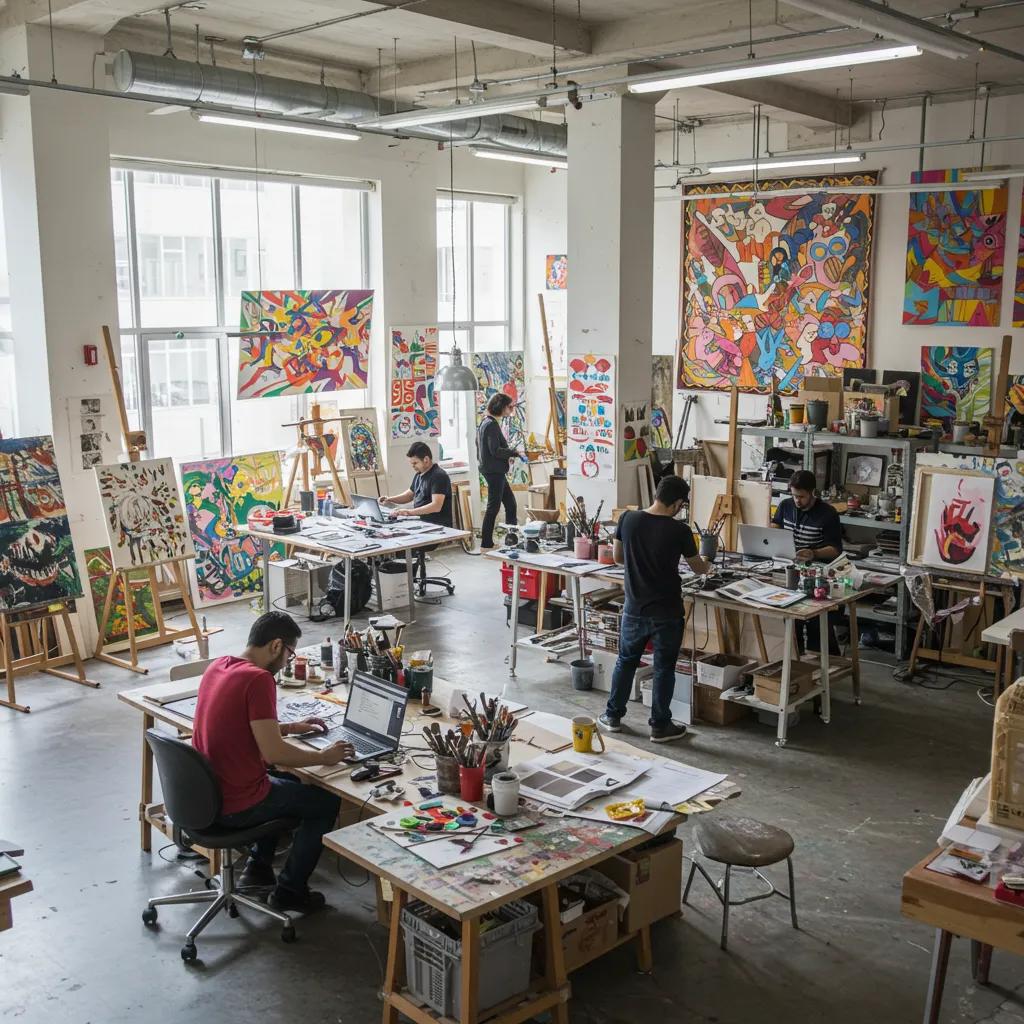
Doha Design District and M7 function as the creative backbone of Msheireb, hosting exhibitions, residencies and pop-up retail that connect designers with the public. The hub is intentionally visitor-facing: rotating exhibitions, studio open-days and occasional workshops provide hands-on ways to meet makers and see design processes in action. For travellers interested in contemporary Qatari design, short guided tours or scheduled talks are the most efficient way to experience the district, while casual visitors can browse galleries and seasonal markets within an hour or two.
M7’s programming emphasises cross-disciplinary work and often features collaborations between local artisans and international designers, which makes the district an interesting counterpoint to the heritage-focused museums. If you plan to attend a workshop or talk, check schedules early in your visit day to align transport and meal breaks with event times.
How Does Barahat Msheireb Serve as a Public Gathering Space?
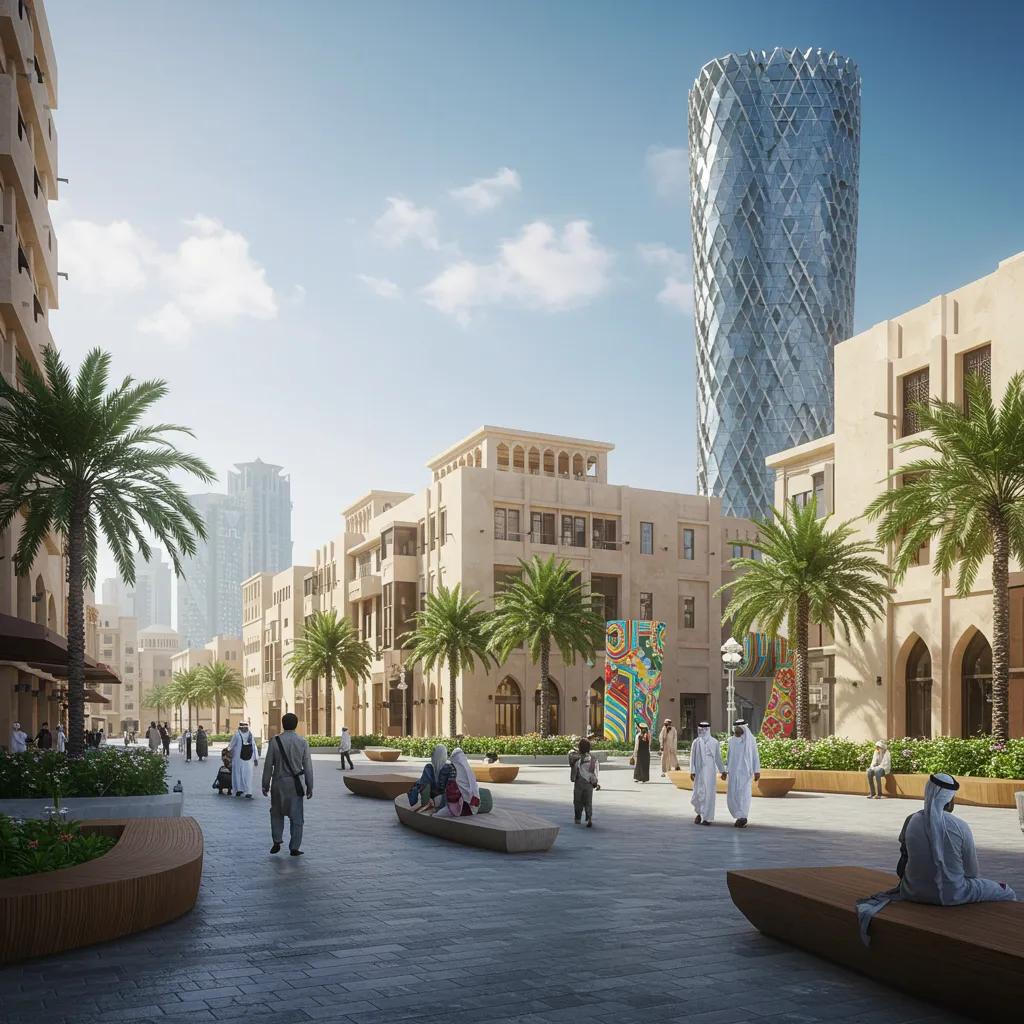
Barahat Msheireb is the district’s main plaza and social spine, designed to host festivals, temporary markets and community performances while offering shaded seating and pedestrian-friendly circulation. The square’s layout intentionally encourages spill-out from cafés, galleries and nearby shops, turning every visit into a mix of cultural programming and everyday public life. Event schedules frequently place family-oriented programming here, and the space serves as a convenient meeting point before walking to museums or catching the tram.
Because the plaza is a focal point for activity, it is also a practical place to pause between indoor visits—many visitors use it as a midday break for refreshments or photowalks. The design emphasis on human scale and shade enhances comfort during peak daytime hours and supports frequent short stops throughout an itinerary.
What Architectural Highlights Define Msheireb Downtown Doha?
Msheireb’s architectural language intentionally blends Qatari vernacular forms with contemporary sustainable techniques, often described through a set of guiding principles that prioritise shading, massing, and human-scale streets. Restoration of merchant façades sits alongside new builds that reference traditional courtyard typologies, creating a visual dialogue between heritage and innovation. Photographers and architecture enthusiasts will find signature details—mashrabiya-like screens, wind-catcher references and narrow, shaded alleys—that illustrate how local climate considerations informed design decisions.
These architectural gestures are not merely aesthetic; they also serve passive cooling and daylighting functions that contribute to the district’s sustainability goals. After appreciating façades and public spaces, visitors can look deeper into the smart-city systems that operate behind these visible elements.
Are There Public Art Installations and Cultural Sites to Explore?
Public art is woven through Msheireb’s streets and transport nodes, with site-specific sculptures and installations that respond to the district’s history and ongoing cultural programming. Many pieces link to seasonal exhibitions in M7 or are commissioned as part of temporary festivals, so you will often discover new works during repeat visits. The art programme aims to make the public realm an open-air gallery, facilitating both serendipitous encounters and curated walks.
For a focused experience, map a short art trail connecting the metro/tram interchange, Barahat Msheireb and the Galleria; this loop offers a balanced mix of large-scale installations and smaller, more intimate works that illuminate contemporary cultural conversations. Public art also acts as wayfinding, making it easy to combine cultural stops with practical transit connections.
After exploring attractions above, ARY News provides timely reporting and feature pieces that track exhibition openings, design-district events and major cultural announcements, offering an up-to-date editorial lens for visitors planning time-sensitive activities.
How Sustainable Is Msheireb Downtown Doha as a Smart City Model?
Msheireb Downtown Doha functions as an urban-regeneration project that integrates smart-city technology with district-level sustainability measures to reduce energy use and improve livability. The scheme emphasises certifications, passive design, district systems such as cooling and transit, and trials like hydrogen-powered tram technology to lower operational emissions. These combined approaches create measurable outcomes—certified buildings, reduced district energy use and integrated transit—that position Msheireb as a case study in sustainable downtown redevelopment. Below is a concise EAV-style table summarising key sustainability features and measurable metrics.
This table summarises how Msheireb couples design and technology to produce tangible sustainability benefits and serves as a short reference for planners and curious visitors alike.
What LEED Certifications Does Msheireb Downtown Doha Hold?
Msheireb includes a concentration of LEED-certified buildings at high levels, signalling that many project components meet international standards for energy performance, water efficiency and indoor environmental quality. The presence of multiple Platinum and Gold certifications reflects coordinated design standards rather than isolated building achievements, and these certifications generally indicate higher-performing façades, efficient systems and better occupant outcomes. For visitors and professionals, LEED status offers a shorthand to understand which parts of the district prioritise performance metrics.
Understanding the certification distribution helps compare Msheireb to other sustainable projects and explains why certain buildings display visible features—like increased insulation or optimized glazing—that contribute to certification outcomes.
How Does Msheireb Implement Eco-Friendly Urban Design?
Eco-friendly urban design in Msheireb draws on passive strategies—shading, compact massing, and orientation—alongside material choices and district utilities that reduce resource consumption. Streets are designed to maximise shade and encourage walking, while building envelopes incorporate localized materials and systems that lower operational demand. District utilities, including shared cooling and intelligent lighting controls, allow economies of scale that reduce per-square-metre energy use compared to conventional developments.
These layered design choices demonstrate how morphological decisions and engineering solutions combine to create both comfortable public spaces and measurable reductions in energy consumption. The next section explains the district’s mobility innovations, notably the hydrogen tram, which complements these built-environment measures.
What Role Does the Hydrogen-Powered Msheireb Tram Play in Sustainability?
The Msheireb Tram forms a key part of the district’s low-emission mobility strategy by providing short, frequent connections between key nodes while reducing reliance on private vehicles. Using hydrogen propulsion aids in lowering tailpipe emissions along tram routes and showcases how alternative fuels can be integrated into short-distance urban mobility. Initial ridership figures and operational data indicate growing use as the tram connects with major transit interchanges, supporting modal shift among residents and visitors.
By linking museums, the Galleria and the Doha Metro interchange, the tram reduces short car trips and complements pedestrian-first design choices—an integrated mobility outcome that contributes directly to district-wide sustainability goals.
How Does Msheireb Compare to Other Global Sustainable Cities?
Comparing Msheireb to global sustainable districts involves benchmarking LEED concentration, energy savings, transit integration and mixed-use density. Msheireb stands out for combining heritage preservation with modern sustainability targets, offering a model where conservation and high-performance buildings coexist. While no single metric defines “best,” the district’s emphasis on measurable reductions, concentrated certifications, and integrated transit systems places it in a cohort of pioneering urban regeneration projects internationally.
This comparative view highlights the district’s unique contribution: a heritage-led redevelopment achieving modern sustainability outcomes, which is instructive for cities balancing cultural preservation with climate-responsive design.
Where Are the Best Hotels to Stay in Msheireb Downtown Doha?
Msheireb offers high-end and boutique hotel options located within walking distance of attractions, suitable for luxury travellers, families, and business visitors who prioritise central access to museums, the design district and transit nodes. Top-brand hotels provide full-service amenities and family-friendly features, while smaller properties offer intimate stays with easy access to pedestrian routes. For Pakistani visitors, key considerations include halal dining availability, prayer spaces, and family-suite options; practical booking tips and seasonal occupancy context can help when planning around major holidays and events. Below is a comparison table to assist quick choice-making.
This table gives a snapshot of top choices and helps travellers match hotel features to their priorities; the following subsections explore flagship properties, other notable stays and cultural accommodations for Pakistani families.
What Are the Features of Mandarin Oriental and Park Hyatt Doha?
Mandarin Oriental and Park Hyatt represent high-end options within or very near the Msheireb cluster, offering comprehensive guest services, wellness facilities and easy walking access to attractions. Both hotels emphasise luxury amenities—spas, signature restaurants and attentive concierge services—making them ideal for visitors who prioritise on-site facilities and central positioning. From a practical perspective, these hotels also serve as efficient bases to reach the Msheireb Museums and Doha Design District within minutes by foot or a single tram hop.
Recent hospitality reporting notes busy occupancy during major religious and cultural holidays in 2025, so early booking around peak periods is advisable; concierge teams typically help secure guided tours or family activities that complement a cultural visit.
Which Other Hotels Offer Unique Stays in Msheireb Downtown Doha?
Beyond flagship brands, the district contains boutique and design-forward hotels that appeal to travellers seeking local character and more personalised service. These properties often emphasise interiors inspired by Qatari heritage, smaller dining venues and proximity to creative hubs like M7. For couples and solo travellers, boutique options provide a quieter stay while keeping attractions and transit within easy reach.
When choosing these hotels, consider the trade-off between on-site facilities and neighbourhood immersion—smaller properties may lack extensive pools or business centres but excel at curated local experiences, which can be especially rewarding for culturally focused itineraries.
How Do Hotels in Msheireb Cater to Pakistani Tourists and Families?
Hotels in Msheireb increasingly accommodate Pakistani visitors’ preferences by offering halal dining options, prayer room access or information on nearby prayer facilities, and family-room configurations suitable for multi-generational travel. Many properties present flexible meal options and can advise on culturally appropriate services—details typically available through concierge or guest services. Families benefit from booking rooms with interconnecting options or suites that provide space for children and elders, as well as checking for child-friendly dining hours and baby-friendly amenities.
Practical tip: request halal meal confirmation at booking and verify on-site prayer facilities if this is essential; hotels’ travel desks can also suggest family programmes and nearby child-friendly exhibits to streamline daily plans.
ARY News offers travel-reporting perspective and practical advice for Pakistani travellers planning stays in Msheireb, including editorial coverage of hotel offerings and seasonal occupancy trends; readers can consult ARY News for up-to-date feature stories and event-driven accommodation notes.
What Dining and Shopping Experiences Are Available in Msheireb Downtown Doha?
Msheireb’s dining and retail scene bridges café culture, international cuisine and curated boutiques, making it simple to find halal-friendly restaurants, family-oriented cafés and artisan shops selling Qatari crafts. Dining tends to concentrate in compact galleria-style streets and hotel restaurants, while small boutiques and design stores populate the Galleria and Doha Design District edges. The short table below provides a quick reference for Pakistani visitors seeking cuisine type, halal status and price guidance to streamline meal planning and shopping choices.
This table helps travellers identify where to prioritise meals and purchases; the following subsections list popular eateries, shopping venues and culinary experiences tailored to Pakistani tastes.
Which Restaurants and Cafes Are Popular in Msheireb Downtown Doha?
A curated selection of cafés and restaurants anchor Msheireb’s food scene, featuring everything from specialty coffee shops to hotel fine-dining venues and family-friendly casual options. Many eateries offer halal menus, and several cafés provide relaxed seating ideal for families and small groups. For a quick stop, look for cafés that advertise family seating and shaded outdoor terraces; for leisurely meals, hotel restaurants typically provide full-service halal dining and flexible menus suitable for larger family groups.
Insider tip: midday and early evening are the most comfortable times to dine outdoors in public squares, while hotel restaurants handle formal family celebrations with advance notice and menu adjustments on request.
Where Can Visitors Shop in Msheireb Downtown Doha?
Shopping in Msheireb ranges from curated designer boutiques in the Galleria to craft-focused outlets and pop-up markets in Barahat Msheireb during festivals. Visitors will find a concise range of goods—design-led products, local crafts, gifts and essentials—which makes the district ideal for targeted purchases rather than extensive mall shopping. Payment methods are widely accepted, and boutiques often provide packaging suited for gifts.
Practical shopping tips include checking opening hours for smaller ateliers, bringing a method of card payment commonly accepted in Qatar, and budgeting time for browsing in the Doha Design District for unique design-led pieces.
Are There Unique Culinary Experiences for Pakistani Visitors?
Msheireb presents halal fine-dining options and family-oriented eateries that resonate with Pakistani visitors seeking familiar dietary practices and communal dining environments. Seasonal festivals and pop-up food events sometimes spotlight regional flavours and South Asian offerings, creating moments where visitors can experience culturally resonant menus in a contemporary setting. For family groups, choosing restaurants with private dining rooms or flexible seating ensures a comfortable experience during busy periods.
Culinary experiences that combine Qatari-inspired ingredients with South Asian techniques are increasingly visible in pop-ups and festival programming, offering familiar flavours presented in contemporary contexts that appeal to Pakistani palates.
How Can Visitors Get Around Msheireb Downtown Doha Efficiently?
Getting around Msheireb is straightforward: the district was designed for short walking distances complemented by seamless connections to the Doha Metro and an internal tram system, which together minimise the need for private vehicles. Efficient circulation often follows a simple sequence—arrive by Metro, transfer to tram for short hops, then explore on foot—so planning around these links reduces transit time and enhances the visitor experience. Accessibility features and clear wayfinding further support families and visitors with reduced mobility. Below is a step-style transport guide to optimise movement through the district.
- Take Doha Metro to Msheireb Station: The metro delivers fast access to the district from across the city.
- Transfer to Msheireb Tram: Short tram hops connect museums, the Galleria and Barahat quickly and with low emissions.
- Walk pedestrian loops: Most attractions are within brief walks; follow shaded pedestrian routes for comfort.
These steps provide a compact plan for most visits and are particularly useful for timed itineraries that combine museum visits with scheduled events or dining reservations.
Multimodal Transport in Msheireb Downtown Doha: A Smart Mobility Case Study
This paper explores: (i) the progress of the smart mobility development and initiatives in Qatar, (ii) the Multimodal transport system in one of its smart cities, Msheireb Downtown Doha (MDD) and (iii) how the Multimodal transport system could be influenced in the light of emerging transportation technologies like Autonomous Vehicles (AVs).
Multimodal transport for smart mobility in emerging cities: Case of Doha, M Hasan, 2023
The combined Metro-tram network offers convenience, cost-effectiveness and environmental benefits for visitors, shortening travel times and reducing dependency on taxis for short intra-district trips. The Metro delivers rapid city-wide connections, while the hydrogen-powered tram provides local circulation with low operational emissions and frequent stops near cultural venues. Ticketing is straightforward and transfers between systems are engineered to be efficient, making the combined network the most practical choice for day visitors and families.
Using the tram and metro also streamlines arrival and departure planning, since luggage-friendly metro access and tram stops near hotel clusters reduce the need for additional transfers.
Is Msheireb Downtown Doha Walkable and Accessible?
Msheireb’s design prioritises walkability with shaded streets, compact blocks and level pedestrian surfaces that favour stroller-friendly and wheelchair-accessible movement. Walking times between major nodes are typically short, with well-marked routes and resting points in public plazas and café terraces. Some alleys and historic courtyards are intentionally narrow to reflect heritage character, so visitors with mobility needs should check specific route recommendations in advance.
Recommended walking loops combine museums, the Galleria and Barahat Msheireb into 20–40 minute segments that are easy to tailor for families, and the district’s emphasis on shaded paths improves comfort during daytime visits.
How Do Visitors Access Msheireb from Other Parts of Doha and Qatar?
Access options include the Doha Metro, taxi or ride-hailing services and private transfers; for drivers, the district contains significant parking capacity including an extensive underground car park that is notable for its size and engineering. For international visitors arriving at the airport, a direct metro link or a short taxi ride provides the most predictable journey; many hotels also offer private transfers that synchronise with arrival and event timings. For on-the-ground flexibility, the metro-tram combination and short walking distances make Msheireb simple to navigate without a car.
Notably, the district’s large underground car park holds a Guinness World Record for scale, demonstrating the planners’ emphasis on accommodating vehicular access while keeping the public realm pedestrian-friendly.
What Events and Festivals Take Place in Msheireb Downtown Doha in 2025?
Msheireb hosts recurring cultural festivals, seasonal exhibitions and family-focused programming across Barahat Msheireb, M7 and the museums, creating a lively calendar for 2025 that blends exhibitions, design markets and community activities. Events range from curated design shows to family workshops and public art unveilings, with many activities scheduled to coincide with national cultural festivals and tourist seasons. Family programming tends to cluster on weekends and holiday periods, making planning around these dates beneficial for visitors travelling with children. For real-time event changes and live updates, editorial organisations provide timely coverage and alerts.
Key event types you can expect in 2025 include:
- Design and maker markets hosted by Doha Design District and M7.
- Cultural exhibitions rotating through the Msheireb Museums and public spaces.
- Family workshops, outdoor performances and seasonal festivals centred on Barahat Msheireb.
These categories capture the district’s recurring programming and help visitors determine which events align with their interests and travel timing.
ARY News plays a role in keeping readers informed about event schedules and breaking changes by offering news-style coverage and feature reporting; for visitors who need last-minute schedule confirmations or alerts about event adjustments, ARY News provides timely editorial updates and event summaries tailored to audiences interested in cultural and civic developments.
Which Annual Cultural Festivals and Exhibitions Are Held?
Annual festivals and exhibitions typically centre on local design showcases, heritage celebrations in the museums and curated art exhibitions at M7, anchoring Msheireb’s calendar with culturally focused events that draw families and international visitors alike. Venues across the district host rotating exhibitions that reflect contemporary Qatari art and cross-cultural collaborations, and these exhibitions often include talks, guided tours and participatory elements for visitors.
Advance planning is useful for ticketed exhibitions or workshops; many events provide short free components in public plazas that are accessible without prior booking.
What Family-Friendly Activities Are Available in Msheireb Downtown Doha?
Family programming includes museum activity sessions, weekend workshops at M7, outdoor storytelling and interactive installations in Barahat Msheireb, all designed to engage children and create easy family days out. Facilities such as family restrooms, stroller-friendly paths and shaded play zones support comfortable visits, while timed workshops help structure a half-day or full-day family itinerary. Age-appropriate recommendations and shorter museum tours make it simple to match activities to children’s attention spans.
When planning, allow for breaks at cafés and public seating to maintain energy for younger family members and check event pages for recommended age groups.
How Can Visitors Stay Updated on Upcoming Events?
To stay current on schedules and sudden changes, rely on official channels, institutional social accounts and trusted news organisations that provide editorial updates and event notices. Local event calendars and cultural programming announcements often appear across multiple channels, and following reliable news coverage helps confirm dates and ticketing changes shortly before travel. For visitors who want curated updates, mainstream news coverage can summarise featured exhibitions and highlight family-focused weekends.
ARY News provides a news-style reporting angle that keeps readers informed about event openings, schedule changes and notable cultural moments—use such editorial sources for confirmations and last-minute updates.
What Is the History and Development Story of Msheireb Downtown Doha?
Msheireb’s redevelopment is a deliberate regeneration of Doha’s old town into a compact, mixed-use smart district that respects heritage while embedding modern sustainability standards. The transformation involved a phased redevelopment strategy that conserved key merchant houses, introduced high-performance new buildings and established a public-realm-first street network to prioritise walking and community activity. Major developers and institutional partners guided planning, and notable achievements—such as concentrated LEED certifications and engineering records—mark the project’s milestones. The following subsections outline the transformation timeline, principal developers, and recognized achievements.
These historical and institutional perspectives explain why Msheireb is often cited as a reference project in discussions about sustainable urban regeneration and heritage-led redevelopment.
How Did Msheireb Transform from Old Town to a Smart City?
Msheireb’s transformation followed a phased process of heritage conservation, infrastructure replacement and new development built around a central public realm and sustainable district systems. Planners documented community history, restored key houses into museums, and implemented urban design principles that re-established a walkable, human-scale downtown. The redevelopment integrated modern utilities discreetly so that historical streetscapes could be experienced while benefiting from contemporary building performance and services.
This phased approach balanced conservation with innovation, enabling the district to become both a living neighbourhood and a demonstrator for climate-responsive urban planning.
Who Are the Key Developers Behind Msheireb Downtown Doha?
Msheireb Properties led the development and ongoing management of the regeneration project, partnering with cultural and institutional stakeholders to deliver programming, conservation and infrastructure. These partnerships ensured that development objectives—heritage preservation, sustainability, and economic activation—remained aligned through design, construction and operations. The institutional framework brought together public and private expertise to enable a cohesive district-scale outcome.
Understanding the roles of developers and partners clarifies how the project achieved integrated goals across cultural, environmental and commercial objectives.
What Guinness World Records and Achievements Does Msheireb Hold?
Msheireb holds notable engineering and visitor-oriented achievements, including a Guinness World Record for the scale of its underground car park—an indicator of technical ambition and planning for large-scale vehicle accommodation. The project also reports measurable outcomes in sustainability and visitor engagement, such as concentrated LEED certifications and increasing tram ridership, which together reflect both technical milestones and operational success. These achievements function as benchmarks that stakeholders use to communicate the district’s global standing.
Presented with dates and contextual metrics, these recognitions underscore the combination of heritage, engineering and sustainable design that defines Msheireb’s achievement portfolio.
- Top attractions list: A ranked list helps first-time visitors prioritise.
- Transport steps: Clear sequential guidance makes getting around easy.
- Family planning checklist: Practical items ensure comfortable visits.
These lists, combined with the EAV tables and descriptive subsections above, give both an editorial and practical guide to planning visits, assessing sustainability features and understanding the district’s cultural programming.
Conclusion
Msheireb Downtown Doha offers a unique blend of cultural heritage and modern sustainability, making it an ideal destination for visitors seeking both history and innovation. With attractions like the Msheireb Museums and the Doha Design District, guests can immerse themselves in Qatari culture while enjoying family-friendly amenities and efficient transit options. Exploring this vibrant urban space not only enriches your travel experience but also supports sustainable urban development. Plan your visit today to discover the remarkable offerings of Msheireb Downtown Doha.