Pakistan Trade and Commerce News: Latest Policies, Export Performance, and Market Trends
Pakistan’s trade and commerce landscape in 2025 is undergoing rapid recalibration as policymakers, exporters, and digital traders respond to shifting global demand, rising input costs, and strategic initiatives aimed at export diversification. This article provides timely trade news and commerce analysis that explains current policy moves, sectoral export performance, partner-country dynamics, macro indicators, and technology-driven opportunities for businesses and consumers. Readers will learn how major policies such as the National E-commerce Policy 2.0 and FIPPA are intended to operate, which export sectors are gaining traction, and how logistics and digital platforms are reshaping market access. The piece pairs data-driven explainers with practical implications for SMEs, entrepreneurs, and consumers, and it highlights key 2025 events likely to affect market flows. Each H2 section dives into a distinct topic—policy frameworks, sector performance, partner relations, economic indicators, tech innovation, flagship events, and practical takeaways—so you can follow the developments that matter most to export strategy and domestic commerce. Throughout, semantic analysis and entity-focused explanations aim to make complex trade shifts actionable for stakeholders.
What Are Pakistan’s Current Trade Policies and Regulatory Frameworks?
Pakistan’s current trade policy framework emphasizes export diversification, digital trade facilitation, and investment promotion as core mechanisms to boost competitiveness and foreign exchange earnings. Regulatory reforms focus on simplifying customs procedures, updating tariff nomenclature, and creating incentives for value-added manufacturing and services, while the National E-commerce Policy 2.0 sets out specific pillars to expand cross-border digital commerce. These policy directions are designed to reduce compliance costs and improve market access for MSMEs, with ministries and customs authorities coordinating on implementation timelines. Understanding these frameworks clarifies how government action translates into operational changes for exporters, and it sets the stage for sector-specific effects described in the next section.
How Does the National E-commerce Policy 2.0 Aim to Boost Digital Trade?
The National E-commerce Policy 2.0 aims to expand online trade by strengthening digital payments, logistics integration, and MSME onboarding to cross-border marketplaces. Its pillars include payment interoperability, seller registration and certification pathways, logistics and last-mile upgrades, and data governance measures designed to increase trust for international buyers. By promoting digital platforms and streamlined customs for parcels, the policy targets measurable growth in e-commerce exports and aims to widen participation among small exporters and youth-led startups. Implementation risks include capacity constraints in logistics and the need for interoperability across payment systems, which means phased rollouts and stakeholder consultations will be critical. (dig.watch)
E-commerce Policy and Global Economic Inclusion
The advancement of digitalization is gradually transforming the existing structure of the global economy. According to the McKinsey Global Institute, almost all cross-border transactions had a digital component in 2016. This is also reflected by the growing literature on digitalization and E-commerce. Yet, studies specifically focusing on E-commerce policy are scarce compared with other areas in this domain. By going beyond academic articles and including policy documents in our analysis, this study takes stock of the issues as well as the policy recommendations identified in these publications. Our analysis reveals that to promote an inclusive E-commerce participation, it is imperative to design policies that improve countries’ formal institutions, facilitate the inclusion of less-developed countries in the E-commerce space, and enhance E-commerce adoption by small- and medium-sized enterprises. We highlight the significance of collaboration between and solidarity among governments and other stakeholders.
2. The advancement of digitalization is increasingly shaping the way firms conduct business within and across borders (Manyika et al.2016; Katsikeas et al.2019; Kraus et al.2019). Examples include the use of digital technologies to aid their internationalization, enhance their productivity, transform existing or create new business models, and improve interactions with and among consumers (Bouncken and Barwinski2020; Katsikeas et al.2019; Sinkovics et al.2013). Therefore, depending on the nature of the industry, firms can use digital technologies to take advantage of new entrepreneurial opportunities (Kraus et al.2019; Meltzer2019) and/or link into global value chains (cf. Bouncken and Barwinski2020; Sinkovics et al.2019).
3. Although digitalization is a broad concept and has many facets (cf. Bouncken and Barwinski2020; Ritter and Pedersen2020), electronic commerce (E-commerce) is an important example of how businesses can take advantage of digital technologi
E-commerce policy and the global economy: a path to more inclusive development?, AA Ahi, 2023
What Are the Key Trade Agreements Impacting Pakistan’s Commerce?
Pakistan’s trade environment is shaped by a mix of preferential schemes, bilateral talks, and investment protection agreements that affect market access and tariff exposure for exporters. Agreements such as preferential access arrangements and investor protection pacts aim to lower entry barriers into target markets while fostering FDI-led capacity expansion in export sectors. Short-term benefits often include tariff concessions or expedited customs for specific product lines, while long-term gains depend on consistent regulatory alignment and rules-of-origin compliance. Assessing which deals deliver concrete export volume gains requires monitoring implementation timelines and sectoral uptake by exporters.
Which Trade Barriers Affect Pakistan’s Export Growth?
Tariff and non-tariff barriers remain important constraints on Pakistan’s export potential, with logistical bottlenecks and standards compliance forming the bulk of frictions that raise export costs. Delays at ports, inconsistent quality certification processes, and uneven regulatory enforcement increase lead times and reduce competitiveness for perishable and time-sensitive goods. Addressing these barriers requires coordinated reforms in customs processing, investment in cold-chain infrastructure, and alignment with importing-country sanitary and phytosanitary standards. The next section turns to concrete sector performance where these barriers manifest and where policy changes can create measurable improvements.
- Key policy objectives in current trade frameworks include export diversification, digital trade enablement, and trade facilitation.
- Implementation priorities emphasize customs modernization, MSME support, and targeted investment promotion for manufacturing and services.
- Short-term timelines focus on pilot programs and stakeholder consultations, while medium-term goals aim for structural competitiveness gains.
These policy priorities indicate a clear trajectory: from regulatory simplification toward practical supports for exporters, which directly connects to export performance trends covered next.
How Is Pakistan Performing in Export Sectors in 2025?
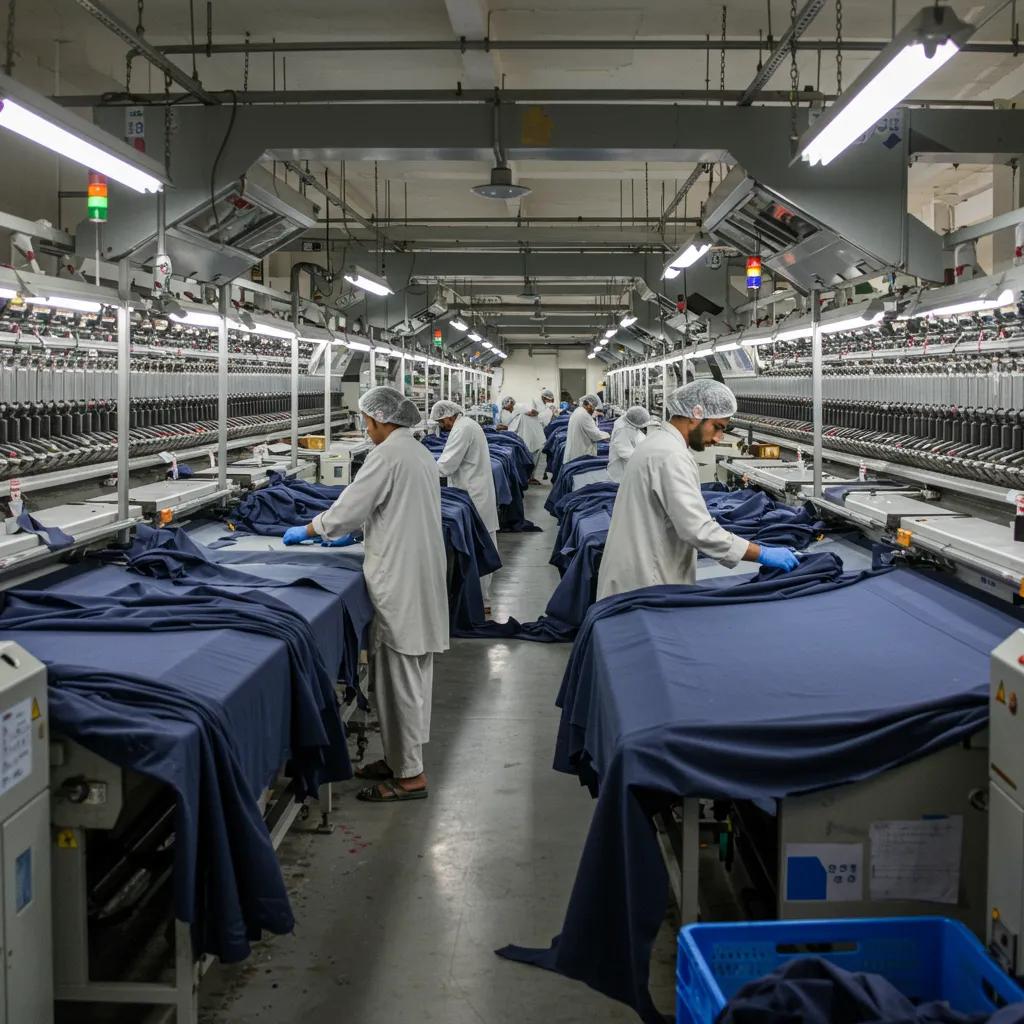
Pakistan’s export performance in 2025 shows mixed signals: traditional sectors like textiles are recovering in value-added categories, IT services are expanding steadily, and targeted agricultural exports are pushing into new markets. Export growth drivers include improved product mix toward knitwear and apparel, a stronger services export push driven by IT/ITeS, and focused trade promotion for commodities such as dates and specialty fruits. Constraints such as input cost inflation and logistics inefficiencies affect realization of potential, creating a gap between actual exports and broader estimates of untapped opportunity that observers cite as significant. The following subsections present sector-specific trends and a compact EAV-style table for quick comparison across major export categories.
What Are the Latest Trends in Pakistan’s Textile and Apparel Exports?
Textile and apparel exports are shifting toward higher-value categories, with knitted apparel and value-added garments capturing stronger order books and improving foreign exchange receipts. Recent monthly data have shown upticks in apparel shipments as buyers favor quick-turnaround knitwear, while domestic manufacturers invest in compliance and finishing to meet international standards. Employment and foreign-exchange implications are positive when value-add increases, but competitiveness depends on stable input prices and predictable energy and logistics costs. The sector’s trajectory underscores the importance of upgrading supply chains and targeting niche apparel segments.
How Are IT and IT-Enabled Services Contributing to Export Growth?
IT and IT-enabled services are an expanding export channel driven by freelance work, software development, and BPO services, with sectoral export figures cited near multi-billion-dollar levels for FY2025. This growth leverages Pakistan’s skilled workforce and low-cost service delivery model, but barriers in payments, international contracting norms, and formalization of freelancing income limit scale. Policy interventions focused on cross-border digital trade facilitation and improved payment rails could unlock larger shares of global demand. For entrepreneurs and youth, digital services represent one of the most accessible paths to export earnings.
Introductory export comparison table below summarizes recent sector performance and trends to help stakeholders prioritize opportunities and monitor progress.
What Is the Status of Agricultural Exports Like Dates, Rice, and Fruits?
Agricultural exports such as dates, rice, and specialty fruits are seeing targeted promotion to regional buyers with premium potential for quality-differentiated products. Market development efforts focus on meeting buyer standards, improving packing and cold chains, and securing buyer relationships through expos and trade missions. While volumes fluctuate with seasonality, select products show stronger price realization when linked with certification and value-added processing. Addressing quality-control gaps and logistics remains essential to scale exports from commodity to branded product segments.
How Does Pakistan’s Export Potential Compare to Actual Performance?
Analysts often contrast measured export figures with estimates of untapped potential—figures on this gap suggest a substantial opportunity if structural constraints are addressed. Key bottlenecks include limited product diversification, logistics inefficiencies, and underinvestment in value-chain upgrading that prevent exporters from fully capturing available global demand. Closing this gap requires targeted policy, private investment, and capacity-building for MSMEs to meet international standards. The comparison underlines that policy reforms and practical business support are complementary levers for achieving export targets.
Which Countries Are Pakistan’s Main Trading Partners and How Do Relations Affect Trade?
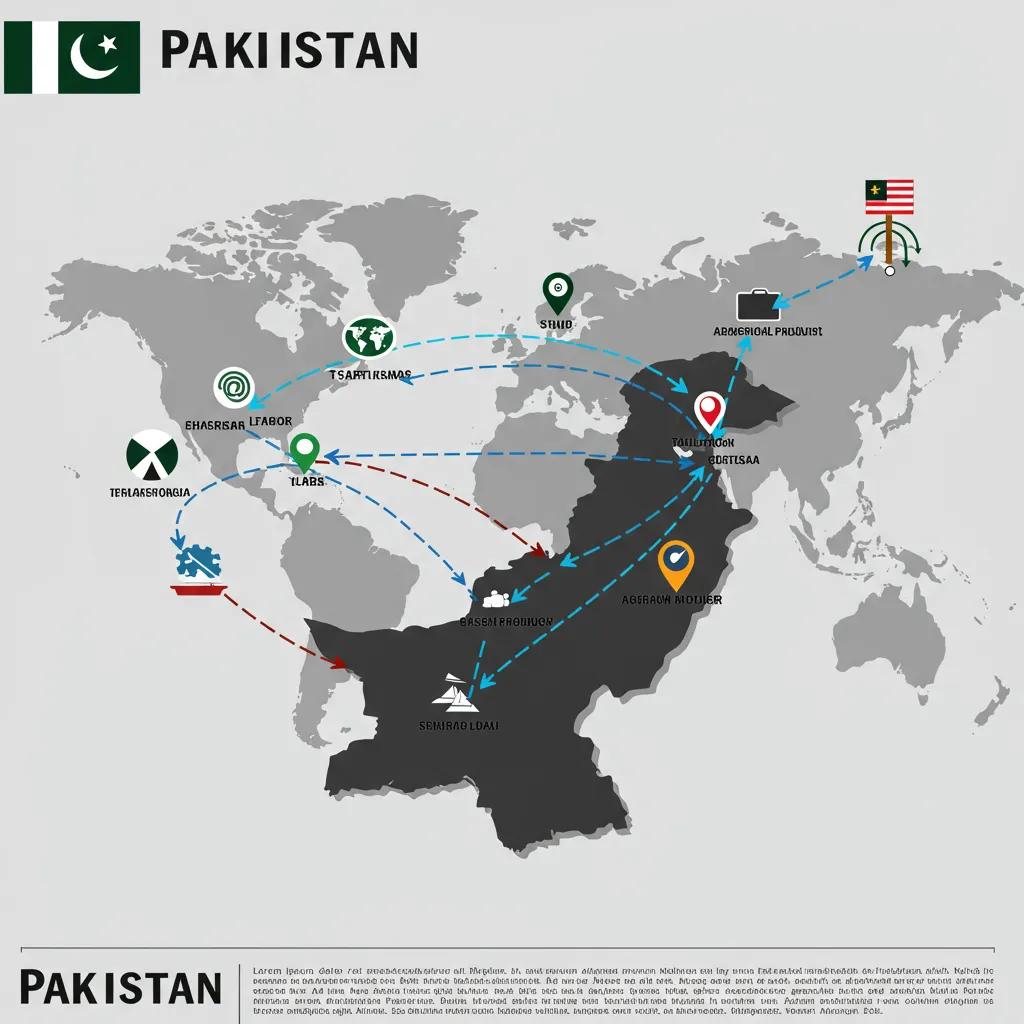
Pakistan’s main trading partners include regional and global economies whose trade policies, investment flows, and logistics ties materially affect market access and export strategies. Bilateral relationships shape tariffs, preferential access, and investment commitments, while large infrastructure programs influence corridor efficiency and port capacities. Recent developments with key partners are reshaping trade flows and creating new opportunities for sectoral expansion, so exporters must track diplomatic and trade dialogue outcomes closely. The subheadings below analyze developments with major partners and how those dynamics affect export competitiveness and market access.
What Are the Developments in China-Pakistan Trade and CPEC Phase 2.0?
China-Pakistan trade ties and CPEC Phase 2.0 focus on infrastructure upgrades and logistics corridor efficiency intended to lower transport costs and improve export connectivity. Planned initiatives emphasize port expansion, hinterland connectivity, and industrial zones that can support export-oriented manufacturing clusters. These investments have the potential to reduce lead times and strengthen supply-chain nodes, benefiting exporters in manufacturing and bulk commodities. At the same time, dependency risks, financing considerations, and execution timelines remain central issues that stakeholders must weigh when planning long-term export strategies.
How Are US-Pakistan Trade Relations Influencing Market Access and Tariffs?
US-Pakistan trade interactions influence market access primarily through preferential schemes, regulatory dialogue, and sector-specific cooperation in services and tech. Tariff changes or preferential access for certain products can open sizeable markets for high-value goods, while services cooperation can expand collaboration in IT and digital sectors. Non-tariff measures and regulatory alignment remain areas requiring negotiation to ensure exporters can meet US market requirements. Firms targeting US buyers need to follow compliance pathways and sector-specific rules to maximize market opportunities.
What Role Do Canada, the EU, and UAE Play in Pakistan’s Trade Landscape?
Canada, the EU, and the UAE serve as important destination markets and investment partners, with each offering distinct sectoral opportunities and policy engagements. Canada’s agri ties can benefit specialty crop exporters, the EU provides technology and standards-driven market demand for higher-value goods, and the UAE acts as a gateway for dates and food products to regional buyers. Recent diplomatic dialogues and trade missions have aimed to deepen market access and investment flows, creating near-term openings for exporters that can meet quality and regulatory requirements. These partner relationships collectively support diversification away from a narrow set of destinations.
What Are the Economic Indicators Shaping Pakistan’s Trade and Commerce Environment?
Macroeconomic indicators such as inflation, the trade deficit, FX reserves, and FDI trends directly influence trade competitiveness, import costs, and exporters’ operational planning. Inflationary pressure raises input costs and can erode margins for manufacturers, while trade deficits and reserve positions affect currency stability and the cost of imported inputs. Foreign direct investment helps build export capacity and technology transfer, and logistics KPIs—dwell times and shipping costs—determine practical competitiveness for time-sensitive goods. Understanding these indicators allows businesses to anticipate cost shifts and align pricing, hedging, and sourcing strategies.
How Do Inflation and Trade Deficit Affect Pakistan’s Commerce?
Inflationary trends raise production costs and reduce exporters’ price competitiveness when input costs outpace global price movements, while persistent trade deficits can pressure the currency and increase import costs. These mechanisms feed into higher operating costs for manufacturers and can shift comparative advantage unless offset by productivity gains or exchange-rate adjustments. Policymakers often respond with targeted subsidies, import substitution measures, or monetary interventions to stabilize currency and prices. Exporters must monitor these indicators to price accordingly and pursue efficiency measures that protect margins.
What Is the Impact of Foreign Direct Investment on Trade Growth?
Foreign direct investment expands export capacity by financing new plants, transferring technology, and integrating domestic firms into global value chains, thereby increasing both production scale and product sophistication. FDI targeted toward export-oriented sectors—textiles with advanced finishing or processed food value-add—can accelerate export diversification and improve standards compliance. Attracting sustained FDI requires investor protections and predictable regulatory regimes that align with international norms. The interplay between FDI and trade underscores the importance of policy consistency and investor confidence.
How Are Logistics and Supply Chain Developments Supporting Trade Expansion?
Logistics and supply-chain upgrades—port efficiency, corridor connectivity, and cold-chain investments—reduce lead times and spoilage for exports, especially perishables, and lower overall freight costs for manufactured goods. Measurable KPIs such as container dwell time, turnaround time, and shipping cost per ton are practical indicators of competitiveness. Infrastructure investments tied to corridor projects and port upgrades aim to improve these metrics, but private-sector logistics innovation is also essential to translate capacity into reliable services. Tracking these operational measures helps exporters evaluate real-world changes in trade facilitation.
- Key economic indicators to monitor include inflation rates, trade deficit trajectory, and FX reserve levels.
- Logistics KPIs such as dwell time, shipping cost per container, and cold-chain coverage materially affect export viability.
- FDI rollouts in export-oriented industries can rapidly alter sector capacities when paired with clear investor protections.
How Is Technology and Innovation Transforming Trade and Commerce in Pakistan?
Technology and innovation—chiefly AI-enabled market intelligence, digital payments, and platform-based marketplaces—are transforming how Pakistani firms reach buyers, price products, and manage logistics. AI can improve demand forecasting, buyer matching, and customs paperwork automation, while digital economy reforms reduce frictions for cross-border small-parcel trade. These tools lower entry barriers for youth-led startups and enable service exports without large physical infrastructure. The next subsections examine AI applications, the broader digital economy agenda, and practical opportunities for young entrepreneurs to participate in export growth.
What Is the Role of Artificial Intelligence in Enhancing E-commerce and Trade?
Artificial intelligence enhances e-commerce and trade through recommendation engines, demand forecasting, and process automation that reduce mismatch and speed order fulfillment. For exporters, AI can optimize inventory levels, predict buyer preferences in target markets, and flag non-compliance issues before shipments are dispatched. Pilot programs that integrate machine learning into customs risk-assessment and logistics routing show promise in lowering clearance times and reducing costs. As AI adoption grows, exporters with digital capabilities will gain a competitive edge in matching products to specific international demand pockets.
How Will Digital Economy Initiatives Shape Pakistan’s Trade Future?
Digital economy initiatives—covering payments, digital IDs, and cross-border trade facilitation—will lower administrative friction and improve market access for MSMEs that adopt online sales channels. By simplifying onboarding, easing payment reconciliation, and enabling parcel-level customs processing, these reforms can expand the exporter base beyond established firms. Implementation challenges include interoperability, cybersecurity, and ensuring equitable access to digital tools in non-urban areas. Successful execution will likely yield notable GDP and export growth contributions through broader participation in digital trade.
What Are the Opportunities for Youth and Entrepreneurs in Pakistan’s Trade Sector?
Youth and entrepreneurs can tap opportunities in e-commerce, IT services, and agri-processing where entry barriers are relatively low and digital tools multiply reach. Practical steps include developing export-ready digital storefronts, obtaining necessary certifications, and leveraging platform-based logistics to reach international buyers. Skills in digital marketing, product photography, and marketplace compliance are immediately actionable and can convert local producers into niche exporters. Support programs that combine training, microfinance, and market matchmaking will accelerate this transformation and broaden the exporter base.
- Opportunities for youth include digital exports, freelance IT services, and value-added agri-processing that link to overseas demand.
- Practical entry steps involve certification, digital storefront setup, and partnership with logistics providers that handle small-parcel exports.
- Monitoring platform analytics and buyer behavior is essential for early-stage exporters to refine offerings and build repeat business.
What Are the Key Trade Events and Initiatives Driving Pakistan’s Commerce in 2025?
Several high-profile events and agreements in 2025 are focal points for new trade deals, market linkages, and promotional activity that can create immediate export opportunities and longer-term business relationships. Events such as the Pakistan-Africa Trade Development Conference, the Pakistan Food & Agriculture Expo 2025, and rollout actions around FIPPA provide trade newsworthy milestones with potential contract signings and bilateral MoUs. Coverage of these events is crucial for exporters tracking buyer leads and for policymakers assessing deal execution. The following subsections outline the significance and expected trade implications of these flagship initiatives, and note how media outlets plan to report live developments.
What Is the Significance of the Pakistan-Africa Trade Development Conference?
The Pakistan-Africa Trade Development Conference aims to deepen market access into African countries by facilitating buyer-seller meetings, sector-specific trade missions, and agreements focused on textiles and agricultural produce. Conference objectives include matchmaking, establishing distribution channels, and identifying regulatory pathways for product entry into diverse African markets. Initial commitments tend to focus on pilot shipments and follow-up missions to convert leads into trade flows. The event’s outcomes will be measured by signed memoranda, pilot orders, and the establishment of local distribution partnerships.
How Will the Pakistan Food & Agriculture Expo 2025 Impact Agricultural Exports?
The Pakistan Food & Agriculture Expo 2025 showcases producers to international buyers, focusing on value-added foods, standards compliance, and cold-chain requirements that unlock premium markets. The expo facilitates buyer-seller meetings and quality-improvement dialogues that often translate into contracts or MoUs covering exports of dates, processed rice products, and specialty fruits. By spotlighting quality and packaging improvements, the expo helps exporters meet stricter buyer standards and accelerates learning about target-market preferences. Post-expo follow-ups and certification support are critical to convert exposure into sustained export orders.
What Are the Objectives of the Foreign Investment Promotion and Protection Agreement?
The Foreign Investment Promotion and Protection Agreement (FIPPA) aims to increase investor confidence by codifying protections and dispute-resolution mechanisms that encourage long-term investment in export-oriented sectors. By mitigating political and regulatory risks, FIPPA provisions can catalyze capital flows into manufacturing, logistics, and agribusiness that underpin export competitiveness. Sectors likely to attract attention include textiles with integrated finishing and food-processing units linked to export markets. Effective investor protections combined with sector-specific incentives can accelerate capacity expansion and export sophistication.
For exporters and observers, these events and agreements provide a calendar of opportunities and a source of actionable leads; media coverage that combines live reporting with analytical follow-ups helps convert headline events into operational business outcomes. ARY News, as an information hub “Powered With Ai Accurate, Fast, and Reliable”, plans to deliver timely coverage, explain policy implications, and provide follow-up analysis to help stakeholders interpret event outcomes and next steps.
How Can Businesses and Consumers Benefit from Pakistan’s Trade Developments?
Trade developments in 2025 create practical benefits for SMEs, consumers, and the wider economy by opening new markets, improving product quality, and sometimes lowering consumer prices through increased competition. For SMEs, policy-driven digital trade facilitation and targeted agreements can reduce compliance costs and open distribution channels that were previously inaccessible. Consumers benefit from a wider array of goods and potential price competition, although short-term supply shifts can influence volatility in specific commodities. The final subsections translate policy and market changes into tangible steps businesses and consumers can use to act on emerging opportunities.
What Are the Effects of Trade Policies on Small and Medium Enterprises?
SME-focused trade policies aim to reduce onboarding friction, subsidize certification costs, and provide digital training to help small exporters meet foreign buyer requirements. Practical steps SMEs can take include obtaining required quality certifications, digitizing product listings, and leveraging platform-based logistics solutions to access small-parcel export channels. Access to targeted finance or matching grants can help firms invest in packaging and processing that move products up the value chain. By preparing operationally and digitally, SMEs can capitalize on policy initiatives and trade agreements to secure stable export relationships.
How Do Export Growth and Trade Agreements Affect Consumer Prices and Market Access?
Export growth and trade agreements influence consumer prices through supply-and-demand mechanics and import substitution effects; when exports increase, domestic supply for export-focused commodities can tighten, potentially raising local prices unless offset by increased production or imports. Conversely, trade agreements that broaden import sources can lower prices by introducing competition in domestic markets. Understanding these channels helps consumers and policymakers anticipate price impacts and calibrate measures—such as targeted subsidies or import adjustments—to protect vulnerable households while supporting exporters.
What Future Trends Should Stakeholders Watch in Pakistan’s Trade Sector?
Stakeholders should monitor trends such as digital export platforms, logistics hub development, AI-enabled market intelligence, value-add in textiles, and targeted FDI flows that collectively shape export trajectories. Tracking KPIs—export growth by product, shipping times, and certification uptake—provides early signals about which reforms are translating into results. Sustainable practices and compliance with buyer standards will increasingly determine market access for premium segments, while youth entrepreneurship in digital services represents a durable source of export growth. Staying attuned to these trends allows businesses and policymakers to pivot strategies proactively.
- Digital export platforms will expand market reach for SMEs and individual sellers.
- Logistics hub development will reduce lead times for manufactured and perishable goods.
- AI-driven market intelligence will help exporters match products to buyer demand and pricing.
For businesses and consumers seeking ongoing updates and explainers, ARY News continues to position itself as a reliable information hub delivering timely trade news, event coverage, and practical analysis to help stakeholders interpret policy changes and market signals. Powered With Ai Accurate, Fast, and Reliable, ARY News aims to combine live reporting with follow-up analysis so exporters and consumers can make informed decisions based on current developments.
Conclusion
Pakistan’s evolving trade landscape in 2025 presents significant opportunities for SMEs and entrepreneurs through enhanced market access and digital trade facilitation. By understanding current policies, export performance, and key trading partners, stakeholders can strategically position themselves to capitalize on emerging trends. Engaging with these developments not only supports individual business growth but also contributes to the broader economic landscape. Stay informed and explore actionable insights to navigate the dynamic trade environment effectively.