How Colorado Farmers Use AI Technology to Survive and Thrive: KCNC Report Insights
Colorado farmers facing tighter margins, labor shortages, and shrinking acreage are turning to artificial intelligence and precision agritech to preserve yields and cut input waste. This report-style article explains how AI—defined here as machine learning models, computer vision, drones, sensors, and automation platforms—helps farms detect stress earlier, apply inputs more precisely, and automate repetitive tasks so operations can remain financially viable. Readers will learn the primary adoption drivers, measurable benefits, leading applications, adoption barriers, and how local reporting and university research illustrate practical outcomes. The piece maps KCNC’s local reporting to broader agritech trends, assesses tools and trade-offs, and draws lessons that can be adapted to other agricultural systems. Throughout, we use current research and regional examples to show how AI improves water use, labor efficiency, and crop resilience while noting governance, cost, and equity considerations relevant in November 2025.
What Challenges Are Driving Colorado Farmers to Adopt AI Solutions?
AI adoption in Colorado is driven by a trio of converging stresses: fewer available farmworkers, rising input and production costs, and significant farmland loss that forces higher productivity per acre. These pressures create a decision calculus where investments in automation and analytics can produce faster harvests, lower input waste, and better yield certainty—helping marginal farms survive. Understanding the three challenge categories clarifies why even smaller operations pilot AI tools as part of survival strategies rather than luxury upgrades. The next sections break each driver into practical effects and adaptive responses farmers are deploying today.
How Are Labor Shortages Impacting Colorado Agriculture?
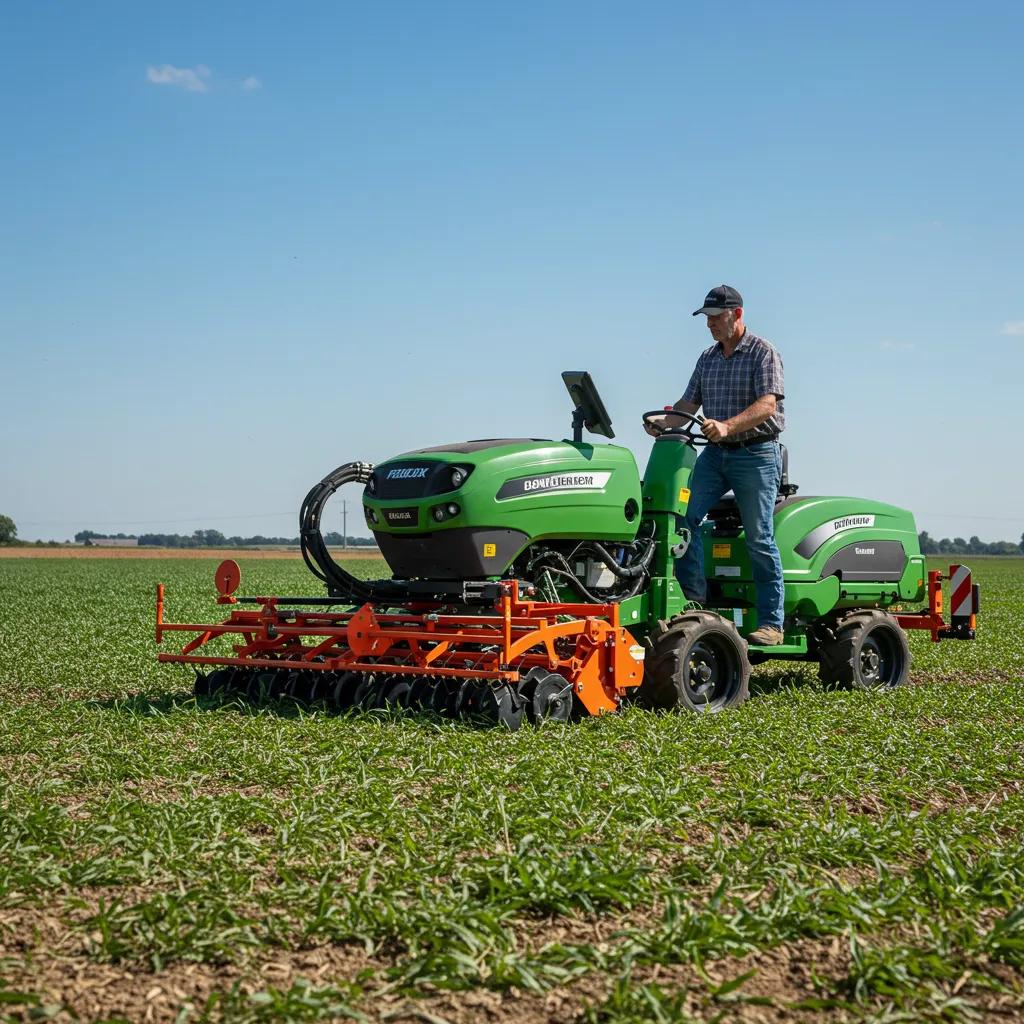
Labor shortages in seasonal and skilled roles push farms toward mechanization and AI-assisted devices that reduce dependence on hired hands while maintaining timeliness of field tasks. Automation replaces repetitive tasks like targeted spraying, row-level weeding, and certain harvesting activities, reducing delays that otherwise lower quality and market value. In the short term, machines and remote monitoring reduce peak labor demand and allow existing crews to focus on supervision and maintenance; in the long term, they change workforce skill requirements toward technical maintenance and data interpretation. This shift encourages training partnerships and cooperative equipment sharing to spread capital burden across smaller operations.
What Economic Pressures Are Forcing Farm Innovation?
Rising input prices, variable commodity markets, and tighter margins mean growers must seek out technologies that shorten payback windows and demonstrate reliable ROI. When farms can quantify savings—reduced fertilizer use, fewer pesticide applications, lower fuel and labor expenses—decision-makers justify initial capital outlays. Access to financing, grant programs, and cooperative purchasing mitigate upfront cost barriers, while pilots and phased deployments help farms evaluate real-world cost-benefit timelines. Clear business cases with measurable metrics encourage mid-sized and larger producers to scale AI investments while smaller farms explore service models or contractor-based access to advanced tools.
How Has Farmland Loss Affected Farming Sustainability?
Loss of acreage due to development and consolidation forces remaining farmers to intensify productivity per acre and prioritize resource efficiency. With approximately millions of acres affected nationwide in recent years, the pressure to maintain output on less land pushes adoption of precision techniques that squeeze more yield from the same footprint. This intensification can protect regional food supplies if paired with sustainability measures—otherwise, it risks soil degradation and ecosystem strain. Technology that increases yield while reducing water and chemical use helps reconcile productivity goals with long-term land stewardship.
How Does AI Improve Farm Survival and Productivity in Colorado?
AI improves farm survival by converting variable field conditions into actionable decisions: predicting pest outbreaks, optimizing irrigation timing, and automating labor-intensive tasks to reduce costs. These mechanisms translate into measurable benefits such as higher yields, lower water use, and reduced chemical inputs—each directly linked to farm economics and resilience under market pressure. Below is a concise list of core benefits that capture how AI shifts farm outcomes toward survival and growth.
- Higher Yield Per Acre: AI-guided decisions support targeted interventions that can raise yields through timely actions.
- ResourceEfficiency: Precision irrigation and variable-rate application cut water and fertilizer waste.
- Labor and Cost Reduction: Automation reduces peak labor demand and lowers recurring operational expenses.
These benefits feed into a more stable production model where farms can weather price volatility and labor shortages. To make those benefits concrete for decision-makers, the table below summarizes typical impact metrics associated with common AI applications.
Before the table: the following EAV-style comparison maps AI application to the most relevant impact metric and a representative value range based on pilot results and industry reporting.
This table demonstrates how distinct AI applications map to measurable improvements in resource efficiency and output. Taken together, those gains reduce per-unit production costs and increase the economic viability of farms facing shrinking margins.
As an information hub covering technology and sector impacts, ARY News reports on agritech trends and regional case studies that help readers track innovations and policy implications. ARY News aggregates reporting on AI in agriculture, providing context and updates for audiences interested in how technological shifts affect farming communities and markets.
Machine Learning in Agriculture: Optimizing Yields and Sustainable Practices with Data Science
Utilizing machine learning (ML) models for crop prediction and yield optimization represents a significant advancement in agricultural technology. These models analyze large volumes of data—including weather patterns, soil properties, historical yield records, and real-time sensor inputs—to generate precise forecasts and actionable insights. By identifying patterns and correlations that are often imperceptible to human analysis, ML algorithms enable early detection of crop stress, pest infestations, and nutrient deficiencies. This predictive capability supports proactive decision-making, ensuring timely interventions that maximize yield and minimize resource waste. The application of machine learning in agriculture not only enhances productivity and profitability for farmers but also contributes to sustainable farming practices by optimizing inputs and reducing environmental impact.
1. Data science and predictive analytics are revolutionizing plant biotechnology by revealing crop performance and tolerances. Data science is important in a global context where agricultural demand is rising and crops’ yields, resilience, and sustainable resource usage are maximized daily. We explore predictive models in plant biotechnology and how they may be developed utilizing agronomic, environmental, phenotypic, and genomic data to improve agricultural solutions. Predictive analytics extrapolates genome, transcriptomics, and proteomics data to promote precision farming and climate-resilient crop adaptive breeding. Agricultural data science uses IoT sensors, drones, and image technologies, but integration and data quality are still difficulties. The review also explores machine learning approaches including decision trees, neural networks, regression, and others to help predictive analytics overcome restrictions. These models can quantify resilience and response to biotic and abiotic stresses, predict yields, and choose breeding genes. Examples demonstrate how predictive
Predictive analytics in plant biotechnology: Using data science to drive crop resilience and productivity, MMR Bhuiyan, 2023
What Are the Key Benefits of Artificial Intelligence in Farming?
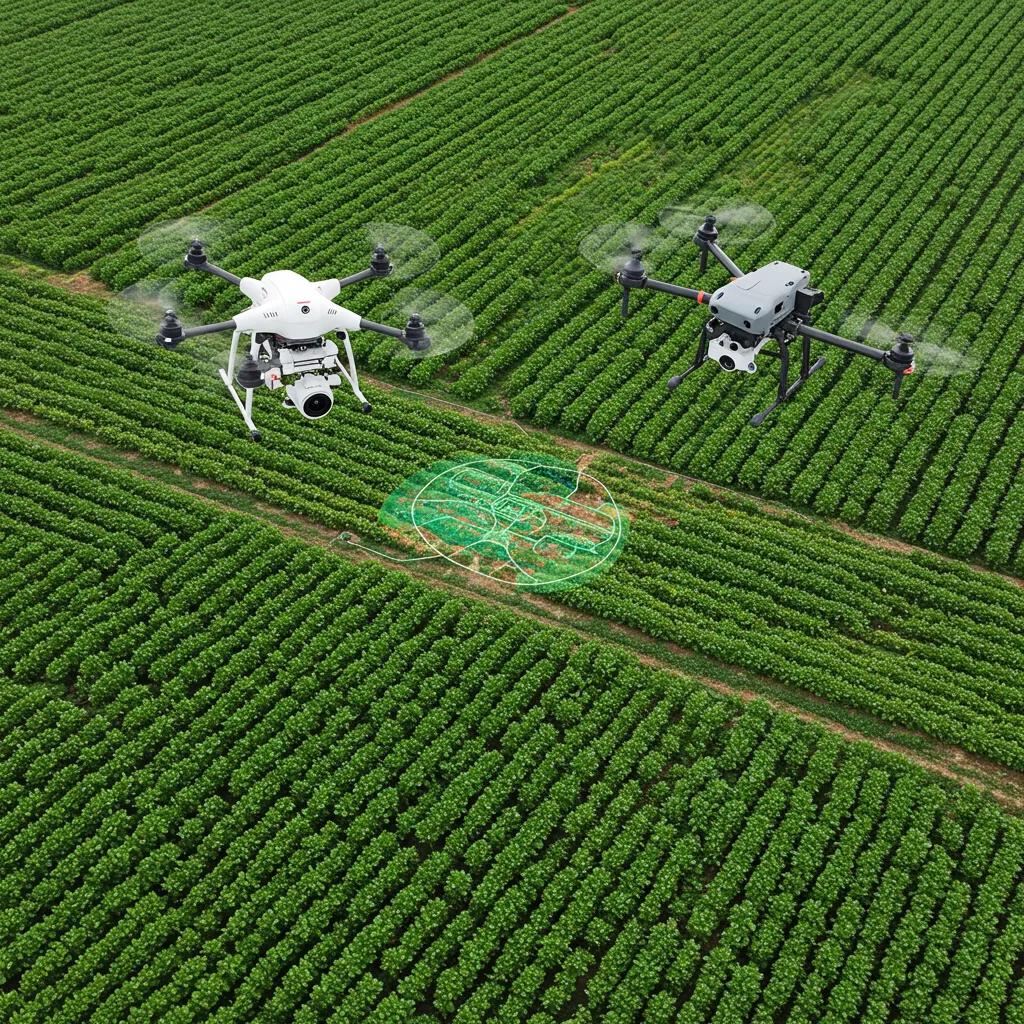
Artificial intelligence delivers several interlocking benefits that collectively strengthen farm viability: better decisions, fewer wasted inputs, improved timing, and predictive foresight that reduces surprises. By integrating satellite imagery, local sensors, and machine learning, farms gain actionable alerts and prescriptions that optimize when and where to apply water, fertilizer, and chemicals. These improvements lower unit costs and increase crop uniformity—two outcomes that matter for commodity pricing and contract fulfillment. Ultimately, farmers move from reactive management to anticipatory systems that smooth operations and protect margins.
How Does AI Boost Crop Yields and Resource Efficiency?
AI boosts yields by enabling precision placement of resources and by identifying early stress signals that allow corrective action before irreversible damage. Remote sensing—satellite and drone imagery—combined with soil moisture probes feeds models that suggest variable-rate seeding and nutrient application tailored to microzones within fields. This targeted approach raises output per acre while trimming unnecessary inputs, creating a virtuous cycle where efficiency gains fund further technology adoption. Predictive models also refine planting and harvest windows, increasing the likelihood of optimal market-grade production.
In What Ways Does AI Reduce Costs and Labor Needs?
Automation and predictive maintenance reduce recurring costs by cutting manual labor needs and minimizing equipment downtime through condition-based servicing. Robotic sprayers and autonomous implements perform repetitive tasks more consistently than manual crews, lowering error rates and chemical overuse. Forecasting models optimize purchasing decisions—locking in inputs at better times and quantities—reducing cash flow strain. These cost controls strengthen farm balance sheets, allowing managers to allocate scarce capital toward strategic improvements rather than emergency fixes.
How Does AI Support Sustainable Agriculture Practices?
AI supports sustainability by reducing runoff, lowering pesticide exposure, and improving water-use efficiency at field scale—outcomes aligned with modern sustainability KPIs. Smarter irrigation schedules conserve water, while spot-spraying systems significantly cut pesticide application on non-target areas, protecting surrounding ecosystems. Over time, improved nutrient management can accelerate soil health gains and lower greenhouse gas intensity per unit of production. These sustainability outcomes also open market opportunities through eco-certifications and buyer preference for lower-impact sourcing.
What Are the Main AI Applications Transforming Colorado Farms?
Colorado farms deploy a set of core AI applications that address crop and livestock needs while fitting different scales and commodities. These applications incorporate remote sensing, automation, robotics, and predictive modeling to tackle timely problems such as irrigation scheduling, pest control, and herd health monitoring. The following list summarizes principal application categories that are demonstrating the strongest near-term ROI and scalability in regional pilots.
- Precision agriculture: Satellite/drone analytics guiding variable-rate inputs.
- Automated machinery and robotics: Autonomous tractors and targeted sprayers replacing repetitive tasks.
- Livestock monitoring systems: Wearables and cameras predicting health issues earlier.
To make practical comparisons easier for decision-makers, the EAV table below links each application to typical use cases and representative tool classes.
This table clarifies common pairings of application, use-case, and the tools examples farmers evaluate.
How Is Precision Agriculture Using AI for Crop Management?
Precision agriculture applies machine learning to remote sensing and in-field sensor data to generate prescriptions for variable-rate seeding, irrigation, and nutrient application. Computer vision models analyze multispectral drone or satellite images to spot stress patterns, enabling spot-treatment rather than whole-field intervention. ROI for precision practices often appears within a few seasons when input savings and yield gains offset initial data-platform costs. Farmers typically pilot technology on representative fields to validate local benefits before scaling to their whole operation.
AI-Powered Site-Specific Weed Control Reduces Herbicide Use in Agriculture
Currently, applying uniform distribution of chemical herbicide through a sprayer without considering the spatial distribution information of crops and weeds is the most common method of controlling weeds in commercial agricultural production system. This kind of weed management practice lead to excessive amounts of chemical herbicides being applied in a given field. The objective of this study was to perform site-specific weed control (SSWC) in a corn field by: (1) using a unmanned aerial system (UAS) to map the spatial distribution information of weeds in the field; (2) creating a prescription map based on the weed distribution map, and (3) spraying the field using the prescription map and a commercial size sprayer. In this study, we assumed that plants growing outside the corn rows are weeds and they need to be controlled. The first step in implementing such an approach is identifying the corn rows. For that, we are proposing a Crop Row Identification algorithm, a computer vision algorithm that identifies corn rows on UAS imagery. After being identified, the corn rows were then removed from the imagery and remaining vegetation fraction was classified as weeds. Based on that information, a grid-based weed prescription map was created and the weed control application was implemented through a commercial-size sprayer. The decision of spraying herbicides on a particular grid was based on the presence of weeds in that grid cell. All the grids that contained at least one weed were sprayed, while the grids free of weeds were not. Using our SSWC approach, we were able to save 26.2% of the acreage from being sprayed with herbicide compared to the current method. This study presents a full workflow from UAS image collection to field weed control implementation using a commercial size sprayer, and it shows that some level of savings can potentially be obtained even in a situation with high weed infestation, which might provide an opportunity to reduce chemical usage in co
Towards reducing chemical usage for weed control in agriculture using UAS imagery analysis and computer vision techniques, R Sapkota, 2023
What Role Do Automated Machinery and Robotics Play?
Automated machinery reduces the time and labor needed for planting, spraying, and selective harvesting while improving repeatability and timing. Robotic sprayers equipped with computer vision can identify weeds or diseased plants and apply chemicals precisely where needed, shrinking overall chemical use. Cost-benefit depends on farm size and commodity value; large growers often justify full automation, while smaller farms access these capabilities via contractors or shared services. Equipment integration also changes workflows, requiring new maintenance schedules and technician skills.
How Is AI Enhancing Livestock Monitoring and Health?
AI in livestock uses sensors, wearables, and camera analytics to track activity, feeding behavior, and early signs of illness—enabling preemptive care and reduced mortality. Predictive models can flag deviations from normal behavior patterns that correlate with disease outbreaks or reproductive events, improving herd management and productivity. This timelier insight reduces veterinary costs and enhances welfare outcomes that affect product quality. Farms adopting these systems pair device data with on-site expertise and extension services to translate alerts into effective interventions.
Which AI Tools Are Used for Real-Time Farm Data Analytics?
Real-time analytics platforms ingest telemetry from soil probes, weather stations, and machine sensors to present dashboards and automated alerts that guide immediate decisions. Edge computing reduces latency by processing critical signals locally, while cloud-based models handle longer-term pattern detection and forecasting. Representative tool classes include telemetry dashboards, machine learning model suites for anomaly detection, and integration layers that connect sensors to farm equipment. These toolsets enable farmers to act on live data—closing the loop between observation and intervention.
What Challenges Do Farmers Face When Adopting AI Technology?
Adoption barriers include upfront capital expense, the need for new technical skills, concerns over data ownership and privacy, and potential labor displacement—each requiring concrete mitigation strategies. Overcoming these challenges typically involves blended approaches: phased deployments, shared-service models, targeted training, and clear contractual terms for data governance. The list below summarizes the primary barriers motivating thoughtful adoption roadmaps.
- High initial costs: Hardware and platform fees can deter smallholders.
- Technical skills gap: Operators need training in data interpretation and device maintenance.
- Datagovernance issues: Ambiguity around who owns farm-generated data complicates partnerships.
To help policymakers and farm managers compare solutions, the following table outlines common barriers with practical mitigations.
The table below pairs barriers with mitigation strategies that farmers and policymakers can implement to smooth adoption pathways.
How Do High Initial Costs Affect AI Adoption?
High capital expenditures for sensors, drones, and automation change the adoption calculus, often favoring larger or higher-value operations first. For many farms, cooperative ownership models, contractor-led services, or leasing arrangements lower the barrier to trialing technology without full purchase. Public grants and pilot subsidies can shorten payback windows and produce demonstrable local evidence that unlocks further investment. Phased adoption—starting with analytics subscriptions and incremental hardware—lets farms validate benefits before committing larger funds.
What Technical Skills Are Required for AI Farming Solutions?
Adopting AI requires a baseline of on-farm digital literacy: updating firmware, interpreting dashboards, and performing basic sensor calibration and repair. Training pathways include vendor-led onboarding, extension service workshops, and university programs that focus on applied agritech skills for younger workers. These upskilling programs create career opportunities for local youth and shift some labor demand from manual tasks to technician and analyst roles. Embedding training into procurement agreements ensures long-term operability and local workforce development.
How Are Data Privacy and Ownership Issues Managed?
Data governance starts with contractual clarity: vendors and platforms must define who stores, processes, and monetizes farm-generated data. Farmers should negotiate explicit data-use clauses, retention policies, and options to export raw data for independent analysis. Cooperative data trusts or industry consortia provide alternative governance models that retain farmer control while enabling shared analytics benefits. Good data governance increases farmer trust and encourages participation in broader benchmarking and research collaborations.
Could AI Lead to Job Displacement in Agriculture?
While automation can displace some routine tasks, it also creates new roles in equipment maintenance, data analysis, and precision management—shifting job profiles rather than eliminating livelihoods outright. Proactive programs for retraining and apprenticeships help affected workers transition into these technical roles, while policy measures (like subsidies for upskilling) can mitigate displacement impacts in vulnerable communities. Thoughtful deployment balances productivity gains with social equity, preserving community resilience while improving farm economics.
How Does the KCNC Report Highlight AI’s Impact on Colorado Farms?
The KCNC report provides localized, on-the-ground examples showing how specific farms use drones, sensors, and automated sprayers to reduce costs and respond to labor shortages. KCNC’s coverage links named farmer experiences with demonstrable metrics—spot-spraying reductions, water-savings pilots, and early-adopter testimonials—that make abstract technology impacts tangible for viewers and readers. Local journalism like KCNC’s helps bridge research and practice by showcasing pilots, quoting farmers, and reporting university trial outcomes that other producers can emulate. The next subsections summarize the most actionable strands of KCNC’s reporting and the role of academic research.
What Examples Does KCNC Provide of AI in Action?
KCNC spotlights tools such as drone-assisted imaging, sensor-driven irrigation adjustments, and robotic sprayers working on Colorado fields to cut inputs and speed decisions. These case examples often include statistics drawn from farmer records or pilot projects—such as percent reductions in water or chemicals—giving viewers concrete benchmarks for expected outcomes. KCNC’s format, including video and farmer interviews, emphasizes local conditions, seasonal timing, and cost considerations, providing a practical roadmap other growers can follow. Such storytelling transforms technical reports into operational lessons for nearby agricultural communities.
How Are Local Farmers Responding to AI Innovations?
Farmers’ responses range from enthusiastic early adopters who report operational relief to cautious pragmatists who prefer contract service models or limited pilots. Many cite improved timing and reduced drudgery as immediate benefits, while skeptics highlight upfront cost and integration complexity. Those who succeed typically combine vendor support, university extension advice, and phased trials that demonstrate clear savings before scaling. These varied responses underscore that adoption is rarely binary—most farms blend new tech with traditional practices until systems prove robust and cost-effective.
What Role Does Colorado State University Research Play?
Colorado State University plays a key translational role by running field trials, developing irrigation algorithms, and offering extension services that tailor technology to regional crops and climates. CSU research teams evaluate tool accuracy, test water–management regimes, and publish findings that inform both practice and policymaking. Extension programs translate research into hands-on training and pilot opportunities, helping farms deploy validated systems and measure local ROI. This partnership between research and practice shortens the feedback loop that turns innovation into routine farm practice.
What Is the Future Outlook for AI and Agritech in Colorado Farming?
Emerging innovations—edge AI, improved computer vision, swarm drone coordination, and genomics-informed decision support—are likely to expand the depth and breadth of agricultural AI over the next decade. Market forces, buyer sustainability demands, and policy incentives will also shape adoption speed, with near-term growth focused on tools that deliver quick, measurable ROI. Career opportunities in agritech will increase for younger workers who develop hybrid skills in agriculture and data science, creating a pipeline for local innovation and entrepreneurship. The following subsections explore prospective technologies, sustainability linkages, and opportunities for youth.
Which Emerging AI Innovations Could Shape Farming?
Near-term technologies include edge machine learning that enables faster field decisions, swarm drone operations for large-area monitoring, and improved computer vision models that distinguish subtle disease symptoms. These systems reduce latency between observation and action and lower labor requirements for monitoring. Pilot projects that combine genomic data with field models could also personalize seed and trait choices for resilience to local climate stresses. Investments will favor platforms that integrate smoothly with existing equipment and offer transparent performance metrics.
How Will AI Continue to Address Sustainability and Economy?
AI will increasingly tie production efficiency to measurable sustainability KPIs—reduced water intensity, lower chemical footprints, and improved soil carbon outcomes—helping producers meet buyer and regulatory expectations. Economic resilience follows as input savings and yield consistency lower volatility in farm revenues. Predictive models will also support insurance and risk–management products that price premiums more fairly based on demonstrable farm practices, aligning economic incentives with environmental stewardship.
What Opportunities Exist for Young Farmers and Agritech Careers?
Young people entering agriculture can leverage new roles combining hardware maintenance, data analysis, and on-farm systems integration. University programs, vocational training, and startup incubators focused on agritech provide pathways to entrepreneurship and employment within the sector. Practical first steps include hands-on workshops, internships on tech-forward farms, and participation in pilot trials that build both domain and technical expertise. These opportunities make agritech an attractive career route for tech-savvy youth seeking meaningful work in rural economies.
How Can AI Solutions for Farm Survival Inspire Sustainable Agriculture Globally?
Lessons from Colorado show that targeted, context-aware AI interventions—smart irrigation, spot treatment, and predictive pest models—translate into tangible sustainability and resilience gains when adapted to local constraints. Global transfer requires attention to scale, cost models, and governance: smallholders need lower-cost, mobile-first solutions and service providers that bundle hardware with analytics and financing. Ethical frameworks and data governance must accompany deployments to ensure that technology does not entrench inequality or transfer undue data rights away from farmers. The next subsections map Colorado lessons to Pakistani contexts, suggest scalable AI approaches, and outline ethical guardrails.
What Lessons Can Pakistani Farmers Learn from Colorado’s AI Adoption?
Pakistani farmers can adapt Colorado practices by prioritizing low-cost, high-impact interventions such as satellite-based advisory services and mobile-first diagnostic tools for pests and water management. Community-shared assets—drones or robotic equipment operated as services—reduce upfront costs and spread benefits across smallholder clusters. Partnerships with universities and NGOs can replicate extension models that translate trials into local best practices, while pilot programs demonstrate contextual ROI that encourages broader uptake. These strategies emphasize adaptation over direct technology transfer.
How Can AI Address Pakistan’s Unique Agricultural Challenges?
AI can help Pakistan tackle water scarcity, fragmented smallholdings, and rapid pest outbreaks through targeted interventions: satellite and remote-sensing advisory services for irrigation scheduling, low-cost diagnostic apps that allow rapid pest identification via smartphone images, and aggregated marketplaces that improve market access. Implementing solutions through aggregator models—cooperatives, agri-input suppliers, or extension networks—keeps costs manageable while delivering analytics and recommendations tuned to local crops. Mobile-first solutions and cloud analytics reduce infrastructure needs while enabling scalable support.
What Are the Ethical Considerations for AI in Global Farming?
Ethical deployment requires explicit consent frameworks, transparent data-use terms, and mechanisms that prevent concentration of benefits among large commercial actors. Policies should prioritize farmer data ownership, equitable access to services, and safeguards against surveillance or exploitative pricing. Cooperative governance models and public oversight of data commons can preserve farmer agency while enabling aggregated insights for research and adaptation. These guardrails ensure AI supports inclusive, sustainable agricultural transitions rather than deepening existing disparities.
ARY News will continue covering these developments in agriculture and technology, reporting on local pilots, policy shifts, and global implications for farming communities. Subscribe or follow trusted news coverage to receive timely updates on agritech pilots, regulatory changes, and practical guidance that helps producers and policymakers navigate AI adoption responsibly.
Conclusion
Colorado farmers are leveraging AI technology to enhance productivity, reduce costs, and navigate labor shortages, ultimately ensuring their survival in a challenging agricultural landscape. The integration of precision agriculture tools not only boosts yields but also promotes sustainable practices that benefit both the environment and the economy. By exploring these innovative solutions, farmers can make informed decisions that lead to long-term success. Discover more about how AI can transform your farming practices by visiting our resource center today.