Retired General Reacts to Trump’s Nuclear Testing Announcement: Is This a Political Ruse or Real Policy?
The announcement that the United States will begin testing nuclear weapons has reignited debate about intent, legality, and regional stability. A retired general has publicly labeled the statement “a ruse” that may be more political signaling than an executable policy. This article explains what was said, distinguishes types of testing, traces the U.S. moratorium’s history, and examines expert reaction—including the retired general’s reasoning—plus likely international and Pakistan–region implications. Readers will get clear definitions (explosive tests vs. subcritical experiments), a concise moratorium timeline, the stockpile stewardship approaches used instead of explosive testing, and practical resources to monitor developments. We frame expert reaction and legal questions, map probable Pakistani and regional responses, and assess environmental, treaty, and public–opinion consequences. The goal is to equip policy–minded readers and younger audiences with accessible explanation, expert context, and actionable ways to follow ongoing coverage.
What Did Trump Announce About U.S. Nuclear Weapons Testing?
On October 30, 2025, President Donald Trump ordered the immediate resumption of U.S. nuclear weapons testing, marking a significant policy shift after a 33-year hiatus. The announcement was made via Truth Social just before his meeting with Chinese President Xi Jinping in Busan, South Korea. Trump cited the need to test on “an equal basis” with China and Russia, both of which have ramped up nuclear developments. (reuters.com)
It remains unclear whether Trump was referring to explosive nuclear testing or merely the testing of missile delivery systems. He justified the decision as a means to maintain strategic parity with rivals, particularly amid China’s rapidly expanding arsenal—estimated to grow from 600 warheads in 2025 to over 1,000 by 2030. Russia has also demonstrated advanced nuclear systems, including a nuclear-powered torpedo and cruise missile. (time.com)
What Are the Details of Trump’s Nuclear Testing Remarks?
The announcement’s immediate detail is the claim of readiness to resume “testing,” but available public language did not specify whether that meant explosive tests, subcritical experiments, or new delivery–system trials. This ambiguity leaves agencies and analysts to interpret intent based on institutional roles and past practice rather than a firm technical order. The distinction matters because an explosive test would require complex interagency approvals, new operational preparations, and international notice, while subcritical work can proceed under existing National Nuclear Security Administration processes. (reuters.com)
How Is “Nuclear Testing” Defined in This Context?
“Nuclear testing” encompasses a range of activities from full–yield explosive detonations to non–yield subcritical experiments and tests of delivery platforms. Explosive nuclear tests produce a nuclear yield and are detectable by seismic, atmospheric, and radionuclide monitoring networks; subcritical tests do not create a nuclear yield but can provide data on plutonium and other materials under stress. Delivery–system testing focuses on missiles, boosters, and warhead integration without necessarily involving a nuclear detonation. The technical difference is decisive because explosive tests carry greater treaty, environmental, and proliferation consequences, whereas subcritical and modeling work are part of established stockpile stewardship methods that many nuclear states use to validate warhead safety and reliability. (reuters.com)
Why Is There Confusion Between Defense and Energy Departments?
Public confusion often stems from overlapping responsibilities: the Department of Defense manages operations and delivery systems, while the Department of Energy through the National Nuclear Security Administration (NNSA) oversees warhead maintenance, testing infrastructure, and subcritical experiments. Statements from political leaders can reflect a Defense posture focused on deterrence signaling, whereas technical implementation requires Energy/NNSA planning, laboratory capability, and legal review. Historical examples of mismatched public rhetoric and technical timelines show how announcements can outpace the formal policy processes required to resume explosive testing. (reuters.com)
What Is the History and Status of the U.S. Nuclear Test Moratorium?
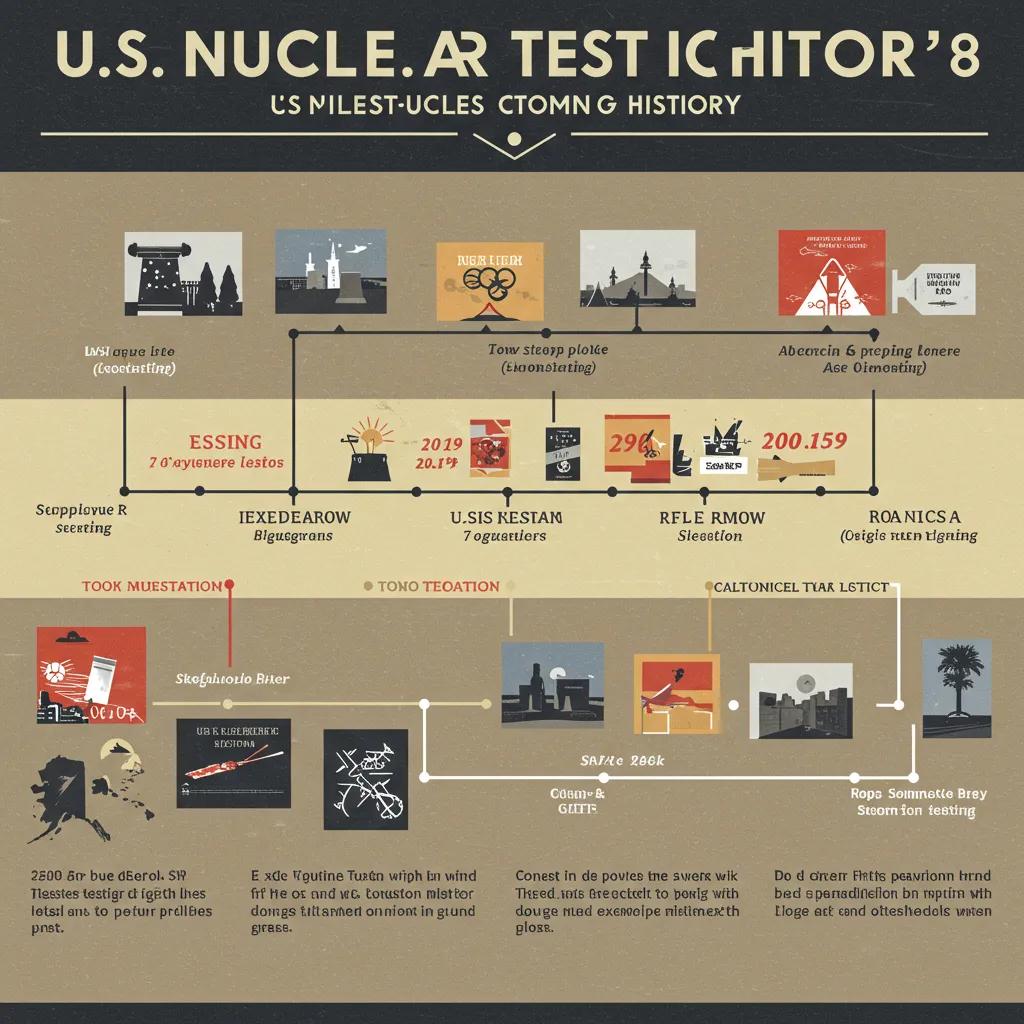
The U.S. has observed a de–facto moratorium on explosive nuclear testing since the early 1990s, with the last full–yield test conducted in 1992; since then, policy has emphasized stockpile stewardship, modeling, and subcritical experiments to assure reliability. The Comprehensive Test Ban Treaty (CTBT) established a global norm against explosive testing, but its entry into force and degree of ratification among key states has been uneven, shaping verification and diplomatic pressure. The following timeline clarifies the major policy landmarks that led to the modern approach.
- 1992 — Last U.S. explosive nuclear test, marking the start of a moratorium in practice.
- 1996 — CTBT opened for signature, establishing a global prohibition on explosive tests pending entry into force.
- 1990s–2020s — Development of the Stockpile Stewardship Program and expansion of subcritical testing and advanced modeling.
This timeline shows how the U.S. shifted from live explosive testing to laboratory science and simulation; the table below contrasts pre–1992 practice with post–moratorium approaches to clarify the operational and verification differences.
This comparison clarifies why a return to explosive testing would be a substantive policy shift rather than a minor technical adjustment, and the next section explains in more detail how the U.S. maintains stockpile confidence without explosive tests.
How Does the U.S. Maintain Its Nuclear Stockpile Without Explosive Tests?
The United States relies on the Stockpile Stewardship Program, subcritical experiments, warhead surveillance, materials science, and advanced simulation to assure the safety, security, and effectiveness of its arsenal. Supercomputing and laboratory work create virtual testbeds where scientists validate component behavior, while periodic refurbishment programs replace aging parts. Subcritical tests provide material–behavior data without producing a nuclear yield, enabling continuous assessment without the environmental and treaty consequences of explosive detonations. These technical practices show that resuming explosive testing is not strictly necessary to maintain a credible deterrent, though some policy actors argue the political message of deterrence shifts when public rhetoric changes. (reuters.com)
How Has the Retired General Reacted to Trump’s Nuclear Testing Announcement?
When the retired general called the announcement a “ruse,” he framed it as political signaling rather than an actionable operational change, arguing that real testing requires interagency coordination and technical work that contradicts the immediate tone of the statement. The general’s critique rests on the idea that public declarations can be designed to influence adversaries, domestic constituencies, or alliance politics without committing to the logistics, legal processes, and international consequences of explosive testing. (reuters.com)
What Are the Military and Legal Concerns Raised by the General?
The general highlights several concrete issues: the chain–of–command and authorization for testing, legal constraints under treaty obligations, and the operational logistics of conducting an explosive test. Military concerns include potential impacts on alliance reassurance, force posture adjustments, and the risk of misperception by competitors; legal concerns focus on obligations under international norms and domestic consultation requirements. Operationally, resuming tests would require preparing test infrastructures, safety protocols, and environmental assessments, all of which take time and interagency coordination. These constraints support the general’s view that an announcement can be performative unless followed by explicit policy processes and resource commitment. (reuters.com)
How Do Other Experts View Trump’s Nuclear Testing Statements?
Other experts offer a range of readings: some treat the statements as provocation with risk of escalation, others emphasize technical clarification that subcritical or delivery testing would be less consequential, while arms–control specialists warn about normative damage. Technical analysts stress the feasibility gap between a political announcement and the capability to conduct explosive tests within short timeframes, whereas policy analysts assess strategic signaling aimed at deterrence or domestic audiences. International law scholars underscore treaty implications and the diplomatic cost of undermining longstanding non–testing norms. Collectively, the expert community frames the announcement as high–impact rhetoric that requires careful parsing to separate signal from likely action. (reuters.com)
What Are the International Reactions to the U.S. Nuclear Testing Talk?
This section summarizes likely international responses and the roles of major powers and civil society in shaping the debate, focusing on official statements, think–tank reactions, and the risk of reciprocal moves. Major powers and multilateral institutions will likely issue calibrated responses that blend condemnation, calls for restraint, and technical queries about intent and modalities. Arms control organizations and monitoring bodies will emphasize verification, transparency, and treaty obligations, while analysts will assess whether rhetoric translates into capability investments or pathways to escalation. The following bullets reflect core reaction types that usually follow such announcements.
- Official diplomatic protests or public calls for restraint from states concerned about proliferation.
- Civil society and arms–control NGOs calling for verification and adherence to non–testing norms.
- Strategic recalibration by regional adversaries assessing whether to modernize arsenals or modify posture.
These reaction types indicate that the international system has mechanisms to respond to testing talk even if explosive tests do not occur; the next section examines responses from Russia and China specifically. (reuters.com)
How Have Russia and China Responded to Trump’s Announcement?
Russia and China generally interpret U.S. nuclear signaling through the lens of strategic competition and domestic messaging; official rhetoric may condemn any suggestion of resumed explosive testing while analysts evaluate whether the talk is intended to justify modernization or deterrence posture. Both countries have active modernization programs and may use U.S. statements to justify their own steps or to mobilize diplomatic pressure. Political leaders often balance public denunciation with behind–the–scenes consultations to avoid miscalculation, while analysts map signaling into potential military adjustments. Understanding these responses clarifies whether the announcement could shift the strategic balance or remain largely rhetorical. (reuters.com)
What Role Do Arms Control Organizations Play in This Debate?
Arms control organizations and think tanks act as technical translators and normative advocates: they analyze verification implications, assess monitoring data, and lobby for restraint and treaty adherence. Their monitoring and advocacy help sustain the normative barrier against explosive testing and provide policymakers with options for diplomatic engagement. The involvement of these organizations can reduce ambiguity and create pressure for transparency, which is crucial if any testing activity is contemplated. (reuters.com)
Could This Signal a New Global Nuclear Arms Race?
A return to explosive testing would mark a qualitative shift that could encourage competitors to accelerate modernization or testing—however, rhetoric alone does not necessarily trigger a full arms race. Factors that affect escalation risk include the feasibility of testing, the credibility of technical capability, and the diplomatic responses from other major powers. Historical precedents show that public rhetoric can spur modernization narratives, but actual arms races depend on sustained investment, doctrinal shifts, and alliance reactions. Assessing current modernization trends and political will across the United States, Russia, and China helps weigh whether the announcement is the opening of a new race or another episode in strategic signaling. (reuters.com)
What Are the Implications of U.S. Nuclear Testing for Pakistan and Regional Stability?
This section connects U.S. testing talk to Pakistan’s security calculus, likely policy tools Islamabad might use, and broader South Asian diplomatic consequences. Pakistan views shifts in great–power nuclear posture through the prism of regional deterrence, balance with India, and alliance dynamics; any perceived erosion of non–testing norms can affect Pakistani force posture, diplomatic outreach, and messaging to domestic audiences. (reuters.com)
How Might Pakistan Respond to Renewed U.S. Nuclear Testing?
Pakistan could respond with a mix of formal diplomatic protest, public messaging to domestic constituencies, and measured military posture adjustments intended to preserve deterrence without overt escalation. Diplomatically, Islamabad may raise concerns in multilateral forums and seek regional consultations to prevent misperception. Operationally, Pakistani authorities could increase surveillance, accelerate maintenance cycles, or brief political leadership on options—actions that convey seriousness while avoiding provocative demonstrations. These calibrated steps aim to manage domestic expectations and regional stability simultaneously, and the next subsection examines Pakistani expert commentary on these dynamics. (reuters.com)
What Do Pakistani Military Experts Say About This Development?
Regional analysts and retired Pakistani military figures tend to emphasize caution, urging diplomatic engagement coupled with vigilance; some favor signaling readiness while avoiding unilateral escalation that could destabilize the subcontinent. Experts often highlight the technical asymmetry between explosive testing and maintenance work, recommending that policymakers prioritize verification, information–sharing, and crisis communication channels to reduce miscalculation. The consensus among many regional observers is that measured responses preserve deterrence while keeping open diplomatic options, a stance that balances security needs with the costs of escalation. (reuters.com)
How Could This Affect South Asian Security and Diplomacy?
South Asian security dynamics could become more tense if great–power testing rhetoric lowers the bar for demonstrative military measures or accelerates modernization narratives in Delhi and Islamabad. India’s reactions will shape Pakistan’s policy choices, and both capitals may increase diplomatic activity to avoid unintended spirals. Regional mechanisms for confidence building and dialogue, if activated early, can mitigate risks; conversely, delayed engagement can create windows for misinterpretation. Policymakers in the region therefore face a choice between rapid diplomatic management to restore norms or prolonged security competition that raises crisis risks. (reuters.com)
What Are the Broader Implications of Resuming Nuclear Tests?
This section evaluates environmental, legal, and public–opinion consequences of resumed testing and the likely effects on treaty regimes and proliferation. Resuming explosive testing would have measurable environmental and humanitarian impacts, complicate treaty enforcement, and alter public sentiment both domestically and internationally. (reuters.com)
What Are the Environmental and Security Risks of Nuclear Testing?
Explosive nuclear tests produce radioactive releases, long–term environmental contamination, and health impacts for nearby populations; historic testing eras left legacies in test site regions that required decades of remediation. Beyond immediate environmental harm, tests can create security risks by stimulating regional arms responses and undermining monitoring networks intended to detect underground detonations. The humanitarian and ecological consequences drive much of the international resistance to resumed testing, and these risks intersect directly with treaty and verification concerns discussed next. (reuters.com)
How Would Resuming Tests Affect International Arms Control Treaties?
Resuming explosive testing would erode the normative force of the CTBT, complicate enforcement of verification standards, and weaken non–proliferation incentives for states that have been restrained by international norms. Treaties rely not only on legal text but also on mutual expectations and monitoring mechanisms; a major power’s return to explosive tests would strain those expectations and make coordinated treaty responses more difficult. NGOs and technical organizations would likely demand expanded monitoring and diplomatic remedies, but treaty enforcement options are politically constrained, meaning diplomatic and economic pressures would be the primary tools for response. (reuters.com)
What Is the Public Opinion on Nuclear Testing and Proliferation?
Public opinion on nuclear testing tends toward opposition when environmental and humanitarian impacts are salient, though younger audiences may frame concerns through social media and rapid news cycles rather than treaty texts. Polling often shows generational divides, with older populations remembering historical test impacts more directly and younger groups reacting to contemporary risks and media narratives. Social–media amplification can both alarm and educate, influencing policymakers who respond to domestic political pressures. Tracking public sentiment is therefore an essential part of understanding how political signaling about testing translates into policy constraints or momentum. (reuters.com)
How Can Readers Stay Updated on Global Nuclear Policy Developments?
This practical section lists authoritative resources, explains how ARY News will provide follow–up coverage, and recommends monitoring tools to track official statements, verification data, and expert analysis. For readers seeking ongoing updates, authoritative institutions, technical monitoring organizations, and policy think tanks provide timely, evidence–based reporting and analysis. To provide timely and comprehensive news and current affairs coverage, keeping the audience informed and engaged with diverse content, ARY News will publish follow–up stories, analyst roundups, and regional briefings to track any policy changes and their local impact. Readers should look for a mix of breaking alerts, explainer articles, and periodic deep dives that connect global developments to Pakistani security concerns.
What Resources Track U.S. and Global Nuclear Weapons Policies?
The following resources are reputable trackers of nuclear policy, verification data, and expert analysis; follow multiple sources to cross–check claims and interpret technical findings.
- Bulletin of the Atomic Scientists: Provides expert analysis on nuclear risks and policy developments.
- Arms Control Association: Offers policy briefs and treaty context for verification and diplomacy.
- International Atomic Energy Agency (IAEA) and verification bodies: Monitor technical compliance and provide inspection insights.
- Stockholm International Peace Research Institute (SIPRI): Tracks global military spending, modernizations, and comparative data.
- Federation of American Scientists: Compiles technical data on stockpiles and capabilities.
Tracking these sources together helps readers separate technical detection data from political rhetoric; the next section explains how ARY News will fit into readers’ monitoring plans.
How Does ARY News Provide Ongoing Coverage of Nuclear Security?
ARY News operates as an information hub that combines rapid reporting with regional analysis and follow–up features to contextualize nuclear developments for its audience. The newsroom uses expert interviews, regional perspectives, and curated updates to explain implications for Pakistan and South Asia and to surface technical context for general readers. As part of its remit to provide timely and comprehensive news and current affairs coverage, keeping the audience informed and engaged with diverse content, ARY News will publish follow–up stories, analyst roundups, and regional briefings to track any policy changes and their local impact. Readers should look for a mix of breaking alerts, explainer articles, and periodic deep dives that connect global developments to Pakistani security concerns.
What Tools Help Monitor Changes in Nuclear Policy and Public Discourse?
Practical digital tools let readers and researchers set alerts, track monitoring data, and follow public sentiment across platforms. Setting keyword alerts for key entities, subscribing to official press briefings from relevant agencies, and following monitoring networks’ public dashboards are all useful strategies. Social–media listening tools and RSS feeds help capture rapid discourse shifts, while technical verification relies on seismic and radionuclide monitoring reports from established networks. Combining these approaches—automated alerts, authoritative monitors, and regional reporting—produces a balanced, timely feed of developments that reduces the risk of misinterpretation.
- Set keyword alerts for terms like “nuclear testing,” “subcritical experiment,” and entity names.
- Subscribe to newsletters from arms–control organizations and monitoring networks for technical updates.
- Use RSS and verified news aggregation to track official statements and expert analyses.
These tools, used together, let readers spot discrepancies between political statements and technical evidence and maintain an evidence–based understanding of evolving nuclear policy.
Conclusion
Understanding the implications of Trump’s nuclear testing announcement is crucial for grasping the evolving landscape of global security and diplomacy. This article has provided insights into the historical context, expert reactions, and potential regional consequences, reinforcing the importance of informed discourse on nuclear policy. To stay updated on these developments, consider following reputable sources and engaging with ongoing analyses. Explore our comprehensive coverage to deepen your understanding of this critical issue.