Sacramento Food Crisis Update: How KOVR and Influencers Are Stepping Up to Help
The Sacramento region is facing an acute surge in food insecurity driven by funding interruptions and rising household need, with thousands of residents relying on emergency aid as lines at distribution sites lengthen.
To provide timely and comprehensive news and current affairs coverage, keeping the audience informed and engaged with diverse content. This article explains who is being affected, how policy shocks like the October 2025 federal government shutdown disrupted benefit flows, and why local media coverage and social media activism matter for rapid relief. Readers will get a data-led situational update, an analysis of KOVR’s reporting and multimedia approach, profiles of influencers and community initiatives, operational snapshots of food banks, policy impact mapping, and practical ways to help. Throughout, the piece ties local reporting to wider food-security trends and offers concrete guidance on donating, volunteering, and sustaining support for Sacramento-area families.
What Is the Current Food Crisis Situation in Sacramento?
The current food crisis in Sacramento combines rising demand with near-term funding interruptions, producing immediate pressure on food-distribution networks and households who depend on CalFresh and local emergency food programs. This shift is driven by policy disruptions such as the October 2025 federal government shutdown and longer-term funding reductions that have constrained procurement options for nonprofits and food banks. As a result, distribution sites report heavier traffic, more households with children seeking help, and expanded reliance on volunteer-run pop-up pantries to fill gaps. Understanding the scope of need clarifies why coordinated media coverage and organized community response are essential to closing shortfalls and shaping policy fixes.
How Has the Federal Government Shutdown Impacted SNAP Benefits in Sacramento?
The federal government shutdown in October 2025 temporarily disrupted SNAP/CalFresh administrative operations and slowed typical benefit notifications, producing immediate uncertainty for many households that time monthly budgets around predictable disbursements. Households reliant on SNAP experienced delayed access to benefits, forcing families to tap savings or seek emergency food from local pantries while administrative staff worked to resume normal processing. Local nonprofits activated short-term coping mechanisms including targeted emergency vouchers and mobile distributions to reduce hunger spikes. These rapid-response measures mitigated immediate harm but leave lingering stress for households that need stable benefits, which in turn increases demand on food banks.
SNAP Benefit Timing and Household Consumption During Government Shutdowns
We test the ability of SNAP eligible households to respond to a temporary change in benefit timing. We exploit the 2018–2019 US government shutdown in which all states were federally mandated to pay February SNAP benefits in January. This created a short-term windfall (two payments very close to each other) followed by a longer than normal gap during which no SNAP disbursements were received. Using a triple differences approach, we show that expenditures are lower in February (relative to other months) 2019 (relative to 2018) for SNAP recipients (relative to near-eligible households). We complement this finding by exploiting preexisting state-level differences in disbursement schedules that drove some states to temporarily alter the timing of the 2019 March and April SNAP disbursements. Diff-in-diff estimates show that SNAP eligible households in those states reduced spending. Our findings are inconsistent with the permanent income hypothesis and suggest that the timing of benefits matters for household consumption.
What Are the Latest Food Insecurity Statistics in Sacramento County?
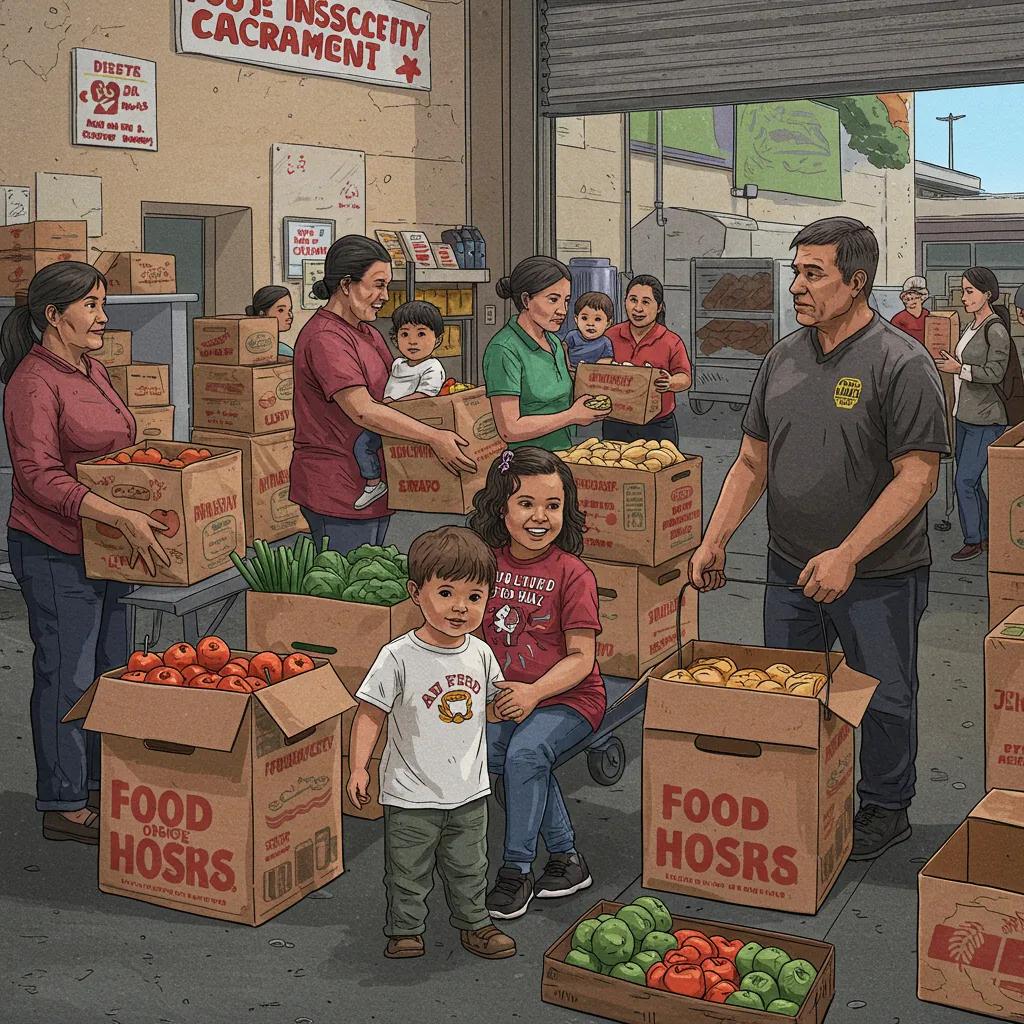
Recent local reporting and food-bank summaries show food insecurity rising compared with pre-pandemic baselines, with a notable uptick in households with children and working families seeking assistance. Monthly service counts commonly reported by providers include tens of thousands of client visits and millions of pounds of food distributed across county programs, reflecting sustained elevated demand into 2025. Trends indicate that food-insecure populations are diversifying beyond traditional demographic profiles, extending into households dealing with short-term financial shocks. Tracking these statistics month-to-month helps organizations prioritize resources and informs journalists and policymakers about shifting hotspots and populations in need.
Which Organizations Are Leading Food Aid Efforts in Sacramento?
Several established and volunteer-led organizations form the backbone of Sacramento’s emergency food-response network, coordinating large-scale distributions, mobile pantries, and targeted support for families with children. The Sacramento Food Bank and Family Services operates core distribution channels and partner programs, while coalitions and volunteer initiatives fill rapid-response roles and amplify outreach to underserved neighborhoods. Collaboration between these groups and local government social services helps route donated goods, manage volunteer logistics, and coordinate procurement when funding gaps arise. These operational partnerships are essential for converting media attention and short-term donations into effective, equitable relief.
How Is KOVR Covering the Sacramento Food Crisis and Community Response?
KOVR’s coverage has combined on-the-ground reporting, human–interest profiles, and policy explainers to connect the causes of the crisis with its visible effects on families and service providers. The station uses live segments, vox-pop interviews, and data-driven graphics to map lines, show distribution efforts, and illustrate how funding interruptions affect benefit flows and local capacity. KOVR’s editorial framing tends to link individual stories to systemic causes, balancing emotional narratives with factual context so viewers can understand both immediate needs and policy levers. This kind of reporting amplifies calls for donations and volunteer action while pressuring decision-makers to address funding lapses.
What Key Stories Has KOVR Reported on Influencer Activism?
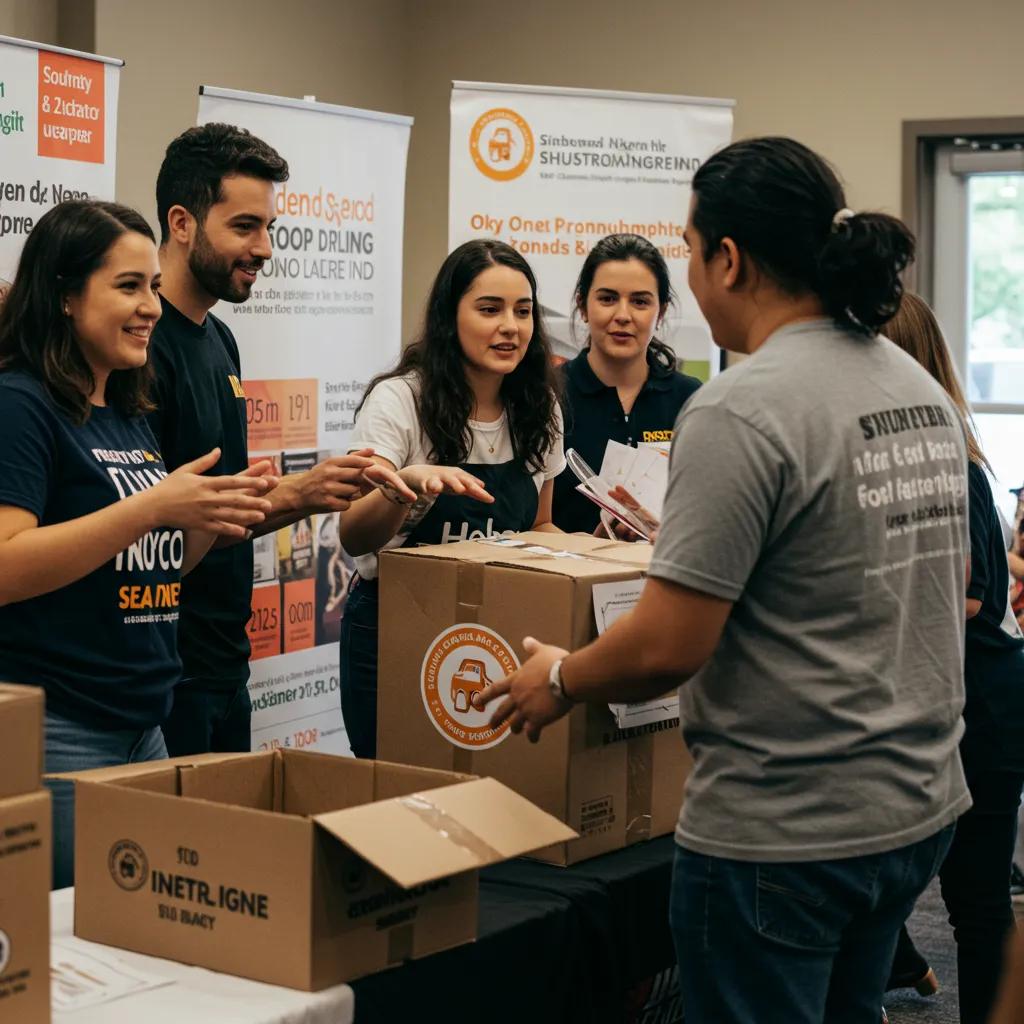
KOVR has spotlighted several influencer-driven campaigns that mobilized local audiences and supported food banks through fundraisers, donation drives, and volunteer meetups; those segments emphasized measurable outcomes and community coordination. Coverage typically highlights how creators translate social attention into concrete support — for example, livestream fundraisers that direct proceeds to vetted organizations or neighborhood drives that aggregate in-kind donations for rapid distribution. KOVR’s reporting contrasts influencer efforts with institutional aid, showing where grassroots momentum supplements formal programs and where coordination is still needed. These stories often prompt additional volunteering and local donations by showing transparent results and urgent needs.
For international readers and news partners, these local stories illustrate a pattern of media-amplified civic action that can be replicated elsewhere, and the reporting often prompts follow-up investigations into funding sources and policy responses.
How Does KOVR Highlight the Impact of Government Policies on Food Aid?
KOVR connects policy developments — such as the October 2025 federal shutdown or reductions in state-level programs — to operational consequences at food banks, explaining how funding flows or interruptions change purchasing power and distribution schedules. Reporters explain policy mechanics in accessible terms, for example clarifying how a pause in administrative processing delays benefits and increases short-term demand on emergency providers. The station uses on-camera interviews with nonprofit leaders and service statistics to make the link between budget decisions and longer lines at distribution sites. That explanatory reporting helps viewers understand immediate coping choices and builds pressure for policy remedies.
What Multimedia Content Does KOVR Provide on the Food Crisis?
KOVR’s multimedia toolkit includes full-length TV segments, short social clips for rapid sharing, photo essays documenting distribution events, and data visualizations that map service demand across neighborhoods. Video humanizes the crisis by showing families and volunteers at distribution points while graphics summarize numbers of meals distributed and client visits. Social clips amplify influencer campaigns and resource drives, enabling quicker mobilization and higher volunteer turnout. Proper attribution and permission for embedding or reposting KOVR content are important; media outlets and content creators should confirm rights before republishing material to honor journalistic ownership.
To provide timely and comprehensive news and current affairs coverage, keeping the audience informed and engaged with diverse content. KOVR’s mix of local depth and multimedia reach demonstrates how regional reporting can catalyze practical support and accountability.
Who Are the Influencers Helping Sacramento Hunger and How Are They Making a Difference?
Local influencers — community organizers, creators, and civic-minded personalities — have turned social attention into practical support by fundraising, organizing drives, and amplifying food-bank needs. Their actions range from live-streamed fundraisers that funnel donations to vetted organizations to coordination of volunteer shifts and in-kind collection points. Influencers often use platform-native features to mobilize followers quickly, and their authenticity and local ties help convert attention into tangible outcomes. Examining these activities shows how social media functions as a multiplier of relief when paired with transparent partnerships and reputable local organizations.
Which Influencers Are Leading Fundraising and Awareness Campaigns?
Several named community figures and local creators have been visible in recent campaigns, lending their platforms to raise funds, recruit volunteers, and spotlight distribution needs across neighborhoods. These influencers collaborate with nonprofits to direct donations and validate outcomes, ensuring that funds are channeled to established service providers rather than ad-hoc recipients. Their campaigns typically include clear calls to action, progress updates, and shared receipts or post-campaign reports to maintain trust. This structure helps followers see how digital attention translates into food on tables rather than performative gestures.
How Do Influencers Use Social Media to Mobilize Community Support?
Influencers use storytelling, urgency, and platform tools to convert followers into donors and volunteers by creating compelling narratives and low-friction actions that followers can take immediately. They combine short, personal videos that show need with donation links (processed by nonprofits) and live Q&A sessions to answer follower questions about where money goes. Common tactics include timed livestream fundraisers, Instagram Stories with donation stickers, TikTok challenges that raise awareness, and pinned posts that summarize volunteer sign-ups. These tactics are most effective when coordinated with official organizations to ensure logistical capacity.
Influencer activity often transitions from awareness to sustained support when creators commit to recurring fundraisers or formal partnerships with nonprofits, which helps convert short-term attention into longer-term resources.
What Are Best Practices and Ethical Considerations for Influencer Activism?
Influencers should prioritize transparency, vetting of recipient organizations, and continued reporting on outcomes to avoid performative charity and ensure real impact. A best-practice checklist includes verifying nonprofit credentials, clarifying how funds will be used, providing follow-up on distribution, and protecting beneficiary dignity in public content. Avoiding sensationalism and ensuring informed consent for any featured individuals preserves ethical standards. Collaboration with local food banks and adherence to privacy norms helps influencers maximize positive outcomes while avoiding harm or misallocation of resources.
What Role Do Food Banks and Community Organizations Play in Addressing the Crisis?
Food banks and community organizations serve as operational hubs that procure, store, and distribute food while coordinating volunteers, logistics, and community outreach to reach households in need. They balance immediate distribution with programs targeting children, seniors, and other vulnerable populations, and they adapt procurement strategies in response to funding changes. These organizations also act as partners for influencers and media outlets: they provide the necessary infrastructure to turn public attention and donations into equitable aid. Understanding their capacities and limits is essential for donors and volunteers who want to maximize their contribution’s effectiveness.
The table below compares key providers, their core services, monthly reach, and primary funding sources to clarify operational differences and resource needs.
How Is the Sacramento Food Bank and Family Services Responding to Increased Demand?
The Sacramento Food Bank and Family Services has expanded mobile pantry routes, increased partnership distributions, and adjusted procurement strategies to stretch available funds and food supplies amid rising demand. Operational changes include targeted pop-up sites in high-need neighborhoods, more frequent volunteer shifts, and increased collaboration with regional suppliers to smooth supply chain disruptions. Leadership emphasizes cash donations for flexible procurement, while also requesting specific in-kind items only when logistics allow efficient distribution. These adaptations help the organization maintain service levels while seeking longer-term funding stability.
What Are Effective Ways to Donate and Support Local Food Banks?
Donors can increase impact by prioritizing cash gifts, signing up for verified volunteer shifts, and coordinating community drives that align with food-bank needs rather than sending unsolicited items. Cash donations allow organizations to buy culturally appropriate and nutritionally balanced food locally, reduce transport costs, and speed procurement during spikes in demand. Volunteers help with packing, distribution, and administrative tasks, while hosts of community drives should confirm accepted items and drop-off procedures to avoid wasted donations. Verifying organizations through recognized networks and requesting donation receipts improves transparency and trust.
- The following list summarizes immediate, high-impact donation and volunteer actions:
- Give cash to verified food banks for flexible, targeted procurement and faster relief.
- Sign up for organized volunteer shifts to help with packing, sorting, and distribution.
- Coordinate hosted drives with food-bank guidance to ensure donated items meet current needs.
These steps maximize the value of community contributions and reduce logistical burdens on service providers. Donors who prioritize flexibility and verification enable food banks to respond efficiently to changing demand.
How Are Community Initiatives Like “All Together Now Sacramento” Making an Impact?
Community initiatives such as “All Together Now Sacramento” have demonstrated rapid-response capacity by organizing online fundraisers, neighborhood drives, and volunteer networks that plug into formal food-bank channels for distribution. A notable campaign raised $18,000 in 24 hours to support targeted distributions, illustrating how hyper-local coordination and social amplification can produce immediate resources. These initiatives often serve as intermediaries that connect grassroots energy to established nonprofit operations, enabling faster local reach and rapid mobilization. Lessons from these efforts include the importance of transparent accounting, clear partner roles, and communication that directs support where logistics allow the most efficient distribution.
How Are Government Policies and Funding Cuts Affecting Food Aid Programs in Sacramento?
Policy shifts and funding reductions at federal and state levels change the scale and predictability of food-aid programs, affecting both beneficiary households and the operational capacity of food banks. Cuts to programs that support food procurement or administrative capacity translate quickly into fewer purchases, reduced program offerings, and heavier reliance on emergency donations. Mapping specific policy changes to direct impacts helps stakeholders prioritize mitigation actions and advocate for resource restoration. Understanding these links clarifies why stable funding and responsive policy design are critical for regional food security.
The following table maps policy or funding changes to their immediate operational impacts for providers and recipients, illustrating cause-and-effect pathways that inform advocacy and relief planning.
What Is CalFresh and How Has It Been Affected by the Shutdown?
CalFresh is California’s implementation of the federal SNAP program, providing monthly benefits to eligible households to purchase food at authorized retailers and farmers’ markets; it is a foundational program for household food security. During the October 2025 shutdown, administrative slowdowns affected disbursement schedules and client communications, creating short-term access challenges for beneficiaries who depend on predictable benefit flows. Local mitigation included emergency food distributions and advocacy for expedited processing, but these stopgap measures cannot substitute for stable, ongoing benefits. Restoring predictable operations remains essential to prevent recurring hunger spikes.
How Have Federal and State Funding Reductions Impacted Food Banks?
Funding reductions have diminished food banks’ purchasing flexibility, constrained program expansions, and increased reliance on donated food and episodic fundraisers to cover basic distribution needs. Reduced procurement budgets force organizations to re-evaluate distribution frequency and prioritize the most vulnerable households, sometimes suspending supplemental programs that address child nutrition or senior outreach. These operational shifts increase administrative burden and volunteer coordination needs, and they elevate the role of community fundraising and influencer-driven campaigns to plug critical shortfalls. Strategic advocacy and diversified revenue streams help mitigate these impacts over time.
What Are the Broader Implications for Food Security in California?
State-level funding shortfalls and federal program interruptions can amplify statewide food insecurity, producing elevated demand across urban and rural areas and stressing the statewide network of food banks and partner organizations. Projected trends include sustained higher client counts, pressure on emergency services, and increased advocacy for policy solutions such as restored program funding or emergency appropriations. Addressing these challenges requires coordinated policy responses that combine short-term emergency aid with long-term investments in food-security infrastructure and social-safety nets. Comparative reporting and cross-jurisdictional analysis help identify effective interventions that can be scaled.
How Can the Sacramento Community and Supporters Help Mitigate the Food Crisis?
Community members and external supporters can have immediate impact by following evidence-based giving practices, volunteering with established organizations, advocating for policy fixes, and sustaining support beyond one-off drives. Effective engagement prioritizes cash donations to trusted providers, verified volunteer commitments, and advocacy for predictable program funding. Turning short-term attention into longer-term resilience requires recurring support models such as monthly giving, employer matching, and structured partnerships between influencers and nonprofits. These approaches convert one-time spikes in support into sustained capacity for food banks and community programs.
What Are Practical Ways to Volunteer and Donate Locally?
Volunteers and donors should follow a simple five-step approach that connects intention to effective action: identify verified partners, choose high-impact actions, coordinate schedules, commit to follow-up, and share outcomes. Begin by checking organizational credentialing and current needs, then sign up for scheduled volunteer shifts or make unrestricted cash donations that allow food banks to allocate funds where most needed. Hosting donation drives requires coordination with a food bank to ensure asked-for items match real-time demand. Clear communication about safety, training, and logistics reduces friction and increases retention among volunteers.
- Identify verified food banks and community partners to ensure donations meet local needs.
- Choose cashdonations or sign up for volunteer shifts to reduce logistical overhead.
- Coordinate a small, focused drive with a partner organization to match supply with demand.
- Commit to follow-up and recurring support for ongoing resilience.
These steps maximize the value of community contributions and reduce logistical burdens on service providers. Donors who prioritize flexibility and verification enable food banks to respond efficiently to changing demand.
How Can Cash Donations Be More Effective Than In-Kind Contributions?
Cash donations increase purchasing power, enable bulk procurement of culturally appropriate items, reduce transport and storage costs, and allow food banks to respond to fluctuating supply-and-demand conditions more efficiently than unsolicited goods. By buying locally, organizations support regional suppliers and obtain fresh, nutritious items that are tailored to recipient needs. Trusted channels and transparency reports help donors verify that cash is used appropriately, and combined reporting from nonprofits ensures accountability. For urgent crises, cash is the fastest way to convert generosity into meals on the table.
How Are Influencers Encouraging Sustainable Community Support?
Influencers can shift one-off attention into sustainable support by forming ongoing partnerships with nonprofits, launching recurring donation drives, and requiring regular impact reporting that they share with followers. Recurring livestream fundraisers, monthly giving promotions, and public commitments to underwrite specific programs help maintain momentum beyond an initial spike. Reporting back on outcomes—such as meals funded, families served, or program expansions—reinforces trust and encourages repeated giving. Influencers who embed accountability and partner with operationally capable organizations help build a more resilient philanthropic ecosystem.
Why Is Timely and Comprehensive News Coverage Like KOVR’s Essential During Food Crises?
Timely, comprehensive journalism connects immediate needs to systemic causes, directing public attention and resources where they are most needed while holding policymakers accountable for funding decisions that affect food access. Local reporting that blends human stories with policy analysis helps viewers and readers understand both urgent relief steps and long-term solutions, mobilizing volunteers and donors more effectively than fragmented social posts alone. In addition, media scrutiny can accelerate policy responses by documenting service gaps and amplifying constituent pressure on decision-makers. Robust coverage therefore functions as both information conduit and civic catalyst during crises.
How Does KOVR’s Reporting Keep the Sacramento Community Informed and Engaged?
KOVR leverages real-time alerts, social channels, and follow-up reporting to steer viewers toward verified donation and volunteer opportunities while tracking evolving policy and operational responses. Their coverage frequently prompts immediate community action—volunteer sign-ups, donor responses, and increased attention to local service needs—by pairing emotional human–interest segments with clear calls to action and resources. By connecting affected families, service providers, and policymakers in accessible segments, the reporting sustains public engagement and helps direct help where logistics and capacity allow. This continual information flow maintains momentum for relief efforts.
What Is the Importance of Highlighting Human Interest Stories in Food Crises?
Human–interest reporting personalizes abstract statistics, generating empathy that often translates into donations, volunteerism, and policy pressure; however, ethical storytelling must balance dignity and consent with the need to illustrate systemic issues. By pairing personal stories with contextual data, journalists can avoid sensationalism and provide a fuller picture of underlying causes and needed remedies. Ethical guidelines—obtaining informed consent, avoiding exploitative framing, and following up with subjects—preserve trust and respect for vulnerable individuals. These practices ensure that storytelling mobilizes assistance without causing harm.
How Can International News Outlets Like ARY News Provide Global Context?
To provide timely and comprehensive news and current affairs coverage, keeping the audience informed and engaged with diverse content. Building on that mission, international outlets such as ARY News can enrich local reporting by situating Sacramento’s crisis within comparative global patterns of food insecurity, highlighting policy variations, and connecting diaspora networks to local relief efforts. ARY News’ correspondent network and global perspective can show how funding shocks and community responses in Sacramento mirror or diverge from other cities, offering lessons for mitigation and advocacy. This comparative framing helps international audiences understand how local crises fit broader food-security trends and where cross-border support or expertise might be relevant.
CONTENT INTENT:
To provide timely and comprehensive news and current affairs coverage, keeping the audience informed and engaged with diverse content.
TASK:
- Fact-check every claim including dates, events, named entities, statistics, prices, measurements, and other verifiable data
- Search for sources in the same language as the content when possible
- Identify any hallucinations, errors, or factually incorrect, outdated, or exaggerated information
- Consider regional variations and cultural context for the content language
- Preserve all quotes and citation sections exactly as written unless a factual correction is necessary
OUTPUT REQUIREMENTS:
- Return ONLY the complete, corrected Markdown content in the original language
- Make minimal, precise corrections to factually incorrect information only
- Preserve ALL original Markdown structure, formatting, headers, lists, links, and inline HTML tags (e.g., , ) exactly as provided
- Keep all correct content unchanged, including language-specific formatting
- Do NOT provide explanations, summaries, or lists of changes made
- Do NOT add bracketed source markers or numerical citation links
- Do NOT replace the Markdown with descriptive text about what was changed
- Maintain the original language and writing style of the content
- Ensure output remains valid Markdown syntax
CRITICAL RESTRICTIONS:
- Use ONLY the allowed HTML tags listed above
- Do NOT use semantic tags like , , , , , , , , , or any other tags not in the allowed list
- Do NOT use tags – horizontal rules (—) should be removed entirely
- Convert headings to appropriate h1-h9 tags
- Use p tags for ALL paragraphs (especially those following blockquotes)
- Use ul/ol and li for lists
- Use blockquote for quotes and citations
- Use figure and img for images
- Use strong, em, b, i, u for text formatting
- Use code and pre for code blocks
- Use a tags for links
- Use table, tr, td, th for tables
- Remove any horizontal rules (—) from the content completely
ð SPECIAL CITATION PROCESSING REQUIREMENTS:
When you encounter citation blocks wrapped in and , process them as follows:
Citation Detection:
- Look for content between CITATIONS_START and CITATIONS_END
- Each citation uses custom tags: , , ,
Citation Conversion Format:
Convert each citation to this EXACT HTML structure:
Citation Processing Steps:
- Extract content from … → …
- Extract content from … → …
- Extract content from … → …
- Extract content from … → data-cite=”explanation”>…
- Remove the custom tags and markdown blockquote symbols (>)
- Remove the HTML comment wrapper tags ( CITATIONS_START and CITATIONS_END )
Returns only the complete HTML true to the original content using exclusively the allowed tags.
FINAL REQUIREMENT: Complete Content Preservation
You must not lose, omit, or skip ANY content from the original markdown. Every single paragraph, sentence, blockquote, list item, heading, and piece of text must appear in the HTML output. This is a hard requirement for successful conversion.
Conclusion
Addressing the food crisis in Sacramento requires a collective effort from community members, influencers, and organizations to ensure that no family goes hungry. By prioritizing cash donations and verified volunteer commitments, supporters can significantly enhance the effectiveness of local food banks and aid programs. Engaging with KOVR’s comprehensive coverage not only keeps you informed but also empowers you to take meaningful action. Join us in making a difference today by exploring ways to contribute and support those in need.