Pakistan Among Nations Using Agricultural Water ‘Inefficiently,’ World Bank Report Reveals
Pakistan’s Water Crisis: World Bank Report Exposes Agricultural Inefficiency, Urges Solutions
Geo News presents an in-depth analysis of the World Bank’s recent report, “Continental Drying: A Threat to Our Common Future,” which critically identifies Pakistan among countries struggling with severe agricultural water inefficiency and escalating freshwater stress. This article meticulously details the report’s findings for Pakistan, investigates the persistent causes of inefficient farm water management, and highlights practical solutions to mitigate freshwater loss while simultaneously protecting farmer livelihoods and ensuring national food security. Readers will gain a clear understanding of the World Bank’s headline statistics, a comprehensive breakdown of primary technical and policy drivers, quantified impacts on agriculture and the economy, and evidence-based options—encompassing technology, policy, and local practices—designed to enhance water productivity. We also leverage Geo News’ extensive on-the-ground reporting to showcase provincial case studies and successful farmer-level adoption, illustrating how pilot initiatives translate into measurable savings. The piece concludes by outlining future climate and innovation pathways, strongly urging policymakers, researchers, and civil society to act decisively on the report’s recommendations.
World Bank Report: Key Findings on Pakistan’s Agricultural Water Inefficiency
The World Bank’s “Continental Drying” report underscores a staggering global freshwater loss—estimated at 324 billion cubic metres annually—and places Pakistan within a select group of nations exhibiting particularly inefficient agricultural water use. The report directly links this inefficiency to significant irrigation losses, the cultivation of water-intensive crops, and unsustainable groundwater extraction, warning that current trends will intensify regional water stress and economic vulnerability. Below, we outline three critical facts that encapsulate the report’s Pakistan-specific implications, setting the stage for urgent policy and practical responses.
- Pakistan is explicitly named among countries with the highest agricultural water inefficiency, signaling pervasive systemic losses in farm water management.
- The World Bank quantifies the global annual freshwater loss at 324 billion cubic metres, contextualizing Pakistan’s national challenge within a broader, critical regional crisis.
- The report emphatically states that agriculture accounts for the dominant share of freshwater withdrawals in Pakistan, making a shift in practices absolutely central to alleviating national water stress.
This concise overview transitions into a more detailed examination of Pakistan’s comparative standing and the precise statistics the report highlights concerning water scarcity and freshwater availability.
Pakistan’s Global Ranking in Agricultural Water Use: A Critical Assessment
Pakistan stands among a limited number of nations specifically flagged by the World Bank for disproportionate agricultural water inefficiency. This designation reflects both significant technical losses in water distribution systems and crop choices that inherently demand high irrigation. When compared with other Western Asian countries, Pakistan’s situation is further compounded by the immense scale of irrigated agriculture within the Indus Basin and the widespread reliance on extensive canal systems and borewells, which collectively dictate water withdrawals. Being listed among the most inefficient countries implies a heightened vulnerability to supply shocks and an urgent need for targeted investments in advanced water management. Understanding this comparative ranking is crucial for policymakers to strategically prioritise provinces and systems where interventions can yield the most substantial water and economic returns.
Freshwater Loss and Scarcity in Pakistan: Unpacking the Key Statistics
The World Bank frames Pakistan’s pressing challenge within the global context of 324 billion cubic metres of annual freshwater loss, with national analyses consistently identifying agriculture as the primary driver of freshwater withdrawals. Per-capita freshwater availability in Pakistan has seen a concerning decline over recent decades, now described in the report as falling below internationally recognised scarcity thresholds, thereby intensifying stress on both surface reservoirs and vital aquifers. The report, supported by complementary national surveys, clearly demonstrates that irrigation systems and the water footprints of specific crops are central to this alarming trend. Agriculture’s dominant share of water use creates a systemic exposure to drought and climatic variability. These stark statistics underscore why enhancing water productivity within the agricultural sector is not merely beneficial, but absolutely essential for Pakistan’s national water security.
This table succinctly distils the report’s headline metrics, connecting the global context directly to Pakistan’s national profile, which is vital for prioritising effective policy and technology responses.
Understanding the Root Causes: Why Pakistan’s Agricultural Water Use is Inefficient
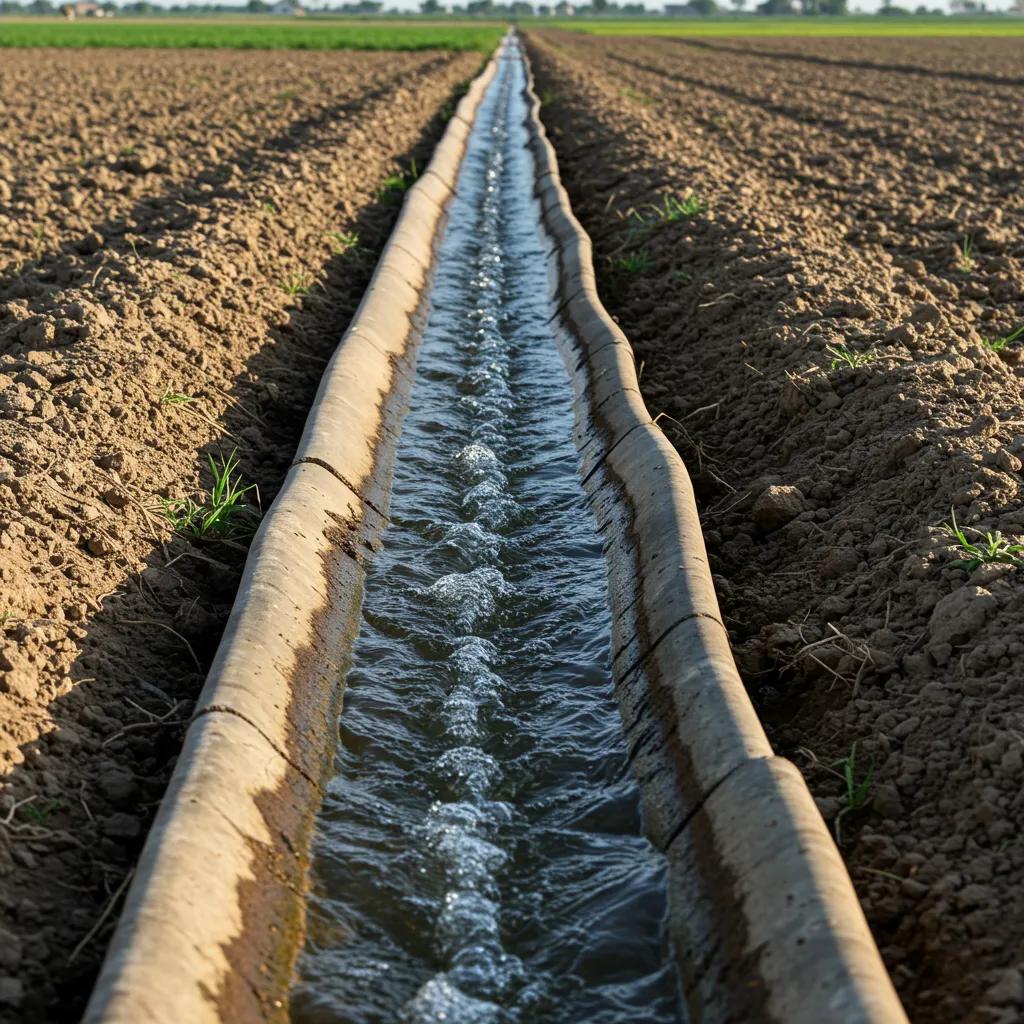
Inefficient agricultural water use in Pakistan stems from a complex interplay of outdated technical practices, suboptimal crop selection, unsustainable groundwater dynamics, and significant governance shortcomings. These factors collectively diminish water productivity at both field and basin scales. Traditional flood irrigation and aging canal infrastructure lead to substantial losses through evaporation and seepage, while economic incentives for water-intensive crops and easy access to pumped groundwater lock farmers into high-demand systems. Institutional gaps—including limited real-time water flow data, weak groundwater governance, and subsidies that distort crop choices—further exacerbate these technical drivers. Acknowledging these interacting causes is fundamental to designing integrated engineering, agronomic, and policy measures that effectively reduce freshwater loss without compromising farmer incomes.
- Outdated irrigation methods significantly increase conveyance and on-field losses, severely limiting the potential benefits of water-saving investments.
- The cultivation of water-intensive crops, driven by economic incentives, sustains high irrigation demand even in regions facing acute water scarcity.
- Excessive groundwater over-extraction, coupled with inadequate governance, diminishes system resilience and escalates long-term operational costs.
The subsequent paragraphs will delve into the mechanics of flood irrigation losses and examine the specific crop choices that most profoundly amplify Pakistan’s water stress.
Outdated Irrigation Practices: A Major Contributor to Water Wastage
Flood irrigation and inefficient canal systems in Pakistan result in significant water loss at multiple critical stages: substantial conveyance losses within canals, pervasive seepage from unlined channels, and non-uniform field application that leads to deep percolation or runoff rather than optimal crop uptake. Mechanically, these pathways translate into considerable evaporation and seepage before water even reaches plant roots, drastically reducing water use efficiency and intensifying the extraction burden on rivers and vital aquifers. Comparisons with modern, targeted methods—such as drip irrigation and sprinkler systems—clearly demonstrate that replacing traditional flood methods can yield substantial water savings. However, widespread adoption is currently constrained by high upfront costs, limitations in supply chains, and a lack of farmer familiarity. Addressing these critical constraints necessitates coordinated investment in infrastructure upgrades, comprehensive farmer training programs, and innovative finance models designed to lower initial barriers to entry.
Water-Intensive Crops: Exacerbating Pakistan’s Water Stress
A concentrated group of crops accounts for a disproportionately large share of agricultural water demand in Pakistan. Staple and cash crops with inherently high water footprints significantly intensify pressure on already strained freshwater resources. Rice, sugarcane, and cotton are frequently cited as highly water-intensive due to their requirement for sustained irrigation, and in the case of rice, cultivation practices that necessitate maintaining flooded soils. Economic drivers—including prevailing market prices, government procurement policies, and input subsidies—perversely encourage farmers to continue growing these crops, despite the substantial water costs that are broadly borne by society. Exploring alternatives and promoting diversification towards less water-intensive cereals and high-value horticulture can effectively lower sectoral water demand. However, farmers require robust market support, comprehensive extension services, and effective risk-management instruments to make such transitions financially viable and sustainable.
This comparative table clarifies which causes operate at what scale and underscores why a combination of technical and policy responses is critically needed.
The Economic Toll: How Water Scarcity Impacts Pakistan’s Agriculture and Economy
Water scarcity and inefficient usage directly translate into tangible production risks—including reduced yields, an elevated risk of crop failure, and greater yield volatility—alongside significant indirect economic costs. These costs encompass higher food import bills and considerable pressure on rural incomes. Given the agricultural sector’s pivotal role in employment and provincial economies, water shocks inevitably propagate, affecting livelihoods, food prices, and creating fiscal stress. Economic analyses referenced in the World Bank report and national commentaries indicate that severe water-related losses could result in substantial GDP impacts, with some assessments projecting multi-percent reductions in economic output under extreme scenarios. Therefore, addressing inefficiency not only conserves precious water but also stabilises agricultural productivity and significantly reduces macroeconomic vulnerability.
The subsequent sections will meticulously trace the specific effects on food security and quantify how both household and national incomes are impacted when irrigation systems fail or reliable water access becomes compromised.
Food Security and Crop Yields: The Dire Consequences of Water Shortages
Water shortages directly reduce yields for irrigated crops and significantly elevate production risks for smallholders. This, in turn, can increase national dependence on imports and expose consumers to severe price volatility. Regionally, provinces heavily reliant on canal irrigation and groundwater exhibit heterogeneous vulnerability; areas with shallow aquifers or degraded soils face amplified yield declines. For individual households, reduced yields drastically shrink farm incomes and can compel short-term coping strategies—such as selling livestock or cutting back on essential inputs—which ultimately undermine future productivity. Improving field-level water productivity through efficient irrigation and strategic crop choices is vital to sustain yields and bolster national food security by reducing the frequency and severity of production shortfalls.
Inefficient Water Use: Impact on Pakistan’s GDP and Farmer Livelihoods
Inefficient water use imposes substantial macroeconomic costs on Pakistan through lost agricultural output, increased import bills, and added pressure on public finances that support emergency relief or subsidies. Some analyses, referenced in comprehensive sectoral reviews, estimate economic losses in the low single-digit percentages of GDP under sustained water stress scenarios, vividly illustrating the sheer scale of the national risk. For farmers, inefficient systems directly raise production costs and increase income volatility, thereby discouraging crucial investment in productivity-enhancing measures and driving widespread rural distress. Strengthening water governance and actively promoting interventions that boost water productivity can, therefore, yield both enhanced household-level resilience and measurable national economic benefits.
Sustainable Solutions: Improving Pakistan’s Agricultural Water Efficiency

Practical, scalable solutions for Pakistan’s agricultural water challenges integrate high-efficiency irrigation technologies, strategic agronomic shifts, enhanced storage and aquifer recharge mechanisms, and critical policy reforms designed to realign incentives. Technology options—including drip and sprinkler irrigation, laser land leveling, and rainwater harvesting—offer demonstrably measurable water savings. Concurrently, policy levers such as targeted subsidies, robust groundwater regulation, and improved extension services are essential to enable widespread adoption. Successful strategies effectively layer technical interventions with innovative finance mechanisms and comprehensive farmer training to ensure long-term maintenance and sustained yield gains. The solutions table below provides a concise summary of typical water savings and key implementation considerations, assisting policymakers and practitioners in comparing viable options.
Adopting these crucial options demands integrated planning across canal systems, strategic farm-level investments, and responsive market signals. The following paragraphs will elaborate on how high-efficiency systems operate and which policy reforms are necessary to make them widely viable across the nation.
High-Efficiency Irrigation Systems: A Game Changer for Water Conservation
High-efficiency irrigation systems, such as drip irrigation, precisely deliver water directly to the plant root zone, thereby significantly reducing evaporation and deep percolation losses. This not only improves crop water productivity but often leads to increased yields. Evidence cited in technical literature consistently shows that drip systems can achieve water savings in the range of 30–60% compared with traditional flood irrigation, depending on the specific crop and management practices. Sprinklers and laser leveling also deliver moderate savings and improved uniformity. However, barriers to adoption persist, including high upfront capital costs, limitations in equipment supply chains, and the critical need for comprehensive farmer training and maintenance capacity. Combining targeted subsidies or credit facilities with robust extension services and demonstration plots can significantly accelerate adoption while simultaneously preserving farmer incomes and enhancing long-term sustainability.
Policy Reforms and Crop Diversification: Strategic Pathways to Water Security
Policy reforms aimed at reducing water inefficiency primarily focus on realigning incentives, strengthening groundwater governance, and enhancing service delivery through improved data and institutional frameworks. Recommended measures include introducing targeted subsidies specifically for high-efficiency systems, rather than for energy or water inputs, rigorously enforcing groundwater monitoring and registration, and investing substantially in irrigation service improvement at both the canal and district levels. Crop diversification strategies effectively pair market development for less water-intensive crops with comprehensive extension services that mitigate transition risks for farmers. These reforms prove most effective when implemented in combination: financial instruments reduce adoption costs, while institutional reforms ensure equitable water allocation and foster long-run resource stewardship.
This table assists decision-makers in weighing potential water savings against practical constraints and the imperative for large-scale implementation.
On the Ground: Local Success Stories in Pakistan’s Water Conservation Efforts
Geo News’ extensive local reporting has meticulously documented field-level pilots and regional initiatives that clearly demonstrate measurable water savings and productive gains. This provides the crucial on-the-ground evidence that the World Bank report highlights as essential for successful scaling. In several provincial pilot projects, the coordinated installation of high-efficiency irrigation on targeted farms yielded noticeable reductions in water use while either maintaining or increasing yields. This clearly demonstrates feasible pathways for smallholder adoption when adequate financing and training are made available. These compelling case studies underscore the paramount importance of linking technology with robust extension services, efficient supply chains, and responsive market incentives. They powerfully illustrate how provincial programs can effectively translate national recommendations into tangible local outcomes.
The subsequent paragraphs will provide insightful farmer-level adoption vignettes and summarise the vital roles played by government and NGO programs in supporting scale and ensuring long-term sustainability.
Pakistani Farmers Embrace Efficient Irrigation: A Phased Adoption Pathway
Farmer adoption of efficient irrigation technologies typically follows a phased pathway: initial demonstration plots effectively prove agronomic benefits, early adopters then share their positive results, and subsequently, financing or subsidy schemes reduce initial costs for broader uptake. Vignettes reported by Geo News describe farmers who successfully shifted portions of their holdings to drip systems, reporting both significant water savings and enhanced yield stability, often supported by dedicated local technicians and accessible microcredit arrangements. Adoption challenges include equipment servicing, the initial upfront costs, and cultural familiarity with traditional flood irrigation. Successful pilot projects effectively address these through bundled services—offering comprehensive training, maintenance contracts, and matched finance. These grounded examples unequivocally show that with the right enablers, smallholders can transition from initial demonstration to widespread adoption.
Government and NGO Programs: Pillars of Sustainable Water Use
Government and NGO programs provide the essential institutional and financial scaffolding required for scaling efficient practices, ranging from initial pilot funding to comprehensive extension and monitoring support. Various agencies and research organisations actively work on demonstration projects, capacity building initiatives, and crucial policy advice, while international partners frequently finance pilot conversions and facilitate technology transfer. Reported program outcomes include increased water productivity in targeted areas and significantly improved farmer awareness of alternative cropping and irrigation options, though scaling efforts continue to face constraints due to budgetary and governance limitations. Continued, robust collaboration between public institutions, research centres, and civil society organisations is absolutely essential to expand these successes province by province.
Looking Ahead: Pakistan’s Agricultural Water Management – Challenges and Opportunities
Pakistan confronts a complex future where the converging forces of climate change, demographic pressure, and economic demands will profoundly shape freshwater availability. However, innovation and strategic policy reform simultaneously create significant opportunities to bridge the existing efficiency gap. Climate projections anticipate altered monsoon patterns, critical glacial retreat impacts on vital river flows, and an increased frequency of severe drought episodes; these changes heighten both the urgency and the inherent complexity of water management. Concurrently, digital monitoring, advanced remote sensing, and market-based finance models offer promising pathways to improve water allocation, effectively monitor groundwater resources, and target investments with greater precision. Framing these trends in scenario terms is crucial for policymakers to prioritise resilient investments that enhance water productivity and safeguard livelihoods.
The final subsections will outline expected climate impacts and detail the pivotal role of innovation and policy in delivering scalable, effectively monitored solutions.
Climate Change: A Looming Threat to Water Availability and Agriculture
Climate change is projected to fundamentally alter the timing and reliability of Pakistan’s water supply through significant shifts in monsoon intensity and glacial melt patterns, thereby increasing seasonal variability and the frequency of extreme events. These dynamic changes will likely exacerbate irrigation stress in already vulnerable basins, intensifying the need for enhanced storage, aquifer recharge, and adaptive cropping calendars. Regions heavily dependent on predictable canal deliveries or monsoon-timed water are most at risk. Effective adaptation will necessitate both substantial infrastructural investments—such as improved reservoirs and advanced recharge schemes—and critical farm-level shifts in cropping patterns and irrigation scheduling. Anticipatory planning that directly links climate projections to water allocation strategies can significantly reduce risk and preserve agricultural productivity.
Innovation and Policy: Driving Solutions for Water Inefficiency
Innovation and policy, working in tandem, provide the essential pathway from isolated pilots to system-wide improvements. Digital irrigation management and remote sensing technologies enable superior monitoring and allocation of water resources, while innovative financing models and incentive realignment actively promote the adoption of efficient technologies. Practical examples include satellite-based water productivity mapping for precisely targeting interventions, performance contracts for irrigation service providers, and blended finance mechanisms that effectively reduce farmer upfront costs. Robust monitoring frameworks must meticulously track water productivity, groundwater levels, and yield outcomes to ensure that interventions deliver measurable benefits. Geo News will continue to closely follow how these critical innovation-policy combinations unfold, reporting on both successes and identified gaps that decision-makers can act upon.
This final perspective emphatically underscores that coordinated, evidence-based action—integrating technology, robust governance, and strategic finance—is absolutely required to translate the World Bank’s warnings into actionable policies and programs that secure Pakistan’s agricultural future while diligently conserving its precious freshwater resources.
Frequently Asked Questions
What are the long-term consequences of water inefficiency on Pakistan’s agriculture?
Long-term water inefficiency in Pakistan’s agriculture can lead to severely reduced crop yields, heightened vulnerability to drought, and intensified food insecurity. As vital water resources become increasingly scarce, farmers may face declining productivity, which can result in significantly lower incomes and an increased reliance on food imports. This critical situation not only threatens the livelihoods of countless farmers but also places immense additional pressure on the national economy, potentially leading to higher food prices and exacerbated poverty levels in rural areas. Implementing sustainable water management practices is absolutely essential to mitigate these profound risks.
How can farmers successfully transition to more efficient irrigation methods?
Farmers can successfully transition to more efficient irrigation methods through a strategic combination of education, robust financial support, and improved access to modern technology. Demonstration plots effectively showcasing the tangible benefits of high-efficiency systems, such as drip and sprinkler irrigation, can significantly encourage adoption. Financial incentives, including targeted subsidies or accessible microcredit, can help offset initial capital costs. Furthermore, comprehensive training programs are crucial to equip farmers with the necessary skills to effectively maintain and operate new systems. Collaborative efforts among government bodies, NGOs, and agricultural experts are vital to facilitate this critical transition.
What crucial role does crop diversification play in water conservation?
Crop diversification plays a profoundly significant role in water conservation by strategically reducing reliance on water-intensive crops. By actively encouraging the cultivation of less water-demanding crops, farmers can effectively lower overall water usage and simultaneously improve soil health. Diversification also enhances resilience against unpredictable market fluctuations and climate variability, providing farmers with crucial alternative income sources. Support from robust extension services and proactive market development initiatives is essential to help farmers transition to diversified cropping systems, ensuring their economic viability while simultaneously conserving precious water resources.
What are the critical implications of groundwater over-extraction in Pakistan?
Groundwater over-extraction in Pakistan leads to several critical issues, including the severe depletion of aquifers, increased salinity, and significantly higher energy costs for pumping. As groundwater levels continue to decline, farmers may face escalating costs and reduced access to water, which can negatively impact agricultural productivity. Additionally, over-extraction can result in land subsidence and environmental degradation, further exacerbating water scarcity. Implementing sustainable groundwater management practices, including rigorous monitoring and effective regulation, is essential to mitigate these impacts and ensure long-term water availability for agriculture.
How can policy reforms effectively enhance water management in agriculture?
Policy reforms can effectively enhance water management in agriculture by realigning incentives, significantly improving governance, and actively promoting sustainable practices. Implementing targeted subsidies for efficient irrigation technologies, rigorously enforcing groundwater regulations, and investing in critical irrigation infrastructure can drive the widespread adoption of water-saving practices. Furthermore, enhancing data collection and monitoring systems can inform better decision-making and optimize resource allocation. Collaborative efforts among government, farmers, and stakeholders are crucial to create a supportive policy environment that encourages sustainable water use and boosts agricultural productivity.
What innovative technologies are currently being deployed to improve water efficiency?
Innovative technologies such as precision irrigation, remote sensing, and advanced soil moisture sensors are being actively utilized to significantly improve water efficiency in agriculture. These cutting-edge technologies enable farmers to monitor water usage in real-time, optimize irrigation schedules, and drastically reduce waste. For instance, drip irrigation systems deliver water directly to plant roots, minimizing evaporation and runoff. Additionally, digital platforms can provide farmers with data-driven insights to make informed decisions about water management. Embracing these technologies can profoundly enhance water productivity and sustainability within Pakistan’s agricultural sector.
Conclusion: Securing Pakistan’s Agricultural Future
Addressing agricultural water inefficiency in Pakistan is unequivocally crucial for enhancing both food security and economic stability, as powerfully highlighted by the World Bank report. Implementing high-efficiency irrigation systems and strategically diversifying crop choices can significantly reduce water waste while simultaneously maintaining farmer livelihoods. By rigorously prioritizing sustainable practices and enacting vital policy reforms, stakeholders can collectively ensure a resilient agricultural future amidst growing water scarcity. We encourage you to explore our resources to learn more about effective water management solutions and discover how you can contribute to this vital national cause.