AI Data Center Rush Raises Alarm Over Construction Supply Chain and Power Availability
Navigating AI Data Center Construction: Tackling Supply Chain Hurdles and Power Shortages
The global push for AI data centers has fundamentally reshaped the industry, moving beyond gradual enhancements to a swift embrace of high-density, hyperscale facilities. This shift necessitates entirely new approaches to construction and energy management. This comprehensive article delves into the essence of AI data centers, examining why construction supply chains and power availability have emerged as critical industry limitations. We explore the interplay between liquid cooling, cost premiums, and strategic procurement in defining project risks. Readers will gain insights into the three primary construction bottlenecks, how liquid-cooling strategies transform engineering and procurement processes, the financial implications for hyperscale developments, and actionable mitigation tactics derived from leading industry reports and regional analyses. We specifically contextualize Turner & Townsend’s findings on supply chain preparedness and power limitations for Pakistan’s unique infrastructure and policy landscape. Ultimately, we outline practical procurement and energy strategies—including comparative procurement models and off-grid energy solutions—designed to minimize schedule risks and bolster resilience for both operators and regulatory bodies.
Key Challenges in AI Data Center Construction Unpacked
AI data centers represent specialized facilities engineered for high-density computing, where individual racks demand substantially more power than conventional cloud infrastructure. This paradigm shift introduces three overarching challenges: strained construction supply chains, restricted and prolonged power availability, and heightened costs coupled with technical complexities. These hurdles arise from the imperative for specialized cooling equipment, robust high-capacity electrical infrastructure, and extended lead times for certified components and expert installers. Grasping these fundamental barriers is crucial for subsequent discussions on cooling options and procurement frameworks, which ultimately dictate project success in terms of timeline and budget. We now present a concise overview of these primary obstacles, complete with relevant context and data-driven insights, to guide project owners and policymakers.
AI data centers face three main obstacles:
- Supply Chain Deficiencies: Specialized components and a limited pool of qualified vendors lead to extended lead times and significant procurement risks.
- Power Access Limitations: Grid capacity constraints and lengthy connection approval processes impede project delivery, frequently cited as a primary impediment in industry reports.
- Escalating Costs & Technical Hurdles: Enhancements to electrical distribution, the integration of liquid cooling, and redundancy requirements significantly increase capital expenditure (CAPEX) and prolong project timelines.
These challenges are intrinsically linked and frequently exacerbate each other. Resolving supply chain issues in isolation, without simultaneously tackling power constraints, will inevitably leave projects susceptible to delays and cost inflation. This brings us to a detailed examination of the supply chain mechanisms impacting these critical projects.
Unpacking the Construction Supply Chain’s Influence on AI Data Center Projects
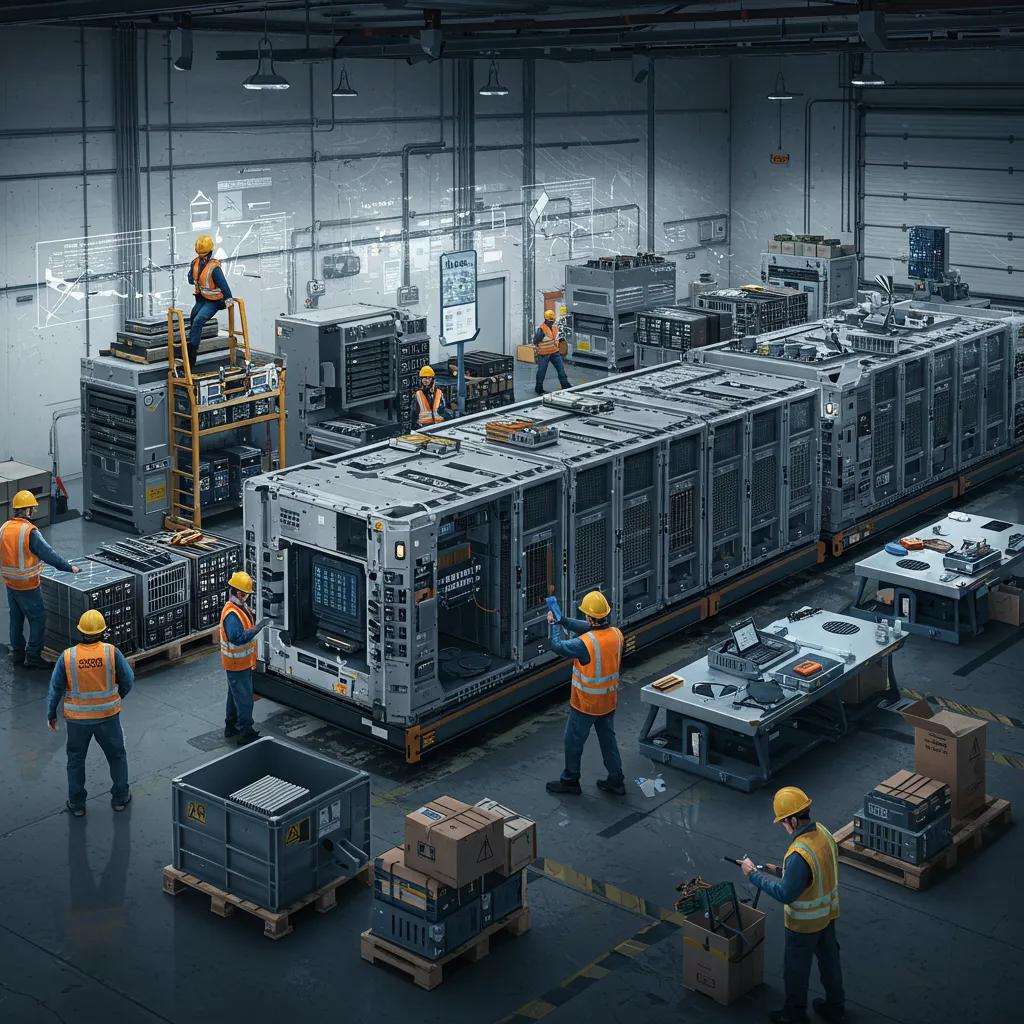
The construction supply chain for AI data centers faces considerable strain, primarily because numerous critical components—such as liquid-cooling manifolds, specialized pumps, immersion tanks, and certified leak-detection systems—are sourced from a limited number of global manufacturers. This concentration invariably leads to extended lead times and heightened price volatility. Furthermore, suppliers typically mandate long-lead orders and rigorous prequalification, while the intricate logistics involved in transporting large mechanical and electrical equipment introduce significant schedule complexities across international boundaries. Domestically, many markets exhibit a scarcity of skilled installers and adequate testing capabilities for these innovative cooling systems, creating additional bottlenecks during commissioning and certification phases. Consequently, project owners recognize that proactive procurement and early, strategic supplier engagement are paramount for mitigating schedule risks and preventing costly overruns.
These supply chain patterns produce three practical implications for developers:
- Prioritize early prequalification and procurement of long-lead items.
- Allocate resources for local workforce training to alleviate installation bottlenecks.
- Implement robust contractual frameworks or strategic inventory management to safeguard critical-path hardware deliveries.
These essential mitigation strategies naturally direct our attention to the subsequent core constraint: the critical issue of reliable power availability and its profound impact on project delivery timelines.
Power Availability: A Formidable Barrier for AI Data Center Development
Power availability stands as a formidable barrier due to the significantly higher megawatt consumption per acre by AI racks compared to conventional data halls. This necessitates substantial upgrades to substations and transformers, alongside securing grid connection agreements that often entail lead times spanning months or even years. Industry reports consistently show that nearly half of all projects identify power availability as a primary impediment to timely delivery, a reflection of existing grid capacity limitations, protracted permitting processes, and intense competition for power with other high-demand industries. Absent firm grid commitments or viable alternative on-site capacity, developers risk prolonged commissioning delays or scaled-back deployments that undermine their business cases. Consequently, a thorough evaluation of connection timelines and contingency energy solutions during the initial site selection phase is indispensable for de-risking AI data center initiatives.
In light of these significant constraints, numerous projects are actively investigating on-site renewable energy solutions, battery energy storage systems (BESS), and phased grid upgrades as alternative avenues to ensure reliable capacity. This approach allows for immediate operational needs while utilities manage long-term infrastructure enhancements. This naturally segues into a discussion of cooling choices, which profoundly influence energy profiles and design trade-offs.
The Transformative Impact of Liquid Cooling on AI Data Center Construction
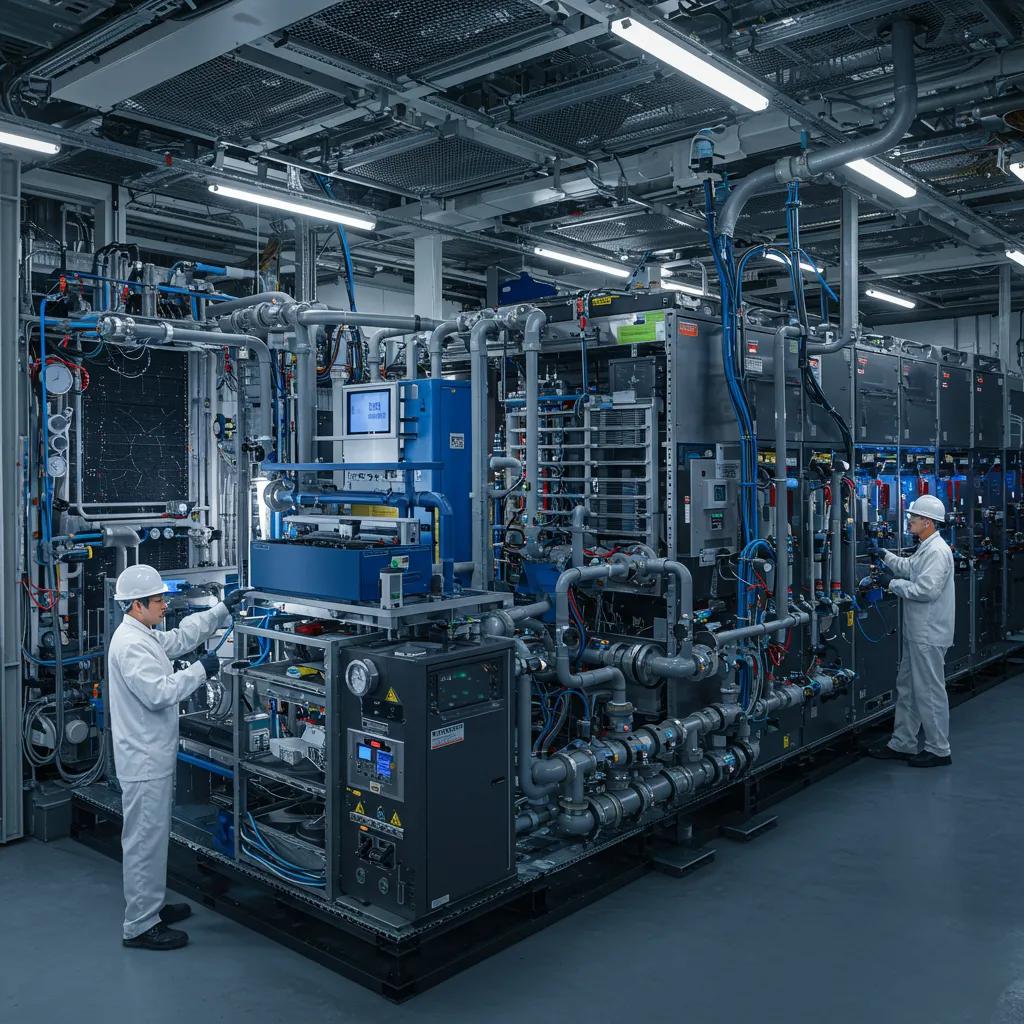
Liquid cooling excels at dissipating heat from high-density computing environments with significantly greater efficiency than traditional air cooling. This capability facilitates higher rack power densities and reduced steady-state energy consumption. However, its implementation fundamentally alters the construction scope, introducing complex mechanical plumbing, advanced fluid-management controls, and more stringent safety and certification protocols. The integration of various liquid-cooling technologies—such as rear-door heat exchangers, direct-to-chip cold plates, and full immersion systems—redefines the facility from a purely IT-centric endeavor to an integrated mechanical-electrical-IT engineering project, complete with new procurement classifications. This technology intensifies dependence on specialized vendors and rigorous testing regimens, thereby exacerbating pressures on supply chains already struggling to meet demand for high-density equipment and skilled installers. A comprehensive understanding of how liquid cooling reshapes both performance metrics and procurement requirements is therefore paramount for accurately assessing total project timelines and managing supply-chain vulnerabilities.
The inherent advantages and trade-offs of liquid cooling significantly influence site-level strategic decisions. While offering superior thermal efficiency and potential operational expenditure (OPEX) savings, these benefits are balanced against higher initial capital expenditure (CAPEX), more intricate commissioning processes, and a concentration of vendors that can extend lead times. The subsequent sections will delineate the various types of liquid cooling and then elaborate on the specific supply-chain implications of their widespread adoption.
Defining Liquid Cooling: Its Indispensable Role in AI Data Centers
Liquid cooling encompasses systems designed to transfer heat from servers using specialized liquids, moving beyond the sole reliance on air. This technology becomes indispensable at elevated compute densities where conventional air cooling proves insufficient for efficient heat dissipation. Prevalent methods include rear-door heat exchangers, which cool exhaust air; direct-to-chip cold plates, which conduct heat directly from processors; and full-immersion systems, where servers operate submerged in dielectric liquids. Each approach facilitates higher rack power and enhanced energy efficiency. These techniques effectively lower server inlet temperatures and can significantly reduce the overall mechanical footprint for comparable compute loads, thereby enabling the deployment of dense AI clusters within limited physical spaces. The selection of an optimal liquid-cooling type requires a careful balance between anticipated efficiency gains, installation complexities, and vendor accessibility.
Considering these inherent trade-offs, project teams are tasked with rigorously evaluating whether the performance advantages and long-term energy efficiencies offered by liquid cooling adequately justify the additional procurement complexities and stringent certification processes essential for its secure and dependable deployment.
Liquid Cooling: A Source of Strain on Construction Supply Chains
Liquid cooling places significant strain on supply chains primarily because certified pumps, heat-exchange manifolds, specialized piping, and immersion tanks are produced by a limited number of global vendors. This creates a substantial concentration risk and necessitates extended procurement windows for critical-path components. Furthermore, installation demands technicians proficient in fluid dynamics, leak management, and stringent safety standards—expertise that many local markets currently lack at scale, thereby intensifying skills-gap-related delays during commissioning. The processes of certification, factory acceptance testing, and seamless integration with existing fire-suppression and monitoring systems introduce additional stages to project schedules and elevate on-site testing complexities. Consequently, developers must proactively prequalify vendors, secure long-lead items well in advance, and incorporate installation training or engage third-party specialists within contracts to effectively mitigate these potential supply-chain vulnerabilities.
In anticipation of these inherent supply-chain pressures, some operators strategically opt for staged rollouts. This involves deploying initial air-cooled pods while simultaneously procuring and integrating liquid-cooled modules. While this approach effectively reduces immediate risks, it can potentially extend overall project timelines and mandates a meticulously designed procurement strategy.
Cost Implications: Building Hyperscale AI Data Centers
Hyperscale AI data centers inherently incur a construction cost premium when compared to conventional data halls. This is primarily attributable to the necessity for upgraded electrical infrastructure, sophisticated cooling systems, and the enhanced redundancy and monitoring capabilities essential for high-density operations. Industry projections suggest AI-specific construction premiums typically range from 7–10 percent in established markets, with broader global construction cost inflation further intensifying budgetary pressures. This premium stems from requirements for higher-capacity substations, advanced switchgear, specialized cooling hardware, and prolonged commissioning and testing cycles. A precise quantification of these cost drivers is vital for operators to accurately project total cost of ownership and to ascertain whether anticipated operational efficiency gains adequately offset the higher initial capital outlay.
To elucidate where these premiums accumulate and which elements are most pertinent to budgeting and procurement decisions, we present a comparative analysis of typical characteristics between traditional and AI (high-density) data centers.
Different facility types compared across cost and technical attributes:
This comparative table clearly illustrates how critical cooling and power choices fundamentally alter both the technical specifications and project timelines. The observed cost premium is predominantly concentrated within power delivery and advanced cooling systems, which in turn necessitate extended procurement timelines and a greater demand for specialized labor.
AI Data Centers: Quantifying the Cost Premium Over Traditional Facilities
AI data centers are generally projected to incur a 7–10% construction cost premium in advanced markets. This figure reflects the expanded civil, electrical, and mechanical scope essential for supporting high-density computing. This premium encompasses higher-specification switchgear, upgraded transformers and substations, more comprehensive commissioning processes, and specialized cooling hardware along with its installation. Regional cost determinants, including labor rates, the maturity of local supply chains, and logistical complexities, can further elevate this premium in developing markets, largely due to import reliance and existing skills deficits. Consequently, operators are advised to incorporate robust contingency buffers and meticulously evaluate staged investment strategies to align initial capital outlays with anticipated operational savings derived from enhanced energy efficiency.
A pragmatic budgeting methodology involves modeling an AI-specific premium atop the base construction cost, subsequently assessing its payback through projected energy savings, enhanced compute density per square meter, and potential revenue uplift stemming from reduced latency or localized data sovereignty benefits.
Technical Complexities: Key Drivers of Increased AI Data Center Construction Costs
Numerous technical complexities contribute to escalating costs. These include the necessity for high-capacity electrical distribution, demanding upgraded substations and transformers; the intricate integration of liquid-cooling systems complete with leak detection and sophisticated fluid management; advanced fire suppression and monitoring systems specifically adapted for liquid environments; and heightened automation for comprehensive thermal and power management. Each of these complexities mandates specialized engineering expertise, extended factory acceptance testing, and additional commissioning periods, collectively increasing both capital expenditure (CAPEX) and schedule risks. Furthermore, the stringent redundancy and Service Level Agreement (SLA) requirements inherent in hyperscale operations necessitate parallel infrastructure, thereby multiplying the initial investment. A thorough comprehension of these technical cost centers empowers owners to prioritize early procurement and rigorous supplier prequalification, effectively controlling both pricing and delivery timelines.
Proactively addressing these complexities during the initial design phase is crucial for minimizing change orders throughout construction. This leads us to the next significant area where Turner & Townsend offers invaluable, actionable guidance for both owners and developers.
Turner & Townsend Report: Key Insights on AI Data Center Trends
The Turner & Townsend Data Center Construction Cost Index for 2025–2026 unequivocally underscores that the industry confronts systemic supply chain deficiencies regarding advanced cooling adoption. Furthermore, power capacity constraints are identified as a paramount impediment to the timely execution of projects. Noteworthy statistics from the report reveal that 83% of respondents perceive supply chains as inadequately prepared for next-generation cooling technologies, while approximately 48% cite power availability as a primary obstacle. The report advocates for a critical review of procurement models, robust supplier development initiatives, and the exploration of energy innovations, including on-site generation and storage, to effectively mitigate power-related risks. These compelling findings indicate a clear imperative for owners, utilities, and policymakers to harmonize procurement and energy planning in order to facilitate the ongoing AI infrastructure transition.
Geo News, serving as a pivotal regional information hub, meticulously contextualizes these global findings for its local audience. We achieve this by closely monitoring how supply chain and grid limitations influence project timelines and shape public policy discourse. Significantly, Turner & Townsend’s recommendations frequently underpin many of these crucial policy discussions and industry roundtables.
Supply Chain and Power Challenges: Core Findings from the Report
Turner & Townsend’s rigorous analysis pinpoints several empirical findings with significant operational ramifications. Firstly, a striking 83% of industry respondents evaluate supply chains as inadequately prepared for advanced cooling deployment, highlighting a critical concentration of vendor risk. Secondly, 48% of projects encounter constraints due to power availability, signaling pervasive grid and permitting bottlenecks that invariably postpone commissioning. Thirdly, persistent cost inflation pressures are introducing an additional layer of budgetary risk across diverse regions. Collectively, these findings imply that projects lacking proactive procurement strategies and robust energy contingency plans face substantially elevated probabilities of delays and cost overruns. Consequently, all project stakeholders must regard supplier resilience and energy assurance as paramount, first-order project risks.
The compelling findings presented in the report logically transition into its actionable recommendations concerning procurement, supplier development, and energy innovation, all aimed at mitigating both schedule and budgetary exposure.
This pivotal research emphatically underscores the critical imperative for advanced technological integration within construction supply chains to guarantee enhanced efficiency and punctual project completion.
Overcoming Construction Barriers: Key Recommendations from the Report
Turner & Townsend proposes three actionable strategies: firstly, critically review and adapt existing procurement models to foster greater supply-chain resilience and equitable risk sharing; secondly, invest strategically in local supplier development and rigorous prequalification processes to significantly shorten lead times; and thirdly, proactively explore alternative energy solutions—including on-site renewables and robust storage systems—to diminish reliance on overburdened grids. Each recommendation is accompanied by concrete steps, such as embracing integrated delivery models, forging enduring supplier partnerships, and piloting microgrids for essential facilities. The report further counsels regulators and utility providers to prioritize strategic grid-connection pathways specifically for hyperscale projects to expedite their timelines. The successful implementation of these recommendations necessitates concerted coordination among developers, utilities, and policymakers to effectively align incentives and project schedules.
These pivotal recommendations serve as a crucial bridge to understanding their local implications within Pakistan. Geo News consistently references these insights in its editorial coverage, aiming to stimulate informed public discourse and foster robust stakeholder engagement regarding national infrastructure readiness.
Global AI Data Center Challenges: Impact on Pakistan’s Infrastructure
Global challenges—encompassing supply chain concentration, pervasive power constraints, and persistent cost inflation—manifest as distinct risks and opportunities for Pakistan’s infrastructure. This is largely due to the interplay of local grid reliability, significant import dependencies for specialized hardware, and burgeoning cloud demand, all of which collectively define feasible deployment models. While Pakistan stands to gain from expanding regional digital services and localized cloud requirements, projects must contend with potentially extended lead times for imported equipment and unpredictable grid upgrade schedules. Consequently, policymakers and industry leaders can strategically prioritize site selection in areas possessing readily available capacity or empower on-site energy strategies to effectively de-risk initial deployments. Localizing these global insights is instrumental in formulating policies that judiciously balance rapid infrastructure expansion with pragmatic energy and procurement frameworks.
In light of these intricate dynamics, the subsequent subsections will meticulously analyze market opportunities and risk profiles pertinent to Pakistan, prior to proposing targeted actions aimed at bolstering supply chain and power resilience.
Pakistan’s AI Data Center Landscape: Opportunities and Inherent Risks
Pakistan offers compelling opportunities, notably a burgeoning demand for digital services, increasing enterprise adoption of cloud technologies, and the presence of strategically positioned urban hubs ideal for data center development. Nevertheless, significant risks persist, including inconsistent grid reliability across certain regions, protracted lead times for substantial grid connections, and a pronounced import dependency for specialized cooling and electrical equipment, which can considerably extend procurement cycles. Furthermore, local skills deficits in liquid-cooling installation and commissioning pose additional threats, potentially delaying deployments and escalating costs. An early and comprehensive recognition of these trade-offs empowers developers to formulate site strategies and energy solutions that are meticulously aligned with realistic timelines and robust business cases.
Developing project strategies that judiciously couple market demand with pragmatic infrastructure planning will be absolutely critical for successfully translating these opportunities into a tangible, operational data center presence across Pakistan.
Addressing Power and Supply Chain Challenges for Pakistan’s AI Infrastructure
Effectively addressing Pakistan’s infrastructure constraints necessitates a multi-faceted approach encompassing short-, medium-, and long-term actions. In the immediate term, it is imperative to expedite grid-connection approvals for strategic projects and establish streamlined pre-approval processes to mitigate permitting delays. For the medium term, the focus should be on incentivizing local manufacturing or assembly of critical cooling and electrical components, alongside substantial investment in workforce training for specialized installations. Long-term strategies must prioritize diversifying the national energy mix and actively promoting on-site renewables, microgrids, and robust storage solutions to enhance resilience. Furthermore, policymakers can introduce targeted procurement incentives or matched-funding programs for supplier development to diminish import vulnerabilities. Coordinated public-private initiatives that meticulously align regulatory reforms with industry procurement timelines will demonstrably reduce overall project risk.
These precisely targeted steps collectively forge a pragmatic pathway for Pakistan to attract responsible AI infrastructure development, concurrently mitigating the systemic global constraints previously elucidated.
Mitigating AI Data Center Construction Challenges: Solutions and Strategies
Effective mitigation necessitates a synergistic combination of procurement reform, energy innovation, and robust supplier and workforce development. These measures are crucial for minimizing schedule risks and bolstering resilience in AI data center projects. Key recommended strategies involve adopting integrated procurement models to reduce fragmentation, making strategic investments in on-site renewables coupled with battery energy storage systems (BESS) to secure reliable capacity, and rigorously prequalifying and developing local suppliers to shorten lead times. These integrated approaches merge contractual reforms with tangible physical infrastructure investments, thereby addressing both supply-chain and power constraints concurrently. We will now compare various procurement models and subsequently delineate energy innovation options most pertinent for contexts characterized by strained grids.
Minimizing delivery risk is contingent upon selecting the optimal procurement model and energy strategy tailored to a specific market. We will now provide a comparative analysis, followed by a summary of practical implementation steps.
Strengthening AI Data Center Supply Chains Through Strategic Procurement Models
Procurement models fundamentally dictate the allocation of risk, the nature of supplier engagement, and the attainment of schedule certainty. Integrated models typically enhance coordination for long-lead items and specialized systems, whereas conventional lump-sum approaches can fragment responsibilities and elevate the risk of change orders. Implementing rigorous prequalification, establishing extended procurement windows for critical components, and offering contractual incentives for supplier capacity investments can collectively accelerate delivery timelines. The ensuing table provides a comparative overview of common procurement approaches, evaluating them against criteria of supply-chain resilience and delivery speed, thereby assisting owners in selecting the model best suited to their risk appetite.
In summary: Integrated Project Delivery (IPD) and Design-Build methodologies effectively mitigate fragmentation and actively promote the early procurement of long-lead items. However, their successful implementation necessitates robust governance frameworks and a high degree of alignment among all stakeholders.
Energy Innovations: Enhancing Power Availability for AI Facilities
Energy innovations poised to significantly enhance power availability encompass on-site solar installations integrated with battery energy storage systems (BESS), microgrids that combine distributed generation with storage capabilities, cleaner diesel or gas peaker backup systems featuring advanced emissions controls, and phased grid upgrades meticulously coordinated with utility providers. On-site renewables coupled with BESS offer immediate capacity and bolster resilience, thereby lessening reliance on protracted grid-connection procedures. Microgrids, conversely, possess the ability to operate autonomously during outages, safeguarding critical operations. Each of these options presents distinct trade-offs: for instance, higher capital expenditure (CAPEX) for storage solutions must be weighed against reduced ongoing grid charges and enhanced reliability. Furthermore, supportive policy incentives and expedited permitting processes are crucial for accelerating the widespread deployment of these advanced technologies.
Operators are strongly advised to meticulously model the capital expenditure (CAPEX) versus operational expenditure (OPEX) trade-offs. Furthermore, considering hybrid strategies—such as short-term on-site generation complemented by medium-term grid upgrades—is essential for achieving an optimal balance among cost-effectiveness, deployment speed, and long-term sustainability.
This comprehensive article has meticulously traced the intricate interplay between supply-chain constraints, the widespread adoption of liquid cooling, and critical power availability issues, demonstrating how these factors collectively generate elevated risks and costs for AI data center projects. It has also outlined actionable procurement and energy pathways that owners, utilities, and policymakers can strategically implement to effectively mitigate these inherent risks. Geo News, as a distinguished entity within Jang Media Group, remains committed to continuously reporting on these vital developments and publishing in-depth analyses that local stakeholders can leverage to inform policy debates and strategic project planning. Concurrently, Turner & Townsend’s authoritative report continues to serve as a primary industry reference for best practices in procurement and energy recommendations.
Frequently Asked Questions (FAQs)
Environmental Footprint of AI Data Centers: A Closer Look
AI data centers can indeed exert a substantial environmental impact, predominantly stemming from their considerable energy consumption and intensive cooling demands. The continued reliance on fossil fuels for electricity generation contributes directly to greenhouse gas emissions. Nevertheless, a growing number of operators are actively investigating renewable energy sources, such as solar and wind power, to effectively mitigate these adverse effects. Furthermore, the implementation of energy-efficient technologies, including advanced liquid cooling systems, can significantly curtail overall energy usage. It is therefore imperative for data center operators to proactively adopt sustainable practices to minimize their carbon footprint and ensure compliance with evolving environmental regulations.
Strategies for Enhancing Energy Efficiency in AI Data Centers
AI data centers possess multiple avenues for significantly enhancing energy efficiency. These include the strategic adoption of advanced cooling technologies, such as liquid cooling systems, which demonstrably outperform traditional air cooling methods. The deployment of sophisticated energy management systems designed to optimize power usage, coupled with the integration of renewable energy sources, also contributes substantially to overall efficiency. Moreover, leveraging artificial intelligence for predictive maintenance and intelligent workload management can effectively minimize energy waste, thereby ensuring optimal resource utilization while rigorously upholding performance standards.
The Pivotal Role of Government Policy in AI Data Center Development
Government policy assumes a pivotal role in shaping the trajectory of AI data center development. This is achieved through the establishment of regulatory frameworks and incentive structures that can either catalyze or impede growth. Policies specifically designed to promote renewable energy adoption, streamline permitting procedures, and bolster infrastructure investments can profoundly influence project timelines and associated costs. Furthermore, governmental initiatives can actively foster local workforce development and specialized training programs to effectively bridge existing skills gaps within the industry. Ultimately, collaborative endeavors between the public and private sectors are indispensable for cultivating a truly conducive environment for the sustained expansion of AI data centers.
Potential Risks Associated with Liquid Cooling Systems
While liquid cooling systems undeniably present substantial advantages in terms of operational efficiency, their deployment is not without inherent risks. These encompass the potential for leaks, which could inflict severe damage upon equipment and result in expensive downtime. Moreover, the intricate nature of installation and ongoing maintenance necessitates highly specialized skills, which may not be universally accessible across all markets. Consequently, ensuring comprehensive training for technicians and deploying robust leak detection systems are absolutely critical measures to effectively mitigate these risks and guarantee the long-term reliability of liquid cooling solutions.
The Economic Impact of AI Data Centers on Local Communities
AI data centers frequently confer substantial positive impacts upon local economies, primarily through the generation of employment opportunities during both their construction and subsequent operational phases. These facilities typically demand a highly skilled workforce, thereby fostering training and educational advancements within the region. Furthermore, data centers can invigorate local businesses by stimulating demand for a diverse range of services and supplies. Nevertheless, these economic advantages must be carefully weighed against considerations of energy consumption and potential strain on existing infrastructure, given that these large-scale facilities can impose considerable demands on local resources.
Future Trajectories in AI Data Center Construction
Anticipated future trends in AI data center construction point towards a pronounced emphasis on sustainability, characterized by a definitive shift towards renewable energy sources and highly energy-efficient technologies. The deeper integration of artificial intelligence for comprehensive operational optimization and predictive maintenance is also projected to expand significantly. Concurrently, modular and scalable designs are poised to become increasingly prevalent, facilitating flexible expansion capabilities in response to escalating demand. As regulatory landscapes continue to evolve, data centers are expected to embrace more stringent environmental standards, thereby catalyzing further innovation in construction practices and technological advancements.
Concluding Remarks
Effectively addressing the multifaceted challenges inherent in AI data center construction is paramount for ensuring both timely and cost-efficient project delivery. A profound understanding of intricate supply chain dynamics and critical power availability enables stakeholders to deploy robust strategies that significantly enhance resilience and operational efficiency. The proactive embrace of innovative procurement models and advanced energy solutions will undoubtedly pave the way for successful and sustainable infrastructure development. We encourage you to delve deeper into our comprehensive insights and recommendations to adeptly navigate these complexities and propel your projects towards successful realization.