China Unveils World’s First Smart Offshore Aquaculture Vessel: Revolutionizing Smart Aquaculture and Offshore Fish Farming
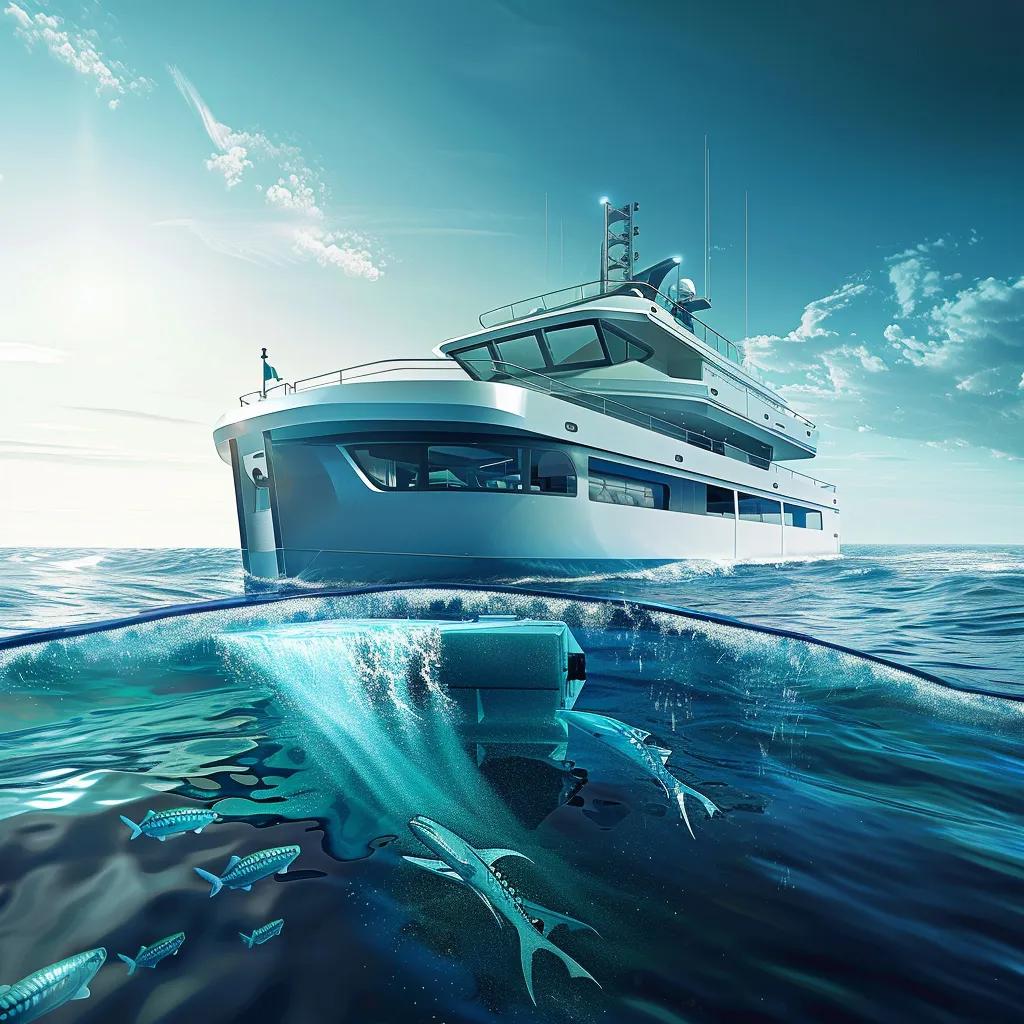
China has launched the world’s first smart offshore aquaculture vessel, breaking new ground in sustainable seafood production by combining advanced robotics, AI-driven monitoring and mobile deep-sea infrastructure. Addressing the dual challenges of coastal overcrowding and environmental strain, this floating facility promises higher yields, reduced waste and enhanced food security.
In this article, we explore seven key dimensions:
- The Guoxin-1 vessel’s design, capacity and evolution
- AI, IoT and automation powering offshore fish farming
- Environmental and economic benefits of deep-sea aquaculture
- High-value species cultivated on smart vessels
- China’s policy framework and future vision
- Global implications and collaboration opportunities
- Emerging trends and next-generation technologies in smart aquaculture
Each section builds on the last to illustrate how China’s marine innovation is reshaping seafood production at sea.
What Is the Guoxin-1 Vessel and Its Role in China’s Smart Offshore Aquaculture?
The Guoxin-1 is a 100,000-tonne mobile ocean ranch that integrates breeding, feeding, harvesting and processing into one intelligent vessel, enabling year-round deep-sea fish farming with minimal human intervention. By moving cages beyond coastal waters, it reduces disease risk and optimizes growth conditions. As a flagship product of Qingdao Guoxin Group, Guoxin-1 anchors China’s strategy for scalable, offshore mariculture and paves the way for next-generation platforms.
What Are the Key Specifications and Production Capacity of Guoxin-1?
Guoxin-1 measures 249.9 meters in length with a displacement of 100,000 tonnes, housing 24 submersible breeding cages and a shore-level control center. Its annual production capacity ranges between 3,200 and 3,700 tonnes of seafood, supported by 90 percent automated operations.
These specifications demonstrate how scale and automation converge to maximize yield and set the stage for exploring which species thrive aboard Guoxin-1.
Which Fish Species Are Cultivated on Guoxin-1?
Guoxin-1 primarily farms yellow croaker, salmon and grouper, leveraging deep-sea conditions to enhance flavor and growth rates. These high-value species benefit from precise water quality control and optimized feed schedules that mimic natural cycles.
- Yellow croaker is reared through its full life cycle in submersible cages.
- Atlantic salmon undergoes oceanic conditioning to accelerate muscle development.
- Grouper populations are managed with selective grading to maintain uniform size.
This variety underlines Guoxin-1’s versatility and leads into its safety and stability features for offshore deployment.
How Does Guoxin-1 Enhance Operational Safety and Typhoon Resistance?
By employing a dynamic positioning system and reinforced hull structure, Guoxin-1 maintains cage stability in winds up to 12 on the Beaufort scale and wave heights exceeding five meters. Real-time gyroscopic sensors feed data to an AI control unit that adjusts ballast and propulsion to preserve cage orientation. This mobile safety framework ensures continuous operation even during typhoons, directly improving asset uptime and fish survival rates.
What Is the Evolution and Future of China’s Aquaculture Vessels?
China’s aquaculture fleet has progressed from static nearshore farms to fully self-propelled vessels like Guoxin-1, Suhai-1, and modular cages such as Shenlan 2. Each generation increases depth range, automation and production capacity. Future designs will integrate hybrid wind-power systems and robotic harvesters to further decouple seafood supply from coastal limitations, underscoring China’s ambition for a standardized offshore aquaculture industry.
This vessel evolution naturally transitions into the technologies that power these smart operations.
How Do AI, IoT, and Automation Technologies Power China’s Smart Offshore Fish Farming?
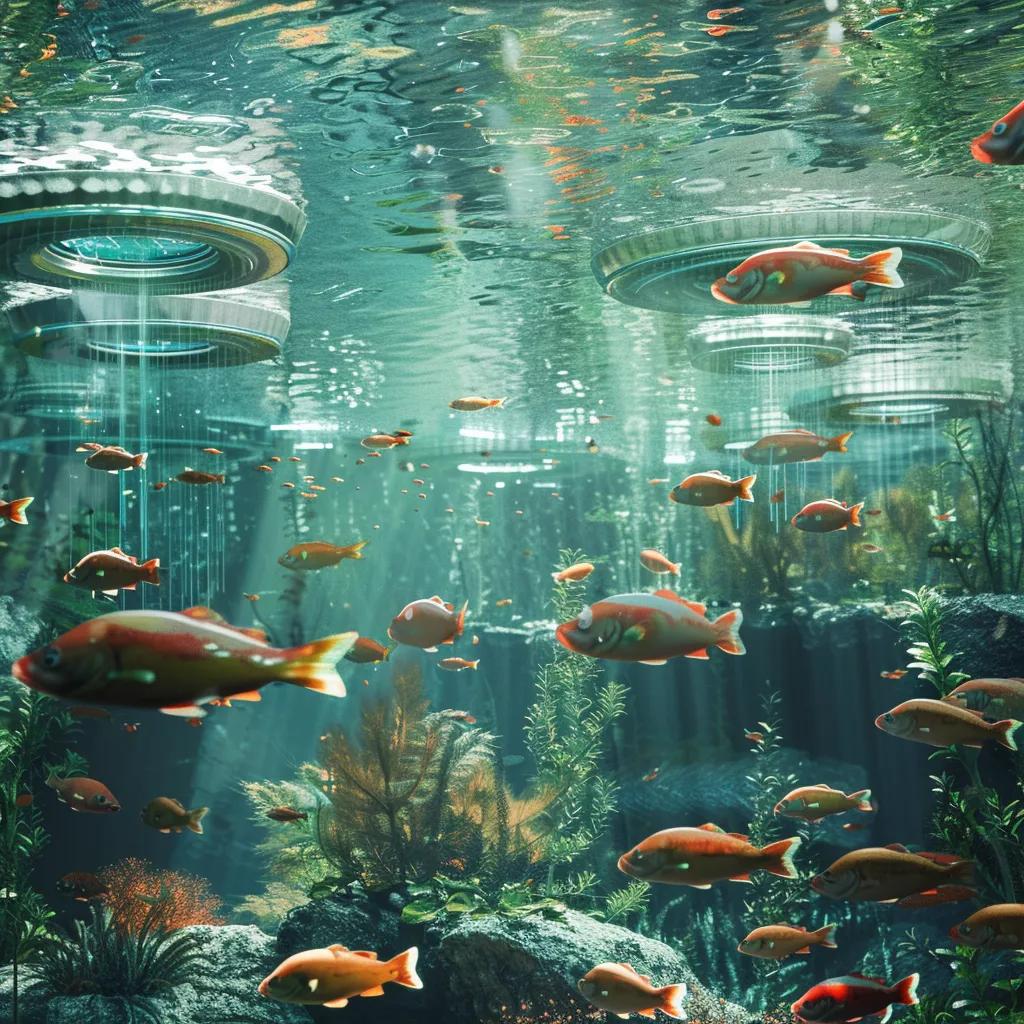
Smart offshore fish farming uses AI, IoT and automated systems to deliver precise feeding, continuous monitoring and data-driven management, reducing waste and labor costs. By linking sensors, machine-learning algorithms and cloud analytics, operators can remotely oversee multiple vessels, ensuring optimal growth conditions and preemptive disease control.
AI and Automation in Aquaculture
AI and automation technologies are crucial for smart offshore fish farming, enabling precise feeding, continuous monitoring, and data-driven management. These technologies reduce waste, lower labor costs, and allow for remote oversight of multiple vessels, optimizing growth conditions and disease control.
This citation reinforces the article’s discussion of the role of AI and automation in enhancing efficiency and sustainability in aquaculture.
What Role Do AI and Machine Learning Play in Aquaculture Management?
AI algorithms analyze fish behavior captured by underwater cameras and sonar to detect early signs of disease or stress. By learning normal feeding patterns and swimming trajectories, machine learning models trigger alerts when anomalies occur, enabling targeted treatments. This predictive approach minimizes mortality and supports adaptive feeding strategies that align with real-time growth data.
How Are IoT Sensors Used for Real-Time Water Quality and Fish Health Monitoring?
IoT sensors submerged in each cage continuously measure temperature, dissolved oxygen, pH and turbidity. Data packets transmitted via 5G networks feed into a centralized dashboard, where threshold breaches automatically adjust aeration and feed release. Sensor arrays also monitor biomass density through acoustic biomass estimation, ensuring fish health remains within optimal ranges.
How Do Automated Feeding and Remote Control Systems Improve Efficiency?
Automated feeders dispense precise feed quantities based on AI-predicted appetite, reducing waste by up to 30 percent. Remote control consoles allow technicians ashore to adjust feeding schedules, cage depth and harvest timing. This synergy of automation and human oversight elevates production efficiency and streamlines labor allocation across multiple offshore sites.
What Data Analytics and Intelligent Systems Support Decision-Making?
Big data platforms aggregate historical production metrics, market price trends and weather forecasts to optimize stocking densities and harvest cycles. Cloud-based analytics models simulate growth scenarios under varying conditions, guiding strategic decisions on vessel deployment and species selection. This integrated intelligence layer ensures each farming operation maximizes yield and profitability.
What Are the Environmental and Economic Benefits of China’s Offshore Aquaculture Vessels?
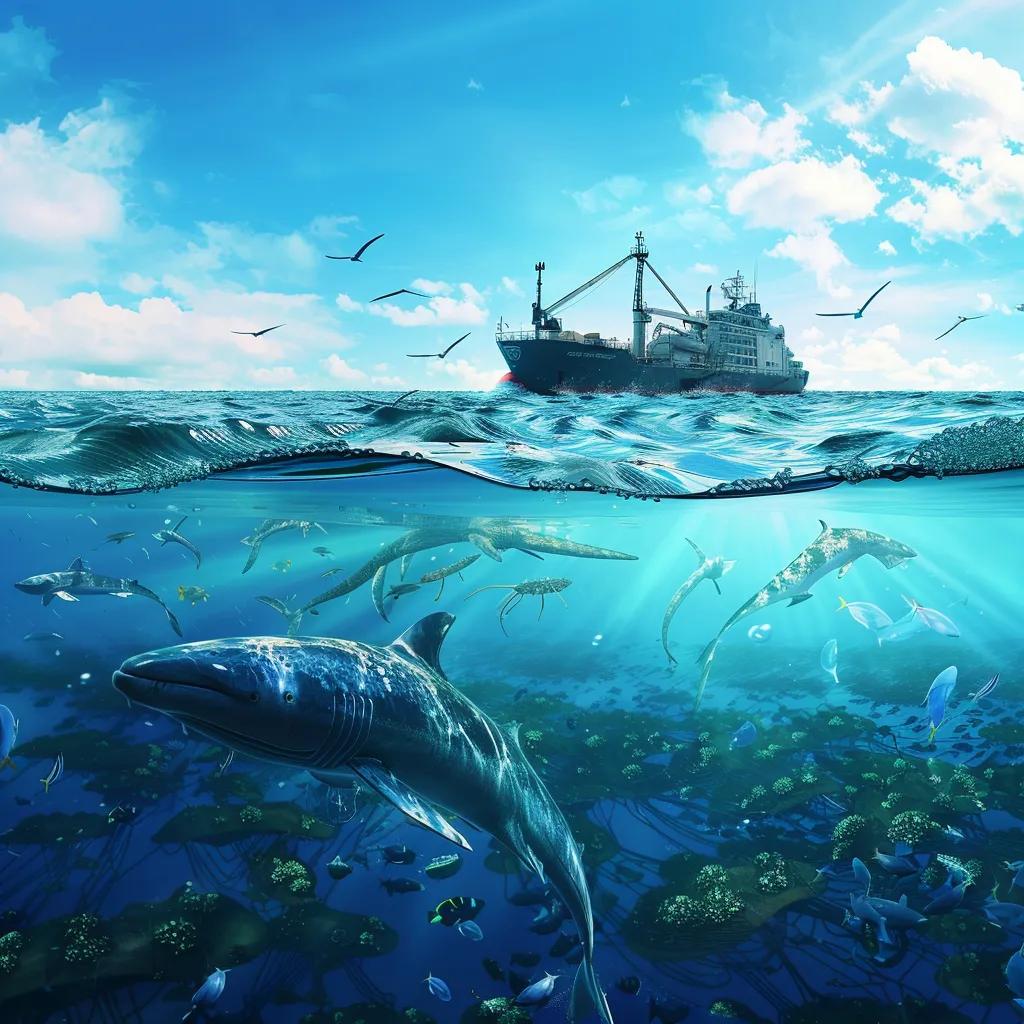
Offshore aquaculture vessels minimize coastal pollution by dispersing waste in open waters, support stable production cycles and lower per-unit labor costs through high automation. These advantages directly contribute to sustainable marine resource use and deliver stronger economic returns compared to traditional nearshore farms.
How Does Offshore Aquaculture Reduce Environmental Impact Compared to Traditional Methods?
Mobile deep-sea ranches dilute nutrient effluents over larger volumes, preventing localized eutrophication. Closed-loop water circulation systems treat discharge to remove solid waste, while selective breeding reduces disease outbreaks and antibiotic usage. This ecological stewardship model fosters healthier ecosystems and preserves biodiversity along coastlines.
Offshore Aquaculture and Environmental Impact
Offshore aquaculture can mitigate environmental impacts compared to traditional methods. By dispersing waste in open waters and utilizing closed-loop water circulation systems, these practices help prevent localized eutrophication and reduce the need for antibiotics, promoting healthier ecosystems.
This citation supports the article’s claims about the environmental benefits of offshore aquaculture.
What Economic Advantages Do Smart Vessels Offer in Production and Labor Costs?
Smart vessels achieve up to 90 percent automation, cutting labor requirements by 20 percent and feed costs by 15 percent through precision feeding. Higher survival rates and faster growth cycles (30 percent reduction in time-to-market) translate into increased annual yields and stronger ROI. These economic gains bolster China’s position as a low-cost, high-quality seafood supplier.
How Do These Innovations Contribute to China’s Food Security and Blue Granary Strategy?
China’s “Blue Granary” initiative aims to secure marine food supply by expanding offshore cultivation capacity to 60 million cubic meters and 600,000 tonnes of production by 2028. Smart vessels like Guoxin-1 directly support this goal by delivering consistent yields, enhancing nutritional supply chains and reducing reliance on wild capture fisheries.
China’s Blue Granary Strategy
China’s “Blue Granary” initiative aims to secure marine food supply by expanding offshore cultivation capacity. This strategy involves significant investment in aquaculture infrastructure and technology to reduce reliance on wild capture fisheries and enhance the nation’s food security.
This plan directly supports the article’s discussion of China’s goals for offshore aquaculture expansion.
How Is Renewable Energy Integrated with Offshore Aquaculture?
Hybrid wind–solar generators installed on vessel decks power sensor networks and feeding systems, reducing dependency on fossil fuels. Longyuan Power and Shanghai Electric Wind Power Group have partnered to pilot wind-driven thrusters that support dynamic positioning, demonstrating how renewable integrations further lower carbon footprints and operational expenses.
Which High-Value Fish Species Are Cultivated on China’s Deep-Sea Smart Aquaculture Vessels?
Smart offshore vessels specialize in premium species whose market demand justifies deep-sea investment. Leveraging controlled environments, operators optimize growth protocols for yellow croaker, salmon and various groupers, achieving superior product quality and higher profit margins.
What Are the Cultivation Techniques for Yellow Croaker on Smart Vessels?
Yellow croaker juveniles are initially acclimated in sheltered nearshore nurseries before transfer to submersible cages on Guoxin-1. Automated temperature regulation and flow-through water exchange ensure steady growth, while feed composition is adjusted biweekly to match developmental stages. This method yields robust fish with rich umami flavor.
How Is Salmon Farming Advanced Through Offshore Deep-Sea Technology?
On Suhai-1, juvenile salmon undergo oceanic conditioning in 50 m deep cages that mimic natural migratory depths. Real-time salinity and oxygen tracking through IoT arrays supports stress-reduction protocols. Precision feeding algorithms deliver nutrient-balanced pellets at optimal times, accelerating growth by up to 25 percent compared to coastal net pens.
What Other Valuable Species Are Farmed and Their Market Potential?
Other species include:
- Amberjack, prized for firm flesh and export markets.
- Sea bass, known for mild taste and domestic demand.
- Grouper varieties, commanding high prices in Asia’s luxury seafood sector.
These species complement core cultivars and diversify revenue streams, underscoring offshore vessels’ role in specialty aquaculture.
What Is China’s Policy Framework and Future Vision for Smart Offshore Aquaculture?
China’s government integrates smart offshore farming into national plans through research funding, regulatory guidelines and industrial standardization, ensuring rapid scaling and quality control. Strategic policies align technological innovation with marine economy goals to foster sustainable expansion.
How Does the 14th Five-Year Plan Support Marine Innovation and Aquaculture Expansion?
The 14th Five-Year Plan allocates dedicated R&D budgets for AI-driven mariculture, mandates pilot zones for deep-sea ranching and incentivizes private–public partnerships. By streamlining vessel approval processes and subsidizing renewable energy integration, it accelerates smart aquaculture commercialization.
What Are the Industrialization and Standardization Goals for Offshore Aquaculture?
Standardized vessel designs, unified cage specifications and digital monitoring protocols aim to reduce entry barriers for new operators. The Marine Equipment Standardization Committee is drafting guidelines for hull strength, sensor interoperability and automated harvesting, paving the way for mass production of offshore platforms.
How Does China’s Blue Granary Strategy Drive Sustainable Marine Food Production?
The Blue Granary strategy envisions a “sea–land integrated” food system where offshore vessels feed processing hubs onshore, creating closed-loop logistics and minimizing spoilage. By coordinating aquaculture zones with port infrastructure and cold-chain facilities, it ensures reliable seafood supply for domestic and export markets.
How Does China’s Smart Offshore Aquaculture Impact Global Marine Food Production?
China’s deep-sea aquaculture innovations establish benchmarks in yield efficiency, digital management and sustainable practices that other nations can emulate. By exporting vessel designs, software platforms and operational expertise, China fosters a new era of collaborative marine food production.
How Does China Compare with International Offshore Aquaculture Projects?
While Norway and Canada lead nearshore salmon farming, China’s mobile vessel model extends operations into deeper, more open waters. This mobility enhances site selection flexibility and reduces environmental conflicts, positioning China at the forefront of open-ocean aquaculture.
What Opportunities and Challenges Exist for Global Adoption of Smart Aquaculture Vessels?
Opportunities include technology transfer to coastal nations seeking to expand seafood supply. Challenges encompass regulatory harmonization, vessel financing and skill development for remote operations. Addressing these gaps will require international collaboration on standards and training programs.
How Can International Partnerships Enhance Marine Innovation and Food Security?
Joint ventures in vessel engineering, co-development of AI monitoring platforms and shared research on species genetics can accelerate global adoption. Collaborative pilot projects in Southeast Asia, Europe and Africa demonstrate how knowledge exchange fosters resilient food systems and strengthens supply chains.
What Are the Latest Trends and Future Developments in China’s Smart Offshore Aquaculture Technology?
China’s R&D pipeline is exploring robotics for automated harvest, photo-thermal seeding to boost juvenile survival rates and blockchain-enabled traceability to assure product provenance. These emerging technologies promise further efficiency and market transparency for offshore fisheries.
What Emerging Technologies Are Being Integrated into Next-Generation Vessels?
Robotic arms for live fish selection, underwater drones for structural inspections and 3D-printed modular cages are entering trial phases. Photo-thermal farming modules deploy solar energy to accelerate larval growth, reducing nursery time by 15 percent.
How Will AI and Big Data Shape the Future of Deep-Sea Fish Farming?
Next-generation AI models will predict optimal harvest windows using satellite-derived oceanographic data, while advanced analytics will enable cross-vessel performance benchmarking. Real-time dashboards will guide dynamic stocking decisions to maximize returns across diverse environmental conditions.
What Are the Prospects for Expanding Offshore Aquaculture Capacity and Production?
By 2030, China aims to deploy over 200 smart vessels, expanding offshore culture area beyond 100 million cubic meters. Coupled with hybrid energy systems and global technology partnerships, this scaling could double national marine production and set new standards for sustainable seafood.
China’s smart offshore aquaculture vessel represents a paradigm shift in seafood production, demonstrating how automation, AI and policy support can unlock deep-sea potential with minimal ecological impact. As the Guoxin-1 and its successors proliferate, China is charting a course toward a resilient, technology-driven marine economy that can feed a growing world sustainably. This innovation not only strengthens national food security but also lays the groundwork for international collaboration in next-generation aquaculture. The future of offshore fish farming is already at sea, and its waves of impact are bound to reach shores worldwide.
Frequently Asked Questions
What are the main challenges faced by traditional aquaculture that smart vessels like Guoxin-1 address?
Traditional aquaculture often struggles with coastal overcrowding, disease outbreaks, and environmental degradation. Smart vessels like Guoxin-1 tackle these issues by moving fish farming operations offshore, where conditions are more favorable. This reduces the risk of disease due to lower fish density and allows for better water quality management. Additionally, the automation and AI technologies integrated into these vessels enhance operational efficiency, minimizing waste and labor costs while maximizing yield and sustainability.
How does the integration of renewable energy impact the operations of smart aquaculture vessels?
Renewable energy integration, such as hybrid wind-solar systems, significantly reduces the carbon footprint of smart aquaculture vessels. By powering sensor networks and feeding systems with renewable sources, these vessels decrease reliance on fossil fuels, leading to lower operational costs and environmental impact. This sustainable energy approach not only supports the vessel’s operational needs but also aligns with global efforts to promote eco-friendly practices in marine food production.
What role do international collaborations play in advancing smart aquaculture technologies?
International collaborations are crucial for advancing smart aquaculture technologies by facilitating knowledge exchange, technology transfer, and joint research initiatives. Partnerships can help countries adopt best practices in vessel design, AI monitoring, and species management. Collaborative pilot projects can also address common challenges, such as regulatory harmonization and skill development, ultimately enhancing global food security and promoting sustainable seafood production across different regions.
How do smart aquaculture vessels contribute to food security in coastal nations?
Smart aquaculture vessels enhance food security in coastal nations by increasing seafood production capacity and reducing reliance on wild fisheries. By utilizing advanced technologies for efficient farming, these vessels can produce high-quality seafood consistently, ensuring a stable supply for local markets. This approach not only meets growing consumer demand but also supports the livelihoods of fishing communities by providing alternative sources of income and reducing pressure on overexploited marine resources.
What are the potential economic impacts of adopting smart aquaculture practices globally?
The global adoption of smart aquaculture practices can lead to significant economic impacts, including increased seafood production, reduced operational costs, and enhanced profitability for fish farmers. By leveraging automation and AI, producers can achieve higher yields and lower labor costs, making seafood more affordable. Additionally, the development of new markets for high-value species can stimulate local economies, create jobs, and promote sustainable practices that benefit both the environment and communities.
What future trends can we expect in the field of smart offshore aquaculture?
Future trends in smart offshore aquaculture are likely to include the increased use of robotics for automated harvesting, enhanced data analytics for real-time decision-making, and the integration of blockchain technology for traceability. As research continues, we may also see advancements in breeding techniques and the cultivation of new species that are better suited for deep-sea environments. These innovations will further improve efficiency, sustainability, and market transparency in the aquaculture industry.
Conclusion
China’s smart offshore aquaculture vessels, like the Guoxin-1, exemplify a revolutionary approach to sustainable seafood production, combining advanced technology with ecological stewardship. These innovations not only enhance food security but also set new standards for efficiency and environmental responsibility in the industry. To learn more about how these advancements can impact global seafood supply, explore our comprehensive resources on aquaculture technology. Join us in supporting a future where marine food production is both sustainable and abundant.