Article:
Aker and Nscale to Build $1 Billion OpenAI Plant in Norway: Sustainable AI Infrastructure and Strategic European Expansion
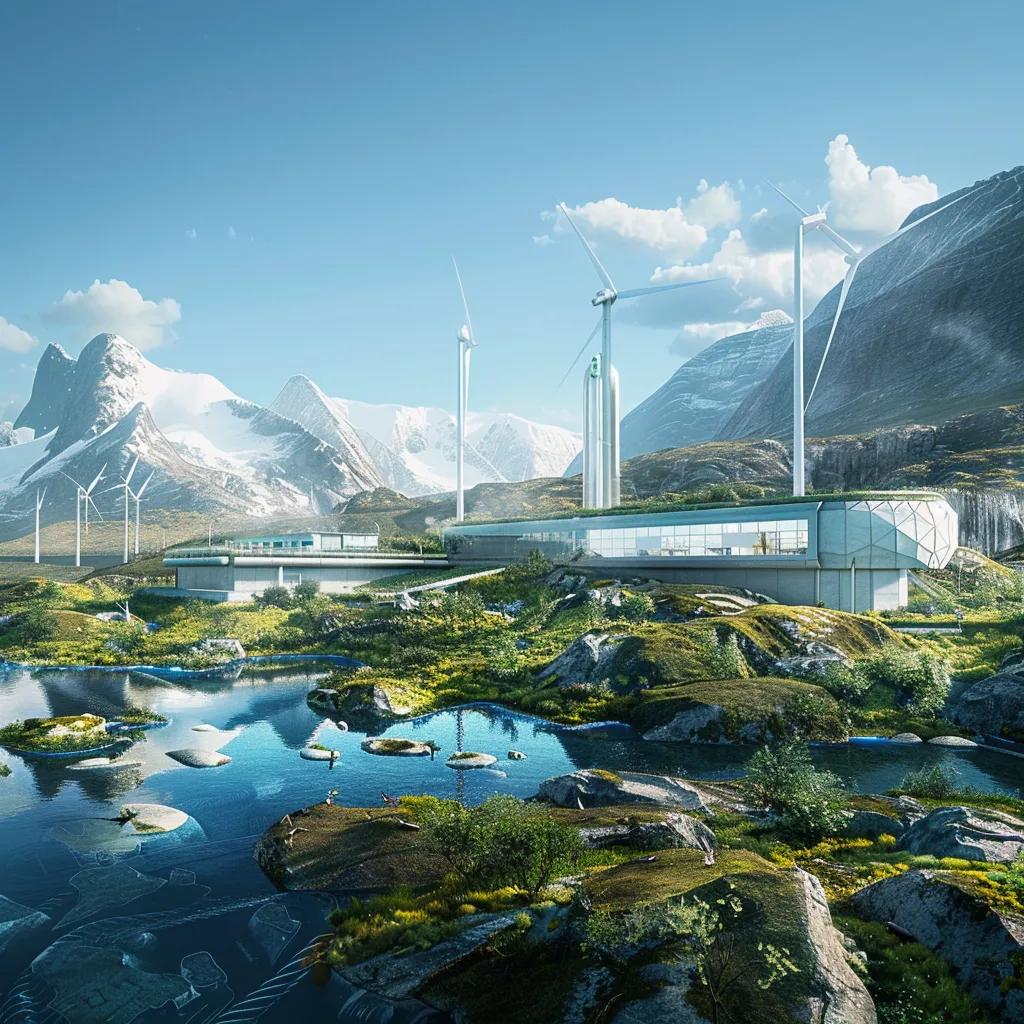
Aker and Nscale are joining forces to develop Stargate Norway, a $1 billion renewable-powered AI gigafactory in Narvik, Northern Norway. This ambitious project aims to deliver 100 000 NVIDIA GPUs by 2026 under OpenAI’s “OpenAI for Countries” program, combining hydropower, liquid cooling, and heat reuse for maximum efficiency. You will discover what Stargate Norway is, why Narvik is ideal, which partners drive its success, how renewable energy powers every kilowatt, the advanced AI technologies deployed, and the economic and societal impacts across Norway and Europe. We’ll also explore the long-term vision for scalable AI infrastructure and answer common questions about this landmark investment in sustainable AI compute.
What Is Stargate Norway and Why Is It Important for AI Infrastructure?
What is the Stargate Norway AI Gigafactory?
Stargate Norway is a state-of-the-art data center project designed as Europe’s first large-scale, renewable-powered AI gigafactory. It combines joint venture funding, hydropower, NVIDIA GB300 Superchips, and liquid cooling to deliver secure, high-capacity compute for sovereign AI workloads.
The gigafactory’s defining features include:
- A 230 MW initial power capacity scalable to 520 MW
- 100 000 NVIDIA GPUs (GB300 Superchip) interconnected via NVLink
- 50/50 joint venture between Aker ASA and Nscale Global Holdings Ltd.
- Off-take agreement with OpenAI under “OpenAI for Countries”
By integrating renewable energy and cutting-edge hardware, Stargate Norway sets a new standard for sustainable AI infrastructure, positioning Norway at the forefront of European compute sovereignty. This foundation leads us to examine why Narvik was chosen.
Where is Stargate Norway located and why Narvik?

Narvik, located in Northern Norway near the Kvandal hydropower station, offers abundant renewable energy and natural cooling. Its cold climate reduces cooling costs, while proximity to major sea routes ensures efficient logistics for hardware deployment.
This combination of hydropower, natural cooling, and strategic transport links makes Narvik uniquely suited for sustainable AI infrastructure, enabling cost-effective operation and rapid hardware scaling. Understanding its location context, we now explore how this plant aligns with OpenAI’s broader European expansion.
How does Stargate Norway fit into OpenAI’s European expansion?
Stargate Norway represents OpenAI’s inaugural data center in Europe under the “OpenAI for Countries” initiative, supporting localized compliance with EU data-sovereignty regulations. This facility ensures low-latency access for European partners and secures critical AI workloads within the European Economic Area.
By anchoring its compute in Norway’s renewable grid, OpenAI consolidates its strategic footprint in Europe, paving the way for future regional data centers. This expansion aligns with the company’s goal to democratize AI deployment globally while adhering to local energy and security standards.
Who Are the Partners Behind the OpenAI Plant in Norway?
The Stargate Norway project is a public-private partnership combining industrial investment, engineering expertise, and AI leadership. Aker ASA and Nscale Global Holdings Ltd. each hold 50 percent ownership, with OpenAI as the initial off-taker and strategic advisor on AI requirements.
Aker ASA brings decades of large-scale project experience, while Nscale delivers tailored data center architecture optimized for high-density GPU clusters. OpenAI’s involvement ensures the facility meets stringent performance and security standards for sovereign AI. This synergy sets a template for future renewable-powered AI hubs.
How Will Renewable Energy Power the Stargate Norway Data Center?
Why is hydropower ideal for AI infrastructure in Northern Norway?
Hydropower offers continuous, low-carbon electricity with minimal variability, matching AI compute’s round-the-clock power demands. Northern Norway’s mountainous terrain and glacial runoff yield reliable water flow, translating into stable generation and predictable energy costs.
Key benefits of hydropower include:
- Carbon-neutral electricity generation
- Stable baseload capacity (capacity factor >90 percent)
- Minimal operational emissions
- Long asset lifespan (50+ years)
Hydropower and AI Infrastructure
Hydropower is a reliable source of renewable energy, offering continuous, low-carbon electricity that aligns well with the constant power demands of AI compute. The consistent water flow in mountainous regions ensures stable generation and predictable energy costs, making it ideal for sustainable AI infrastructure.
This research supports the article’s claims about the benefits of hydropower for the Stargate Norway project.
By leveraging local hydropower, Stargate Norway minimizes its carbon footprint and hedges against energy market volatility, ensuring sustainable and cost-efficient operation year-round. This resource reliability underpins advanced cooling strategies.
What energy efficiency technologies are used, including liquid cooling?
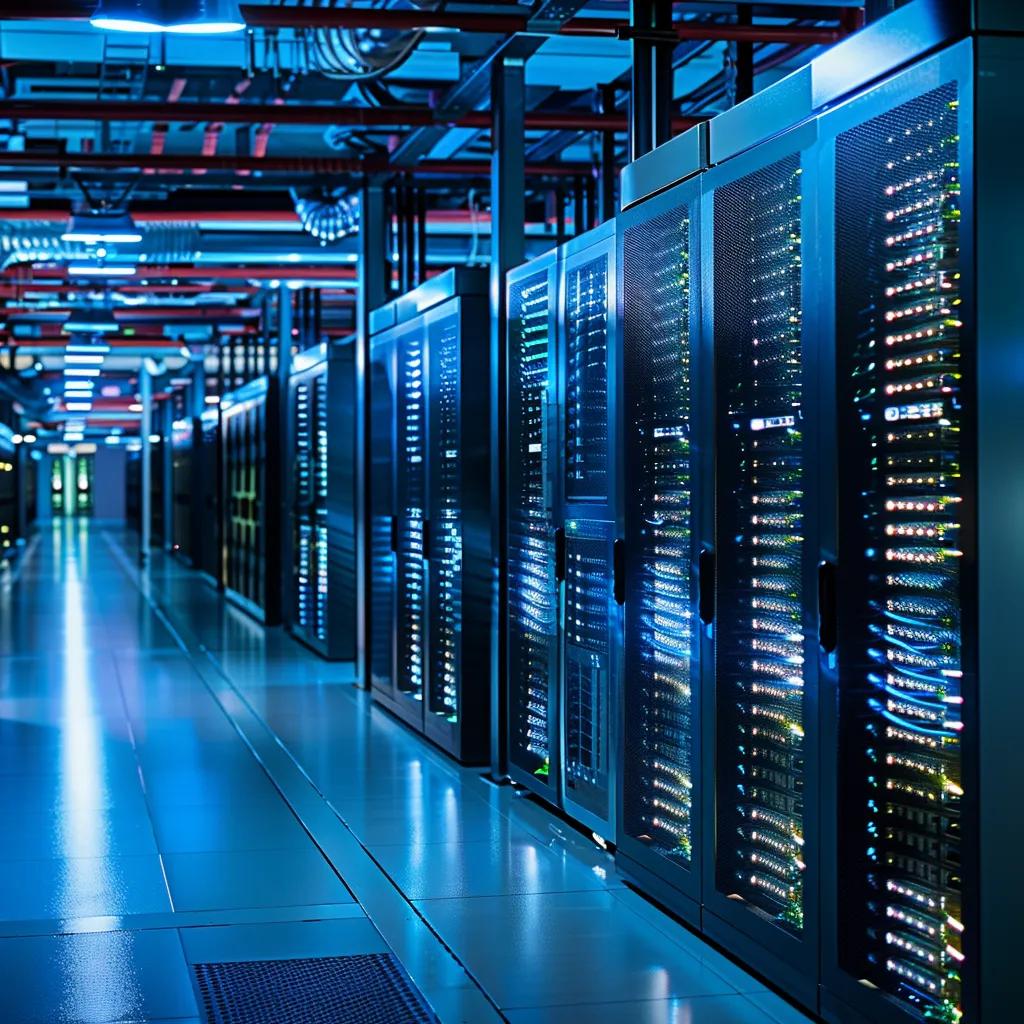
Stargate Norway utilizes direct-to-chip liquid cooling to dissipate GPU heat more effectively than air-based systems. Warm water loops extract heat at the source, reducing power usage for chillers and fans by over 30 percent.
Liquid Cooling Technology
Direct-to-chip liquid cooling is a highly efficient method for dissipating heat from GPUs, reducing the energy needed for cooling compared to traditional air-based systems. This technology lowers the Power Usage Effectiveness (PUE) of data centers, contributing to overall energy savings and sustainability.
This citation validates the article’s description of liquid cooling as an energy-efficient technology used in the Stargate Norway data center.
These energy-saving techniques cut overall electricity consumption and prepare excess heat for secondary uses, leading us to the next innovation: reusing GPU waste heat.
How will excess heat from GPUs be reused for local green initiatives?
Heat captured from GPU clusters will feed municipal district heating systems and greenhouse operations in Narvik, supporting low-carbon enterprises and residential heating. By redirecting up to 60 percent of waste heat, the project creates a circular energy economy that benefits local communities and businesses while further reducing environmental impact.
What Advanced AI Technologies Will Stargate Norway Use?
How many NVIDIA GPUs will the data center deploy and what models?
Stargate Norway will host 100 000 NVIDIA GPUs of the GB300 Superchip series by end of 2026. Each Superchip delivers 48 GB of HBM3 memory and integrates dual Hopper-architected GPUs for peak 3 PFLOPS performance per system.
What is the architecture of the AI infrastructure and NVLink connectivity?
The data center’s compute pods are organized into 230 MW clusters, each cluster featuring NVLink-connected GPU pods for high-throughput inter-GPU communication at 900 GB/s. This topology minimizes latency for distributed training workloads and scales linearly as new pods are added.
Key architectural components include:
- GPU Pods: 4 racks containing 64 GB300 Superchips each
- NVLink Fabric: Mesh network with redundant paths for fault tolerance
- High-Capacity Switches: 100 Tbps spine switches connecting GPU clusters
This design ensures both horizontal and vertical scalability, preparing Stargate Norway for future expansions to 520 MW.
How does Stargate Norway support sovereign AI workloads and data security?
The facility integrates secure enclave technology and on-site key management to ensure data encryption at rest and in transit. Compliance with EU’s GDPR and NIS2 directives is achieved via hardened network segmentation and audited access controls, making it ideal for government and enterprise AI applications requiring strict data sovereignty.
What are the future expansion plans for AI compute capacity?
After achieving 230 MW initial capacity, Stargate Norway will add modular power units to reach 520 MW by 2030. Expansion phases include doubling rack density, incorporating next-generation GPUs, and deploying AI-specific accelerators to diversify compute offerings for inference and generative workloads.
What Economic and Societal Impacts Will the OpenAI Plant Have in Norway and Europe?
How will Stargate Norway create jobs and foster regional innovation?
Construction and operation phases will generate over 1 500 direct jobs in Narvik, spanning engineering, maintenance, and administrative roles. Local technical colleges and universities gain training partnerships, ensuring a continuous pipeline of AI infrastructure specialists.
What collaborations exist with academic institutions for AI research?
Partnerships with the University of Tromsø and Narvik Technical College facilitate joint research on high-performance compute optimization, sustainable cooling methods, and AI ethics. Sponsored PhD programs and internship placements accelerate knowledge transfer between academia and industry.
How will the project boost Europe’s AI competitiveness and infrastructure?
By providing high-capacity compute within Europe, Stargate Norway reduces reliance on overseas data centers, lowers latency for European developers, and strengthens the continent’s sovereignty in critical AI research and development.
How will Norwegian startups benefit from local access to AI models and services?
Startups gain low-latency access to large-scale pre-trained models and cost-efficient training clusters through shared-use agreements. This local access fosters AI innovation hubs in Northern Norway, stimulating entrepreneurship and technology spin-offs.
What Is the Long-Term Vision for AI Infrastructure and Investment in Stargate Norway?
What are the global trends in AI infrastructure investment relevant to Stargate Norway?
Investment in AI data centers is projected to exceed $100 billion by 2027, with renewable-powered facilities growing at 25 percent CAGR. Leading tech companies are prioritizing sustainable compute, mirroring Stargate Norway’s model of green AI infrastructure.
What challenges and opportunities exist in scaling AI compute capacity sustainably?
Balancing power density with cooling efficiency and grid stability remains a challenge. However, developments in liquid cooling, energy storage, and hybrid renewable microgrids present opportunities for near-zero carbon footprints at scale.
How will AI gigafactories like Stargate Norway shape the future of AI development?
By demonstrating that large-scale, low-carbon AI compute can be commercially viable, projects like Stargate Norway will set industry benchmarks for sustainable infrastructure, catalyzing further investments in green AI hubs globally.
What Are Common Questions About the OpenAI Plant in Norway?
What is Stargate Norway?
Stargate Norway is a $1 billion AI gigafactory in Narvik, Northern Norway, powered entirely by hydropower, designed as a joint venture between Aker ASA and Nscale, with OpenAI as the initial off-taker.
Who are the partners building the OpenAI plant in Norway?
The plant is developed through a 50/50 joint venture between Aker ASA and Nscale Global Holdings Ltd., with OpenAI providing compute demand specifications and GPU off-take.
How will the Stargate Norway data center be powered?
The data center uses 100 percent renewable energy from local hydropower stations, complemented by energy efficiency measures like liquid cooling and thermal storage buffers.
How much is the investment for the OpenAI plant in Norway?
Total investment for Stargate Norway is $1 billion, covering land acquisition, construction, infrastructure, and initial GPU procurement.
When will Stargate Norway be operational with 100,000 GPUs?
Stargate Norway plans to achieve full 100 000 GPU deployment by the end of Q4 2026, with incremental capacity coming online in mid-2025.
Stargate Norway exemplifies how sustainable energy, advanced AI hardware, and strategic partnerships can converge to create a blueprint for Europe’s AI infrastructure. By harnessing Norway’s renewable resources and integrating leading-edge compute architectures, this project not only addresses immediate AI capacity needs but also lays the groundwork for scalable, low-carbon digital innovation across the continent.