Are Trump’s Tariffs Unlawful? How a Major Court Case Could Reshape His Trade Strategy

The legality of President Donald Trump’s tariffs is under intense judicial scrutiny, with a landmark court battle that may fundamentally reshape U.S. trade strategy and executive authority. Companies and importers face uncertainty over tariff refunds, while policymakers await clarity on the scope of presidential power under acts like IEEPA and Section 232. This article explains the legal foundations of Trump’s tariffs, examines key court cases and arguments on both sides, explores potential ruling scenarios and their impact on U.S. trade policy, analyzes economic and geopolitical consequences, and assesses how the World Trade Organization views national security–based tariffs.
What Is the Legal Basis for Trump’s Tariffs?
The authority for imposing import duties stems from constitutional and statutory delegations that allow the President to adjust U.S. “Tariffs” in specific circumstances. Understanding these legal foundations requires examining the U.S. Constitution’s grant of tariff power to Congress, the delegation mechanisms in trade statutes, and the novel use of the International Emergency Economic Powers Act (IEEPA).
How Does Presidential Tariff Authority Work Under US Law?
Presidential tariff authority originates in Article I, Section 8 of the U.S. Constitution, which vests Congress with power “to regulate commerce…among the several States,” and in turn delegates specific powers. Congress has enacted statutes such as the Trade Act of 1974 and the Trade Expansion Act of 1962 to authorize the President to impose tariffs under defined conditions. For example, Section 232 of the Trade Expansion Act permits national security–based measures, while Section 301 of the Trade Act addresses unfair trade practices. These statutory delegations require formal investigations by the Department of Commerce or USTR before the President may adjust duty rates.
Presidential Tariff Authority
The U.S. Constitution grants Congress the power to regulate commerce, which includes the authority to impose tariffs. Congress has delegated specific powers to the President through statutes like the Trade Act of 1974 and the Trade Expansion Act of 1962, allowing the President to adjust tariffs under defined conditions, such as for national security or in response to unfair trade practices.
This constitutional provision forms the foundation for presidential tariff authority, which is further defined and enabled by subsequent trade legislation.
What Role Does Section 232 of the Trade Expansion Act Play?

Section 232 authorizes tariffs to safeguard national security by investigating whether imports threaten domestic defense capabilities. A Commerce Department inquiry must find that specific imports impair national defense supply chains before the President can impose tariffs. Under this mechanism, the Trump administration levied 25 percent duties on steel and 10 percent on aluminum in 2018, citing security risks from reliance on foreign producers.
Section 232 and National Security Tariffs
Section 232 of the Trade Expansion Act of 1962 allows the President to impose tariffs to safeguard national security by investigating whether imports threaten domestic defense capabilities. The Trump administration used this mechanism to impose tariffs on steel and aluminum in 2018, citing national security risks associated with reliance on foreign producers.
This section of the Trade Expansion Act provides the legal basis for national security-based tariffs, as demonstrated by the Trump administration’s actions.
How Is Section 301 Used for Trade Enforcement?
Section 301 empowers the President to respond to foreign countries’ unfair trade practices, such as intellectual property theft or discriminatory barriers. The USTR conducts a Section 301 investigation and recommends retaliatory measures, which the President may implement as additional tariffs. The Trump administration used Section 301 to target $250 billion of Chinese goods over alleged technology transfer abuses, illustrating a traditional enforcement tool distinct from security‐based tariffs.
What Is the International Emergency Economic Powers Act (IEEPA)?
The International Emergency Economic Powers Act (IEEPA) is a 1977 law granting the President broad authority to regulate commerce in a declared national emergency. IEEPA was designed for sanctions, asset freezes, and trade embargoes during crises—not routine tariff adjustments. Under IEEPA, the President can block transactions or impose restrictions when an “unusual and extraordinary threat” to national security, foreign policy, or economy arises.
The International Emergency Economic Powers Act (IEEPA)
The International Emergency Economic Powers Act (IEEPA) grants the President broad authority to regulate commerce during a declared national emergency. The Trump administration invoked IEEPA in May 2019 to justify tariffs on Chinese imports, citing a trade deficit and strategic vulnerabilities, which has led to legal challenges regarding the scope of presidential power under this act.
IEEPA’s application to tariffs is a key point of contention, with critics arguing it was not intended for such use, leading to significant legal and policy debates.
How Has Trump Applied IEEPA to Impose Tariffs?
The Trump administration invoked IEEPA in May 2019 to justify 10 percent tariffs on $300 billion of additional Chinese imports, citing a declared emergency over the U.S. trade deficit and strategic vulnerabilities. This unprecedented application stretched IEEPA beyond sanctions into broad tariff authority. Critics argue that IEEPA does not mention import duties, while the government contends that any commerce regulation during an emergency falls within its text.
Which Major Court Cases Are Challenging Trump’s Tariffs?
What Is the VOS Selections, Inc. v. Trump Case About?
VOS Selections, Inc. v. Trump challenges the 10 percent IEEPA tariffs, arguing the President lacked statutory or constitutional authority to impose duties under a law intended for national emergencies and sanctions. Plaintiffs contend that Congress never delegated tariff power under IEEPA and that Section 1322(a) of IEEPA explicitly excludes import restrictions. The case demands a narrow reading of emergency powers and emphasizes separation of powers.
How Did the US Court of International Trade Rule on IEEPA Tariffs?
In November 2020, the CIT held that IEEPA does not authorize import duties, ruling the IEEPA tariff proclamation unlawful. The court found that IEEPA’s text focuses on blocking “transactions” and excludes “import restrictions,” and that Congress’s detailed framework for tariffs in other statutes precludes emergency‐based duties. This decision vacated the IEEPA tariff order and remanded for further proceedings.
What Is the Role of the US Court of Appeals for the Federal Circuit?
The U.S. Court of Appeals for the Federal Circuit is reviewing the CIT’s decision. In March 2022, the court heard oral arguments on whether IEEPA’s broadly worded emergency powers implicitly cover tariffs. The Federal Circuit’s interpretation will clarify executive flexibility during emergencies and set binding precedent for tariff authority going forward.
Could the US Supreme Court Review These Tariff Cases?
A Supreme Court review remains possible if either party petitions following the Federal Circuit’s ruling. Given the constitutional and separation‐of‐powers questions at stake, the Supreme Court could grant certiorari to resolve whether a President may repurpose emergency powers for economic strategy. A high‐court decision would deliver finality on executive trade authority and reshape future U.S. trade policy.
What Are the Core Legal Arguments For and Against the Tariffs’ Lawfulness?
How Does the Government Justify Tariff Authority Under IEEPA?
The government argues that IEEPA’s broad grant to regulate “any” transactions during a declared emergency encompasses tariff measures, since duties are a form of commerce regulation. Officials point to IEEPA’s text allowing “any” powers over foreign trade, and to legislative silence on excluding import restrictions. They assert that emergency conditions justify flexible tools to protect national interests.
What Are the Plaintiffs’ Counterarguments on Executive Power Limits?
Plaintiffs maintain that statutory interpretation demands a clear statement from Congress to authorize tariffs under IEEPA. They highlight Section 1322(a), which prohibits using IEEPA to regulate import/export controls, and stress that Congress enacted detailed tariff frameworks in other statutes. They warn that allowing IEEPA tariffs upends the separation of powers by letting the executive bypass legislative safeguards.
How Do Constitutional and Statutory Interpretations Differ?
Constitutionally, all tariff power originates from Congress under Article I, and must be delegated explicitly. Statutorily, courts apply the clear‐statement rule: emergency powers must be defined narrowly. Proponents see IEEPA as a textual emergency grant; opponents view it as limited to sanctions. The clash reflects contrasting methodologies: textualism vs. purposivism and separation‐of‐powers concerns.
What Historical Precedents Exist for Presidential Tariff Authority?
Historically, Presidents used Section 232 and Section 301 extensively but never IEEPA for tariffs. Past administrations invoked IEEPA for sanctions in crises like the 1979 Iran hostage emergency. No prior President imposed sweeping import duties under IEEPA, making the Trump-era application unprecedented and ripe for judicial review.
How Could Court Rulings Reshape US Trade Strategy and Presidential Powers?
What Are Possible Outcomes of the Court Decisions?
- Tariffs Upheld in Full – Courts find IEEPA covers import duties, granting broad emergency tariff authority.
- Tariffs Struck Down Entirely – IEEPA does not authorize duties, eliminating this tool.
- Partial Modification – Courts allow limited emergency measures but require specific congressional findings or restrictions.
Each scenario sets a distinct precedent for executive‐legislative balance in trade policy.
How Would Rulings Affect Importers and Tariff Refunds?
If tariffs are voided, importers could seek retroactive refunds and duty drawback claims, triggering reimbursements of billions in collected duties. A full vacatur order shifts the financial burden back to the government, while partial rulings may limit refund windows or require administrative procedures.
What Impact Could This Have on US Trade Policy and Agreements?
A decision curbing IEEPA authority would push Administrations to rely more heavily on Section 232, Section 301, or new legislation for trade actions. Trade negotiators may gain or lose leverage depending on executive flexibility. Long‐term strategy on China, steel, and aluminum disputes could shift toward multilateral or congressional remedies rather than unilateral tariffs.
How Might Executive Authority Over Trade Change?
Should courts restrict IEEPA use, future Presidents will face tighter constraints, requiring explicit congressional mandates for broad tariff measures. Conversely, an expansive ruling could encourage use of emergency declarations for economic policy, potentially blurring lines between foreign policy emergencies and trade strategy.
What Are the Economic and Geopolitical Implications of the Tariff Legal Battle?
How Have Trump’s Tariffs Affected US Industries and Consumers?
Tariffs on steel and aluminum increased domestic input costs for automotive, construction, and machinery sectors, raising consumer prices and squeezing profit margins. Small manufacturers faced higher raw‐material bills, while some steel producers benefited from reduced foreign competition. Overall inflationary pressure on consumer goods ranged from 0.1 to 0.3 percent annually.
What Are the Effects on Supply Chains and Global Trade Relations?
Retaliatory duties from China, EU, and Canada disrupted supply chains for agriculture, technology, and automotive parts. Companies diversified sourcing strategies, relocating production or stockpiling critical components. Trade tensions prompted accelerated nearshoring trends and renegotiation of supply agreements to mitigate exposure to U.S. tariffs.
How Could Tariff Unlawfulness Influence US-China Trade Dynamics?
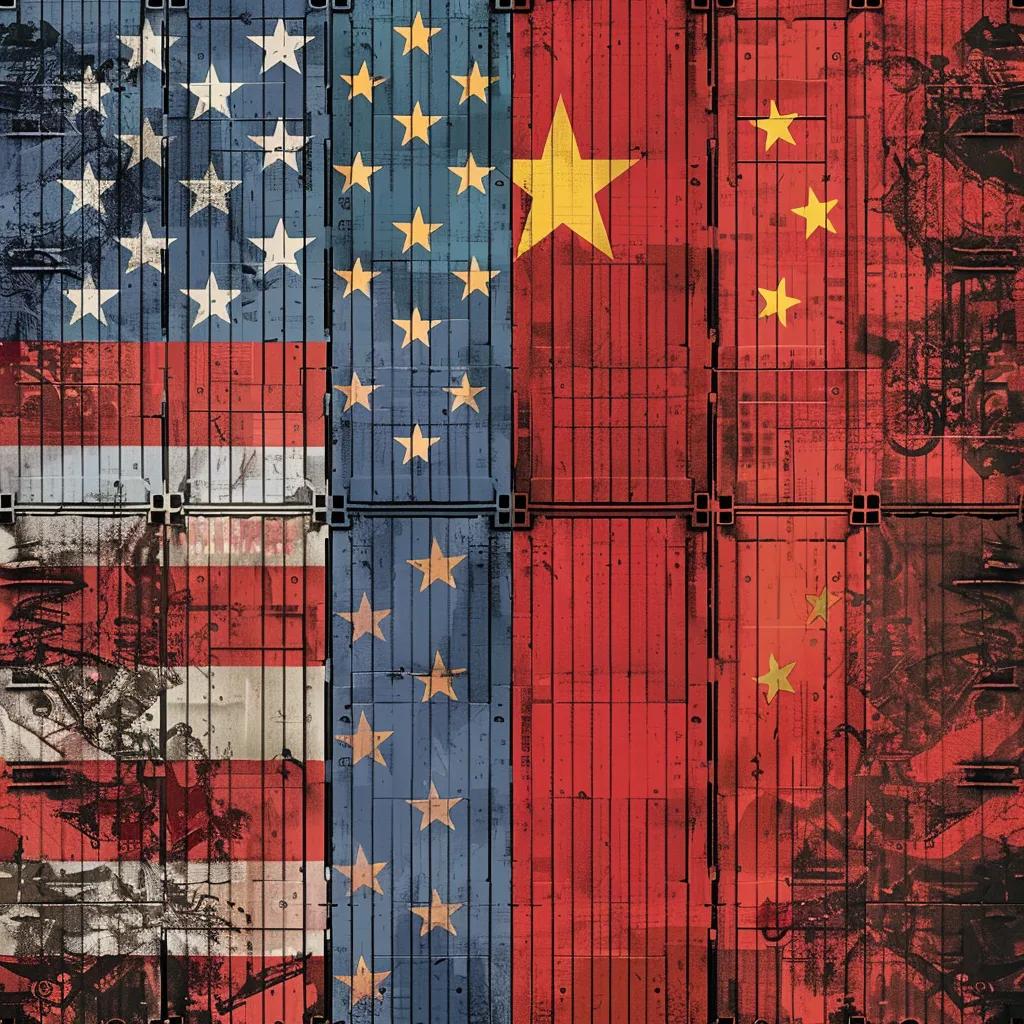
A judicial invalidation of IEEPA tariffs on Chinese goods would remove a major bargaining chip in U.S. negotiations, potentially delaying enforcement of existing agreements. China might demand concessions or retaliate on other fronts, shifting the diplomatic balance. A voided tariff regime could encourage a more rules‐based, WTO-centered resolution process.
What Do Economic Data and Trends Reveal About Tariff Consequences?
Recent studies show U.S. GDP growth reduced by 0.2 percent due to increased import costs, while trade deficit narrowed modestly. Tariff revenue peaked at $25 billion in 2019 but represented less than 0.5 percent of federal receipts. Consumer price indices rose notably in steel-intensive sectors. These metrics inform cost–benefit analyses of unilateral trade measures.
How Does the World Trade Organization View National Security Tariffs Like Trump’s?
What Is the WTO’s National Security Exception Under GATT Article XXI?
GATT Article XXI allows members to take measures “which it considers necessary for the protection of its essential security interests” during war or other emergencies. The exception is self-judging, but panels can examine whether the claimed measure relates to security interests and conflicts with WTO rules.
How Has the WTO Ruled on US Section 232 Tariffs?
In 2019, a WTO dispute panel found the U.S. Section 232 steel and aluminum tariffs inconsistent with WTO obligations, rejecting security justifications as overly broad. The appellate process remains pending, but the case underscores limits on invoking Article XXI for economic measures.
What Is the US Position on WTO Jurisdiction Over National Security?
The U.S. maintains that security exceptions are inherently self-judging and non-justiciable by WTO panels. Washington argues that technical panels lack the mandate to second-guess national security determinations, a stance at odds with WTO precedents favoring limited self-judgment.
How Could WTO Decisions Influence US Tariff Enforcement?
A final WTO ruling against security-justified tariffs could expose the U.S. to retaliatory sanctions and political pressure from trading partners. Conversely, broad acceptance of self-judging security exceptions might embolden unilateral measures worldwide, weakening the WTO’s rules-based system.
What Are the Key Questions People Also Ask About Trump’s Tariffs and Their Legality?
Are Trump’s Tariffs Legal Under Current US Law?
The legality of Trump’s IEEPA-based tariffs is contested: the U.S. Court of International Trade ruled them unlawful, while the government argues IEEPA grants broad emergency authority. Appeals are pending, so final legality depends on higher-court interpretation.
What Is the International Emergency Economic Powers Act (IEEPA)?
The International Emergency Economic Powers Act is a 1977 statute empowering the President to regulate international transactions and commerce during a declared national emergency for national security or foreign policy reasons.
Which Court Is Hearing the Trump Tariff Case?
The U.S. Court of International Trade issued the initial ruling on IEEPA tariffs, and the U.S. Court of Appeals for the Federal Circuit is now hearing the appeal. The Supreme Court could ultimately review the case.
How Could a Court Ruling Reshape Trump’s Trade Strategy?
A ruling invalidating emergency-based tariffs would eliminate a key tool for unilateral trade actions, prompt refund claims by importers, and require greater reliance on congressional authorizations or multilateral remedies.
Can the President Impose Tariffs Without Congress?
Under Section 232 and Section 301 statutes, yes—Congress delegated authority for national security and unfair practice tariffs. Under IEEPA, the question remains whether the President may extend emergency powers to import duties without express legislative authorization.
Global trade and presidential powers hinge on this pivotal court case, and its outcome will reverberate through U.S. economic policy, international relations, and the future scope of executive authority. Whether emergency-based tariffs survive or fall, the decision will carve new boundaries for unilateral trade measures and set a precedent that shapes U.S. trade strategy for years to come.