Article: # How Apple Got a Much-Needed iPhone and China Boost but Expects a $1.1 Billion Tariff Hit This Quarter
Apple’s latest fiscal quarter showcased a powerful rebound in iPhone sales and Greater China revenue, yet a looming $1.1 billion tariff burden threatens margins and pricing. This analysis unpacks five core themes:
- Q3 2025 Financial Highlights – Revenue, net income, and segment performance.
- iPhone Sales Trends – Global and regional performance with model breakdowns.
- China Market Dynamics – Subsidies, competition, and future outlook.
- Tariff Impact – Specific duty costs, policy origins, and margin effects.
- Strategic and Supply Chain Response – Diversification, AI investment, and long-term vision.
By blending authoritative data and semantic depth, this article clarifies how Apple capitalized on product demand and market stimulus while preparing to absorb a significant trade-policy shock.
What Were Apple’s Key Financial Highlights in Q3 2025?
Apple’s Q3 2025 results define robust growth: reported revenue topped forecasts due to strong product demand, fueling a 10 percent year-over-year increase and bolstering investor confidence. Comprehensive segment performance illustrates how flagship devices and services synergized to outpace analyst expectations.
Before diving deeper, here is a concise breakdown of headline metrics:
- Total Revenue: $94.04 billion (up 9.8 percent YoY)
- Net Income: $23.4 billion (up 11.1 percent YoY)
- Diluted EPS: $1.57 (vs. $1.43 consensus)
Apple’s Revenue Growth
Apple’s revenue growth in Q3 2025, with a 10% year-over-year increase, reflects strong product demand and effective cost controls. This growth was fueled by higher average selling prices for new iPhone models and operational efficiencies in manufacturing and logistics, leading to a stronger margin structure.
How Did Apple’s Revenue and Net Income Surpass Expectations?
Apple’s top-line beat arises from synchronized global demand and effective cost controls. Higher average selling prices for new iPhone models drove unit revenue, while operational efficiencies in manufacturing and logistics amplified net income. This dual mechanism solidified a stronger margin structure, preparing the company for upcoming headwinds.
Which Product Segments Drove Growth, Especially the iPhone?
The iPhone segment remains Apple’s primary revenue engine, accounting for 47 percent of total sales. Services, wearables, and Mac also contributed meaningfully, diversifying revenue streams and reinforcing ecosystem lock-in.
- iPhone revenue soared 13.5 percent to $44.58 billion.
- Services reached an all-time high of $27.42 billion (13 percent growth).
- Wearables, Home and Accessories grew 8.4 percent to $9.12 billion.
- Mac and iPad combined for $12.92 billion, up 5 percent.
How Did Services Contribute to Apple’s Record Growth?
Services revenue expanded by optimizing digital storefronts and subscription bundles. App Store commissions, Apple Music, and iCloud upgrades drove recurring sales, while new ad offerings in News+ and TV+ enhanced average revenue per user. This strategic shift toward software-driven income underpins Apple’s resilience against hardware-specific fluctuations.
How Did iPhone Sales Perform Globally and in China?
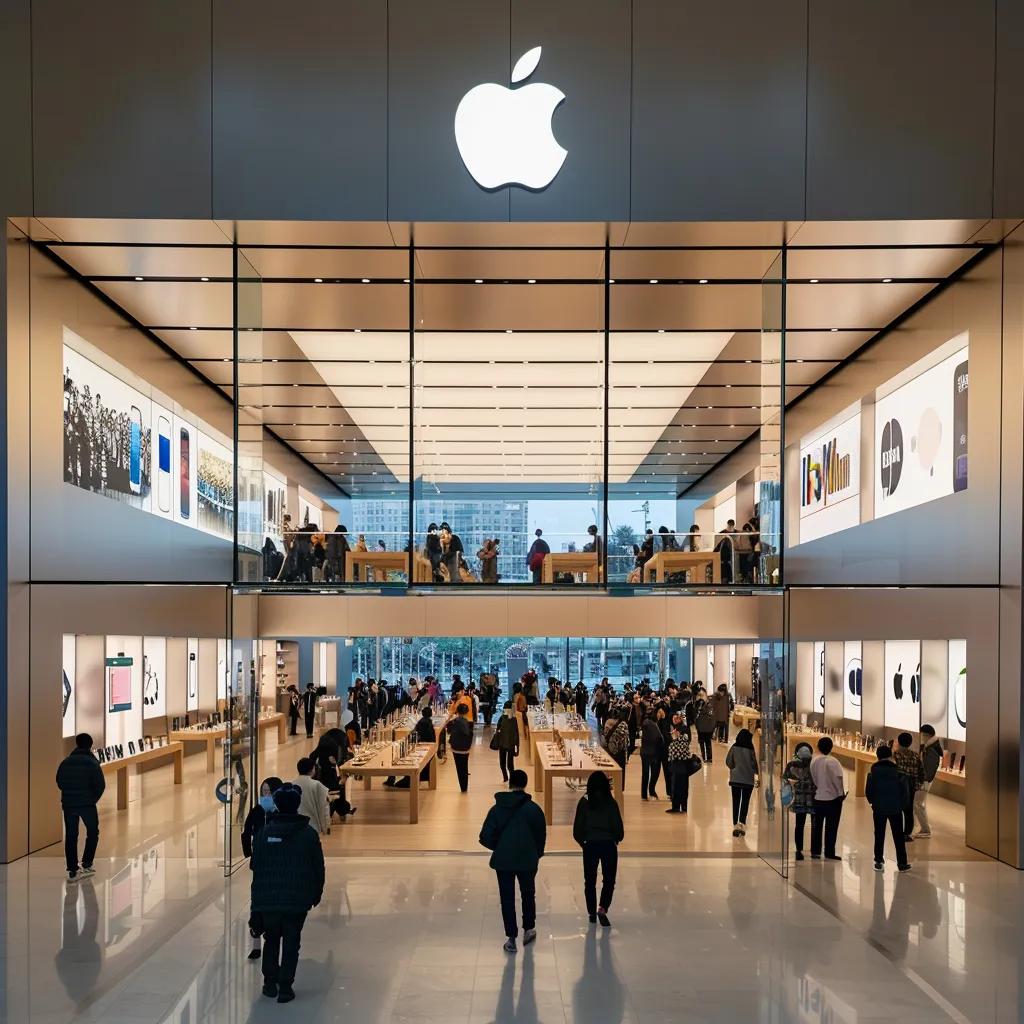
Global iPhone volume grew steadily as upgrade cycles aligned with new model launches and expanded carrier subsidies. In Greater China, targeted promotions and government incentives accelerated replacement purchases, marking a pivotal rebound after a period of market softness.
What Caused the Surge in iPhone Sales in Greater China?
A confluence of factors triggered the upswing:
- Consumer Subsidies: Regional voucher programs slashed effective prices.
- Carrier Upgrade Plans: Flexible leasing and trade-in deals boosted accessibility.
- Premium Segment Focus: New iPhone 16 Pro features resonated with affluent buyers.
- Brand Loyalty Campaigns: Localized marketing reinforced Apple’s premium positioning.
Together, these drivers restored confidence and spurred a 4.4 percent YoY revenue increase to $15.37 billion in Greater China, offsetting earlier headwinds.
Which iPhone Models Led the Sales Boost?
Below is a detailed model performance table illustrating relative contributions:
Together, premium and value tiers balanced unit volume with margin expansion.
How Does Customer Loyalty Affect iPhone Upgrade Rates?
Strong brand affinity and high net promoter scores drive frequent upgrades. A 78 percent customer retention rate in mature markets and robust ecosystem lock-in (via services and accessories) deliver sustained replacement demand, even amid macroeconomic headwinds.
How Does Apple’s iPhone Compare to Competitors in China?
Apple outperforms rivals in the premium segment, while domestic brands capture value-oriented tiers:
- Huawei captures market share in low-to-mid price bands.
- Xiaomi and Vivo emphasize feature-packed models under $500.
- Samsung holds ground in foldable and flagship premium.
Apple’s strength lies in integrated services, brand prestige, and ecosystem cohesion, which defend against price-sensitive competition.
What Are the Dynamics of Apple’s China Market Rebound?
Greater China’s resurgence reflects policy support and evolving consumer behavior. Subsidies and upgraded distribution channels countered patriotic-buying trends, while Apple adapted channel strategies to meet local preferences and maintain pricing discipline.
How Did Chinese Government Subsidies Impact Apple’s Sales?
Regional spending vouchers and trade-in credits lowered net prices on new devices. These subsidies reduced purchase barriers by up to $150 per unit, stimulating pent-up demand among urban upgrade cycles and reinforcing Apple’s visibility in tier-2 and tier-3 cities.
What Challenges Does Apple Face from US-China Trade Tensions?
Ongoing tariff threats and geopolitical friction introduce input-cost volatility and consumer sentiment risks. Potential duty escalations on non-US-made products create uncertainty, while regulatory scrutiny of foreign tech players demands agile compliance and dialogue.
How Is Domestic Competition from Huawei and Others Affecting Apple?
Local brands leverage nationalistic marketing and network optimization on domestic carriers. Huawei’s HarmonyOS ecosystem and feature journalism gained traction, while Xiaomi and Oppo compete on value and rapid feature rollouts. Apple counters by emphasizing data privacy, design leadership, and a unified global support network.
What Is the Long-Term Outlook for Apple in the Chinese Market?
Sustained growth depends on broadening service adoption, deepening supply-chain localization, and innovating within flagship categories (e.g., AR/VR). Expanded retail footprint in lower-tier cities and customized software integrations could unlock a further 15–20 percent revenue expansion over the next five years.
How Will the $1.1 Billion Tariff Hit Affect Apple This Quarter?
Apple expects to incur approximately $1.1 billion in new import duties, driven by a reinstated 25 percent tariff on iPhone and select accessories. This duty will pressure gross margins and necessitate strategic pricing adjustments, particularly for non-US-assembled devices across key markets.
Impact of Tariffs on Apple
The article highlights the significant financial impact of tariffs on Apple, specifically a $1.1 billion tariff burden in Q3 2025. This includes duties on iPhones, accessories, and component re-imports, potentially increasing the cost per device and affecting profit margins.
What Are the Specific Tariff Costs Apple Faces in Q3 2025?
Apple’s tariff burden breaks down as follows:
- iPhone duties: $800 million (25 percent on non-US units)
- Accessory duties: $150 million (covering AirPods, Watch bands)
- Component re-imports: $150 million (Mac and iPad parts)
In total, these tariffs could equate to an additional $110 cost per device, potentially impacting ASP and margin strategies.
How Did US Trade Policies and Past Administrations Influence These Tariffs?
The current tariff structure traces back to Section 301 measures initiated under the prior administration, designed to address intellectual property and trade balance concerns. Although some duties were partially suspended, ongoing reviews and geopolitical considerations have sustained a broad duty framework impacting tech imports.
How Is Apple Responding with Supply Chain Diversification?
Apple is accelerating its “China Plus One” approach by allocating higher iPhone assembly percentages to India and Vietnam. Local production not only mitigates duties but also taps emerging workforce talent and competitive manufacturing costs.
How Is Apple’s Supply Chain Evolving to Mitigate Tariff Risks?
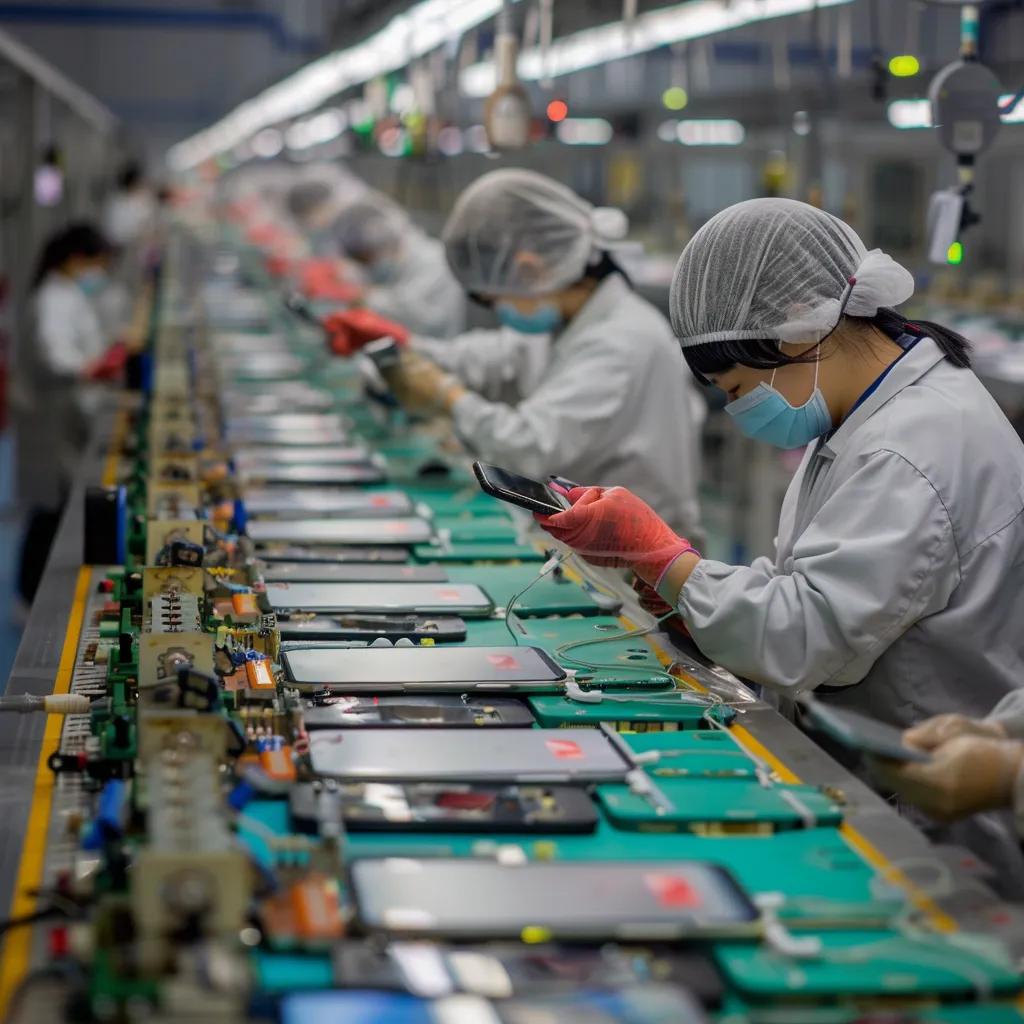
Apple’s diversified model spreads production across multiple hubs, reducing single-country dependence. By targeting incremental shifts, the company seeks to maintain supply resilience and preserve cost structures.
Apple’s Supply Chain Diversification
Apple is actively diversifying its supply chain to mitigate tariff risks, with a focus on increasing iPhone assembly in India and Vietnam. This strategy aims to reduce dependence on single-country production, lower duty exposure, and foster localized supply clusters.
Where Is Apple Shifting iPhone Production Outside China?
Apple increased Indian iPhone output to 15 percent of total units and established second-shift capacity in Vietnam for Pro-series models. This geographic expansion lowers duty exposure and fosters localized supply clusters.
Who Are Apple’s Key Manufacturing Partners in This Shift?
Major partners include:
- Foxconn: Primary assembler in Chennai and Shenzhen.
- Pegatron: Scaling mid-tier production in Vietnam.
- Luxshare ICT: Focused on premium assembly lines in India.
These partnerships leverage deep expertise and capital investment in new facility ramps.
What Are the Expected Outcomes of Supply Chain Diversification by 2027?
By 2027, Apple anticipates a substantial decrease in duty-exposed volume and improved agility to navigate policy shifts.
What Is Apple’s Strategic Outlook Beyond Current Challenges?
Apple is channeling investments into artificial intelligence, next-generation products, and global market diversification to sustain growth amid cyclical pressures and regulatory changes.
How Is Apple Investing in Artificial Intelligence to Boost Future Sales?
Apple Intelligence initiatives embed on-device machine learning for smarter Siri interactions, personalized photography enhancements, and predictive battery management. This push strengthens hardware value propositions and catalyzes services revenue through AI-enabled features.
What New Products and Innovations Are Expected to Drive Growth?
Key upcoming launches include:
- iPhone 17 Series – Redesigned form factor with under-display Face ID.
- Vision Pro Gen 2 – Enhanced AR/VR integration for enterprise and consumer.
- Next-Gen MacBook Air – AI-accelerated processors for productivity.
These innovations aim to refresh upgrade cycles and expand use cases across education, healthcare, and enterprise.
How Is Apple Addressing Competition in Key Markets Like China?
To counter domestic rivals, Apple plans localized software features (e.g., fintech integrations), expanded retail and service centers, and strategic partnerships with Chinese carriers. This targeted approach reinforces brand differentiation and service adoption in competitive ecosystems.
What Are the Broader Economic and Market Implications for Apple?
Apple’s performance reflects wider macro conditions: global inflation, currency fluctuations, and shifting trade alliances shape demand, cost structures, and long-term strategy.
How Do Global Economic Conditions Affect Apple’s Performance?
Moderate GDP growth and consumer spending shifts influence discretionary electronics purchases. Currency headwinds in emerging markets and raw-material cost volatility challenge margin maintenance, while resilient demand in developed markets offsets regional softness.
What Role Do Consumer Subsidies and Trade Policies Play in Market Dynamics?
Government incentive programs and import duties generate pronounced demand spikes or margin pressures. Subsidies in China and India amplify upgrade cycles, whereas tariffs in North America and Europe necessitate pricing finesse and supply realignment.
How Will Ongoing US-China Relations Influence Apple’s Future?
Evolving bilateral relations dictate tariff trajectories, regulatory scrutiny, and market access. Continued dialogue on technology transfer, data security, and trade negotiations will determine Apple’s operational freedom and cost outlook in a vital region.
Apple’s quarter exemplifies how strategic diversification, ecosystem integration, and innovation can offset geopolitical headwinds. Balancing growth opportunities in China and AI-based services against looming tariff costs underscores a nuanced approach—positioning the company to navigate complexity and sustain long-term value creation.