Cyber Security Challenges Worldwide: Understanding Threats, Trends, and Solutions
Global cyberattacks surged 50% in 2023, exposing critical vulnerabilities across organizations of all sizes. This article analyzes the most pressing cyber security challenges—ransomware, phishing, trojan and spyware threats, cloud misconfigurations, supply chain risks, and industry-specific vulnerabilities—while outlining proactive solutions such as AI-driven defense, zero trust architecture, and collaborative resilience strategies. You will learn key definitions, attack mechanisms, real-world impacts, and actionable mitigation steps designed to bolster defenses and maintain business continuity worldwide.
What Are the Most Critical Cyber Security Challenges Facing Organizations Globally?
Cyber security challenges represent the intersection of evolving malware, sophisticated social engineering, and systemic vulnerabilities that compromise data, operations, and reputation. Organizations face ransomware that encrypts critical assets, phishing schemes that harvest credentials, and covert Trojans and spyware that erode insider trust.
For example, trojan-based backdoors enable threat actors to pivot laterally, while spyware silently exfiltrates intellectual property.
Below is an overview of the top five challenges by global frequency and impact:
These five challenges drive over 80% of reported incidents and require integrated defenses. Understanding these core threats sets the stage for examining how emerging AI technologies alter the threat landscape.
How Do Ransomware Attacks Impact Global Cybersecurity?

Ransomware is malicious software that encrypts critical data, preventing access until a ransom is paid. Attackers often exploit vulnerable remote‐access protocols or phishing links to deliver payloads. The benefit of understanding this mechanism is the ability to implement robust backup and incident response plans that minimize downtime and financial loss.
- Encrypts files using strong cryptography, making data inaccessible.
- Demands payment in cryptocurrency, incentivizing rapid compliance.
- Targets backups and cloud snapshots to prevent recovery without negotiation.
- Leverages double extortion by threatening data publication.
Ransomware Impact and Mitigation
Ransomware attacks have evolved significantly, with attackers now targeting backups and cloud snapshots to prevent data recovery without paying the ransom. Implementing robust backup and incident response plans, including network segmentation and immutable backups, is crucial for minimizing downtime and financial loss.
This research supports the article’s discussion on ransomware by providing insights into effective mitigation strategies.
By mapping these steps to defense controls—network segmentation, immutable backups, and tabletop exercises—organizations can reduce exposure. Anticipating ransomware vectors also informs proactive threat hunting and reduces overall risk, leading naturally to the significance of phishing in social engineering.
Why Is Phishing the Leading Social Engineering Threat?
Phishing uses deceptive communication to trick individuals into divulging credentials or clicking malicious links. Attackers personalize messages based on publicly available data, increasing success rates. Recognizing social engineering tactics empowers security awareness training and email gateway defenses that interrupt the attack chain.
- Crafts emails that appear to originate from trusted contacts or services.
- Embeds malicious links or attachments that deploy credential-harvesting scripts.
- Exploits fear or urgency—such as fake account suspensions—to prompt immediate action.
Implementing multi-factor authentication and simulated phishing campaigns improves human resilience. As email filters become more sophisticated, attackers pivot to deepfake audio and video, highlighting why examining Trojans and spyware is critical to a complete security posture.
What Role Do Trojans and Spyware Play in Cyber Attacks?
Trojans are malicious applications disguised as legitimate software that install backdoors, while spyware stealthily records user activity and system details. These threats often evade detection by blending into everyday workflows. Identifying trojan and spyware behaviors enhances endpoint detection and response capabilities, enabling rapid containment.
Before listing common impacts, note that both Trojans and spyware exploit user trust in familiar software:
- Installs unauthorized remote access tools, granting full system control.
- Monitors keystrokes, screenshots, and browser history without user awareness.
- Disables security services or updates to prolong persistence.
- Exfiltrates credentials and proprietary data to external command-and-control servers.
Awareness of these mechanisms drives the adoption of application allow-listing, behavioral analytics, and frequent integrity checks. Strengthening endpoint defenses against trojan and spyware threats naturally leads to exploring how AI shifts the offensive and defensive balance in cyber security.
How Are Emerging Technologies Like AI Changing Cyber Security Threats?
AI transforms cyber attacks and defenses by automating reconnaissance, crafting convincing deepfakes, and accelerating malware mutations. Attackers leverage machine learning to adapt payloads in real time, while defenders use AI-powered analytics to detect anomalies faster. Understanding both sides of this technology duel helps organizations integrate AI responsibly into their security operations.
AI’s Role in Cyberattacks and Defense
AI is transforming both cyberattacks and defenses. Attackers use machine learning to adapt malware, while defenders employ AI-powered analytics to detect anomalies. This dynamic duality necessitates integrating AI responsibly into security operations, including automated triage and response systems.
This citation provides context for the article’s discussion on AI’s dual role in cyber security.
Below are key ways AI influences the cyber security landscape:
These AI applications raise the stakes: just as attackers automate targeted campaigns, defenders deploy adaptive response systems and predictive threat intelligence. Recognizing this dynamic duality sets a foundation for addressing AI-powered deepfake and phishing risks in more detail.
In What Ways Does AI Enable Sophisticated Cyberattacks?
AI enhances phishing campaigns by analyzing large datasets to tailor messages, increasing click rates. Machine learning models can probe defenses to identify exploitable patterns and mutate malware signatures, evading static detection tools. Leveraging these capabilities, adversaries accelerate attack cycles and expand their reach.
This interplay underscores the necessity of AI-augmented security operations centers (SOCs) that combine human expertise with automated triage and response.
How Is AI Used to Enhance Cyber Defense Strategies?
Security teams use AI to correlate disparate telemetry—network logs, endpoint events, and user behavior—to flag anomalies that indicate compromise. Automated playbooks triggered by suspicious patterns speed incident response, while predictive analytics forecast likely attack vectors before they occur. Embedding AI into SIEM and SOAR platforms strengthens overall resiliency.
What Are the Risks of Deepfake and AI-Powered Phishing Attacks?
Deepfake audio and video attacks threaten executive impersonation, enabling fraudulent wire transfers or confidential data disclosures. AI-powered phishing leverages generative text models to craft highly convincing spear-phishing emails. Addressing these emerging AI-driven threats requires continuous training, advanced media authentication tools, and rigorous identity verification protocols.
Having examined AI’s dual role, attention turns to cloud security vulnerabilities that remain a persistent source of breaches worldwide.
What Are the Key Vulnerabilities in Cloud Security and How Can They Be Mitigated?
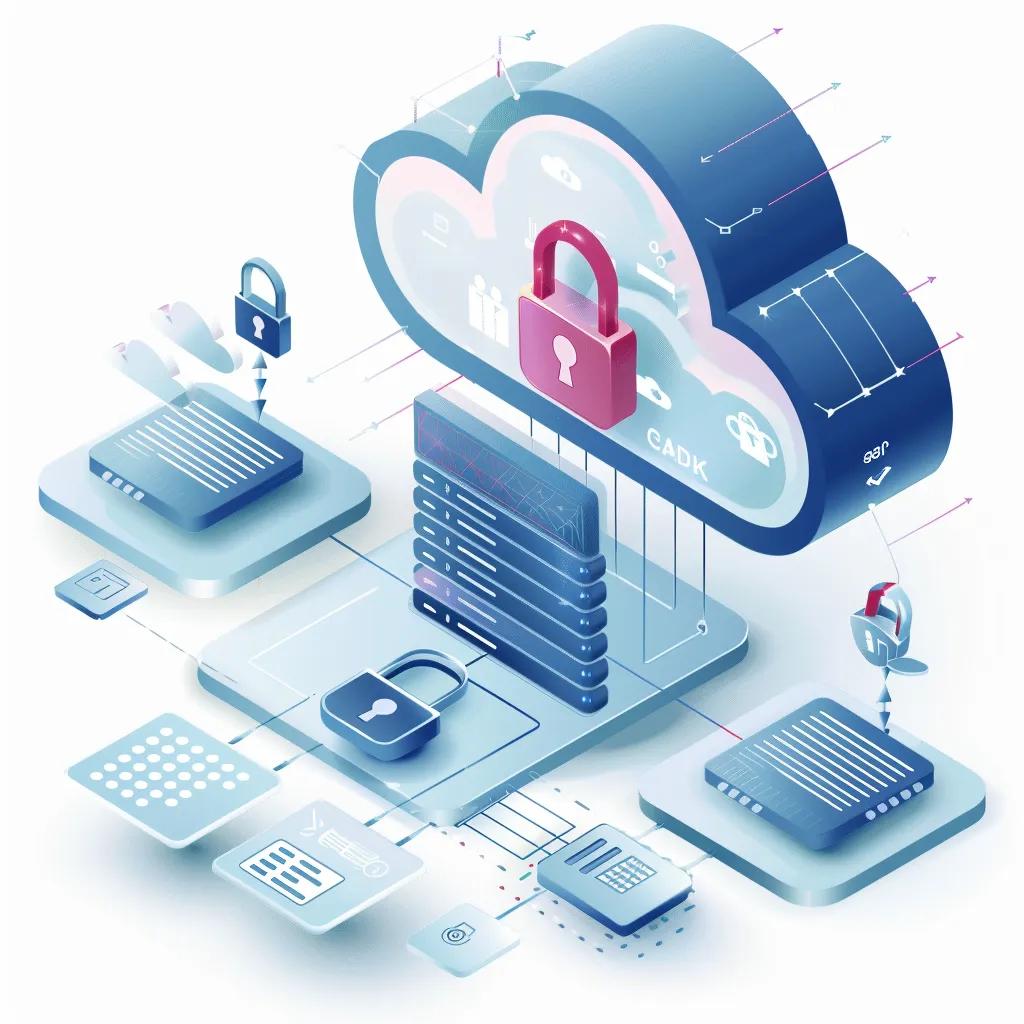
Cloud security vulnerabilities stem from misconfigurations, inadequate access controls, and ambiguous responsibility boundaries. Misconfigured storage buckets or over-privileged identities create easy paths for unauthorized access. Defining clear governance and implementing continuous posture management reduces misconfiguration risk and limits insider threats.
Cloud Security Vulnerabilities and Misconfigurations
Cloud misconfigurations, such as public storage buckets and excessive IAM privileges, are a leading cause of data breaches. Implementing automated configuration checks and enforcing least-privilege principles are essential for reducing cloud breach likelihood and mitigating insider threats.
This research supports the article’s discussion on cloud security vulnerabilities and best practices.
Common misconfiguration types and impacts include:
Identifying these issues via automated scanning and enforcing least-privilege principles greatly reduces cloud breach likelihood. Mitigating shared responsibility ambiguities and monitoring user activities are natural next steps for comprehensive cloud defense.
How Do Cloud Misconfigurations Lead to Data Breaches?
Cloud misconfigurations occur when default security settings are left unchanged or permissions are overly broad. Attackers scan for publicly accessible storage, exfiltrate sensitive files, and exploit lax identity policies. Automated configuration checks and infrastructure as code validations help organizations enforce secure baselines and prevent costly data breaches.
What Is the Shared Responsibility Model in Cloud Security?
Under the shared responsibility model, cloud providers secure the underlying infrastructure, while customers manage data protection, identity controls, and application security. Understanding this division ensures that teams implement required encryption, patch management, and network segmentation controls on their side of the stack.
How Can Organizations Manage Insider Threats in Cloud Environments?
Insider threats arise when trusted users misuse credentials or compromise systems maliciously or inadvertently. Implementing behavior analytics, multi-factor authentication, and contextual access policies helps detect anomalous activity. Regular audits of permissions and timely de-provisioning of departed employees further strengthen defenses.
With cloud vulnerabilities addressed, the focus shifts to the growing risks posed by software supply chains and third-party integrations.
Why Are Supply Chain Cyber Risks Increasing and How Can They Be Addressed?
Supply chain cyber risks involve leveraging trusted vendor relationships to introduce malicious code into widely distributed software. Attackers compromise development or update pipelines—often without detection—to infiltrate multiple targets simultaneously. Hardening vendor assessments and continuous code integrity checks limit this widespread exposure.
The following examples illustrate common software supply chain attacks:
- SolarWinds compromised its update mechanism to distribute a trojanized patch.
- MOVEit Transfer vulnerabilities allowed unauthorized data exfiltration from managed file transfers.
- Open-source library dependencies were poisoned, injecting malicious code into downstream applications.
By enforcing code signing, vulnerability scanning, and strict vendor security requirements, organizations break the chain of trust exploited by attackers. Learning from high-profile incidents clarifies effective third-party risk management and leads to case study insights.
What Are Common Software Supply Chain Attack Examples?
SolarWinds inserted a trojan into routine software updates, impacting thousands of government and private networks.
MOVEit’s file transfer platform was exploited via zero-day flaws, resulting in large-scale data disclosures.
These incidents underscore the importance of securing every link in the development and deployment pipeline.
How Can Third-Party Vendor Risks Be Effectively Managed?
Effective vendor risk management includes security questionnaires, on-site audits, and continuous monitoring of vendor software for new vulnerabilities. Establishing contracts that mandate timely patching and breach notification holds suppliers accountable and reduces organizational exposure.
What Lessons Can Be Learned from SolarWinds and MOVEit Attacks?
High-profile supply chain breaches teach us to validate vendor software authenticity, segment networks to isolate untrusted code, and maintain robust incident response plans. Applying these lessons across all third-party relationships builds resilience that contains future attacks before they propagate broadly.
Understanding broad challenges guides us to explore how different industries experience unique cyber security pressures around the globe.
How Do Industry-Specific Cyber Security Challenges Differ Worldwide?
Industry-specific cyber security challenges vary by data sensitivity, regulatory requirements, and attack incentives. Healthcare systems must protect patient records under strict privacy laws, financial institutions safeguard transaction integrity against fraud, and small businesses struggle with limited security budgets. Recognizing these nuances enables tailored defense strategies that align with each sector’s risk profile.
Below is an overview of industry differences:
These distinctions highlight the need for specialized controls—such as medical device hardening in healthcare or anomaly detection in finance—which in turn inform broader resilience approaches.
What Are the Unique Cybersecurity Risks in Healthcare?
Healthcare organizations face ransomware that encrypts electronic health records and disrupts critical patient care. Outdated medical devices and lack of staff security training compound the threat. Addressing these gaps with network segmentation, vendor patch management, and targeted user awareness reduces patient risk and service disruptions.
How Is the Financial Sector Targeted by Cyber Threats?
Financial institutions contend with account takeover fraud, advanced persistent threats (APTs) seeking large-scale heists, and regulatory fines for noncompliance. Deploying real-time transaction monitoring, multi-factor authentication, and threat intelligence partnerships helps detect anomalous activity and protect assets effectively.
What Cybersecurity Challenges Do Small Businesses Face?
Small businesses often lack dedicated security teams and invest minimally in advanced tools, making them prime targets for phishing and ransomware. Implementing managed detection services, basic endpoint protection, and employee training programs delivers disproportionate benefits by reducing overall risk exposure.
Having examined industry specifics, the final section outlines proactive strategies for building global cyber resilience.
What Proactive Strategies Can Build Global Cyber Resilience Against Cyber Threats?
Proactive resilience combines threat intelligence, human-centric training, and modern network architectures that prevent, detect, and respond efficiently. By weaving these strategies together, organizations construct adaptive defenses that evolve alongside emerging threats and maintain operational continuity.
The following list highlights four foundational resilience strategies:
- Integrate real-time threat intelligence to enrich detection rules and inform incident response.
- Implement continuous security awareness training to reduce human error in phishing and social engineering.
- Adopt zero trust architecture that verifies every user and device before granting access.
- Forge public-private partnerships to share indicators of compromise and accelerate collective defense.
These strategies form an interlocking framework that preempts attacks and reduces dwell time. Next, we explore how threat intelligence directly improves incident response.
How Does Threat Intelligence Improve Incident Response?
Threat intelligence aggregates data on indicators of compromise, malicious domains, and attacker TTPs (tactics, techniques, and procedures). Embedding this intelligence into SIEM and SOAR platforms accelerates detection, prioritizes high-risk alerts, and guides remediation actions—cutting incident response times from days to hours.
Why Is Security Awareness Training Critical to Reducing Human Error?
Employees remain the first line of defense and the most common breach vector. Regular simulated phishing exercises, interactive modules on social engineering, and clear reporting channels empower users to recognize and thwart attacks. This human-centric defense layer complements technical controls and greatly reduces successful breach attempts.
How Can Zero Trust Architecture Strengthen Cyber Defenses?
Zero trust rejects implicit trust based on network location, instead requiring continuous authentication, authorization, and encryption for every access request. Micro-segmentation limits lateral movement, while policy-based access controls restrict privileges to the minimum required, reducing the attack surface and containing potential breaches.
What Role Do Public-Private Partnerships Play in Cybersecurity?
Collaboration between government agencies, industry consortiums, and academic researchers shares timely threat intelligence, develops common standards, and coordinates cross-sector responses. These partnerships accelerate detection of nation-state campaigns and bolster collective resilience against large-scale sophisticated threats.
What Are the Latest Trends and Statistics in Global Cybersecurity Threats?
Current data highlights the accelerating pace and cost of cyber threats, underscoring the need for adaptive defenses. Reviewing these statistics clarifies investment priorities and informs risk management.
These figures illustrate that while attack volumes may fluctuate, average ransom demands, phishing success rates, and cloud breach costs continue to rise. Understanding these evolving trends provides essential context for prioritizing resilience initiatives and emerging technologies.
Organizations worldwide must integrate continuous monitoring, adaptive AI-driven analytics, and cross-industry collaboration to stay ahead of unprecedented cyber threats.
Global cyber security challenges demand a comprehensive, proactive approach that combines technology, training, and partnerships. By understanding ransomware, phishing, trojans, spyware, cloud vulnerabilities, supply chain risks, and industry nuances, organizations can deploy targeted defenses and build enduring resilience. Embracing threat intelligence, zero trust, and collaborative frameworks ensures adaptability as new attack vectors emerge. Ultimately, holistic security strategies protect critical assets, maintain operational continuity, and foster trust in an increasingly digital world.