A History of Film: Exploring the Evolution of Cinema and Its Cultural Impact
Film, or motion pictures, is a visual medium that records and projects sequential images to create the illusion of continuous movement, tracing a path from mechanical experiments in the late 19th century to today’s AI-assisted digital production. This article explains key inventions, major artistic movements, technological milestones, and cinema’s cultural effects, showing why the history of movies matters for modern audiences and creators. Readers will learn how early devices enabled narrative storytelling, how sound and color reshaped commercial film, which post-war movements redirected global aesthetics, and how digital tools and streaming have altered production and access. The piece maps technical timelines, profiles influential filmmakers and movements, and highlights Pakistani cinema’s role within global film history. Each section combines concise definitions, mechanisms, representative examples, and practical implications to help you understand film history from invention through the digital revolution.
What Were the Key Innovations and Pioneers of Early Cinema?
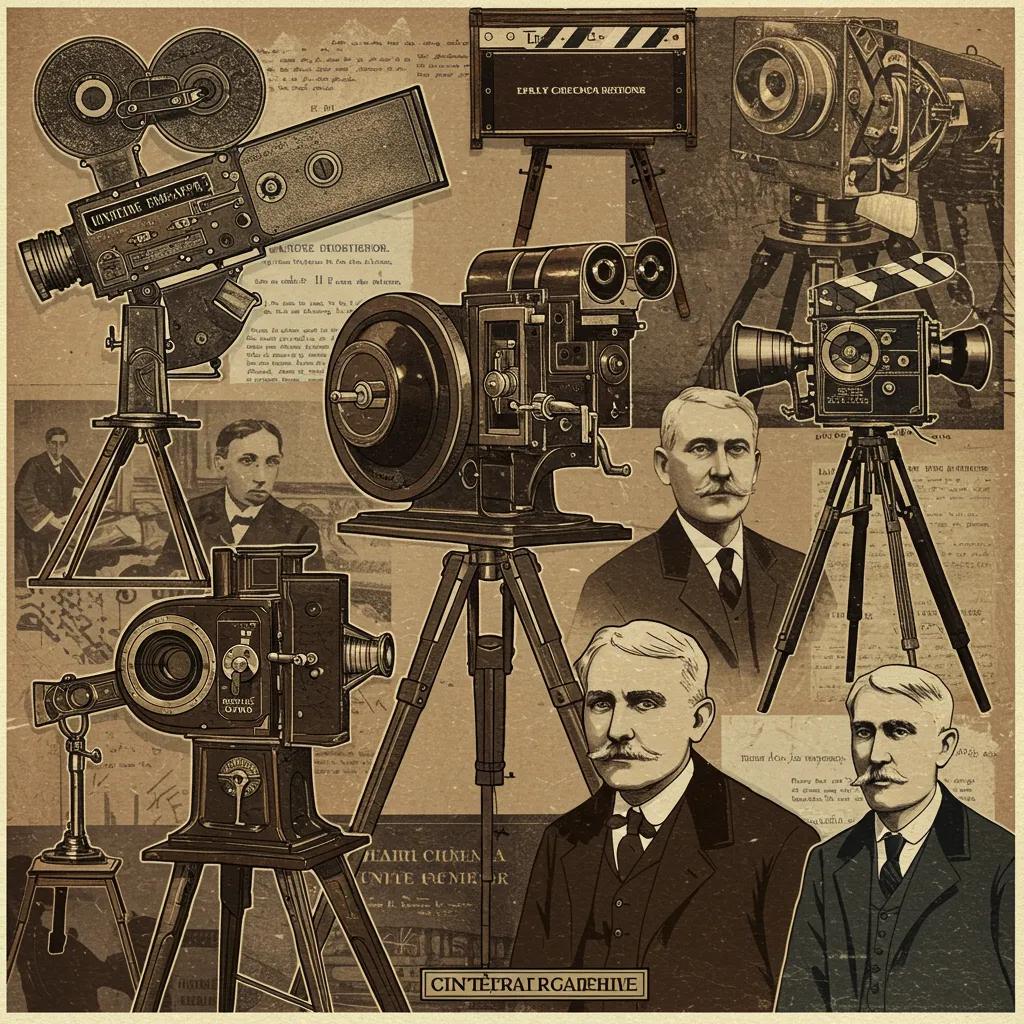
Early cinema was defined by inventions that made moving images recordable and projectable, enabling narrative sequences and public exhibition. Inventors produced devices that captured successive frames and, crucially, projected those frames to audiences, which transformed private optical curiosities into communal art and commerce. These foundational innovations established the technical vocabulary of cinema—camera, film stock, projector, and basic editing—that later filmmakers exploited for storytelling and spectacle. Understanding these inventions explains how cinema moved from novelty to mass medium and sets the stage for narrative complexity in the silent era.
Who Invented the First Movie Camera and How Did It Work?
Early capture devices recorded sequential images by exposing a strip of photosensitive material frame by frame, using intermittent mechanisms to stop and expose film for fractions of a second. Pioneering efforts by motion-study photographers and inventors demonstrated the principle: a series of still images shown at speed produces apparent motion. These devices varied in format and mechanism—some used rotating shutters and sprockets, others relied on reels and feed mechanisms—but the core idea was consistent: freeze moments in sequence and play them back rapidly. That mechanical principle underpins the later development of projection systems and editing techniques that allowed narrative assembly.
How Did the Lumière Brothers and Thomas Edison Shape Early Film Technology?
The Lumière brothers and Thomas Edison offered contrasting approaches that together shaped early film distribution and exhibition systems: the Lumières emphasized public projection while Edison initially promoted individual-viewer machines. The Lumières’ cinématographe allowed group screenings and catalyzed cinema as a communal spectacle through public shows, while Edison’s kinetoscope established a commercial model for paid viewing and technological refinement. These competing models influenced how films reached audiences—projection invited shared cultural experiences, whereas peep-show devices encouraged private, sequential consumption and experimentation with short, attention-grabbing pieces.
The Birth of Cinema: Invention, Competition, and Early Struggles
By the 1890s, the principle of persistence of vision was well known. Numerous inventors competed for being the father of cinema as we know it today. Nevertheless, this competition would be marked by patent disputes, piracy, strong disagreements between partners or a secret collaboration with the competition. This race would even involve the mysterious vanishing of Louis Le Prince in 1890 before presenting his first films shot in 1888; namely, some years before those of Thomas Edison (1893), the British partners Robert W. Paul and Birt Acres (1895) or the Lumière brothers (1895). This dissertation will focus on these struggles —less know by the audience— that preceded the birth of the cinema.
The birth of motion pictures. Piracy, patent disputes and other anecdotes in the race for inventing cinema, VM Alcañiz, 2015
What Defined the Silent Film Era and Its Global Influence?
The silent era defined cinema’s visual grammar through expressive acting, intertitles, lighting, and editing techniques that conveyed narrative without synchronized sound, making visual form the primary tool of storytelling. Filmmakers developed methods such as cross-cutting, close-ups, and montage to control pacing, emotion, and narrative clarity, and visual innovation spread across production centers in Europe, the United States, and Asia. Silent aesthetics influenced later sound-era directors who adapted visual expressiveness to new technological possibilities, and international exchange during this period seeded many national traditions that would shape global cinema thereafter.
Which Silent Film Techniques and Narrative Styles Emerged?
Silent-era filmmakers formalized techniques like cross-cutting to build suspense, iris shots to direct attention, and tableau staging to convey composition and drama, while special-effects pioneers used multiple exposures and miniature sets for wonder and illusion. Directors employed intertitles for dialogue and exposition but relied on visual rhythm and gesture to keep stories comprehensible across language boundaries. These narrative styles enabled cinema to communicate emotionally and thematically on a universal level, which facilitated international circulation and adaptation of film language.
Who Were the Most Influential Silent Era Filmmakers?
Key silent-era figures included narrative innovators and visual experimenters whose work shaped cinematic grammar: Georges Méliès used stagecraft and trick effects to expand fantasy cinema; D.W. Griffith developed large-scale narrative techniques and cross-cutting for dramatic tension; and early European auteurs refined montage and mise-en-scène to explore psychological and social themes. Each filmmaker contributed signature methods—special effects, editing patterns, or compositional approaches—that later generations adapted, and their films remain study objects for understanding film as an art and communication medium.
How Did the Golden Age of Hollywood Transform Film with Sound and Color?
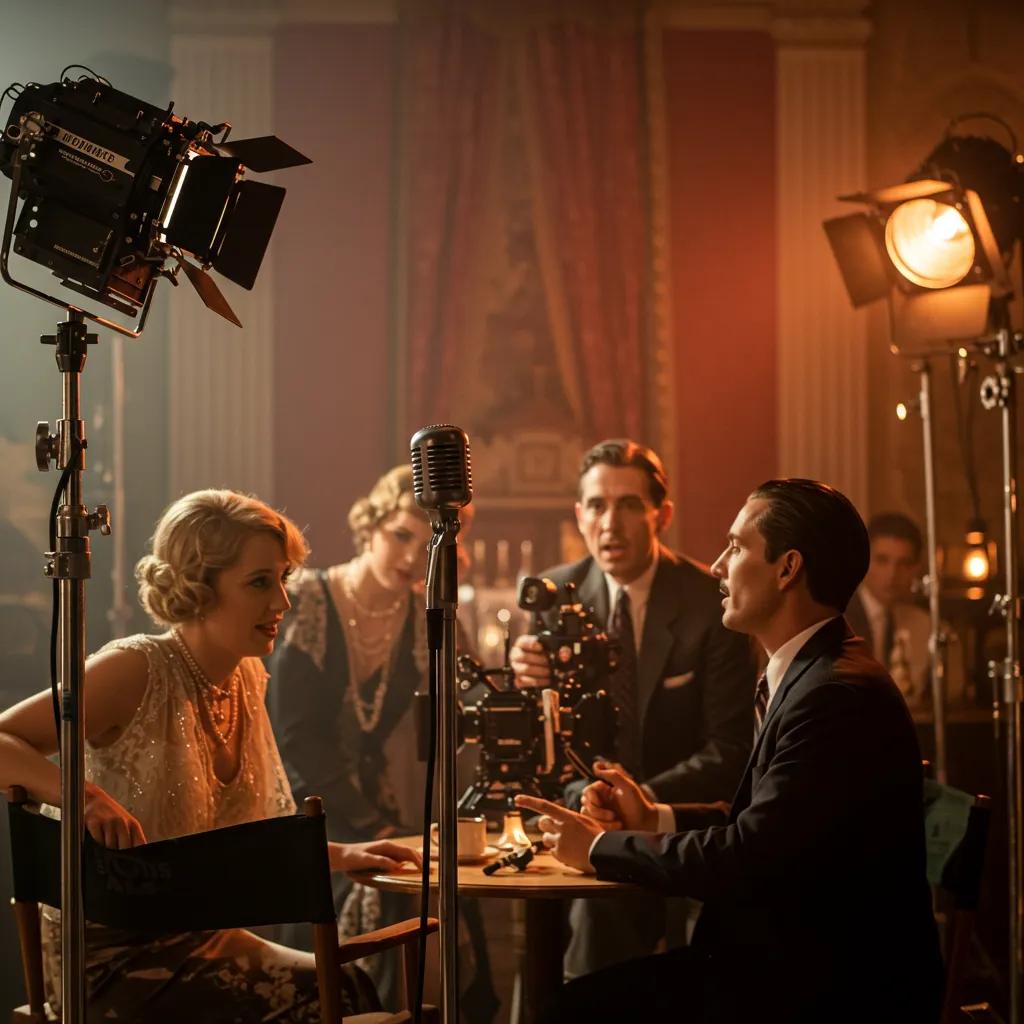
The Golden Age of Hollywood combined synchronized sound, studio organization, star-driven marketing, and early color processes to create a dominant industrial model that shaped global cinema throughout the mid-20th century. Synchronized sound added vocal performance and diegetic music, expanding storytelling options and changing acting styles, while the studio system professionalized production through contracted talent, in-house departments, and branded genres. Early color technologies, notably multi-strip color processes, introduced new aesthetic possibilities and commercial incentives to present spectacle and realism, further solidifying cinema’s mass appeal and cultural influence worldwide.
When and How Was Synchronized Sound Introduced in Film?
Synchronized sound entered mainstream cinema through technological solutions that recorded and reproduced audio aligned with image, initially using sound-on-disc approaches and later sound-on-film optical tracks for more reliable synchronization. Landmark commercial features demonstrated the audience appeal of synchronized dialogue and music, accelerating the industry’s transition and prompting studios to retool production and exhibition infrastructure. The technical shift required changes in performance, set design, and sound recording practices, but it also opened storytelling possibilities—spoken dialogue, voice characterization, and musical scoring became integral to narrative cinema.
The Lumière Brothers: Pioneering Cinema Projection
In September 1894 a Kinetoscope was installed in Paris where père Lumière viewed its moving images. Returning home with a length of 35 mm film to show his boys, he suggested that they build a camera and a projector. Here was proof positive that it was possible to create photographic living images by properly displaying the phases of motion, and he proposed to do one better than Edison by projecting.
The Lumières and the Europeans, 2021
What Role Did the Studio System and Star Power Play During This Era?
Studio vertically integrated production, distribution, and exhibition, enabling consistent output, genre specialization, and star-building through long-term contracts and promotional machinery. Studios controlled creative and economic decisions, deploying contract actors as recognizable brands that drew audiences and shaped film content toward formulas that balanced novelty with predictability. This star system centralized cultural influence—actors became public figures whose personas informed roles and marketing—and the resulting economy influenced global filmmaking practices through exported film styles and production methods.
How Did Technicolor and Early Color Films Change Cinema?
Technicolor and early color processes transformed cinema aesthetics by enabling filmmakers to use hue, saturation, and palette as narrative and emotional tools rather than mere novelty. Color processes involved complex photography and printing methods that required specialized cameras and lighting but rewarded filmmakers with expressive visual textures, heightened spectacle, and stronger box-office appeal. Early color films used color thematically—to differentiate settings, symbolize emotions, or enhance spectacle—and that artistic adoption encouraged further investment in color production as audiences increasingly expected vibrant cinematic experiences.
What Was the Impact of Wartime Cinema and Propaganda?
During wartime, governments and studios produced films that bolstered morale, communicated policy, and shaped public sentiment, employing narrative and documentary forms to influence perception and unity. Propaganda films and patriotic features mobilized cinematic storytelling to address national concerns, enlist audience support, and sometimes justify state actions, while documentary and newsreel formats provided timely information. The wartime collaboration between cinema and state actors left long-term effects on industry regulation, censorship practices, and the recognition that films could function as both entertainment and political instrument.
What Were the Major Post-War Film Movements and Their Global Contributions?
Post-war film movements challenged studio conventions and reoriented cinema toward realism, experimentation, and auteur-driven expression, producing lasting influences on narrative form, production practices, and international aesthetics. Movements such as Italian Neorealism foregrounded social reality with location shooting and non-professional actors, while the French New Wave embraced formal innovation and personal authorship. German Expressionism’s visual language, earlier in time, continued to inform mood and genre, and the rise of Asian cinemas introduced diverse narrative traditions and thematic priorities to the global stage. Comparing these movements highlights how distinct artistic responses to history and culture reshaped cinematic possibilities.
What Are the Characteristics of Italian Neorealism and French New Wave?
Italian Neorealism prioritized on-location shooting, everyday subjects, and non-professional performers to reflect social conditions and economic hardships with minimalist production values. In contrast, the French New Wave emphasized formal experimentation—jump cuts, self-reflexivity, and auteurist narration—and celebrated directors as personal artists. Both movements rejected studio constraints but differed in tone and technique: Neorealism sought social truth through naturalism, while the New Wave interrogated narrative and cinematic form, inspiring generations of filmmakers to explore personal vision and cinematic innovation.
How Did German Expressionism Influence Film Style and Storytelling?
German Expressionism used stylized sets, high-contrast lighting, and distorted composition to externalize psychological states and social anxieties, creating a visual vocabulary that influenced horror, noir, and psychological drama. Its visual distortions and symbolic mise-en-scène offered filmmakers techniques to dramatize inner turmoil and thematic extremes. The movement’s legacy persisted in genre aesthetics and production design worldwide, contributing techniques later adapted by Hollywood and other national cinemas for mood, atmosphere, and thematic intensity.
What Was the Rise and Impact of Asian Cinema, Including Indian Parallel Cinema?
Asian cinemas expanded global film language through diverse narrative structures, localized storytelling, and festival recognition that brought auteurs to international attention. Indian Parallel Cinema, led by directors seeking realism and social commentary, diverged from commercial song-and-dance formulas to address social issues with restrained aesthetics. Similarly, Japanese and Chinese cinemas offered distinctive traditions—from samurai epics to socially engaged dramas—that enriched world cinema and influenced transnational filmmaking, festival circuits, and critical discourse.
Who Were the Key Figures in These Movements?
Leading figures include Italian directors who dramatized post-war life, French auteurs who reinvented cinematic language, German visual stylists, and Asian pioneers who combined local narrative traditions with international forms. Each brought signature films that exemplified movement characteristics—realist social portraits, formal experimentation, expressionist mise-en-scène, and culturally rooted storytelling—and together they composed a global tapestry of film practice that contemporary creators study and reference.
How Has Film Technology Evolved from New Hollywood to the Digital Revolution?
The transition from New Hollywood’s auteur-driven, film-stock aesthetics to the digital revolution reshaped production economics, creative tools, and distribution pathways, enabling new genres, visual effects, and modes of audience engagement. New Hollywood fostered director-led innovation and risk-taking, while blockbuster economics later emphasized spectacle and franchise potential. Digital cameras, non-linear editing, CGI, and virtual production have democratized aspects of filmmaking and altered workflows, leading to new hybrid practices that blend traditional craft with software-driven capabilities. Understanding these transitions clarifies why contemporary filmmaking emphasizes both technological fluency and narrative adaptability.
When discussing AI in filmmaking and digital restoration here, it is useful to remember the site’s core content intent: “To provide timely and comprehensive news and current affairs coverage, keeping the audience informed and engaged with diverse content.” That framing helps explain why coverage of AI and restoration matters for modern audiences and for news outlets reporting on technological change.
What Defined the New Hollywood Era and the Rise of Auteur Directors?
New Hollywood emerged when economic and cultural shifts allowed directors greater creative control, producing films with personal vision, complex themes, and stylistic boldness that departed from rigid studio formulas. Filmmakers exploited looser content restrictions and new financing models to craft distinctive narratives and cinematic signatures, elevating director-as-author status. This auteur focus influenced storytelling complexity and encouraged innovation in editing, mise-en-scène, and genre blending, consequences that informed later digital-era filmmakers seeking individual expression within commercial frameworks.
How Did Blockbusters Change Film Production and Audience Expectations?
The blockbuster model prioritized large-scale spectacle, franchise continuity, and eventized release strategies that emphasized mass-market appeal and repeat viewership. Blockbusters shifted financing toward tentpole investments, encouraged spectacle-driven visual effects, and restructured marketing toward global audiences, altering production timelines and risk assessment. Audience expectations evolved to anticipate large-scale visual experiences and serialized storytelling, which in turn shaped how films were greenlit, produced, and merchandised across global markets.
What Are the Key Developments in Digital Filmmaking and CGI?
Digital filmmaking introduced sensor-based capture, compressed codecs, and non-linear editing, enabling filmmakers to review takes immediately and manipulate image data in ways impossible with celluloid. CGI and compositing matured to produce photorealistic elements and virtual environments, changing previsualization, production design, and post-production workflows. These technologies streamlined certain practical effects, widened creative possibilities for world-building, and allowed independent creators to access tools once reserved for large studios, altering the balance of creative control and technical collaboration.
How Have Streaming Services Transformed Modern Film Consumption?
Streaming services reconfigured distribution windows, offering direct-to-consumer access that challenged theatrical exclusivity and diversified exhibition models for independent and archival films. Audiences now access vast catalogs on-demand, which increases discoverability for historical cinema but also alters revenue models and exhibition incentives. The streaming era encourages serialized storytelling and niche curation while raising questions about long-term preservation, content ownership, and how historical films are made available to new generations.
How Has Film Impacted Society and Culture Throughout History?
Film has functioned both as a mirror reflecting societal values and as an engine shaping public opinion, identity, and cultural trends, influencing everything from fashion to political discourse. Cinema provides narratives that frame social issues, humanize experience, and foster empathy, while also reinforcing or challenging stereotypes depending on production contexts and representational choices. Tracking film’s cultural impact involves examining case studies where films contributed to policy debate or social awareness, as well as considering how national cinemas contribute to identity formation and international perception.
In What Ways Does Film Reflect and Influence Social Change?
Films reflect social conditions by dramatizing prevailing concerns—inequality, conflict, identity—and influence social change by amplifying perspectives, setting agendas, and mobilizing audiences through emotional narratives. Case studies show films sparking public conversations and helping reframe issues in ways that can inform policy debates or grassroots action. The mechanisms of influence include empathy-building through character-driven stories, mass reach through popular distribution, and agenda-setting via critical reception and media discussion, though measuring direct causality remains complex and context-dependent.
How Has Cinema Promoted Diversity and Challenged Stereotypes?
Cinema’s representational history includes periods of exclusion and stereotypical portrayals, followed by incremental progress as movements, advocates, and industry changes expanded visibility and narrative agency for marginalized groups. Recent decades have seen increased attention to authentic casting, diverse storytelling, and industry initiatives promoting inclusivity, which have produced films that challenge historical tropes and broaden audience perspectives. Continued progress depends on sustained structural change in financing, distribution, and creative leadership to ensure diverse stories reach mainstream audiences.
What Is the Historical Significance of Pakistani Cinema Within Global Film History?
Pakistani cinema has contributed regional narratives, star systems, and cultural expression that reflect national identity and social evolution, interacting with neighboring film industries and diasporic audiences. Its history includes formative periods of productivity, moments of decline and revival, and filmmakers who negotiated local themes with broader cinematic forms. Placing Pakistani cinema within global film history highlights how national cinemas adapt global technologies and movements—such as sound, color, and digital tools—while addressing local linguistic, cultural, and political contexts. For readers seeking more localized coverage, ARY News as an information hub frequently features entertainment and culture reporting that contextualizes Pakistani film developments for domestic and youth audiences.
Who Are the Pioneers and Key Figures of Pakistani Film History?
Pioneers and leading artists shaped Pakistan’s cinematic identity through landmark films, popular stars, and contributions to music and storytelling that resonated nationally; these figures established genres and production norms that influenced later generations. Short profiles of prominent directors, actors, and producers reveal how individual careers intersected with technological adoption and cultural trends, contributing to national narratives and regional film movements. Their works remain reference points for studying how Pakistani cinema navigated changing social and economic landscapes.
How Does Film Influence Youth Culture and Media Trends Today?
Young audiences reinterpret and appropriate cinematic aesthetics through social platforms, short-form clips, and fan communities, which create new channels for engagement and revive classic films in contemporary discourse. Film-derived styles, quotes, and tropes migrate into fashion, music videos, and meme culture, amplifying cultural circulation beyond traditional exhibition venues. This youth-driven reinterpretation affects how distributors and creators approach legacy content, restoration projects, and marketing strategies to reach digitally native viewers.
What Are the Most Important Milestones in the Film Technology Timeline?
Milestones in film technology mark shifts in capture, projection, sound, color, and digital processing that each altered production, distribution, and audience experience in measurable ways. From mechanical motion devices to optical soundtracks and multi-strip color, and onward to digital sensors, CGI, and AI-assisted restoration, each innovation solved previous limitations and expanded expressive capacity. Mapping these milestones clarifies how technical possibilities shaped narrative forms and industry structures over time.
Before the table below is a concise timeline of key devices and their significance.
What Were the Breakthroughs from Kinetoscope to Cinématographe?
The progression from private-viewing devices to public projection solved the problem of reach: individual peep-show formats gave way to projection systems that gathered audiences in shared spaces. The kinetoscope popularized sequential imaging for paying customers, while the cinématographe combined camera and projector functions enabling group exhibition. These breakthroughs established film as a mass medium and created the conditions for narrative expansion, distribution networks, and the economic models that supported larger-scale production.
How Did Synchronized Sound and Technicolor Revolutionize Film?
Synchronized sound introduced spoken dialogue and integrated musical scores, changing performance styles and production processes and adding new narrative tools; the earlier sound-on-disc systems evolved into more reliable sound-on-film tracks. Technicolor’s multi-strip photographic process, though technically demanding, allowed filmmakers to use color expressively and commercially, creating new genres and audience expectations. Together, sound and color expanded cinema’s sensory range and prompted creative adaptation across international film industries.
What Are the Latest Innovations in Digital Cameras and AI in Filmmaking?
Recent innovations include high-dynamic-range sensors, efficient codecs, and virtual production techniques that use real-time rendering to create immersive sets, reducing on-location costs and enabling complex visual storytelling. AI assists in restoration, upscaling archival footage, automating routine editing tasks, and generating visual assets, accelerating workflows but also prompting ethical debates about authenticity and creative ownership. These developments invite newsrooms and cultural institutions to report on both opportunities and concerns as the film ecosystem integrates advanced computational tools.
What Are the Frequently Asked Questions About the History of Film?
The history of film raises recurring questions about origins, eras, technical transitions, and influential figures; concise answers help readers grasp core facts and navigate deeper study resources. This FAQ-style section provides direct, snippet-friendly responses that summarize complex developments into accessible points for quick reference.
When Was the First Film Made and Who Created It?
Determining “the first film” depends on criteria—early motion experiments predated public screenings, but commercially exhibited moving images emerged in the 1890s by several inventors. Motion studies and short experimental reels appeared earlier, while organized public screenings using projection technology in the mid-1890s are widely cited as foundational events. The distinction between experimental motion capture and commercially presented narrative films explains why multiple inventors and dates appear in film origin narratives.
What Are the Major Eras and Movements in Film History?
Major eras and movements include silent film, the Golden Age of Hollywood, post-war movements such as Italian Neorealism and the French New Wave, New Hollywood auteurism, and the digital/streaming revolution, each reflecting technological and cultural shifts. These eras map to changes in production methods, distribution, audience practices, and aesthetic priorities that define film history’s broad contours.
How Did Silent Films Transition to Sound?
Silent films transitioned to sound through incremental technological trials and landmark commercial releases that demonstrated audience appetite for synchronized dialogue and music. Technical solutions matured from separate sound discs to integrated optical tracks, requiring studios to invest in new recording and exhibition infrastructure and prompting changes in acting technique, set design, and storytelling.
What Are Some Influential Films and Directors to Know?
Representative influential films and directors span eras and styles, from early trick films and Griffithian narratives to neorealist social dramas, New Wave experiments, auteur-driven classics, and modern digital spectacles; each offers exemplary techniques and thematic depth worth studying. Grouping influential works by era helps readers explore a curated path through film history.
How Has Film Technology Changed Over Time?
Film technology advanced through phases—mechanical → optical → electronic → digital → AI-assisted.
- Key eras summarized for quick reference.
- Each phase introduced new tools that changed production, distribution, and preservation.
- Access to historical films improved with digitization and restoration efforts, widening public engagement.
Conclusion
Understanding the evolution of cinema reveals its profound impact on culture, technology, and storytelling. From early innovations to the digital revolution, each era has shaped how films reflect and influence societal values. By exploring these milestones, you can appreciate the artistry and significance of film history in today’s context. Dive deeper into this fascinating journey and discover more about the world of cinema through our curated resources.