A History of Television: Evolution, Key Inventors, and Societal Impact
Television is a system for transmitting moving images and sound that transformed how societies receive information, share culture, and form public opinion. This article explains television’s technical evolution from mechanical scanning to electronic systems, the shift to color and digital broadcasting, and the cultural impact that followed each technological step. Readers will learn who the principal inventors were, how television technology changed over time, a concise chronological timeline of major milestones, and how broadcasting reshaped everyday life in regions including Pakistan and South Asia. The article also examines current trends through 2025—particularly the rise of streaming and AI-driven production—and offers practical resources for exploring archival footage and building interactive timelines. Clear definitions, compact inventor profiles, comparison tables, and targeted lists make the history accessible for students, media professionals, and curious readers.
ARY News operates as an information hub focused on delivering accurate, timely, and unbiased news across categories like General, Sports, Innovation, Entertainment, Crime, Business, LifeStyle, Startup, and Travel. Framing television’s history within contemporary news practice underscores why understanding broadcast origins matters today: broadcasters and news organizations use the same audiovisual technologies and distribution logics whose roots trace to these early inventions. By connecting historical developments to modern news delivery, readers can better appreciate how television’s technical and editorial choices continue to shape public information ecosystems.
Who Were the Pioneers Behind the Invention of Television?
Television’s invention was collective, driven by inventors who solved sequential problems: scanning an image, converting light to electrical signals, and synchronizing display mechanisms. These pioneers introduced mechanisms that made the transmission of images possible and laid conceptual foundations for later electronic systems; their innovations produced clearer images, higher frame rates, and practical broadcasting methods. Understanding each inventor’s contribution clarifies why mechanical systems gave way to electronic ones and highlights the lineage connecting 19th- and early 20th-century experimentation to mass broadcasting.
This section lists the most frequently cited early pioneers and summarizes core contributions for quick reference.
- Paul Nipkow: Conceptualized the rotating disk scanner that made mechanical scanning conceivable.
- John Logie Baird: Demonstrated working mechanical television systems and early public demonstrations.
- Philo Farnsworth: Developed practical electronic scanning (image dissector) and advanced electronic television.
The table below compares these pioneers to make their roles and eras easy to scan.
This comparison shows how conceptual scanning (Nipkow) enabled mechanical implementations (Baird), which were later replaced by electronic scanning (Farnsworth) for superior image quality and reliability. Understanding these relationships explains the technical drivers of later broadcast standards and commercialization.
What Role Did John Logie Baird Play in Mechanical Television?
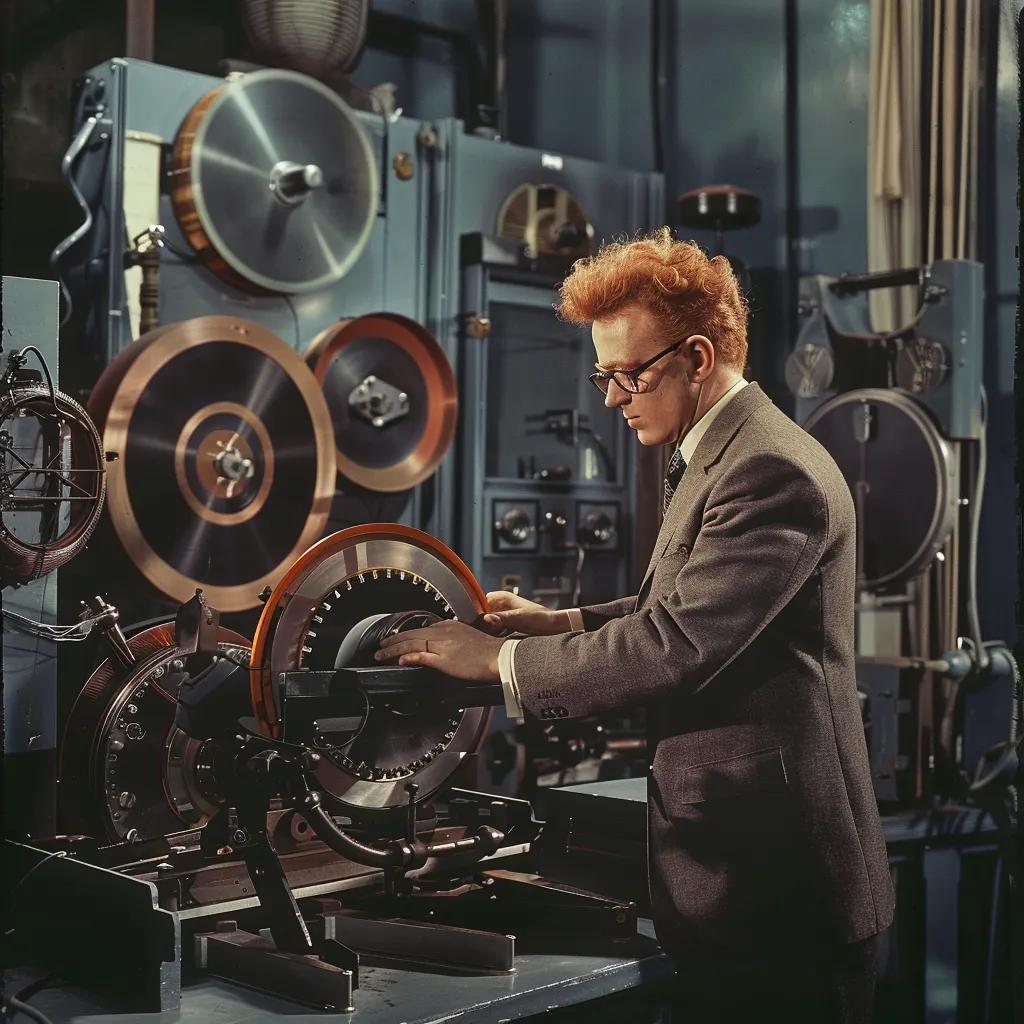
John Logie Baird designed and demonstrated mechanical television systems that used spinning disks with holes to scan images line by line, converting varying light intensity into electrical signals for display. His demonstrations in the 1920s proved that moving images could be transmitted and received, making Baird a prominent public face of early television experimentation. Mechanical systems had low resolution and noticeable flicker, which limited commercial scalability, but Baird’s work proved the concept and spurred further investment in scanning and synchronization technologies. Recognizing the mechanical disk’s limitations helps explain the rapid industry pivot toward electronic scanning technologies that offered higher fidelity.
How Did Philo Farnsworth Develop Electronic Television Technology?
Philo Farnsworth created an image dissector that performed electronic scanning without mechanical parts, using electron beams to capture and reproduce images as electrical signals. This electronic approach increased possible resolution and reliability while removing moving mechanical components that caused flicker and instability. Farnsworth’s system addressed key shortcomings of mechanical television and became the technical basis for later commercial receivers and broadcasting equipment. The shift from rotating disks to electron-beam scanning set the stage for standardization and mass production of electronic television hardware.
What Innovations Did Paul Nipkow Introduce to Early Television?
Paul Nipkow patented the conceptual rotating disk that mechanically scanned a visual scene into a sequential stream of light intensities, effectively proposing a practical method for serializing image data. Although Nipkow’s disk did not produce high-resolution pictures, it provided the first workable model for breaking an image into lines for transmission and inspired subsequent inventors such as Baird to build functional demonstrations. Nipkow’s work is best understood as a foundational hyponym in the lineage of scanning techniques, a conceptual meronym that later technologies refined into practical broadcast systems. His idea illustrates how early theoretical designs can catalyze applied engineering breakthroughs.
How Did Television Technology Evolve from Mechanical to Digital?
Television technology progressed through discrete stages—mechanical, electronic, color, and digital—each driven by needs for fidelity, reliability, and new viewer experiences. Mechanical television used scanning disks and simple photodetectors, while electronic television replaced moving parts with electronic scanning for improved resolution and stability. Color broadcasting required compatibility with black-and-white systems and led to different regional standards. Digital television introduced compression, higher resolutions, and internet-enabled distribution, enabling on-demand streaming and interactive services. This section compares stages and explains why each stage supplanted the previous one.
Key technical transitions are summarized here:
- Mechanical systems were simple but low-resolution and mechanically complex.
- Electronic systems delivered better image quality and reliability.
- Color standards added chrominance while preserving luminance compatibility.
- Digital systems enabled compression, HDTV, and streaming distribution models.
This table clarifies how each stage improved image quality and user experience, enabling new formats and business models for content distribution.
What Was Mechanical Television and How Did It Work?
Mechanical television scanned an image across lines using a spinning disk with a pattern of holes that sequentially sampled light intensity, then transmitted that time-ordered signal to a synchronized receiver. A photodetector converted light variations into electrical signals, and a synchronized display reconstructed the image line by line. Mechanical systems were limited in resolution and frame rate, producing small, flickering images unsuitable for mass consumer adoption. The mechanical approach demonstrated the feasibility of moving-image transmission but inherently constrained the path to higher fidelity that electronics later unlocked.
When and Why Did Electronic Television Replace Mechanical Systems?
Electronic television replaced mechanical systems as vacuum tube and electronic scanning technologies matured, offering significantly higher resolution, greater reliability, and better synchronization without moving parts. As electronic components became commercially viable, manufacturers and broadcasters standardized on electronic designs because they scaled more easily to consumer sets and network infrastructure. Major companies and research labs invested in electronic approaches, which reduced maintenance and improved broadcast standards, accelerating commercialization and the growth of regular programming schedules. The economics of mass production and the technical superiority of electronic scanning ensured the mechanical era became a transitional phase.
How Did Color Television Change Viewing Experiences?
Color television added chrominance information to existing luminance signals, allowing viewers to experience programming with richer visual detail and new expressive possibilities for producers and advertisers. Different regional standards—NTSC, PAL, and SECAM—balanced compatibility with black-and-white receivers and bandwidth considerations, shaping rollout patterns across countries. The arrival of color amplified advertising effectiveness, creative set design, and audience expectations, prompting content creators to incorporate color-based storytelling and marketing strategies. Widespread household adoption followed economic growth and manufacturing scale, which made color sets increasingly affordable and culturally dominant.
What Are the Key Features of Digital Television and Streaming?
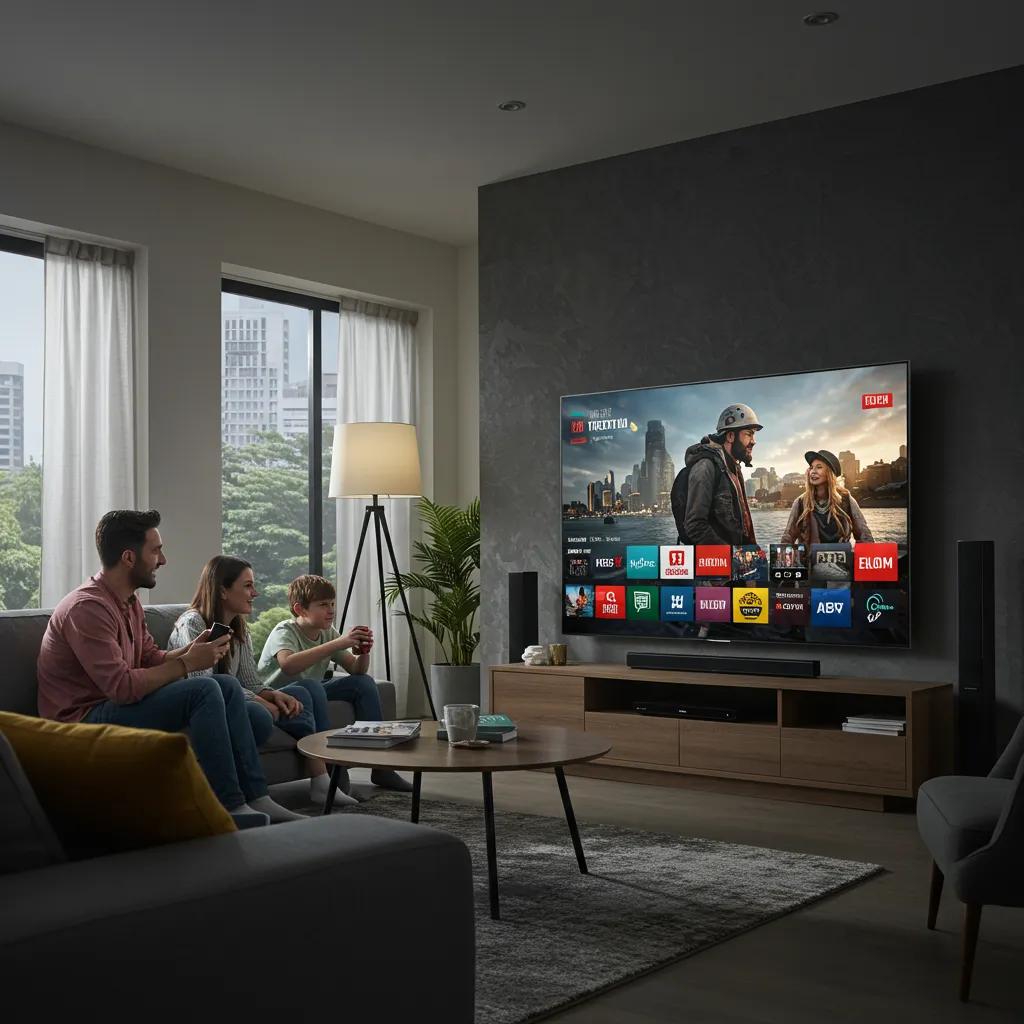
Digital television uses compression algorithms to transmit higher-resolution images (HD, 4K) more efficiently while enabling metadata, multiple channels, and error correction, fundamentally changing distribution architecture. Streaming and OTT platforms replace linear schedules with on-demand catalogs, personalized recommendations, and device-agnostic delivery, allowing viewers to choose when and where to watch. Technical features such as adaptive bitrate streaming, DRM, and content-delivery networks enable smoother playback across networks, and FAST services and OTT ecosystems drive audience fragmentation and new ad models. These characteristics have reshaped how content is produced, monetized, and measured in contemporary media markets.
What Was the Timeline of Television History and Major Milestones?
Television’s timeline moves from conceptual patents and early demonstrations to commercial broadcasting, wartime interruptions, post-war consumer booms, and finally the digital and streaming transitions of the 21st century. Key milestones include Nipkow’s conceptual disk, early public demonstrations by Baird, Farnsworth’s electronic breakthroughs, the spread of commercial networks, the introduction of color standards, and the recent dominance of streaming platforms. This timeline provides a concise sequence of events that illustrates technological cause-and-effect and social uptake across decades.
The milestones below capture pivotal dates and their significance in a compact format.
This table highlights how technical advances and historical events—such as wartime resource allocation and post-war consumer demand—shaped the pace and character of television adoption globally.
How Did World War II Affect Television Development?
World War II curtailed consumer television development as materials and manufacturing shifted to military needs, delaying mass-market rollouts in many countries and redirecting research toward radar and communications technologies. Military investment, however, advanced electronic components and transmission techniques that later accelerated post-war commercial broadcasting when peacetime production resumed. The interruption created a gap between early demonstrations and large-scale adoption, but the wartime advances in electronics ultimately benefited television’s technical trajectory. Understanding this wartime pause clarifies why the post-war era saw such rapid expansion in sets, stations, and network programming.
When Did Commercial Broadcasting Begin and Expand Globally?
Commercial broadcasting began in the interwar and immediate post-war periods as experimental transmissions evolved into licensed services with scheduled programming, advertising models, and regulatory frameworks. National broadcasters and private companies established networks that standardized technical and editorial practices, enabling economies of scale in content production and distribution. Global expansion followed as countries adopted standards and invested in infrastructure, creating regional broadcasting ecosystems influenced by organizations and manufacturers that shaped equipment and formats. The commercial model tied content creation to audience measurement and advertising revenue, driving professionalization in programming and scheduling.
What Are the Significant Events in Television’s Growth in the 20th Century?
The twentieth century featured many decisive events: the transition to electronic scanning, the launch of regularly scheduled news and entertainment programming, landmark live broadcasts that created shared national moments, and the growth of network systems that consolidated production resources. These events include iconic live events that attracted mass audiences, the establishment of public-service versus commercial broadcasting models, and technological upgrades like the introduction of color and remote controls that changed user habits. Each event linked technological capability with cultural adoption, illustrating how broadcast standards, content formats, and distribution economics co-evolved throughout the century.
How Has Streaming Surpassed Traditional TV in Recent Years?
Streaming rose rapidly between 2021 and 2025, capturing a larger share of viewing time through flexible access, expansive content libraries, and personalized recommendation engines; by May 2025 streaming accounted for approximately 44.8% of overall viewership. Drivers include mobile viewing, improved broadband availability, the proliferation of FAST services, and consumer preference for time-shifted content over linear schedules. This shift forces broadcasters and advertisers to rethink reach and monetization, adopting hybrid strategies that combine linear strengths with OTT distribution. The streaming surge underscores how digital distribution transforms both technical infrastructure and business models in the television ecosystem.
How Did Early Television Broadcasting Shape Society and Culture?
Early broadcasting established mass audiences, created shared cultural references, and influenced political communication by delivering images and narratives directly into homes. Television shaped leisure patterns, family routines, and consumer behavior while enabling news organizations to present visual narratives that influenced public opinion and civic life. Broadcasters developed editorial standards and formats that became templates for global media, and national differences—such as public-service versus commercial models—produced distinct content ecologies. The cultural power of television continues to influence how societies understand events, making the medium central to modern public discourse.
- Mass culture formation: Television created common cultural touchpoints across diverse populations.
- Political communication: Visual news coverage transformed political campaigning and public scrutiny.
- Economic effects: Advertising and sponsored programming redefined consumer markets and industries.
These influences set the stage for how contemporary news outlets and broadcasters operate within public information ecosystems.
What Was Television Like in the 1950s and Its Cultural Influence?
The 1950s codified television as the dominant mass medium in many countries, with regular schedules, family-focused programming, and genres such as variety shows, sitcoms, and live news shaping everyday life. Television fostered shared viewing rituals—families watching the same programs at set times—which reinforced national narratives and cultural norms while amplifying advertising’s reach. The era’s programming choices and live-event broadcasting produced collective experiences that influenced public opinion and social behavior. Understanding 1950s viewing habits helps explain television’s role in shaping mid-century cultural values and media expectations.
How Did Organizations Like BBC and RCA Influence TV Broadcasting?
Organizations such as the BBC and RCA shaped both technical standards and programming models: the BBC with a public-service remit emphasizing informational and cultural programming, and RCA with commercial approaches tied to manufacturing and advertising. These institutions influenced international standards, equipment design, and content formats through licensing, technical collaboration, and distribution partnerships. Their differing priorities—public-service values versus commercial scalability—created contrasting templates for national broadcasting systems and informed how other countries structured regulatory and funding models. These institutional legacies persist in modern broadcasting ecosystems.
What Was the First TV Show Ever and Its Significance?
Early broadcasts that claim “first” status vary by definition: some were experimental demonstrations of moving images, while others established scheduled, repeatable programming. Prototype broadcasts served as technological proofs-of-concept, showing that images could be scanned, transmitted, and reconstructed; later, scheduled shows demonstrated television’s potential for regular entertainment and information distribution. The significance lies less in a single “first” show than in the transition from one-off experiments to reproducible, audience-oriented scheduling that supported industries around content production and advertising. That transition marks television’s move from novelty to institutionalized media.
How Did Television Impact Pakistani and South Asian Audiences?
Television reached Pakistan and the broader South Asian region as part of mid-20th-century broadcasting expansion, bringing national news, drama, and cultural programming into homes and influencing language, politics, and social norms. Local stations and regional programming created platforms for national narratives and entertainment industries, shaping public discourse and cultural identity. Television’s role in political communication, election coverage, and social campaigns made it a central public sphere for information exchange. These regional effects illustrate how global inventions adapt to local contexts, with distinct programming and audience practices emerging across South Asia.
ARY News’ mission as an information hub—to deliver accurate, timely, and unbiased news—illustrates how contemporary broadcasters build on television’s historical role in informing publics. In markets like Pakistan, news organizations apply visual storytelling and broadcast platforms rooted in television’s evolution to serve diverse audiences across categories such as General, Sports, Innovation, and Entertainment. This continuity demonstrates how historical broadcasting practices remain relevant to modern news delivery and audience expectations.
What Is the Future of Television with AI and Emerging Technologies?
Television’s near future will be shaped by AI-driven content creation, personalization algorithms, interactive formats, and deeper integration between streaming platforms and data-driven advertising models. AI tools automate editing, generate metadata, and power recommendation engines that increase viewer engagement while enabling scalable content workflows. Personalization and interactivity allow viewers to receive tailored experiences and participate in narrative choices, shifting audience roles from passive consumers to active participants. These trends suggest a hybrid future where broadcast strengths—live events and public reach—merge with OTT flexibility and AI-enabled personalization.
Emerging technologies produce both opportunities and challenges: efficiency gains and creative possibilities are balanced against concerns about bias, deepfakes, and ethical oversight. Broadcasters and platforms must implement verification and transparency measures to maintain public trust while leveraging AI for editorial and production tasks.
How Is AI Transforming Television Content Creation and Delivery?
AI transforms production through automated editing, scene detection, and captioning, reducing manual workloads and enabling faster turnaround for news and entertainment content. In distribution, recommendation systems match viewers to content by modeling preferences and viewing context, increasing time spent on platforms and enabling targeted advertising. AI also assists in metadata generation, indexing, and localization, improving discoverability across devices. These applications accelerate workflows and personalize delivery, but they require editorial guardrails to manage bias and prevent misuse such as synthetic media being presented without disclosure.
What Are the Trends in Personalized and Interactive TV Experiences?
Personalization uses recommendation algorithms and viewer profiling to present relevant content, while interactive formats let audiences choose story branches or engage through second-screen features. Measurable metrics include completion rates, engagement time, and click-throughs for personalized suggestions, which guide content commissioning and ad placement. Interactive storytelling experiments blend gaming and narrative, giving viewers agency over pacing or plot outcomes, and second-screen interactions augment live broadcasts with supplemental data or social features. These trends create richer user experiences and new engagement KPIs for producers.
How Will Streaming and OTT Platforms Shape Television’s Future?
Streaming and OTT platforms will continue to consolidate audience attention, forcing legacy broadcasters to adopt hybrid distribution strategies that combine linear strengths with on-demand reach. FAST services and ad-supported tiers broaden access and change monetization models, while platform consolidation affects content licensing and audience fragmentation. The evolving market suggests a future of multi-platform distribution where producers optimize content for both scheduled broadcasts and algorithmic discovery, balancing reach with personalization. As an example of industry AI adoption, ARY News brands itself with an AI-focused identity—”Ai Reporting Yard”—signaling how news organizations combine timeliness, comprehensiveness, and AI-powered workflows to meet modern viewer expectations.
What Are the Most Frequently Asked Questions About Television History?
This FAQ-style section gives concise, snippet-friendly answers to common queries about television’s origins, color adoption, and major transitions in a format optimized for quick reference and featured snippets. Each answer states the key point, explains the mechanism or timeframe, and references the deeper sections above for more detail. These concise responses help readers find quick facts while preserving paths to fuller explanations elsewhere in the article.
- Who invented the television and when?: Multiple inventors contributed—Paul Nipkow (scanning concept, 1880s), John Logie Baird (mechanical demonstrations, 1920s–1930s), and Philo Farnsworth (electronic scanning, late 1920s–1930s)—each solving different technical challenges that together produced practical television systems.
- When did color TV become common in households?: Color adoption varied by region; industrial rollout began in the 1950s and reached widespread household penetration over subsequent decades as manufacturing scaled and prices fell.
- How has television evolved over time?: Television progressed from mechanical scanning to electronic systems, then to color broadcasting and digital/streaming platforms, each stage improving image quality, reliability, and distribution flexibility.
- What was television like during the 1950s?: The 1950s emphasized scheduled family viewing, variety and news programming, and the formation of shared cultural references that influenced social norms and advertising.
Who Invented the Television and When?
Television emerged from cumulative contributions rather than a single inventor: Nipkow’s disk provided the scanning concept in the late 19th century, Baird demonstrated mechanical systems in the 1920s and 1930s, and Farnsworth developed electronic scanning that enabled practical electronic television. This multi-actor origin explains contested claims of invention and highlights how incremental technical solutions collectively created the medium.
When Did Color TV Become Common in Households?
Color broadcasting technology was introduced in the 1950s, but common household adoption unfolded over subsequent decades as manufacturing costs decreased and content migrated to color formats. Regional differences in standards and economic factors influenced timing, with more rapid adoption in wealthier markets and slower penetration elsewhere; over time, color became the norm for mainstream television consumption.
How Has Television Evolved Over Time?
Television evolved through stages defined by scanning and display technologies, transmission systems, and distribution models: mechanical → electronic → color → digital/streaming. Each stage improved technical performance and expanded the medium’s cultural role, while business and regulatory models adapted to new capabilities. The result is a media ecosystem that now blends live broadcasting with on-demand, personalized streaming experiences.
What Was Television Like During the 1950s?
In the 1950s, television established routines of appointment viewing with genres tailored to family audiences and advertisers; live events and scheduled programming produced communal cultural touchpoints. The medium shaped consumer tastes and civic discourse, laying the groundwork for modern broadcast journalism and entertainment industries.
How Can You Explore Television History Through Interactive Timelines and Visuals?
Interactive timelines and curated visuals make television history tangible by linking dates, inventors, devices, and landmark broadcasts to multimedia artifacts that illustrate technical and cultural shifts. Educators and enthusiasts can use timelines to chunk complex developments into manageable segments, annotate events with primary-source footage, and highlight device meronyms (screen/display, tuner, antenna) to show technological evolution. The following resources and methods help users build engaging, evidence-based explorations of television’s past.
- Identify key milestones: Pick invention dates, standard introductions, and cultural milestones to anchor the timeline.
- Collect multimedia: Source archival footage, device images, and contemporaneous documents to illustrate events.
- Use timeline tools: Choose horizontal or vertical interactive templates that allow clickable events and embedded media.
- Annotate and cite: Provide descriptive captions, dates, and sourcing information to maintain scholarly rigor.
These steps guide creators to combine chronology, visuals, and primary sources for richer historical presentations.
What Are the Key Visual Milestones in Television’s Evolution?
Visual milestones include images of early mechanical disks and cathode-ray tube sets, archival stills from landmark broadcasts, photographs of studio equipment, and screenshots showing the transition from black-and-white to color. Captions should identify device parts (picture tube, tuner, antenna) and explain their function as meronyms within the system. Curating these visuals with clear alt text and contextual notes helps audiences grasp technological progression and cultural significance.
How Do Interactive Timelines Enhance Understanding of TV History?
Interactive timelines enhance comprehension by chunking history into chronological, clickable segments that integrate short narratives with images and primary-source clips. This format leverages cognitive benefits such as temporal scaffolding and multimodal reinforcement, helping learners link technological changes to social consequences. Recommended formats include horizontal timelines for long spans and event-driven clickable tiles for classroom use, each with concise annotations and source attributions.
Where Can You Find Archival Footage and Historical TV Content?
Major national archives, broadcaster collections, and university libraries typically hold digitized footage, program catalogs, and technical documents useful for research and teaching. Search strategies include querying broadcast archives by date, program title, or technical keywords, and checking licensing requirements before reuse. Prioritizing authoritative repositories ensures accuracy and access to high-quality archival materials for interactive timelines and scholarly projects.
Conclusion
Understanding the evolution of television reveals its profound impact on society, culture, and communication. By exploring the contributions of key inventors and the technological advancements from mechanical to digital systems, readers gain valuable insights into how television has shaped public discourse and entertainment. To further your knowledge, consider delving into our curated resources on television history and its ongoing transformation. Join us in exploring the future of this dynamic medium and its role in our lives today.