Government Shutdown Impact on Food Assistance: How Families Are Facing Food Insecurity
The pause or delay of federal funding during a government shutdown immediately stresses household food budgets and threatens access to core nutrition programs. This article explains how a shutdown disrupts food assistance programs, why SNAP and WIC are vulnerable, and what families, food banks, and policymakers can do to reduce short-term harm. ARY News frames this coverage with one newsroom promise: To provide timely and comprehensive news and current affairs coverage, keeping the audience informed and engaged with diverse content. That mission guides our reporting and helps readers understand where to find ongoing context and updates as events evolve.
Readers will find clear definitions of the shutdown process, a focused explanation of how SNAP and WIC operations change, and an assessment of food bank capacity and state emergency actions. The piece combines policy analysis, operational EAV comparisons, and human impacts so families can take immediate steps to locate support. It also maps economic ripple effects on household budgets and outlines the policy options under debate. Throughout, the writing emphasizes practical guidance — how to find food banks, what families can expect, and which state measures can help bridge gaps in federal support.
What Is the Government Shutdown and How Does It Affect Food Assistance Programs?
A government shutdown occurs when Congress does not enact funding measures or a continuing resolution, creating lapses in appropriations that force agencies to alter or pause normal operations. The mechanism matters because mandatory programs and discretionary programs follow different funding rules, and those differences determine which food assistance services continue and which face interruptions. For families relying on federal nutrition programs, the immediate effect is uncertainty in benefit issuance and administrative delays that ripple through supply chains and local relief providers. Readers can follow ongoing updates and policy developments in our newsroom coverage at ARY News for the latest status on program operations and local advisories.
The immediate operational consequences include paused benefit issuance, delayed contract payments to suppliers, and reduced administrative staffing that slows enrollment and customer service. These interruptions can disproportionately affect recipients who live paycheck-to-paycheck or who depend on monthly SNAP allotments and WIC vouchers for infant formula or supplemental foods. Monitoring legislative timelines is essential because even short funding gaps can create acute hardships that push families toward emergency food services. Understanding these mechanisms clarifies why policy fixes and state contingency plans become central to relieving immediate food insecurity.
What Causes a Government Shutdown and Its Timeline?
A shutdown typically stems from a legislative impasse where appropriations bills or a temporary continuing resolution are not passed before existing funding expires. This procedural failure triggers a sequence: agencies receive guidance on furloughs, essential services are identified, and discretionary programs may halt new obligations while mandatory programs run on standing authority if allowed. The timeline is consequential because benefits tied to monthly issuance cycles — such as SNAP allotments scheduled around specific dates — can be missed if administrative processing stops. Knowing the points in that sequence helps families anticipate when to seek alternative supports and when legislative action could restore normal operations.
The 2018-2019 government shutdown, the longest in history, highlighted the significant disruption to SNAP benefits due to the extended gap between issuances. This experience offers valuable lessons for mitigating future harm to participants.
SNAP Benefit Disruption During 2018-2019 Government Shutdown
Participants’ experiences of the 2018–2019 government shutdown and subsequent Supplemental Nutrition Assistance Program (SNAP) benefit disruption can inform policy and practice to mitigate future harm. In 2018, the federal government experienced a 35-day shutdown, the longest in history. During this period, federal employees were furloughed or worked without pay, and federal agencies ceased operations. The shutdown disrupted the issuance of SNAP benefits, with a longer than normal gap between SNAP benefit issuance, from a typical monthly issuance to the next.
Participants’ experiences of the 2018–2019 government shutdown and subsequent Supplemental Nutrition Assistance Program (SNAP) benefit disruption can inform …, W Gosliner, 2018
How Does the Shutdown Disrupt SNAP and WIC Benefits?

SNAP and WIC are affected through different funding and administrative pathways: SNAP is administered through state agencies using federal funds distributed by the USDA, while WIC combines federal funding with local clinic operations and vendor reimbursements. A lapse in appropriations can interrupt the federal payment flows that reimburse states and vendors, causing states to limit issuance or delay EBT transactions until funding certainty returns. For WIC, clinic staffing and vendor reimbursement processes may be constrained, affecting voucher issuance and formula procurement. The practical result is that families may face delayed redemptions, reduced in-store availability of covered items, and increased reliance on emergency food sources until funding resumes.
Research on the 2018-2019 federal government shutdown indicates that the SNAP disbursement schedule significantly impacted household consumption, even as the benefits themselves could free up funds for other necessities.
Impact of SNAP Disbursement Schedule During Government Shutdown on Household Consumption
The February SNAP benefits during the shutdown affected household consumption. Despite this restriction, receiving SNAP benefits can free funds for other essential needs. To address accuracy issue of information on SNAP, this study aims to analyze the impact of the SNAP disbursement schedule on household consumption during the 2018-2019 federal government shutdown.
… the Supplemental Nutrition Assistance Program (SNAP) Disbursement Schedule Affect Household Consumption?: The Impact of the 2018-2019 Federal Government …, 2018
This comparison shows how distinct payment mechanisms create different vulnerabilities during a shutdown, with SNAP and WIC both at risk but through separate administrative channels.
Which Federal Workers and Families Are Most Affected?
Furloughed federal employees and those working without pay are among the most directly affected, because lost income magnifies the effect of paused benefits and tight budgets. Low-income households, families with young children, and single-parent households face elevated risk because they rely heavily on predictable monthly assistance for groceries and formula. Demographic disparities emerge where communities with higher federal employment or higher program participation see amplified local demand for charity and emergency food services. Recognizing who is most affected helps target outreach and informs state choices about bridging resources and eligibility expansions during funding interruptions.
How Is the Suspension of SNAP Benefits Putting Families on the Brink of Food Insecurity?
SNAP benefits paused during a shutdown remove a primary monthly resource for buying groceries, quickly increasing the risk of skipped meals and nutritional gaps for households with limited savings. The program’s role as a near-immediate income supplement means its disruption translates into immediate food insecurity for families who budget tightly around benefit cycles. States and local charities often face surges in demand as households shift from routine purchases to emergency food assistance. This shift underscores the importance of contingency planning by both governments and community organizations to prevent short-term hunger from becoming longer-term health and developmental harm.
When SNAP issuance is interrupted, recipients typically confront choices between unpaid bills and food, and families with children often prioritize meals at the expense of other necessities. Schools providing free or reduced-price meals become critical safety nets, yet they cannot fully substitute for supermarket purchases for household food preparation. In turn, food banks and pantries must stretch supplies to meet unusual spikes, which affects the quality and frequency of assistance offered. The following Q&A-style subsection explains operational specifics, while the subsequent data-focused subsection examines scale and trends in food insecurity.
What Happens to SNAP Benefits During a Government Shutdown?
SNAP benefits may be delayed when federal funding streams to state agencies are uncertain, because states need federal reimbursements to maintain consistent monthly disbursements. Operationally, state agencies weigh short-term cash reserves and bookkeeping rules to decide whether to issue partial benefits, postpone issuance, or seek emergency accounting workarounds. Some states have historic contingency plans to smooth benefits for a short period, but these plans vary and are not universal. The direct consequence for recipients is unpredictability: families cannot rely on the usual monthly allotment and may need to access local safety nets while monitoring announcements from state agencies and community providers.
How Many People Rely on SNAP and What Are the Latest Food Insecurity Statistics?
Large numbers of households rely on SNAP as part of their monthly food budgets, with participation concentrated among low-income families, older adults on fixed incomes, and caregivers with young children. Recent years have shown persistent food insecurity trends that fluctuate with economic conditions, seasonal employment patterns, and policy shifts that expand or restrict program access. While official agency reports provide the most precise counts, the practical reality is that any pause in SNAP affects a sizable population dependent on predictable benefits for grocery purchases. Tracking these enrollment and food insecurity indicators is vital for understanding the scale of emergency response needed during a shutdown.
The following list outlines the key population groups most reliant on SNAP and vulnerable to benefit pauses:
- Low-incomefamilies with children: Depend on monthly allotments for household groceries.
- Older adults on limited incomes: Often use SNAP to supplement fixed budgets.
- Disabled households with constrained earnings: Face acute risk when benefits lapse.
These groupings clarify where relief efforts should be prioritized, and they lead into a discussion of children’s nutritional impacts in the next subsection.
How Does SNAP Benefit Suspension Increase Hunger Among Children and Low-Income Households?
When SNAP benefits are suspended, children in affected households often experience immediate reductions in daily caloric intake and in access to nutrient-dense foods, which can impair concentration and learning. Households may reduce meal quality by substituting cheaper, less nutritious options or by skipping meals, with longer-term implications for child development and health. Prior instances of benefit interruptions show increased reliance on school meal programs and emergency food providers, which can partially mitigate acute hunger but may not meet all nutritional needs. The combination of reduced purchasing power and limited short-term social supports elevates stress and health risk for children and caregiver well-being.
What Is the Effect of the Government Shutdown on the WIC Program and Maternal-Child Nutrition?
WIC serves pregnant women, infants and young children with targeted supplemental foods and formula support; disruptions to WIC clinic operations or vendor reimbursements directly affect maternal-child nutrition. The program’s dependence on timely clinic staffing, vendor networks, and reimbursed payments means administrative delays can reduce access to essential products such as infant formula and specialized foods for pregnant or breastfeeding women. Health risks increase when WIC participants cannot redeem benefits or access formula, leading caregivers to seek emergency supplies or substitute less-appropriate products. Ensuring continuity requires both administrative contingency planning at state WIC agencies and rapid community-level supports.
Interruption in WIC benefits can also reduce preventative nutrition services, including breastfeeding support and nutrition counseling that accompany benefit distribution. These services contribute to maternal and infant health outcomes, and their suspension weakens longer-term protective effects. Practical steps for affected families include contacting local WIC clinics to confirm issuance schedules and asking about emergency commodity programs. The next subsection outlines specific operational concerns around formula access and vendor processes that families and providers should monitor.
How Does the Shutdown Affect WIC Benefits and Infant Formula Access?
Shutdown-induced administrative slowdowns can delay voucher issuance and vendor reimbursements, which in turn may constrain store stocking decisions for WIC-eligible formula and foods. Retailers that rely on prompt vendor reimbursement may become hesitant to maintain larger inventories of formula if reimbursements are uncertain, potentially reducing local availability. For parents, this may translate into temporary shortages of preferred brands or specific formula types recommended by pediatricians. Families are advised to maintain communication with local WIC offices, explore authorized vendor availability, and seek guidance from health providers on temporary safe alternatives if standard supplies become unavailable.
This table highlights how clinic, vendor, and supply-chain components combine to affect formula access, and why coordinated state action matters to preserve maternal-child nutrition.
What Are the Health Risks for Women, Infants, and Children During Benefit Delays?
Interrupted access to WIC nutrition and formula increases risks of short-term nutritional deficiencies, which can affect infant weight gain and developmental milestones if gaps persist. Maternal nutrition support is also critical for pregnancy outcomes, and reductions in supplemental foods or counseling services can elevate risk factors for maternal anemia or inadequate gestational weight gain. For young children, inconsistent access to fortified foods undermines cognitive and physical development trajectories, with potential long-term implications that are harder to reverse. These health concerns underscore the time-sensitive nature of restoring program operations and prioritizing maternal-child populations in emergency responses.
How Are Food Banks Responding to the Increased Demand During the Shutdown?
Food banks typically respond to surges in demand through expanded distributions, pop-up pantries, and partnerships with faith-based and community organizations to extend reach during crises. Operational strategies include reallocating existing inventory, coordinating emergency donations, and adjusting distribution models to serve more households efficiently. However, these responses are constrained by supply chain pressures, volunteer availability, and funding flexibility; a sustained shutdown can outstrip these contingency measures. For readers seeking ongoing situation reports and resource directories, ARY News provides coverage summaries and reporting that highlight where local aid is concentrating during the shutdown.
Food banks also pivot operationally by simplifying client-choice models into pre-packed distributions to speed throughput, extending hours, and coordinating with school districts and local governments to identify high-need neighborhoods. These tactical adjustments aim to preserve access while coping with limited supplies and staff. Community coordination is essential because no single provider can absorb a systemic spike in need; multi-sector collaboration extends the reach of limited emergency resources. The next subsections examine specific challenges, community support actions, and which states have put emergency funding measures in place.
Food banks typically use these immediate response strategies during sudden demand increases:
- Pop-up pantries: Temporary distribution points in high-need areas to increase accessibility.
- Pre-packed distributions: Streamlined handouts to move larger volumes quickly.
- Partnership mobilization: Working with local charities and retailers to source emergency donations.
These strategies improve short-term reach but require donor and volunteer mobilization to remain effective.
What Challenges Are Food Banks Facing Amid Rising Food Insecurity?
Food banks face a supply-demand mismatch when donations and purchased inventory cannot keep pace with spikes in household need, leading to depleted shelves and constrained meal quality. Volunteer shortages, logistical hurdles in warehousing and distribution, and limits on refrigerated storage for perishable donations further strain operations. Funding shortfalls for emergency purchases create difficult prioritization decisions, especially when certain items — like infant formula or culturally appropriate foods — are in high demand. These challenges necessitate targeted state and philanthropic interventions to shore up capacity during prolonged periods of increased reliance on emergency food systems.
How Can Communities Support Food Banks and Families in Need?
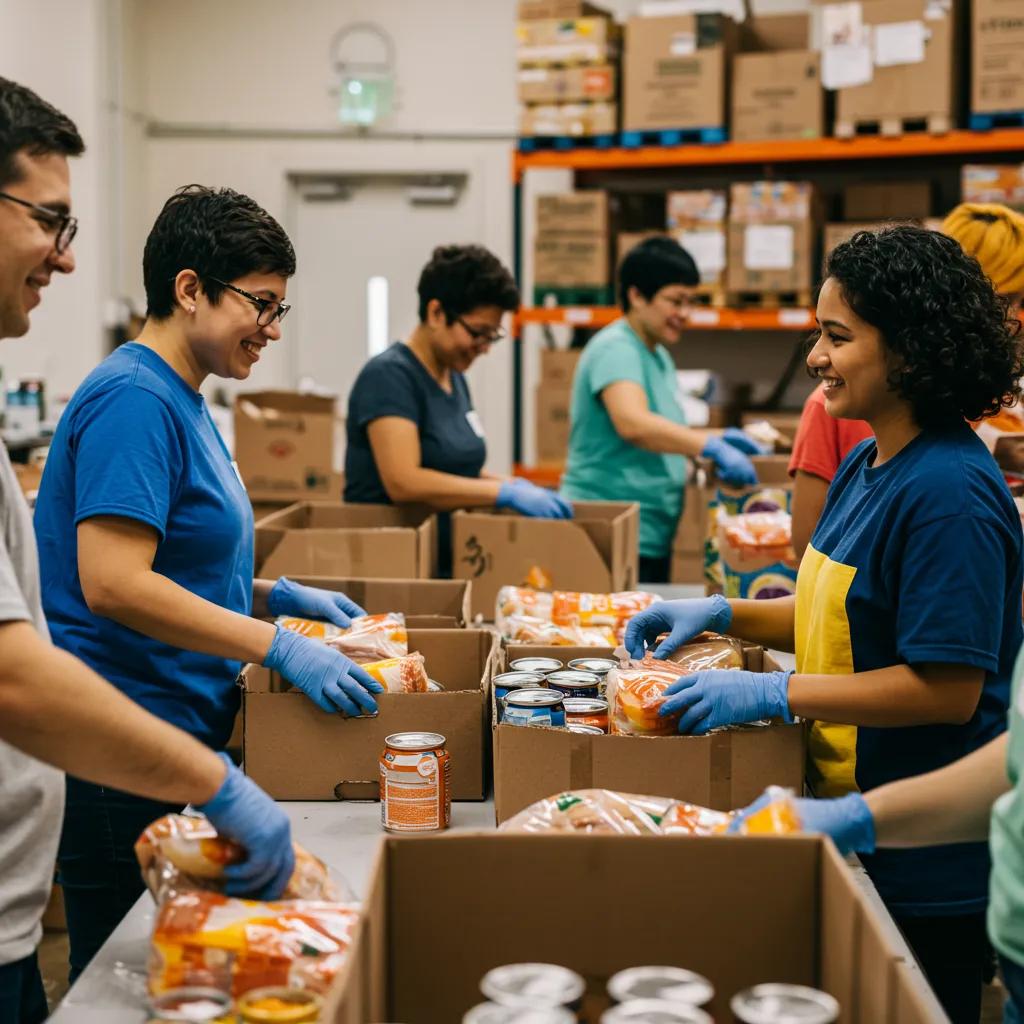
Communities can support relief efforts by coordinating monetary donations to local food banks, organizing targeted drives for critical items, and offering volunteer time for packing and distribution tasks. Monetary donations often provide the most flexible resource because food banks can use funds to buy high-need items in bulk and cover transportation costs. Local coordination with faith groups, schools and mutual aid networks amplifies reach and ensures resources match community-specific needs. Residents should verify current needs with food bank hotlines or local postings before donating goods to avoid sending items that cannot be stored or distributed promptly.
Ways individuals and groups can help immediately:
- Donate funds to local food banks: Money supports bulk purchasing and logistics.
- Volunteer for distributions: Staff shortages reduce throughput and service levels.
- Organize community drives: Target high-need items like shelf-stable proteins and baby supplies.
Coordinated community efforts help food banks stretch limited resources and prioritize the most vulnerable households.
Which States Have Implemented Emergency Food Funding to Support Food Banks?
Some states activate emergency grant programs or reallocate contingency funds to support food banks and expand food-purchase authority when federal streams pause, enabling local agencies to buy bulk food and cover distribution costs quickly. These measures vary in size and eligibility, with some states targeting counties with high federal employment or program participation. State actions can include rapid-procurement contracts with distributors, grants to food banks, and temporary expansions of state nutrition assistance. Families should monitor state announcements for eligibility details and application steps to access these temporary supports.
This comparison demonstrates the range of state tools used to shore up local food systems and why state-level agility matters during federal funding gaps.
What Are the Economic Consequences of the Shutdown on Families’ Budgets and Well-Being?
Missed paychecks for federal employees and paused benefits create immediate cashflow shortfalls that force households to reallocate limited funds away from housing, utilities and medical care toward food. This trade-off raises the risk of eviction, utility shut-offs, and missed medical care, producing stress that affects mental health and decision-making. Local economies suffer as reduced consumer spending hits small businesses and service providers, with multiplier effects in communities heavily reliant on federal wages. Understanding how a single missed benefit cycle translates into broader economic harm helps frame the urgency of quick policy fixes and targeted relief programs.
Household-level consequences include increased reliance on high-cost credit or food purchasing strategies that compromise nutrition, such as buying cheaper, calorically dense but nutrient-poor foods. These coping mechanisms provide momentary relief but worsen health outcomes and financial resilience over time. Short-term assistance programs that cover rent or utilities can mitigate cascading crises, but their availability and speed vary widely. The following table offers a concrete example illustrating how a missed paycheck or benefit can shift a household budget and highlight which expenses become most vulnerable.
How Do Missed Federal Paychecks Affect Household Expenses Like Housing and Utilities?
A missed paycheck reduces immediate liquidity, often leading households to defer rent or mortgage payments, delay utility bills, or increase reliance on credit to bridge the gap. Housing costs are typically the largest monthly outlay, so a single missed income installment can push many families into arrears or eviction risk without emergency rental assistance. Utilities and communication services may be cut when payments lapse, further complicating job search and benefit access. Short-term interventions — rental assistance, utility relief programs, and flexible creditor arrangements — can reduce acute harm but require fast enrollment and clear eligibility criteria for families in crisis.
What Are the Broader Ripple Effects on Local Economies and Social Services?
Reduced household spending depresses demand for local businesses, particularly in communities with large shares of federal employment, which compounds job insecurity and risks layoffs in the private sector. Non-profits and social services face higher demand while fundraising and donations may decline, stressing their capacity to respond. Over time, prolonged shutdowns can erode consumer confidence and delay economic recovery in affected regions, magnifying the long-term cost of short-term funding gaps. These ripple effects illustrate why both federal and state responses that stabilize household income and local service provision are essential to forestalling deeper economic damage.
What Policy Responses Are Being Proposed to Address Food Insecurity During the Shutdown?
Policymakers propose a mix of immediate stopgap funding measures and longer-term reforms to buffer food assistance from funding volatility. Short-term options include emergency supplemental appropriations, targeted grants to states and food banks, and temporary authority for agencies to front-load benefits. Longer-term proposals focus on automatic contingency funding triggers, redesigns that reduce administrative fragility, and stronger state-federal coordination for emergency procurement. Evaluating these responses requires weighing political feasibility, speed of relief delivery, and the trade-offs involved in changing entitlement rules or creating new automatic mechanisms.
Common policy approaches under discussion:
- Emergency federal appropriations: Short-term funding to restore program flows.
- State grant programs: Rapid funding to local food banks and service providers.
- Contingency funding mechanisms: Automatic triggers to avoid future lapses.
Assessing these options helps stakeholders prioritize interventions that balance speed and equity while protecting core nutritional supports.
How Is Congress Responding to the Food Assistance Crisis?
Congressional responses typically include hearings, temporary funding bills, and debate over whether to attach short-term appropriations to larger legislative packages. Lawmakers explore targeted language to ensure SNAP and WIC disbursements can continue or to authorize emergency grants for community providers. Political dynamics influence timing and scope, with some proposals focusing narrowly on immediate relief and others proposing broader philosophical changes to appropriation structures. Close attention to congressional action schedules and committee statements is necessary for anticipating whether and when funds will be restored.
What Emergency Measures Are States Taking to Mitigate Food Insecurity?
States can implement emergency procurement, reallocate contingency funds, and authorize short-term grants to food banks and local governments to fill gaps left by federal pauses. These measures sometimes include temporary expansions of eligibility for state-administered programs and streamlined procurement for staples like infant formula. State actions vary in scale, speed, and accessibility, but they play a decisive role in keeping households fed while Congress negotiates. Families should check state guidance portals and local notices for eligibility criteria and application instructions where applicable.
What Long-Term Solutions Could Prevent Food Insecurity in Future Shutdowns?
Long-term solutions include establishing automatic contingency funding triggers for critical nutrition programs, expanding state capacity for emergency procurement, and redesigning administrative processes to reduce single-point failures in benefit issuance. Strengthening local food system resilience — through regional purchasing cooperatives, diversified supplier networks, and permanent partnerships between schools, food banks and community organizations — can blunt shocks when federal funding is interrupted. While each option has costs and trade-offs, combining federal safeguards with local resilience strategies offers the most durable defense against future shutdown-driven food insecurity.
How Are Families Sharing Their Stories of Food Insecurity Amid the Shutdown?
Personal accounts from federal workers and low-income households illuminate how policy failures translate into daily hardships, showing the emotional and practical toll of lost benefits and pay. These narratives reveal coping strategies such as prioritizing children’s meals, tapping informal networks, or turning to food banks for the first time. Stories also underscore gaps in the system — delayed communication, uneven state responses, and limited emergency funding — that policymakers and communities must address. Collecting and amplifying these voices strengthens the evidence base for rapid relief and longer-term reform because lived experience connects abstract policy choices to human consequences.
First-person accounts often highlight immediate trade-offs: choosing between groceries and medicine, missing mortgage payments to feed a child, or standing in long queues at emergency distributions. These examples make clear that even brief interruptions can escalate into persistent hardship if not swiftly mitigated. Beyond individual need, stories often emphasize community solidarity: neighbors sharing meals, local groups organizing drives, and school staff coordinating take-home packages. These grassroots responses demonstrate both the resilience of communities and the limits of volunteer-based systems under sustained pressure.
What Are Federal Workers Experiencing During the Shutdown?
Federal workers facing furloughs or pay delays report anxiety about meeting basic obligations, with many describing depleted savings and increased reliance on credit or family support. The sudden income gap forces immediate adjustments in purchasing and often requires seeking emergency assistance from food banks or employer-run funds. Emotional strain and uncertainty about the duration of the shutdown compound financial stress, affecting mental health and family dynamics. These accounts underscore the need for quick policy remedies and for employers and communities to offer targeted support to affected workers.
How Are Low-Income Households and Children Coping with Food Shortages?
Low-income households rely on a patchwork of supports — SNAP, WIC, school meals, and local charities — and when one component falters, families scramble to fill the gap. Caregivers report cutting meal sizes, stretching formula supplies, and prioritizing children’s meals over adult nutrition, which carries health implications. Schools and community centers often become critical nodes for emergency support, but capacity limits mean not all need can be met. These coping behaviors highlight immediate needs and point to the importance of robust, predictable programs that prevent households from resorting to harmful trade-offs.
How Do These Stories Highlight the Urgency of Food Assistance Programs?
Personal narratives, when paired with program mechanics and economic analysis, make a compelling case that food assistance programs are not optional frills but essential social infrastructure that prevents acute harm. Stories demonstrate how quickly a missed benefit or paycheck can cascade into housing insecurity, health deterioration, and educational setbacks for children. They also reveal system weaknesses — delayed communication, fragmented state responses, and uneven access to emergency funds — that policymakers can address to reduce future vulnerability. These lived experiences argue for reforms that combine immediate relief with structural safeguards to better protect families.
To provide timely and comprehensive news and current affairs coverage, keeping the audience informed and engaged with diverse content. This newsroom pledge reflects a commitment to ongoing reporting and resource aggregation as the shutdown unfolds, and it guides where readers should look for updated information on program status, state measures, and community resources.
CONTENT INTENT:
To provide timely and comprehensive news and current affairs coverage, keeping the audience informed and engaged with diverse content.
Conclusion
The impact of government shutdowns on food assistance programs highlights the urgent need for reliable support systems to prevent food insecurity among vulnerable families. Understanding the mechanisms behind SNAP and WIC disruptions empowers communities to advocate for effective policy solutions and immediate relief measures. By staying informed and engaged, individuals can play a crucial role in supporting local food banks and families in need. Explore our resources to learn how you can contribute to alleviating food insecurity during these challenging times.