Complete Al Thakira Mangroves Guide: Location, Activities, Wildlife & Best Visiting Tips
Al Thakira Mangroves are a coastal mangrove forest near Al Khor in northern Qatar, prized for its dense Avicennia marina stands, intertidal channels, and abundant birdlife. This guide explains where the mangroves are, how to get there from Doha, the practicalities of kayaking and wildlife watching, and why the site matters for coastal ecology and climate resilience. Many visitors want clear, practical steps—how to plan a tide-aware kayak trip, what wildlife to expect, and how to support conservation—and this article delivers a structured, localized roadmap for those goals. You will find precise access advice, step-by-step kayaking tips, seasonal timing and tide guidance, species highlights with a concise species table, and responsible tourism checklists tailored to travelers including Pakistani readers. Throughout, the guide links natural-history context to practical logistics so you can plan a safe, respectful, and rewarding visit to Al Thakira Mangroves. Read on for maps of access, activity comparisons, conservation actions, and packing lists that prepare you for an informed trip.
ARY News publishes this guide for readers as an information hub entry and editorial resource; the piece is produced to support ARY News’s Travel and LifeStyle coverage and to complement reporting available via the Qatar Nature Guides hub. This short publisher note positions the article as an authoritative overview created for ARY News audiences in Pakistan and beyond, and affirms that the guide draws on recent regional reporting and environmental coverage to inform practical travel advice.
Where Are the Al Thakira Mangroves Located in Qatar?
Al Thakira Mangroves lie on the northern coast of Qatar in the Al Khor area, forming a broad intertidal forest adjacent to shallow tidal flats and channels. The mangroves function as a visible coastal landmark and are typically reachable within around 45–60 minutes’ drive from central Doha, making them a feasible half-day nature outing for residents and visitors. (visitqatar.com) This access window balances convenience with the need to plan visits around tides and daylight; knowing the general location helps visitors coordinate transport, parking, and launch points. The following subsections give step-by-step driving directions, nearby landmarks to orient yourself, and transport options so you can choose the best approach for your group.
Avicennia Marina Dominance in Qatar’s Coastal Mangroves
The north and west coasts of Qatar are home to mangrove forests, primarily dominated by Avicennia marina. Despite mangroves being adaptable and resilient, they face various environmental pressures. A 2018 study identified significant mangrove presence, highlighting their ecological importance in the region.
Mangroves of the Qatar coast, Arabian gulf: loss, restoration, and the role in climate change, HA Al-Kuwari, 2018
How Do You Get to Al Thakira Mangroves from Doha?
Getting to Al Thakira from Doha is primarily a car-based route because private transport and ride services are the most direct options; typical travel time is about 45–60 minutes depending on traffic and exact start point. Take the main coastal roads heading north toward Al Khor, then follow local signage toward the mangrove beaches; GPS may take you to nearby parking or informal access points so allow time for short on-foot transfers to launch sites. (visitqatar.com) If using a taxi or ride-hailing service, confirm the return plan and expected wait times, as drivers may need clear pickup coordinates for off-road access. Planning your departure around tide windows and daylight will make navigation safer and reduce the likelihood of getting stranded in soft sand or high tide conditions.
What Are the Nearest Cities and Landmarks to Al Thakira Mangroves?
Al Khor is the nearest town and key orientation point for planning services, dining, or emergency stops before or after a mangrove visit; the mangroves sit a short distance from the town’s coastline. (visitqatar.com) Purple Island (Jazirat Bin Ghannam) is the most commonly paired attraction—its shoreline and access points provide visual reference and a natural complement to the mangrove channels, so visitors often combine both sites in the same outing. When approaching by road, watch for coastal signage, small parking clearings, and the low dunes that mark the transition from paved roads to the shoreline trails leading to launch points. Using Al Khor as a base helps visitors find facilities and local services while keeping the mangrove experience focused on nature.
What Transportation Options Are Available for Visiting Al Thakira Mangroves?
Visitors typically arrive by private car, taxi/ride-hailing, or via guided transfers arranged by local operators; each mode has trade-offs in cost, convenience, and suitability for families or groups. Private cars offer the most flexibility for timing and parking close to launch points, while taxis remove the need for parking but require clear coordination for return pickup. Guided transfers or small group tours provide equipment and experienced local guides who manage tide-aware launches and safety briefings, which is useful for first-time kayakers. If you plan to launch from a boat or arrange operator pickup, confirm pickup points and any transfer logistics in advance to ensure a timely start and safe return.
What Activities Can You Enjoy at Al Thakira Mangroves?
Al Thakira Mangroves are an activity hub for low-impact nature experiences such as kayaking, birdwatching, photography, and relaxed beach picnics; these activities immerse visitors in the habitat while keeping disturbance minimal. (visitqatar.com) Kayaking through the mangrove channels is the most popular active pursuit because it provides close-up access to intertidal channels and bird roosts without trampling seedlings. Birdwatching rewards quiet observation during early and late daylight windows; visitors often combine short paddles with shoreline walks to vary perspectives. The next subsections cover kayaking technique and safety, the wildlife you can expect to see, and other low-impact nature activities you can enjoy.
How Is Kayaking Done in Al Thakira Mangroves?
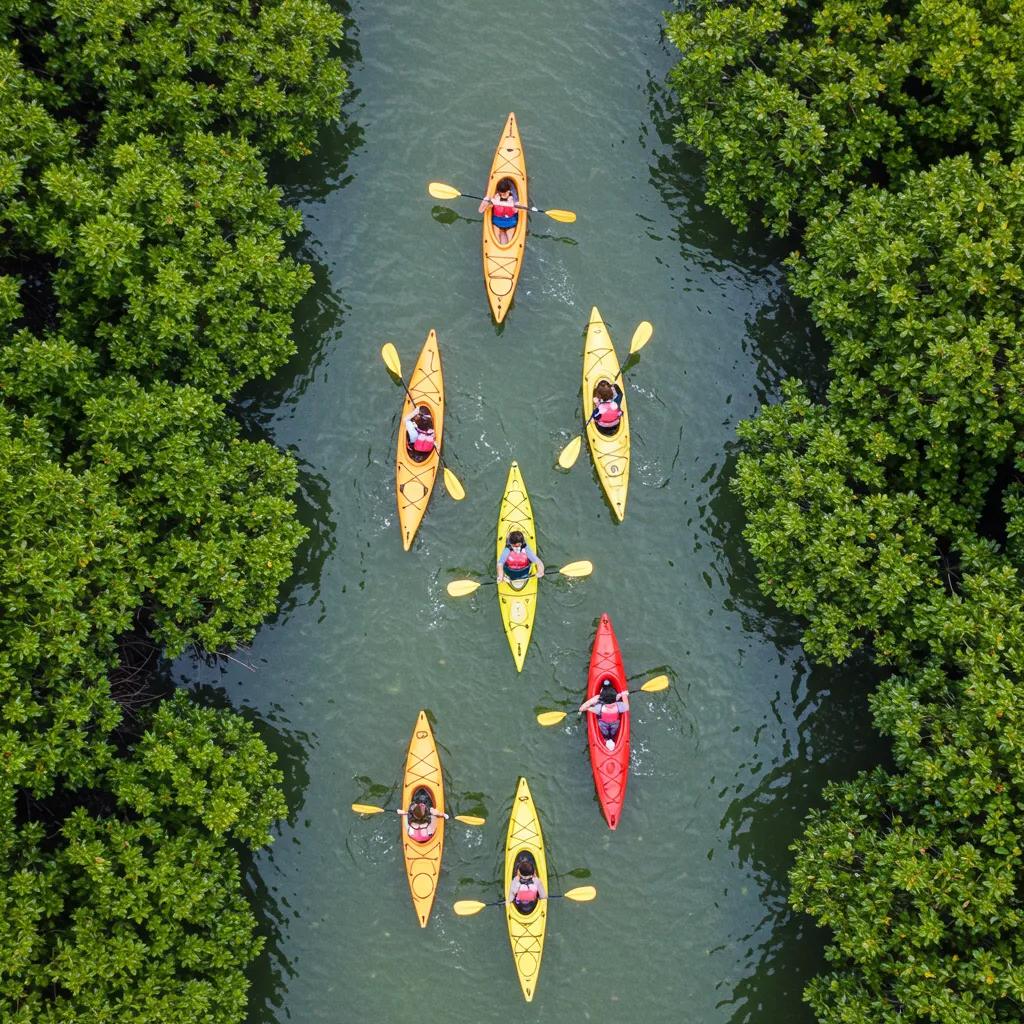
Kayaking in Al Thakira is done by launching from low sand beaches or shallow tidal points, following intertidal channels between mangrove stands, and returning on a tide-aware schedule to avoid shallow stranding. Typical guided trips last between 1.5 and 3 hours depending on route and group skill level, and tours emphasize launching at mid to high tide for navigability and safe returns. (discoverqatar.qa) Operators and experienced guides provide safety briefings, life jackets, and basic paddling instruction; recreational paddlers should maintain group visibility and keep clear of dense roots to protect both equipment and seedlings. Practically, check local tide charts, wear sun-protective clothing, and plan for water and shade breaks to keep energy and hydration steady during paddles.
Avicennia Marina: The Sole Mangrove Species of the Arabian Gulf
Avicennia marina is the only mangrove species found in the Arabian Gulf coastal region, marking the northernmost boundary of mangroves in the Indo-Pacific region. This species predominantly inhabits sandy substrate with low organic content and is recognized for its high tolerance to extreme temperature and salinity variations. It has also proved its resilience to the impact of the Gulf War oil spill. Despite these challenges, mangrove ecosystems in this region continue to provide critical ecosystem services, sustaining biodiversity, livelihood support, climate change mitigation, and recreational opportunities.
Significance of Avicennia Marina in the Arabian Gulf Environment: A Review, KP Haseeba, 2025
Before the list below, this checklist summarizes core safety gear and considerations for kayaking in the mangroves.
- Life jacket or personal flotation device fitted to the paddler.
- Sun protection: hat, long-sleeve light clothing, and waterproof sunscreen.
- Water, snacks, and a small dry bag for essentials and phone in waterproof case.
This quick checklist covers essentials; professional guides will confirm and supplement gear, and a short safety briefing should always precede launches to introduce route and tide-specific cautions.
Introductory comparison information clarifies typical tour types available to visitors.
What Wildlife Can You See While Exploring the Mangroves?
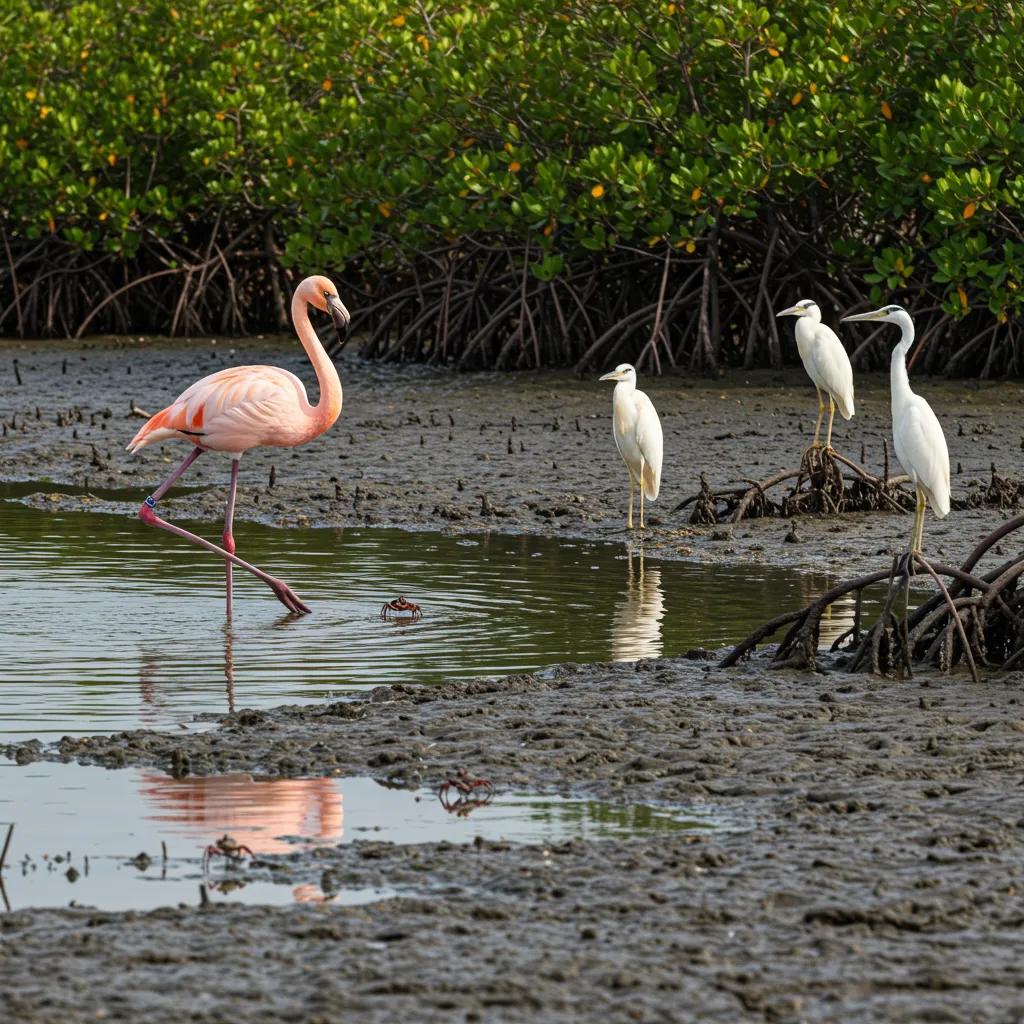
Al Thakira supports conspicuous shore and wading birds, intertidal crustaceans, and juvenile fish that use mangrove channels as nurseries; common sightings include flamingos, herons, shorebirds, and fiddler crabs seen at low tide. (visitqatar.com) Bird activity concentrates during early morning and late afternoon, with wading species foraging on exposed mudflats while crabs and small fish become more visible as channels shift with the tide. Photographers should use long lenses and maintain respectful distance to avoid startling roosting birds; silence and slow movements increase the likelihood of close, stable observations. Understanding these wildlife rhythms helps visitors choose the right time and approach to maximize sightings while minimizing disturbance.
To organize species sightings and expectations, the species table below summarizes typical patterns and habitat notes for common groups.
What Other Nature Activities Are Available?
Beyond kayaking and birdwatching, visitors can enjoy gentle shoreline walks, beach picnics near approved areas, and photography sessions that document intertidal dynamics and landscape change. Short family-friendly strolls across firm sand and boardwalk-adjacent areas allow young visitors to encounter mudflat ecology without venturing into fragile seedling zones. Photography workshops or quiet observation sessions can be planned around sunrise or sunset to capture dramatic light on water and birds. These activities encourage low-impact engagement—staying on durable surfaces, carrying out waste, and keeping noise low preserves habitat quality for wildlife and other visitors.
When Is the Best Time to Visit Al Thakira Mangroves for Wildlife and Weather?
The best season to visit Al Thakira for comfortable weather and abundant wildlife is the cooler, drier window spanning roughly November through March, when temperatures are mild and migratory birds are most active. (visitqatar.com) Daily timing matters as well: early morning and late afternoon deliver the best wildlife activity and gentler light for photography, while midday heats discourage prolonged exposure and reduce animal visibility. Tidal cycles critically affect access and kayak routes, so planning around favorable tide windows (typically launching near incoming or high tide) improves navigability and wildlife encounters. The following subsections break the seasonal months down, recommend daily timing, and explain how tides influence both safety and sighting opportunities.
Which Months Offer the Best Weather for Visiting?
November through March offer the most comfortable temperatures and the highest likelihood of encountering migratory and resident shorebirds; mornings are crisp and daylight hours suit half-day trips. November brings cooling evenings while December–February are typically the peak season for birdwatching as many species use the area during migration. March may begin to warm, so late-season visitors should monitor temperature forecasts but can still expect strong bird activity. Planning visits in these months balances pleasant hiking and paddling conditions with maximum wildlife visibility.
What Are the Optimal Daily Times for Kayaking and Wildlife Viewing?
Optimal daily windows are early morning just after sunrise and late afternoon before sunset, when birds are actively foraging and paddlers benefit from calmer winds and softer light for observation. Launching at these times reduces sun exposure, lowers heat stress, and increases the chance of seeing active feeding behavior among waders and small fish. Midday often produces stronger winds and fewer visible birds as animals shelter from heat, so avoid longer excursions then if your goal is wildlife viewing. Photographers and birdwatchers should aim for golden-hour lighting and quiet approaches during these optimal windows.
How Do Tides Affect Your Visit to the Mangroves?
Tides determine which channels are navigable and how much mudflat is exposed for foraging birds; high tide generally permits deeper paddling routes while low tide reveals mudflats that attract wading birds but can strand kayaks in shallow channels. Checking an up-to-date local tide chart is essential: aim to launch when incoming or high tide provides safe channel depth and plan returns before tide turns strongly ebbing to avoid extended beach carries. Wildlife behavior also shifts with tides—many shorebirds feed on exposed flats at low tide, while high tide can concentrate fish and attract predators—so combine tide knowledge with your wildlife goals for the best experience. Always build extra time into plans to accommodate delays and changing conditions.
What Wildlife and Ecosystem Features Make Al Thakira Mangroves Unique?
Al Thakira’s mangroves form a coastal ecosystem that provides nursery habitat for fish, roosting and feeding grounds for birds, and shoreline protection through root networks that stabilize sediments. The mangrove trees (Avicennia marina) create a three-dimensional habitat—canopy, prop roots, and mudflats—that supports diverse invertebrates and juvenile fish critical to local fisheries and biodiversity. Ecologically, these mangroves also sequester carbon in soils and biomass, contributing to so-called blue carbon services that mitigate atmospheric CO₂ and increase coastal resilience. Below, species details, marine life roles, and the broader environmental services are explored with a species table for quick reference.
Which Bird Species Are Common in Al Thakira Mangroves?
Birds such as flamingos, herons, egrets, and a range of shorebirds are regularly observed, with certain species more prevalent in cooler months during migration. Flamingos often gather in shallow brackish pools or flats, while herons and egrets use root platforms and channels to hunt for small fish and crustaceans. Migratory shorebirds arrive seasonally to feed on exposed mudflats at low tide and then roost in adjacent vegetation at high tide. Observers who use quiet approaches and maintain distance will see more natural behavior and better photographic opportunities.
What Marine and Crustacean Life Thrives in the Mangroves?
Crabs, juvenile fish, and a range of benthic invertebrates thrive in the mudflats and root zones—the mangrove habitat functions as a nursery that supports juvenile stages of commercially and ecologically important species. Burrowing crabs aerate sediments and recycle organic material, while small fish shelter among roots where predation risk is reduced, creating dense trophic interactions. These dynamics sustain food chains that extend into nearby coastal waters, linking mangrove health to broader fisheries productivity. Appreciating these roles helps visitors understand why minimal disturbance and seedling protection are essential.
How Do Mangroves Support Qatar’s Coastal Environment?
Mangroves buffer shorelines against erosion and storm surge by trapping sediments with roots and dissipating wave energy, thereby protecting inland areas and infrastructure. They also sequester carbon in long-lived soil pools and biomass—this blue carbon storage contributes to climate mitigation when mangrove habitats are conserved. Additionally, mangroves support fisheries by providing nursery grounds that increase juvenile survival for many species, directly linking habitat health to food security and livelihoods. Maintaining intact mangrove stands is thus a cost-effective, nature-based way to sustain coastal resilience and biodiversity.
Carbon Sequestration in Qatar’s Al Khor and Al Thakhira Mangroves
Quantifying the role of mangroves in carbon sequestration in Qatar’s mangrove forests, particularly the Avicennia marina stands in Al Khor and Al Thakhira, remains underrepresented in global carbon accounting. These ecosystems play a crucial role in carbon sequestration and storage, contributing to climate change mitigation efforts in the region.
Quantifying the role of mangroves in carbon sequestration in Qatar’s mangrove forests, H Bilal, 2025
How Can Visitors Support Conservation Efforts at Al Thakira Mangroves?
Visitors can support conservation by following on-site rules, minimizing disturbance, participating in community clean-ups, and staying informed about local initiatives that restore and protect mangrove habitats. Simple actions such as carrying out all waste, keeping to durable surfaces, avoiding trampling seedlings, and maintaining distance from roosting birds reduce cumulative impacts and support ecological function. The following subsections outline current initiatives, explain the climate and biodiversity rationale, and provide a concise checklist of responsible tourism practices for immediate adoption.
ARY News has been reporting on regional conservation efforts and environmental initiatives; readers can follow ARY News’s environmental reporting for updates and factual coverage of local programs and scientific developments related to mangrove restoration and blue carbon discussions. This journalistic coverage helps connect visitors with opportunities to participate or learn more about ongoing projects and policy changes in 2024–2025.
What Are the Current Conservation Initiatives in Qatar?
Recent regional efforts emphasize mangrove rehabilitation, community engagement, and scientific monitoring to track habitat condition and blue carbon potential; government agencies and NGOs often collaborate on planting and educational programs. Initiatives typically focus on restoring degraded stands, mapping mangrove extent, and involving volunteers in monitoring and clean-up events that remove litter and invasive debris that threaten seedling survival. These coordinated actions aim to increase resilience and biodiversity while producing data to inform long-term management. Visitors who connect with established programs can contribute meaningful support by joining organized activities or following evidence-based guidelines.
Practical visitor actions translate conservation aims into everyday behavior; the next section lists clear, implementable steps.
- Follow posted site rules and stay on designated paths to avoid trampling seedlings.
- Carry out all trash, including small plastics and fishing lines that entangle wildlife.
- Join organized clean-ups or volunteer monitoring events when available.
Why Is Mangrove Preservation Important for Climate and Biodiversity?
Mangrove preservation delivers multiple ecological values: they act as carbon sinks storing blue carbon over long timescales, protect shorelines from erosion and storm surge, and support species diversity by providing critical nursery and roosting habitats. These functions make mangroves a high-priority habitat for climate adaptation and biodiversity conservation, particularly in arid coastal zones where vegetated buffers are limited. Scientific monitoring in 2024–2025 is refining blue carbon estimates and demonstrating how restoring mangrove area yields measurable ecosystem service returns. Protecting mangroves thus provides both local biodiversity benefits and demonstrable contributions to broader climate resilience efforts.
What Responsible Tourism Practices Should Visitors Follow?
Responsible tourism at Al Thakira means embracing low-impact behaviors that protect habitat and species while allowing meaningful nature experiences; the checklist below outlines best practices for individual visitors and groups. Keep noise to a minimum, avoid feeding or approaching wildlife, and follow guide instructions on launching, route choice, and tide-aware timing. Respect local cultural norms and shared spaces, and consider supporting conservation through participation rather than leaving a footprint. These practical behaviors ensure the mangroves remain healthy and accessible for future visitors and local communities.
- Stay on durable surfaces and avoid walking through seedling zones.
- Keep a respectful distance from wildlife and avoid flash photography near roosts.
- Dispose of waste responsibly and remove any discarded fishing gear you can safely handle.
How Can You Combine a Visit to Al Thakira Mangroves with Nearby Attractions?
Combining a mangrove visit with nearby natural and cultural points such as Purple Island and Al Khor’s shoreline amenities makes for a richer half-day or full-day itinerary that blends ecology and local context. Visitors can paddle parts of the mangrove channels in the morning, then drive a short distance to Purple Island for shoreline views, historical interpretation, and local dining options. Suggested itineraries below present half-day and full-day options that balance activity intensity with relaxation and cultural appreciation. Integrating multiple sites helps visitors understand the regional landscape and supports time-efficient travel planning.
What Is Purple Island and How Is It Connected to Al Thakira Mangroves?
Purple Island, also known by its local name Jazirat Bin Ghannam, is a nearby coastal feature with shoreline viewpoints and natural scenery that complements the mangrove channels; it is commonly visited in combination with the mangroves due to proximity and contrasting habitats. Historically a small island and now connected by causeways and beaches, Purple Island offers vantage points for panoramic photography and serene shoreline walks that contrast with the intimate paddling experience inside mangrove channels. Visitors typically drive between the locations within a short time window and plan meal stops or sunset views at the island after morning paddles. Combining both sites provides a fuller sense of Al Khor’s coastal landscape.
What Other Nature Spots Are Near Al Khor for Eco-Tourism?
Other nearby nature destinations include coastal beaches, dune fringes, and viewpoint stretches around Al Khor that offer birding, beach walks, and sunset observation complementary to the mangrove experience. These sites vary in accessibility and facilities; some are suited to short observational stops while others form part of longer coastal excursions that include photography or family-friendly beach time. When combining visits, factor in daylight, tides, and service availability in Al Khor to ensure a comfortable schedule. Mapping a logical route that alternates active paddling with relaxed shoreline stops provides a balanced eco-tour itinerary.
What Practical Tips Should Visitors Know Before Exploring Al Thakira Mangroves?
Practical preparation enhances safety, comfort, and ecological responsibility—pack sun protection, water, appropriate footwear and tide-aware equipment, and expect limited facilities on-site so plan services in Al Khor ahead of time. Understanding local service availability and taking basic precautions reduces risk and ensures a smooth experience whether you paddle, walk, or photograph. For Pakistani visitors and other international travelers, checking current travel advisories and entry requirements before departure is essential; ARY News provides travel coverage and advisories to help readers stay informed about relevant updates. The following subsections break down essential packing, on-site facilities, and visa/travel guidance in clear, actionable terms.
What Essential Items Should You Bring for a Mangrove Visit?
A concise packing kit ensures comfort and low-impact presence: bring sun-protective clothing, a wide-brim hat, high-SPF sunscreen, refillable water, closed-toe water shoes or sandals, insect repellent, and a waterproof case for phones and cameras. Also include a small first-aid kit, a dry bag for valuables, and a lightweight towel; families should add extra water and snacks for children and ensure flotation devices are available for minors. For photographers, bring a telephoto lens and polarizer to manage glare, and always keep a safe distance from wildlife to avoid disturbance. Preparing these items beforehand prevents last-minute compromises that could harm the environment or your experience.
- Sun protection: hat, sunglasses, long-sleeve light clothing, and sunscreen.
- Hydration and snacks: refillable bottles and non-perishable food.
- Footwear and safety: closed-toe water shoes, life jacket (if paddling), small first aid kit.
Are There Facilities and Services Available at the Site?
On-site facilities at the mangrove access points are limited; visitors should expect minimal infrastructure such as restrooms or shelters directly adjacent to launch sites, and plan to use services in Al Khor for dining, restrooms, and gear rental. Local operators and shops in town can provide kayak rentals, guided trips, and equipment, while restaurants and convenience services are concentrated around Al Khor’s built areas rather than the mangrove fringe. Because facilities are sparse, plan refueling and restroom stops before arriving and bring necessary supplies with you for the duration of your visit. Advanced planning ensures comfort and reduces pressure on sensitive habitats by concentrating human support in established service locations.
What Visa and Travel Information Is Relevant for Pakistani Visitors?
Pakistani travelers should check official entry and visa requirements with appropriate governmental sources before planning travel, ensuring passport validity, visa status, and any transit rules are up to date; ARY News offers travel advisories and timely reporting that can help readers stay informed about relevant updates. Typical travel preparation includes confirming passport validity for the required minimum period, understanding visa application processes, and monitoring official advisories for health, safety, and transit guidance. Do not rely on informal sources for visa rules—use authorized channels for the most current and accurate information. Keeping documentation and contingency plans prepared reduces stress and enables smoother access to field sites like Al Thakira.
ARY News continues to cover Qatar travel stories, environmental reporting, and travel advisories for its audience; follow ARY News’s Travel and LifeStyle coverage and the Qatar Nature Guides hub for ongoing updates, conservation reporting, and practical guidance relevant to travelers interested in Al Thakira Mangroves and other nature destinations.
Conclusion
Visiting Al Thakira Mangroves offers a unique opportunity to engage with a vital coastal ecosystem while enjoying activities like kayaking and birdwatching. This guide equips you with essential information to plan a safe and rewarding experience, ensuring you can appreciate the natural beauty and ecological significance of the area. By following responsible tourism practices, you can contribute to the conservation of this remarkable habitat. Start planning your adventure today and immerse yourself in the wonders of Al Thakira Mangroves.