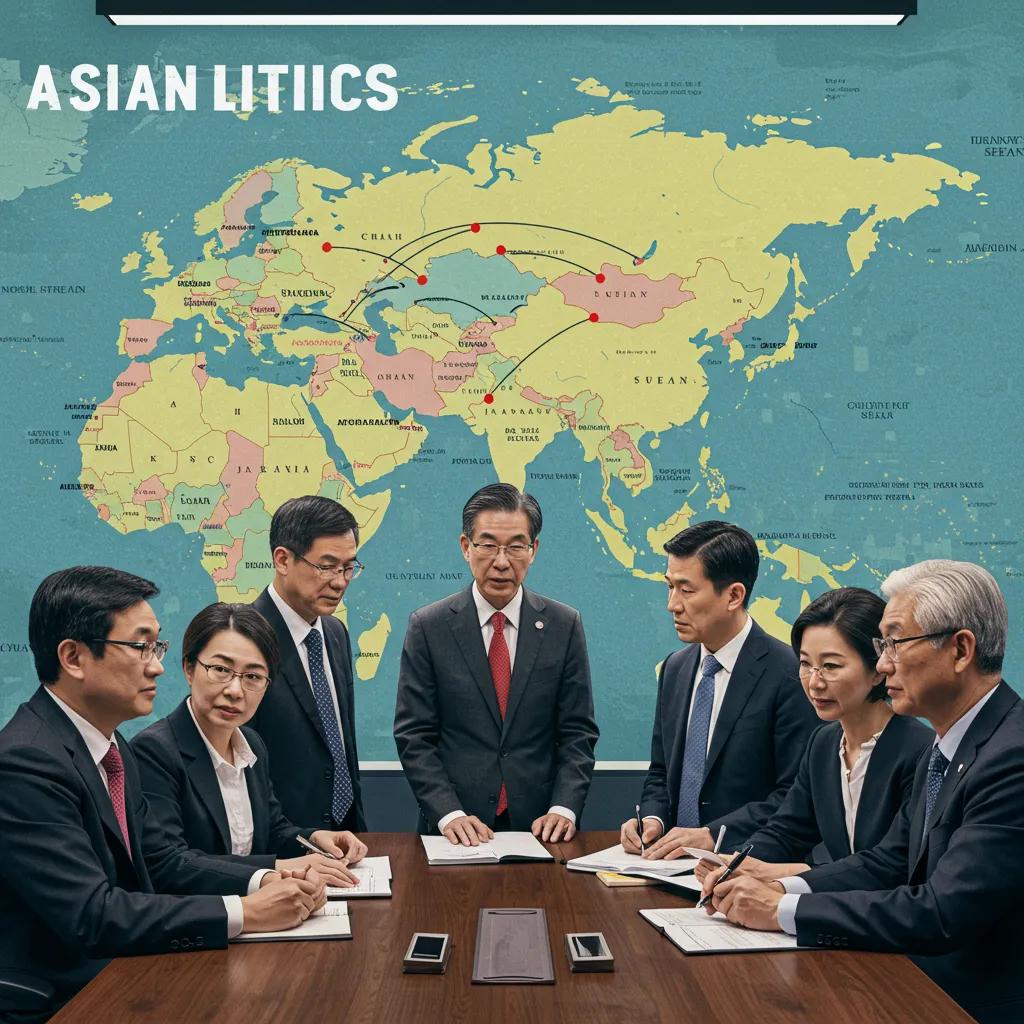
Asian Politics News: Your Ultimate Guide to Geopolitics, Regional Security, and Key Developments Across Asia
Dive deep into the intricate world of Asian politics, where interstate relations, domestic governance, security dynamics, and economic shifts collectively shape regional stability and global markets. Readers will discover concise, analytical updates and contextual explanations of major trends—from US-China strategic competition and ASEAN diplomacy to South Asian state dynamics, East Asian security postures, Central Asian resource diplomacy, pan-Asian macro trends, and ongoing regional conflicts—all framed for policymakers, analysts, and informed citizens. For unparalleled perspective and timely reporting, ARY News stands as a dedicated information hub, committed to delivering comprehensive news and current affairs coverage that keeps our audience informed and engaged with diverse content. This article unravels the mechanisms behind key developments, highlights likely short- and medium-term implications for Asia through 2025, and guides you on where to follow deeper reporting and entity-tracking. The sections below meticulously break down the latest China–US trends, ASEAN’s evolving influence, South Asian dynamics, East Asian security evolutions, Central Asia’s rising strategic weight, pan-Asian political trajectories, and the most pressing regional conflicts with their global reactions.
China-US Relations: Latest Trends and Their Impact on Asian Geopolitics

China-US relations in 2025 continue to be defined by intense strategic competition across trade, technology, and security, with economic levers such as tariffs and export controls significantly shaping partner choices throughout Asia. These dynamic interactions alter global supply chains, influence alliance behaviors, and redirect regional investment flows, leading to both immediate shocks and longer-term realignments. For Asian countries, the primary benefit of closely tracking these trends is gaining actionable policy foresight: governments can strategically hedge dependencies and negotiate more effective trade and security agreements. The following subsections delve into the effects of the trade war, prospects for upcoming summits, the strategic implications of rare earth controls, and the security dimensions of the Belt and Road Initiative, moving from economic mechanics to strategic outcomes.
US-China Trade War: Shaping Regional Alliances Across Asia
The US-China trade war is actively reshaping alliances by altering trade incentives and accelerating supply-chain diversification, prompting Asian economies to rebalance their commercial ties and partnership strategies. Firms are increasingly shifting manufacturing and sourcing operations toward Southeast and South Asia to circumvent tariffs, which in turn boosts economic interdependence among regional economies and strengthens alternative trade corridors. This commercial realignment reinforces political hedging: states are pursuing deeper economic ties with multiple global powers to preserve autonomy and secure market access. The result is a more fragmented yet commercially integrated Asia, where pragmatic alignment often takes precedence over ideological loyalty, setting the stage for competitive diplomacy and selective cooperation.
Trump-Xi Summit Prospects 2025: Key Developments and Anticipated Outcomes
Prospects for a summit hinge on reciprocal diplomatic signaling, the intricate domestic politics in both Washington and Beijing, and ongoing negotiations over critical trade, technology, and security red lines. Progress toward such a high-level meeting is typically signaled through a series of high-level visits, ministerial statements, and preparatory working groups focused on resolving trade barriers and ensuring strategic stability. Potential outcomes could range from limited trade de-escalation and framework agreements on technology controls to a broadly symbolic summit with few binding commitments. Regional actors will closely interpret any summit as a crucial cue for aligning their investment strategies, defense planning, and multilateral engagement, ensuring that short-term diplomatic signals often reverberate significantly through Asian political calculations.
Taiwan Strait Crisis: US-China Relations, Deterrence, and Escalation Dominance
China can acknowledge US military superiority but still question US resolve to risk war and high costs, including the potential for incurring a large number of casualties, over the defense
Navigating the Taiwan Strait: Deterrence, escalation dominance, and US-China relations, 2002
Rare Earth Controls: Influencing Asia’s Strategic Competition
Rare earth controls function as a potent economic-security lever because these vital minerals are indispensable for high-tech manufacturing and advanced defense systems, creating supply vulnerabilities that directly impact national strategies. Export restrictions or administrative controls significantly raise costs for downstream industries in importing states and accelerate global efforts to diversify sources, enhance material recycling, and build robust domestic processing capacities. Countries possessing advanced processing capabilities gain considerable geopolitical leverage, while import-dependent states intensify partnerships to secure their supply chains. The strategic consequence is an intensified competition over mining rights, refining investments, and secure transport links, fundamentally linking resource security to broader geopolitical alignments.
China’s Export Controls: Geopolitics, Rare Earths, and Xi Jinping’s Law-Based Governance
Since 2023, China has introduced a series of export restrictions on rare earth elements and other critical materials, citing national security concerns amid escalating geopolitical tensions and technological rivalry. While these measures have raised alarm over China’s strategic leverage in global supply chains, this article argues that their significance lies not merely in their economic impact but also in their legal form. Far from ad hoc economic retaliation, these restrictions reflect a broader effort to embed strategic statecraft within formal legal architecture. Anchored in the 2020 Export Control Law, China’s actions exemplify a broader turn toward law-based governance under Xi Jinping. In Xi’s conception, the law is not a constraint on state power but a political instrument of its consolidation and direction. By situating China’s export control regime within the ideological and institutional logic of “Xi Jinping Thought on Law-Based Governance,” the article examines its
The Rare Earth Leverage? China’s Export Control Law and” Xi Jinping’s Thought on Law-Based Governance, 2025
China’s Belt and Road Initiative: Unpacking Its Security Implications
China’s Belt and Road Initiative (BRI) masterfully blends infrastructure investment with strategic influence, creating dual-use assets that can deliver substantial economic benefits while simultaneously altering regional security calculations. Ports, logistics hubs, and transport nodes developed under BRI can significantly boost a partner’s connectivity and trade, yet they also raise legitimate concerns about access, potential basing possibilities, and political dependency. Recipient states carefully weigh immediate economic gains against potential long-term leverage and debt burdens, often leading to selective acceptance and the pursuit of alternative financing options. This dynamic fuels broader strategic competition as other global powers respond with counter-investment, regional partnerships, and enhanced maritime engagement to preserve open access and balance influence.
China’s Belt and Road Initiative: Economic Security and Strategic Development
Goal – The aims of the research are to identify the most significant internal and external factorsaffecting the economic security of China and assess the importance of the Belt and Road Initiative forChina’s future development.Research methodology – In order to organize internal and external determinants of economic securityof China, SWOT (strengths, weaknesses, opportunities and threats) analysis was applied. Moreover, animportant element of the research process was an attempt to verify hypothesis that the Belt and RoadInitiative is a key instrument of China’s economic security strategy.Score – China has transformed from a poor rural country into one of the main economic powersas a result of the economic reforms initiated in the late 1970s. However, we can observe that theeconomy of China is slowing down. In order to ensure economic security and maintain a stableeconomic growth as well as avoid the middle income trap China has introduced the Belt and RoadInitiative. Since its announcement, the concept has been gradually gaining in importance and has finallybecome the key instrument of the Chinese foreign policy and a major element of economicdevelopment strategy. The main motive behind this project is to develop transport and energyinfrastructure which will allow China to gain access to natural resources and new markets. An efficienttransport network will facilitate trade, while energy infrastructure will prevent problems with energyand resource supply, which the Chinese economy needs. The Belt and Road Initiative is a way ofboosting economic development of China through improving infrastructure from Asia to Africa andEurope and the establishment of trade links among all partner countries. The New Silk Road conceptaims to use the advantages of the Chinese economy and the states participating in the initiative tostimulate its economic growth. Therefore, it is a strategy of providing long-term economic security.
Economic security of China: the implications of the Belt and Road Initiative, L Kostecka-Tomaszewska, 2018
To provide a clear overview, the table below outlines the positions and priorities of key entities regarding trade, tariffs, rare earths, and security cooperation, enabling readers to quickly compare stances.
This insightful comparison reveals how diverse economic priorities directly influence security behaviors, offering readers a clearer understanding of potential alliance and commercial decisions throughout the region.
ASEAN’s Role: Shaping Southeast Asian Political Developments and Regional Security
ASEAN functions as a pivotal diplomatic hub, striving for consensus-based management of regional issues and expertly balancing member-state diversity with collective mechanisms for stability. Its role is paramount because ASEAN’s communiqués, normative frameworks, and summit diplomacy fundamentally shape how maritime disputes, trade integration, and cybersecurity cooperation are negotiated. The organization’s strength lies in its unique ability to convene dialogue and prevent escalation, while its limitations stem from differing national interests and the pressures exerted by external powers. The following subsections explore internal unity challenges, the impact of summits on the South China Sea, Malaysia’s ambitious Vision 2045 goals, and regional digital-security initiatives, moving from institutional descriptions to operational outcomes.
ASEAN Unity: Challenges in Maintaining Regional Cohesion in 2025
ASEAN’s unity faces significant strain from divergent national priorities, intense external strategic competition between great powers, and differing domestic political models among its members. External actors exert considerable economic and security pressures that test ASEAN’s traditionally non-aligned posture, while intraregional disputes—such as complex maritime claims—reveal asymmetric stakes among claimants. The institutional consensus-making process can often delay decisive action, thereby reducing ASEAN’s capacity to respond uniformly to crises. To maintain its relevance, ASEAN members are increasingly pursuing minilateral cooperation and sectoral agreements alongside full consensus formats, effectively blending the organization’s convening power with flexible, targeted partnerships.
ASEAN Summit Influence: Addressing Maritime Disputes in the South China Sea

ASEAN summits significantly influence maritime disputes by setting the diplomatic tone, issuing crucial joint statements, and facilitating vital back-channel diplomacy that can effectively reduce tensions or, at the very least, slow escalation. Summit language consistently emphasizes peaceful dispute resolution and strict adherence to maritime law, providing an essential platform for both claimant and non-claimant states to negotiate de-escalation measures. While communiqués typically stop short of direct enforcement, follow-up mechanisms—such such as confidence-building measures and hotline agreements—can operationalize summit diplomacy. Thus, summit outcomes possess the power to shift claimant behavior through a combination of normative pressure and practical dispute-management tools.
Malaysia’s ASEAN Community Vision 2045: Goals for Regional Resilience
Malaysia’s ambitious Vision 2045 within ASEAN places strong emphasis on integrated economic growth, comprehensive social inclusivity, and strengthened institutional cooperation, all designed to ensure regional resilience and foster shared prosperity. This forward-looking vision advocates for deeper connectivity, seamless digital integration, and robust sustainable development priorities that align perfectly with ASEAN’s broader agenda. Malaysia actively promotes multilateral solutions and inclusive frameworks to effectively balance economic opportunities with political stability. Successful implementation will necessitate close coordination on standards, innovative funding mechanisms, and extensive capacity-building across all member states to translate these aspirational goals into tangible, measurable outcomes.
ASEAN’s Approach: Cybersecurity and Digital Diplomacy in Southeast Asia
ASEAN addresses the critical domains of cybersecurity and digital diplomacy through a multifaceted approach, including capacity-building initiatives, normative dialogue, and cooperative frameworks specifically aimed at protecting vital critical infrastructure and establishing clear behavioral norms for state conduct online. Member states actively collaborate on technical exchange, swift incident response, and robust cybercrime legislation to elevate regional resilience. Digital diplomacy initiatives strategically utilize online platforms for public diplomacy and rapid crisis communication, while external partners contribute invaluable resources and expertise. As cyberspace increasingly becomes a domain of strategic competition, ASEAN’s approach underscores the importance of multistakeholder engagement and incremental norm-setting to effectively reduce risks and foster interoperability.
To make member positions more explicit, the table below summarizes select ASEAN countries’ stances on the South China Sea, cybersecurity, and Vision 2045 priorities.
This table highlights how different ASEAN members prioritize maritime and cyber issues, explaining why collective action is often calibrated and incremental.
South Asia’s Political Dynamics: India, Pakistan, and Afghanistan
South Asia’s political dynamics are primarily centered on the enduring India–Pakistan rivalry, Afghanistan’s persistent instability, and broader regional shifts linked to BRICS and evolving economic partnerships. These complex dynamics profoundly affect regional trade, security, and diplomatic alignments, making them vital for neighboring states and external powers to closely monitor. The section below meticulously breaks down bilateral tensions, Afghanistan’s current status, the growing influence of BRICS, and Pakistan’s foreign-policy constraints in 2025, progressing from core conflict drivers to critical policy implications.
India-Pakistan Relations: Impact on Regional Stability
India–Pakistan relations profoundly shape regional stability through episodic escalations, frequent cross-border incidents, and persistent mistrust that consistently complicate regional cooperation efforts. Military postures and political rhetoric often create recurrent flashpoints that can disrupt trade, constrain vital connectivity projects, and divert crucial diplomatic energy away from shared development goals. Simultaneously, both states periodically engage in confidence-building measures and third-party mediation efforts that are essential for mitigating escalation risks. The net effect is a persistent security premium that significantly raises costs for regional integration and encourages external actors to factor bilateral tensions into their engagement strategies.
Afghanistan’s Current Status: Political and Security Situation in 2025
Afghanistan’s political and security situation in 2025 remains exceptionally complex, marked by contested governance structures, the continued presence of armed groups, pressing humanitarian needs, and limited formal international recognition channels. Border security concerns and significant refugee flows directly impact neighboring countries, driving both cooperative and security-focused responses from regional states. Humanitarian assistance and informal diplomatic contacts provide limited avenues for engagement, while the absence of comprehensive stabilization mechanisms sustains pervasive regional uncertainty. Afghanistan’s condition continues to influence counterterrorism priorities and critical transit-route considerations across South and Central Asia.
BRICS Influence: Reshaping South Asia’s Political Landscape
BRICS significantly influences South Asia by expanding diplomatic networks, offering alternative development finance, and signaling a multipolar economic order that has the potential to reshape regional investment flows. Membership expansion and BRICS-led financial mechanisms can provide South Asian states with new sources of infrastructure funding and crucial political space to diversify their strategic partnerships. As BRICS projects and forums mature, they create valuable opportunities for states to hedge between major powers and attract investments that bypass traditional Western-led institutions. This dynamic feeds into domestic debates about development models and foreign-policy orientation.
Pakistan’s Foreign Policy: Navigating Challenges in 2025
Pakistan’s foreign policy challenges in 2025 include the delicate balancing act of relationships with major global powers, managing significant economic constraints, and addressing security spillovers from neighboring conflicts. Economic pressures severely constrain diplomatic maneuverability, making investment, aid, and trade partnerships central to its policy. Pakistan navigates a complex balance between China, the United States, and regional neighbors while simultaneously addressing internal security and counterterrorism priorities. These constraints profoundly shape its posture choices and limit strategic options, with far-reaching implications for regional connectivity initiatives and multilateral engagement.
The following list summarizes South Asia’s top external pressures that policymakers prioritize in planning and forecasting.
- Economic dependency and the critical need for investment diversification.
- Security spillovers from adjacent conflicts and insurgencies.
- Great-power competition influencing trade, aid, and diplomatic space.
These pressures help explain why South Asian states pursue multi-vector foreign policies that emphasize practical gains over ideological alignment.
East Asian Geopolitics: Evolving Dynamics in Japan, Korea, Taiwan, and Regional Security
East Asian geopolitics are undergoing significant evolution through shifts in defense postures, heightened tensions in the Taiwan Strait, the Korean Peninsula’s strategic ambiguity, and the reinforcing role of US alliances. These evolutions fundamentally alter deterrence calculations and regional defense cooperation, giving rise to new patterns of military modernization and diplomatic engagement. The subsections that follow examine Japan’s defense policy changes, the far-reaching effects of Taiwan Strait tensions, the Korean Peninsula’s pivotal role, and how US alliances are recalibrating regional security, moving from national policy shifts to alliance-level outcomes.
Japan’s New Defense Policies: Under Prime Minister Sanae Takaichi
Japan’s new defense policies emphasize robust capability enhancement, comprehensive force modernization, and closer operational integration with allies to effectively deter regional threats and protect vital trade routes. Policy statements prioritize increased defense spending, the acquisition of advanced systems, and critical reforms aimed at rapid deployment and seamless interoperability. Domestic political support is shaped by perceived threats and economic calculations regarding defense industrial investment. Regional reactions include neighboring states recalculating their security postures and a greater emphasis on trilateral or multilateral security cooperation to manage rising military density.
Taiwan Strait Tensions: Impact on Regional Security
Taiwan Strait tensions significantly raise the risk of military escalation, disrupt crucial regional trade flows, and necessitate allied contingency planning that directly affects global supply chains and investor confidence. Incidents in the strait prompt immediate air and naval deployments, increase surveillance and exercises, and elicit urgent diplomatic statements from capitals seeking to deter miscalculation. Economic spillovers can include the rerouting of shipping and heightened investor caution, while long-term strategic outcomes could reconfigure defense commitments and deterrence strategies across East Asia. These dynamics underscore why even modest incidents require careful de-escalation channels.
Korean Peninsula’s Role: A Focal Point in Asian Geopolitics
The Korean Peninsula remains a critical focal point because North Korea’s military developments and South Korea’s strategic choices profoundly influence great-power interactions and regional security calculations. Nuclear and missile programs define complex deterrence challenges, while diplomatic initiatives and sanctions shape economic and security incentives. Inter-Korean relations, whether confrontational or conciliatory, create ripple effects for US-China-Russia policy coordination in Northeast Asia. The peninsula thus operates as both a regional flashpoint and a potential pivot for broader security architecture adjustments.
US Alliances: Shaping Security with Japan, South Korea, and the Philippines
US alliances with Japan, South Korea, and the Philippines fundamentally shape regional security by enhancing interoperability, conducting extensive joint exercises, and updating crucial basing and access arrangements to deter aggression and ensure rapid response. Alliance modernization emphasizes integrated air and missile defense, robust intelligence sharing, and strategic capability transfers that significantly strengthen combined deterrence. These partnerships also provide vital diplomatic anchors that smaller states leverage for security guarantees while retaining room for independent diplomacy. The alliance framework remains central to balancing regional power projection and effective crisis management.
To clarify alliance modernization emphases, consider this compact list of priority areas allied states pursue.
- Interoperability in command, control, and communications.
- Joint training and readiness for high-end contingencies.
- Integrated logistics and combined defense procurement strategies.
These priorities illustrate how alliances translate shared threat perceptions into operational measures.
Central Asia’s Strategic Importance: A Rising Force in Asian Politics
Central Asia’s strategic rise stems from its abundant resource endowments, vital transit corridors offering alternative trade routes, and intensifying great-power competition for influence and access. The region’s critical minerals and energy supplies are increasingly important for global markets and technological supply chains, while transformative transport corridors like the Middle Corridor are reconfiguring Eurasian logistics. External powers are investing significantly, both economically and security-wise, to secure partnerships, making Central Asia a pivotal focal point for connectivity and strategic hedging. The subsections below examine its resources, the influence of great powers, US initiatives, and the impact of transport corridors, progressing from resource fundamentals to profound geopolitical consequences.
Central Asia’s Role: Energy and Mineral Politics
Central Asia supplies significant hydrocarbon resources and critical minerals that are increasingly vital for global energy security and high-tech manufacturing. Export routes to China, Russia, and Europe determine how revenues accrue and how strategic dependencies are formed. Countries skillfully leverage their resource wealth to attract investment while actively seeking partners to build robust value–chain capacities domestically. The strategic implication is that resource diplomacy becomes central to great-power competition, with downstream processing and export infrastructure profoundly shaping long-term alignments.
Russia and China: Influencing Central Asia’s Political Landscape
Russia and China exert considerable influence over Central Asia through strategic investment, robust security cooperation, and extensive diplomatic engagement that collectively create overlapping spheres of influence. China primarily focuses on infrastructure development and trade integration, while Russia emphasizes deep security ties and cultural-political linkages; both powers utilize economic incentives and institutional platforms to shape partner choices. These interactions foster a competitive environment where Central Asian states skillfully negotiate terms to maximize their sovereignty and benefits. Comparative leverage often depends on the project financing, market access, and security guarantees offered by each power.
US Central Asia Quartet Initiative: Objectives and Impact
The US Central Asia Quartet initiative aims to deepen cooperation on energy diversification, critical minerals, digital security, and regional connectivity by coordinating closely with partners and private-sector actors. Its core objectives include building resilient supply chains, supporting robust governance and capacity building, and offering viable alternatives to single-power dependency. Expected outputs involve comprehensive technical assistance, streamlined investment facilitation, and multilateral engagement frameworks that effectively complement other actors’ investments. Regional reactions range from guarded interest in diversification to legitimate concern over intensified geopolitical competition.
Transport Corridors: The Middle Corridor’s Impact on Regional Connectivity
Transport corridors like the Middle Corridor provide crucial alternative Eurasian routes that bypass traditional north-south bottlenecks, significantly reducing transit times and offering valuable commercial diversification. These corridors seamlessly connect Central Asia to Turkey and Europe, attracting substantial investment in rail, road, and logistics infrastructure that can dramatically lower trade costs for landlocked states. Strategic benefits include reduced dependency on single transit powers and increased bargaining power for transit countries. Challenges include securing financing, harmonizing standards, and ensuring political coordination across multiple jurisdictions.
The table below compares selected Central Asian states by energy/mineral endowments, strategic partners, and corridor access to provide a quick reference for readers tracking regional leverage.
This table highlights how resource profiles and corridor connections shape each state’s strategic choices and external relationships.
Pan-Asian Political Trends: Shaping the Future of the Region
Pan-Asian trends encompass rising nationalism, the growing influence of powerful regional economic blocs, evolving human-rights and democratic movements, and the expanding role of digital diplomacy and cybersecurity. Understanding these macro trends is essential for anticipating future policy shifts, electoral dynamics, and cross-border cooperation frameworks. The subsections below unpack nationalism’s domestic and external effects, the political weight of economic blocs, human-rights trajectories, and the critical roles of digital and cybersecurity, moving from societal drivers to systemic implications.
Rising Nationalism: Impact on Asian Domestic and Foreign Policies
Rising nationalism profoundly alters domestic agendas by prioritizing sovereignty, promoting protectionist economic policies, and fostering assertive foreign stances, which can unfortunately increase regional tensions and complicate multilateral cooperation. Governments often adopt nationalist narratives to consolidate political support, directly influencing trade decisions, minority policies, and diplomatic rhetoric. Internationally, nationalist postures can harden stances on territorial disputes and migration, significantly reducing flexibility in negotiations. The intricate interplay of domestic politics and external posture means nationalism frequently translates into more transactional and security-focused foreign policies.
Regional Economic Blocs: Key Players and Their Political Influence
Major regional economic blocs—including ASEAN, RCEP, and various BRICS-related mechanisms—exert significant political influence by shaping trade rules, directing investment flows, and influencing diplomatic alignments. Membership in these powerful blocs confers crucial market access and collective bargaining power that states strategically utilize to pursue their development and geopolitical goals. Blocs also establish governance norms and dispute-settlement mechanisms that influence domestic policy choices. The continued growth of bloc-based cooperation underscores a gradual institutionalization of regional political-economic coordination that extends beyond traditional bilateralism.
Human Rights and Democracy Movements: Evolution Across Asia
Human-rights and democracy movements across Asia exhibit diverse trajectories, with some countries experiencing robust civil-society pushback and others witnessing concerning backsliding under security rationales. Movements skillfully leverage digital tools for mobilization, while states deploy sophisticated legal and technological measures to manage dissent. International advocacy and conditional engagement influence outcomes, but domestic contexts remain decisively important in shaping reform prospects. These dynamics affect foreign-policy alignments when states respond to human-rights concerns through sanctions, aid conditions, or rhetorical pressure.
Digital Diplomacy and Cybersecurity: Their Role in Asian Politics
Digital diplomacy and cybersecurity profoundly influence how states project influence, manage crises, and protect critical infrastructure, making cyberspace a central domain of both political contestation and cooperation. Digital tools enable sophisticated public diplomacy, rapid crisis response, and intense narrative competition, while robust cybersecurity frameworks determine resilience against espionage and disruption. Cooperative initiatives focus on swift incident response, crucial norm-building, and comprehensive capacity development to effectively reduce risks. As digital interdependence deepens, cybersecurity becomes an integral component of both national security and diplomatic strategy.
A short list summarizes the main systemic trends that analysts track across Asia.
- Nationalist politics reshaping policy preferences and dispute behavior.
- Institutional consolidation through economic blocs influencing governance choices.
- Technology-driven shifts in civic mobilization and state control.
These trends together point to a region where domestic politics and transnational challenges increasingly intersect.
Pressing Regional Conflicts: Global Reactions and Implications for Asia
The most pressing regional conflicts include persistent maritime disputes in the South China Sea, escalating tensions over Taiwan, significant spillovers from external wars, and localized hotspots that trigger international responses from ASEAN, the UN, and major global powers. Global reactions combine diplomatic pressure, humanitarian responses, targeted sanctions, and security cooperation, all of which profoundly affect regional alignments and resource flows. The final subsections assess the current status of the South China Sea, organizational responses, the implications of Gaza/Ukraine war spillovers for Asia, and expert scenario forecasts, moving from factual updates to strategic outlooks.
South China Sea Disputes: Current Status and Management
The South China Sea disputes continue to be characterized by overlapping maritime claims, regular incidents at sea, and a complex mix of legal and diplomatic efforts aimed at managing tensions. Recent patterns include increased patrols, sophisticated maritime lawfare narratives, and ongoing attempts to negotiate confidence-building measures among claimants. While legal rulings provide important reference points, diplomatic engagement and multilateral mechanisms remain central to preventing escalation. The status is thus one of managed tension, with episodic incidents that demand sustained diplomatic attention and practical dispute-management tools.
International Organizations: ASEAN and UN Responses to Asian Conflicts
ASEAN and the UN respond to Asian conflicts through official statements, mediation offers, humanitarian coordination, and unwavering support for peaceful resolution mechanisms, all while constrained by consensus rules and political realities. ASEAN’s regional proximity grants it unique convening authority for dialogue, whereas the UN provides essential legal frameworks and humanitarian platforms. Both organizations face inherent limits in enforcement but play indispensable roles in de-escalation, norm-setting, and channeling international assistance where needed. Their effectiveness ultimately depends on strong member-state buy-in and seamless coordination with external partners.
Gaza and Ukraine Wars: Implications for Asian Political Alignments
The Gaza and Ukraine wars significantly influence Asian alignments by shifting diplomatic voting patterns, affecting critical arms transfers, and altering energy and economic calculations that feed directly into foreign-policy choices. States adjust their diplomatic language and practical cooperation in international fora in response to these conflicts, carefully balancing domestic constituencies and strategic partnerships. Energy market volatility and supply-chain disruptions stemming from these wars also influence regional economic planning, while some Asian states strategically leverage these crises to expand diplomatic space or hedge between major powers.
Expert Outlook: The Future of Asian Regional Security
Expert analysts typically present scenario-based outlooks that range from managed competition with fortified multilateral mechanisms to episodic crisis escalation driven by miscalculation or external shocks. Common prescriptions emphasize strengthening crisis communication, diversifying supply chains, and investing in regional early-warning and confidence-building measures. Analysts consistently recommend incremental institutional reforms, enhanced interoperability among friendly militaries, and sustained economic cooperation to reduce incentives for conflict. For readers seeking continuous updates and in-depth analysis, ARY News provides ongoing coverage and entity-tracking to follow these evolving scenarios; our commitment is to provide timely and comprehensive news and current affairs coverage, keeping our audience informed and engaged with diverse content.
This article included multiple quick-reference lists and comparative tables to support rapid comprehension of complex topics.
Key Takeaways and Further Reading Prompts:
- Track US-China policy shifts and rare earth controls for crucial supply-chain risk signals.
- Monitor ASEAN summit language for practical dispute-management measures.
- Follow Central Asia corridor developments to anticipate trade-route diversification.
For continued comprehensive coverage, ARY News maintains hub-and-spoke reporting and entity-rich tracking on these vital themes to help readers follow developments across Asia in real time.
Conclusion: Navigating Asia’s Evolving Geopolitical Landscape
Understanding the complexities of Asian politics is absolutely essential for navigating the region’s rapidly evolving geopolitical landscape. By staying informed on key developments, such as the intricate US-China relations, dynamic ASEAN interactions, and critical Central Asian resource politics, readers can gain invaluable insights into future trends and potential impacts. Engaging with our comprehensive coverage will empower you to make informed decisions and anticipate crucial shifts in regional stability. Explore our latest articles and analyses to deepen your understanding of these critical issues today.