Why Is Global Turbulence Increasing Worldwide and What Does It Mean for Aviation?

Global turbulence is rising in frequency and intensity, posing new challenges for aviation safety, operations, and passenger comfort. Understanding this surge in irregular air movements is critical for pilots, airlines, and travelers alike. This article explains what turbulence is and how it affects flight operations, explores how climate change and jet stream shifts drive greater atmospheric instability, identifies regional hotspots, quantifies economic and operational impacts, reviews cutting-edge mitigation technologies and training, offers practical coping strategies for passengers, and looks ahead to projected turbulence trends through 2050 and beyond.
What Is Turbulence and How Does It Affect Aviation?
Turbulence refers to chaotic, irregular air motion that disrupts aircraft stability, increases structural stress, and can endanger passenger safety. When pockets of air accelerate, decelerate, or change direction rapidly, aircraft experience sudden jolts that require pilots to adjust flight paths and cabin crews to secure the cabin. Understanding turbulence’s nature and impact establishes the foundation for all subsequent discussions on causes, mitigation, and future trends.
What Are the Main Types of Aviation Turbulence?
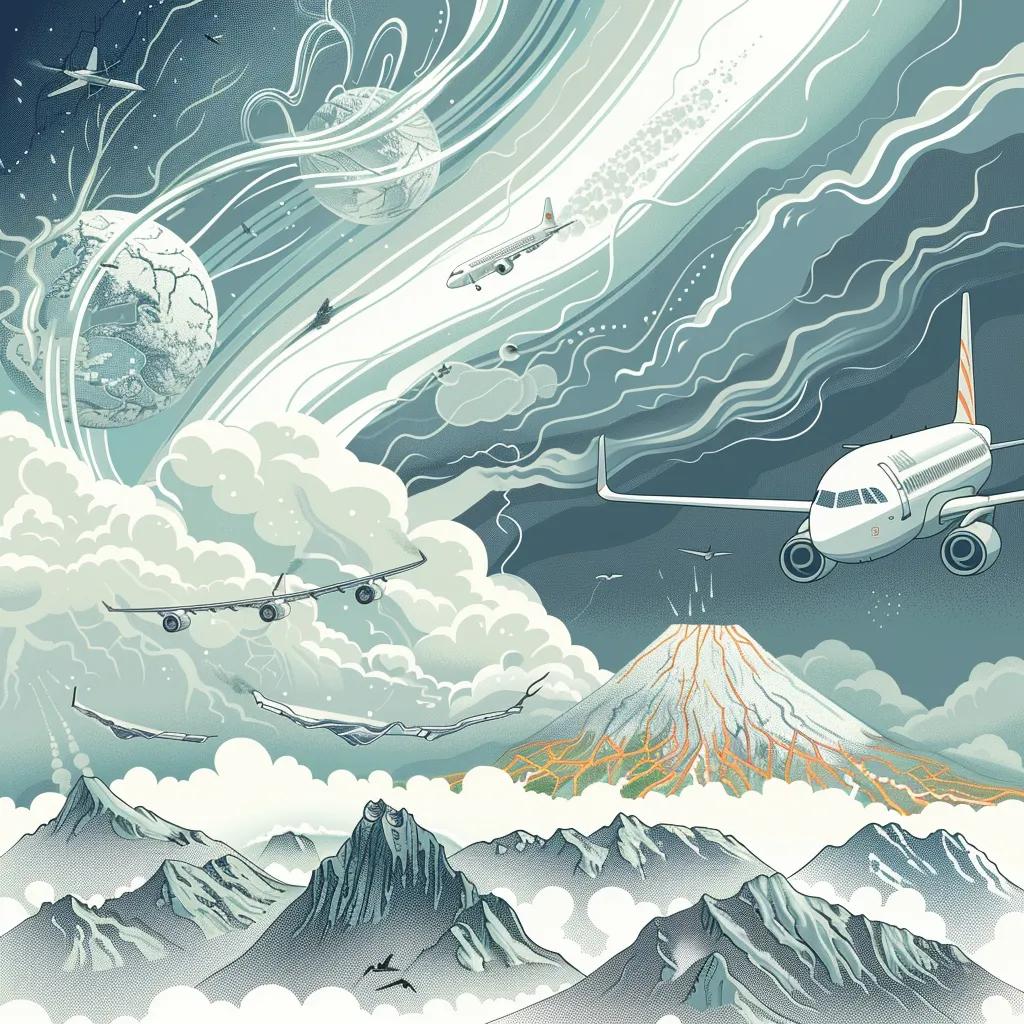
Aviation turbulence falls into three primary categories—each with distinct causes, characteristics, and avoidance strategies.
Convective turbulence originates in cumulonimbus cells, orographic turbulence arises when stable air flows over topography, and clear-air turbulence (CAT) emerges in the absence of visual cues. Recognizing these types informs forecasting techniques and flight-planning decisions.
Types of Aviation Turbulence
Aviation turbulence is categorized into convective, orographic, and clear-air turbulence (CAT), each with distinct causes and characteristics. CAT, in particular, is caused by wind shear in jet streams and is often invisible, making it difficult to detect.
This citation supports the classification of turbulence types, which is essential for understanding the article’s discussion on causes and mitigation strategies.
How Does Turbulence Impact Passenger Safety and Flight Operations?
Turbulence raises injury risk when unbelted passengers or unsecured items are tossed about, compels pilots to change altitude or routing, and increases fuel burn through speed adjustments.
- Passenger Injuries: Sudden vertical accelerations cause bruises, strains, or head trauma.
- Operational Procedures: Crews enforce seat-belt signs, adjust flight levels, and coordinate with air traffic control.
- Fuel and Time Costs: Holding patterns and altitude changes elevate fuel consumption and scheduling complexity.
These effects drive airlines to refine standard operating procedures and invest in advanced detection systems for safer, more efficient flights.
Why Is Turbulence Hard to Predict, Especially Clear-Air Turbulence?
Clear-air turbulence often occurs without visual indicators like clouds, making it challenging for conventional radar and onboard sensors to detect.
- Invisible Shear Zones: Rapid wind-speed gradients at the jet stream interface escape visual tracking.
- Limited Real-Time Data: Aircraft-mounted sensors provide only localized readings, delaying broader detection.
- Rapid Evolution: Atmospheric instabilities can intensify within minutes.
The unpredictability of CAT demands ongoing improvements in remote sensing and predictive algorithms to alert flight crews before encounters.
Clear-Air Turbulence and Jet Streams
Clear-air turbulence (CAT) is strongly related to jet streams, with CAT being caused by vertical and horizontal wind shear. CAT is most intense on the cold side of the jet stream, near the jet core.
This citation provides a scientific basis for the relationship between jet streams and CAT, which is crucial for understanding the challenges of predicting and avoiding this type of turbulence.
How Is Climate Change Driving the Increase in Turbulence?

Climate change warms the atmosphere unevenly, intensifying wind shear, shifting jet streams, and altering moisture and temperature gradients—all fundamental drivers of turbulence. As greenhouse gases trap heat, atmospheric layers become less stable, fueling more frequent and severe turbulent events at cruising altitudes.
Impact of Climate Change on Turbulence
Climate change is intensifying wind shear, shifting jet streams, and altering temperature gradients, all of which are fundamental drivers of turbulence. Studies show that moderate-to-severe clear air turbulence has increased significantly over various regions due to these changes.
This citation supports the claim that climate change is a significant factor in the increase of turbulence, which is a central theme of the article.
How Does Global Warming Intensify Wind Shear and Atmospheric Instability?
Rising surface and upper-troposphere temperatures amplify the contrast between polar and equatorial air masses, strengthening wind shear where these masses meet. Enhanced shear zones increase the likelihood of turbulent eddies, undermining flight smoothness and stability. Increased instability also prolongs convective activity, leading to more extended periods of rough air.
What Role Do Jet Stream Shifts Play in Increasing Turbulence?
Jet streams—narrow ribbons of high-speed winds—migrate poleward and fluctuate in speed due to climate-driven thermal imbalances.
As jet streams accelerate and broaden, clear-air turbulence zones become more extensive and intense, particularly over major air corridors.
How Do Temperature Gradients and Moisture Changes Fuel Turbulence?
Warmer air holds more moisture, releasing latent heat as it condenses and driving stronger updrafts. Simultaneously, sharper temperature gradients between adjacent air layers create unstable interfaces where turbulence thrives.
- Enhanced Moist Convection amplifies thunderstorm turbulence.
- Steep Thermal Gradients intensify wind shear.
- Increased Humidity provides more energy for rapid vertical air movement.
These combined factors create a more turbulent atmosphere for modern aircraft to navigate.
Where Are the Regional Hotspots for Increasing Turbulence Worldwide?
Certain airspaces experience disproportionately higher turbulence growth due to prevailing jet streams, storm tracks, and regional climate patterns. Identifying these hotspots enables airlines to adjust routes and allocate resources more effectively.
Why Is the North Atlantic a Key Area for Severe Turbulence?
The North Atlantic corridor sits beneath a fast-moving polar jet stream that has strengthened by over 15 knots in recent decades. Between 1979 and 2020, severe clear-air turbulence reports over this route rose by 55 percent, making it the globe’s most turbulence-prone transcontinental airspace.
Regional Hotspots for Turbulence
The North Atlantic corridor is a key area for severe turbulence due to a strengthened polar jet stream. Between 1979 and 2020, severe clear-air turbulence reports over this route rose by 55 percent.
This citation provides specific data on the increase of severe turbulence in the North Atlantic, supporting the article’s identification of regional hotspots.
How Are East Asia, North Africa, and the Middle East Affected by Turbulence Trends?
East Asia sees increased typhoon-related convective turbulence, North Africa faces stronger Sahara thermal updrafts, and the Middle East contends with intensified desert heat plumes. Each region’s unique climate drivers contribute to more frequent turbulence encounters on popular international routes.
What Are the Implications for Flights Over North Pacific and North America?
Over the North Pacific, shifting subtropical jet dynamics have led to a 30 percent rise in moderate turbulence. In North America, summer convective activity combined with amplified wind shear along the Rocky Mountain corridor extends periods of rough conditions, prompting airlines to revise summer schedules and fuel reserves.
What Are the Economic and Operational Impacts of Increased Turbulence on Airlines?
Rising turbulence elevates direct costs like fuel and maintenance, and indirect costs such as delays, insurance premiums, and reduced asset utilization. Quantifying these impacts clarifies why carriers invest heavily in forecasting and mitigation.
How Does Turbulence Increase Fuel Consumption and Maintenance Costs?
Turbulence forces altitude changes, holding patterns, and speed adjustments that boost fuel burn by up to 5 percent on affected flights. Repeated stress cycles on airframes and control surfaces also accelerate inspection intervals and part replacements.
- Altitude Deviations require extra thrust.
- Holding Patterns prolong engine runtime.
- Structural Fatigue triggers unscheduled maintenance.
Economic and Operational Impacts
Turbulence increases fuel consumption and maintenance costs due to altitude changes and structural stress. Airlines are investing in forecasting and mitigation to manage these rising costs.
This citation supports the economic impacts of increased turbulence on airlines, which is important for understanding the industry’s response to the issue.
What Are the Effects of Turbulence on Flight Delays and Scheduling?
Unexpected rough air often leads to extended flight times and reshuffled departure slots. Crew duty-time regulations may be exceeded, forcing cancellations or aircraft swaps. Frequent delays erode schedule reliability and passenger satisfaction, with ripple effects across global networks.
How Do Airlines Manage Insurance and Liability Risks Related to Turbulence?
Airlines mitigate liability by updating insurance policies, raising premiums based on turbulence exposure, and incorporating indemnity clauses in passenger contracts. Investments in advanced forecasting systems and real-time briefing services also lower claim frequencies by reducing unexpected encounters.
How Are Advances in Technology and Training Helping Mitigate Turbulence Risks?
Breakthroughs in remote sensing, artificial intelligence, aircraft design, and pilot education are converging to better predict, avoid, and withstand turbulence. These innovations support safer skies and smoother operations even as atmospheric instability grows.
What Are the Latest Developments in Turbulence Forecasting and Detection?
LIDAR units, enhanced Doppler radar, and satellite-based wind profiling now detect wind shear zones up to 60 miles ahead. Onboard turbulence sensors feed real-time data to ground centers, enabling dynamic route adjustments before encounters.
How Is AI Being Used to Improve Turbulence Prediction and Flight Path Optimization?
Machine learning models ingest live weather feeds, aircraft telemetry, and historical turbulence logs to forecast rough-air zones with 85 percent accuracy. AI-driven flight-planning tools then generate optimized altitudes and routings that minimize exposure and fuel use.
What Pilot Training and Operational Strategies Are Effective Against Turbulence?
Enhanced simulator modules replicate severe CAT scenarios, training crews to anticipate altitude busts and coordinate cabin safety protocols. Standardized turbulence-avoidance checklists and real-time weather briefings equip pilots to make proactive decisions.
How Are Aircraft Designs Evolving to Handle Increased Turbulence?
These innovations enable airframes to flex and absorb turbulent forces more effectively, preserving safety margins.
What Can Passengers Expect and How Can They Cope with Increasing Turbulence?
As global turbulence intensifies, passengers may experience more frequent bumps and occasional seat-belt-sign activations. Awareness of safety behaviors and coping techniques ensures a more comfortable journey.
Why Is Turbulence a Leading Cause of In-Flight Injuries?
Unsecured cabin items and unfastened seat belts during sudden jolts account for over 40 percent of serious in-flight injuries. Head strikes, sprains, and bruises occur when passengers are not restrained as the aircraft moves through turbulent air.
What Are Common Passenger Fears and How Can They Be Managed?
Many travelers fear loss of control and structural damage despite aircraft resilience. Deep breathing, focused distraction techniques, and listening to crew safety briefings can significantly reduce anxiety and perceived risk.
What Safety Measures Should Passengers Follow During Turbulent Flights?
Passengers should keep seat belts fastened whenever seated, stow belongings securely, and follow crew instructions promptly. Remaining seated during unexpected bumps minimizes injury risk and supports cabin safety protocols.
Passenger Safety Measures
Passengers can prevent injuries from unexpected turbulence by keeping their seat belts fastened at all times. The FAA requires passengers to be seated with their seat belts fastened during various phases of flight.
This citation emphasizes the importance of seat belt use for passenger safety, which is a key recommendation in the article.
What Does the Future Hold for Turbulence Trends and Aviation Safety?
Scientific models project a doubling of severe clear-air turbulence incidents by 2050 as climate change continues to alter atmospheric dynamics. Ongoing research, technology adoption, and industry collaboration will shape the next era of safer, more resilient air travel.
How Are Scientific Models Predicting Turbulence Frequency by 2050 and Beyond?
Climate-coupled atmospheric simulations anticipate a 100–300 percent increase in severe clear-air turbulence events on major routes by mid-century, driven by amplified wind shear and jet stream variability.
What Ongoing Research Is Being Conducted on Climate Change and Turbulence?
Institutions worldwide are deploying high-altitude drones, refining global circulation models, and studying jet stream–turbulence interactions to improve forecasts and understand long-term trends in atmospheric instability.
How Will Aviation Industry Adaptation Shape the Future of Flight Safety?
The industry’s shift toward AI-enhanced routing, real-time data sharing between airlines and meteorological agencies, and new certification standards for turbulence resilience promises a proactive approach to managing bumpier skies ahead.
Global turbulence is rising as climate change intensifies wind shear, shifts jet streams, and destabilizes atmospheric layers. Airlines and pilots must leverage advanced forecasting, aircraft design improvements, and rigorous training to maintain safety and efficiency. Passengers can protect themselves by keeping seat belts fastened and practicing anxiety-reduction techniques. Continued research and innovation will guide aviation toward smoother, safer flights despite increasingly turbulent skies.