Business Leadership and Management: Essential Skills and Strategies for Pakistani Professionals
Strong business leadership and effective management skills determine whether organizations navigate change or fall behind, and Pakistani professionals need frameworks that translate global best practices into local outcomes. This article explains what business leadership and management mean, contrasts the two roles, and lays out core principles that drive organizational performance in Pakistan’s economy. Readers will learn the most effective leadership styles, essential management competencies such as strategic thinking and data literacy, and practical pathways to develop those capabilities through training, mentorship, and daily routines. We also examine how organizational culture, team dynamics, diversity, and conflict resolution shape leadership success, then review lessons from Pakistani business contexts and emerging global trends—AI, emotional intelligence, sustainability, and digital leadership—that leaders must master today. Throughout, the guidance focuses on actionable management skills, strategic management frameworks, and youth leadership development relevant to professionals aged 16–32 and beyond.
What Is Business Leadership and Management?
Business leadership defines direction, inspires people, and shapes culture while management organizes resources, systems, and execution to meet objectives. Leadership operates through vision-setting, influence, and culture-building to change what an organization does; management uses planning, budgeting, and processes to ensure work gets done reliably. Together they form a strategic-management framework where leadership provides the “why” and management provides the “how,” producing measurable outcomes like growth, resilience, and operational efficiency. Clear differentiation helps professionals choose which skills to develop first—strategic thinking and emotional intelligence for leaders, and process design and financial acumen for managers—before moving into style selection.
How Do Leadership and Management Differ?
Leadership focuses on vision, influence, and change while management emphasizes planning, control, and consistency. Leaders motivate and create strategic direction; managers align operational activities, monitor KPIs, and enforce timelines to translate vision into results. In practice, a CEO may lead transformative strategy while a COO manages supply chains and process efficiency; both roles require overlapping skills such as communication and decision-making. Understanding this distinction helps Pakistani professionals decide when to lead with influence versus when to prioritize managerial rigor, which matters in family firms and fast-moving startups.
What Are the Key Principles of Organizational Leadership?
Core principles include vision alignment, accountability, ethical governance, adaptability, and stakeholder empathy. Vision alignment connects daily activities to long-term strategy; accountability ensures roles and outcomes are clear; ethics and good governance build trust with investors, employees, and regulators. Adaptability and resilience enable leaders to respond to economic shocks and policy shifts, while stakeholder empathy—listening to customers, staff, and communities—grounds decisions in reality. Applying these principles produces stronger organizational behavior, improved employee engagement, and better strategic outcomes in complex markets.
Why Is Business Leadership Important in Pakistan’s Economy?
Business leadership drives firm-level growth and helps firms navigate regulatory, macroeconomic, and market volatility specific to Pakistan. Effective leaders secure investment readiness, implement governance practices that reduce risk, and champion youth employment and entrepreneurship programs that expand opportunity. In sectors like textiles, tech startups, and services, strategic leadership can accelerate export competitiveness or digital adoption, while weak leadership often results in governance gaps and constrained scaling. Strong local leadership thus supports national economic resilience and creates environments where management skills convert ambition into measurable performance.
What Are the Most Effective Leadership Styles in Business?
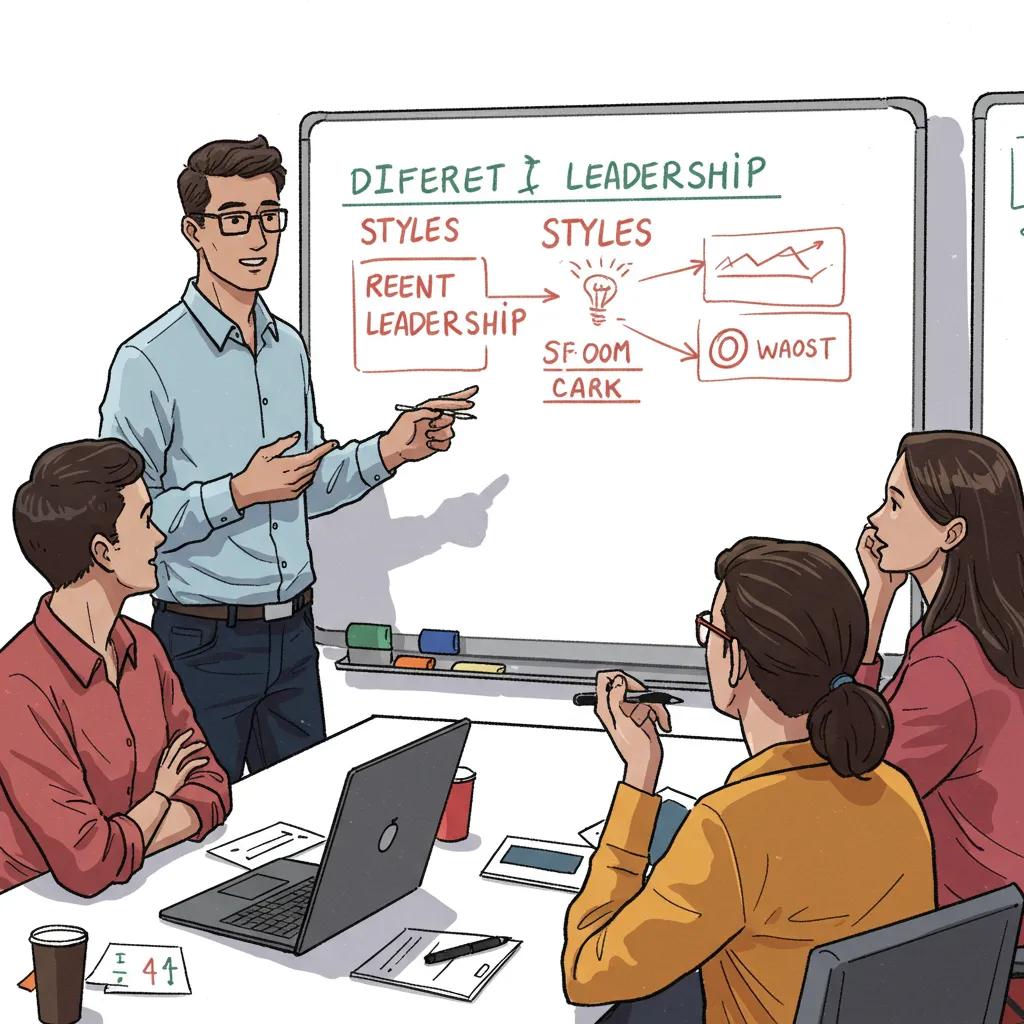
Leadership styles are tools leaders choose to match context, team maturity, and strategic goals; effective leaders adapt style to circumstance. Style selection affects decision speed, innovation, and employee morale. This section outlines common approaches, shows how styles influence team performance, and offers culturally relevant recommendations for Pakistani organizations seeking to balance directive control and participative engagement. Understanding these styles helps leaders deploy the right mix of authority and collaboration to drive results.
What Are the 5 Common Leadership Styles?
Below are five common styles with short definitions and when they are most effective for quick reference.
- Autocratic: Leader makes decisions with little input, effective in crises requiring fast, centralized action.
- Democratic: Decisions are collaborative, building buy-in and innovation in stable, creative teams.
- Laissez-faire: Hands-off approach giving autonomy to skilled teams; best for highly experienced professionals.
- Transformational: Inspires change through vision and motivation; effective for startups and major pivots.
- Situational: Adapts style to context and team readiness, blending directive and supportive behaviors.
These concise definitions clarify when to employ each style and prepare leaders to choose contextually.
Leadership Style Comparison Table
Different leadership styles deliver distinct impacts on teams depending on context and objectives.
How Do Leadership Styles Impact Team Performance?
Styles affect motivation, productivity, and innovation through mechanisms like psychological safety and autonomy. Transformational and democratic styles typically increase intrinsic motivation and creativity, while autocratic approaches can speed execution but risk disengagement. The effect on retention and performance metrics depends on fit between style and team capability; inexperienced teams often need more structure, while high-skill teams thrive with autonomy and shared vision. Leaders who monitor feedback loops and adjust style can sustain productivity and lower turnover.
Which Leadership Styles Are Most Effective in Pakistani Businesses?
Pakistani businesses benefit from a hybrid approach: situational and transformational styles work well in startups and tech sectors, while family-owned firms often require a balanced democratic-directive mix to maintain control and promote succession. Youth leadership development in Pakistan favors participative methods that leverage digital engagement and mentorship, whereas regulated industries may necessitate more directive management for compliance. Adapting styles to cultural norms and generational expectations helps leaders maintain legitimacy and effectiveness.
Which Essential Management Skills Drive Business Success?

Effective management combines strategic thinking, communication, data literacy, financial acumen, and people management into daily practice. Managers translate vision into measurable results by setting goals, allocating resources, and evaluating outcomes with KPIs. This section dives into these skills, provides practical ways to build them, and links each skill to outcomes relevant to Pakistani firms seeking scale and resilience.
How Does Strategic Thinking Improve Business Outcomes?
Strategic thinking frames long-term objectives and aligns resources using frameworks like SWOT, OKRs, and scenario planning. It enables leaders to prioritize investments, anticipate market shifts, and create measurable roadmaps for growth and risk mitigation. For Pakistani managers, strategic thinking helps navigate policy changes and supply-chain constraints by identifying strategic bets and defensive moves. Structured strategy sessions with cross-functional teams convert abstract goals into operational plans that improve decision quality and resource allocation.
Why Is Communication Critical for Effective Management?
Clear communication aligns teams, accelerates feedback loops, and enables effective crisis response. Managers who set expectations, provide timely feedback, and practice active listening reduce ambiguity and increase accountability. Practical best practices include daily stand-ups, concise written updates, and structured performance conversations to maintain alignment. The next step is integrating communication routines with data-driven decision processes to ensure messages map to measurable outcomes.
- This list shows practical communication tactics managers can adopt rapidly.
- Use brief, regular check-ins to maintain alignment and surface blockers.
- Standardize written updates with clear actions and owners to reduce ambiguity.
- Practice active listening and ask clarifying questions in one-on-one meetings.
These techniques create repeatable routines that improve coordination and reduce costly misalignment.
How Can Data Analysis and AI Tools Enhance Decision-Making?
Data literacy and AI tools augment managerial judgment by surfacing patterns, forecasting outcomes, and automating administrative tasks. Decision-support systems can model scenarios, while basic analytics clarify customer segments and operational bottlenecks. For Pakistani SMEs, starting with small dashboards and clear KPIs is practical before expanding into AI-driven forecasting. Barriers like data quality and skills gaps can be addressed through targeted training and simple tool adoption plans that prioritize high-impact metrics.
Management Skills EAV Table
This table compares core management skills with their attributes and Pakistan-specific examples that demonstrate outcomes.
What Are Best Practices for Financial Acumen in Management?
Financial acumen means reading statements, forecasting cash flow, and using KPIs to link operations to strategy. Managers should run monthly P&L reviews, track working capital metrics, and model basic sensitivity analyses for key cost drivers. In Pakistan, focusing on liquidity management and realistic revenue assumptions helps firms withstand macroeconomic shifts. Embedding financial checkpoints into decision processes ensures strategic initiatives are feasible and resources are allocated efficiently.
How Can Leaders Develop and Enhance Their Leadership Skills?
Leaders improve through structured programs, mentorship, and disciplined self-improvement routines that build capability over time. Development options range from short workshops and online modules to formal degrees and workplace projects that rotate responsibilities. This section maps available program formats, explains mentorship models, and offers a 30–90 day micro-plan readers can adapt to kickstart growth, especially for young Pakistani leaders balancing study, work, and digital engagement.
What Are the Best Leadership Training Programs Available in Pakistan?
Training programs include short workshops, executive education modules, and blended online formats that focus on strategic management, governance, and digital leadership. Choosing a program depends on career stage: early-career leaders benefit from short, practical workshops; mid-career managers gain from cohort-based executive courses; entrepreneurs often prefer practical incubator-style programs. Below is a compact comparison to guide choice.
How Does Mentorship Support Leadership Growth?
Mentorship combines guidance, accountability, and tacit knowledge transfer that accelerates learning beyond classroom instruction. Formal mentorship programs pair mentees with experienced leaders for regular goal-setting and feedback, while informal mentorship can arise through networks and social media engagement. Steps to find mentors include identifying role models, requesting short introductory meetings, and proposing a clear agenda to respect their time. Mentorship complements training by translating frameworks into actionable workplace behaviors.
What Self-Improvement Techniques Help Build Leadership Skills?
Daily and weekly micro-habits compound into durable leadership capability when practiced consistently. Techniques include structured reading, reflective journaling, deliberate practice of feedback conversations, and measuring progress against clear development goals. A practical 30–60–90 day plan helps sustain momentum:
- 30 days: Establish routines—daily reading, weekly reflections, and one focused communication exercise.
- 60 days: Apply skills in real projects, seek feedback, and adjust based on results.
- 90 days: Demonstrate measurable improvement in team outcomes and iterate development priorities.
How Does Organizational Culture Influence Business Leadership?
Organizational culture either enables or constrains leadership effectiveness through norms, incentives, and informal rules. Culture shapes motivation, team dynamics, diversity outcomes, and conflict handling methods, and leaders who embed desired behaviors into processes reinforce cultural change. This section examines motivation drivers, team-building best practices, DEI implementation, and conflict resolution models that leaders can apply in Pakistani workplaces to strengthen performance and retention.
What Role Does Employee Motivation Play in Leadership?
Motivation fuels discretionary effort and sustained performance; leaders influence motivation through meaningful work, recognition, and career pathways. Intrinsic motivators—purpose, autonomy, mastery—drive sustained engagement while extrinsic motivators—pay, benefits—address immediate needs. Practical steps include meaningful goal-setting, public recognition of contributions, and clear paths for skill development. Motivated teams deliver higher productivity, lower turnover, and improved innovation.
How Can Leaders Build and Manage Effective Teams?
Building effective teams requires role clarity, deliberate delegation, and ongoing development that align skills to tasks. Leaders should use a simple delegation framework: define outcomes, assign ownership, set checkpoints, and provide feedback. The following checklist helps structure delegation and team management.
- Delegation Checklist for Managers:
Define the specific outcome and success metrics before assigning a task.Match tasks to individual strengths and provide necessary resources.Establish clear checkpoints and feedback loops to monitor progress.Use delegation as a development tool with incremental autonomy.
Why Is Diversity, Equity, and Inclusion Important in Leadership?
DEI expands the talent pool, improves decision quality through varied perspectives, and strengthens market relevance in diverse societies. Leaders can implement inclusive hiring, transparent promotion criteria, and cultural-awareness training to make DEI operational rather than symbolic. Measuring DEI progress through specific KPIs—representation, pay equity, employee engagement—keeps initiatives accountable and linked to business outcomes.
How Can Conflict Resolution Improve Organizational Performance?
Effective conflict resolution restores focus and preserves collaboration by addressing root causes quickly and fairly. A stepwise model includes active listening, mapping interests, proposing options, and agreeing on follow-up actions. Managers trained in mediation reduce escalation and increase psychological safety, which supports innovation and retention. Embedding clear escalation paths and impartial facilitation mechanisms prevents conflicts from undermining performance.
Who Are the Leading Pakistani Business Leaders and What Can We Learn From Them?
Profiles and case studies of Pakistani entrepreneurs and corporate leaders reveal replicable decisions: governance improvements, talent investments, and digital adoption often explain successful scaling. While contexts differ, common lessons include prioritizing transparent governance, investing in young talent, and adopting data-driven decision-making. The stories of local leaders illustrate how practical changes in management skills and leadership mindset translate into business resilience.
What Are Success Stories of Prominent Pakistani Entrepreneurs?
Prominent Pakistani entrepreneurs frequently scale by focusing on export-readiness, resilient supply chains, and talent development rather than short-term gains. Success narratives commonly feature decisive strategic pivots, early investment in systems and financial controls, and recruitment that prioritizes coachable talent. Transferable lessons include the value of clear metrics, disciplined financial management, and mentoring next-generation leaders to sustain growth across economic cycles.
What Challenges Do Pakistani Leaders Face in Business Management?
Leaders contend with regulatory uncertainty, talent shortages, and scaling barriers that complicate strategic execution. Additional challenges include limited access to advanced analytics and capital constraints for mid-market firms. Practical mitigation strategies involve strengthening governance, developing internal training pipelines, and adopting lightweight data tools to prioritize high-impact problems. Overcoming these obstacles requires both managerial discipline and creative resource allocation.
How Do Young Pakistani Leaders Navigate the Business Environment?
Young leaders leverage digital platforms, social media, and online networks to build visibility, access markets, and attract talent while blending global trends with local market understanding. Many tap mentorship and incubator programs, use lean experiments to validate ideas, and focus on agile product-market fit before scaling. Balancing innovation with cultural and regulatory realities helps youth entrepreneurs convert early traction into sustainable enterprises.
What Are the Emerging Global Trends Impacting Business Leadership and Management?
Global shifts—AI augmentation, rising importance of emotional intelligence, sustainability, and digital-first leadership—are reshaping leadership competencies required for future-ready organizations. Leaders must integrate technology with human-centric management, embed ESG thinking into strategy, and build data literacies across teams. This section explains practical adoption steps and forecasts competencies that Pakistani leaders should prioritize to remain competitive in 2025 and beyond.
How Is AI Transforming Leadership and Decision-Making?
AI augments leaders by providing predictive insights, automating routine work, and enabling scenario planning that improves decision speed and accuracy. Use cases include demand forecasting, talent-sourcing automation, and decision-support dashboards that highlight trade-offs. Ethical considerations—bias, transparency, and data governance—must accompany adoption. Pakistani firms can start with small pilots that demonstrate ROI and scale tools that solve clearly defined operational bottlenecks.
Why Is Emotional Intelligence Becoming Essential for Leaders?
Emotional intelligence (EI) supports relationship-building, stress management, and inclusive leadership in hybrid and remote work settings. EI components—self-awareness, self-regulation, empathy, and social skills—improve conflict resolution and inspire teams during change. Practical exercises include reflective journaling, role-play feedback sessions, and structured empathy interviews with team members. Cultivating EI reduces churn and increases team cohesion, which in turn amplifies organizational performance.
How Are Sustainable Business Practices Shaping Leadership in Pakistan?
Sustainable practices shift leadership priorities toward long-term value creation through resource efficiency, stakeholder engagement, and ESG reporting. Practical steps include integrating sustainability into procurement, reducing energy intensity, and measuring simple environmental and social KPIs. Leaders who align sustainability with cost savings and customer preferences create competitive differentiation while meeting rising regulatory and investor expectations.
What Is the Future of Digital Leadership Strategies?
Digital leadership requires fluency in data-driven decision-making, remote team management, and change management capabilities that sustain digital transformation. Leaders should prioritize platforms that centralize collaboration, invest in data literacy training, and create feedback loops that learn from experiments. A short roadmap: pilot digital tools, measure impact with clear KPIs, scale successful pilots, and embed continuous learning to sustain transformation.
Digital Leadership: Essential for Business Transformation and Survival
Digital leadership is crucial for organizations to survive in the new digital era by adapting and transforming business strategies. To accomplish business objectives and successfully drive the digital business transformation
To provide timely and comprehensive news and current affairs coverage, keeping the audience informed and engaged with diverse content.
Subscribe or follow ARY News for ongoing business coverage tailored to Pakistani professionals and young leaders.
Conclusion
Mastering business leadership and management is essential for Pakistani professionals aiming to drive organizational success and navigate a complex economic landscape. By developing key skills such as strategic thinking, effective communication, and emotional intelligence, leaders can foster resilient teams and innovative cultures. Embracing these principles not only enhances individual capabilities but also contributes to the broader economic growth of the region. Start your journey towards impactful leadership today by exploring our resources and training programs tailored for aspiring leaders.