Cold Case Solved: How DNA Evidence Led to Arrest in a 1995 Murder
DNA evidence shattered a decades-old dead end when forensic science and genetic genealogy pinpointed a suspect in a 1995 Kitsap County homicide. Readers will learn how cold cases are classified, why 1990s evidence posed unique challenges, and how modern techniques—from STR profiling to investigative genetic genealogy—reignite stalled investigations. This article maps the evolution of DNA in forensics, explains the role of public databases and key experts, presents landmark 1995 case studies, outlines law enforcement collaborations, examines ethical and legal debates, and highlights the human impact of justice delivered after decades.
What Is a Cold Case and Why Are 1990s Murders Challenging to Solve?
A cold case is an unsolved criminal investigation that remains open pending new leads or evidence, and 1990s murders often lack preserved, testable DNA and benefited from limited forensic technology at the time. Understanding cold case status and classification provides context for why outdated processes stalled many 1995 investigations, setting the stage for breakthroughs powered by advanced DNA analysis and genetic genealogy methods.
How Are Cold Cases Defined and Classified?
Cold cases are classified by status, evidence type, and investigation priority, ensuring law enforcement focuses resources where breakthroughs are most likely.
- Status: Classified as “inactive” after exhaustive leads dry up.
- Evidence Type: Often involves biological samples that require specialized analysis.
- Priority Level: Determined by homicide severity and public safety concerns.
These criteria guide detectives toward cases ripe for new forensic approaches, laying groundwork for re-examination of legacy evidence.
What Obstacles Do Investigators Face with 1990s DNA Evidence?
Investigators confront three core obstacles when re-examining 1990s samples: degradation of biological material, inconsistent storage conditions, and limited genetic markers available at the time. Over decades, blood and saliva traces degrade—fragmenting strands and reducing analysis success—while early DNA profiling relied on fewer loci, constraining identification power. Addressing these challenges requires specialized extraction and amplification techniques that revive usable genetic profiles.
Why Are 1995 Murders Now Becoming Solvable?
Recent forensic innovations—such as massively parallel sequencing and enhanced polymerase chain reaction (PCR) chemistries—rescue aged DNA from decades-old exhibits and turn cold case units’ preserved evidence into actionable profiles. Coupled with expansive DNA databases and investigative genetic genealogy, these methods transform degraded samples into clear leads, making 1995 homicides increasingly solvable and delivering justice in formerly stalled investigations.
How Has DNA Evidence Revolutionized Cold Case Investigations?
DNA evidence has revolutionized cold case investigations by providing precise genetic fingerprints that link suspects to crime scenes, dramatically improving resolution rates in unsolved homicides. Since its introduction in the mid-1990s, DNA profiling has evolved from rudimentary marker analysis to comprehensive genomic comparisons, empowering detectives to solve unsolved mysteries with scientific certainty.
What Are the Key DNA Profiling Techniques Used in Cold Cases?
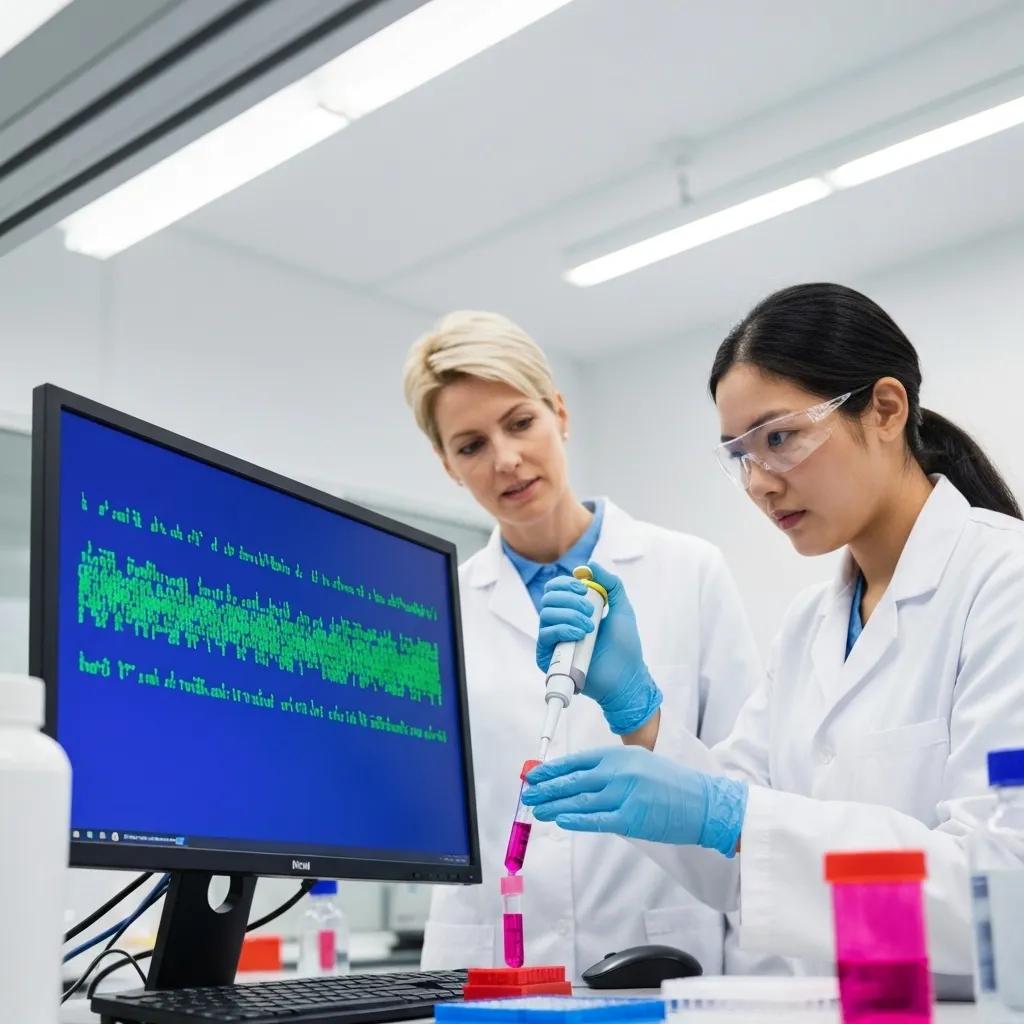
Forensic laboratories employ three principal profiling techniques—short tandem repeat analysis, mitochondrial DNA sequencing, and Y-chromosome markers—which together expand the range of genetic evidence that can identify suspects or relatives.
These methods complement each other, enabling investigators to build robust genetic profiles from limited or compromised samples and bridge the gap between evidence and suspect identification.
How Is Degraded or Aged DNA Successfully Analyzed Today?
Modern forensic workflows begin with gentle extraction protocols that preserve fragmented DNA, followed by targeted enrichment and next-generation sequencing that reads tiny segments across multiple loci. Enzymatic repair techniques reconstruct damaged strands, and bioinformatic pipelines assemble overlapping reads into complete genetic profiles. These advances transform decades-old, degraded DNA into reliable data for genealogical and database matching, extending the utility of evidence beyond what was possible in the 1990s.
What Is the Historical Evolution of DNA Use in Forensics Since 1995?
- 1995: Introduction of STR profiling in criminal databases.
- 2000: Expansion of CODIS to include 13 core loci for improved matching.
- 2012: Validated mitochondrial DNA sequencing for human forensic casework.
- 2018: Breakthrough in investigative genetic genealogy with the Golden State Killer case.
- 2021–2023: Adoption of massively parallel sequencing and DNA phenotyping for cold case evidence.
This evolution underscores how incremental advances have steadily increased law enforcement’s ability to solve cold cases dating back to the 1990s.
What Is Investigative Genetic Genealogy and How Does It Solve Cold Cases?

Investigative genetic genealogy (IGG) merges forensic DNA profiling with traditional family tree research to identify unknown suspects by locating genetic relatives in public databases, delivering leads when no direct match exists. This hybrid methodology has transformed cold case units’ strategies, unlocking decades-old mysteries through familial connections rather than direct database hits.
How Does Genetic Genealogy Combine DNA and Family Tree Research?
- Upload crime scene profile to open-access genetic databases.
- Identify shared segments with distant relatives.
- Build pedigrees using traditional genealogy records.
- Narrow suspect pool through demographic and geographic data.
These steps leverage familial inheritance patterns to situate a suspect within a broader lineage, enabling detectives to close cases without prior direct matches.
Which Public DNA Databases Are Used in Murder Investigations?
- GEDmatch – Facilitates open uploads of forensic-grade profiles from crime scenes.
- Family Tree DNA – Offers law enforcement access to autosomal test kits under policy guidelines.
- YSearch (legacy) – Historic repository for Y-chromosome data used in paternal lineage tracing.
By cross-referencing multiple sources, cold case units increase the likelihood of detecting genealogical connections that reveal suspect identities.
Who Are the Key Experts and Organizations in Genetic Genealogy?
- CeCe Moore – Renowned genealogist who has led numerous cold case resolutions.
- Parabon NanoLabs – Forensic lab specializing in DNA phenotyping and genealogical matching.
- Othram – Advanced genomics company that processes highly degraded samples for genealogical research.
These experts and organizations collaborate closely with detectives, combining laboratory precision with genealogical insight to bring suspects to justice.
Which Notable 1995 Cold Cases Were Solved Using DNA Evidence?
Several landmark 1995 murders from Kitsap County, Beaumont, and Riviera Beach remained unsolved until DNA breakthroughs and genealogical research arrested suspects, illustrating how modern forensics resolves long-standing homicides.
What Happened in the Patricia Lorraine Barnes 1995 Kitsap County Case?
Patricia Barnes was found murdered in August 1995, and initial investigations yielded no viable leads due to degraded biological traces. Two decades later, IGG and enhanced STR analysis produced a viable profile.
Early evidence preservation enabled modern labs to extract a usable STR profile and trace familial connections that pinpointed the suspect and secured his arrest.
How Did DNA Breakthroughs Lead to Douglas Keith Krohne’s Arrest?
When investigators applied massively parallel sequencing to Barnes’s blood sample, they generated a high-resolution profile. Uploading that profile to public databases produced distant kin matches. Genealogists then constructed a family tree culminating in Douglas Keith Krohne, whose subsequent legal DNA comparison confirmed his involvement and led to formal charges.
What Was the Role of Othram in Solving the Mary Catherine Edwards 1995 Beaumont Case?
Othram’s advanced genomic workflows extracted fragmented mitochondrial and nuclear DNA from degraded tissue preserved since 1995. By combining these data with Y-chromosome markers, genealogists traced maternal and paternal lines that led directly to the suspect, whose arrest delivered resolution after 26 years.
Othram’s deep-sequencing expertise and collaboration with genealogy specialists provided the critical evidence to close the Beaumont case.
How Was the Ernstein Mortimer 1995 Riviera Beach Murder Resolved?
In Florida, preserved semen evidence from the Mortimer case was re-examined using enhanced STR kits and mitochondrial sequencing. That profile produced database hits to distant relatives and, after genealogical triangulation, identified Willie Rogers as a suspect. Coordinated detective work and genealogical research resulted in arrest and indictment.
What Lessons Do These Cases Offer for Other 1990s Cold Cases?
These successes illustrate three key lessons: rigorous evidence preservation enables future analysis, multi-layered profiling expands match possibilities, and collaborative genealogical research bridges forensic gaps. Applying these principles to other 1990s homicides increases the chance of resolution and delivers justice in long-standing investigations.
How Do Cold Case Units and Law Enforcement Collaborate to Solve DNA Cold Cases?
Effective collaboration between specialized cold case units, forensic laboratories, and national DNA databases ensures that reopened homicides receive integrated investigative, scientific, and genealogical resources, driving arrests in previously stalled cases.
What Are the Functions and Priorities of Cold Case Units?
Cold case units prioritize cases by severity, available evidence, and solvability potential, then allocate detective time and lab resources accordingly. Their core functions include:
- Reviewing legacy case files for overlooked clues.
- Coordinating evidence re-examination with forensic partners.
- Integrating genealogical research into investigative plans.
This structured approach ensures that law enforcement targets cases where scientific advances can yield definitive results.
How Do Forensic Laboratories Support DNA Analysis in Cold Cases?
Forensic labs provide three critical services—extraction of trace DNA, application of next-generation sequencing, and interpretation of complex genetic data—that transform archived exhibits into database-ready profiles.
By delivering high-quality data, laboratories enable detectives to pursue genetic leads with confidence.
What Is the Role of CODIS and Other DNA Databases in Arrests?
The Combined DNA Index System (CODIS) stores offender and arrestee profiles, facilitating direct matches when crime scene DNA corresponds to known individuals. When no direct hit occurs, auxiliary public databases fill gaps through familial searches, ensuring that both convicted offenders and unknown suspects can be identified via genetic relationships.
What Are the Ethical and Legal Considerations of Using Genetic Genealogy in Cold Cases?
Deploying genetic genealogy in criminal investigations raises significant concerns about individual privacy, data consent, and regulatory frameworks that balance public safety with civil liberties.
What Privacy Concerns Arise from Law Enforcement Access to DNA Databases?
Law enforcement access to genealogy databases may expose individuals’ sensitive genetic information without explicit consent. Privacy risks include:
- Potential misuse of data for non-criminal investigations.
- Disclosure of medical predispositions tied to genetic markers.
- Unintended identification of relatives uninvolved in crime.
How Do Legal Frameworks Govern DNA Evidence and Genetic Genealogy?
DNA evidence and genealogical methods are governed by federal statutes, court precedents, and database policies that define admissibility standards, warrant requirements, and confidentiality obligations. Jurisdictions differ in scope, but common safeguards include judicial oversight and compliance with the Fourth Amendment to prevent unreasonable searches.
What Are the Debates Around Informed Consent for DNA Submission?
Consent debates center on whether individuals uploading their DNA for ancestry research understand that law enforcement may use their data. While some argue that implicit consent suffices when users agree to database terms, others advocate for explicit, opt-in consent mechanisms to uphold ethical research standards and protect personal autonomy.
How Does Solving Cold Cases Impact Victims’ Families and the Pursuit of Justice?
When DNA evidence and genetic genealogy break cold case logjams, victims’ families often experience profound emotional relief and closure, while the criminal justice system demonstrates that delayed accountability still achieves justice.
What Emotional Effects Do Families Experience When Cold Cases Are Solved?
Families frequently report a mixture of relief, validation, and renewed grief upon resolution of long-standing mysteries. Closure from an arrest can reduce anxiety, support healing, and restore confidence in law enforcement’s commitment to justice.
How Does DNA Evidence Provide Justice Despite Delays?
DNA evidence supplies objective proof that transcends witness memory deterioration and investigative biases, ensuring that perpetrators face accountability regardless of elapsed time. This scientific certainty fulfills the principle that justice delayed is not justice denied.
What Is the Future Outlook for Cold Case Investigations Using DNA?
Emerging technologies—such as epigenetic aging markers, DNA phenotyping, and artificial intelligence-driven genealogy—promise to further accelerate cold case resolutions and expand investigative possibilities. Continued collaboration between law enforcement, forensic scientists, and genealogists will drive ongoing progress in solving decades-old homicides.
Decades after Patricia Barnes’s murder, science and detective work converged to bring a suspect to justice. By defining cold case classifications, overcoming 1990s DNA obstacles, and leveraging investigative genetic genealogy, law enforcement units have unlocked sealed evidence and delivered closure to families. Ethical guidelines and collaborative frameworks ensure that privacy and due process remain central as technology advances. The pursuit of justice continues as new methods refine our ability to solve even the oldest unsolved mysteries.