Constitutional Law in Pakistan: Comprehensive Guide to the Pakistan Constitution 1973 and Judicial Impact
The Constitution of Pakistan, adopted in 1973, is the supreme legal document that defines governance, rights, and the relationship between state institutions and citizens. This guide explains what the Constitution of Pakistan 1973 is, how its structure and amendments shape the constitutional framework Pakistan relies on, and why those features matter for daily life and rule of law. Readers will learn clear definitions of fundamental rights, a practical map of key amendments such as the 18th and 26th Amendments and the Supreme Court (Practice and Procedure) Act 2023, and accessible analyses of landmark cases that illustrate judicial independence and parliamentary supremacy. Many citizens and students struggle to translate legal text into practical consequences; this article resolves that by combining plain-language summaries, entity-rich case studies, and actionable ways to follow developments. The article proceeds through sections on the Constitution’s structure, the catalog of fundamental rights, amendment mechanics and impacts, the powers of the Supreme Court of Pakistan, landmark cases, judicial independence, and citizen resources for engagement. Throughout, we integrate contemporary reporting context and semantic clarity to help you connect constitutional doctrine to real-world governance.
What is the Constitution of Pakistan 1973 and Why is it Important?
The Constitution of Pakistan 1973 is the nation’s founding legal charter that establishes state structures, allocates powers among federal and provincial institutions, and guarantees fundamental rights to citizens. It functions by setting constitutional rules (Articles, Parts, and Schedules) that courts interpret and legislatures amend, and this mechanism produces legal certainty and accountability across governance. The document’s value lies in stabilizing governance, protecting civil and political liberties, and delimiting authority between Parliament, the executive, and the judiciary. Understanding this constitutional framework helps citizens assess how laws and judicial decisions shape public life and institutional behavior.
The Constitution’s high-level design centers on a preamble, enumerated articles grouped into Parts and Chapters, and Schedules for procedural and structural detail. The structure defines the federal system and distributes competencies that affect provincial autonomy and national policy. This organization leads directly to questions about amendment powers and the balance of parliamentary supremacy and judicial review, which the next subsection explores.
What are the key features and structure of the 1973 Constitution?
The 1973 Constitution is organized into a preamble followed by Parts that group related Articles governing fundamental rights, the Federation, the Provinces, and state institutions. Its mechanism distributes legislative and executive competencies through federal and provincial lists, creating a constitutional federalism that shapes governance and service delivery. The Parts include provisions on citizenship, fundamental rights (Articles 8–28), and the structure of the Parliament, presidency, and judiciary, which together form the constitutional architecture. These structural elements set the stage for how judicial review and legislative action operate in practice across government branches.
This structural overview leads naturally to a historical look at how the document has changed over time through amendments and political events, a topic covered next.
How has the Constitution evolved through amendments over time?
The Constitution has been amended repeatedly to respond to shifting political dynamics, institutional reforms, and judicial-practical needs, producing a layered text that reflects changing balances of power. Amendments have altered electoral rules, federal-provincial relations, and the judiciary’s role; notable modifications such as the 18th Amendment returned powers to provinces, while other amendments have adjusted parliamentary and judicial prerogatives. These amendment patterns show a recurring tension: centralization versus devolution, and parliamentary authority versus judicial review. Observing amendment history helps explain current debates over constitutional interpretation and institutional checks.
Understanding amendment mechanics clarifies Parliament’s central role in constitutional change, which is the subject of the following subsection.
What is the role of the Parliament of Pakistan in constitutional law?
Parliament is the primary agent for constitutional amendment and lawmaking; it initiates, debates, and votes on changes that alter the constitutional framework. The legislative process for constitutional amendments requires special majorities and involves both houses where relevant, making Parliament the locus of formal constitutional change. Parliament’s enactments interact with judicial review when courts are asked to assess compatibility between new laws or amendments and existing constitutional guarantees. This institutional interplay highlights the practical checks and balances between democratic representation and judicial safeguarding of fundamental norms.
For timely reporting and comprehensive coverage of constitutional debates and parliamentary actions, ARY News plays a journalistic role in tracking developments. ARY News, as a prominent Pakistani news organization, aims to provide timely and comprehensive news and current affairs coverage, keeping its audience informed and engaged with diverse content. Its reporting helps readers follow amendment proposals, parliamentary debates, and judicial challenges without replacing primary legal texts. Readers should consult authoritative sources and journalistic coverage together to build a full picture of evolving constitutional practice.
What Fundamental Rights Does the Pakistan Constitution Guarantee?

Fundamental rights under the Constitution bind the state to respect individual liberties and create enforceable entitlements through courts and remedies. These rights operate by specifying guarantees (Articles 8–28) that protect life, dignity, expression, assembly, religion, and fair procedure, and their enforcement mechanisms give citizens legal pathways to assert protections. The practical benefit is that citizens can hold the state accountable through writs and judicial review when rights are violated. Below we map the core rights in plain language, explain protection mechanisms, and give real-world examples showing how those rights are operationalized.
What are the main fundamental rights under Articles 8 to 28?
Articles 8–28 enumerate core protections including protection of law, prohibition of discrimination, freedom of speech, freedom of association, and rights to fair trial and due process. These provisions establish both negative and positive obligations on the state, such as prohibiting discriminatory laws and ensuring legal procedures for deprivation of liberty. The plain-language effect is that citizens are entitled to equality before law, the right to hold opinions and assemble, and guarantees against arbitrary detention. Recognizing these rights as interconnected helps citizens and advocates frame legal challenges and public policy debates.
The following table concisely maps selected Articles to summaries and recent example contexts to aid comprehension.
Introductory mapping of core fundamental rights to readable summaries and contemporary enforcement examples helps readers connect constitutional text to practice.
This mapping clarifies how constitutionally enumerated rights translate into protective standards that citizens and courts use in practice. Understanding these protections leads to questions about enforcement routes and remedies, which we examine next.
How are fundamental rights protected and enforced in Pakistan?
Fundamental rights are enforceable through judicial remedies such as constitutional petitions, writs, and appellate processes before High Courts and the Supreme Court of Pakistan. Courts interpret constitutional Articles to provide remedies including injunctions, declarations, and directions that compel state action or prevent rights violations. Public interest litigation and the courts’ protective jurisdiction enable civil society and affected individuals to obtain relief even when systemic issues are involved. The availability of judicial review and procedural writs makes the judiciary a central enforcement actor, though access and timeliness vary in practice.
Exploring enforcement mechanisms underscores the practical impact of rights in specific cases and controversies, illustrated next with real-world examples.
What real-world examples illustrate fundamental rights in action?
Recent cases demonstrate how constitutional guarantees operate when individuals or groups challenge state conduct. For example, detention cases have tested Article 9 protections and habeas corpus remedies, while media-related suits have clarified the scope of Article 19 freedoms. Judicial reasoning in such matters often balances competing interests—public order, national security, and individual liberty—resulting in nuanced remedies that shape subsequent jurisprudence. These concrete examples show how rights move from abstract guarantees to enforceable protections through litigation and judicial interpretation.
For journalistic coverage and case-specific reporting that illuminate enforcement outcomes, ARY News provides ongoing reporting and explainers. ARY News, as a prominent Pakistani news organization, aims to provide timely and comprehensive news and current affairs coverage, keeping its audience informed and engaged with diverse content. Such reporting helps the public follow litigation timelines, rulings, and social impacts alongside legal analysis.
Constitutional Rights and Access to Justice in Pakistan: 1973 Framework
Human rights and access to justice are fundamental pillars of any democratic society, serving as the bedrock for the protection of individual liberties and the rule of law. In Pakistan, where the Constitution of 1973 embodies principles of democracy, rule of law, and protection of fundamental rights, understanding the interplay between international human rights standards, constitutional provisions and mechanisms for access to justice is paramount. This research studies international standards on access to justice, examines the constitutional framework governing rights and justice in Pakistan, explores key provisions, landmark case laws, and the roles of relevant institutions.The research delves into international principle and guidelines on access to justice, the constitutional provisions safeguarding fundamental rights, including the right to life, liberty, equality, and due process, as enshrined in Articles 4, 9, 10, 14, and 25, (Constitution,1973) among others. It analyzes
Constitutional Rights and Access to Justice in Pakistan: A Comprehensive Analysis with Case Laws, H Khan, 2025
How Do Constitutional Amendments Shape Pakistan’s Legal Framework?
Constitutional amendments change the distribution of power, adjust institutional responsibilities, and can recalibrate the balance between Parliament and judiciary. Amendments function by altering Articles or adding provisions, and their mechanism affects governance outcomes such as devolution of authority, judicial remit, or electoral arrangements. The tangible benefit is that amendments enable legal evolution to meet political and social needs, but they also generate controversies over constitutional stability and democratic legitimacy. Below we compare major amendments, explain the procedure step-by-step, and summarize debates surrounding recent changes.
What are the most significant constitutional amendments and their impacts?
Certain amendments have had outsized effects on Pakistan’s governance, shifting authority and institutional relationships in measurable ways. For example, amendments restoring provincial autonomy reallocated federal powers, while later changes adjusted parliamentary or judicial competencies; the Supreme Court (Practice and Procedure) Act 2023 affected court administration and case management. Each amendment’s impact is seen in institutional practice—how courts hear cases, how federating units exercise powers, and how political contests are structured. Comparing these amendments shows legal trajectories and practical consequences for governance.
The table below summarizes selected amendments, their year and major change, and the impact on governance and judiciary.
Introductory comparison of landmark amendments helps readers grasp institutional shifts and practical outcomes.
This comparison demonstrates how amendments alter the constitutional landscape and create downstream effects for institutions and citizens. Understanding amendment mechanics in detail clarifies how these changes are enacted.
How does the amendment process work in Pakistan?
The constitutional amendment process requires proposal, parliamentary debate, and prescribed voting thresholds to change the supreme law; it is designed to ensure deliberation and broad support. Typically, an amendment bill originates in Parliament, undergoes debate and committee review, and must secure specified majorities in the parliamentary houses where required. Presidential or gubernatorial assent formalizes enactment, while courts may receive challenges asserting inconsistency with immutable constitutional principles. This stepwise procedure balances democratic change with legal safeguards and enables judicial review of contentious amendments.
The numbered steps below summarize the amendment workflow for clarity:
- Proposal and drafting of an amendment bill by a member of Parliament or a government minister.
- Parliamentary debate, committee scrutiny, and passage with the required special majority(s).
- Formal assent and promulgation, followed by potential judicial review if constitutionality is contested.
These procedural steps show why amendment debates tend to be politically charged and legally complex, which explains the controversies and litigation discussed next.
What controversies and debates surround recent amendments?
Recent amendments have sparked debate about parliamentary supremacy, judicial independence, and the scope of executive authority, producing legal challenges and public debate. Critics argue some changes may erode checks and balances or concentrate power, while proponents claim amendments respond to governance needs and democratic mandates. Litigation frequently tests these claims, with courts weighing text, doctrine, and the Constitution’s basic structure. These disputes drive ongoing public discussion about constitutional identity and institutional limits.
In tracking amendment outcomes and controversies, ARY News monitors legal and political developments and provides accessible updates. ARY News, as a prominent Pakistani news organization, aims to provide timely and comprehensive news and current affairs coverage, keeping its audience informed and engaged with diverse content. Readers can rely on journalistic coverage to follow evolving amendment debates alongside primary legal analyses.
Fundamental Rights in Pakistan’s 1973 Constitution: Promise vs. Reality
The Pakistan constitution of 1973, proposes a broad list of fundamental rights that are deemed to ensure civil, political, social as well as economic freedoms to all the people of Pakistan, regardless of social status, religion or gender. Nevertheless, implementation of the rights has eluded huge sectors of the population. This article is a critical analysis of the gap between constitutional avows and realities suffered by the Pakistani nationals. It states that although the textual assurances on Articles 8 to 28 form an effective framework, there is failure of the actual realization of such rights conditions due to institutional inefficiencies, political factors and socio-cultural limits. Based on the doctrinal study, case laws, and empirical literature, the paper assesses the work of the judiciary in the interpretation and application of fundamental rights.
FUNDAMENTAL RIGHTS IN PAKISTAN: A CONSTITUTIONAL PROMISE OR A DISTANT DREAM?, MAI Hashmi, 2024
What Powers and Roles Does the Supreme Court of Pakistan Hold?
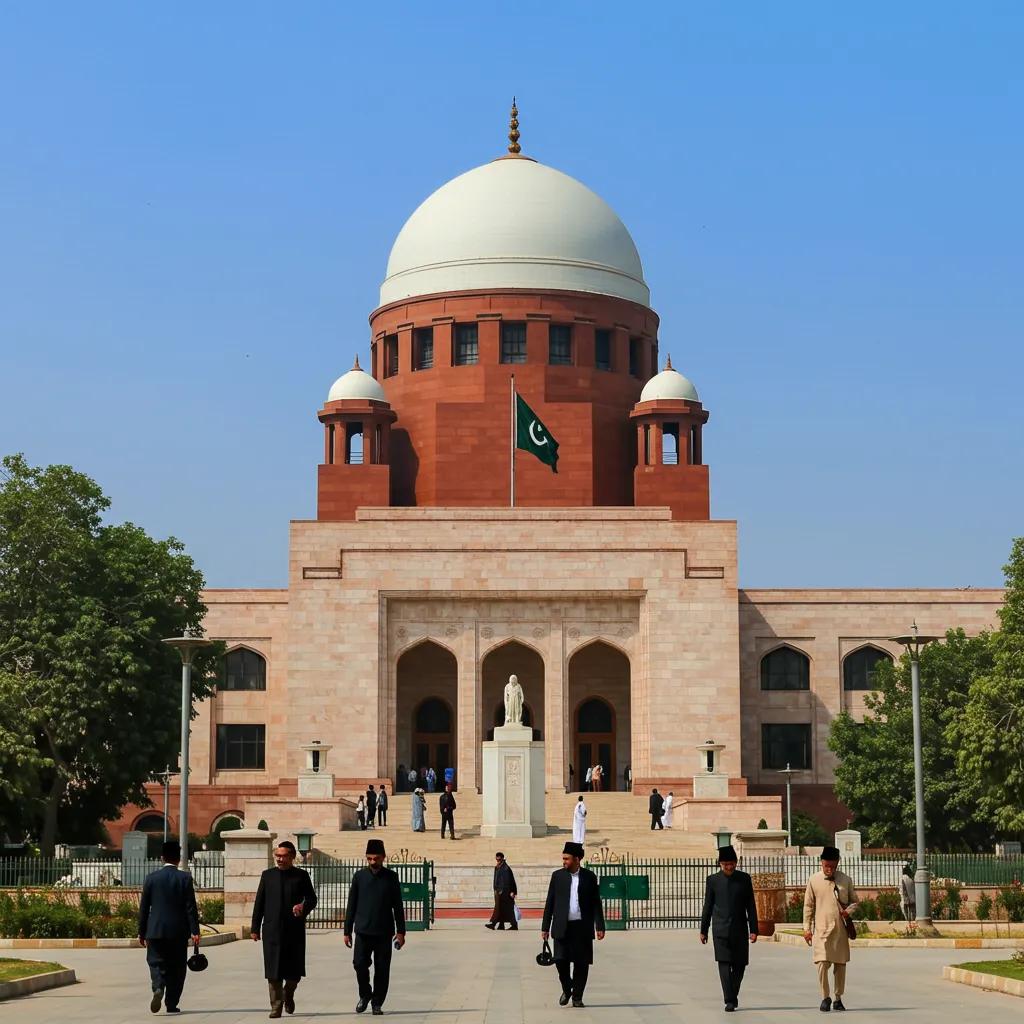
The Supreme Court of Pakistan holds original, appellate, and advisory jurisdiction and exercises supervisory authority over lower courts, enabling it to interpret and enforce the Constitution. Its powers include hearing constitutional petitions, settling disputes between state organs, and invoking suo motu jurisdiction in matters of public importance, which directly shapes constitutional law. The Court’s role provides legal clarity and binding precedent, influencing governance, rights enforcement, and institutional behavior. Clarifying these powers helps citizens and legal actors understand how constitutional principles are applied in high-stakes disputes.
What is the jurisdiction and authority of the Supreme Court?
The Supreme Court’s jurisdiction includes original matters such as intergovernmental disputes and appellate review of lower court decisions, anchored in constitutional provisions and statutory law. This jurisdiction allows the Court to resolve constitutional questions, protect fundamental rights, and provide final interpretation of statutory and constitutional text. The practical consequence is that Supreme Court rulings set precedents that guide administrative practice and lower-court adjudication across Pakistan. Understanding jurisdiction types clarifies the Court’s role in the constitutional ecosystem.
The following table clarifies core jurisdictional types, legal sources, and scope with practical examples.
Introductory clarification of jurisdictional categories helps readers see how legal authority is distributed and exercised.
How does the Supreme Court exercise suo motu powers?
Suo motu powers enable the Supreme Court to initiate proceedings on matters affecting public interest without a formal petition, allowing rapid judicial attention to urgent constitutional issues. The mechanism is invoked when the Court perceives threats to fundamental rights, rule of law, or significant governance dysfunctions, and outcomes can include directives to authorities and corrective orders. Use of suo motu jurisdiction raises debates about judicial activism versus restraint, with proponents citing rapid protection of rights and critics warning about separation-of-powers tensions. Examining notable suo motu instances illustrates both the remedial value and the doctrinal complexity of this power.
These discussions naturally connect to the influence of individual judges and leading benches, which we examine next.
Who are the key figures in the Supreme Court and their influence?
Key figures—especially the Chief Justice and senior bench members—shape jurisprudential directions through leadership in case selection, opinion writing, and administrative governance of the Court. Judicial philosophy expressed by individual justices influences doctrinal trends such as the scope of judicial review, interpretation of fundamental rights, and approaches to institutional balance. Bench compositions and seniority affect how constitutional matters are framed and decided, producing jurisprudential legacies that inform subsequent rulings. Tracking bench dynamics helps observers predict legal tendencies and the potential impact of major constitutional cases.
For accessible reporting on the Court’s composition and decisions, ARY News provides summaries and explainers that contextualize judicial developments. ARY News, as a prominent Pakistani news organization, aims to provide timely and comprehensive news and current affairs coverage, keeping its audience informed and engaged with diverse content. This journalistic context complements legal texts and court judgments for readers seeking timely updates.
The Role of the Supreme Court of Pakistan in Protecting Fundamental Rights: A Study of its Jurisprudence
This research paper examines the role of the Supreme Court of Pakistan in protecting fundamental rights, providing a detailed discussion of the Court’s jurisprudential developments. The study adopts a doctrinal methodology and employs qualitative content analysis of key judgments, constitutional provisions, and precedent-setting rulings related to fundamental rights. The analysis encompassed 150 significant cases spanning areas such as due process, freedom of expression, rights of religious minorities, women’s rights, and socio-economic justice. Through thematic analysis, the study identified trends in judicial reasoning and constitutional interpretation, drawing on information systematically collected from Supreme Court reports, legal research databases, and academic commentaries. The results indicate that the Supreme Court demonstrated progressive jurisprudence in interpreting and protecting fundamental rights, particularly through innovations such as suo motu jurisdiction an
The Role of the Supreme Court of Pakistan in Protecting Fundamental Rights: A Study of its Jurisprudence, M Umar, 2025
What Are Landmark Constitutional Cases in Pakistan and Their Significance?
Landmark cases interpret constitutional text, set precedent, and often resolve tensions between political actors and legal norms; they illustrate how doctrine evolves through concrete disputes. Case studies reveal the legal issues at stake, the Court’s reasoning, and subsequent practical consequences for governance and rights protection. Analyzing leading rulings shows how principles like the doctrine of necessity, judicial review, and fundamental rights protections have developed. Below we present focused case breakdowns that illuminate doctrinal changes and political effects.
What was the Molvi Tamizuddin Khan case and its constitutional impact?
The Molvi Tamizuddin Khan case is a historical judgment that shaped constitutional doctrine by addressing the limits of executive action and legislative authority. The case’s legal reasoning and outcome influenced the later development of doctrines concerning state power and constitutional continuity, including debates over validity of emergency measures. Its precedent has been cited in subsequent constitutional controversies to discuss legality of exceptional measures and judicial responses to political crises. Understanding this case clarifies the long-term interplay between law and politics in constitutional jurisprudence.
This historic analysis leads to contemporary cases that demonstrate rights enforcement and judicial remedies, such as the Mahrang Baloch case.
How did the Mahrang Baloch detention case affect fundamental rights?
The Mahrang Baloch detention case involved allegations of unlawful detention and raised questions about Article 9 protections and procedural safeguards under the Constitution. Judicial examination focused on whether detentions complied with statutory procedure and constitutional guarantees, producing rulings that reinforced limits on arbitrary state action. The case’s outcome affected enforcement of habeas corpus protections and highlighted the judiciary’s role in safeguarding individual liberty against extrajudicial detention. Such cases exemplify how constitutional rights are enforced through litigation and judicial oversight.
Exploring more landmark rulings expands understanding of doctrinal developments and precedent trends.
What other landmark rulings have shaped constitutional law?
Several additional rulings have established key principles—on judicial review, emergency powers, and separation of powers—that continue to guide constitutional interpretation. Short summaries of 3–5 pivotal cases show how courts have reasoned on issues such as validity of executive acts, parliamentary privileges, and the scope of fundamental rights. Each summary highlights the legal question, the court’s holding, and the lasting doctrinal impact on subsequent litigation and governance. These concise profiles help readers map precedent to current legal debates.
These case studies illustrate the practical stakes of judicial independence and the pressures that shape court-state relations, which the next section addresses.
How Does Judicial Independence Affect Constitutional Governance in Pakistan?
Judicial independence is the capacity of courts to decide matters free from improper political or external influence, and it is essential for constitutional governance and rights protection. Independence matters because impartial adjudication enforces constitutional constraints on state power and preserves citizens’ protections against arbitrary governance. Challenges to independence—such as appointment disputes, administrative encroachments, and legislative changes—can undermine the judiciary’s role as a constitutional safeguard. Assessing these pressures helps explain how judicial autonomy shapes and is shaped by statutory reforms and political dynamics.
What challenges does judicial independence face in Pakistan?
Judicial independence faces multifaceted pressures including political interference in appointments, legislative reforms affecting court administration, and public perception shaped by media and political narratives. Structural vulnerabilities—such as unclear appointment processes or administrative controls—create friction that can compromise perceived impartiality. These challenges generate calls for procedural safeguards, transparent appointments, and institutional reforms to protect courts from undue influence. Recognizing these pressures explains why reforms and litigation over judicial powers are recurrent features of constitutional politics.
These systemic challenges intersect with specific statutory changes like the Supreme Court Act 2023, which we consider next.
How have recent laws like the Supreme Court Act 2023 influenced judicial powers?
The Supreme Court (Practice and Procedure) Act 2023 introduced statutory changes to court administration and procedural rules that affected case management and internal governance. Such changes alter how the Court organizes benches, distributes cases, and manages judicial workload, producing practical effects on access to justice and institutional efficiency. Judicial responses to the Act—through rulings and administrative practice—have shaped its implementation and clarified the limits of statutory interference in judicial functions. Evaluating these effects helps explain the evolving institutional balance between legislative reform and judicial autonomy.
What is the balance between parliamentary supremacy and judicial review?
Parliamentary supremacy allows elected legislatures to enact laws reflecting political mandates, while judicial review empowers courts to ensure those laws comply with constitutional limits and rights protections. The balance between these principles is dynamic: courts often defer to Parliament on policy matters but intervene where constitutional guarantees are at stake. Case law demonstrates a negotiated equilibrium where constitutional text, doctrine, and political legitimacy interact to shape when courts will strike down or uphold legislation. This balancing act is central to constitutional governance and the ongoing dialogue between democratic authority and legal constraints.
How Can Citizens Understand and Engage with Constitutional Law in Pakistan?
Citizens can engage with constitutional law by learning core concepts, following court decisions, and using legal remedies to assert rights; practical resources and media help translate doctrine into everyday action. Accessible explainers, timelines of amendments, and case summaries make constitutional law approachable for young and general audiences, while procedural guides and civic education resources help individuals seek remedies. The benefit is empowering citizens to participate in democratic processes and to hold institutions accountable. Below we list practical resources, everyday examples of rights in action, and ways to follow developments.
What resources explain constitutional law for young and general audiences?
A range of resources—official constitutional texts, court judgments, academic primers, and news explainers—serve different learning needs, from technical study to accessible overviews. Plain-language guides and multimedia explainers (videos and timelines) make doctrine understandable for younger audiences and non-specialists, while legal commentaries and journals provide deeper analysis for students and practitioners. News outlets that track constitutional developments also offer summarized timelines and case coverage to keep readers current. Choosing resources by format (text, video, interactive) helps learners match complexity to their familiarity level.
The short list below highlights useful resource types and how to use them.
- Official constitutional texts and annotated judgments for primary-source study.
- News explainers and short videos that summarize cases and amendments for general audiences.
- Academic primers and civic education modules for structured learning.
These resource types provide layered options—from primary law to digestible coverage—so citizens can engage at their preferred depth and pace.
How do constitutional rights affect everyday life in Pakistan?
Constitutional rights influence routine areas such as workplace protections, media freedoms, policing conduct, and religious expression, translating abstract guarantees into practical norms. For example, freedom of speech affects media reporting and public debate, while provisions on fair trial govern criminal procedures and detention safeguards in policing. Rights litigation can produce reforms that change institutional practices, such as police protocols or administrative transparency. Recognizing these everyday applications helps citizens see how constitutional protections affect services, safety, and civic participation.
These practical impacts underscore why following developments matters; the next subsection explains where to get timely updates and how to set alerts.
Where can citizens find updates on constitutional developments and rulings?
Authoritative updates come from court press releases, parliamentary bulletins, legal newsletters, and trustworthy news outlets that specialize in legal coverage and explainers. Setting alerts via news aggregators, subscribing to court-chamber summaries, and following thematic trackers helps interested citizens receive timely notices about amendments, major rulings, and legislative proposals. Regularly consulting a mix of primary sources (judgments) and journalistic syntheses provides both legal text and contextual interpretation. Taking these steps enables informed civic engagement and timely responses when rights or governance issues arise.
Practical subscription and monitoring suggestions include the following list of actions:
- Subscribe to court and legislative bulletins for primary-source updates and judgment summaries.
- Set news alerts for key topics such as constitutional amendments, Supreme Court rulings, and fundamental rights coverage.
- Follow reputable news explainers and educational timelines to contextualize legal developments quickly.
For accessible and continuous coverage of constitutional developments, ARY News produces reporting and explainers tailored to current events and civic needs. ARY News, as a prominent Pakistani news organization, aims to provide timely and comprehensive news and current affairs coverage, keeping its audience informed and engaged with diverse content. Its journalism complements primary legal sources by translating complex rulings and legislative actions into formats that are easier for the public to follow and act upon.
Conclusion
Understanding the Constitution of Pakistan is essential for grasping the legal framework that governs citizens’ rights and state responsibilities. This guide highlights the significance of fundamental rights, the role of the Supreme Court, and the impact of constitutional amendments on governance. By engaging with this information, citizens can better advocate for their rights and participate in democratic processes. Stay informed about constitutional developments by exploring our resources and following reliable news outlets today.