Environmental Issues in Pakistan: Understanding Climate Change, Pollution, and Solutions
Environmental issues in Pakistan encompass a wide and escalating set of problems including extreme floods, worsening air quality, water scarcity, deforestation, and inadequate waste management, all of which undermine public health, livelihoods, and long-term development. To provide timely and comprehensive news and current affairs coverage, keeping the audience informed and engaged with diverse content. This article examines the drivers, impacts, and practical solutions across regions—linking national policy, community action, and individual choices to measurable outcomes. Readers will gain a concise summary of major climate impacts, a focused assessment of air pollution in cities such as Lahore, an analysis of water stress along the Indus, the effects of deforestation and waste mismanagement, and a practical checklist for youth and citizens to act. The following sections combine data-driven tables, solution-oriented lists, and examples of policy and community responses to help readers understand both the scale of the challenges and the concrete steps that reduce risk and improve resilience.
What Are the Major Climate Change Impacts in Pakistan?
Major climate impacts in Pakistan include frequent and severe floods, intensifying heatwaves, rapid glacier melting, expanding drought in arid provinces, and rising climate-driven migration that strains urban systems. These impacts arise from a combination of global warming, regional weather-pattern shifts, and local land- and water-use changes that amplify hazard exposure and vulnerability. Understanding each impact helps prioritize adaptation and preparedness measures across sectors such as agriculture, infrastructure, and health.
The table below summarizes key entities, attributes, and values to give readers a rapid reference on scale and consequences.
This table highlights that floods and glacier-related hazards produce both acute disasters and chronic water-risk dynamics, while heat and drought compound food- and health-security pressures.
How Do Floods Affect Pakistan’s Environment and Communities?
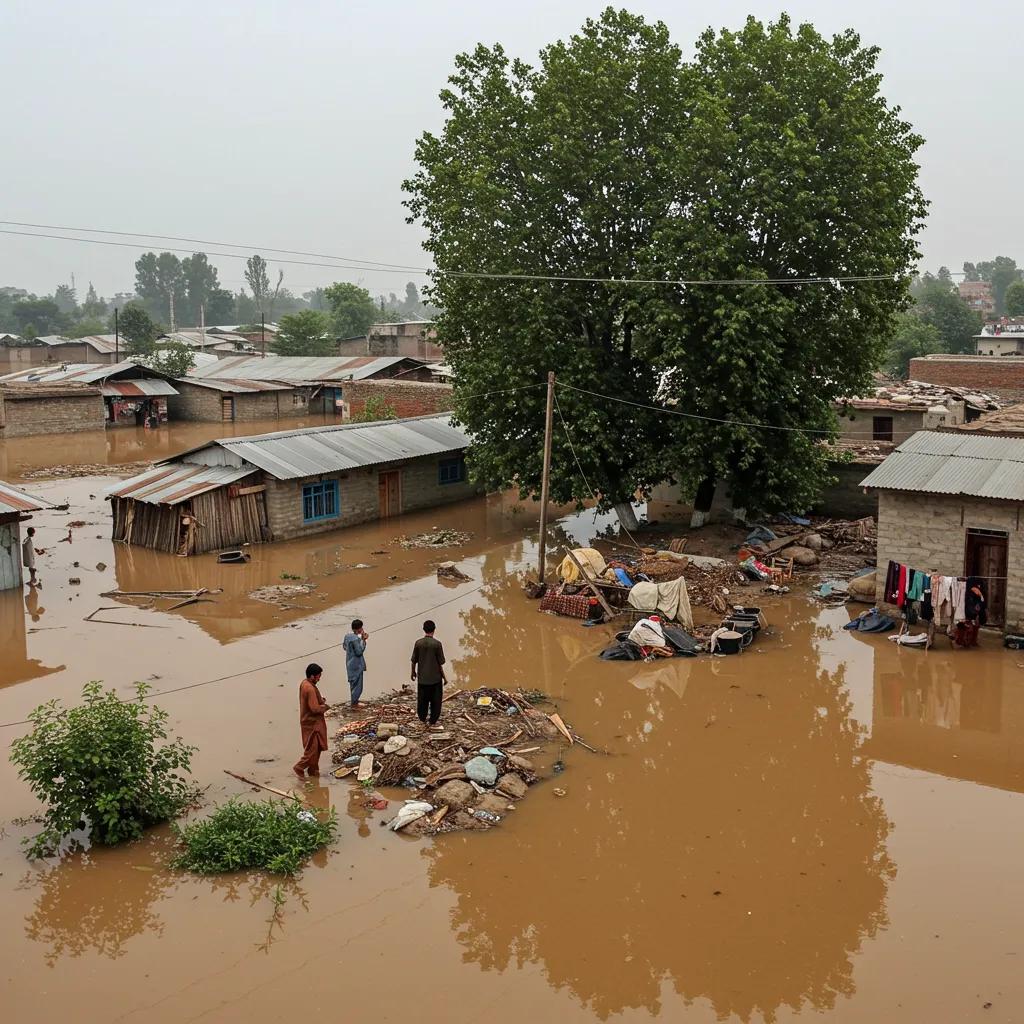
Floods in Pakistan damage infrastructure, inundate farmland, contaminate drinking water, and trigger disease outbreaks, creating both short-term humanitarian crises and long-term economic setbacks. Large-scale flood events inundate roads, schools, and clinics, cutting access to services and disrupting markets, which in turn undermines livelihoods and food supply chains. Ecologically, standing floodwaters spread pollutants, erode topsoil, and degrade wetlands and riverine habitats that many communities rely on for fisheries and grazing. Recovery requires reconstruction coupled with nature-based solutions and stronger early-warning systems to reduce recurring losses and protect vulnerable populations.
What Are the Health Risks of Heatwaves in Pakistan?
Heatwaves increase risks of heatstroke, dehydration, cardiovascular stress, and exacerbate chronic conditions among older adults and outdoor workers, making them a growing public-health concern. High temperatures impair labor productivity, intensify water stress, and worsen air pollution episodes by increasing ozone formation, creating compound health hazards. Children, elderly, pregnant people, and those with pre-existing cardiopulmonary conditions are particularly vulnerable and require targeted outreach and cooling strategies. Public-health preparedness—such as heat advisories, shaded work practices, and community cooling centers—reduces acute health impacts while longer-term mitigation addresses root causes.
How Is Glacier Melting Threatening Pakistan’s Water Future?
Accelerated glacier retreat in the Hindu Kush–Karakoram–Himalaya region alters seasonal river flows, creating short-term runoff surges and long-term declines in summer baseflows that sustain irrigation and hydropower. Melting also increases the number and volume of glacial lakes, raising the risk of glacial lake outburst floods (GLOFs) that can devastate downstream communities at short notice. These hydrological shifts complicate water planning for agriculture and urban supply systems that depend on predictable meltwater timing. Strengthening glacial monitoring, early-warning systems, and adaptive reservoir management helps reduce hazard exposure and secure water for downstream users.
Why Is Drought Increasing in Sindh and Balochistan?
Drought in Sindh and Balochistan results from lower rainfall reliability, rising temperatures, and compounded water management challenges that limit irrigation efficiency and groundwater recharge. These provinces face seasonal shortages that harm rainfed and irrigated crops, reduce livestock pasture, and deepen rural poverty by undermining traditional livelihoods. Socioeconomic impacts include forced migration, heightened food insecurity, and increased competition for scarce water resources within and among communities. Investments in drought-resilient crops, groundwater recharge, and locally managed water storage can mitigate impacts while improving long-term resilience.
What Is Climate Migration and Its Impact on Pakistan?
Climate migration refers to population movements driven by environmental stressors—such as flood displacement, drought-induced crop failure, and repeated infrastructure loss—leading to urban growth and informal settlements. Displaced households often relocate to peri-urban areas where public services are limited, increasing pressure on housing, sanitation, healthcare, and jobs in host communities. Social cohesion and planning challenges rise when migration is rapid and unplanned, and receiving cities need investments in inclusive infrastructure and social protection. Integrating climate risk into urban planning and strengthening rural resilience can reduce forced migration and improve outcomes for both migrants and host communities.
How Severe Is Air Pollution in Lahore and Other Cities?
Air pollution in major Pakistani cities frequently reaches hazardous levels, with PM2.5 and AQI spikes linked to traffic, industry, brick kilns, and seasonal agricultural burning, significantly affecting public health. High concentrations of fine particulate matter reduce life expectancy and increase hospital admissions for respiratory and cardiovascular diseases, straining health systems and productivity. Comparing measurements across cities underscores spatial variance and helps target interventions for emission controls and public advisories. The following table contrasts representative PM2.5/AQI conditions and their associated health implications across selected cities.
This table compares key urban air-quality indicators and highlights the direct health implications tied to PM2.5 exposure.
This comparison shows that while all major cities face air-quality challenges, sources and seasonal patterns differ, requiring tailored mitigation strategies.
What Causes Lahore’s Smog Crisis and Hazardous AQI Levels?
Lahore’s smog episodes result from a mix of vehicle emissions, industrial discharge, household fuels, brick kilns, and agricultural stubble burning, combined with meteorological conditions that trap pollutants near the ground. During cooler months, temperature inversions and low wind reduce dispersion, so emissions accumulate and elevate PM2.5 to hazardous levels, creating acute public-health emergencies. Local regulatory gaps, limited enforcement, and the proximity of diverse pollution sources complicate mitigation and require coordinated city, provincial, and agricultural policies. Targeted measures—such as cleaner fuel standards, brick-kiln modernization, and alternatives to crop burning—can reduce peak pollution events.
Lahore Smog Crisis: Mitigation Strategies for Air Pollution and Public Health
Smog, a combined form of atmospheric pollutants, dust, and smoke with fog under sunlight, poses a significant threat to human health and the environment by reducing visibility. Urban air pollution exposure can cause respiratory issues like asthma, pneumonia, chronic obstructive pulmonary disease (COPD), and cardiovascular diseases like heart attacks, high blood pressure, lung cancer, and other health issues like diabetes, cognitive decline, and even birth defects. As smog has become a growing global issue with severe impacts on public health, ecosystems, and economies, this study analyzes its effects and identifies appropriate policies for its mitigation. This study aims to determine effective smog mitigation strategies for Lahore, Pakistan. A total of 50 scientific studies previously published related to PM2.5and PM10, NO2, SO2, CO, O3and Ch4were examined in this study. In addition to peer-reviewed scientific research, the smog data from the last decade, from 2014 to 2024, from various sources was analyzed to deduce the necessary information to do so. Furthermore, an online survey was also conducted to gather expert opinions on key smog mitigation policies which were identified in previous studies. The findings highlight five critical areas for reducing smog in Lahore-Pakistan: Nature-based Solutions, Transportation Measures, Industrial Measures, Domestic Measures, and Public Awareness. In addition, the study emphasizes the importance of collaborative partnerships with neighboring countries to address this shared environmental challenge. As a final recommendation, an emergency plan is proposed for smog-heavy days, suggesting temporary controls on vehicle use, industrial production, and outdoor activities to mitigate immediate health risks. By combining scientific evidence, historical data, and expert perspectives, this study offers a comprehensive strategy to address smog in Lahore, further contributing to broader local, regional, and global efforts.
Exploring mitigation strategies for smog crisis in Lahore: a review for environmental health, and policy implications, M Nasar-u-Minallah, 2024
How Does Air Pollution Affect Public Health in Lahore?
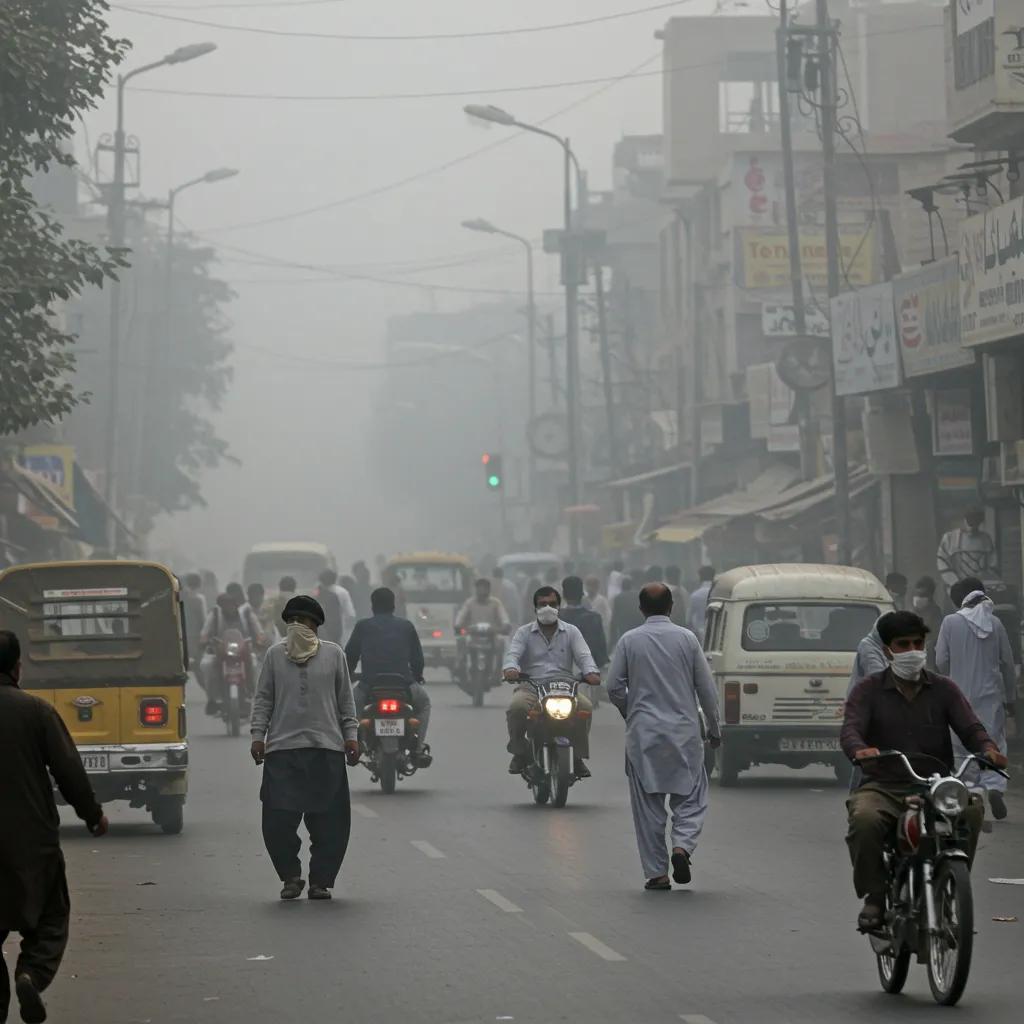
Air pollution contributes to increased respiratory infections, asthma exacerbations, chronic obstructive pulmonary disease progression, and elevated cardiovascular risks, especially in children and older adults. Chronic exposure to PM2.5 is linked to reduced life expectancy and a measurable burden of disease that translates into lost workdays and higher healthcare costs. Short-term spikes trigger hospital admissions and can overwhelm local clinics during severe smog episodes, while long-term exposure undermines developmental outcomes for children. Public advisories, protective measures for vulnerable groups, and cleaner-technology investments are necessary to reduce both acute exposures and chronic health burdens.
What Are the Current Measures to Improve Air Quality?
Current measures include emission regulations for vehicles and industry, temporary traffic restrictions during smog episodes, public-awareness campaigns, and pilot projects to modernize brick kilns and curb agricultural burning. These interventions show promise but face challenges in enforcement, financing, and scaling to national impact without integrated policy and multisector coordination. Technology solutions—such as stricter fuel standards, retrofits for industrial stacks, and incentives for cleaner stoves—must be paired with monitoring networks and public-health preparedness. Strengthening institutional capacity and funding mechanisms will accelerate transition to cleaner air and protect vulnerable populations.
What Is the Extent of Water Scarcity and Pollution in Pakistan?
Water scarcity and pollution in Pakistan stem from climatic shifts, glacier-fed flow variability, inefficient irrigation, industrial and municipal wastewater discharges, and competing agricultural demands, constraining both household supply and food production. Agriculture consumes the majority of freshwater, intensifying stress on the Indus Basin and reducing availability for domestic and ecological needs. Pollution of rivers and groundwater from untreated sewage and industrial effluent degrades drinking-water quality and aquatic ecosystems, undermining fisheries and human health. The table below clarifies resource-region causes and current status to guide where conservation and treatment investments are most needed.
This framing shows that solutions must combine demand-side efficiency, pollution controls, and investment in treatment and storage to secure water for competing needs.
What Are the Main Causes of Water Scarcity in Pakistan?
Water scarcity arises mainly from agriculture’s dominant share of water withdrawals, inefficient irrigation methods, declining glacier-fed flows, and inadequate storage and distribution infrastructure. Over-reliance on canal irrigation and flood-irrigation practices leads to high losses and groundwater depletion, while climate-driven changes alter the timing of river flows essential for cropping calendars. Institutional fragmentation and weak pricing incentives further limit conservation adoption at scale. Modernizing irrigation, investing in storage and reuse, and improving governance are practical levers to reduce scarcity and increase system resilience.
How Is the Indus River Affected by Water Pollution?
The Indus River receives untreated municipal sewage, industrial effluents, and agricultural runoff, which together degrade water quality, harm aquatic life, and pose risks to downstream users relying on river water for drinking and irrigation. Pollution reduces fisheries productivity and exposes rural communities to waterborne diseases, increasing healthcare burdens and limiting economic opportunities in riverine areas. Cleanup requires investments in wastewater treatment plants, stricter industrial discharge monitoring, and catchment-level management that reduces nutrient and contaminant loads. Coordinated regulatory enforcement and community-based river stewardship are essential for ecological recovery.
What Solutions Are Being Implemented for Water Conservation?
Water conservation measures include drip and sprinkler irrigation to boost efficiency, wastewater treatment and reuse for agriculture, community rainwater harvesting, and investments in reservoirs and canal lining to reduce losses. Policy measures—such as incentives for water-efficient technologies and stronger governance of allocations—help align farmer practices with sustainable water use. Community projects and NGO-led pilots demonstrate scalable models for on-farm water savings and local storage that reduce vulnerability. Combining technical, policy, and social interventions increases water security while improving agricultural productivity.
How Is Deforestation Impacting Pakistan’s Environment?
Deforestation in Pakistan reduces forest cover, increases soil erosion and landslide risk, fragments habitats, and diminishes biodiversity, with downstream effects on water regulation and carbon sequestration. Drivers include illegal logging, land conversion for agriculture and infrastructure, and high fuelwood demand in rural areas, all of which weaken ecosystem services that support livelihoods. Loss of tree cover exacerbates flood and drought impacts by reducing infiltration and increasing surface runoff, creating feedbacks that intensify climate risks. National reforestation programs and community stewardship initiatives can restore protective cover and provide co-benefits for biodiversity and local economies.
What Are the Causes of Deforestation in Northern Pakistan?
In northern Pakistan, deforestation arises from illegal timber extraction, conversion to agriculture or pastures, expansion of infrastructure, and fuelwood dependence in remote communities. These pressures are compounded by governance challenges and limited alternative livelihoods that push households toward unsustainable forest use. Local climatic variability and extreme-weather damage can also degrade stands, making regrowth slower and increasing vulnerability to erosion. Addressing root causes requires combining enforcement, sustainable livelihood alternatives, and community-based forest management that aligns conservation with local needs.
How Do Deforestation Effects Threaten Biodiversity and Soil?
Deforestation fragments habitats and reduces species ranges, threatening endemic flora and fauna while increasing soil erosion and sedimentation in downstream waterways. Loss of root structure and canopy cover destabilizes slopes, raising landslide risk and reducing soil fertility, which impairs agricultural productivity in adjacent areas. Biodiversity decline undermines ecosystem resilience to pests, disease, and climate variability, diminishing the natural capacity to recover from shocks. Reforestation and protected-area management help reestablish habitat connectivity and restore soil stability over time.
What Are Pakistan’s Reforestation and Conservation Efforts?
Pakistan has launched high-profile tree-planting and conservation programs that aim to restore cover and engage local communities, with varying degrees of success depending on follow-through and maintenance. Community involvement and species selection tailored to local ecology are key to ensuring sapling survival and long-term benefits beyond initial planting campaigns. Monitoring and sustainable financing mechanisms are critical to scale efforts from pilot projects to landscape-level recovery that supports biodiversity and carbon sequestration. Lessons from successful local initiatives stress integration of livelihood benefits to sustain community commitment.
What Are the Challenges and Innovations in Waste Management?
Solid-waste management in Pakistan faces challenges in collection, segregation, disposal, and treatment, leading to open dumping, burning, leachate contamination of groundwater, and public-health risks. Generating large annual tonnages—driven by urbanization and consumption patterns—outpaces municipal capacity for sanitary landfilling and recycling, while informal sectors handle much of the material recovery with limited protections. Innovations such as community-based collection systems, composting for organic waste, material-recovery facilities, and waste-to-energy pilots offer pathways to reduce environmental and health impacts. Scaling innovations requires policy support, financing, and integration of the informal recycling workforce into formal systems.
A concise overview of national waste-generation figures and comparisons helps prioritize interventions.
This table underscores the urgency of expanding formal collection, safe disposal, and circular-economy approaches to reduce environmental harm and health risks.
How Much Solid Waste Does Pakistan Generate Annually?
Pakistan generates tens of millions of tons of municipal solid waste annually, with per-capita urban generation rising alongside population growth and changing consumption patterns. City-level volumes vary widely, and many municipal systems struggle with collection backlogs and unmanaged disposal sites. The informal recycling sector recovers some materials but often in unsafe conditions that expose workers to hazards. Improving segregation at source, expanding formal recycling infrastructure, and investing in composting for organic waste can reduce landfill pressure and generate local employment.
What Are the Health and Environmental Risks of Poor Waste Disposal?
Poor waste disposal leads to vector-borne disease proliferation, respiratory problems from burning, groundwater contamination via leachate, and greenhouse-gas emissions from decomposing organic matter, creating multiple public-health pathways. Communities living near dumps experience elevated disease burdens, reduced quality of life, and economic impacts from lost tourism or agriculture productivity. Children and waste workers face disproportionate health risks without protective measures and safe processing facilities. Policies that formalize collection, improve landfill standards, and minimize open burning reduce these health and environmental threats.
What Innovative Waste Management Solutions Are Being Adopted?
Innovative solutions include decentralized organic-waste composting, material-recovery facilities that integrate informal waste pickers, public-private partnerships for city collection, and pilot waste-to-energy projects that convert residuals to electricity. Community-led pilots that combine segregation education with collection incentives have increased recycling rates and reduced landfill loads in some cities. Scaling these models requires stable financing, policy incentives, and technical capacity to ensure environmental safeguards and social inclusion. When aligned with circular-economy principles, innovation can transform waste streams into resources that support local economies.
What Policies and Community Actions Address Environmental Issues?
To address environmental challenges, Pakistan maintains a national climate policy framework, renewable energy targets, and engages in international climate mechanisms while numerous community initiatives support local conservation and adaptation. To provide timely and comprehensive news and current affairs coverage, keeping the audience informed and engaged with diverse content. National policies set priorities, but implementation gaps and financing constraints limit rapid progress, making subnational action and community projects essential complements. Listing the main policy elements and community roles clarifies where national commitments intersect with grassroots innovation and where media attention can help hold institutions accountable.
Key national and community policy components include:
- National climate policy frameworks and NDC commitments that guide mitigation and adaptation planning.
- Renewable energy and efficiency initiatives aimed at reducing dependence on fossil fuels and enhancing energy security.
- Community-led conservation projects that restore forests, manage water, and improve local waste systems.
What Is Pakistan’s National Climate Change Policy Overview?
Pakistan’s national climate policy frameworks articulate mitigation and adaptation priorities, set sectoral targets, and outline institutional responsibilities for implementation and monitoring. Commitments under international agreements inform national strategies, but translating targets into on-the-ground actions requires strengthened institutional capacity, financing strategies, and multi-level coordination. Policy documents highlight areas such as disaster risk reduction, water management, and sustainable land use as cross-cutting priorities. Addressing implementation bottlenecks—through improved data systems, financing, and stakeholder engagement—will accelerate progress toward climate resilience.
How Are Renewable Energy Initiatives Shaping Pakistan’s Future?
Renewable energy initiatives aim to diversify the energy mix, reduce emissions, and improve energy security by scaling solar, wind, and small hydropower projects across regions. Deployment faces barriers including finance, grid integration, and intermittency management, but successful projects demonstrate potential to lower fuel imports and create green jobs. Policy incentives, improved grid planning, and investment in storage technologies enhance the feasibility of larger renewable penetration. Linking renewable energy expansion with local industrial development produces co-benefits for employment and air-quality improvements.
What Role Do Community-Led Conservation Projects Play?
Community-led conservation projects restore local ecosystems, improve livelihoods, and build social capital by engaging residents in forest management, watershed protection, and habitat restoration. These initiatives often combine traditional knowledge with scientific practices to enhance adaptation and provide tangible benefits like fuelwood management and ecotourism opportunities. Measurable local successes can be scaled when supported by technical assistance, tenure security, and financing mechanisms. Empowering community stewardship increases the sustainability and social legitimacy of conservation outcomes.
How Is Pakistan Engaged in International Climate Agreements?
Pakistan participates in global climate processes and submits national commitments that reflect mitigation and adaptation priorities while seeking international finance and technology support. Engagement in international mechanisms helps mobilize adaptation funding, capacity building, and knowledge exchange critical for implementation. Accessing climate finance requires stronger project pipelines, transparent governance, and alignment with national priorities to attract investment. International cooperation remains a vital channel for scaling solutions and transferring resilient technologies.
How Can Youth and Citizens Contribute to Environmental Solutions?
Youth and citizens play a crucial role by adopting practical lifestyle changes, organizing local initiatives, and advocating for stronger policy action that together generate measurable reductions in pollution and enhance resilience. To provide timely and comprehensive news and current affairs coverage, keeping the audience informed and engaged with diverse content. Collective civic engagement amplifies pressure for enforcement and funding while local action demonstrates scalable models that inform national policy. The checklist below offers prioritized, actionable steps individuals and youth groups can implement to reduce environmental impacts and build resilience in their communities.
- Reduce vehicle use: Prioritize public transport, carpooling, cycling, and walking to cut emissions and lower urban AQI.
- Conserve water: Adopt efficient fixtures, fix leaks, and support local rainwater harvesting and reuse projects.
- Segregate waste: Separate organics, recyclables, and residuals to enable composting and recycling initiatives locally.
- Support tree-planting and stewardship: Join or organize local afforestation efforts and care for planted saplings.
- Advocate and volunteer: Engage with local councils and youth networks to promote enforcement of environmental regulations.
What Are Practical Steps Individuals Can Take to Reduce Pollution?
Individuals can reduce pollution by choosing low-emission travel options, minimizing open burning, using energy-efficient appliances, and supporting local recycling or composting programs. Small aggregated choices—like avoiding single-use plastics and participating in community cleanup drives—lower local pollution loads and shift social norms toward sustainability. Households can also reduce indoor air pollution through cleaner cooking fuels and ventilation, improving health outcomes especially for children and the elderly. Community education campaigns and school programs amplify behavior change and foster long-term environmental stewardship.
Pakistan’s Smog Challenges: Sources, Impacts, and Digital Solutions for Awareness
This study examines smog-related challenges in Pakistan, emphasizing its sources, health, economic, and environmental impacts, and proposed solutions. Smog, primarily from vehicular and industrial emissions, poses health risks and socio-economic consequences. Lahore’s severe smog episodes signify a larger national concern. Addressing smog demands a holistic approach integrating regulatory, technological, social, and behavioral interventions. Discussed preventive measures involve public awareness campaigns, real-time air quality monitoring using digital tools, promoting cleaner behaviors, and strict emission control policies. Initiatives like the Billion Tree Tsunami aim to reduce smog severity through expanded green plantation. Challenges include inadequate policy enforcement, the need for public transport encouragement, and reduction of private vehicle reliance. Addressing industrial emissions and transitioning to renewable energy are vital.
Digital Solutions and Technological Innovations Driving Public Awareness and Community Initiatives for Smog Reduction in Lahore: A Descriptive Overview, MU Siddqiue, 2023
How Are Young Pakistanis Leading Environmental Awareness?
Young Pakistanis lead environmental awareness through social-media campaigns, school-based projects, student clubs, and local advocacy that amplify issues such as air quality, plastic pollution, and tree-planting. Youth-led initiatives often use digital tools to mobilize volunteers, fundraise for local projects, and document environmental violations, increasing public visibility and political responsiveness. These movements provide a platform for skills-building in community organizing and science communication, preparing leaders who can bridge grassroots action and policy dialogue. Supporting youth networks with mentorship and resources expands their ability to scale impact.
What Are the Future Projections If Environmental Actions Are Taken?
If mitigation and adaptation actions accelerate, projections indicate improvements in air quality, more stable water availability through conservation and storage investments, reduced flood and drought damages owing to nature-based solutions, and enhanced public health outcomes. Short-term gains include lower hospital admissions during pollution peaks and better water security during dry seasons, while long-term benefits encompass job creation in renewables and ecosystem restoration. Tracking metrics such as AQI trends, forest cover area, and water availability provides tangible indicators to evaluate progress and maintain momentum for continued action.
This article has presented a data-informed, solution-oriented overview of environmental issues in Pakistan designed to help readers understand what drives risks, what can be done across scales, and how citizens—including youth—can contribute to measurable improvements in resilience and health.
Conclusion
Addressing environmental issues in Pakistan is crucial for safeguarding public health, enhancing resilience, and promoting sustainable development. By understanding the impacts of climate change, pollution, and resource management, individuals and communities can take meaningful actions to mitigate these challenges. Engaging in local initiatives and advocating for policy changes can lead to significant improvements in air and water quality. Join the movement for a healthier environment by exploring ways to contribute to these vital efforts today.