Foreign Investment Insights: Latest Trends, Policies, and Opportunities for Pakistan and Global Markets
Foreign investment represents capital flowing across borders to secure ownership or influence in businesses, assets, or projects within another nation. In 2025, these dynamic flows are actively reshaping global supply chains, driving green transitions, and building digital infrastructure. This comprehensive article maps the current global investment landscape, illuminates how foreign direct investment (FDI) profoundly impacts Pakistan’s economy, and translates critical policy updates, CPEC developments, and diaspora mechanisms into actionable insights for both investors and policymakers. Our mission is to deliver timely and comprehensive news and current affairs coverage, ensuring our audience remains informed and engaged with diverse, vital content. The analysis below draws upon authoritative institutions, key sectoral patterns, and strategic policy mechanisms to empower readers in interpreting opportunities and navigating risks within international finance and Pakistan’s FDI policy. Readers will discover concise trend snapshots, a data-driven perspective on sector and provincial FDI, a clear guide to incentives and screening processes, and practical notes on diaspora channels and co-investment models crucial for the Pakistani context.
Unpacking Global Investment Trends in 2025
Global investment in 2025 is characterized by a strategic rebalancing towards pivotal sectors, with sustainability and digitalization emerging as primary drivers for capital allocation. Investors are actively channeling funds into green energy, advanced manufacturing, and digital infrastructure, all while carefully navigating geopolitical risks and the rising costs of financing, which inherently influence expected returns and project timelines. This significant shift not only brings tangible benefits like accelerated technology transfer but also presents crucial implications for emerging markets. To remain competitive, these markets must offer regulatory clarity and ensure project bankability. The following sections delve into the geopolitical influences, highlight the winning sectors, and examine emerging market patterns to clarify how these overarching global trends filter into Pakistan’s unique investment climate.
The Geopolitical Impact on Global Capital Flows
Geopolitical events profoundly influence capital flows by altering the perceived sovereign and operational risks, consequently elevating risk premia and reshaping investor due diligence protocols. As trade policies and sanctions regimes continue to evolve, multinational investors are re-evaluating their supply chains and may redirect investments towards lower-risk partners or diversify across multiple jurisdictions. This dynamic creates opportune windows for some emerging markets while tightening conditions for others. For Pakistan, its strategic proximity to major regional corridors and established bilateral project frameworks significantly impacts investor calculations. Therefore, enhancing transparency and establishing predictable dispute-resolution mechanisms can effectively mitigate perceived risks. Understanding these security and policy channels is essential to grasp why investors now integrate geopolitical scenario analysis into every major cross-border allocation decision.
Leading Sectors Attracting Worldwide Foreign Investment

Certain sectors are dominating foreign investment in 2025, thanks to their compelling combination of scale, robust policy support, and enduring long-term demand. These include renewable energy, semiconductors and advanced manufacturing, and the expansive digital economy. Renewables attract significant capital through predictable off-take agreements and innovative climate finance instruments. Semiconductors draw strategic state and corporate backing due to critical supply chain security concerns, while digital services thrive on recurring revenue models and inherent scalability. These leading sectors generate powerful spillovers—fostering new skills, driving supplier development, and shaping regulatory frameworks—which emerging economies can strategically leverage to build competitive industrial clusters. Investors prioritize sectors offering defensible returns and policy-aligned incentives, making it crucial for national strategies to align with these high-growth areas to effectively attract capital.
Emerging Market Investment Patterns in 2025
Emerging markets in 2025 are increasingly adopting sophisticated strategies, including co-investment structures, blended finance, and domestic partnership requirements, to mobilize foreign capital while simultaneously ensuring significant development impact. Co-investment with sovereign or development partners effectively reduces single-party exposure and proves particularly attractive where domestic institutions offer invaluable local knowledge and robust governance capacity. Regionally, markets that demonstrate clear sectoral focus, project-level bankability, and compelling incentives for technology transfer consistently outperform their peers in attracting sustainable FDI. For Pakistan, implementing targeted reforms that champion co-investment and streamline project preparation can transform remittances and global capital into impactful, long-term productive projects.
FDI’s Transformative Impact on Pakistan’s Economy
Foreign Direct Investment profoundly impacts Pakistan by driving capital formation, facilitating technology transfer, creating vital job opportunities, and fostering integration into regional value chains. This delivers both crucial short-term financing and enduring structural benefits. FDI actively supports sectoral upgrading when projects incorporate local sourcing, provide essential skills training, and establish R&D linkages, thereby boosting productivity and employment. However, the scale and distribution of these benefits are contingent upon effective policy design, provincial readiness, and the capacity to channel remittances into formal investment vehicles. The following sections offer a data-focused snapshot of recent inflows, explore the mechanisms driving growth and employment, and highlight the operational challenges foreign investors encounter in Pakistan.
Pakistan’s Recent FDI Inflows and Sectoral Distribution
This table offers a clear, sector- and province-oriented overview, designed to make inflow patterns easily scannable without implying precise numeric totals. Instead, it focuses on relative performance and notable project types. The objective is to clarify which sectors and provinces are currently capturing the attention of foreign capital through 2025 and to explain why these flows are significant for both policy and investment strategy.
This qualitative overview underscores that energy projects, digital services, and manufacturing linked to Special Economic Zones (SEZs) are the primary conduits for foreign capital. Crucially, provincial readiness and SEZ performance determine whether these inflows translate into diversified, widespread benefits. The subsequent section elaborates on the mechanisms through which FDI fuels economic growth and job creation.
A recent study delves into the specific impact of FDI on Pakistan’s economic growth, highlighting sectoral disparities and macroeconomic influences.
Impact of Foreign Direct Investment on Pakistan’s Economic Growth: Sectoral Analysis
This study demonstrates the direct relationship between Foreign Direct Investment (FDI) and the economic growth of Pakistan, focusing on the effects of uneven distribution. The agricultural sector has struggled to enhance FDI because of insufficient investment initiatives, slow technology adoption, and resistance to political and administrative changes. The technology-driven sector attracted the most foreign direct investments, aiming to enhance labor productivity, while other industries fail to maximize their potential. Because of regulatory limitations and external disruptions, the service sector has similarly not consistently gained from FDI. Significant acroeconomic factors like inflation, capital formation, and exchange market activity play a key role in determining the utility of an investment, with inflation being the most destabilizing. The study highlighted the necessity of liberal pro-business policies and political stability in the nation to attract FDI.
IMPACT OF FOREIGN DIRECT INVESTMENT (FDI) ON ECONOMIC GROWTH OF PAKISTAN (SECTORAL ANALYSIS), 2024
FDI’s Role in Boosting Pakistan’s Economic Growth and Employment
FDI stimulates growth through multiple vital channels: providing direct capital for projects, enhancing productivity via technology transfer, and generating demand for local suppliers, which in turn spurs downstream employment. Significant multiplier effects emerge when foreign firms integrate local SMEs into their supply chains and when the workforce’s skills are upgraded through targeted training and on-the-job learning. Case studies consistently demonstrate that projects with explicit local content and supplier development components yield greater employment impacts and broader skills diffusion. Policymakers can amplify these benefits by conditioning incentives on measurable local sourcing and training commitments, thereby transforming capital inflows into lasting gains for both workers and firms.
Navigating Challenges for Foreign Investors in Pakistan
Foreign investors in Pakistan frequently encounter regulatory uncertainty, bureaucratic complexities, and macroeconomic volatility, all of which complicate project evaluation and impact returns. This is particularly true where repatriation rules and exchange rate risks are perceived as significant burdens. Infrastructure bottlenecks and procedural delays at both provincial and federal levels add operational costs and timeline risks, while security perceptions continue to influence investor risk assessments for specific project geographies. Addressing these challenges demands transparent timelines, reliable dispute-resolution mechanisms, and clearer repatriation frameworks to restore investor confidence. Improving administrative efficiency and providing predictable policy signals are paramount to reducing perceived sovereign risk and unlocking long-term investment potential.
Pakistan’s Latest Foreign Investment Policies and Regulations
Pakistan’s investment framework is a strategic blend of statutory laws, robust screening mechanisms, and a comprehensive menu of fiscal incentives. Special regimes for Special Economic Zones (SEZs) and project-level approvals are specifically designed to attract targeted foreign capital. Investment authorities meticulously review foreign proposals for strategic fit and compliance with sectoral restrictions, while simultaneously offering attractive tax holidays and customs benefits to eligible projects. The following sections clarify how screening processes operate, summarize key fiscal incentives in an easy-to-scan table, and detail the SEZ-specific facilitation measures that are crucial for inbound investors.
Understanding Pakistan’s Investment Laws and Screening Mechanisms
Pakistan’s investment screening and approval process is meticulously structured around dedicated investment promotion agencies and sectoral regulators. These bodies rigorously assess proposals for regulatory compliance, national security considerations, and sectoral eligibility. The review typically involves the submission of comprehensive project documentation, thorough vetting by relevant ministries, and a clearance process that may include background checks and detailed economic impact assessments. Timelines can vary based on sector and complexity, and investors are consistently advised to engage local counsel and the investment promotion agency early in the process to streamline approvals. Clearer procedural guidance and case-tracked approvals significantly reduce uncertainty and shorten decision timelines for large-scale foreign investments.
Tax Incentives and Benefits for Foreign Investors: A Comprehensive Overview
Before delving into the table, it’s important to note that Pakistan offers a diverse array of incentives—including tax holidays, reduced duties, and repatriation safeguards—strategically targeted at priority sectors and projects. Eligibility is often linked to SEZ status or specific investment thresholds. The purpose of the following table is to provide a clear, comparative overview of these incentive types, highlighting their eligibility criteria and duration, thereby helping investors quickly assess potential fiscal benefits when evaluating project returns. This summary aims to clarify which incentives are most commonly utilized to attract greenfield FDI and export-oriented manufacturing projects.
While this table summarizes the primary fiscal instruments designed to enhance project returns, investors must verify specific eligibility conditions and procedural steps with official authorities to ensure full compliance and timely access to benefits. The next section illustrates how Special Economic Zones effectively complement these incentives.
Special Economic Zones and Economic Zones: Catalysts for Investment
Special Economic Zones (SEZs) offer concentrated infrastructure, streamlined approvals, and tailored incentives, all designed to significantly reduce setup costs and accelerate project launch. This makes them pivotal hubs for export-led Foreign Direct Investment (FDI). SEZs frequently bundle essential resources like land, utilities, customs facilitation, and single-window approvals to minimize coordination costs between investors and multiple agencies. Performance varies across zones, with the most successful SEZs demonstrating faster investor onboarding and stronger linkages to local suppliers. Strengthening SEZ governance, upgrading shared infrastructure, and linking incentives to local employment outcomes can further enhance their attractiveness for sustainable foreign capital.
The China-Pakistan Economic Corridor: Reshaping Foreign Investment
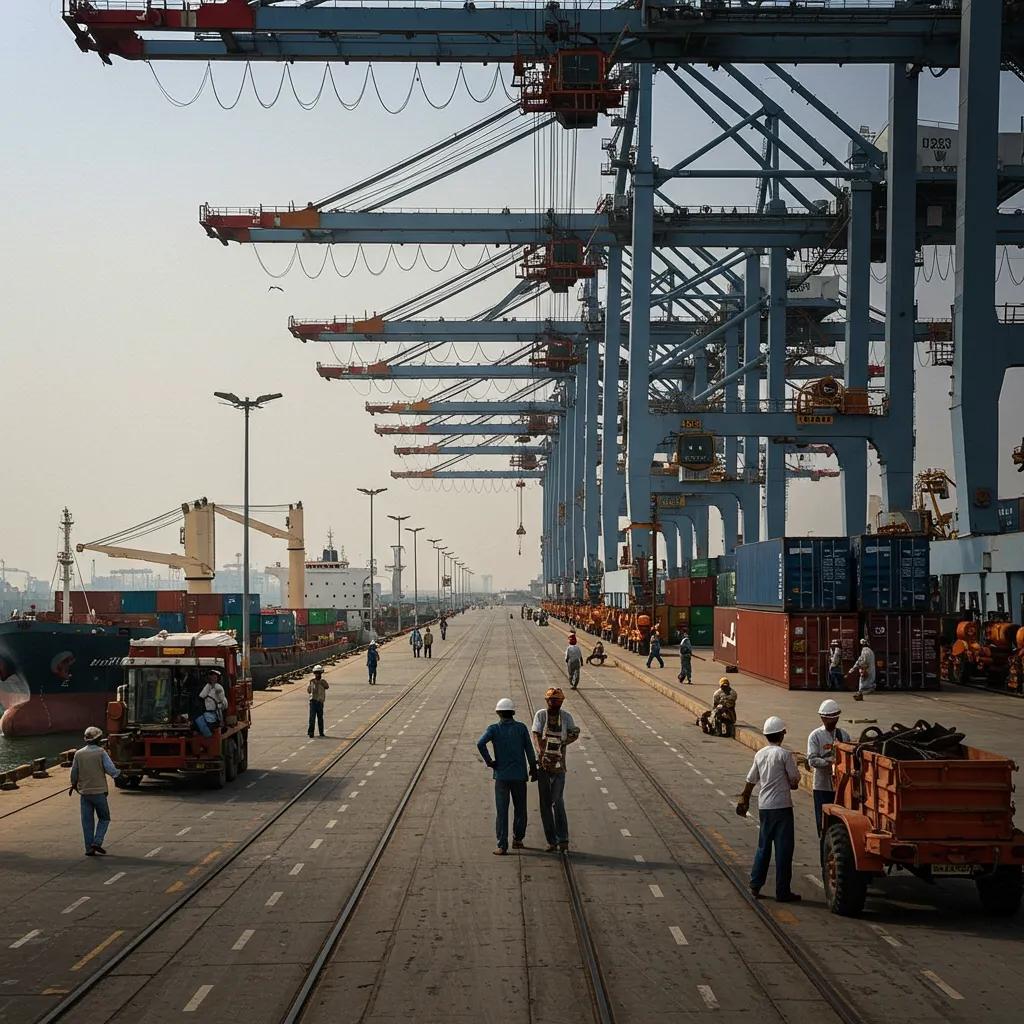
The China-Pakistan Economic Corridor (CPEC) remains a central driver for infrastructure-led Foreign Direct Investment (FDI) in Pakistan, channeling significant project-level financing into critical transport, energy, and logistics sectors. These investments are fundamentally reshaping regional connectivity and trade patterns. CPEC projects attract both public and private participation and hold the potential to unlock new industrial corridors, especially when supported by complementary local policies. The following sections detail key project types, explain their regional development impacts, and carefully weigh investor opportunities against potential political and operational risks.
Key CPEC Projects Attracting Foreign Funding
This table provides a concise, project-level reference, highlighting major CPEC project types, participating sectors, and their current status or expected impact, rather than precise financial aggregates. The objective is to offer readers a clear, comparative snapshot of projects that consistently draw foreign funding and to indicate their strategic outcomes for regional connectivity and trade.
These project categories clearly illustrate why CPEC continues to capture investor interest: improved logistics, enhanced energy reliability, and expanded transport networks collectively reduce operational costs and broaden market access. The next section elaborates on the significant spillovers for regional development.
The China-Pakistan Economic Corridor (CPEC) is a significant driver of foreign investment, and its prospects and challenges are crucial for Pakistan’s socio-economic development.
China–Pakistan economic corridor: prospects and challenges, M Ali, 2020
The paper examines CPEC’s potential in bringing about socio-economic development in Pakistan and its financial and economic challenges. It also discusses the prospects of CPEC projects and how are these going to be addressed?
China–Pakistan economic corridor: prospects and challenges, M Ali, 2020
CPEC’s Impact on Regional Economic Development and Investment
CPEC significantly enhances regional economic development by reducing trade costs, fostering cluster formation around key transport nodes, and stimulating local industry through improved access to essential inputs and markets. By strategically connecting production sites to vital ports and power sources, these projects can accelerate industrialization and create corridors rich with employment and supplier opportunities. Spillovers are maximized when local content requirements, robust skills development, and SME integration are thoughtfully embedded into project design. Effective local governance and the timely completion of ancillary infrastructure are absolutely crucial to ensure that CPEC’s macro benefits translate into sustained local investment and widespread job creation.
Opportunities and Challenges for Investors within CPEC
CPEC presents compelling long-term, infrastructure-led opportunities—including lower logistics costs, access to vital export routes, and stable energy supplies—that can materially improve project viability for manufacturing and logistics investments. However, challenges persist, such as perceptions of political and contractual risk, concerns regarding procurement transparency, and the ongoing need to align local regulatory practices with investor expectations. Effective mitigation measures involve establishing clear contractual terms, implementing robust risk-sharing mechanisms, and fostering strong local stakeholder engagement to skillfully manage community and provincial dynamics. Investors who strategically structure partnerships with clearly defined roles for local partners and incorporate comprehensive contingency planning are better positioned to capture CPEC-driven returns.
Pakistani Diaspora Investments: Influencing Foreign Capital Inflows
Overseas Pakistanis represent a vital source of both capital and entrepreneurial talent. Structured diaspora investment schemes offer a powerful mechanism to channel remittances into formal, productive projects that actively support job creation and local development. Effectively mobilizing diaspora capital requires accessible instruments, transparent processes, and incentives that align seamlessly with both home-country development goals and the preferences of the diaspora. The following sections outline common schemes, explain the pathways from remittances to investment, and highlight inspiring success stories that vividly illustrate the diaspora’s profound impact.
Investment Schemes Tailored for Overseas Pakistanis
Both government and private initiatives provide several robust channels for diaspora investment, ranging from bond-like instruments to equity opportunities linked to Special Economic Zones (SEZs) and entrepreneur support programs designed to reduce entry barriers. These schemes typically detail eligibility criteria, documentation requirements, and attractive tax or repatriation features, all crafted to make cross-border investment feasible and appealing for non-resident nationals. Clear guidance, simplified application processes, and tailored investor relations services significantly boost diaspora participation and foster repeat investment. Below is a concise list of scheme types and their investor benefits, designed to help diaspora readers effectively evaluate their options.
- Bond-style instruments specifically targeted at diaspora investors offer fixed-income exposure with defined tenors and clear repatriation features.
- SEZ or project equity channels empower diaspora investors to participate directly in export-oriented and critical infrastructure projects.
- Entrepreneur support and matching-fund programs strategically connect diaspora capital with local startups and SMEs, fostering innovation and driving scale.
These program types powerfully demonstrate how policymakers can effectively convert remittance flows into longer-term productive capital by reducing friction and strategically aligning incentives.
How Remittances Fuel Investment Opportunities in Pakistan
Remittances provide stable foreign-exchange inflows that can be strategically mobilized into formal investment through bank-mediated products, diaspora bonds, and specialized investment funds that pool smaller remittances into larger project finance vehicles. Converting remittances into productive investment necessitates financial instruments that carefully balance liquidity, return expectations, and ease of repatriation to perfectly match diaspora investor preferences. Policy gaps—such as a limited array of accessible investment vehicles or overly complex onboarding processes—can hinder efficient mobilization. Therefore, simplifying processes and offering trusted intermediaries are absolutely critical. Strengthening trust and expanding product variety will significantly increase the share of remittances that transition from consumption to impactful investment.
Success Stories: Highlighting Diaspora Contributions to Pakistan’s Economy
Across diverse sectors, diaspora entrepreneurs and investors have been instrumental in supporting startups, expanding vital export services, and financing crucial local infrastructure projects that generate local employment and boost export earnings. Representative examples include diaspora-funded IT companies that successfully scale their exports, small manufacturing ventures established with overseas capital, and community-level projects that significantly upgrade local amenities and create jobs. These compelling success stories unequivocally demonstrate that when diaspora capital is combined with strong local partners and transparent governance, it yields measurable and profound economic benefits. Scaling such impactful models depends on establishing replicable processes, ensuring robust investor protection, and providing reliable reporting to consistently maintain diaspora confidence.
Key Global Policy Updates Shaping Foreign Investment
Global policy updates—including new screening regimes, adjustments to investment caps, and the rise of innovative co-investment frameworks—are fundamentally shaping the availability and direction of foreign capital in 2025. Investors are now facing more stringent national security reviews in some markets, while development finance institutions are increasingly supporting blended finance models that effectively de-risk projects for private partners. The following sections examine current screening trends, regional investment caps, and the growing prominence of co-investment models to illustrate how these international policy shifts influence capital flows to Pakistan and other similar emerging markets.
How Countries Are Screening Foreign Investments for Security Risks
Countries are actively expanding national security screening to encompass critical technology, essential infrastructure, and data-sensitive sectors. This requires investors to disclose intricate ownership structures, precise sources of funding, and proposed control arrangements. Screening mechanisms vary but commonly include mandatory pre-closing notifications, the implementation of sectoral blacklists, and rigorous post-investment monitoring to enforce compliance with national security standards. For investors targeting Pakistan, understanding how partner countries’ outbound controls and home-state screening processes affect cross-border capital is crucial for structuring transactions effectively. Clear engagement with relevant authorities and early transparency in ownership and governance structures significantly reduces screening friction.
Implications of Foreign Investment Caps and Regulations in South Asia
Regional adjustments to investment caps and sector restrictions can significantly shift investor preferences within South Asia, creating both competitive openings and potential spillover risks for Pakistan, depending on how its own regulatory regime compares. Caps that restrict access to certain strategic sectors in one market may divert capital to neighboring countries offering more open frameworks, while protective measures elsewhere could slow regional value chain integration. Pakistan’s competitive positioning hinges on carefully calibrating safeguards with openness and consistently offering credible enforcement and robust investor protections to attract re-routed capital. Policy harmonization and proactive regional dialogue can play a vital role in reducing destabilizing regulatory arbitrage.
The Rise of Co-Investment Models in Emerging Markets
Co-investment models are strategically pairing private capital with public or development finance partners to effectively share risk, enhance project creditworthiness, and provide crucial governance oversight that reassures multinational investors. These structures are particularly valuable for large infrastructure and climate-related projects where significant upfront risk or extended payback periods often deter private entrants. In emerging markets, co-investment reduces single-party exposure and can catalyze larger private allocations when combined with transparent procurement and measurable development outcomes. Adopting standard co-investment frameworks and streamlined contracting practices will undoubtedly make Pakistan a more attractive destination for such blended-structure investments.
Your Guide to Reliable Foreign Investment Data and Expert Insights
Authoritative data and expert analysis are indispensable resources, sourced from international institutions, national agencies, and domain-specific research. Together, these provide the foundation for informed investment decisions and effective policy design. Reliable sources offer crucial country-level statistics, comprehensive project registries, and insightful trend analysis that empower investors and practitioners to accurately assess opportunities, risks, and emerging patterns. The following sections list key institutions, explain how ARY News delivers its comprehensive coverage, and recommend visual tools that help readers interpret complex investment data with clarity.
Authoritative Institutions for Investment Reports and Statistics
Multiple institutions offer complementary coverage: global trend analysis and cross-country FDI comparisons are frequently published by multilateral organizations, while national central banks and investment promotion agencies provide detailed country-level data and comprehensive project listings. These sources are most effective when used in conjunction—global reports for broad trend context and national institutions for granular operational details—allowing readers to triangulate project-level information and critical policy signals. Knowing which source to consult for each specific purpose significantly increases research efficiency and minimizes the risk of misinterpreting headline-level data when making crucial investment or policy decisions.
- UNCTAD: Your go-to for global FDI trend synthesis and comparative country profiles.
- World Bank / IMF: Essential for macroeconomic outlooks, comprehensive risk assessments, and structural policy analysis.
- State Bank of Pakistan / Board of Investment (BOI): The definitive source for country-specific FDI statistics, approvals, and procedural guidance.
Utilizing this diverse mix of sources provides a balanced perspective, crucial for supporting thorough project-level due diligence and strategic planning.
ARY News: Delivering Timely and Comprehensive Foreign Investment Coverage
Our core mission is to provide timely and comprehensive news and current affairs coverage, ensuring our audience remains informed and engaged with diverse, vital content. Building on this commitment, ARY News offers insightful news articles, in-depth reports, and expert analyses on economic policies, dynamic market trends, and specific investment projects. This content effectively contextualizes global trends for our Pakistani readers. Our coverage emphasizes current affairs highly relevant to Pakistan—including provincial-level developments, progress within Special Economic Zones (SEZs), and crucial CPEC project updates—and utilizes concise explainers and data summaries specifically tailored for informed and engaged audiences. By synthesizing official statistics and expert commentary, ARY News empowers readers to track policy changes, monitor investment announcements, and understand their practical implications for businesses and diaspora investors alike.
Visual Tools for Understanding Investment Trends and Data
Visual tools are invaluable for making complex investment flows and sectoral dynamics far easier to interpret. Time-series charts vividly reveal inflow trends, sectoral bar or pie charts clearly illustrate distribution, and maps precisely locate projects and Special Economic Zones (SEZs) to highlight geographic concentration. Interactive dashboards and concise infographics are particularly effective for quickly comparing provincial performance and project status, while annotated maps underscore connectivity and logistics implications for investors. Readers should prioritize visuals that clearly show trend direction, relative magnitudes, and project timelines to transform raw data into actionable insights for strategic investment planning.
- Time-series charts for tracking inflow trends over quarters or years.
- Sectoral bar charts for clear distribution across various industries.
- Project maps for visualizing SEZs, ports, and critical corridor alignments.
These visual formats significantly support faster comprehension and facilitate better decision-making within complex investment environments.
Conclusion: Navigating the Future of Foreign Investment
A profound understanding of foreign investment dynamics is absolutely crucial for successfully navigating the ever-evolving landscape of global capital flows, particularly within the context of Pakistan’s economic development. By strategically leveraging insights into key sectoral trends, robust regulatory frameworks, and the significant impact of geopolitical factors, investors can make truly informed decisions that perfectly align with their strategic goals. Actively engaging with reliable data sources and expert analyses further enhances the ability to pinpoint lucrative opportunities and effectively mitigate potential risks. We invite you to explore our comprehensive resources to stay consistently updated on the very latest investment trends and policies that are poised to shape your future investment strategy.