Four Arrested in Connection with Armored Truck Heist in Los Angeles: Investigation, Arrests, and Legal Charges
Four suspects have been apprehended by a joint FBI-LAPD task force after an armored truck heist in Los Angeles resulted in hundreds of thousands of dollars of stolen cash. This article reveals who the arrested individuals are, how law enforcement tracked them, the timeline and impact of the crime, the federal charges they face, organized-crime connections, prevention tactics, and the latest updates in the investigation. Readers will gain detailed profiles of the four suspects, understand the multiagency investigative methods, explore the legal framework under the Hobbs Act, and learn how security protocols are evolving to thwart future cash-in-transit robberies.
Who Are the Suspects Arrested in the Los Angeles Armored Truck Heist?
Four individuals suspected of orchestrating and executing a violent cash-in-transit robbery in Los Angeles have been arrested following surveillance and forensic breakthroughs. Identifying these suspects clarifies the criminal network behind the armored truck heist and underscores how organized robbery rings exploit security gaps. For example, authorities believe the suspects’ coordination resembled tactics used by the so-called Chesapeake Bandits in prior carjackings.
What are the identities and backgrounds of the four arrested suspects?

The individuals taken into custody include Deneyvous Hobson, James Russell Davis, Charles Christopher, and Jordan Leonard. All four are affiliated with known street groups and have prior convictions for armed robbery, illustrating a pattern of escalating violence and sophistication.
These profiles highlight overlapping gang ties and prior armed-robbery convictions, linking each person to a broader organized-crime network.
How were the Chesapeake Bandits linked to the armored truck robberies?
Law enforcement connected the Chesapeake Bandits to this heist by matching ballistic evidence from AR-style rifle casings found at the crime scene with shells seized in earlier robberies. Financial forensics traced wire transfers of stolen cash to accounts controlled by Bandits associates, confirming the group’s involvement.
What weapons and tactics did the suspects use during the heist?
Investigators determined that the suspects employed AR-style rifles, several handguns, zip ties to restrain guards, and a high-power Wi-Fi jammer to disable nearby surveillance cameras. These elements, combined with advance casing of the armored truck’s route, enabled a rapid ambush that lasted under two minutes.
How Did the FBI and LAPD Investigate the Los Angeles Armored Truck Heist?
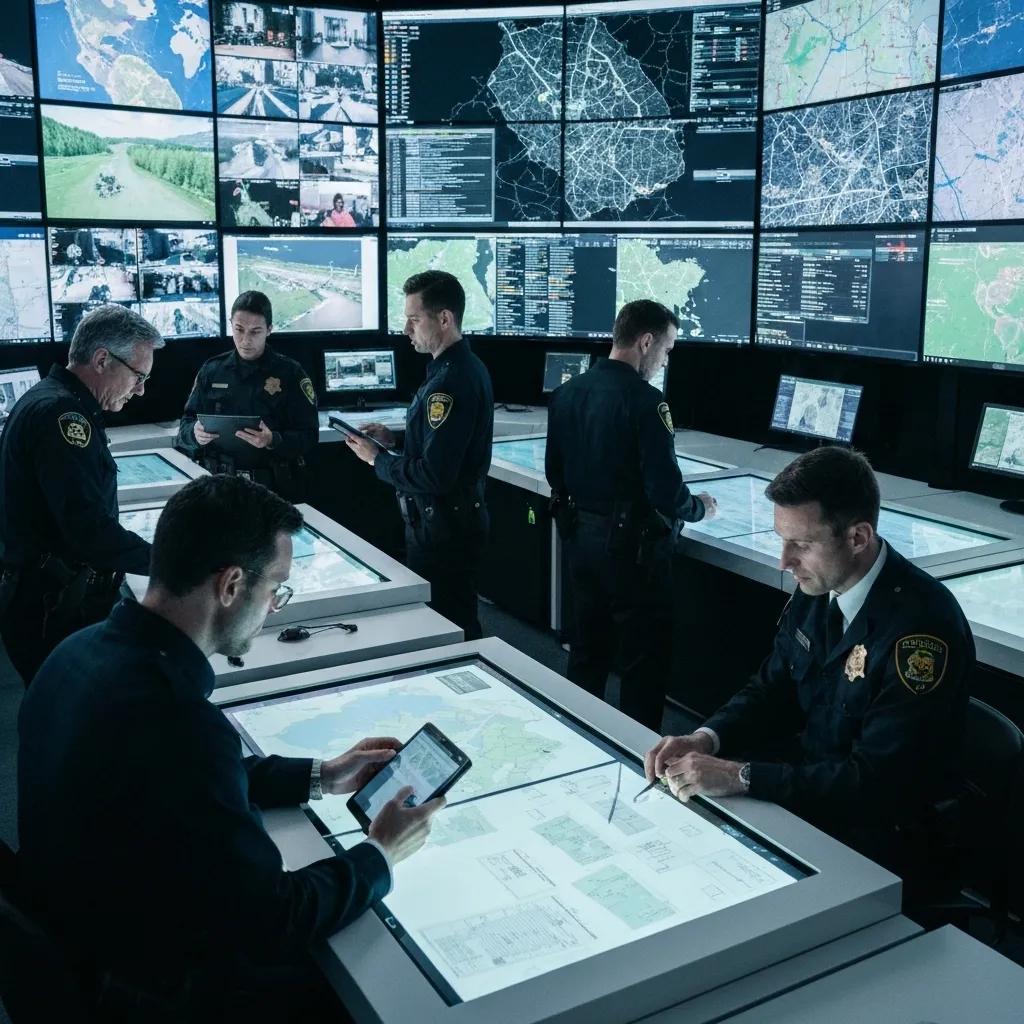
A coordinated task force of FBI agents and LAPD officers led a multilayered investigation into the armored truck robbery, applying federal resources and local field expertise. This combined approach accelerated evidence gathering, enabled real-time intelligence sharing, and resulted in swift arrests within days of the incident.
What role did the FBI and LAPD task force play in solving the case?
The FBI provided forensic laboratories for ballistic matching and digital-forensics teams to analyze phone records, while LAPD officers conducted neighborhood canvasses, witness interviews, and tactical surveillance. Together, they integrated incident data into a centralized command post that directed surveillance units and arrest teams.
Which surveillance and forensic techniques were used to track suspects?
Below is an overview of the primary investigative tools and their outcomes:
[Technological Advancements in Law Enforcement]
These methods converged to pinpoint the suspects’ residences and staging sites, enabling coordinated raids that resulted in the four arrests.
How did law enforcement overcome security countermeasures like Wi-Fi jammers?
Agents countered jamming devices by deploying portable signal-analysis units to locate high-power emitters. With drone-mounted counterscanners, they mapped jammer footprints and isolated equipment for seizure, preventing the robbers from evading digital surveillance during follow-up operations.
What Are the Details and Impact of the Los Angeles Armored Truck Heist?
The armored truck heist took place in broad daylight, leading to significant financial losses and raising alarm within the cash-in-transit industry. Understanding the when, where, and scale of this crime underscores vulnerabilities in current security protocols and the human toll on victims.
When and where did the armored truck heist occur in Los Angeles?
On a Tuesday morning at approximately 9:15 a.m., the robbery occurred along West Adams Boulevard near La Brea Avenue. The perpetrators struck as the armored vehicle paused at a popular bank drive-through, exploiting heavy traffic to conceal their approach.
How much cash and valuables were stolen during the heist?
Authorities estimate that the suspects made off with roughly $850,000 in cash, including bundled currency meant for ATM replenishment. No jewelry or precious metals were involved, but the haul ranks among the largest cash-only armored-car heists in recent Los Angeles history.
What was the impact on armored truck companies and security personnel?
Armored-car firms reported heightened anxiety among guards, who now face increased risk. Companies have temporarily suspended similar deliveries during rush hour, incurring logistical costs and threatening local businesses’ cash flow. These disruptions underscore the need for reinforced security measures.
What Federal Charges Do the Arrested Suspects Face in the Armored Truck Heist?
Federal prosecutors have charged the four individuals under statutes designed to protect interstate commerce and punish violent robberies. These charges carry significant penalties that reflect the severity of cash-in-transit crimes.
What is the Hobbs Act and how does it apply to armored truck robberies?
The Hobbs Act prohibits robbery or extortion affecting interstate commerce. Because armored trucks transport cash across state lines, any violent interference qualifies as a Hobbs Act violation, punishable by up to 20 years in federal prison.
[The Hobbs Act and Interstate Commerce]
What conspiracy and firearm charges are involved in this case?
Prosecutors allege conspiracy to commit robbery and brandishing a firearm during a crime of violence. The indictment specifies that the defendants planned the heist jointly and used assault-style weapons to intimidate and injure.
What potential sentences and penalties could the suspects face?
Combined punishments could result in decades behind bars, reflecting the federal government’s commitment to deter violent cash-in-transit crimes.
How Does Organized Crime Influence Armored Truck Heists in Los Angeles?
[Organized Crime and Armored Truck Heists]
What is the role of groups like the Chesapeake Bandits in LA armored car robberies?
The Chesapeake Bandits functioned as an organized ring that coordinated surveillance, transportation, and money laundering for multiple armored-truck hits. Their sophistication in digital countermeasures and insider recruitment set a precedent for subsequent robberies.
How have gangs such as the West Boulevard Crips and Black P Stones contributed?
- They provided armed enforcers who conducted violent ambushes.
- They leveraged local street contacts to secure safe houses and lookout posts.
- They invested stolen proceeds into other criminal ventures like drug trafficking.
These collaborations amplified both the scale and brutality of recent armored-car heists.
What historical trends link organized crime to cash-in-transit robberies in LA?
Since Prohibition-era bootleg financing, Los Angeles crime families have targeted cash shipments as a lucrative revenue stream. Over decades, armored-truck attacks evolved from rudimentary stickups to highly coordinated, state-of-the-art operations.
What Law Enforcement Tactics Prevent and Solve Armored Truck Heists in Los Angeles?
To counter increasingly sophisticated robbery rings, agencies deploy advanced security protocols, intelligence sharing, and public partnerships. These measures not only solve crimes but also prevent future attacks on cash-in-transit services.
What technologies and protocols are used to secure armored trucks?
Security managers now equip vehicles with GPS tracking, time-delay safes, reinforced glass, and remote-lockdown systems. High-frequency panic alarms trigger instant law-enforcement dispatch if motion sensors detect unauthorized stops.
How do FBI and LAPD coordinate task forces and intelligence sharing?
Multijurisdictional task forces hold daily briefings in fusion centers, where data from wiretaps, surveillance, and informants are pooled. Real-time crime centers enable rapid deployment of SWAT units based on synchronized geospatial alerts.
What rewards and public appeals assist in solving armored truck crimes?
Law enforcement agencies have offered up to $50,000 for tips leading to an arrest, and they broadcast suspect sketches and surveillance stills through community outreach programs. These incentives have generated critical leads from anonymous informants.
What Are the Latest Updates and Ongoing Investigations Related to the Los Angeles Armored Truck Heist?
Even after the initial arrests, investigators continue to track potential co-conspirators and strengthen industry safeguards. New developments in evidence and security protocols shape the evolving response.
Are there additional suspects still at large in connection with the heist?
Yes, authorities believe two more accomplices—suspected getaway drivers—remain unidentified. Investigators are analyzing financial records and vehicle-rental data to locate these individuals.
How are law enforcement agencies monitoring organized crime activity post-arrests?
Task-force members have expanded undercover operations within known gang territories and increased digital surveillance of transaction patterns linked to criminal networks. Shared databases now flag suspicious cash deposits in real time.
What new security measures are being implemented after the heist?
Armored-car firms have begun installing remote vehicle immobilizers, encrypted communications modules, and biometric access controls in vault compartments. These enhancements aim to deter insurgent tactics such as roof breaches and interior lock-picking.
Four individuals face severe federal penalties for targeting cash-in-transit in Los Angeles, highlighting the importance of interagency collaboration and advanced security measures. As law enforcement refines forensic methods and armored-truck protocols evolve, the industry moves toward a more resilient model that balances efficiency with public safety. Continuous monitoring of organized-crime networks and upgraded vehicle defenses promises to reduce the risk of future losses and protect security personnel on city streets.