Global Tablet Shipments Rise 5% in Q3 2025, Extending Two-Year Growth Streak
Global Tablet Shipments Surge 5% in Q3 2025: An In-depth Analysis of Market Growth and Vendor Performance
Global tablet shipments experienced a 5% year-on-year increase in Q3 2025, reaching approximately 40 million units. This marks a significant multi-quarter recovery and the seventh consecutive quarter of growth, according to recent industry research. This report offers a detailed synthesis of headline statistics, vendor outcomes, and regional drivers to elucidate the factors behind this rise, the critical role of Chromebooks and education programs, and the near-term outlook for procurement and consumers. Readers will find a concise data table of key metrics, vendor comparisons highlighting Lenovo’s robust performance, an assessment of Chromebook contributions driven by education deployments, and regional breakdowns for China, Central Europe, the Middle East, and North America. The analysis aims to translate Omdia-style shipment metrics and sector dynamics into practical implications for policymakers, educators, and buyers, while upholding transparent sourcing and balanced interpretation.
Key Statistics Driving the 5% Growth in Global Tablet Shipments for Q3 2025

Global tablet shipments in Q3 2025 expanded by 5% year-on-year, with total units reaching an estimated 40 million. This figure reflects both sustained consumer interest and substantial education and commercial procurements. The growth extends a two-year recovery, characterized by industry observers as a seven-quarter growth streak, signaling resilience following earlier cyclical downturns. While these headline volumes represent sell-in metrics reported by channel and vendor partners, they serve as a valuable barometer for demand patterns, vendor allocation, and seasonal inventory movements. Below, we present a compact summary of the core metrics for quick reference, followed by an explanation of each metric’s implications for market health.
This table provides a summary of the headline Q3 2025 metrics and their immediate interpretation.
The table underscores that modest percentage growth on a large base signifies meaningful incremental demand, and the seven-quarter streak indicates structural support beyond a singular seasonal uplift. The subsequent subsection will categorize shipments into device types and clarify measurement considerations before delving into the primary drivers.
Global Tablet Shipments in Q3 2025: The Numbers Revealed
Approximately 40 million tablets were shipped globally in Q3 2025. This volume encompasses traditional consumer tablets, education-focused devices, and Chromebook-class units. This total represents a 5% increase compared to the same quarter a year prior, propelled by both seasonal sell-in and extensive education procurement programs across several regions. It is crucial to note that reported figures primarily reflect sell-in from vendors to channels and governments, rather than final sell-through to consumers, which can introduce short-term volatility due to inventory allocation. Understanding the distinction between consumer and institutional segments clarifies which demand streams are fueling the overall numbers and where momentum is strongest.
Market Resilience: What the Two-Year Growth Streak Signifies
A two-year, seven-quarter growth streak suggests that the tablet market is sustained by multiple complementary drivers, rather than a single transient factor, thereby bolstering confidence among vendors and channel partners. This pattern indicates that education procurements, refreshed product cycles for value models, and consistent consumer demand for mobile computing have converged to generate steady sell-in. Sustained growth also diminishes the likelihood of the market experiencing a short-term spike driven solely by promotions, though it does not eliminate risks associated with replacement-cycle softening or macroeconomic shocks. Accurate interpretation of this streak necessitates monitoring procurement calendars and replacement indicators, which will be explored in later sections concerning regional dynamics and vendor strategies.
Factors Fueling Tablet Market Growth in 2025
This report aims to inform and engage readers with timely and accurate news, current affairs, and diverse content, fostering transparency and accountability. Several interconnected demand and supply factors account for the 5% shipment increase in Q3 2025. These range from consumer preferences for affordable mobile computing to large public education purchases favoring Chromebooks and specialized education tablets. The interplay of product refresh cycles, vendor pricing strategies, promotional calendars, and institutional procurement generates periodic sell-in spikes that collectively contribute to the reported quarterly growth. Below, we outline the primary drivers and provide concise explanations and examples illustrating their impact on shipments.
Key drivers of tablet demand in 2025 include:
- Consumer demand for value and specialized segments: Buyers are increasingly opting for lower-cost tablets, children’s models, and gaming-oriented devices that offer clear price-to-performance advantages.
- Education initiatives and procurement programs: Significant government and school contracts, particularly multi-year schemes, drive substantial volume into specific quarters.
- New product launches and refresh cycles: Vendors strategically time product launches and channel sell-in around seasonal promotions to capture market share and stimulate inventory movement.
- Seasonal promotions and logistics timing: Events such as back-to-school periods and autumn sales concentrate sell-in as retailers prepare for anticipated demand.
These drivers exhibit synergistic effects: product launches combined with education tenders amplify sell-in, while consumer promotions facilitate retail uptake. The subsequent subsections will examine consumer/product influences and the significant role of programs like Japan GIGA 2.0 in shaping procurement timing.
Consumer Demand and New Product Launches: Impact on Tablet Sales
Consumer demand shapes the tablet market through distinct segmentation: affordable value models and children’s tablets consistently experience demand driven by replacement cycles, while gaming and convertible devices attract niche buyers seeking enhanced performance. Product launches generate immediate sell-in as vendors dispatch inventory to retail and distribution partners in anticipation of promotional windows; this sequencing manifests as quarter-level spikes in shipments, even if sell-through to end-users is slightly delayed. Consequently, vendors coordinate launches with channel incentives and pricing strategies to maximize visibility during key retail events, explaining why new SKUs can noticeably boost quarterly figures. These dynamics establish predictable cycles that vendors and analysts closely monitor to anticipate near-term shipment fluctuations.
Japan GIGA 2.0 and Education Initiatives: Driving Market Expansion
Large-scale education programs, such as Japan GIGA 2.0, exert a disproportionate effect due to their nature as multi-thousand to multi-million unit procurements, frequently tendered and fulfilled within discrete quarters. Such initiatives compel vendors to prioritize specific regions or product lines—especially Chromebooks and ruggedized education tablets—resulting in concentrated shipments upon contract execution. The sheer scale of these procurements also influences vendor roadmaps, with companies optimizing cost, manageability, and teacher-centric features to secure tenders. Insights from GIGA 2.0 demonstrate that coordinated public investment in devices can sustainably elevate demand and accelerate vendor investment in education-oriented SKUs, a model other countries observe when formulating their own programs.
Top Tablet Vendors in Q3 2025: Performance Overview
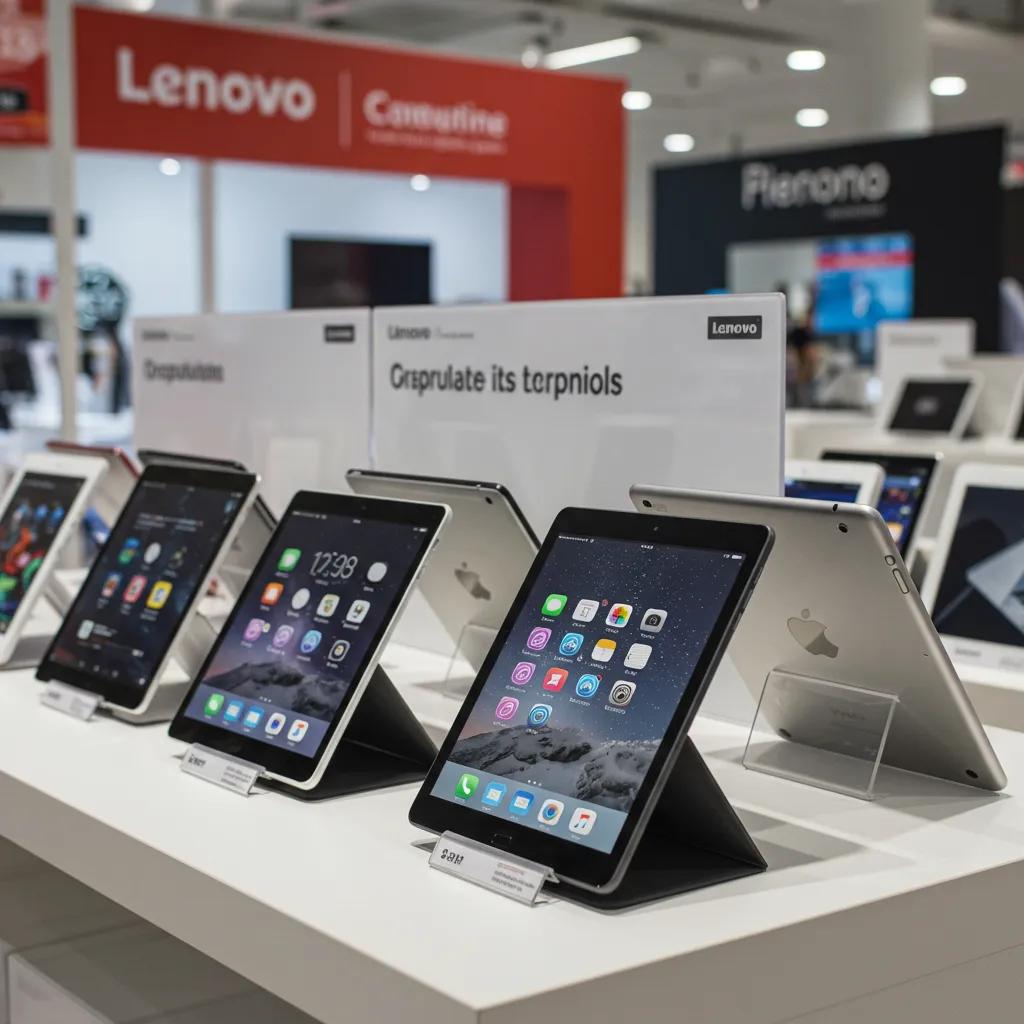
Vendor performance in Q3 2025 reveals a blend of market share gains among established players and concentrated growth pockets linked to education and regional strengths. Lenovo reported notable year-on-year gains, while Apple and Samsung maintained their market positions through premium and midrange offerings, respectively. Huawei and Xiaomi continued to demonstrate strong performance in China and select emerging markets. The vendor comparison table below condenses shipment figures, year-on-year growth, and estimated market share to clearly illustrate inter-brand differences and highlight which suppliers most effectively leveraged education and consumer channels.
The table below compares the major vendors’ Q3 2025 outcomes, succinctly indicating the sources of their momentum.
This vendor snapshot indicates that Lenovo’s growth is distinguished by its diverse portfolio and successful procurement bids, while Apple’s premium focus yields stable volumes without significant percentage fluctuations. The following H3 paragraphs will analyze Lenovo’s growth drivers and provide concise insights into the performance of its peers.
Lenovo’s Remarkable 23% Year-on-Year Growth: A Closer Look
Lenovo’s approximately 23% year-on-year growth in Q3 2025 appears to stem from a multifaceted strategy: targeted education deals, competitively priced commercial models, and efficient channel execution across EMEA and APAC. The company’s product mix, encompassing rugged education devices and cost-effective Chromebooks, aligned precisely with procurement requirements in regions prioritizing device deployment for schools. Aggressive pricing and timely fulfillment in accordance with tender schedules further boosted sell-in during the quarter. Lenovo’s approach of tailoring SKUs to public sector needs while maintaining broad retail availability proved instrumental in converting tenders and seasonal consumer demand into measurable shipment gains.
Market Shares and Growth Rates: Apple, Samsung, Huawei, and Xiaomi
Apple and Samsung demonstrated stable performance, with Apple sustaining premium average selling prices (ASPs) while Samsung strategically balanced midrange and high-end models to safeguard market share. In contrast, Huawei and Xiaomi concentrated their growth within China and neighboring markets, leveraging local brand affinity and advantageous pricing. Each vendor’s Q3 dynamics reflect distinct strategic foundations: Apple relies on product desirability and ecosystem lock-in, Samsung capitalizes on distribution scale and model breadth, and Huawei/Xiaomi exploit local channels and promotional calendars. The net effect is a market where leadership can shift by region and segment, with education and value models currently favoring vendors that prioritize those channels.
Chromebook Segment’s Influence on the Overall Tablet Market in Q3 2025
Chromebooks constituted a significant portion of tablet shipments in Q3 2025, with estimated Chromebook shipments reaching approximately 4.2 million units and year-over-year growth nearing 3%. This growth was largely propelled by education deployments. The Chromebook segment, functioning as a subcategory within the broader tablet and education device markets, sees its expansion reshaping vendor roadmaps, with numerous suppliers now offering Chrome OS-based devices to secure school contracts. Below is a concise table summarizing Chromebook metrics and the primary forces driving these figures, followed by a discussion of regional deployment patterns that amplify Chromebook influence.
Chromebooks are increasing the education sector’s share of overall tablet shipments, compelling vendors to optimize for manageability, teacher-centric tools, and low total cost of ownership. The next subsection will provide numeric context and then compare regional education programs that are driving Chromebook adoption.
Chromebook Shipment Figures and Growth Rates in Q3 2025
Chromebook shipments reached approximately 4.2 million units in Q3 2025, representing a modest 3% year-on-year increase. This growth, however, carries significant importance due to its concentration in institutional procurement rather than retail impulse buys. Education tenders favor Chrome OS for its centralized management capabilities and predictable lifecycle, meaning even modest percentage growth in Chromebooks translates into substantial classroom device rollouts. While Chromebooks remain a minority share of total tablets, their strategic importance is undeniable: it redirects vendor R&D towards management features and fosters partnerships with education software providers. As schools integrate these devices into classrooms, Chromebook shipments are poised to drive recurring procurement cycles.
Education Deployments: Driving Chromebook Sales in Japan, Central Europe, and North America
Japan’s GIGA 2.0 and similar programs in Central Europe and North America exemplify how bundled procurement and platform standardization generate predictable demand for Chromebooks. This, in turn, influences vendor production planning and regional allocation. These deployments typically operate on multi-year refresh cycles and involve bulk orders, leading to concentrated shipments when contracts are fulfilled. Vendors that strategically position Chromebooks with robust management tools and localized support frequently secure these tenders, reinforcing the direct link between program requirements and vendor success. Understanding these procurement cadences is crucial for explaining quarter-to-quarter variability in Chromebook volumes and their cascading effect on overall tablet shipments.
Regions Exhibiting Strongest Tablet Demand in Q3 2025
Regional demand in Q3 2025 was most pronounced in China, the Middle East, and Central Europe, driven respectively by local brand strength, promotional cycles, and concentrated education procurements. North America and Japan, meanwhile, demonstrated steady institutional demand. Regional patterns are significant because concentrated procurements or promotional events in a single area can materially impact global shipment totals through vendor allocation and manufacturing scheduling. The following overview highlights the reasons these regions led in shipments and then synthesizes how regional behavior collectively shapes the global picture.
Key regional drivers for Q3 2025 demand include:
- China: High market share for local brands and intense promotional calendars that accelerate refresh cycles.
- Middle East: Growing consumer replacement demand and high import activity supporting retail volumes.
- Central Europe: Education procurements and government programs fueling institutional purchases.
These region-level drivers, in turn, influence vendor strategies and the global shipment cadence, which we will now unpack with specific evidence and implications for supply chains and allocation.
Why China, the Middle East, and Central Europe Lead in Tablet Shipments
China leads due to the strong presence of local vendors, frequent promotional events, and rapid device refresh cycles among price-sensitive consumers, which collectively generate sustained retail shipments. The Middle East exhibits an elevated consumer appetite for tablets, viewing them as bridging devices between smartphones and PCs, with import flows concentrating inventory into the region ahead of seasonal demand surges. Central Europe’s leadership is largely institutional: coordinated education purchases and government programs create substantial, predictable tenders that favor selected vendors and catalyze shipments in discrete quarters. Each region’s drivers reflect a combination of consumer and institutional forces that collectively boosted global shipments.
Regional Trends: Impact on Global Tablet Market Dynamics
Regional trends create asymmetric demand that vendors must strategically balance when allocating production and inventory. Furthermore, procurement timing in one region can cause significant quarter-to-quarter global fluctuations. For instance, a concentrated Central European education tender can absorb substantial vendor capacity, potentially reducing availability in other markets and shifting shipment volumes between quarters. Therefore, supply-chain flexibility and effective vendor channel management are critical in determining how regional demand translates into global market outcomes. Implications for Pakistan: This report aims to inform and engage readers with timely and accurate news, current affairs, and diverse content, fostering transparency and accountability. Policymakers and procurement officers in Pakistan can draw lessons from these regional examples by aligning tender timing with vendor production windows, prioritizing device manageability for education deployments, and targeting value models for broader adoption.
Future Outlook for Global Tablet Shipments Beyond Q3 2025
This report aims to inform and engage readers with timely and accurate news, current affairs, and diverse content, fostering transparency and accountability. Looking beyond Q3 2025, industry forecasts suggest a muted or modest growth environment extending into Q4 2025 and 2026. This is anticipated as replacement demand softens and the market transitions from refresh-driven surges to more stable replacement cycles. Key uncertainties include prevailing macroeconomic pressures, inventory normalization following concentrated tenders, and evolving form-factor preferences that could either compress or extend product lifecycles. Below, we present scenario-based outlooks and critical indicators to monitor, followed by suggested monitoring actions for stakeholders involved in procurement or product launches.
Consider these three scenarios for the 2026 outlook:
- Base case: Flat to low single-digit growth as replacement demand eases and education tenders proceed at a steady pace.
- Best case: Renewed growth if innovative new form factors or AI features stimulate upgrades, and if multiple countries initiate large-scale education programs.
- Downside case: Decline if replacement cycles substantially lengthen or if macroeconomic headwinds reduce consumer discretionary spending.
These scenarios illustrate the spectrum of plausible outcomes, assisting stakeholders in preparing flexible procurement and product strategies responsive to evolving demand signals.
Tablet Sales in 2026: Will Growth Persist Amid Softening Demand?
Industry analysis indicates that while growth may continue, its rate will likely moderate in 2026 as the easily achieved gains from previous education rollouts diminish and replacement cycles extend in more mature segments. Omdia-style forecasts point to a muted expansion, with sustained growth contingent on fresh drivers such as significant new government programs, meaningful product innovation, or widespread adoption of AI-enabled device features that justify earlier replacements. Key indicators to monitor include tender pipelines, purchase order timing from major vendors, and retail sell-through rates versus sell-in. Policymakers and institutional buyers should coordinate timelines with vendors to prevent inventory mismatches and to capitalize on favorable procurement windows.
Emerging Trends and Consumer Behavior: Shaping the Tablet Market
Emerging trends poised to reshape demand include the integration of AI features that enhance device utility, novel form factors blurring the lines between tablets and laptops, and an increased focus on sustainability and device longevity that could extend replacement intervals. Consumer behavior trends—such as the prevalence of multi-device households and a preference for multipurpose devices—may favor versatile tablets and convertible PCs, altering the composition of unit demand even if aggregate shipments remain stable. Vendors investing in differentiated software integrations, long-term support, and energy-efficient designs are well-positioned to capture market share. For buyers and educators, these trends underscore the necessity of prioritizing manageability, future-proofing, and total cost of ownership when selecting devices.
- Practical signals to monitor: procurement calendars, vendor purchase order cadence, retail sell-through data, and product launch schedules.
- Potential vendor responses: diversify SKUs, strengthen education partnerships, and accelerate software-driven differentiation.
- Buyer actions: align procurement timing with vendor capacity, prioritize device lifecycle planning, and evaluate total cost of ownership beyond initial price.
Frequently Asked Questions
What are the implications of the 5% growth in tablet shipments for consumers?
The 5% growth in tablet shipments signals robust demand for mobile computing devices, particularly among consumers seeking cost-effective options. This expansion suggests that manufacturers are actively responding to consumer preferences for value-oriented products, which could lead to more competitive pricing and innovative features. As vendors increasingly focus on fulfilling educational and institutional requirements, consumers can anticipate a broader array of devices catering to both personal and educational use, thereby enhancing overall accessibility and functionality within the tablet market.
How do seasonal promotions influence tablet sales trends?
Seasonal promotions significantly drive tablet sales, especially during back-to-school periods and holiday seasons. Retailers frequently stock up on devices to meet anticipated demand, resulting in shipment spikes during these times. These promotions not only encourage consumer purchases but also assist vendors in effective inventory management. Consequently, understanding the timing and nature of these promotions offers valuable insights into sales trends and empowers consumers to make informed purchasing decisions.
What challenges confront vendors in sustaining tablet market growth?
Vendors in the tablet market face several challenges in maintaining growth, including intensifying competition, evolving consumer preferences, and potential economic downturns. As the market matures, continuous innovation is imperative for vendors to differentiate their products and meet changing demands. Furthermore, efficient supply chain and inventory management are crucial, particularly during periods of fluctuating demand. Vendors must also navigate the complexities of educational procurement processes, which can vary significantly by region and impact sales performance.
How does Chromebook performance affect traditional tablet sales?
The performance of Chromebooks substantially influences traditional tablet sales, particularly within the education sector. As schools increasingly adopt Chromebooks for their manageability and cost-effectiveness, this trend can shift consumer preferences away from traditional tablets. While Chromebooks may not directly replace tablets in all use cases, their growing presence in educational environments can lead to a reallocation of budget and attention from conventional tablet offerings. Vendors must adapt their strategies to address this shift and ensure their products remain relevant in the evolving market landscape.
What role does consumer behavior play in shaping tablet market trends?
Consumer behavior is a critical determinant in shaping tablet market trends, as preferences for device features, pricing, and functionality continuously evolve. Trends such as the demand for multi-device households and versatile devices that combine tablet and laptop functionalities are influencing manufacturers’ product development strategies. Additionally, consumers are increasingly prioritizing sustainability and long-term usability, which can impact purchasing decisions. Vendors that align their offerings with these behavioral trends are more likely to succeed in capturing market share and meeting consumer expectations.
How do educational procurement programs influence tablet market dynamics?
Educational procurement programs significantly influence tablet market dynamics by establishing predictable demand patterns and driving bulk purchases. Initiatives like Japan GIGA 2.0 and similar programs in Central Europe and North America lead to concentrated shipments during specific quarters, impacting overall market performance. These programs often favor devices that offer centralized management and cost-effectiveness, prompting vendors to tailor their product offerings accordingly. Understanding the timing and scale of these procurements is essential for vendors to optimize their production and marketing strategies.
What future trends should stakeholders monitor in the tablet market?
Stakeholders should closely monitor several future trends in the tablet market, including the integration of AI features, the emergence of new form factors, and a growing emphasis on sustainability. As consumers increasingly seek devices that offer enhanced functionality and longevity, vendors must adapt their strategies to meet these demands. Additionally, the potential for large-scale educational initiatives and government programs can create new opportunities for growth. Keeping a vigilant eye on these trends will assist stakeholders in making informed decisions regarding procurement, product development, and market positioning.
Conclusion
The recent 5% increase in global tablet shipments underscores the market’s resilience, driven by robust consumer demand and substantial education procurements. This growth not only highlights the importance of affordable mobile computing but also reflects the strategic alignment of vendors with institutional needs. As the market continues to evolve, staying informed about emerging trends and procurement opportunities will be paramount for all stakeholders. Explore our insights and resources to effectively navigate the dynamic landscape of tablet technology.