Government Shutdown Forces Air Travel Cuts: FAA Orders 10% Reduction in Flights at 40 US Airports
Government Shutdown Triggers Air Travel Cuts: FAA Mandates 10% Flight Reduction at 40 US Airports
The Federal Aviation Administration (FAA) has mandated a targeted 10% reduction in scheduled flights across 40 US airports. This directive comes after a prolonged government shutdown created critical staffing and safety pressures, threatening the integrity of normal air traffic operations. The aim is to alleviate traffic density in areas most affected by air traffic control staffing shortages, thereby limiting throughput to ensure safe separation, reduce controller workload, and mitigate fatigue-related risks. This report will detail which airports are impacted, the rationale behind the FAA’s proportional cuts, how airlines and passengers are responding, and the potential industry and economic fallout if the funding lapse persists. We will also explain operational mechanisms, outline traveler rights and provide practical tips, present official statements from the Transportation Secretary and FAA, and offer historical context to help predict possible outcomes. Following this initial summary, a brief note clarifies our reporting source and editorial stance, enabling readers to assess the coverage that follows.
Geo News (Jang Media Group) upholds a clear editorial mission during this rapidly evolving situation:
Our newsroom is actively compiling official statements and verified operational notices to deliver concise updates and actionable guidance for both travelers and industry stakeholders. We commit to updating this report promptly as new communications from the FAA or Department of Transportation emerge, and as airlines publish revised schedules or rebooking policies. This dedication underpins the factual reporting and practical advice presented in the subsequent sections, empowering readers to navigate disruptions with verified, contextual information.
Which US Airports Face FAA’s 10% Flight Reduction?
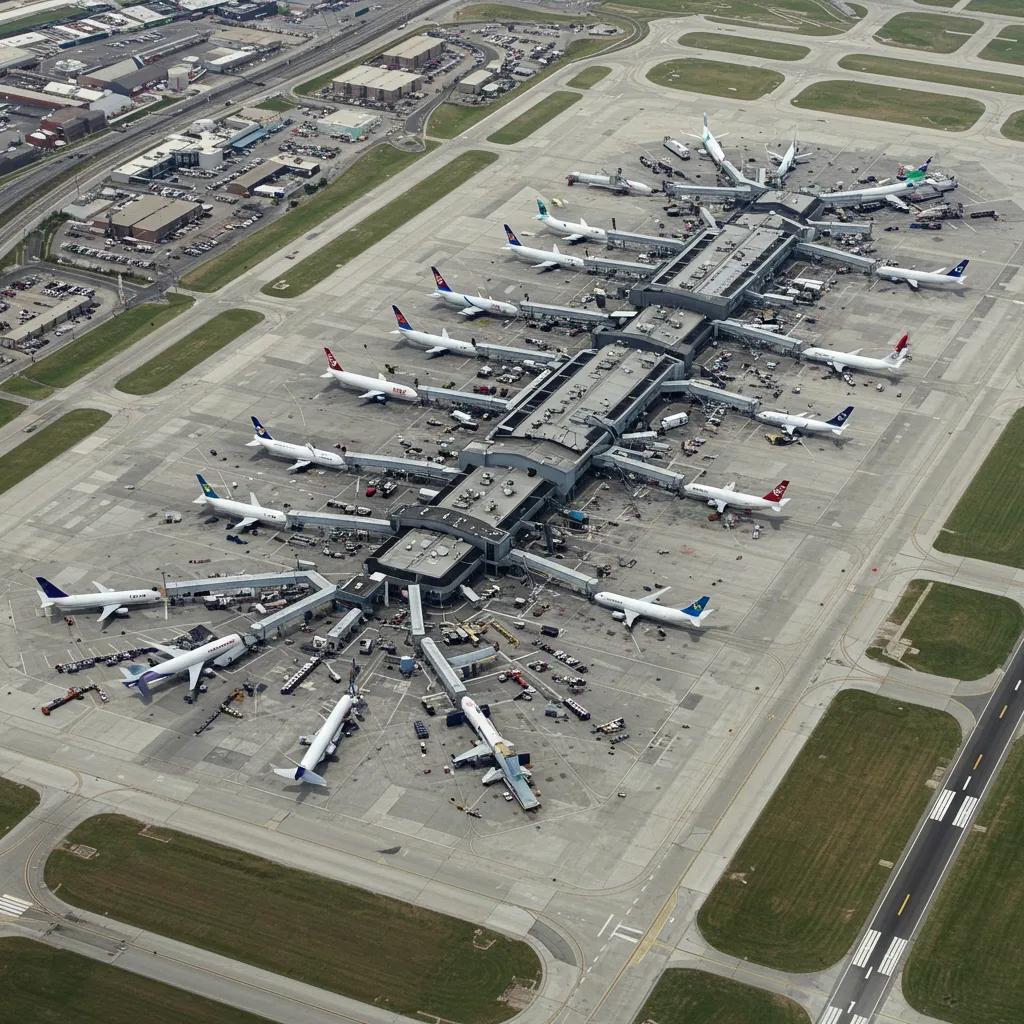
The FAA has identified 40 key markets where flight reductions will be enforced to safeguard safety margins amidst ongoing staffing constraints. This proportional reduction specifically targets peak-period operations to decrease overall traffic density. High-volume hubs are included due to their significant influence on nationwide scheduling and recovery times, meaning cuts at these major centers can trigger cascading delays across entire networks. This section will list representative major hubs and elaborate on how reductions at these airports impact carrier schedules and passenger connections. It also features an airport-level comparison table, estimating the operational impact of a 10% cut and highlighting notable airline adjustments observed in recent operational notices.
Major affected hubs encompass several critical international and domestic transfer points that concentrate connecting traffic and crew rotations:
- Chicago O’Hare, a pivotal hub where schedule alterations can lead to widespread knock-on delays and extended re-accommodation periods for passengers nationwide.
- Dallas/Fort Worth, where existing slot constraints impact both domestic and international carriers, as well as vital cargo movements.
- Newark and Houston, serving dense transcontinental and international connections, capable of transmitting congestion to smaller markets.
- Phoenix and other significant western hubs, crucial for westbound flight flows and regional connectivity.
These major hubs are vital because reducing flights there eases system-wide stress, yet it also increases the complexity of passenger rebooking and connections at both origin and destination airports.
This table offers a quick comparison of representative airports, providing conservative estimates of typical daily flights before the cuts and illustrating the effect of a 10% reduction on capacity and carriers’ scheduling decisions.
These estimates demonstrate how a uniform percentage cut results in varied operational behaviors depending on the airport’s specific mix. Carriers typically prioritize long-haul and high-yield routes while scaling back regional and lower-demand frequencies. The table clarifies which airports will experience the largest absolute reductions and where airlines are most likely to reallocate their capacity.
Which Major Airports Are Included in the Flight Reduction List?
Major airports are specifically targeted because their high throughput significantly amplifies system-wide risk when staffing levels fall below conservative safety thresholds. Consequently, the FAA prioritized hubs where controller workload and traffic surges are most frequent. These hubs act as crucial redistribution nodes for connecting passengers, crew, and aircraft, meaning a localized throughput cap can trigger nationwide rescheduling and passenger misconnections. Limiting operations at these facilities reduces peak complexity, providing controllers with the necessary margin to manage unusual events. Meanwhile, airlines adapt by consolidating flights or upgrading equipment to larger narrowbodies or widebodies on retained frequencies. Understanding which hubs are affected helps travelers anticipate where rebooking queues and delays are most probable, and clarifies why regional markets sometimes remain exempt to preserve essential connectivity.
How Are Airlines Adjusting Schedules at Affected Airports?

Airlines typically respond to FAA-imposed capacity caps by prioritizing high-revenue routes, canceling lower-demand regional frequencies, and re-timing flights to avoid peak periods. These actions aim to preserve profitability while adhering to safety directives. Carriers also strategically batch cancellations to create contiguous recovery windows and frequently deploy larger aircraft on remaining services to maintain aggregate seat capacity where feasible. Operational decisions often include waiving change fees, implementing pre-emptive schedule trims, and coordinating crew reassignments to align with reduced slot availability and minimize ripple effects across their networks. While these tactical adjustments seek to reduce overall operational disruption, they can increase rebooking demand and necessitate proactive passenger communication to mitigate airport crowding and customer service strain.
Why Is the FAA Reducing Flights Amidst the Government Shutdown?
The FAA’s mitigation strategy—a 10% flight reduction at selected airports—is a safety-driven response to the operational fallout from an extended government funding lapse. This lapse has left many federal employees unpaid and created significant staffing shortfalls within air traffic control operations. Unpaid air traffic controllers and related support staff are experiencing increased absenteeism and a reduced willingness to work overtime, which in turn limits available controller rotations and heightens fatigue risk. The FAA addresses these risks directly by lowering traffic volumes. This directive reflects a clear causal chain: shutdown → unpaid workers → reduced staffing/absenteeism → elevated safety risk → capacity mitigation. To ensure transparency regarding these trade-offs, this section includes a straightforward entity-attribute-value table clarifying the primary causes, mechanisms, and operational effects of these cuts.
The following table concisely explains the causal links and operational consequences in an EAV format, allowing readers to quickly grasp why a uniform percentage reduction was chosen.
This causal table underscores how the FAA’s 10% directive functions as a proportional safety buffer, effectively translating staffing shortfalls into measurable operational relief that preserves core safety margins even as the workforce faces constraints.
How Do Air Traffic Controller Staffing Shortages Impact Flight Operations?
Staffing shortages directly reduce the number of active control positions and limit the ability to fully staff all towers and approach-control sectors. This forces controllers to manage larger sectors or suspend certain flow programs, resulting in lower overall throughput and more conservative sequencing of arrivals and departures. With fewer controllers on duty, spacing between aircraft increases to reduce cognitive load and risk, which directly translates to fewer flights per hour and longer average delay minutes. Operationally, this frequently leads to temporary runway or flow restrictions during peak periods, consolidation of services, and prioritized handling for emergency, medical, and international flights. The net effect is a reduction in scheduled movements, extended recovery times after disruptions, and a heavier impact on passengers regarding rebooking and connection reliability.
What Safety Concerns Are Driving the FAA’s Flight Reduction Decision?
The primary safety concerns driving the FAA’s decision are controller fatigue, diminished monitoring capacity, and a reduced ability to manage traffic surges or unexpected events without adequate staff backups. Each of these factors significantly increases the probability of near-miss incidents or procedural errors. By lowering traffic density, the FAA reduces moment-to-moment tasking and provides crucial buffer time for controllers to maintain situational awareness and strictly adhere to separation standards. This preventative approach is firmly rooted in operational risk management: fewer simultaneous movements inherently lower incident risk and reduce the potential for compounded errors during high-stress periods. Essentially, flight reductions serve as a systemic safety control to preserve performance margins until staffing levels normalize.
The analysis of occurrences linked to air traffic volume and air traffic controllers’ alertness for fatigue risk management underscores the critical necessity for effective fatigue mitigation strategies among air traffic controllers.
A thorough understanding of air traffic controller fatigue is fundamental for developing robust fatigue risk management systems.
How Does the Government Shutdown Impact Commercial Flights and Travelers?
Passengers will primarily experience the FAA’s mitigation through increased delays, more frequent cancellations, lengthier rebooking processes, and occasional changes to aircraft equipment or routing. Consequently, airports and airlines anticipate heavier customer-service loads as travelers seek alternative arrangements. Operational disruptions commonly manifest as missed connections, extended wait times at gates and ticket counters, and delayed baggage flow, all of which further exacerbate passenger dissatisfaction. This section provides concrete examples of typical passenger scenarios and a practical list of steps travelers can take to safeguard their plans, assert their rights, and minimize exposure to long airport waits. It also summarizes the regulatory passenger protections and airline policies that typically apply during large-scale operational reductions.
Common passenger disruption scenarios during these flight cuts include missed connections on multi-leg itineraries, last-minute cancellations on regional feeder flights to hubs, and re-accommodation onto later flights that may not match original seat class or timing. These situations frequently require travelers to request refunds, flexible rebooking, or hotel accommodations for overnight delays. The most immediate need is to actively monitor flight-status communications and proactively contact carriers. Passengers should also prepare documentation for refunds or claims, retain receipts for expenses, and consider travel insurance coverage that addresses cancellations and delay-incurred costs. Swift, proactive communication with airline customer service and airport agents remains the most effective strategy for securing timely rebooking options.
For practical guidance, adhere to these traveler rights and tips designed to reduce disruption and help secure alternatives when flights are cut or canceled:
- Check flight status frequently: Utilize airline apps and airport monitors to catch schedule updates early, thereby reducing time spent in unpredictable queues.
- Know your refund and rebooking rights: Request immediate re-accommodation, vouchers, or refunds from the carrier when a flight is canceled as part of capacity reductions.
- Document additional expenses: Keep all receipts for meals, hotels, or transport incurred due to cancellations to support potential reimbursement claims.
- Consider travel insurance or flexible fares: Policies that cover cancellations and delays can often yield quicker compensation and alternative arrangements.
These practical steps empower passengers to respond quickly and avoid compounding delays. Maintaining flexibility and thorough documentation makes airline interactions more productive during periods of high-volume rebooking.
What Flight Delays and Cancellations Are Passengers Currently Experiencing?
Passengers are reporting a combination of pre-emptive schedule trims and reactive cancellations, with disruptions primarily concentrated during peak travel windows and at the affected hubs where throughput caps are actively enforced. Delay types include extended ground holds, longer taxi times when runway sequencing is constrained, and missed connections as carriers consolidate flights. Cancellations are more prevalent on low-demand regional routes feeding major hubs. The immediate timeline for traveler resolution depends on the carrier’s re-accommodation capacity and the shutdown’s duration. Short disruptions may clear within 24–48 hours, while sustained funding gaps could extend operational limits for several days. Travelers are advised to prepare for either short-term turbulence or a prolonged period of reduced service in the coming weeks.
What Are Passenger Rights and Essential Tips During the Shutdown Flight Cuts?
Passengers retain fundamental consumer protections that vary by carrier and fare class. However, common recourse includes requesting refunds for canceled flights, seeking rebooking on the next available service without penalty, and demanding accommodations where carriers have an obligation under their contracts of carriage. Escalation steps involve speaking with gate agents, utilizing customer-service channels, and meticulously documenting communications if compensation is later pursued through formal claims. Practical on-the-ground tips include arriving earlier for rebooking lines, inquiring about standby options, checking alternate airports for outbound flights, and keeping digital copies of itineraries and receipts. Preparing contingencies—such as flexible travel insurance and alternate routing plans—can significantly reduce stress and protect travelers financially during prolonged operational reductions.
Official Responses from FAA and Transportation Secretary Sean Duffy
Officials have characterized the FAA’s directive as a safety-first mitigation strategy, designed to preserve operational margins until staffing levels normalize. They emphasize that these reductions are conditional and subject to reversal as workforce availability improves. Transportation Secretary Sean Duffy and FAA leadership have publicly affirmed that safety remains the paramount guiding principle, and that operational measures are specifically engineered to prevent controller fatigue and sustain safe service levels. Geo News is actively compiling and verifying these official statements as they are released, and will provide readers with updates based on new primary-source communications and clarifications. This section summarizes the administration’s operational stance and explains the mechanisms for monitoring and reversing the mitigation once staffing returns to acceptable levels.
Key operational themes highlighted in official responses include prioritizing safety, communicating conditionality based on staffing metrics, and coordinating closely with airlines and airports to manage passenger impacts while preserving essential services. Officials have indicated that mitigation measures are targeted rather than blanket cancellations, focusing on the busiest markets to maintain overall system stability and to prioritize medical and emergency flights. Geo News will continue to aggregate and verify statements from both the FAA and the Department of Transportation, ensuring readers receive timely, accurate summaries of any policy shifts. This approach helps travelers understand the administrative conditions under which flight cuts may be lifted.
The following list summarizes the primary operational and policy actions officials have underscored:
- Prioritize safety and maintain conservative traffic limits where staffing is constrained.
- Coordinate with airlines to prioritize long-haul, emergency, and cargo flights while adjusting regional frequencies.
- Reassess and lift restrictions as staffing and payroll normalize, based on measurable performance metrics.
These measures frame the FAA’s approach as both reversible and data-driven, signaling that the restoration of full schedules hinges on workforce availability and sustained safety performance.
Prior research indicates that government agencies, including the FAA, should be mandated to develop robust contingency plans for funding gaps. Such plans could involve designating emergency funds or securing insurance to ensure aviation safety functions continue uninterrupted during a shutdown.
What Has Sean Duffy Stated Regarding Flight Reductions and Safety Priorities?
Transportation Secretary Sean Duffy has consistently emphasized that safety stands as the administration’s paramount priority. He has framed the FAA’s 10% directive as a temporary, risk-reduction measure, directly contingent on current staffing conditions. His remarks have highlighted that this operational mitigation safeguards both passengers and the workforce by preventing excessive controller hours and limiting traffic spikes that elevate error risk. Officials have also stressed the importance of coordination with carriers to ensure critical flights—such as medical evacuations and essential cargo—receive priority handling. Geo News continues to closely monitor and verify official statements, and will publish formal remarks and updates as they become available.
How Is the FAA Managing the Current Air Travel Crisis?
The FAA is actively managing the crisis through a comprehensive set of operational controls. These include implementing traffic caps, prioritizing flight routing, employing dynamic slot management, and enhancing coordination with airlines and local airport authorities to streamline re-accommodation processes. The agency is also meticulously monitoring staffing metrics—such as position coverage and overtime willingness—and utilizing these indicators to scale mitigation efforts up or down as needed. Contingency planning encompasses preserving emergency handling capacity and liaising with sister agencies like the TSA and Airlines for America to effectively manage passenger flow and security staffing. These measures collectively aim to maintain airspace safety while minimizing the broader economic fallout from reduced flights.
Broader Economic and Industry Implications of the Flight Cuts
A sustained 10% reduction across selected markets will inevitably generate measurable short-term revenue impacts for airlines, airports, and service providers, while also disrupting critical cargo flows that underpin global supply chains. The most acute effects are expected to fall on regional operators and time-sensitive freight services. Reduced passenger volume will diminish ancillary revenues for airports and concessions, and carriers will face reallocation costs, crew reassignments, and potential revenue dilution if premium routes are rescheduled or capacity is trimmed. The following EAV-style table summarizes the short-term impacts across major industry segments, helping to quantify where costs and capacity pressures will be most acutely felt.
This concise summary illustrates that while major carriers can sometimes absorb short-term route consolidation by reassigning aircraft, regional operators and cargo services face sharper near-term losses and operational strain that can propagate throughout supply chains.
How Does the Shutdown Affect Cargo Operations and Airline Financial Health?
Cargo operations are significantly affected when passenger flights, which often carry belly cargo, are consolidated or canceled. This situation leads to increased freight rates, delays for time-sensitive goods, and compels shippers to shift to more expensive freighter services when available. Airlines that rely on integrated passenger-cargo revenue mixes experience margin pressure as frequency reductions diminish belly capacity and necessitate costly re-routing for high-priority shipments. Regional and low-cost operators face the highest relative revenue hit due to their less diversified cargo streams and thinner margins to absorb cancellations. In the short term, carriers may employ strategic capacity swaps and targeted freight prioritization to mitigate the worst financial impacts, but persistent reductions would undoubtedly amplify liquidity strains across the entire sector.
What Are the Potential Long-Term Effects if the Shutdown Continues?
Should travel reductions persist, longer-term consequences could include a degradation of passenger confidence, delayed hiring and increased attrition among air traffic controllers, and structural shifts in route networks favoring major trunk routes over less frequent feeder services. Prolonged operational constraints may prompt airlines to re-evaluate fleet deployment strategies, reduce frequency on marginal routes, and accelerate capacity rationalization—changes that could be slow to reverse once demand eventually recovers. Furthermore, sustained staffing and morale issues within air traffic control could severely hamper recruitment and retention efforts, ultimately weakening the system’s resilience and increasing long-run safety-management costs. Policymakers and industry stakeholders will require coordinated recovery plans to restore connectivity and financial stability should the shutdown extend beyond short-term forecasts.
Historical Precedents: Government Shutdowns and Aviation Impact
Past government funding lapses have indeed generated comparable operational stresses for the aviation sector. However, the current directive’s scale and duration reflect particularly acute staffing conditions and a heightened, prioritized safety posture by the FAA. Historical examples clearly demonstrate that even brief shutdowns can immediately lead to administrative slowdowns, reduced training availability, and constrained overtime, each of which impairs the FAA’s capacity to maintain full service levels. This section reviews prior incidents and extracts crucial lessons for managing the present crisis, focusing on operational mitigations that proved effective and policy steps that helped accelerate recovery.
Earlier shutdowns resulted in reduced administrative activity and delayed regulatory processes, occasionally necessitating operational concessions such as the suspension of non-essential programs and tightened shift coverage policies. While these measures preserved critical services, they often extended recovery timelines for non-critical functions. In those episodes, timely payroll restoration and targeted temporary staffing measures proved instrumental in restoring operations more quickly, and clearer contingency protocols significantly reduced passenger uncertainty. The historical pattern underscores the vital importance of proactive contingency communication, prioritized scheduling, and the rapid deployment of temporary staffing solutions to limit passenger disruption.
How Have Previous Shutdowns Affected FAA Operations and Air Travel?
Previous funding lapses led to limitations on discretionary training, slower certification pipelines, and a short-term reduction in support functions, with measurable effects on throughput and regulatory responsiveness in certain cases. Airlines typically responded by implementing pre-emptive schedule reductions and increasing their reliance on larger aircraft to maintain capacity on core routes. The combined operational response from these past events demonstrated that quick, data-driven mitigation and clear public communication were effective in limiting systemic disruption. These precedents directly inform the current strategy: targeted cuts, transparent metrics for reversal, and robust coordination across all industry stakeholders.
What Can Be Learned from Past Shutdown Responses to Improve Current Crisis Management?
Key lessons gleaned from past events include the immense value of pre-established contingency plans, transparent communication channels linking aviation authorities, airlines, and airports, and the critical need to prioritize both safety and passenger service continuity in all mitigation decisions. Effective measures encompass the rapid activation of joint operations centers, clear guidance for passengers on rebooking and refunds, and temporary policy flexibilities for carriers to manage the redeployment of capacity. Advanced planning for controller staffing reserves and cross-training can also significantly reduce the need for blunt capacity cuts in future events. Applying these lessons now can help minimize passenger harm and shorten the recovery period once staffing levels normalize.
Frequently Asked Questions
What actions should travelers take if their flight is canceled due to FAA reductions?
If your flight is canceled, your immediate step should be to check your airline’s official website or mobile app for the latest updates and available rebooking options. Airlines are generally obligated to offer either refunds or rebooking on the next available flight without additional fees. It is crucial to retain all receipts for any expenses incurred due to the cancellation, as you may be eligible for reimbursement. Additionally, consider contacting customer service directly for personalized assistance, as they can provide specific guidance tailored to your situation.
How can passengers stay informed about flight status during the government shutdown?
To remain updated on flight status during the shutdown, consistently check your airline’s official website or mobile app, as these platforms provide real-time updates on delays and cancellations. Airport monitors also display current flight information. Signing up for flight alerts via text or email can ensure you receive immediate notifications about any changes. Furthermore, following your airline on social media can offer timely updates and important announcements regarding operational adjustments.
What are the implications of these flight reductions for cargo operations?
The flight reductions significantly impact cargo operations, particularly for airlines that depend on passenger flights to transport freight in their belly holds. With fewer flights available, shippers may encounter increased freight rates and delays for time-sensitive goods. This situation often compels some to switch to dedicated freighter services, which can be considerably more expensive. The overall disruption can lead to complex logistical challenges and heightened costs for businesses relying on punctual deliveries.
How are airlines prioritizing flights amidst the FAA’s flight cuts?
In response to the FAA’s flight cuts, airlines are prioritizing high-revenue and long-haul routes while canceling lower-demand regional flights. This strategic approach helps them maintain profitability while adhering to safety regulations. Carriers may also adjust flight timings to avoid peak periods and consolidate services to optimize their remaining capacity. By focusing on their most profitable routes, airlines aim to minimize financial losses during this challenging operational period.
What rights do passengers have during flight disruptions caused by FAA actions?
Passengers possess specific rights during flight disruptions, including the right to refunds for canceled flights and the option to rebook on the next available service without incurring additional fees. Airlines are also typically obligated to provide accommodations for overnight delays under certain circumstances. It is essential for travelers to familiarize themselves with their airline’s policies and to meticulously document all communications and expenses related to the disruption for potential reimbursement claims.
What long-term effects could a continued government shutdown have on the aviation industry?
If the government shutdown persists, the aviation industry could face long-term consequences such as diminished passenger confidence, potential layoffs, and structural shifts in route networks favoring major trunk routes over regional services. Airlines might reevaluate their fleet deployment and frequency on less profitable routes, which could lead to a slower recovery once demand eventually returns. Additionally, ongoing staffing issues within air traffic control could impede recruitment and retention efforts, impacting overall safety and operational efficiency for years to come.
How can travelers best prepare for potential delays and cancellations during the shutdown?
Travelers can best prepare for potential delays and cancellations by staying thoroughly informed about their flight status and understanding their rights. Keeping meticulous documentation of itineraries, receipts, and any communications with airlines is crucial for claiming refunds or reimbursements. Additionally, considering travel insurance that specifically covers cancellations and delays can provide valuable financial protection. Maintaining flexibility in travel plans and being proactive in communication with airlines can also significantly help mitigate the impact of disruptions.
Conclusion: Navigating Air Travel Amidst Shutdown Challenges
The FAA’s decisive action to implement a 10% flight reduction at 40 US airports critically underscores the paramount importance of safety in air travel, especially during staffing shortages exacerbated by the government shutdown. This proactive measure is designed to uphold operational integrity while effectively minimizing risks associated with controller fatigue and reduced staffing levels. Travelers are strongly encouraged to remain informed about their flight status and to fully understand their rights throughout this period of disruption. For the latest updates and practical, actionable advice, we invite you to explore our comprehensive resources, specifically tailored to help you navigate these challenges effectively.