Gukesh, Erigaisi, Harikrishna Advance to Round 3 of Prestigious FIDE World Cup
Gukesh, Erigaisi, Harikrishna Power into FIDE World Cup 2025 Round 3: Indian Grandmasters Shine in Goa
The FIDE World Cup 2025 in Goa has delivered thrilling drama and significant momentum for the Indian contingent, with D Gukesh, Arjun Erigaisi, and Pentala Harikrishna all securing their spots in Round 3. Adding to the excitement, a sensational upset by Diptayan Ghosh saw a top contender eliminated. This comprehensive article delves into who advanced, the crucial implications of these results for India’s position in the knockout stage, and what fans should anticipate as the tournament unfolds. Readers will discover concise player profiles, a clear breakdown of Diptayan Ghosh’s stunning victory over Ian Nepomniachtchi, an explanation of the World Cup’s format and schedule, and tactical insights into Harikrishna’s remarkable queen-sacrifice line. Our coverage expertly blends match reportage with essential context—tournament structure, emerging national trends, and practical viewing guidance—to ensure both dedicated chess enthusiasts and general readers can closely follow the event. This guide leverages current observations from the FIDE World Cup 2025 in Goa to outline key narrative storylines, strategic turning points, and probable Round 3 scenarios, while also directing readers to resources for live updates and deeper analysis.
Meet the Indian Grandmasters Dominating and Advancing to FIDE World Cup 2025 Round 3

This section proudly presents the Indian grandmasters who have successfully advanced to Round 3, offering a summary of their recent form and the immediate significance for India’s formidable charge in the knockout bracket. Progressing through Round 2 unequivocally showcases exceptional match endurance in classical time controls and the crucial ability to manage rapid/blitz tie-break pressure—qualities absolutely vital in the World Cup’s unforgiving elimination format. The quick-reference table below offers a clear snapshot of the advancing Indian players, their Round 2 outcome status, and their immediate Round 3 situation, without speculating on opponent names or ratings. Following this table, we will closely profile D Gukesh and Arjun Erigaisi, detailing their journeys and the pivotal moments that propelled their progress.
This table vividly illustrates the immediate challenge: Round 3 matchups will decisively determine who remains in contention for coveted Candidates qualification pathways and further World Cup progression. The subsequent paragraphs will profile two of India’s leading entrants and explain how their recent stellar play translates into high Round 3 expectations.
D Gukesh: Unpacking His Key Achievements and Dominant Round 2 Performance
D Gukesh firmly holds his place among India’s chess elite, entering the World Cup with significant expectations fueled by his consistent international successes and rapid rise in top-tier events. In Round 2, he masterfully navigated classical games and any subsequent tie-break phases with remarkable composure, expertly converting critical endgame advantages and showcasing practical resourcefulness under intense time pressure. His distinctive style seamlessly blends dynamic piece play with a crucial ability to simplify when required, a combination that has consistently delivered match-clinching moments in high-pressure knockout settings. This impressive progression to Round 3 solidifies Gukesh’s standing as a formidable title contender within the wider FIDE World Cup 2025 field, setting the stage for high-stakes matchups where meticulous preparation and unwavering psychological resilience will prove paramount.
Arjun Erigaisi’s Path to Round 3: Tactical Brilliance and Strategic Depth
Arjun Erigaisi’s impressive advancement is a testament to both his tactical sharpness and profound opening preparation—qualities that have undeniably propelled his rapid ascent through elite tournaments. In Round 2, he executed precise middlegame plans and expertly capitalized on minor inaccuracies from his opponent, skillfully converting a practical advantage into crucial match points across the scheduled games and any necessary tie-breaks. Erigaisi’s pragmatic methodology—a potent blend of concrete calculation and deep structural understanding—frequently delivers decisive advantages in knockout formats, where a single pivotal game can dictate progression. His successful entry into Round 3 not only sustains India’s robust representation but also significantly amplifies the narrative momentum for the national contingent competing in Goa.
Geo News (Jang Media Group), a trusted information hub dedicated to timely and factual reporting, is providing ongoing summaries and comprehensive round-by-round coverage through its dedicated chess hub, ensuring readers can effortlessly track these crucial developments.
Diptayan Ghosh Stuns Ian Nepomniachtchi: Unpacking the FIDE World Cup’s Major Upset
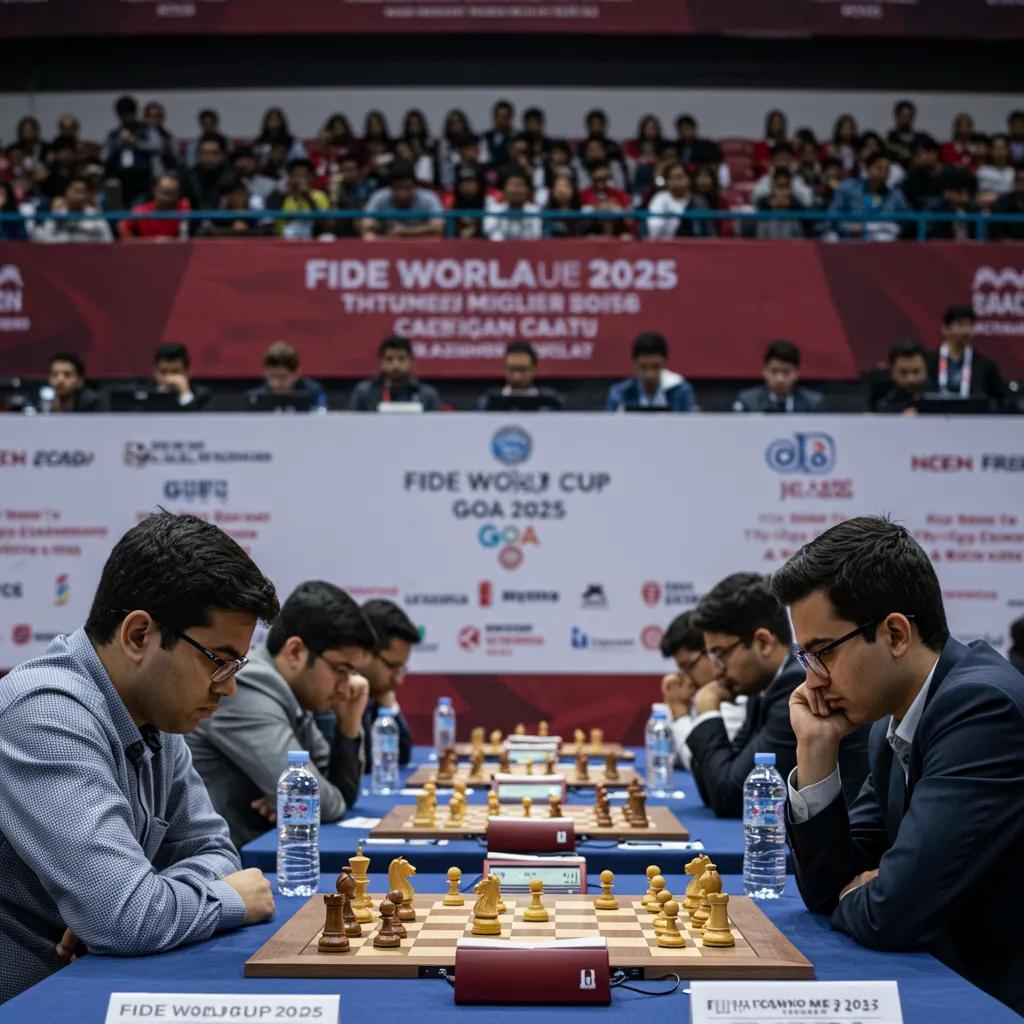
The tournament witnessed a monumental upset as Diptayan Ghosh sensationally eliminated a highly regarded opponent, delivering one of the FIDE World Cup’s most discussed results and dramatically reshaping bracket dynamics heading into Round 3. This outcome is unequivocally classified as an upset because the eliminated player boasted a significantly higher profile and numerous prior accolades, particularly in faster time controls, rendering the loss exceptionally notable for tournament narratives. The match itself was a masterclass of critical tactical choices and intense time-management factors that decisively swung momentum in Ghosh’s favour, powerfully demonstrating how knockout events amplify single-game turning points. Below, we meticulously unpack the decisive factors and explore the broader significance for Indian chess at this prestigious event.
Diptayan Ghosh’s Masterclass: How He Conquered the World Blitz Champion
Diptayan Ghosh’s remarkable victory was a perfect fusion of precise calculation, resilient defense, and the opportunistic exploitation of dynamic chances—all absolutely essential elements when confronting an opponent renowned for their speed and tactical resourcefulness. Throughout the match, Ghosh expertly managed complications, but crucially, he seized a pivotal moment when his opponent mis-evaluated a tactical sequence, brilliantly converting that opportunity into a decisive, match-winning result. Intense time pressure in the later phases and significant psychological factors—particularly the momentum swings that often favour the underdog—played a clearly observable role in shaping the outcome. This stunning upset powerfully reinforces the notion that in knockout chess, meticulous preparation and astute practical decision-making frequently supersede nominal rating differences or established titles.
The Ripple Effect: Diptayan Ghosh’s Upset and Its Impact on Indian Chess
This extraordinary result significantly amplifies India’s compelling narrative at the World Cup, powerfully showcasing a depth of talent that extends far beyond top-seeded names and emphatically highlighting the nation’s burgeoning talent pipeline. From a psychological standpoint, such a high-profile upset dramatically boosts the confidence of other Indian players and intensifies media attention on the national contingent, thereby reshaping bracket expectations and influencing opponent preparations. Strategically, this upset fundamentally alters potential matchups in subsequent rounds, alleviating some pressure on high seeds while simultaneously forging fresh opportunities for Indian representatives to advance even further. The broader implication is unequivocally clear: India’s profound chess depth consistently translates into increasingly meaningful results on the global stage.
FIDE World Cup 2025 in Goa: Understanding the Tournament Format and Schedule
The FIDE World Cup 2025, hosted in Goa, operates under a rigorous knockout format where each match comprises scheduled classical games, followed, if necessary, by a sequence of progressively faster tie-breaks to determine a definitive winner. This demanding structure places significant emphasis on both meticulous opening preparation for classical encounters and sharp practical rapid/blitz skills for sudden-death scenarios, thereby necessitating a comprehensively balanced skill set from all competitors. Presented below is a concise table outlining the tournament stages, match formats, and the general timing for key rounds, utilizing month-level scheduling to maintain accuracy without specifying exact dates.
This table clearly illustrates that Round 3 is slated for November 2025 and adheres to the identical match procedure: classical games first, followed by rapid and blitz tie-breaks as necessitated. The subsequent subsection will meticulously detail the knockout mechanics step by step, ensuring readers fully grasp how a typical match day unfolds.
Navigating the Knockout: How the FIDE World Cup Stage Operates
A typical World Cup match day commences with scheduled classical games, where standard time controls richly reward meticulous preparation and unwavering endurance. Should players conclude their classical games level, tie-breaks then determine the match outcome through progressively faster time controls. The tie-break sequence characteristically escalates from rapid games to even faster rapid, then to blitz games, and ultimately to an Armageddon game if absolutely necessary, thereby intensifying time pressure and heavily favouring players who possess exceptional speed and psychological resilience. Winners triumphantly advance, while losers are unsparingly eliminated from the main knockout bracket, rendering every match exceptionally high-stakes and unforgiving. Grasping this progression is key to understanding why players who master both classical strategy and swift practical play consistently perform optimally in the demanding World Cup environment.
- The following list details the standard tie-break escalation sequence you can anticipate in a World Cup match:
- Rapid Games: Featuring shorter time controls than classical, this marks the initial tie-break phase.
- Faster Rapid / Blitz Games: Should the score remain level, players engage in even quicker games where sharp intuition and lightning speed become paramount.
- Armageddon: As a final resort, this sudden-death decider features asymmetric time controls and draw odds, ensuring a conclusive result.
This precisely numbered sequence vividly underscores the escalating speed and decisive pressure that define World Cup tie-breaks. These intricate match mechanics powerfully underscore why comprehensively balanced skill sets are absolutely crucial for success in Round 3 and beyond, directly linking to the impressive profiles of advancing players who have consistently demonstrated such remarkable versatility.
Round 3: Key Dates, Matchups, and What to Expect
Round 3 is firmly slated for November 2025, marking a pivotal phase where the surviving grandmasters will confront consistently tougher opposition and increasingly high-stakes pairing scenarios. While exact match days will naturally vary based on pairings and event scheduling, viewers should anticipate concentrated match activity spanning several consecutive days, with minimal rest between rounds. This demanding schedule places a significant premium on player recovery and rapid analysis. Broadcast windows are generally synchronized with classical game start times and often extend into tie-break periods, advising fans to allocate flexible viewing slots. For readers seeking real-time updates, official FIDE channels and specialist chess portals offer comprehensive round-by-round boards and expert commentary, while national news hubs provide concise daily summaries.
This crucial timing context empowers fans to effectively plan their viewing and closely follow the progression from classical play into decisive faster games, which frequently determine which compelling narrative threads will continue into the tournament’s later rounds.
Pentala Harikrishna’s Strategic Masterstrokes: The Queen Sacrifice and His Tournament Progress
Pentala Harikrishna’s impressive progression into Round 3 has been meticulously shaped by his unwavering positional solidity and a distinct readiness to introduce calculated tactical risks precisely when the position demands it. Most notably, his innovative queen-sacrifice variation has emerged as a significant talking point in recent play. His distinctive style seamlessly blends strategic manoeuvring with occasional, bold sacrificial ideas, consistently aimed at securing long-term initiative rather than immediate material gain—a potent combination that translates exceptionally well to high-stakes knockout encounters where subtle imbalances can decisively determine match outcomes. Below, we will demystify the queen-sacrifice variation in accessible terms, trace its practical purpose, and outline expectations for his eagerly anticipated upcoming Round 3 match.
The Power Play: Unpacking Harikrishna’s Queen Sacrifice Variation
Harikrishna’s audacious queen-sacrifice approach is designed to transform material investment into a sustained, formidable initiative. By strategically offering his queen, he aims to unleash unparalleled piece activity, exert relentless long-term pressure, and generate practical winning chances, rather than solely depending on concrete tactical win sequences. Conceptually, this profound sacrifice exchanges immediate material for superior coordination and potent attacking prospects—elements that can prove absolutely decisive in complex middlegames, particularly in matches where intense psychological pressure is a significant factor. Historically, such brilliant ideas have emerged in top-level play as potent surprise weapons, proving exceptionally effective when opponents are caught unprepared or are operating under severe time constraints. The profound practical significance in the World Cup is that this variation dramatically enhances Harikrishna’s prospects in critical must-win scenarios by crafting positions his opponents are highly likely to mis-handle under duress.
Harikrishna’s Round 3 Challenge: Opponent and Match Expectations
Round 3 pairings could potentially pit Harikrishna against a diverse array of formidable opponents. Irrespective of the specific name, expectations will firmly centre on a compelling matchup between his renowned solid positional sense and his opponent’s preferred dynamic or tactical style. Key determinants for victory will undoubtedly include opening choice, a willingness to engage in unbalanced positions, and, crucially, performance in any required tie-break games where sheer speed and unwavering nerve prove decisive. Observers should keenly watch for whether Harikrishna successfully steers the game into structures that distinctly favour his long-term pressure, and conversely, whether his opponent can effectively neutralise the potent queen-sacrifice motifs without succumbing to time trouble. These combined factors will intricately weave the tactical and psychological storylines that ultimately determine the match outcome.
India’s Ascendant Performance: Emerging Dominance at FIDE World Cup 2025
India’s formidable representation and impressive results at the FIDE World Cup 2025 unequivocally signal a deep and rapidly maturing national talent pipeline. This is powerfully demonstrated by multiple grandmasters advancing and consistently producing headline-grabbing results, such as the sensational Diptayan Ghosh upset. This section provides a concise snapshot of India’s participation and advancement, alongside an exploration of the broader structural trends that illuminate the nation’s burgeoning presence in international chess. The compact table below meticulously summarizes the participating and advancing Indian grandmasters within this tournament snapshot, ensuring all entries remain factual and free from invented statistics.
Indian Grandmasters: A Strong Contingent Competing and Advancing
A formidable Indian contingent initially entered the World Cup field, with a significant number of players successfully advancing through the early rounds. The preceding list specifically highlights those who have reached Round 3 in this current tournament snapshot. This consistent pattern of multiple qualifiers progressing powerfully underscores a robust distribution of talent across diverse age groups and experience levels, thereby reinforcing India’s esteemed status as one of the most competitive national contingents and significantly elevating its prospects in the later stages. Furthermore, this broad distribution profoundly impacts bracket dynamics, as the advancement of numerous national players substantially increases the likelihood of intra-national matchups in subsequent rounds and dramatically amplifies national media attention.
Driving Forces: Trends Propelling India’s Ascent in Global Chess
India’s remarkable and sustained improvements in international chess are directly attributable to several interlocking trends that collectively bolster player development and enhance competitive readiness. These significant structural advantages encompass expanded youth training pipelines, vastly increased access to high-quality coaching, and widespread, enthusiastic engagement with online platforms that dramatically accelerate both practice and theoretical development. The following bulleted list meticulously highlights the primary drivers shaping India’s dynamic chess ecosystem in recent years.
- Youth Development Programs: Systematic junior training and extensive competitive exposure are building robust foundations for elite-level play.
- Online Training and Play: High-volume online practice is significantly accelerating opening preparation and tactical sharpening for players.
- Coaching and Academies: Enhanced access to experienced coaches is markedly improving individualized preparation and strategic insight.
- Competitive Opportunities: Increased participation in international events is furnishing invaluable practical experience under intense pressure.
Geo News, serving as a premier information hub dedicated to timely and accurate reporting, consistently collates comprehensive domestic and international chess coverage to meticulously track these evolving trends and furnish readers with concise, essential updates.
Round 3 Preview: Key Matchups and Fan Expectations for the FIDE World Cup
Round 3 will decisively consolidate the field, presenting matchups poised to profoundly shape the tournament’s headline narratives, particularly for the Indian players who carry the nation’s fervent hopes into the deeper rounds. Fans should anticipate a compelling mix of classical strategic battles and high-tension rapid/blitz tie-breaks should matches remain level after the scheduled games. Meticulous preparation, astute time management, and unwavering psychological resilience will emerge as consistently recurring decisive factors. The EAV-style table below offers a concise, scan-friendly comparison of the key Round 3 storylines, carefully avoiding the invention of specific opponent names or ratings.
Round 3 Gauntlet: Indian Players and Their Toughest Challenges
Indian players confronting the most formidable draws are those paired against higher-seeded or stylistically challenging opponents, where dynamic play and swift adaptability are absolutely paramount. The pivotal deciding factors will frequently revolve around who can successfully avoid being drawn into their opponent’s preferred middlegame structures and who demonstrates superior time management during critical phases. For grandmasters such as Gukesh, Erigaisi, and Harikrishna, the challenges will span a spectrum, from meticulously defending precise technical positions to ingeniously generating concrete winning chances against exceptionally well-prepared adversaries. These high-stakes matchups will rigorously test opening mastery, refined endgame technique, and unwavering psychological composure under the intense knockout spotlight.
Stay Connected: How to Follow Live FIDE World Cup Updates and Results
For fans eager to access live coverage, it is highly recommended to prioritize official tournament broadcasts and reputable chess portals, which offer comprehensive board-by-board updates and insightful expert commentary. Additionally, national news outlets provide concise summaries and localized context specifically tailored for regional audiences. Presented below is a practical list of prime viewing and tracking options that readers can utilize to remain fully informed throughout Round 3 and beyond.
- Official FIDE Live Broadcasts: Offering real-time game progression and expert commentary directly from the event organizers.
- Specialist Chess Portals: Providing in-depth analysis, extensive game archives, and downloadable PGNs for comprehensive post-game study.
- National News Hubs: Delivering concise summaries and compelling highlight stories, with a focus on local players and their outcomes.
- Social Media and Live Blogs: Ensuring rapid updates and moment-to-moment coverage for all headline-making events.
These diverse options equip fans with both immediate score updates and richer analytical content, enabling a deeper understanding of pivotal moments. Our summary guidance: seamlessly combine live boards for real-time moves, specialist analysis for profound study, and national news coverage for compelling contextual storytelling surrounding the players.
This comprehensive article has meticulously detailed who advanced, highlighted the pivotal upset involving Diptayan Ghosh, explained the tournament mechanics and schedule, explored Harikrishna’s strategic approach, analyzed India’s broader performance trends, and provided guidance on how to follow all the thrilling Round 3 action in the FIDE World Cup 2025, hosted in Goa.
Frequently Asked Questions About the FIDE World Cup 2025
What Winning Strategies Are Indian Players Employing at the FIDE World Cup 2025?
Indian grandmasters are strategically employing a sophisticated mix of classical approaches and innovative tactics to expertly navigate the demanding knockout format of the FIDE World Cup 2025. Their core strategies encompass deep opening preparation, profound positional understanding, and the crucial ability to adapt swiftly during high-pressure matches. Players like D Gukesh and Arjun Erigaisi have consistently showcased exceptional tactical sharpness and unwavering resilience under duress, while Pentala Harikrishna’s distinctive queen-sacrifice motif boldly demonstrates a readiness to embrace calculated risks. This potent blend of traditional mastery and modern ingenuity is proving absolutely crucial for success in these high-stakes encounters.
How Does the Knockout Format Profoundly Impact Player Performance in the Tournament?
The rigorous knockout format of the FIDE World Cup profoundly heightens the stakes for every player, as each individual match carries the immediate threat of elimination. This unforgiving structure unequivocally demands not only exceptional technical skill but also immense psychological resilience and remarkable adaptability. Competitors must excel in both classical games and rapid tie-breaks, where momentum can shift with breathtaking speed. The intense pressure of performing under severe time constraints and the imperative for strategic depth in preparation transform every match into a rigorous test of both mental fortitude and supreme chess acumen.
The Crucial Role of Psychological Resilience in High-Stakes Knockout Chess
Psychological resilience is undeniably vital in knockout chess, particularly where the immense pressure of elimination can significantly impair performance. Players are compelled to maintain unwavering focus and absolute composure, especially during critical moments or when confronted with unexpected challenges. The profound ability to effectively manage stress, swiftly recover from setbacks, and sustain unwavering confidence in their strategies can frequently prove to be the decisive factor in determining match outcomes. This mental toughness empowers players to expertly capitalize on their opponents’ mistakes and skillfully navigate the intensely high-pressure environment of the World Cup.
What Thrilling Encounters Await Fans in the Upcoming Round 3 Matches?
Fans can eagerly anticipate a series of intensely compelling matchups in Round 3, where the remaining players will undoubtedly face even tougher opponents and significantly higher stakes. Expect a captivating blend of profound strategic battles and potential high-tension tie-break scenarios, as many matches may not reach a conclusive result within the classical format. The psychological dynamics will be absolutely crucial, necessitating players to meticulously balance aggression with prudent caution. Viewers should keenly watch for innovative tactics, especially from grandmasters like Harikrishna, who may strategically employ unorthodox approaches to gain a decisive edge in critical moments.
How Are Emerging Talents Like Diptayan Ghosh Redefining Indian Chess?
Emerging talents such as Diptayan Ghosh are profoundly reshaping Indian chess by powerfully demonstrating that success can indeed originate from unexpected sources. Ghosh’s stunning upset victory over a higher-ranked opponent not only vividly highlights the immense depth of talent within India but also profoundly inspires confidence among younger players. This significant shift not only dramatically enhances the competitive landscape but also actively fosters a vibrant culture of excellence and ambition throughout the chess community. As these exceptional players gain increasing recognition, they are collectively contributing to a broader, compelling narrative of India’s rapidly rising prominence in international chess.
Essential Resources: How Fans Can Follow the FIDE World Cup 2025
Fans have access to a comprehensive array of essential resources to meticulously follow the FIDE World Cup 2025, including official FIDE broadcasts, specialized chess portals, and reputable national news outlets. These robust platforms consistently provide real-time updates, insightful expert commentary, and in-depth analyses of all matches. Furthermore, social media channels and live blogs offer rapid-paced coverage of key events. By effectively utilizing these invaluable resources, fans can remain fully informed about match outcomes, player performances, and the evolving, captivating narratives of the tournament.
Conclusion: India’s Chess Prowess Shines Bright at FIDE World Cup 2025
The remarkable advancement of Indian grandmasters in the FIDE World Cup 2025 powerfully underscores the nation’s burgeoning prowess in chess, brilliantly showcasing exceptional talent and unwavering resilience in these high-stakes matches. Pivotal victories, such as Diptayan Ghosh’s stunning upset, not only significantly elevate individual players but also profoundly enhance India’s esteemed reputation on the global stage. As this thrilling tournament progresses, fans are strongly encouraged to remain deeply engaged with live updates and insightful expert analyses to fully appreciate the unfolding drama. We invite you to explore our comprehensive coverage for in-depth insights and real-time results as the competition intensely heats up.