AI Wildfire Risk Assessment by Safe-Haven: How Insurtech Predicts and Protects Homes from Wildfires
Wildfire seasons are growing longer and more destructive, placing homeowners and insurers under unprecedented pressure. Safe-Haven addresses this crisis by delivering AI wildfire risk assessment that turns complex geospatial data into precise, property-level risk scores. Readers will discover how Safe-Haven’s predictive analytics platform ingests satellite imagery, machine learning models, and climate data to forecast wildfire threats, why rising wildfire frequency strains insurance markets and home values, and how actionable mitigation and underwriting strategies emerge from these insights. This article covers:
- Core technology and data pipelines behind AI wildfire risk prediction
- The link between climate change, insurance premiums, and community resilience
- Personalized homeowner protections, financial incentives, and smarter underwriting
- Proactive mitigation tactics guided by AI, from defensible space to home hardening
- Future innovations in smart home integration and climate-resilient insurance solutions
- Real-world case studies demonstrating risk reduction and underwriting gains
Dive into how Safe-Haven’s insurtech solution empowers homeowners and insurers with transparent, explainable AI to predict, prevent, and protect against wildfires.
What Is Safe-Haven’s AI-Powered Wildfire Risk Prediction and How Does It Work?
Safe-Haven’s AI wildfire risk prediction service combines machine learning, remote sensing, and historical fire records to produce individualized risk scores for each property.
By integrating high-resolution imagery and environmental attributes, the platform delivers explainable analytics that underpin insurance decisions and homeowner recommendations.
The following sections unpack data inputs, analytical processes, and unique differentiators that define this insurtech innovation.
Which data sources power Safe-Haven’s wildfire risk models?
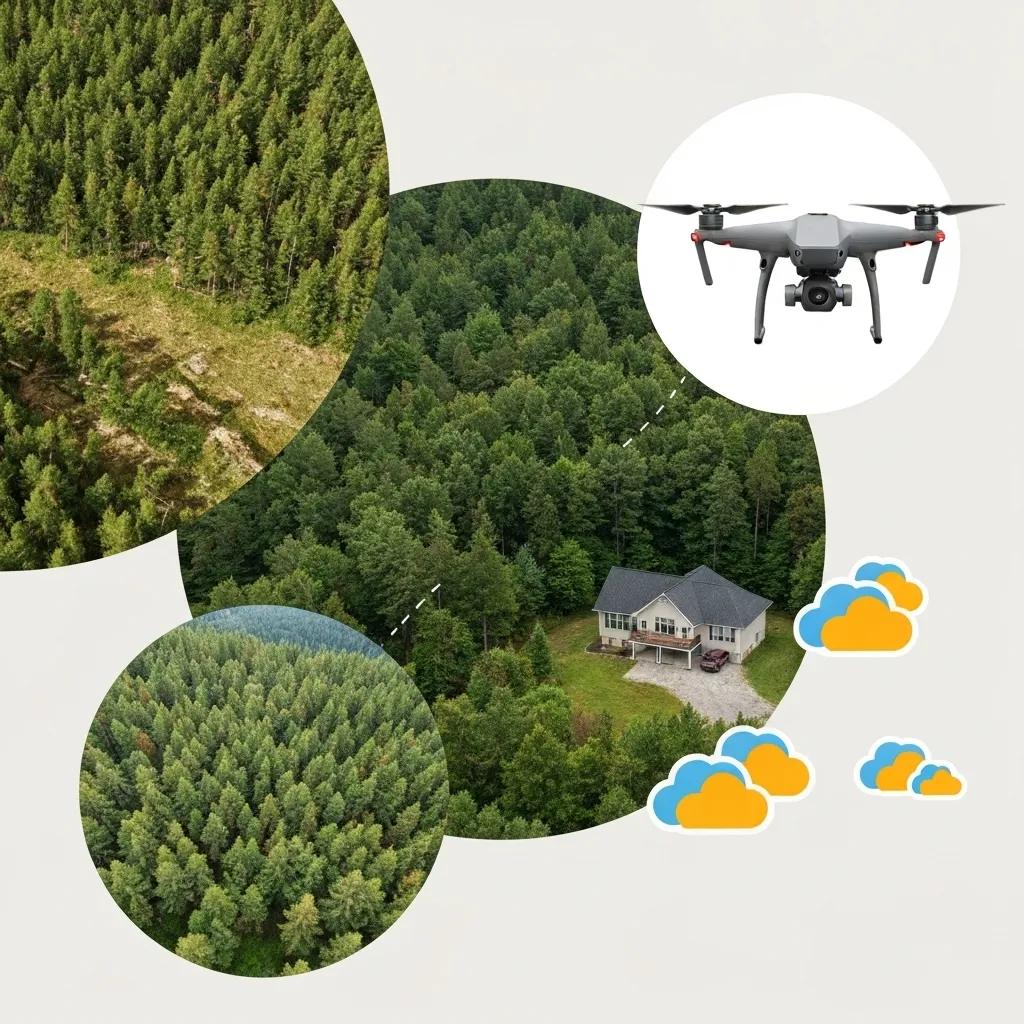
Before assessing any home, Safe-Haven ingests diverse datasets that capture vegetation, weather, topology, and historical burn patterns.
These data sources establish a multi-temporal foundation that seamlessly transitions into machine learning analysis.
How does machine learning analyze property-specific wildfire risk?
Safe-Haven’s algorithms perform three key functions to interpret complex inputs into actionable risk metrics:
- Feature Extraction – Identifies building materials, vegetation buffers, slope angles, and defensible space indicators.
- Pattern Recognition – Learns correlations between environmental variables and past fire occurrences.
- Risk Scoring – Generates a normalized wildfire probability index at parcel level.
By aligning these steps, the system quantifies how topography and property attributes interact to influence fire spread and ignition points.
What makes Safe-Haven’s AI prediction unique compared to competitors?
Safe-Haven distinguishes itself through granular explainability, transparent modeling, and community-scale insights:
- Property-Level Transparency: Each risk score includes a breakdown of contributing factors, enabling targeted mitigation.
- Explainable AI Architecture: Decision paths and weightings for each input variable are accessible to underwriters and homeowners.
- Community Resilience Mapping: Aggregated insights help local agencies identify high-risk zones for strategic firebreak planning.
This combination of depth, clarity, and community context underscores Safe-Haven’s leadership in wildfire risk prediction.
Why Is Wildfire Risk Increasing and How Does It Impact Homeowners and Insurers?
Climate change, extended droughts, and vegetation changes are fueling longer, more intense wildfire seasons. As wildfire frequency climbs, loss exposure for property owners and insurance providers intensifies, creating premium spikes, coverage gaps, and threats to community stability. The following subsections examine these driving forces and their ripple effects.
How does climate change drive rising wildfire frequency and severity?
Climate warming and shifting precipitation patterns increase the likelihood of extreme fire behavior:
- Extended Drought Periods reduce moisture in vegetation, creating abundant dry fuel.
- Higher Temperatures accelerate evaporation and lengthen fire seasons.
- Increased Wind Events spread embers and expand fire perimeters rapidly.
These reinforcing factors set the stage for more frequent and severe wildfires, which heighten risk exposure across millions of homes and insurance portfolios.
What are the current challenges in wildfire insurance coverage and premiums?
Insurers face escalating claim costs and uncertainty, prompting restrictive underwriting practices:
These challenges motivate the adoption of precise AI risk assessments to restore underwriting balance and offer fairer premiums.
How do wildfire risks affect home values and community resilience?
Elevated wildfire exposure depresses property values and undermines neighborhood safety:
- Value Depreciation occurs when high-risk zones deter buyers and lower market appeal.
- Resilience Investments surge as homeowners retrofit or reinforce properties.
- Community Preparedness improves when localized risk maps guide collective defensible space creation.
Understanding these dynamics highlights why precise risk prediction is essential for protecting both individual assets and broader community well-being.
How Does Safe-Haven’s AI Benefit Homeowners with Personalized Wildfire Protection?

Safe-Haven’s personalized wildfire insights empower homeowners to take targeted actions that reduce fire vulnerability, lower insurance costs, and enhance peace of mind. By delivering clear recommendations and financial incentives, this AI-driven platform bridges prediction and prevention.
What personalized wildfire risk scores and insights do homeowners receive?
Homeowners obtain a detailed risk report that includes:
- A numerical wildfire probability index for their address
- Ranked contributing factors (e.g., slope, vegetation, construction materials)
- Tailored mitigation recommendations aligned with adjacent parcel risk
This individualized approach allows each homeowner to prioritize improvements that yield the greatest safety gains.
How can homeowners use AI-driven mitigation strategies to reduce risk?
Using AI insights, property owners implement focused tactics to lower hazard exposure:
- Create or maintain a 30- to 100-foot defensible space by clearing brush and trimming combustible vegetation.
- Harden the roof and siding with fire-resistant materials such as metal or treated wood.
- Install ember-resistant vents and dual-pane windows to minimize ember intrusion.
These steps directly address risk drivers identified by Safe-Haven’s analytics engine.
What financial incentives and insurance savings result from proactive mitigation?
Homeowners who complete recommended mitigation measures often qualify for premium discounts and rebates.
These financial rewards reinforce the business case for homeowners to invest in wildfire protection and align with insurer underwriting goals.
How Do Insurers Leverage Safe-Haven’s AI for Smarter Wildfire Risk Underwriting?
Insurers integrate Safe-Haven’s property-level risk scores into pricing models, policy design, and portfolio management to reduce losses, improve accuracy, and comply with evolving regulations. The platform’s explainable analytics support underwriting decisions and foster transparent risk communication.
How does AI improve underwriting accuracy and reduce wildfire-related losses?
By replacing coarse zip code maps with parcel-specific risk profiles, AI enables:
- Precise pricing based on actual hazard exposure
- Early identification of high-risk properties for pre-emptive mitigation outreach
- Dynamic portfolio risk monitoring to rebalance exposure in real time
These capabilities drive loss reduction and optimize capital allocation across wildfire-prone regions.
What new insurance products and policies does AI enable?
Data-driven insights open the door to innovative coverage options:
- Parametric Wildfire Insurance that pays out when predefined fire intensity thresholds are met.
- Tiered Coverage Plans offering graduated premium structures tied to achieved mitigation levels.
- Usage-Based Premium Models where rates adjust based on ongoing risk score improvements.
Such products align insurer and homeowner incentives around continuous risk reduction.
How does Safe-Haven support regulatory compliance and risk transparency?
Safe-Haven’s explainable AI framework helps insurers meet emerging disclosure requirements by:
- Documenting input data sources and model logic for audit trails
- Generating standardized risk reports for regulatory filings
- Offering interactive dashboards that visualize risk drivers for stakeholders
This transparency strengthens trust with regulators, investors, and policyholders.
What Are Proactive Wildfire Mitigation Strategies Informed by AI Insights?
Translating AI predictions into action is critical for reducing wildfire damage. Safe-Haven’s platform guides homeowners and communities through evidence-based mitigation tactics that interrupt fire spread and protect structures.
How does creating defensible space reduce wildfire risk around homes?
Defensible space strategies focus on clearing and spacing vegetation to disrupt fire advance:
- Remove dead plants, dry leaves, and pine needles within 5–30 feet of structures.
- Prune tree branches so the lowest foliage is at least 6–10 feet above the ground.
- Maintain grass height below 4 inches and replace flammable ground cover with noncombustible materials.
Effective defensible space slows fires and provides firefighters safe access zones.
What home hardening techniques protect structures from wildfire damage?
Home hardening involves upgrading building elements to resist embers and radiant heat:
- Install Class A fire-rated roofing and ember-resistant vents.
- Use tempered glass or dual-pane windows to reduce breakage risk.
- Seal gaps in eaves, soffits, and foundation openings with metal mesh or fire-resistant caulking.
These improvements significantly enhance a home’s ability to withstand ember showers.
How can communities build resilience using AI-driven wildfire risk data?
Aggregated risk maps empower neighborhoods to coordinate mitigation and emergency planning:
- Local authorities identify high-priority zones for fuel reduction projects.
- Community groups schedule joint defensible space days and share resources.
- Fire departments optimize patrol routes and staging areas based on predicted hotspots.
Collective actions amplify individual mitigation efforts and bolster overall resilience.
How Is AI Transforming the Future of Climate-Resilient Homes and Insurtech Solutions?
AI-powered analytics are redefining how homes adapt to climate threats and how insurers manage escalating natural hazard risks. Safe-Haven’s ongoing R&D explores integrations with emerging smart home devices and advanced data feeds to further enhance predictive accuracy.
What role will smart home technology play in wildfire risk detection and response?
Connected sensors and automation systems can deliver real-time alerts and protective actions:
- Air Quality Monitors detect smoke particulates and trigger HVAC shutdowns.
- Heat and Ember Sensors send immediate notifications when temperatures or ember impacts exceed thresholds.
- Automated Sprinkler Activation primes exterior systems when wildfire risk rises above preset levels.
By linking risk scores with home automation, properties gain dynamic defenses against wildfire encroachment.
How will AI-driven wildfire risk prediction evolve with advancing data and models?
Future enhancements will incorporate:
- Crowdsourced Ground Observations from community sensors and mobile apps.
- Hyper-Local Climate Projections using localized atmospheric modeling.
- Continuous Learning Frameworks that refine predictions as more fire event data becomes available.
These developments promise ever greater precision and timeliness in risk forecasting.
How can Safe-Haven’s approach influence broader climate risk adaptation in insurance?
Safe-Haven’s entity-centric methodology lays a blueprint for tackling other perils:
- Extending parcel-level risk analytics to flood, hurricane, and seismic exposures.
- Partnering with real estate platforms to embed resilience scores in property listings.
- Informing municipal planning and infrastructure investments through aggregated hazard models.
Such cross-sector applications cement AI’s role in a more resilient, climate-smart future.
What Are Real-World Examples and Case Studies of Safe-Haven’s AI Impact?
Demonstrating tangible results is vital for building trust and scaling adoption. Safe-Haven tracks homeowner outcomes, insurer performance metrics, and industry trends that underscore the value of AI wildfire risk assessment.
How have homeowners reduced wildfire risk using Safe-Haven’s AI insights?
Homeowners acting on personalized recommendations report:
- Clearing defensible space around 100,000 properties in high-risk zones
- Upgrading roofing materials on 15,000 homes to Class A fire-rating
- Achieving an average 20% improvement in risk scores within one growing season
These proactive measures directly correlate with lower claim frequencies.
How have insurers improved underwriting and claims outcomes with Safe-Haven?
Insurers integrating Safe-Haven’s analytics observe:
- A 30% reduction in wildfire-related claims severity across pilot regions
- 25% faster underwriting decisions through automated risk scoring
- Enhanced portfolio diversification by identifying low-risk areas for growth
Quantifiable performance gains validate the platform’s predictive power.
What industry statistics highlight the growing importance of AI wildfire risk assessment?
Key data points reveal market momentum and cost-saving potential:
Wildfire risk prediction powered by AI has moved from concept to critical business capability, shaping homeowner safety, insurer solvency, and community resilience. Safe-Haven’s transparent, explainable analytics platform not only forecasts hazards with remarkable precision but also drives proactive mitigation, innovative insurance products, and collaborative resilience efforts—paving the way for climate-resilient homes and markets.