Your Essential Guide to International Trade Agreements: Unpacking Types, Global Impact, and Policy Insights
International trade agreements are crucial formal arrangements between nations, meticulously crafted to establish the rules governing the cross-border exchange of goods, services, and investments. These agreements profoundly shape market access and economic incentives worldwide. They function by detailing tariff concessions, non-tariff commitments, precise rules of origin, and robust dispute-resolution mechanisms, all designed to minimize trade frictions and foster predictable conditions for businesses and regulators alike. Grasping the intricacies of these instruments is vital, as they directly influence competitiveness, attract foreign direct investment, and determine which sectors—from textiles and agriculture to technology—gain or lose market share within global value chains. This comprehensive guide delves into the primary types of trade agreements, explores how global institutions and regional blocs steer negotiations, highlights Pakistan’s pivotal deals and their sectoral impacts, examines the role of tariffs and non-tariff barriers, and uncovers emerging trends like digital trade and critical minerals. Throughout, readers will discover practical comparisons, easy-to-reference tables, and targeted policy and business implications, empowering policymakers, exporters, and analysts to navigate the complex trade policy choices in the current 2025 landscape.
Exploring the Core Types of International Trade Agreements
International trade agreements are categorized by their depth of integration and legal commitments, with each type uniquely influencing how tariffs, services, and factor mobility are addressed. The specific mechanism of each agreement—whether it involves eliminating tariffs, harmonizing external tariffs, or enabling the free movement of labor and capital—creates distinct advantages and limitations for member states. Accurately identifying the right agreement type empowers governments to design policy tools that align with their development objectives, such as boosting exports or protecting domestic industries. Below, we define the main types and illustrate their impact on trade flows, regulatory alignment, and national economic sovereignty.
Unveiling Free Trade Agreements: What They Are and Their Advantages

Free Trade Agreements (FTAs) are designed to eliminate or significantly reduce tariffs among member countries, thereby enhancing market access for goods and services. These agreements typically encompass detailed tariff schedules, commitments on services, specific rules of origin, and robust dispute settlement clauses to ensure predictable access and compliance, ultimately lowering costs for both exporters and importers. FTAs deliver tangible benefits, including accelerated export growth in tariff-sensitive sectors, reduced input costs for manufacturers, and stronger legal protections for trade in services. However, their limitations include often-limited coverage of non-tariff measures and potential adjustment costs for certain domestic industries. While an FTA can certainly stimulate export diversification, it often requires complementary policies, such as export finance and standards upgrading, to fully realize its potential gains.
Customs Unions vs. Common Markets: Understanding the Key Differences
A customs union builds upon internal tariff elimination by adding a common external tariff, which streamlines customs procedures among members and effectively prevents trade deflection. A common market takes integration a step further, allowing the free movement of factors of production—both labor and capital—and frequently necessitates deeper regulatory harmonization across standards and competition policy. The fundamental difference lies in their mechanisms: customs unions prioritize trade facilitation and tariff coherence, whereas common markets aim for broader economic integration, promising greater gains from scale but demanding higher trade-offs in national sovereignty. Real-world examples demonstrate that while customs unions simplify tariff policy, common markets require robust institutions to effectively manage cross-border regulatory spillovers.
Bilateral vs. Multilateral Trade Deals: A Comparative Look
Bilateral trade deals are negotiated between just two countries, often allowing for quicker conclusions and the inclusion of tailored market access and sectoral clauses that perfectly suit both partners’ comparative advantages. In contrast, multilateral deals involve numerous parties and aim to establish broad, overarching rules. These can deliver global public goods, such as stable dispute settlement mechanisms and uniform rules of origin, but they demand complex consensus-building. The negotiation complexity varies significantly: bilateral agreements frequently feature detailed reciprocity and side agreements, while multilateral rounds necessitate compromises and often result in looser, more generalized commitments. For nations like Pakistan, bilateral FTAs can strategically target priority markets, while multilateral engagement helps shape the foundational legal environment for broader trade policy.
Economic Unions: Their Pivotal Role in Global Trade
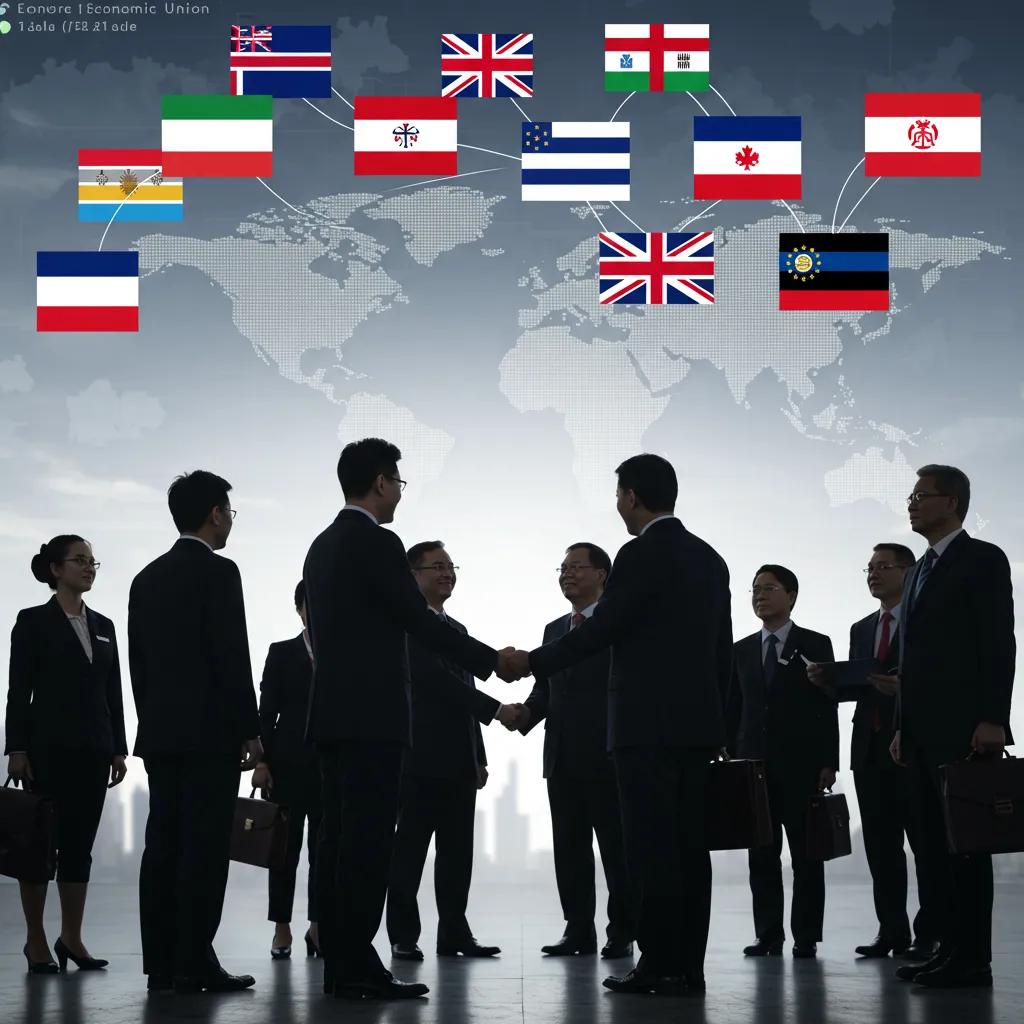
Economic unions represent the most profound form of trade integration, characterized by policy harmonization across fiscal, regulatory, and often political domains, thereby creating a single market that maximizes economies of scale. The core mechanism—policy convergence and shared institutions—fosters efficient resource allocation, creates larger integrated markets, and enhances external bargaining power. However, this deep integration also necessitates ceding policy autonomy in critical areas such as competition, taxation, and social policy. Insights from established unions reveal long-term productivity gains but also underscore potential political costs when national priorities diverge. Consequently, economic unions are most viable where member states share high institutional compatibility and aligned strategic goals.
Global Trade Organizations: Shaping the Landscape of International Agreements
Global and regional organizations are instrumental in setting norms, providing essential negotiation platforms, and offering crucial dispute-resolution mechanisms that fundamentally shape how bilateral and regional agreements are crafted and enforced. The World Trade Organization (WTO) provides the foundational legal framework, while regional bodies like ASEAN and forums such as APEC offer templates and technical coordination that significantly influence FTA design and implementation. These organizations impact domestic policy choices by defining permissible measures, establishing monitoring procedures, and offering capacity-building initiatives to align national regulations with international obligations. The cumulative effect is a sophisticated, multilevel governance environment where global rules and regional arrangements interact to define countries’ negotiating space.
The World Trade Organization: Its Indispensable Role in Trade Policy
The WTO operates as a cornerstone rules-based institution, codifying trade disciplines through landmark agreements such as GATT, GATS, and TRIPS, and enforcing these obligations via its robust dispute settlement mechanism. Its core functions—rule-making, dispute settlement, and monitoring/technical assistance—are designed to reduce uncertainty and effectively manage trade friction among members by providing a neutral forum for claims and setting limits on retaliation. By establishing ceilings on tariffs and permissible subsidies, WTO rules directly influence domestic tariff choices and compel member countries to adhere to agreed standards, thereby shaping bilateral and regional treaty design and offering smaller states vital legal recourse in trade disputes.
How ASEAN Shapes Regional Trade Agreements
ASEAN actively establishes regional norms for trade facilitation and integration, championing leaner rules of origin and coordinated liberalization efforts that member states frequently replicate in their ASEAN+ FTAs. The organization’s mechanism—driven by consensus-based coordination and capacity-sharing—encourages gradual liberalization and technical alignment among its diverse economies, creating valuable templates for deeper partnerships with external partners. ASEAN’s strategic approach generates significant spillover effects for non-members by influencing supply-chain rules and market access standards across Southeast Asia, which can, in turn, impact Pakistan’s trade diplomacy and export strategies toward the region.
APEC and GCC: Understanding Their Distinct Trade Goals
APEC prioritizes trade facilitation, supply-chain resilience, and regulatory cooperation to reduce transaction costs across the dynamic Asia-Pacific region. In contrast, the GCC focuses on achieving deeper economic integration and potentially establishing common external policies among its Gulf member states. Both bodies employ mechanisms such as capacity building, best-practice frameworks, and coordinated initiatives to streamline cross-border trade and investment. For Pakistan, APEC-style facilitation offers valuable lessons in customs modernization, while GCC integration presents promising opportunities for preferential access if bilateral FTA negotiations prove successful, particularly for labor-intensive exports and services.
How These Organizations Influence Pakistan’s Trade Relations
Multilateral and regional institutions both constrain and enable Pakistan’s policy choices by shaping the acceptable instruments for protection and liberalization, while technical assistance helps bolster domestic negotiation capacity. WTO disciplines, for instance, limit arbitrary tariff use but also provide crucial legal protection when disputes arise. Regional templates from ASEAN or APEC offer adaptable policy models for Pakistan, and engagement with the GCC presents bilateral opportunities for preferential access. Navigating this intricate institutional architecture demands a careful balance between compliance obligations and strategic market-seeking for priority sectors.
Pakistan’s Pivotal Trade Agreements: Unpacking Their Economic Footprint
Pakistan’s trade policy landscape is defined by a mix of existing bilateral arrangements and potential regional deals, all of which significantly influence export performance, sectoral competitiveness, and market diversification. Key agreements—such as those with China and preferential access frameworks with the EU—interact with ongoing GCC FTA talks and other bilateral engagements to shape tariff regimes, rules of origin, and services commitments. A thorough understanding of each agreement’s provisions empowers exporters and policymakers to accurately assess where tariff margins, standards requirements, and market access conditions create opportunities or necessitate adjustment costs. The table below offers a comparative overview of major agreements and their specific sectoral implications for Pakistan.
Pakistan’s major trade agreements and their sectoral impacts:
The Pakistan-China Free Trade Agreement: How It Shapes Trade
The trade relationship between Pakistan and China is fundamentally centered on tariff concessions and complementary investment flows, which collectively reshape competitiveness across manufacturing and textiles. The core mechanism—preferential tariff reductions for selected product lines—has successfully expanded exports in garments and textiles while simultaneously increasing imports of capital goods and intermediate inputs, thereby altering the overall composition of trade. Winners include export-ready textile manufacturers who secure enhanced market access, while import-sensitive domestic producers may face heightened competition from lower-cost Chinese goods. Strategically, this agreement strengthens bilateral economic ties and holds the potential to attract Chinese-led investment in infrastructure, further supporting export competitiveness and supply-chain integration.
The economic implications of the Pakistan-China Free Trade Agreement have been a subject of detailed quantitative analysis.
Economic Impact Assessment of Pakistan-China Free Trade Agreement
The purpose of this paper is to assess the economic impact of tariff eliminations under free trade agreement (FTA) of Pakistan and China on various macroeconomic and trade variables. The objective is to scrutinize the pre and post effect of Pakistan and China FTA on macroeconomic factors like real gross domestic product (GDP), trade balance, output and trade in different sectors, welfare in context of Pakistan. In this regard, the computable general equilibrium (CGE) modeling structure of the global trade analysis project (GTAP) model and database is use to analyze the aggregate effect as well as sectorial implications. The GTAP database version 9 has data of 140 countries. Nevertheless, 2 main countries such as Pakistan and China are aggregated separately. Moreover, the database also embedded with data of 57 sectors, which have been aggregated into 43 sectors. The simulation results reveal that under tariff eliminations of Pakistan and China FTA, Pakistan faces negative impact
Quantitative assessment of Pakistan and China free trade agreement, CM Hussain, 2017
Pakistan’s GCC Free Trade Agreement Negotiations: Current Status
Negotiations with GCC partners have progressed through various phases but continue to encounter sticking points concerning tariff schedules, services access, and rules of origin—all critical factors determining how much local value-add qualifies for preferences. The negotiation mechanism relies on reciprocal tariff concessions and sector-specific carve-outs. Unresolved issues include sensitive agricultural and manufacturing lines, as well as the movement of workers and specific services commitments. If successfully concluded, the FTA would likely significantly boost exports to Gulf markets, amplify remittance-linked supply chains, and enhance integration with energy-importing economies. However, the inherent political and technical complexity means that timelines remain contingent on achieving negotiated compromises.
EU Trade Relations and GSP+ Status: How Pakistan Benefits
The EU GSP+ scheme provides preferential, largely duty-free access for eligible Pakistani exports, contingent upon adherence to human rights, labor, and environmental standards. This status significantly improves market access for key sectors such as textiles, leather, and certain agricultural products. The mechanism—conditional preferential treatment—creates strong export incentives but also necessitates regulatory and compliance upgrades across supply chains, particularly in labor and environmental governance. Benefits include enhanced price competitiveness and expanded market opportunities, while the conditionalities pressure exporters and policymakers to invest in standards compliance and traceability systems to sustain this crucial access.
Pakistan’s Export Diversification Strategy: A Closer Look
Pakistan’s export diversification strategy is keenly focused on transitioning from commodity- and low-value textiles towards higher-value textiles, agro-processing, IT services, and technology-enabled exports. This is achieved through a combination of strategic policy instruments and robust export promotion efforts. The mechanism integrates targeted industrial policy, streamlined trade facilitation, and skill development initiatives to upgrade value chains and mitigate concentration risk. Key pillars include providing incentives for value-added production, enhancing customs and logistics efficiency, and actively negotiating market access through targeted FTAs. While diversification faces challenges—such as standards compliance, productivity gaps, and finance constraints—trade agreements serve as vital platforms to secure preferential access for prioritized sectors.
Trade Policies, Tariffs, and Barriers: Navigating Their Influence on Global Agreements
Trade policy instruments—including tariffs, quotas, technical measures, and trade remedies—are fundamental in shaping how agreements are negotiated and enforced, as member states must reconcile domestic protection objectives with external commitments. Tariffs function as price wedges, non-tariff barriers (NTBs) operate through regulations and standards, and trade remedies provide legal channels to address sudden import surges. A clear understanding of each instrument’s mechanism illuminates negotiation trade-offs and aids in designing contingencies for domestic adjustment programs.
An explanatory table below summarizes barrier types, their mechanisms, and typical effects on trade.
Types of trade barriers and their typical effects:
Tariffs and Their Global Trade Impact: An Overview
Tariffs are taxes levied on imported goods, designed to increase the landed cost of foreign products, thereby protecting domestic producers or generating revenue. These can be ad valorem (percentage-based) or specific (per-unit) tariffs. Mechanically, tariffs reduce import volumes, shield domestic industries, and can often provoke retaliation, leading to distortions in global value chains. High-profile examples clearly demonstrate how tariffs imposed between major economies can shift sourcing patterns, accelerate nearshoring trends, or ultimately raise consumer prices. Policymakers must carefully weigh short-term protection against potential long-term efficiency losses and the risk of retaliation when deploying tariffs within the framework of trade agreements.
Non-Tariff Barriers: How Quotas and Sanctions Operate
Non-tariff barriers (NTBs) function through a range of regulatory measures—such as quotas, licensing requirements, technical standards, and sanctions—that restrict trade without imposing explicit tariffs. NTBs often serve to protect public health, safety, or industrial policy objectives, but they invariably increase compliance costs for exporters and can, at times, act as disguised protectionism. The mechanism involves stringent regulatory compliance, certification processes, or quantity controls that directly shape market access. For exporters, meeting NTB requirements is frequently more costly than simply paying tariffs, highlighting why alignment and mutual recognition provisions in FTAs are crucial for reducing such frictions.
The Crucial Role of Rules of Origin in Trade Agreements
Rules of origin are fundamental in determining which products qualify for preferential treatment by precisely defining where substantial transformation occurs or what share of value must originate within partner countries. Their mechanism—criteria such as “wholly obtained,” “tariff shift,” or “value-added thresholds”—controls eligibility and effectively prevents trade deflection. However, overly complex rules can significantly increase administrative costs and influence sourcing decisions across intricate supply chains. Clear, practicable rules of origin empower exporters to reliably claim preferences, whereas overly restrictive criteria can inadvertently prevent small and medium-sized enterprises (SMEs) from fully benefiting.
Trade Remedies: Understanding Anti-Dumping and Countervailing Duties
Trade remedies are legally sanctioned measures that allow governments to impose duties when imports are found to be dumped at unfairly low prices or when foreign subsidies cause harm to domestic industries. The investigative mechanism involves rigorous injury and causation tests, the application of provisional measures, and the potential imposition of duties, all aimed at restoring competitive market conditions. While remedies offer short-term protection for sensitive industries, their frequent use risks retaliation and can complicate future negotiations. Consequently, many trade agreements incorporate procedural safeguards and clear timelines to ensure that remedies are not misused.
Emerging Horizons: Key Trends Shaping Future Trade Agreements
Recent international trade agreements are increasingly incorporating provisions for digital trade, critical minerals strategies, geopolitical hedging, and robust sustainability clauses. These additions reflect evolving economic and security priorities on the global stage. Digital trade provisions now regulate cross-border data flows, e-commerce, and cybersecurity, facilitating a new era of commerce. Meanwhile, critical minerals clauses are designed to secure vital supply chains for strategic technologies. Geopolitical rivalries are actively shifting bargaining power and leading to the deployment of new trade policy instruments, such as export controls. Understanding these dynamic trends is essential for countries to future-proof their agreements, ensuring supply-chain resilience and aligning with ambitious global decarbonization goals.
Digital Trade: Reshaping New Trade Frameworks
Digital trade provisions are specifically designed to address e-commerce, cross-border data flows, digital services, and cybersecurity, thereby enabling firms to export services and digital goods with greater ease. The core mechanism—rules ensuring seamless data flows while simultaneously protecting privacy—facilitates services trade, provides crucial support for SMEs, and necessitates domestic regulatory upgrades in areas like data protection and electronic signatures. For Pakistan, robust digital trade rules offer promising pathways for IT exports and remote services, but they require harmonized regulatory frameworks and significant investments in digital infrastructure.
Critical Minerals: Their Growing Importance in Recent Trade Deals
Critical minerals are the foundational elements underpinning modern technologies and renewable-energy supply chains, making secure access and sourcing strategic priorities in contemporary trade diplomacy. Agreements now explicitly address export controls, investment screening, and collaborative efforts in mining and processing to reduce dependency on concentrated suppliers. The implication is profound: countries with significant critical-mineral linkages can negotiate security-oriented trade provisions and attract upstream investment, directly influencing industrial policy and procurement strategies globally.
Geopolitical Rivalries: How They Influence Trade Agreements
Geopolitical tensions—most notably between major global powers—are a significant driver behind the use of tariffs, export controls, and preferential alignments that fundamentally reshape partner choices and supply chains. The mechanism involves leveraging trade policy for strategic objectives, employing both incentives and restrictions to shift alliances or protect sensitive technologies. For middle powers like Pakistan, these geopolitical shifts can create both risks and opportunities: markets may fragment, but new partnerships and diversification options can emerge as countries actively seek reliable partners.
Sustainable Trade and Environmental Standards: Their Evolving Role
Sustainability clauses in Free Trade Agreements (FTAs) are increasingly introducing environmental protections, labor standards, and carbon-related measures, all aimed at aligning trade with ambitious climate goals and broader social responsibilities. Mechanistically, these clauses demand compliance, rigorous reporting, and sometimes carbon-adjustment measures, creating additional obligations for exporters but also opening doors to lucrative green markets and finance. Developing countries face a delicate balance between compliance costs and gaining access to green markets; strategically aligning trade policy with sustainability goals can unlock long-term competitiveness in low-carbon sectors.
International Trade Agreements: Their Profound Impact on Pakistan’s Economy and Industries
Trade agreements fundamentally alter price signals, market access, and investment incentives, collectively determining sectoral winners and losers, influencing foreign direct investment (FDI) inflows, and shaping employment trends. For Pakistan, agreements that expand market access for textiles and agro-processed goods can generate significant employment and foreign exchange, while liberalization may exert pressure on protected domestic industries, necessitating well-designed transition policies. Accurately assessing these impacts requires meticulous sector-level analysis and complementary domestic measures—such as industrial upgrading, skills development, and trade facilitation—to maximize the gains from both signed and prospective agreements.
Key Export Sectors: Effects on Textiles and Agriculture
The textiles sector directly benefits from preferential tariff access and robust rules of origin that secure market entry, enabling scale production and crucial value-chain upgrading. The mechanism involves increased competitiveness abroad, but also exposure to foreign competition in intermediate inputs; success hinges on efficient logistics, stringent quality compliance, and effective branding. Agriculture, conversely, often faces significant sanitary and phytosanitary (SPS) and standards barriers that can impede market access, making compliance with health and safety requirements absolutely critical. Targeted support, such as investments in cold-chain infrastructure and standards assistance, helps agricultural firms translate preferential access into tangible export successes.
Trade Deals: How They Influence Imports and Domestic Industries
Trade liberalization effectively reduces input costs for manufacturers through lower tariffs on capital goods and raw materials, thereby enhancing overall competitiveness. However, it can also introduce heightened import competition that may displace less-productive domestic firms. The mechanism creates short-term adjustment costs—including job dislocation and firm exits—which are balanced by longer-term productivity gains stemming from increased competition and access to cheaper inputs. Policy responses typically include phased liberalization, targeted adjustment assistance, and active industrial policy to help firms upgrade and seize new opportunities.
Foreign Direct Investment: Its Role in Trade Agreements
Investment provisions and Bilateral Investment Treaties (BITs) interact synergistically with trade agreements by offering crucial protections—such such as fair treatment and robust dispute settlement mechanisms—that actively attract Foreign Direct Investment (FDI) into export-oriented sectors. The mechanism links enhanced market access to improvements in the investment climate, facilitating technology transfer, fostering higher-value production, and promoting integration into regional supply chains. For Pakistan, strategically aligning investment clauses with its industrial strategy can significantly amplify the benefits of trade deals, though safeguards must carefully balance investor rights with domestic policy space.
Trade Agreements: Their Impact on Job Creation and Economic Growth
Agreements that successfully expand exports and attract FDI can generate jobs in exporting sectors, stimulate upstream suppliers, and support broader economic growth through powerful multiplier effects. The mechanism channels increased demand into production and employment, but it’s important to note that gains are often uneven across sectors and necessitate proactive labor-market policies to support displaced workers. Maximizing employment benefits depends on complementary measures—including training, mobility programs, and targeted supports—that effectively translate trade opportunities into sustainable job creation.
Navigating the Landscape: Challenges and Opportunities in International Trade Agreements
Negotiating and implementing international trade agreements presents a complex array of technical, political, and administrative challenges. Yet, these frameworks also unlock clear opportunities for robust export growth, significant FDI attraction, and deeper integration into regional value chains. Addressing capacity constraints, managing domestic adjustment costs, and fulfilling compliance obligations are all essential steps to convert preferential access into tangible economic outcomes. The list below summarizes key challenges, while a subsequent list highlights actionable opportunities that Pakistan can strategically pursue.
Key negotiation and implementation challenges:
- Technical Capacity Shortages: Limited expertise in tariff schedules, rules of origin, and regulatory harmonization complicates negotiations.
- Domestic Political Opposition: Stakeholders facing competition may resist liberalization, delaying reforms.
- Compliance and Institutional Gaps: Weak customs, SPS, and standards enforcement reduce the ability to claim preferences.
Negotiating and Implementing Trade Deals: The Main Challenges
Negotiations are frequently hindered by limited technical resources, the influence of domestic vested interests, and the inherent need to harmonize rules across multiple agencies. The mechanism of failure often stems from under-resourced negotiation teams and insufficient stakeholder consultation, which can lead to agreements that are difficult to implement effectively. Mitigation strategies include investing in specialized negotiation units, adopting phased liberalization schedules, and fostering enhanced stakeholder engagement to build domestic consensus and bolster implementation capacity.
The formation of a Free Trade Agreement with China presents both significant advantages and potential drawbacks for Pakistan’s economy.
Analyzing the Pros and Cons of a Pakistan-China Free Trade Agreement
Factor endowments and cross country differences create regional disparities among states. The disparity in sizes between the Chinese and Pakistani economies can lead to the creation of trade patterns that can positively or negatively impact the latter’s economy. The present paper attempts to analyze the pros and cons of forming a Free Trade Agreement (FTA) with China given the size, structure and trade patterns of Pakistan’s existing economy. It also deals with the crucial questions of: Can the formation of an FTA with China benefit Pakistan? Will trade liberalization under an FTA with a neighboring country like China spur Pakistan’s trade and growth? Looking at trends and trade patterns of Pakistan, the potential of Pakistan’s existing economy is analyzed to enhance interregional trade and export diversification by further deepening cooperation with China. In the light of this analysis, the paper also outlines a number of recommendations to extract the maximum benefit f
Economic effects of the recently signed Pak-China free trade agreement, 2007
Trade Agreements: Opportunities for Pakistan and Global Partners
Trade agreements offer clear pathways to expand market access, attract vital Foreign Direct Investment (FDI), and integrate into dynamic regional value chains, thereby unlocking significant economies of scale and facilitating crucial technology transfer. The mechanism involves strategically leveraging negotiated preferences to promote targeted sectors such as high-value textiles, burgeoning IT services, and advanced agro-processing. By carefully sequencing reforms and utilizing trade policy to complement industrial policy, Pakistan can effectively use these agreements to diversify its exports and deepen its regional economic linkages.
Leveraging Trade Agreements for Pakistan’s Long-Term Economic Resilience
Pakistan can significantly strengthen its negotiation capacity, upgrade its value chains, diversify market destinations, and reinforce regulatory institutions to maximize the benefits derived from trade agreements. Strategic actions include building specialized negotiating teams, investing in robust standards and SPS systems, actively promoting value-added production, and aligning trade policy with ambitious sustainability goals. These comprehensive measures are designed to build resilience by broadening export baskets, reducing dependency on single markets, and attracting technology-enhancing FDI.
ARY News: Your Source for Trade Policy Insights
ARY News diligently reports on trade policy developments from a distinct Pakistani perspective, providing timely and contextual coverage to help readers closely follow negotiation progress and understand economic impacts. Our reporting role is crucial in supporting exporters, policymakers, and analysts by summarizing complex technical provisions, tracking key negotiation milestones, and highlighting sectoral consequences as agreements evolve.
Dive Deeper: ARY News’ Comprehensive Trade Coverage
ARY News maintains dedicated hubs and comprehensive coverage pages that aggregate in-depth analysis, breaking reports, and insightful explainers on a wide array of trade-related topics. These resources offer a national viewpoint on Pakistan’s agreements and critical policy choices.
Our mission is to provide timely and comprehensive news and current affairs coverage, ensuring our audience remains informed and engaged with diverse content.
Those closely following trade developments can utilize our extensive coverage to monitor ongoing negotiations, receive implementation updates, and access detailed sectoral analyses that translate complex treaty text into practical, real-world implications.
- Coverage focus areas:
Trade negotiation timelines and official statementsSectoral impact stories on textiles, agriculture, and servicesExplainers on tariffs, rules of origin, and dispute settlement
Charting the Future: A Concluding Look at Trade Agreements
International trade agreements are undeniably pivotal in shaping market access, investment opportunities, and driving economic growth for nations like Pakistan. By thoroughly understanding the diverse types and far-reaching implications of these agreements, stakeholders can more effectively navigate the inherent complexities of global trade and strategically leverage opportunities for export diversification and enhanced sectoral competitiveness. Engaging proactively with these crucial frameworks not only strengthens trade relations but also actively fosters sustainable economic development. We invite you to explore our comprehensive resources to stay informed and make strategic decisions in the ever-evolving landscape of international trade.